
Deer Resistant Perennials
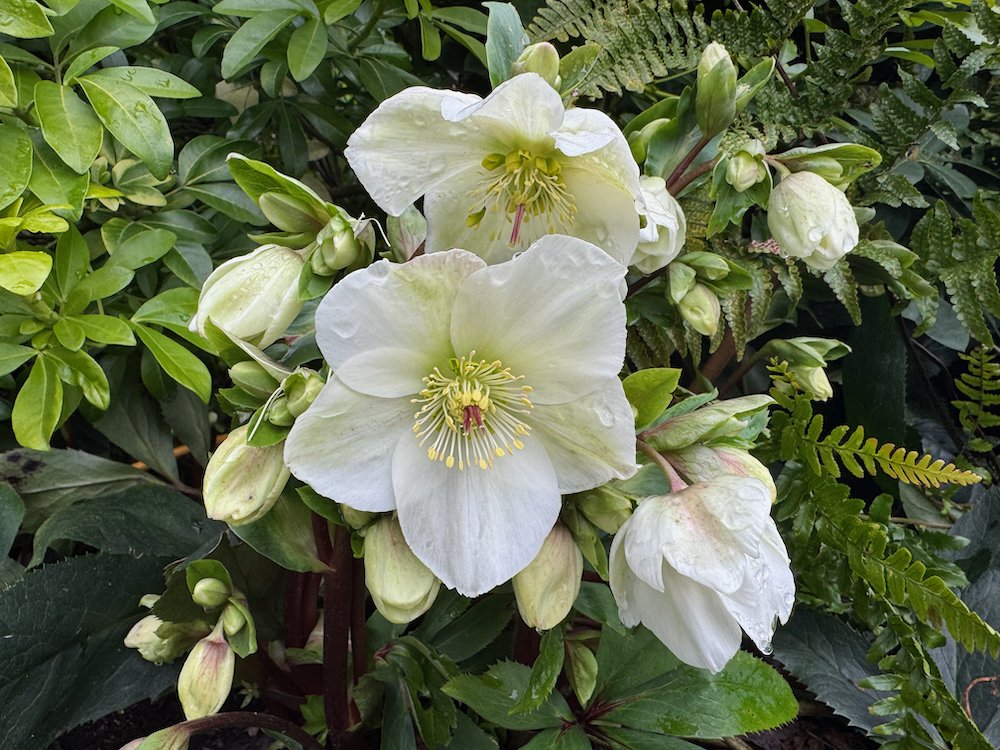
Helleborus niger HGC ‘Jacob’
Evergreen perennial with deep green leathery foliage and outward facing pure white blooms. Grows 8 to 12 inches tall. Ideal for borders, containers, and woodland garden plantings. Zones: 4 to 9.
Deer resistant perennials help reduce browsing damage while bringing dependable color, texture, and seasonal interest to the landscape. Many feature aromatic foliage, fuzzy leaves, or strong fragrance that make them less appealing to deer, while still providing flowers and foliage that contribute to the overall garden design. These plants help maintain fuller garden beds and more consistent displays throughout the season, allowing gardeners to spend less time replacing damaged plants and more time enjoying the landscape as it grows and matures.

Considerations for Deer Resistant Plants
Deer Pressure Level: Assess how frequently deer visit and how heavily they browse in your area, as this influences how resistant a perennial truly needs to be. In areas with consistent deer activity, even plants considered resistant may experience occasional damage.
Plant Palatability: Focus on perennials with characteristics deer tend to avoid, such as aromatic foliage, fuzzy or rough-textured leaves, milky sap, or strong fragrances. Resistance is not absolute, and deer may browse plants when food sources are limited.
Aesthetic Preferences: Deer-resistant perennials often feature distinctive foliage textures, silver or gray leaves, or fragrant foliage in addition to flowers. Consider how foliage, bloom color, and flowering season fit your overall garden design.
Maintenance Requirements: Monitor for browsing damage and be prepared to protect young plants as they establish. Some perennials recover quickly after light feeding, while others may require trimming or seasonal cleanup to restore their appearance.
Supplemental Protection: Even resistant perennials may benefit from temporary fencing, repellents, or netting during establishment or periods of heavy deer pressure. Additional protection can help reduce damage and improve long-term success.
Water & Fertility Management: Avoid overfertilizing, as lush, soft growth is often more appealing to deer. Moderate watering and fertilization help encourage sturdier growth that is generally less attractive to browsing.
Local Observations: Pay attention to which perennials deer avoid or repeatedly browse in nearby gardens, as preferences vary by region and season. Local experience often provides the most useful guidance when selecting plants.
Seasonal Vulnerability: Consider when perennials are most susceptible to browsing, particularly during spring emergence when fresh shoots appear. Newly planted perennials and tender growth often attract more attention than mature plants.
Plant Selection Strategy: Use a variety of highly resistant perennials rather than relying on a single plant type. Combining plants with different bloom times and growth habits can create a more resilient planting overall.
Site Placement: Position more vulnerable perennials closer to patios, walkways, or frequently used areas, and place highly resistant selections along outer edges. Deer are generally more cautious near spaces with regular human activity.
CONEFLOWER (Echinacea)
01


Highlights ►
2 to 4 ft tall
1 to 2 ft wide
Full to part sun
Deciduous
Moderate growth
Moderate resistance
Not aromatic
Flowers
Coneflowers combine sturdy growth and coarse foliage with qualities that make them a dependable choice for deer-resistant perennial plantings. Echinacea purpurea (shown here) is grown for its upright habit and daisy-like flowers with rosy-purple petals surrounding prominent central cones. Its textured foliage and slightly rough leaves help maintain seasonal interest while making it less appealing to browsing deer.
Well suited to borders, prairie-style gardens, or deer-resistant plantings, these perennials provide lasting color and structure throughout the growing season. Echinacea ‘Kismet Raspberry’ offers rich raspberry-pink blooms, while Echinacea Fresco ‘Apricot’ adds soft apricot flowers with warm peach tones for stronger contrast in the landscape. Together, these selections provide lasting color, seasonal interest, and a refined presence in the garden.
Related: See All Coneflowers ➔
IRIS
02
Highlights ►
30 to 36 in tall
18 to 24 in wide
Full sun
Deciduous
Moderate growth
High resistance
Not aromatic
Flowers
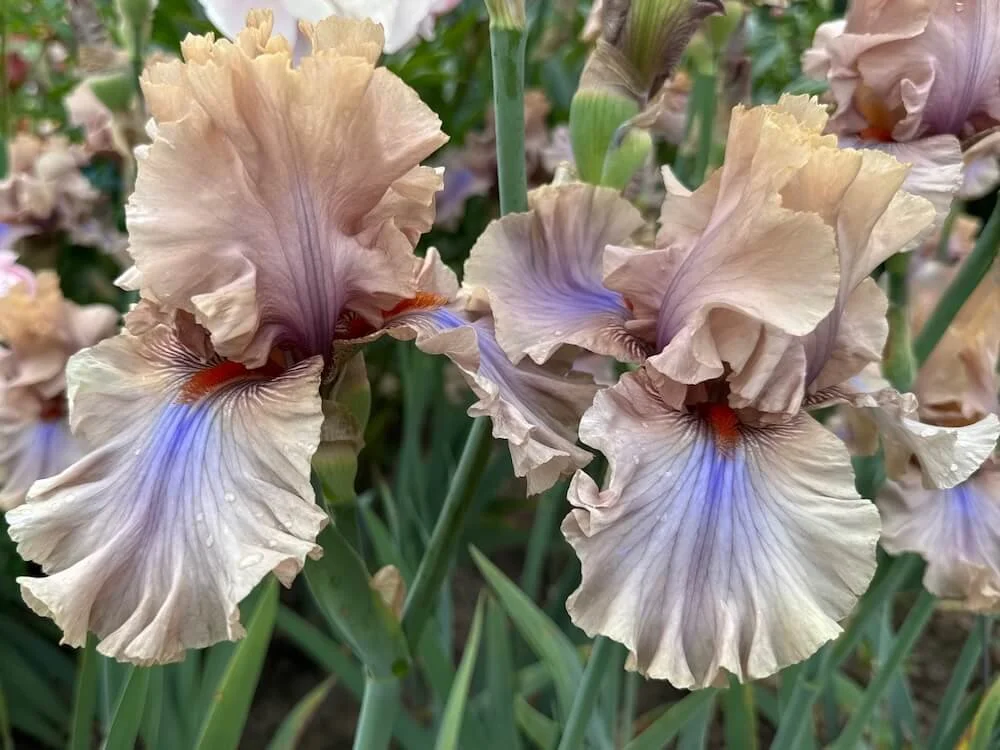
Irises combine sword-like foliage and compounds within their leaves and rhizomes that make them generally unappealing to browsing deer while contributing strong seasonal color. Iris ‘Coffee Trader’ (shown here) produces richly colored blooms with warm coffee, caramel, and smoky lavender tones held above upright fans of foliage in late spring. The bold flower form and vertical leaves create a distinctive presence after flowering has ended.
Flower color and foliage structure allow irises to stand out among deer-resistant perennial combinations. Iris pseudata ‘Roryu’ produces large golden-yellow flowers and marked by dramatic burgundy-black signals, while Iris sibirica ‘Miss Apple’ bears rosy-pink blooms above narrow grassy foliage. Their upright growth bring texture and seasonal interest to deer-resistant borders while pairing effectively with salvias, and alliums.
Related: Explore All Irises ➔
FERN
03
Highlights ►
4 to 8 in tall
12 to 24 in wide
Part to full shade
Evergreen
Slow growth
High resistance
Not aromatic
No flowers
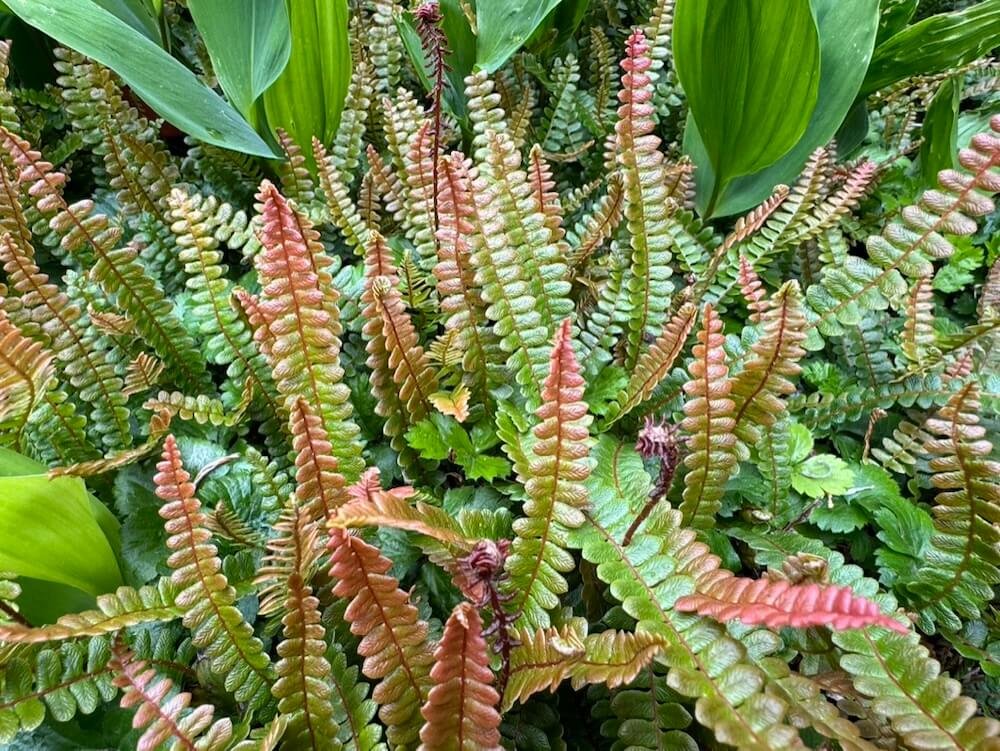
Ferns offer layered foliage and soft texture while remaining among the more dependable deer-resistant perennial choices for shaded garden spaces. Blechnum penna-marina (shown here) is grown for its low evergreen fronds that gradually form spreading carpets of finely textured foliage. Its leathery foliage and dense growth help maintain seasonal interest while making it less appealing to browsing deer in mixed plantings.
A wonderful addition to woodland gardens, borders, or deer-resistant plantings, these perennials provide texture and structure throughout the growing season. Athyrium niponicum var. pictum ‘Regal Red’ offers silvery foliage brushed with burgundy and purple tones, while Asplenium scolopendrium adds glossy strap-like evergreen fronds for stronger contrast in shaded landscapes. Together, these selections provide lasting texture, seasonal interest, and a refined presence in the garden.
Related: Explore All Ferns ➔
DAYLILY (Hemerocallis)
04
Highlights ►
24 to 30 in tall
18 to 24 in wide
Full to part sun
Deciduous
Moderate growth
Moderate resistance
Not aromatic
Flowers
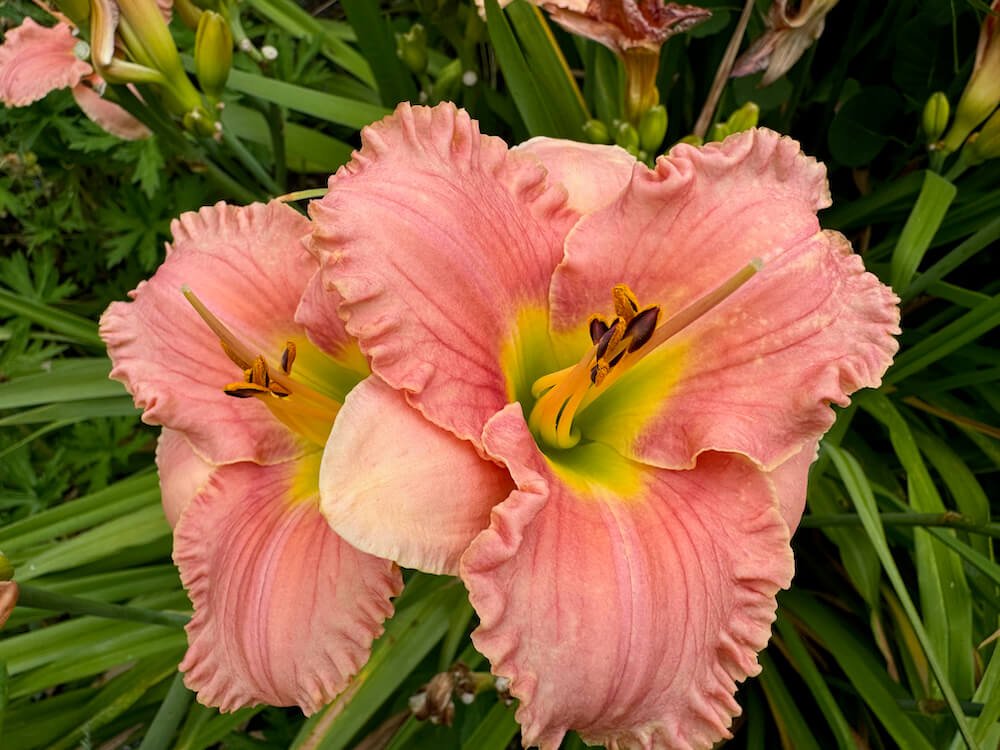
Daylilies bring weeks of colorful summer bloom while their strap-like foliage and fibrous growth habit are often overlooked by browsing deer. Hemerocallis ‘Elegant Candy’ (shown here) produces large ruffled flowers in soft shell pink and peach tones surrounding a glowing yellow-green throat. The gently blended coloring creates a luminous effect across the garden.
Individual cultivars add very different color notes within deer-resistant plantings. Hemerocallis ‘Forestlake Ragamuffin’ offers peachy-apricot flowers with ruffled golden-orange edges, while Hemerocallis ‘Mighty Chestnut’ produces burnt orange flowers with a deep burgundy middle. Their extended flowering season bring seasonal interest to deer-resistant borders alongside ornamental grasses and other perennials.
Related: See All Dayliles ➔
LENTEN ROSE (Helleborus)
05

Highlights ►
18 to 24 in tall
18 to 24 in wide
Part to full shade
Evergreen
Moderate growth
High resistance
Not aromatic
Flowers
Lenten roses combine leathery evergreen foliage and early flowering with qualities that make them dependable choices for deer-resistant perennial plantings. Helleborus x g. HGC ‘Ice N’ Roses Purple Sunrise’ (shown here) is grown for its large purple-rose flowers that create long-lasting color during the cooler months. Its thick leaves and coarse texture make it less appealing to deer.
Their leathery evergreen foliage and early blooms bring texture and color to woodland plantings throughout much of the year. Helleborus x ericsmithii HGC ‘Shooting Star’ offers creamy white flowers flushed with pink tones, while Helleborus x ballardiae HGC ‘Pink Frost’ adds rosy pink blooms. Together, these selections provide lasting texture, seasonal interest, and a refined presence in the garden.
Related: Explore All Lenten Roses ➔
ASTILBE
06
Highlights ►
18 to 24 in tall
18 to 24 in wide
Part to full shade
Deciduous
Moderate growth
Moderate resistance
Not aromatic
Flowers
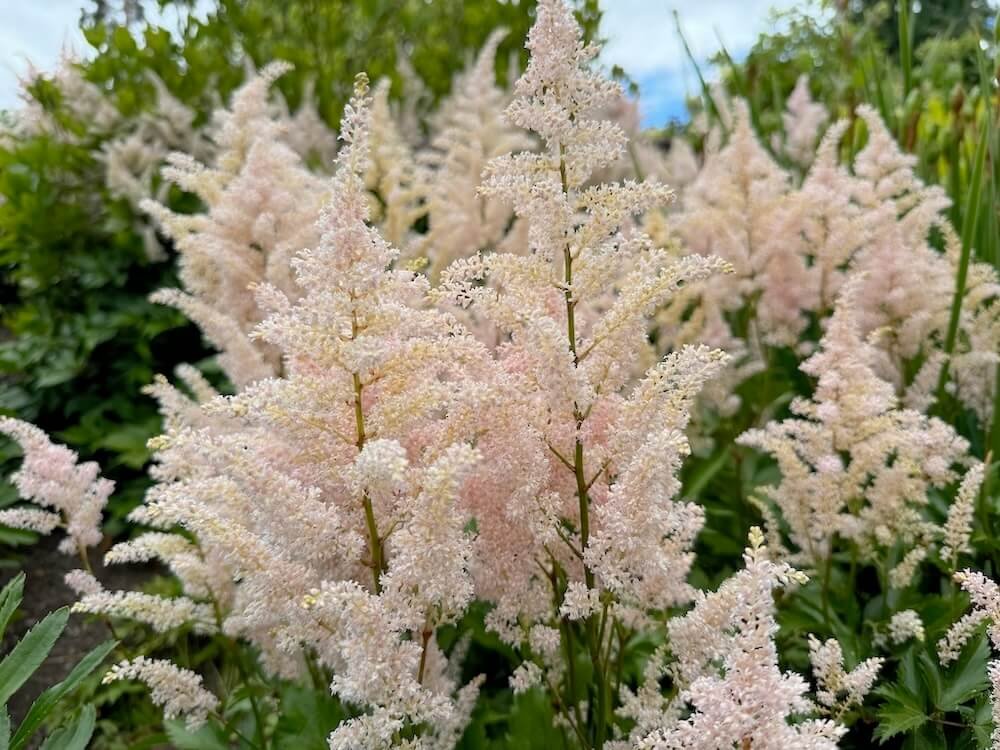
Astilbes bring finely textured foliage and soft plume-like flowers to shaded spaces while remaining among the more dependable deer-resistant perennial choices. Astilbe x rosea ‘Peach Blossom’ (shown here) is grown for its fern-like green foliage and airy peach-pink flower plumes. Its textured foliage and dense growth help maintain seasonal interest while making it less appealing to browsing deer in mixed plantings.
Among hostas, ferns, and other shade-loving companions, these perennials add layered texture and soft seasonal color. Astilbe chinensis ‘Vision in Pink’ offers fuller rosy-pink flower plumes with sturdy stems, while Astilbe simplicifolia ‘Hennie Graafland’ adds soft pink flowers with a lighter, airy appearance for stronger contrast in shaded landscapes. Together, these selections provide lasting texture, seasonal interest, and a refined presence in the garden.
Related: See All Astilbes ➔
SAGE (Salvia)
07
Highlights ►
12 to 18 in tall
12 to 15 in wide
Full sun
Deciduous
Moderate growth
High resistance
Aromatic foliage
Flowers
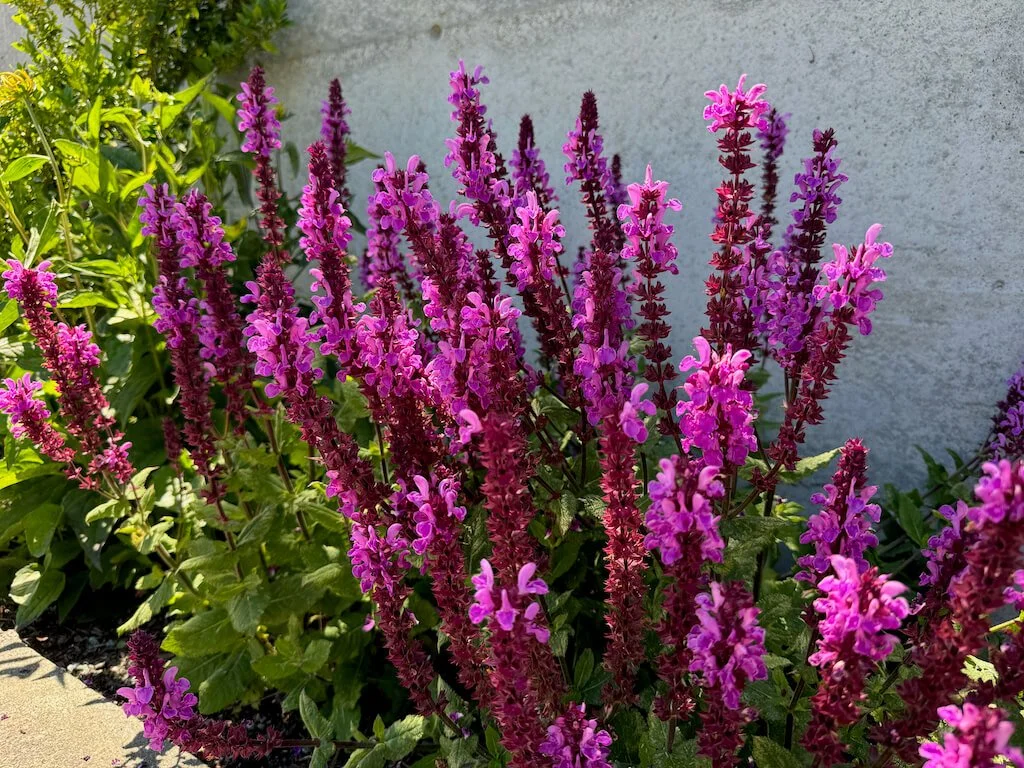
Sages combine aromatic foliage and textured leaves with qualities that make them dependable choices for deer-resistant perennial plantings. Salvia Hybrid ‘Amistad’ is grown for its deep green foliage and long spikes of rich violet-purple flowers held above dark stems that create extended seasonal color. Its fragrant leaves and slightly coarse texture help make it less appealing to browsing deer in mixed plantings.
With fragrant foliage and long-lasting flower spikes, these perennials bring structure and season-long color to borders, cottage gardens, and deer-resistant plantings. Salvia microphylla ‘Heatwave Glow’ offers soft peach flowers, while Salvia nemorosa ‘Rose Marvel’ (shown here) adds bright pink flower spikes with a compact habit for stronger contrast in the landscape. Together, these selections provide lasting color, seasonal interest, and a refined presence in the garden.
Related: Explore All Sage ➔
LUNGWORT (Pulmonaria)
08
Highlights ►
12 to 18 in tall
18 to 24 in wide
Part to full shade
Semi-evergreen
Moderate growth
High resistance
Not aromatic
Flowers
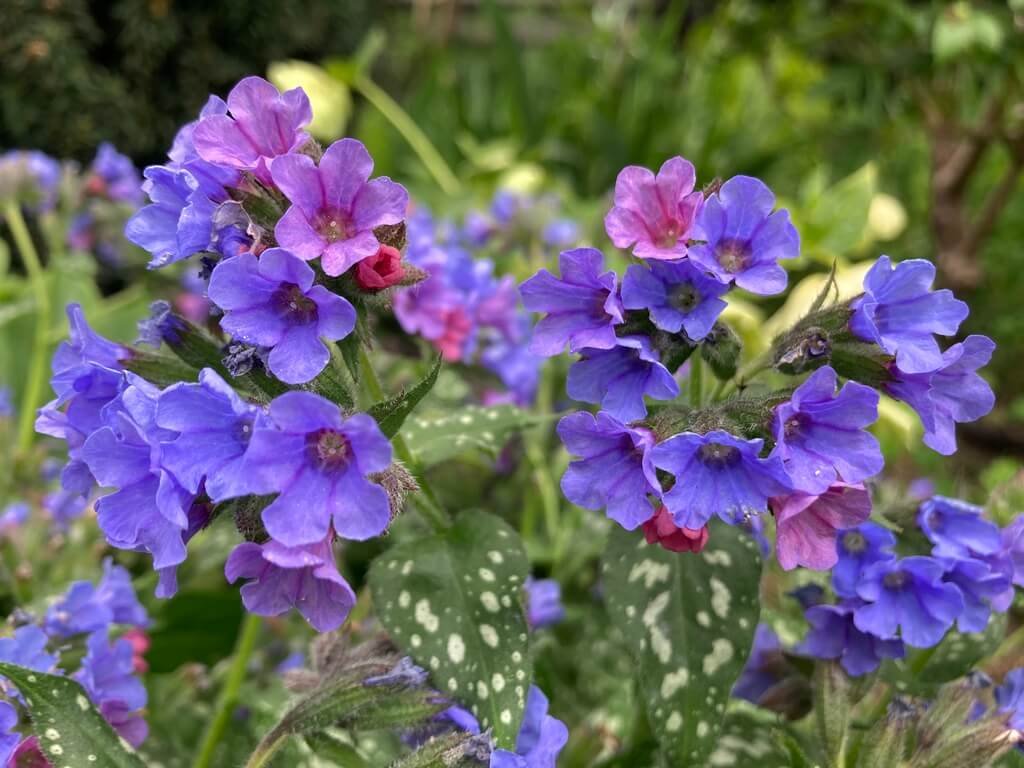
Lungwort combines textured foliage and naturally unpalatable leaves with qualities that make it a dependable choice for deer-resistant perennial plantings. Pulmonaria ‘Twinkle Toes’ is grown for its silver-speckled foliage and clusters of flowers that open pink before maturing to lavender. Its slightly rough leaves and dense growth help maintain seasonal interest while making it less appealing to browsing deer in mixed plantings.
In woodland settings, these perennials help brighten shaded spaces with colorful flowers and patterned foliage. Pulmonaria ‘Trevi Fountain’ (shown here) offers intense cobalt-blue flowers above heavily silver-spotted foliage, while Pulmonaria ‘Raspberry Splash’ adds raspberry-pink blooms and bright silver-marked leaves. Together, these selections provide lasting texture, seasonal interest, and a refined presence in the garden.
WINDFLOWER (Anenome)
09

Highlights ►
30 to 36 in tall
24 to 30 in wide
Full to part sun
Deciduous
Moderate growth
Moderate resistance
Not aromatic
Flowers
Fall-blooming anemones bring movement and late-season color to the garden while remaining among the less appealing choices for browsing deer. Anemone ‘Royal Blush’ (shown here) is grown for its soft pink flowers that gradually deepen in color and rise above mounds of deeply divided foliage as summer transitions into fall. Their slightly coarse leaves and fibrous growth contribute seasonal interest while helping reduce browsing pressure in mixed plantings.
As many perennials begin fading for the year, these windflowers continue extending color into woodland edges and layered borders. Anemone hupehensis var. japonica ‘Pamina’ offers rich semi-double rosy-pink blooms, while Anemone x hybrida ‘Honorine Jobert’ adds elegant white flowers that brighten shaded garden spaces later in the season. Their tall stems and open habit create texture and contrast as the garden shifts toward autumn.
SPEEDWELL (Veronica)
10
Highlights ►
20 to 24 in tall
16 to 20 in wide
Full sun
Deciduous
Moderate growth
Moderate resistance
Not aromatic
Flowers
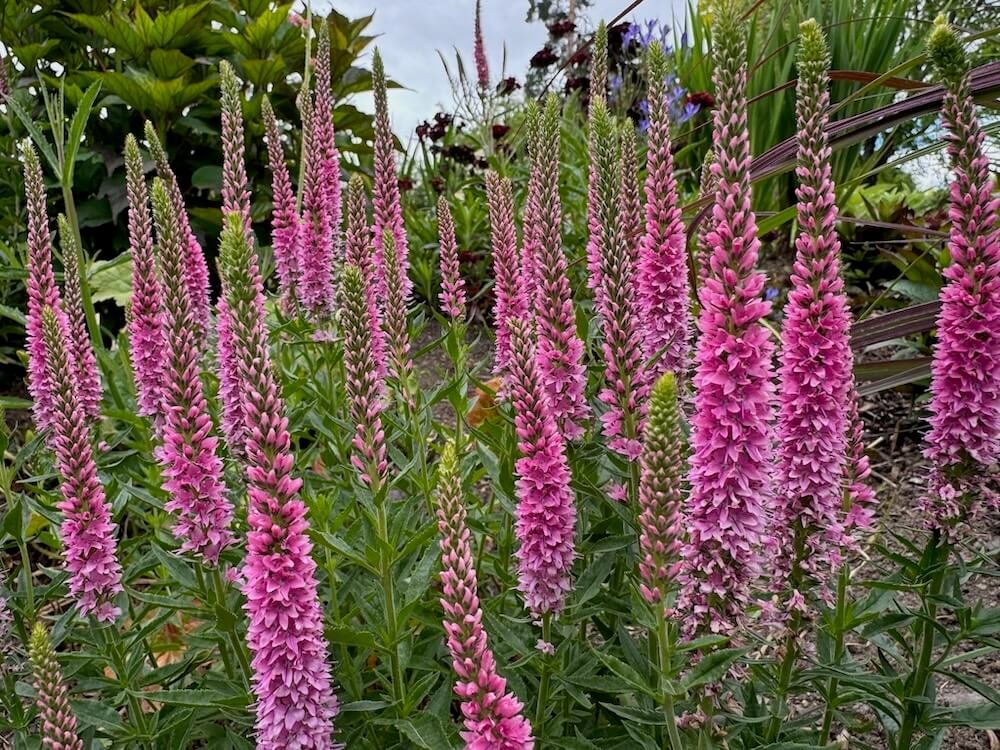
Speedwells combine textured foliage and colorful flower spikes with qualities that make them well suited to deer-resistant perennial plantings. Veronica longifolia ‘Perfectly Picasso’ (shown here) is grown for its tidy green foliage and dense flower spikes that open soft pink and gradually deepen to richer rose-pink tones as they mature. Its slightly coarse leaves and sturdy growth make it less appealing to browsing deer while contributing long-lasting seasonal interest in mixed plantings.
In borders and cottage-style gardens, speedwells help connect upright and mounding plants while introducing strong color and contrast among neighboring perennials. Their long flowering period extends seasonal interest and pairs especially well with ornamental grasses and softer-textured foliage plants. These qualities create a layered garden display with texture and structure that continues beyond peak bloom.
DAFFODIL (Narcissus)
11
Highlights ►
16 to 18 in tall
4 to 6 in wide
Full to part shade
Deciduous
Moderate growth
High resistance
Not aromatic
Flowers
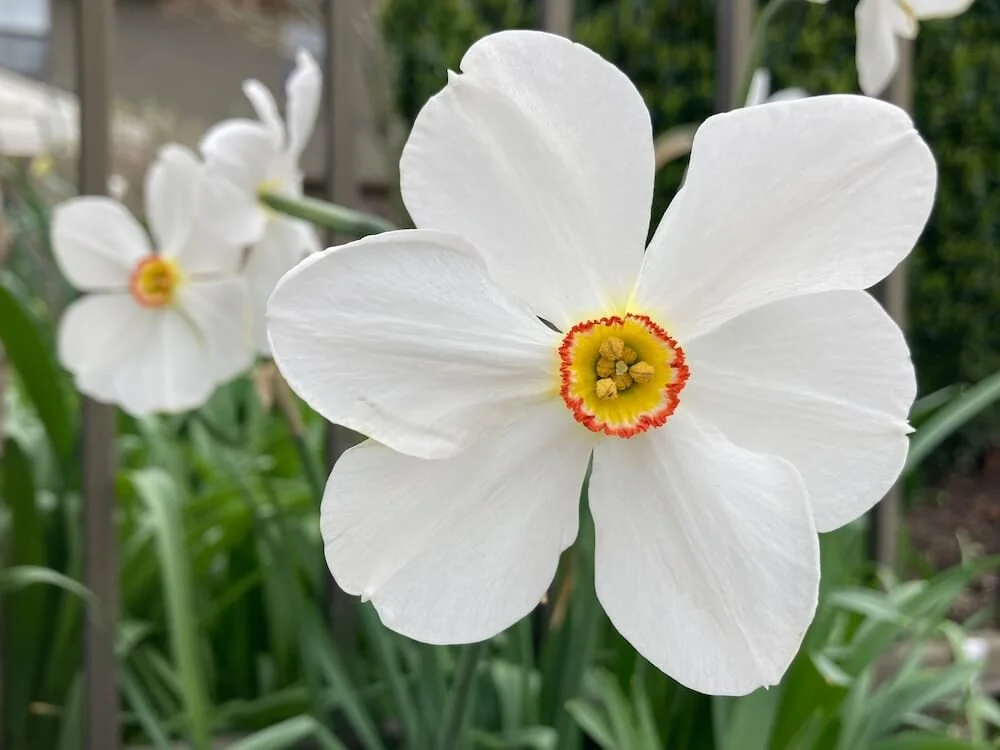
Daffodils combine early seasonal color with natural defenses that make them dependable deer-resistant perennials for gardens and naturalized plantings. Narcissus ‘Actaea’ (shown here) is grown for its white petals surrounding a small yellow cup edged in orange-red, creating a clean and elegant spring display. Their naturally toxic bulbs and foliage make them far less appealing to browsing deer in mixed plantings.
Planted in borders and naturalized settings, these perennials bring strong spring color while remaining less appealing to browsing deer. Narcissus ‘Apricot Whirl’ offers layered creamy petals with soft apricot tones, while Narcissus ‘Bellabombe’ adds fully double yellow and orange blooms for stronger contrast in the landscape. Together, these selections provide lasting color, seasonal interest, and a refined presence in the garden.
Related: See All Daffodils ➔
HYSSOP (Agastache)
12
Highlights ►
18 to 24 in tall
18 to 24 in wide
Full sun
Deciduous
Moderate growth
High resistance
Aromatic foliage
Flowers
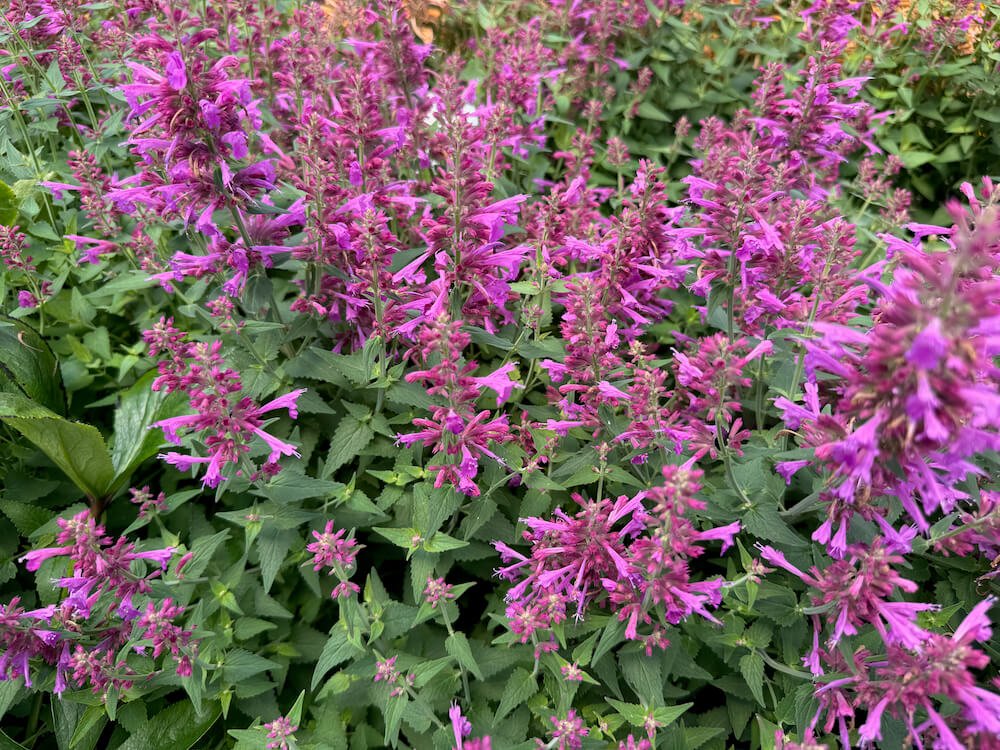
Hyssops combine aromatic foliage and nectar-rich flowers with qualities that make them largely unappealing to browsing deer. Agastache mexicana ‘Balsumlmag’ (shown here) produces upright spikes of rosy-magenta tubular flowers above fragrant green foliage that releases a minty scent when brushed. The aromatic leaves and open branching habit contribute texture and color throughout the growing season while attracting hummingbirds, bees, and butterflies.
Flower color and foliage fragrance create a lively presence within deer-resistant perennial plantings. Agastache mexicana ‘Balsumlora’ bears bright coral-pink flower spikes, while Agastache x poquito Orange ‘TNAGAPO’ produces soft peach-orange blooms that add warmth and contrast among cooler flower colors. Their upright forms and extended bloom periods help maintain seasonal interest.
BLUESTAR (Amsonia)
13
Highlights ►
15 to 18 in tall
18 to 24 in wide
Full to part sun
Deciduous
Moderate growth
High resistance
Not aromatic
Flowers
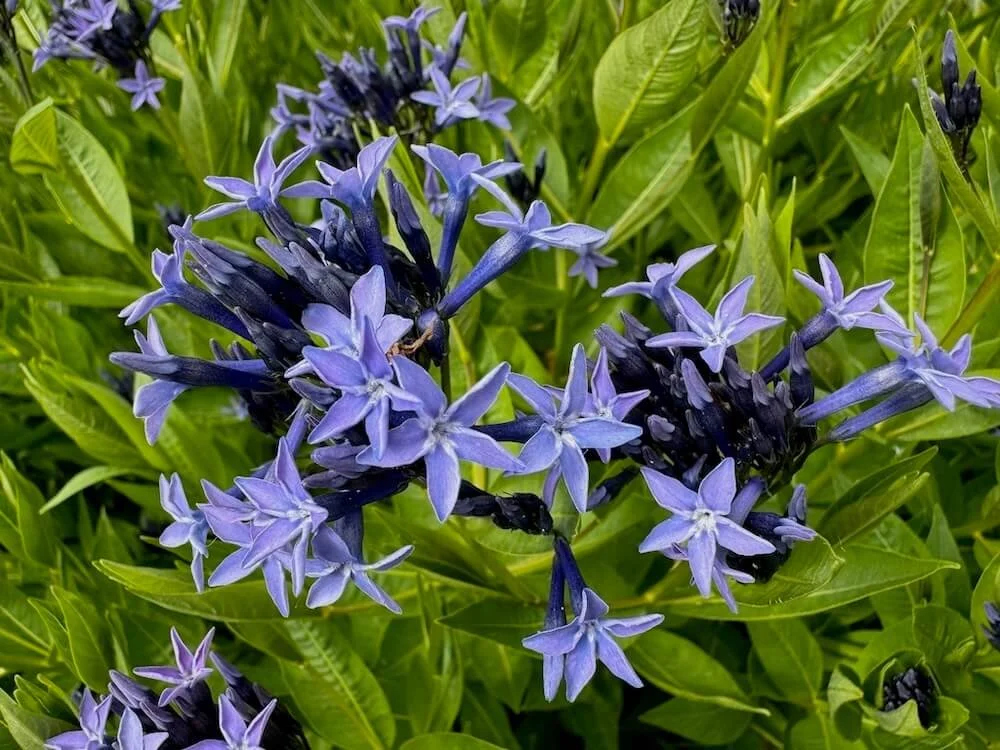
Bluestars offer finely textured foliage and naturally unpalatable growth that make them especially useful in deer-resistant perennial plantings. Amsonia orientalis ‘Blue Ice’ (shown here) is grown for its tidy mounds of green foliage and clusters of deep steel-blue, star-shaped flowers that create rich color in late spring. Its milky sap and naturally bitter compounds helps reduce browsing pressure while contributing long-lasting seasonal interest in mixed garden settings.
As the season progresses, bluestars continue contributing well beyond their flowering period through changing texture and foliage effects. Amsonia hubrichtii develops exceptionally fine thread-like foliage that softens neighboring plantings before turning brilliant golden-yellow in fall. Their airy character pairs especially well with ornamental grasses and broader-leaved perennials, creating contrast that evolves across multiple seasons.
ALLIUM
14

Highlights ►
24 to 36 in tall
8 to 12 in wide
Full sun
Deciduous
Moderate growth
High resistance
Aromatic foliage
Flowers
Alliums combine aromatic foliage and bold flower forms with characteristics that make them especially useful in deer-resistant perennial plantings. Allium aflatunense ‘Purple Sensation’ (shown here) is grown for its globe-shaped clusters of rich violet-purple flowers held on tall stems above strappy foliage in late spring. Their onion-scented leaves and naturally unpalatable qualities help reduce browsing while contributing strong seasonal interest in mixed plantings.
Rising above neighboring perennials, these ornamental onions introduce distinct shapes and clean architectural lines across the garden. Allium unifolium offers looser clusters of soft lavender-pink flowers, while Allium stipitatum ‘Mt. Everest’ adds large white flower spheres that brighten planting combinations and create contrast among surrounding foliage. Their unusual forms and changing bloom sequence help extend interest across the season.
RUSSIAN SAGE (Perovskia)
15
Highlights ►
3 to 5 ft tall
2 to 4 ft wide
Full sun
Deciduous
Fast growth
High resistance
Aromatic foliage
Flowers
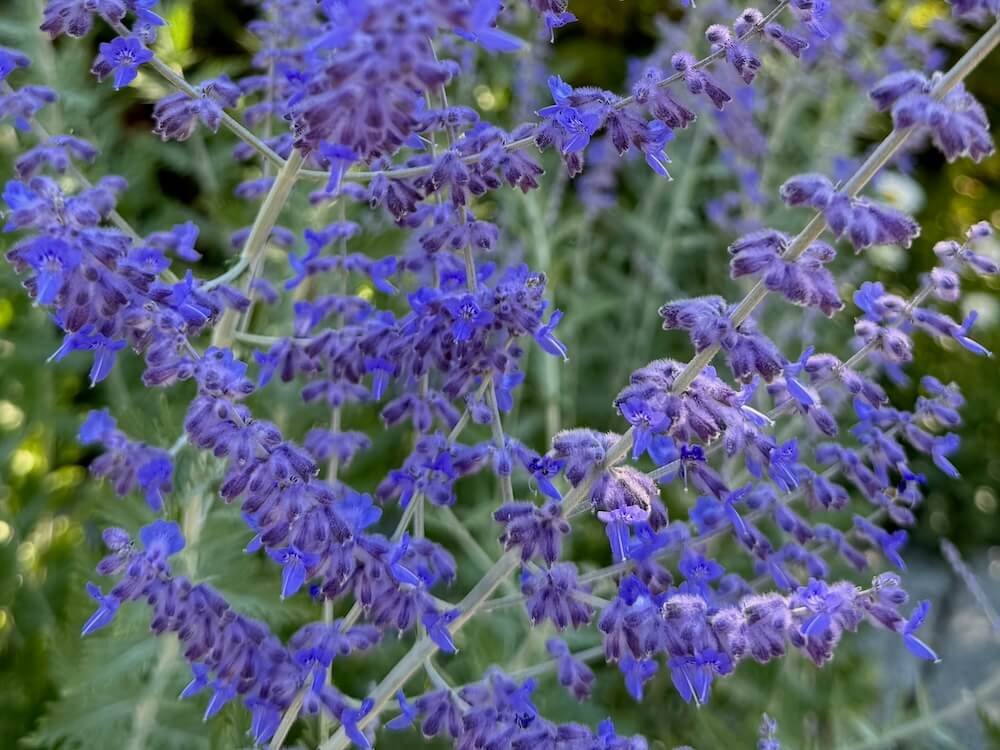
Russian sage combines aromatic foliage and a naturally airy habit, making it one of the more dependable deer-resistant perennials for sunny gardens and open landscapes. Perovskia atriplicifolia (shown here) is grown for its finely divided silvery-gray foliage and long wands of lavender-blue flowers that create a soft haze of color through summer and into fall. Its fragrant leaves and textured stems help maintain seasonal interest while making it less appealing to browsing deer in mixed plantings.
A dependable addition to borders, prairie-style gardens, or deer-resistant plantings, this perennial provides texture and structure throughout the growing season. Its upright branching habit and drought-tolerant nature allow it to blend easily with ornamental grasses and flowering companions while creating a light, layered presence in the landscape. Together, these characteristics provide lasting structure, seasonal interest, and a refined presence in the garden.
FEATHER REED GRASS (Calamagrostis)
16
Highlights ►
3 to 4 ft tall
2 to 3 ft wide
Full to part sun
Deciduous
Moderate growth
Moderate resistance
Not aromatic
Flowers
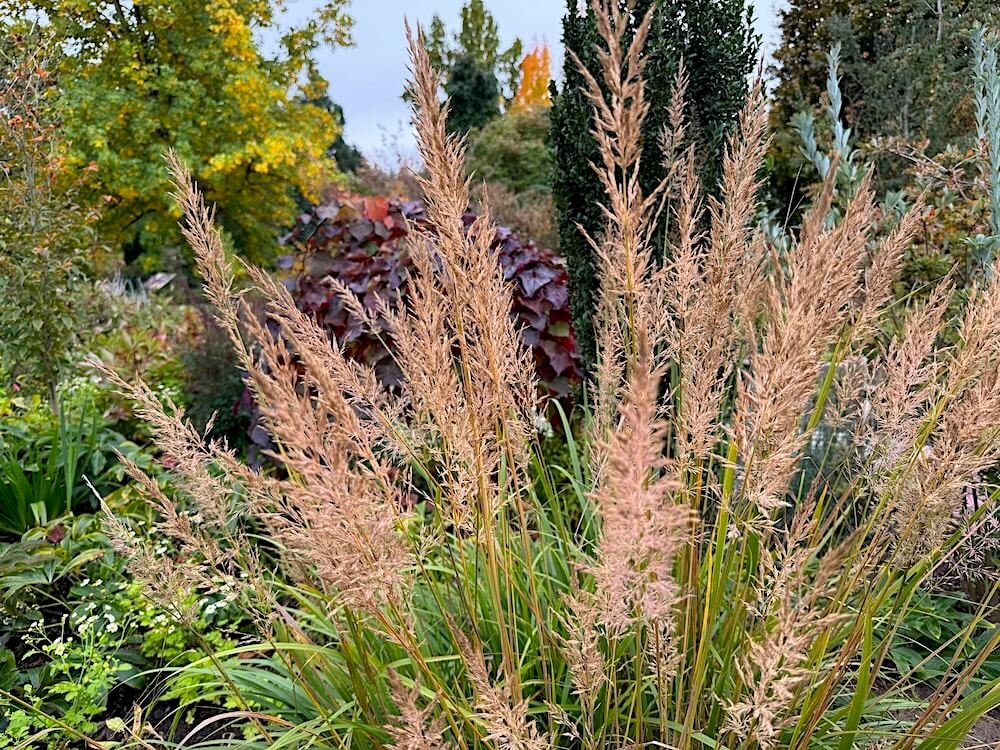
Feather reed grasses provide dependable structure and texture while remaining among the more deer-resistant perennial choices for borders and naturalistic plantings. Calamagrostis brachytricha (shown here) is grown for its arching green foliage and soft pink-tinged flower plumes that mature to silvery tan tones later in the season. Its upright habit and coarse texture help maintain seasonal interest while making it less appealing to browsing deer in mixed plantings.
A reliable addition to borders, prairie-style gardens, or deer-resistant plantings, these grasses provide texture and structure throughout the growing season. Calamagrostis x acutiflora ‘Karl Foerster’ offers narrow vertical plumes held on strongly upright stems that create a more architectural appearance in the landscape. Together, these selections provide lasting structure, and seasonal interest in the garden.
Related: Explore All Grasses ➔
FALSE INDIGO (Baptisia)
17
Highlights ►
3 to 4 ft tall
3 to 4 ft wide
Full to part sun
Deciduous
Moderate growth
High resistance
Not aromatic
Flowers
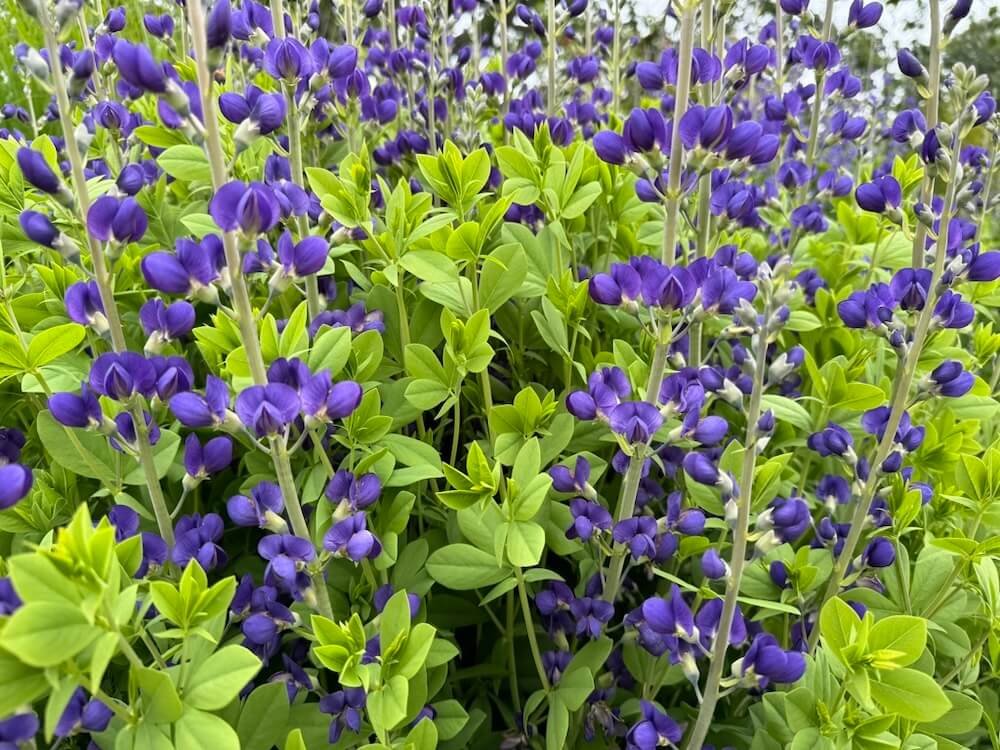
False indigo combines sturdy stems and substantial blue-green foliage with qualities that make it a dependable choice for deer-resistant perennial plantings. Baptisia australis (shown here) is grown for its shrubby form and spires of deep indigo-blue flowers that rise above dense mounds of foliage in late spring and early summer. Its thick stems and slightly leathery leaves help maintain seasonal interest while making it less appealing to browsing deer in mixed plantings.
These perennials provide texture and structure throughout the growing season and are a great choice for prairie-style gardens, borders, or deer-resistant plantings. Baptisia x ‘Purple Smoke’ offers smoky violet-purple flowers held above blue-green foliage with darker stems that add stronger contrast in the landscape. Together, these selections provide lasting structure, seasonal interest, and a refined presence in the garden.
RED HOT POKER (Kniphofia)
18
Highlights ►
3 to 4 ft tall
24 to 30 in wide
Full sun
Semi-evergreen
Moderate growth
High resistance
Not aromatic
Flowers
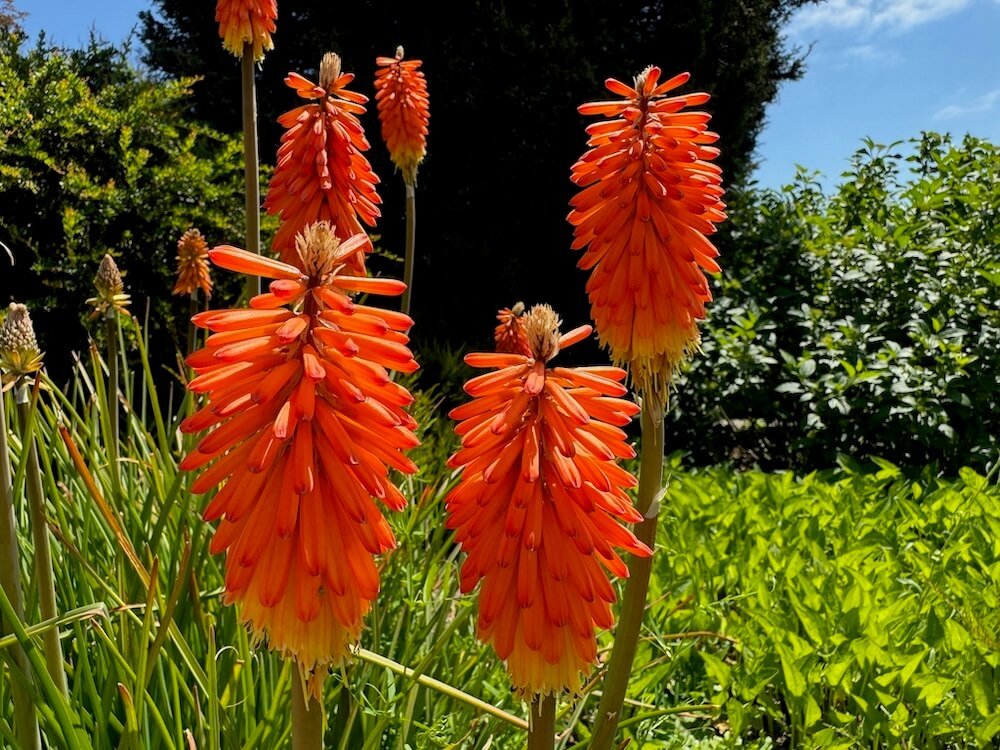
Red hot pokers bring bold flower forms and grassy foliage to the garden while remaining among the less favored choices for browsing deer. Kniphofia ‘Fire Glow’ (shown here) is grown for its arching green foliage and torch-like flower spikes in fiery orange-red tones that rise above the leaves in summer. Its coarse foliage texture and fibrous growth help discourage browsing while adding strong vertical interest to mixed plantings.
Tall flower spikes and vivid colors allow these perennials to stand out among neighboring plants without overwhelming surrounding textures. Kniphofia ‘Citrina’ offers softer lemon-yellow flower spikes that create a lighter look and broaden the color range within the garden. Their upright forms introduce contrast among mounding perennials and ornamental grasses while extending seasonal color through the warmer months.
SEA HOLLY (Eryngium)
19
Highlights ►
24 to 30 in tall
18 to 24 in wide
Full sun
Deciduous
Moderate growth
High resistance
Not aromatic
Flowers
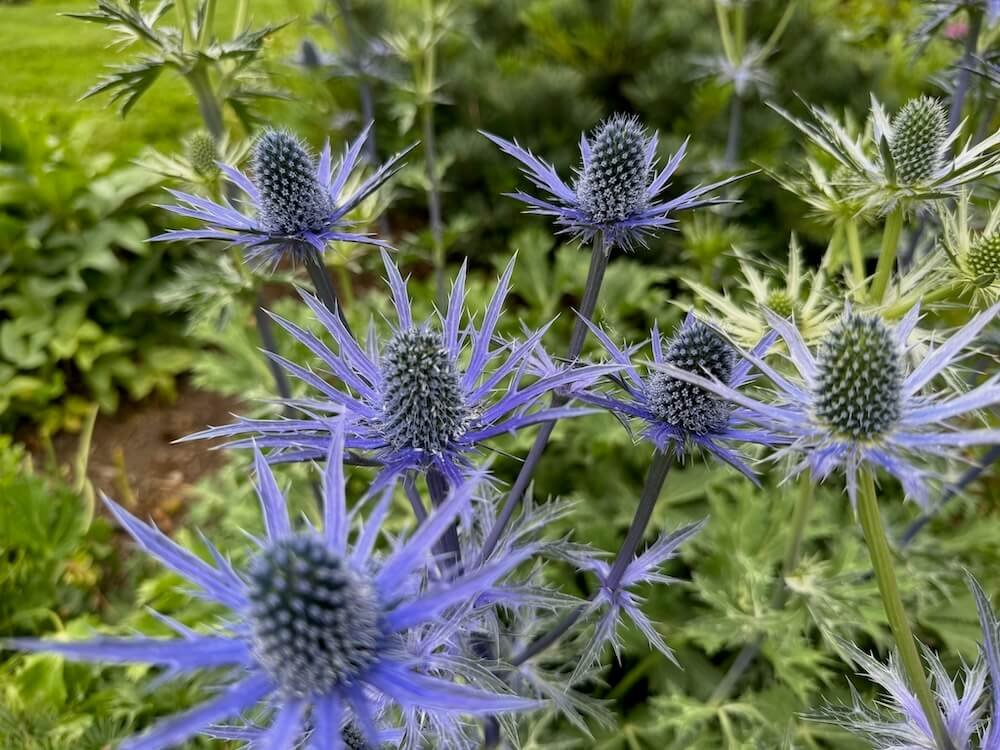
Sea hollies combine spiny foliage, rigid stems, and coarse textures that make them naturally resistant to deer browsing while adding dramatic structure to perennial borders. Eryngium x zabelii ‘Big Blue’ (shown here) produces lavender-blue flower cones surrounded by star-like bracts above silvery foliage, creating a distinctive architectural presence through summer. The prickly flower heads and leathery leaves contribute both visual interest and a texture that deer typically avoid.
Form and foliage color give different sea hollies unique roles within deer-resistant plantings. Eryngium x zabelii ‘Neptune’s Gold’ develops unique golden-yellow variegated bracts, while Eryngium planum bears masses of steel-blue flower heads on branching stems that create a lighter, more airy effect. Their sculptural silhouettes and unusual coloring bring texture and seasonal interest to deer-resistant borders while pairing effectively with grasses, salvias, and other sun-loving perennials.
YARROW (Achillea)
20

Highlights ►
18 to 36 in tall
18 to 24 in wide
Full sun
Deciduous
Fast growth
High resistance
Aromatic foliage
Flowers
Yarrow combines aromatic foliage and finely divided leaves with characteristics that help make it a useful choice for deer-resistant perennial plantings. Achillea millefolium (shown here) is grown for its fern-like foliage and broad clusters of white flowers that rise above sturdy stems through summer. Its fragrant leaves and naturally bitter compounds help reduce browsing while contributing texture and long-lasting interest in mixed garden settings.
From prairie-style plantings to sunny borders, yarrows bring a softer texture that contrasts well with grasses and broader-leaved companions. Achillea millefolium ‘New Vintage Violet’ offers rich violet-purple flower clusters, while Achillea millefolium ‘Paprika’ adds warm red blooms that gradually soften to salmon-pink tones as they age. Their flattened flower heads create repeating patterns and extend color across the garden well into the season.