
COMPLETE GUIDE
TO DAYLILIES
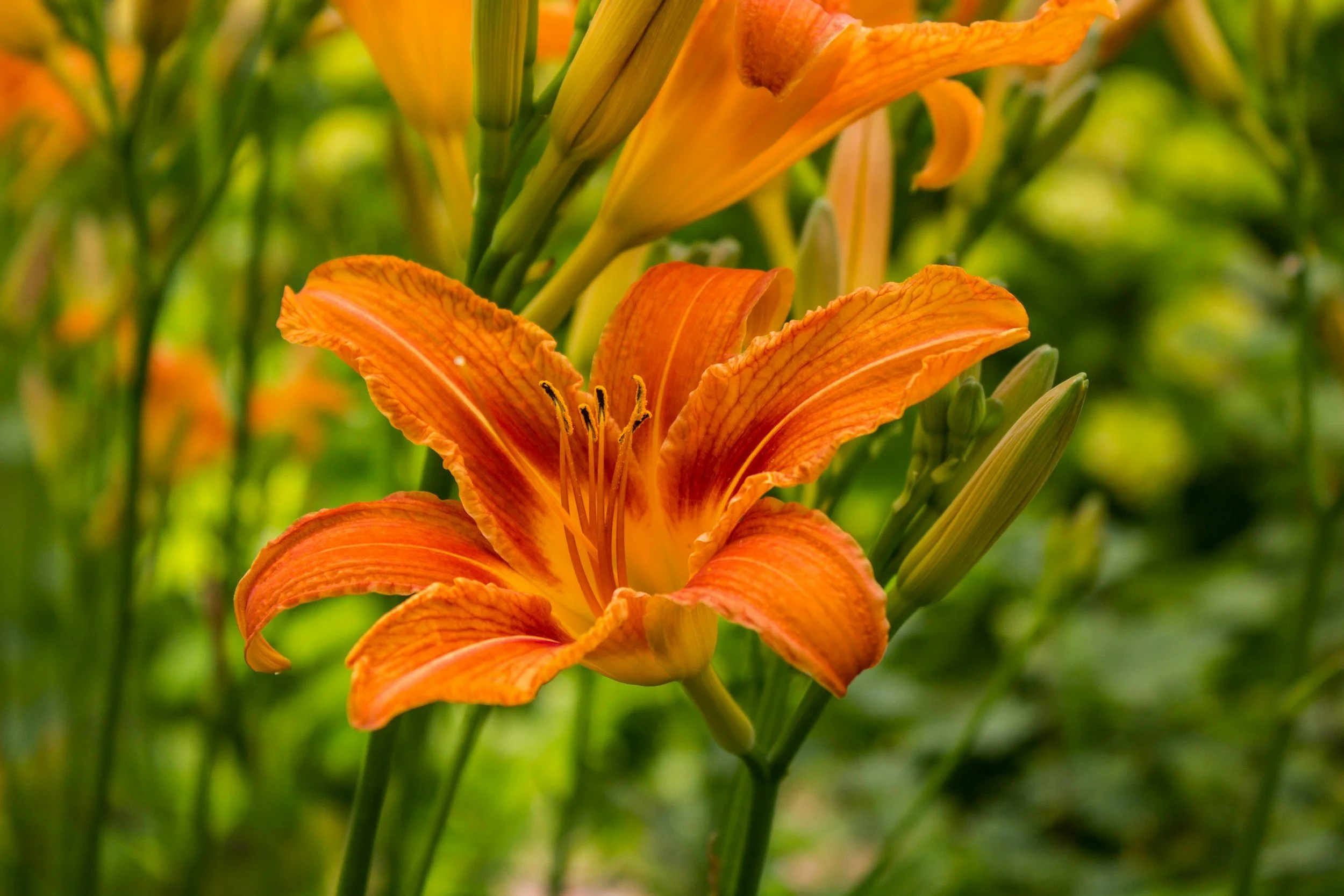
Daylilies bring bright color to the garden, producing an abundance of blooms in a wide range of colors, patterns, and flower forms from early summer into late season. Their arching, grass-like foliage provides texture even when plants are not in bloom, while their adaptability makes them suitable for borders, mass plantings, slopes, and mixed perennial beds. With thousands of cultivars available in sizes ranging from compact to tall, daylilies offer endless possibilities for combining color and extending the flowering season, making them dependable and rewarding additions to a wide variety of garden styles.
CHOOSING & DESIGNING WITH DAYLILIES
Flower forms and colors:
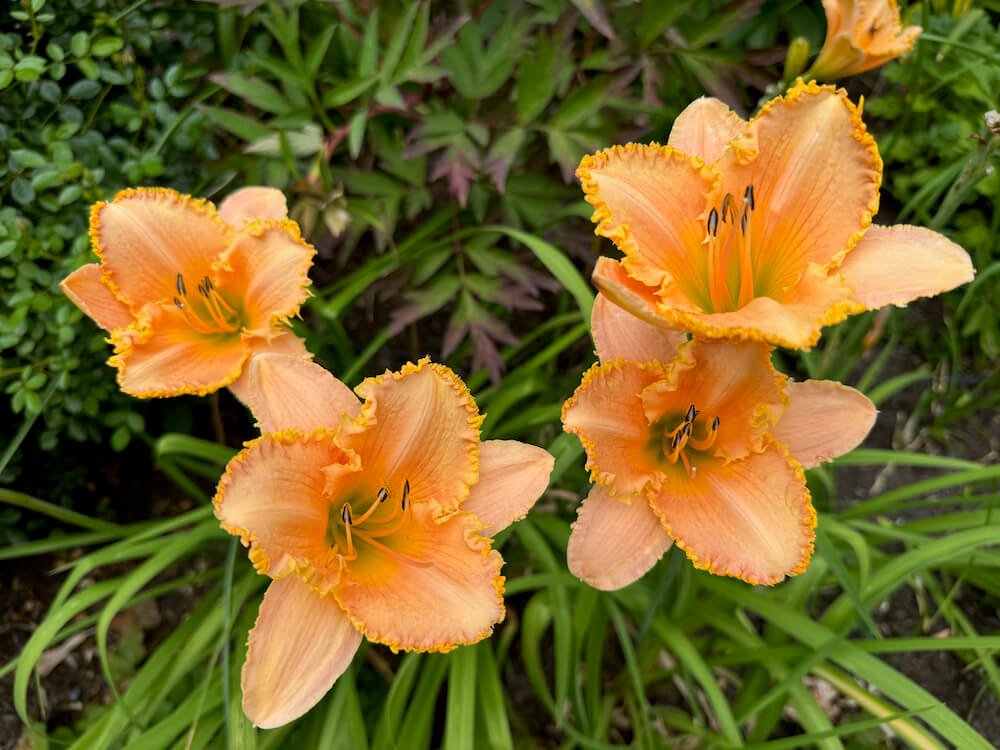
Daylilies are available in a large range of colors, patterns, and flower forms. Single blooms, heavily ruffled flowers, and unusual spider forms each bring their own character to the garden. Colors range from soft creams and pinks to rich reds, oranges, purples, and nearly black tones. Eye zones, contrasting edges, and recurved petals further expand the design possibilities.
Bloom season and repeat flowering:
By combining early, mid, and late-season varieties, gardeners can enjoy flowers over an extended period. Some cultivars are also reblooming, producing multiple flushes of flowers throughout the summer and into early fall. Selecting varieties with different bloom times helps create a longer-lasting display.
Growth habits:
Most daylilies form attractive clumps of arching foliage that provide texture even when plants are not in flower. Mature plants gradually increase in size over time, making them suitable for borders, mass plantings, and naturalistic gardens. Their adaptability and longevity make them among the easiest perennials to incorporate into a wide range of landscapes.
Companion plants:
Daylilies combine beautifully with coneflowers, salvias, ornamental grasses, phlox, coreopsis, Russian sage, and shrubs such as hydrangeas and roses. Their strap-like foliage provides contrast to broad-leaved perennials while their flowers contribute bright summer color.
Garden uses:
Daylilies are versatile plants suitable for perennial borders, cottage gardens, foundation plantings, slopes, and mass plantings. Compact varieties work well near pathways and containers, while taller selections provide color and structure toward the middle or back of borders.
Seasonal interest:
Although individual flowers last only a day, each scape carries numerous buds that open over several weeks. The foliage remains attractive through much of the growing season and provides a pleasing backdrop for neighboring plants.

Classic Single Daylilies

Hemerocallis 'Bonanza'
Deciduous perennial with bright golden yellow blooms highlighted by deep mahogany red eyes. Grows 18 to 24 inches tall. Ideal for borders, mass plantings, and low maintenance gardens. Zones: 3 to 9.
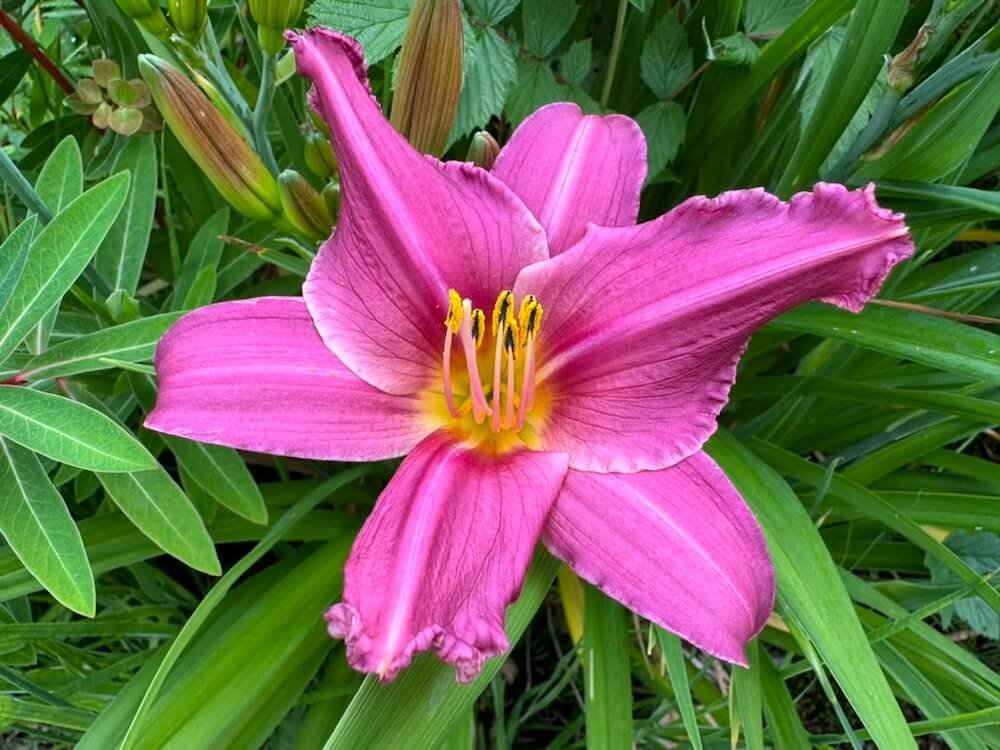
Hemerocallis 'Summer Wine'
Deciduous perennial with rich pink blooms surrounding golden green throats. Grows 24 to 30 inches tall. Ideal for cottage gardens, and mixed perennial plantings. Zones: 3 to 9.
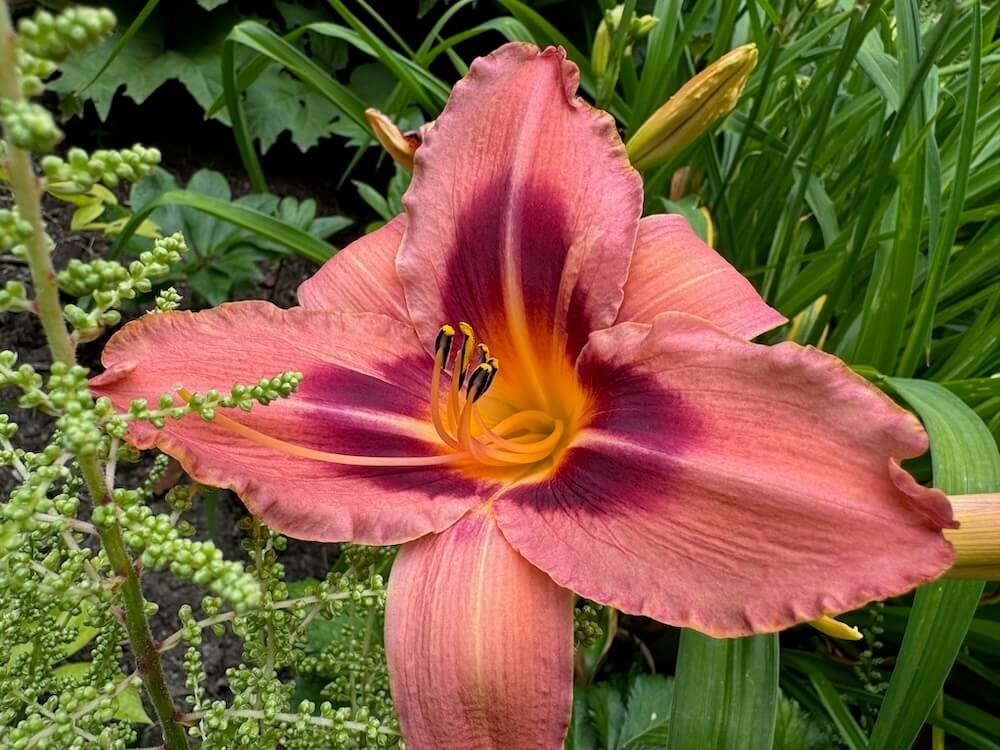
Hemerocallis 'Wineberry Candy'
Deciduous perennial with dusty rose blooms featuring bold wine purple eyes and golden throats. Grows 24 to 30 inches tall. Ideal for borders, cottage gardens, and mixed perennial plantings. Zones: 3 to 9.
Other Notable Classic Single Daylilies
Hemerocallis 'Autumn Red': Rich red flowers with warm golden throats bring vibrant color to the garden
Hemerocallis 'Early Bird Cardinal': Bold cardinal red blooms appear early and provide weeks of colorful display
Hemerocallis 'Fooled Me': Bright golden yellow petals with a deep red eye
Hemerocallis 'Pink Tangerine': Soft pink blooms infused with warm peach tones add glowing color
Hemerocallis 'Red Pinocchio': Deep red flowers highlighted by golden throats

PLANTING DAYLILIES
When to plant:
Daylilies can be planted in spring or fall, with March through May and September through October generally providing the most favorable conditions for establishment. Soil temperatures between 50°F and 70°F encourage active root growth while avoiding the stresses associated with summer heat and winter cold. In colder climates, spring planting allows roots additional time to establish before winter.
Where to plant:
Most daylilies perform best with 6 to 8 hours of direct sunlight per day, although some darker-colored cultivars appreciate protection from intense afternoon heat in warmer climates. Morning and midday sun promote stronger flowering and sturdier growth. Sites with good air circulation help maintain healthy foliage and reduce disease problems.
How to plant:
Prepare the planting area by loosening the soil and incorporating compost or other organic matter to improve drainage and soil structure. Most daylilies are sold in one-gallon containers, and planting holes should be approximately 10 to 12 inches wide and 8 to 10 inches deep, or slightly wider than the root ball but no deeper. Position the crown about 1 inch below the surrounding soil surface, backfill gently, and water thoroughly to eliminate air pockets. Continue regular watering during the first growing season while roots establish into the surrounding soil.
Soil:
Daylilies perform best in fertile, well-drained soil with a slightly acidic to neutral pH between 6.0 and 7.0. Incorporating compost, leaf mold, or aged manure before planting improves soil structure and moisture retention. Heavy clay soils benefit from additional organic matter to improve drainage, while sandy soils often require amendments to retain moisture and nutrients. A balanced slow-release fertilizer such as 10-10-10 or 14-14-14 incorporated according to label directions helps support healthy growth and flowering. After planting, apply a 2 to 3 inch layer of shredded bark, compost, or leaf mold around the plants, keeping mulch away from the crowns to discourage rot.
Watering:
Newly planted daylilies generally benefit from about 1 inch of water per week, applied once or twice weekly depending on rainfall and soil conditions. Established plants are relatively drought tolerant but flower best when provided with supplemental moisture during extended dry periods. Deep watering every 7 to 10 days during hot weather encourages stronger roots and better bloom production.
Growing daylilies in containers:
Daylilies adapt well to container culture provided pots have excellent drainage and adequate room for root development. Use a high-quality potting mix enriched with compost and supplemented with perlite or fine bark to improve aeration. Container-grown plants require more frequent watering than those growing in the ground and may benefit from additional winter protection in colder climates.
Ruffled & Decorative Daylilies
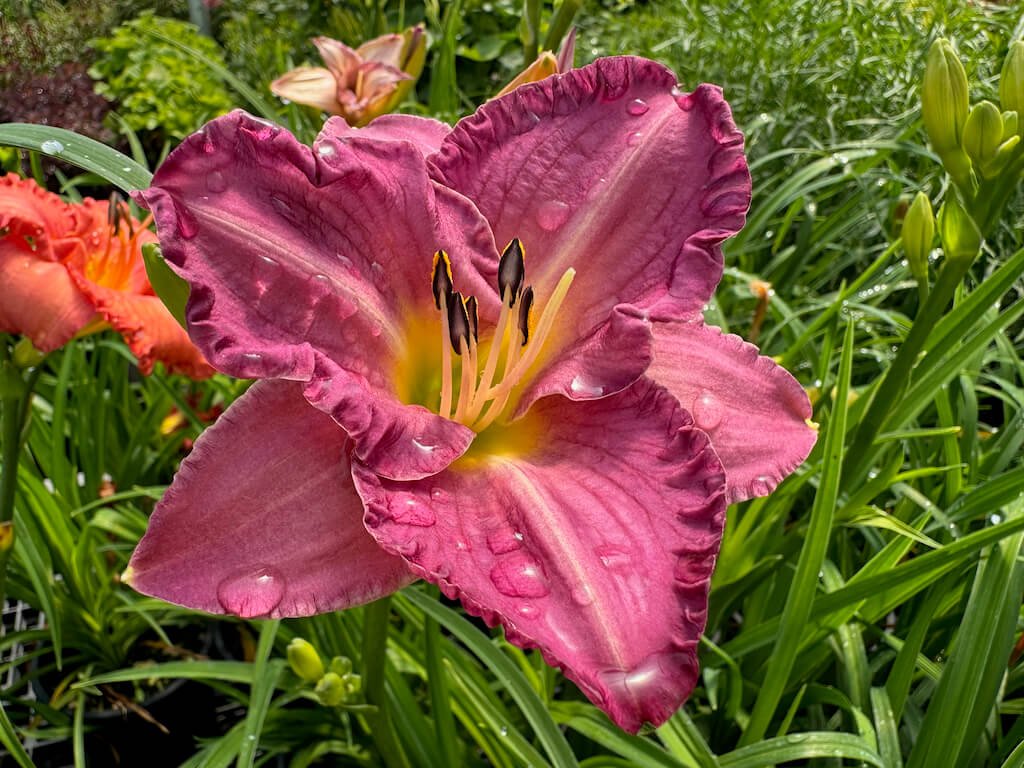
Hemerocallis 'Elegant Candy'
Deciduous perennial with soft peach-pink blooms and yellow green throats. Grows 24 to 30 inches tall. Ideal for borders, cottage gardens, and mixed perennial plantings. Zones: 3 to 9.
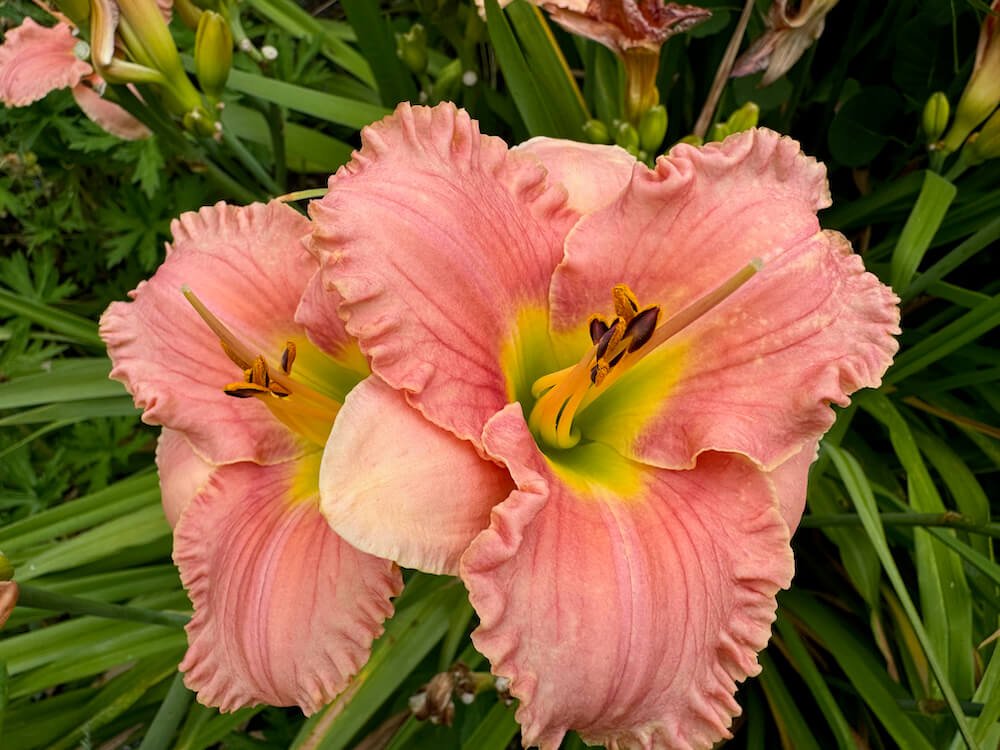
Hemerocallis 'Entrapment'
Deciduous perennial with dusky pink blooms highlighted by green throats. Grows 24 to 30 inches tall. Ideal for borders, cottage gardens, and mixed perennial plantings. Zones: 3 to 9.
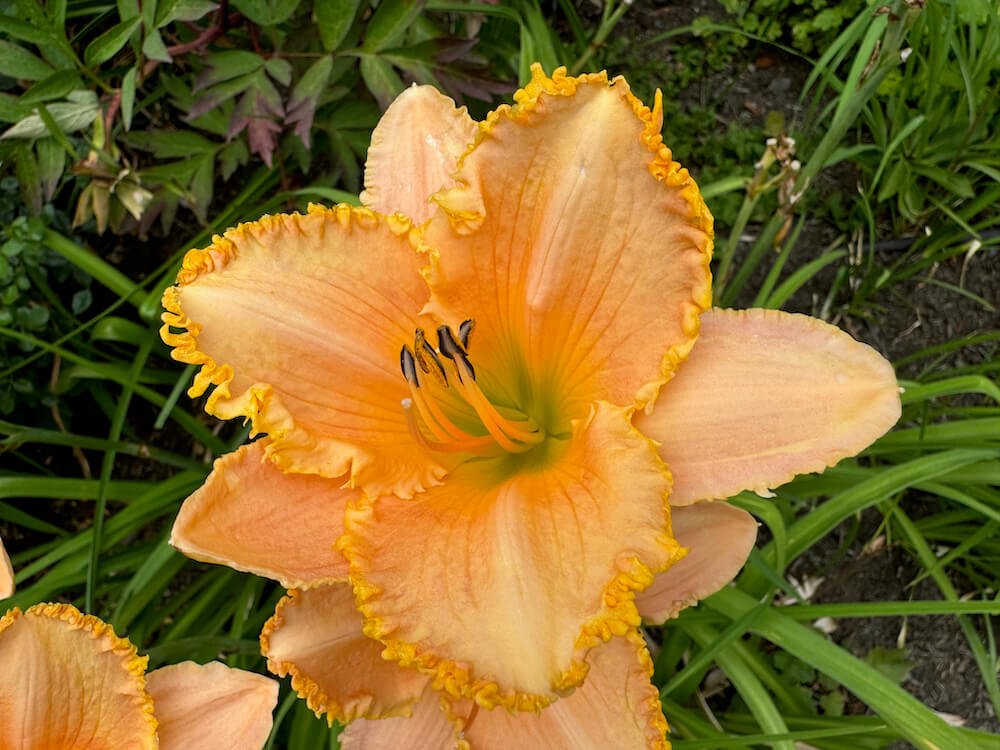
Hemerocallis 'Forestlake Ragamuffin’
Deciduous perennial with creamy yellow blooms and ruffled edges. Grows 24 to 30 inches tall. Ideal for borders, cottage gardens, and mixed perennial plantings. Zones: 3 to 9.
Other Notable Ruffled & Decorative Daylilies
Hemerocallis 'Bela Lugosi': Deep wine purple flowers with a bright yellow green throat and softly ruffled edges
Hemerocallis 'Chance Encounter': Coral pink blooms with a warm rose overlay, yellow green throat, and softly ruffled petals
Hemerocallis 'Flasher': Bright orange flowers brushed with red orange tones and a golden throat
Hemerocallis 'Marquee Moon': Creamy white flowers with a yellow green throat and heavily ruffled edges
Hemerocallis 'Margo Reed Indeed': Pale lemon yellow flowers with a soft yellow throat and gently ruffled edges
CARING FOR DAYLILIES
Fertilizing and mulching:
Daylilies are relatively light feeders and generally benefit from an annual application of a balanced slow-release fertilizer such as 10-10-10 or 14-14-14 in early spring. Plants growing in poor soils may benefit from a second light feeding approximately 6 to 8 weeks later, but excessive fertilization should be avoided, as it may encourage foliage growth at the expense of flowers. A 2 to 3 inch layer of shredded bark, compost, or leaf mold helps conserve moisture, suppress weeds, and gradually improve soil quality.
Deadheading and pruning:
Removing spent flowers helps maintain a tidy appearance and prevents seed production. Once flowering has finished, old flower stalks can be cut back near their base. Damaged or yellowing foliage may be removed during the growing season, while dormant foliage is typically cut back to a few inches above the ground in late fall or early spring.
Dividing and rejuvenating:
Most daylilies benefit from division every 3 to 5 years when clumps become crowded or flowering declines. Early spring or early fall are generally the best times to divide plants. Lift the entire clump, separate it into smaller sections containing healthy roots and fans, and replant promptly. Division rejuvenates older plants and provides additional divisions for other areas of the garden.
Winter care:
Established daylilies are extremely hardy and generally require little winter protection. Applying mulch after the ground has cooled helps moderate temperature fluctuations and reduce frost heaving. New growth emerges readily in spring, even after harsh winters.
Pests and diseases:
Daylilies are generally trouble-free but may occasionally be affected by aphids, spider mites, slugs, crown rot, or daylily rust. Proper spacing, good air circulation, and prompt removal of damaged foliage help minimize most problems. Maintaining healthy growing conditions encourages vigorous plants that are better able to resist pests and diseases.
Unusual Forms & Patterns
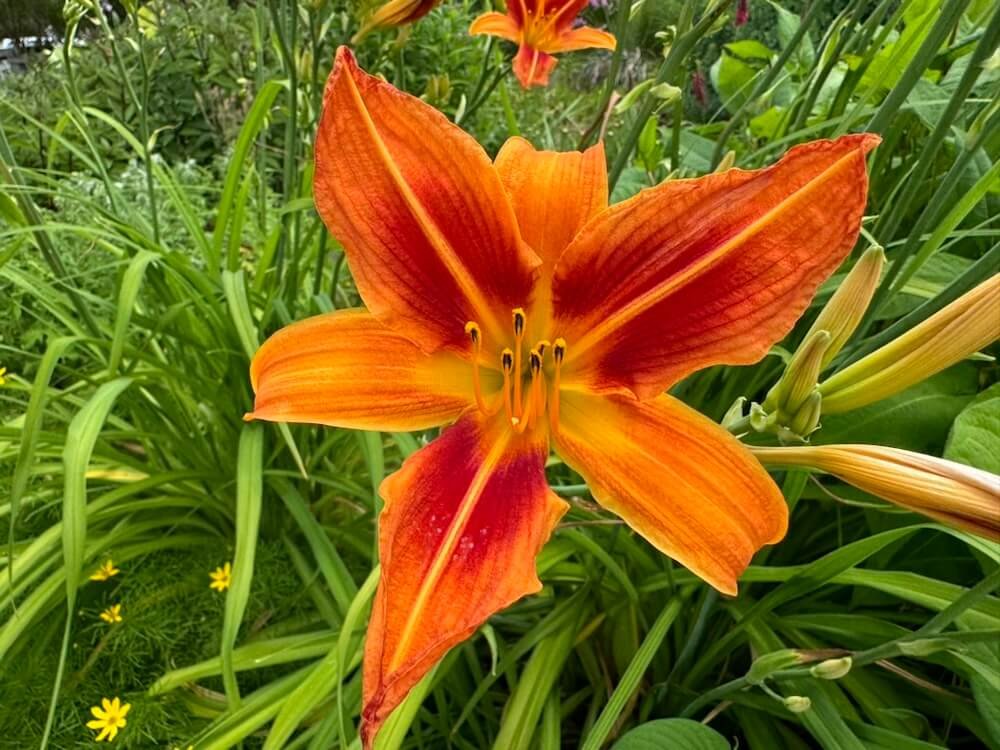
Hemerocallis 'Barnegat Light'
Deciduous perennial with warm orange blossoms accented by a bold red eye zone. Grows 24 to 30 inches tall. Ideal for borders, cottage gardens, and mixed perennial plantings. Zones: 3 to 9.
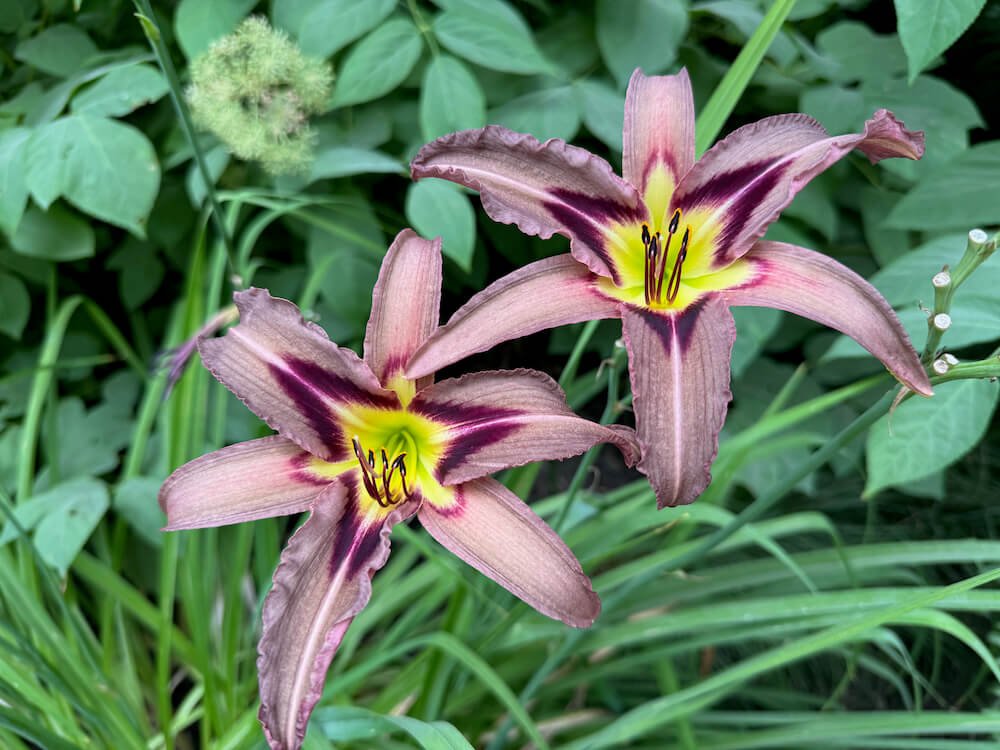
Hemerocallis 'Grey Witch'
Deciduous perennial with smoky lavender blooms highlighted by deep purple eyes and green throats. Grows 24 to 30 inches tall. Ideal for borders, cottage gardens, and collector plantings. Zones: 3 to 9.
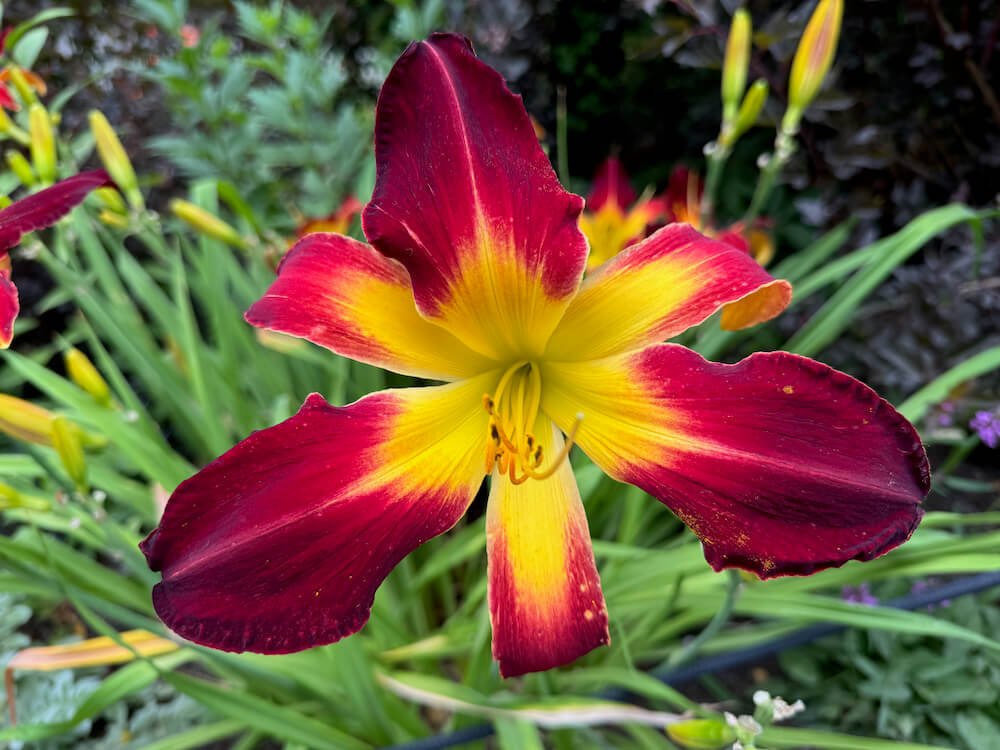
Hemerocallis 'Spider to the Fly'
Deciduous perennial with unusual spider form blooms blending creamy yellow and burgundy red. Grows 24 to 30 inches tall. Ideal for borders, cottage gardens, and collector plantings. Zones: 3 to 9.
Other Notable Unusual Forms & Patterns
Hemerocallis 'Custard Candy': Creamy yellow flowers highlighted by a burgundy red eye and picotee edge
Hemerocallis 'Dominic': Rich burgundy purple blooms with a glowing yellow green throat and broad petals
Hemerocallis 'Starman's Quest': Large lavender pink flowers feature a bold plum purple eye and matching edge
Hemerocallis 'Stella D'Oro': Cheerful golden yellow flowers bloom continuously for months
Hemerocallis fulva 'Kwanso Variegata': Double orange flowers rise above cream and green variegated foliage