
Best Perennials
for Hummingbirds
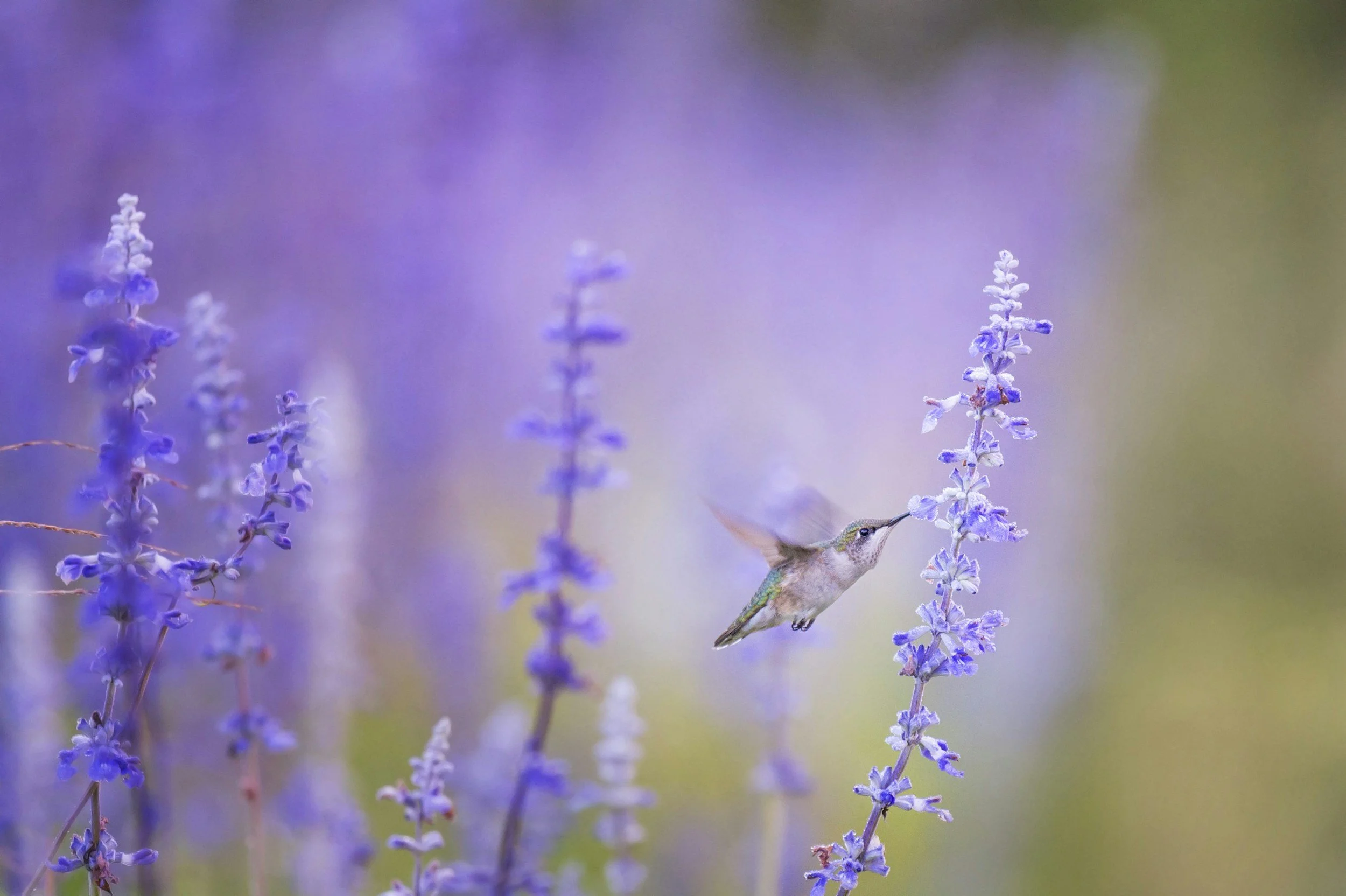
Perennials that attract hummingbirds bring movement and activity to the garden, producing nectar-rich blooms that provide a dependable food source from spring through late season. Many flower over extended periods, helping support hummingbirds during their most active months while adding color and seasonal interest to the landscape. These plants create a space that feels lively, inviting, and full throughout the changing season, encouraging repeat visits and bringing the enjoyment of watching hummingbirds dart and hover through the garden.
WHY PERENNIALS ARE IMPORTANT TO HUMMINGBIRDS
Reliable nectar sources:
Perennials return year after year and often bloom over predictable periods, helping provide a dependable source of nectar throughout the growing season. Choosing plants with different flowering times creates a longer window of food availability.
Seasonal diversity:
Different perennials bloom at different times, allowing gardens to provide nectar from spring through late season. Early flowers help support hummingbirds when food sources are still limited, while later bloomers continue feeding activity as summer begins to fade.
Supporting insects:
Hummingbirds rely on more than nectar alone and also feed on small insects and spiders, especially during nesting season. Flowering perennials attract pollinators and other insects that become an additional food source.
Long bloom periods:
Many perennials flower for weeks or even months, creating repeated feeding opportunities over an extended period. Deadheading and selecting reblooming varieties can further increase nectar availability.
Garden structure and habitat:
Perennials add more than flowers by contributing texture, foliage, and varying plant heights. Combined with shrubs and trees, they help create layered spaces that support feeding and movement throughout the garden.
Low-maintenance return:
Unlike annuals that require replanting each year, perennials establish and return with increasing size and flower production over time. A well-planned planting can gradually become more valuable to hummingbirds with relatively little effort.

Spring Blooming Perennials for Hummingbirds

Asclepias tuberosa
Deciduous perennial with vivid orange flower clusters Grows 18 to 30 inches tall. Ideal for borders, meadow plantings, and wildlife gardens. Zones: 3 to 9.
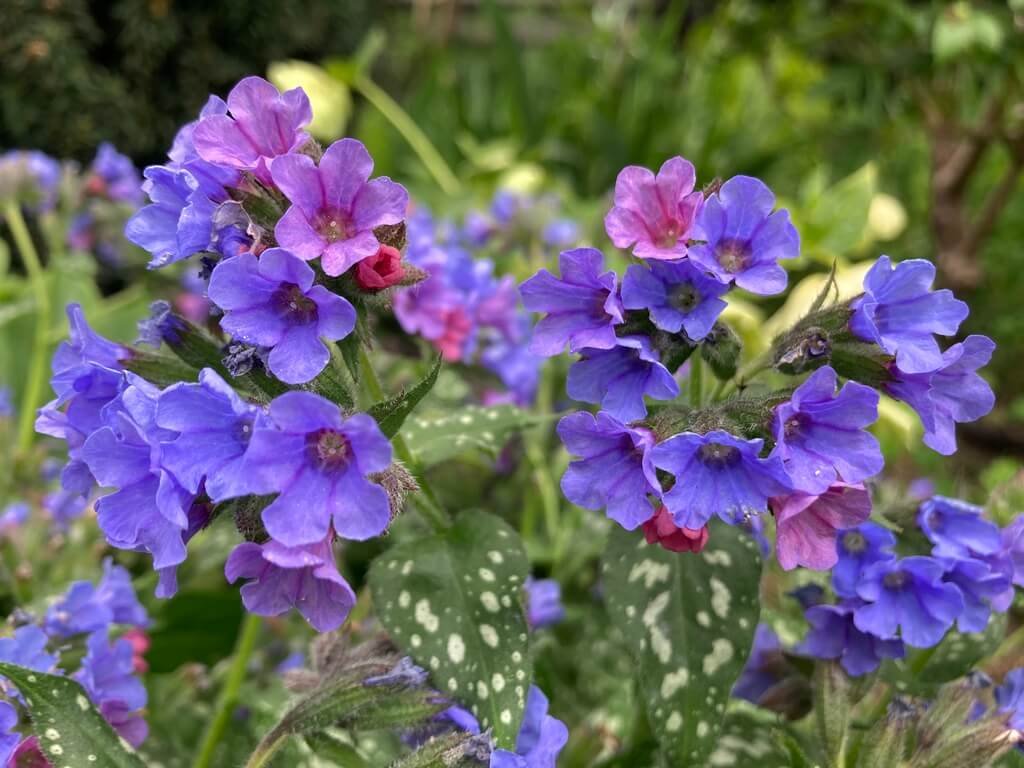
Pulmonaria 'Trevi Fountain'
Deciduous perennial with silver spotted foliage and rich cobalt blue funnel shaped blooms. Grows 10 to 12 inches tall. Ideal for woodland borders and shade plantings. Zones: 3 to 8.
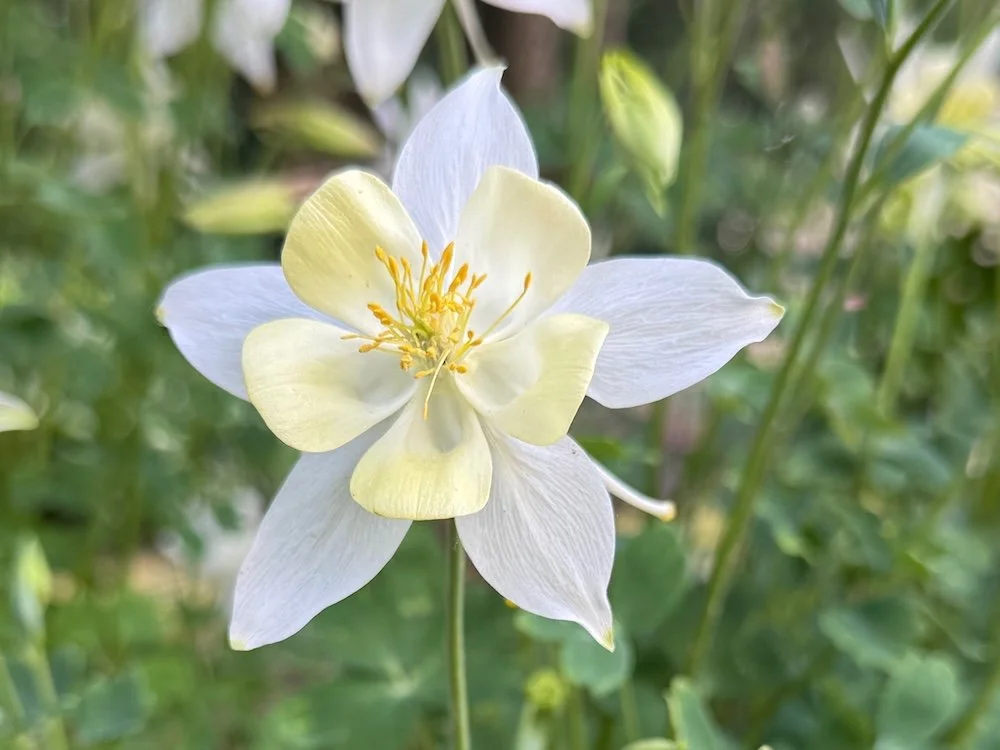
Aquilegia caerulea 'Crystal Star'
Deciduous perennial with pure white star shaped blooms. Grows 24 to 36 inches tall. Ideal for borders, cottage gardens, and woodland plantings. Zones: 3 to 8.
Other Notable Spring Perennials for Hummingbirds
Campanula glomerata: Dense clusters of violet-purple bell-shaped flowers rise above compact foliage
Symphytum 'Hidcote Blue': Nodding clusters of deep blue tubular flowers
Corydalis curviflora subsp. rosthornii 'Blue Heron': Airy spikes of vivid cobalt-blue tubular flowers
Heuchera 'Ruby Tuesday': Sprays of small rosy-pink bell-shaped flowers rise above rich burgundy foliage
Bergenia cordifolia 'Winter Glow': Clusters of rosy pink flowers appear above glossy foliage flushed with burgundy
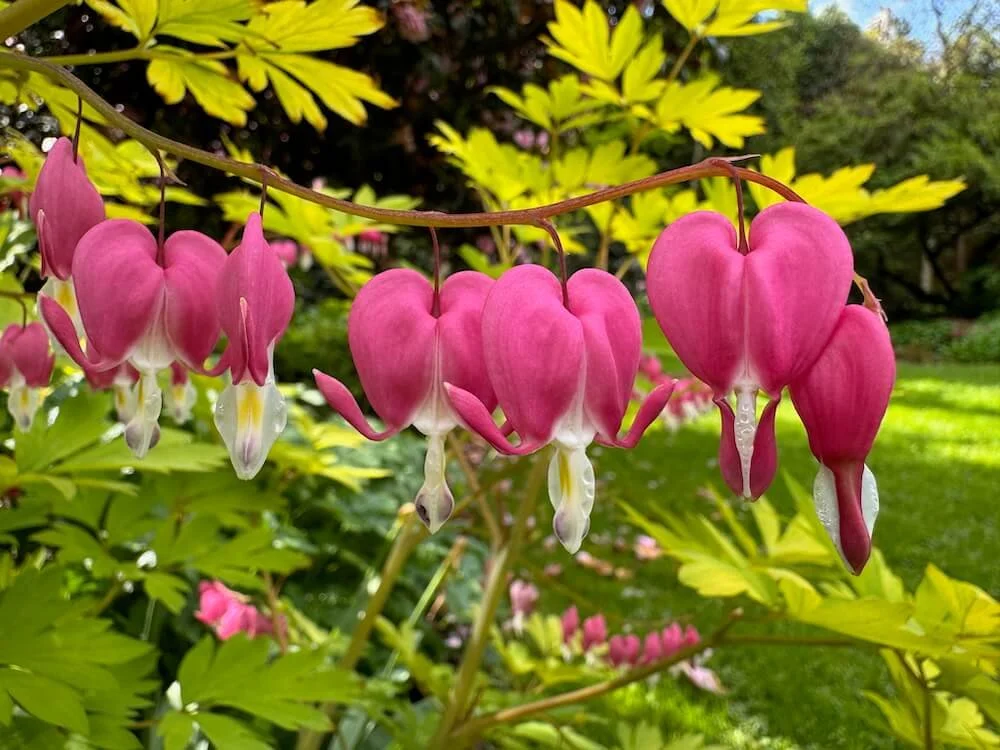
Lamprocapnos spectabilis: Arching stems lined with pendulous heart-shaped pink and white flowers
DESIGNING A HUMMINGBIRD-FRIENDLY GARDEN
Layered plantings:
Combining perennials of different heights creates a garden with multiple feeding levels and a fuller, more natural appearance. Taller plants can provide elevated flowers and shelter, while lower growing varieties fill pathways and borders with nectar sources throughout the season.
Bloom succession:
Selecting perennials with staggered flowering periods helps maintain nectar availability from spring through fall. Pairing early, midseason, and late bloomers creates a garden that stays colorful and active while supporting hummingbirds over a longer period.
Grouping plants together:
Planting perennials in drifts or repeated groupings makes flowers easier for hummingbirds to locate and creates stronger visual impact. Larger masses of blooms often attract more attention than scattered individual plants.
Balancing sun and shelter:
Many flowering perennials bloom best in sunny locations, but hummingbirds also benefit from nearby cover and resting places. Positioning perennial borders near shrubs, small trees, or structures creates feeding areas with nearby shelter.
Combining perennials with other plants:
Perennials pair naturally with shrubs, ornamental grasses, vines, and small trees that also attract hummingbirds. Combining plant types creates layers of flowers, foliage, and habitat while extending bloom periods throughout the garden.
Small-space gardens and containers:
Even patios, balconies, and compact gardens can support hummingbirds when container-friendly perennials are included in the design. Compact varieties planted in pots or smaller borders bring flowers closer to outdoor spaces where hummingbird activity can be enjoyed nearby.
Summer Blooming Perennials for Hummingbirds
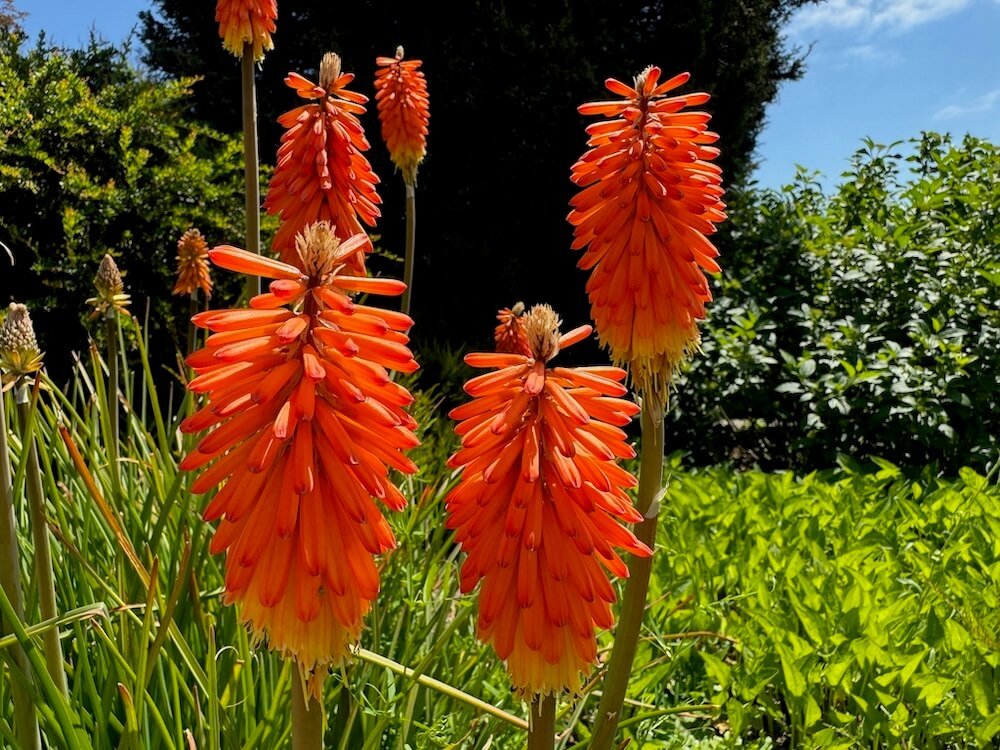
Kniphofia 'Fire Glow'
Deciduous perennial with glowing orange red flower spikes. Grows 30 to 36 inches tall. Ideal for borders, pollinator gardens, and bold seasonal displays. Zones: 5 to 9.
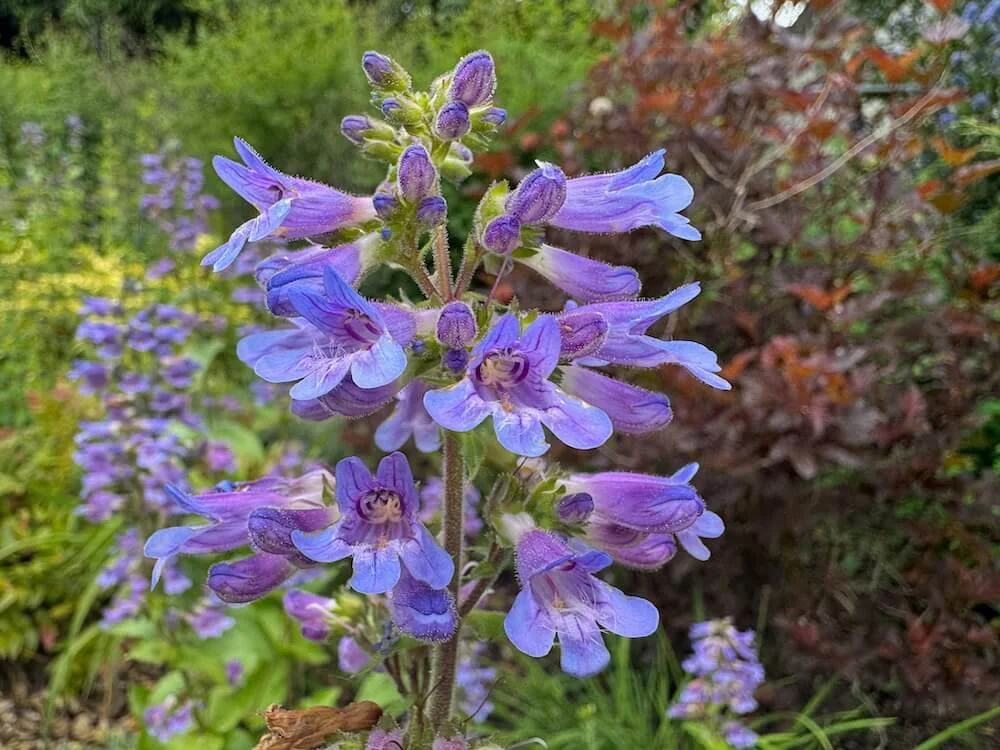
Penstemon ovatus
Deciduous perennial with rounded clusters of deep blue violet flowers. Grows 18 to 30 inches tall. Ideal for borders, pollinator gardens, and naturalistic plantings. Zones: 4 to 8.
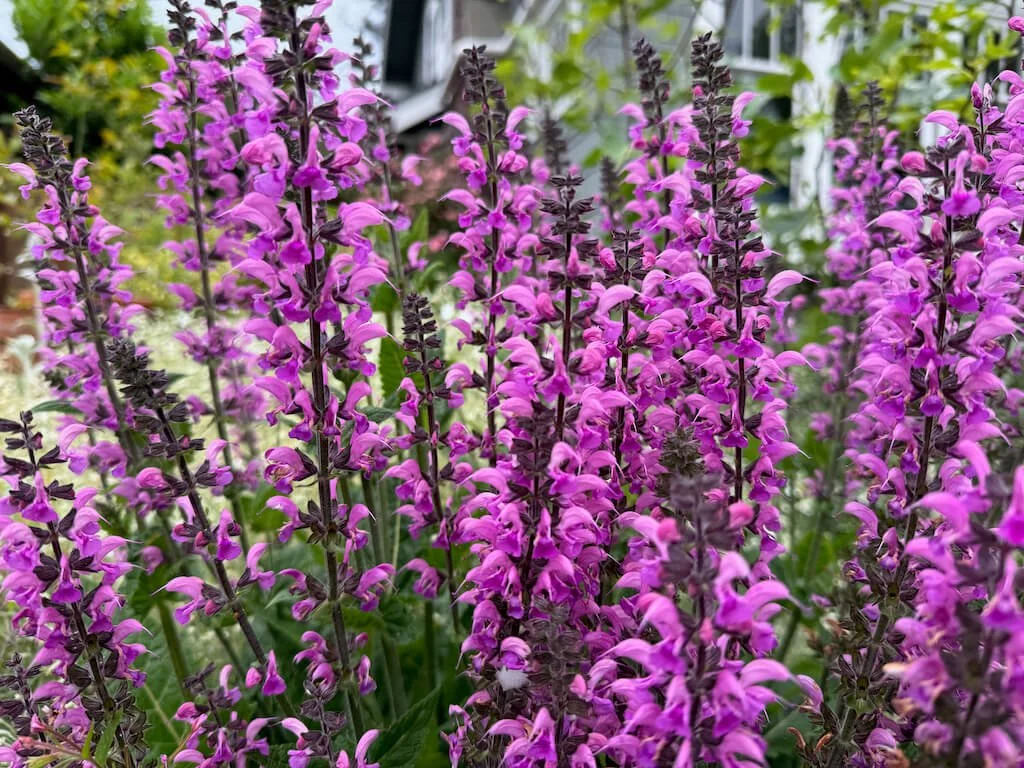
Salvia n. ‘New Dimension Rose’
Deciduous perennial with rose pink flower spikes. Grows 12 to 18 inches tall. Ideal for borders, pollinator gardens, and cottage garden plantings. Zones: 4 to 8.
Other Notable Summer Blooming Perennials for Hummingbirds
Monarda didyma 'Bee-You Bee-True': Brilliant fuchsia-red shaggy blooms crowd the tops of dark stems
Delphinium elatum 'Guardian Blue': Tall flower spikes packed with rich purple and cobalt-blue blossoms
Physostegia virginiana: Upright spikes of tubular lavender-pink flowers bloom through summer
Dianthus barbatus ‘Sooty’: Deep burgundy-bronze foliage is topped with clusters of velvety crimson-red flowers
Geum ‘Flames of Passion’: Fiery scarlet-red semi-double flowers with nectar-rich blooms
CREATING SEASON-LONG HUMMINGBIRD ACTIVITY
Early season nectar:
Spring-blooming perennials help provide nectar when hummingbirds emerge from winter and food sources remain limited. Early flowers can encourage more frequent visits as activity begins increasing.
Peak summer feeding:
Summer often brings the greatest abundance of nectar-rich flowers and the highest level of hummingbird activity. Midseason perennials create a concentrated period of color and feeding opportunities.
Late season support:
Late-blooming perennials help maintain nectar availability into late summer and fall as many plants begin slowing down. Continued flowering can support migrating hummingbirds and extend activity in the garden.
Mix flower shapes and colors:
Including a variety of tubular flowers, clustered blooms, and different flower colors creates a more diverse feeding environment. A wider range of bloom types often results in more consistent garden activity.
Use overlapping bloom periods:
Selecting plants with overlapping flowering times prevents gaps when little nectar is available. Continuous bloom succession helps encourage repeat visits over a longer season.
Create repeat destinations:
Hummingbirds quickly learn where dependable food sources are located. Gardens with multiple nectar-rich plantings often become regular feeding stops that birds revisit throughout the season.
Late Seasons Blooming Perennials for Hummingbirds
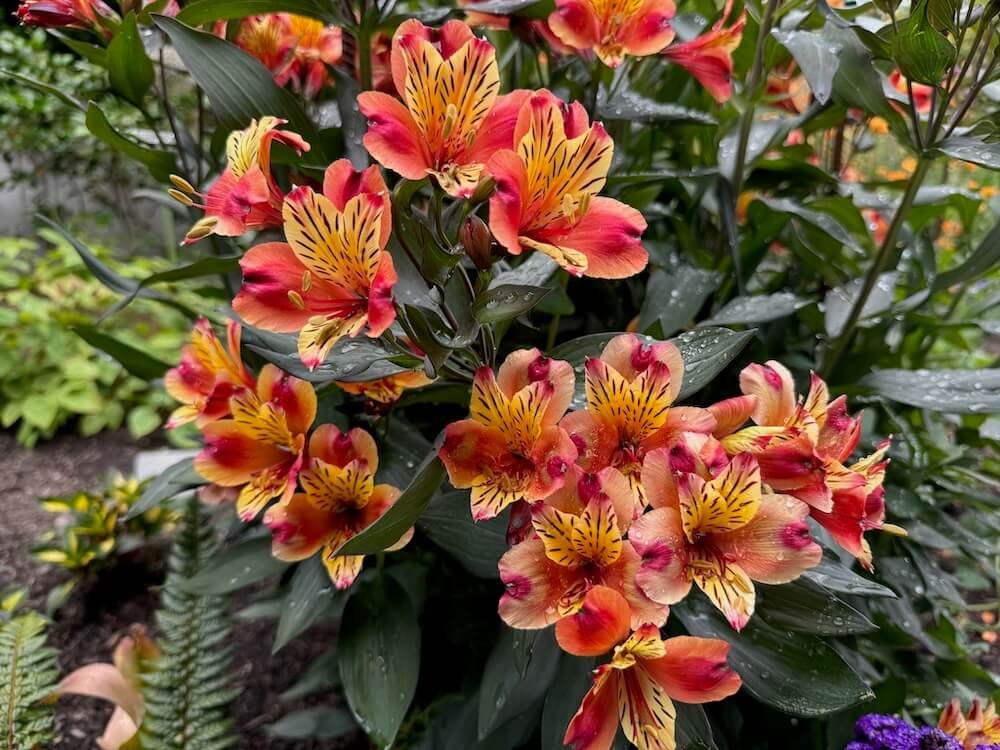
Alstroemeria 'Indian Summer'
Deciduous perennial with bronze purple foliage and glowing orange, gold, and peach lily like blooms. Grows 24 to 36 inches tall. Ideal for borders, containers, and bold seasonal displays. Zones: 6 to 10.
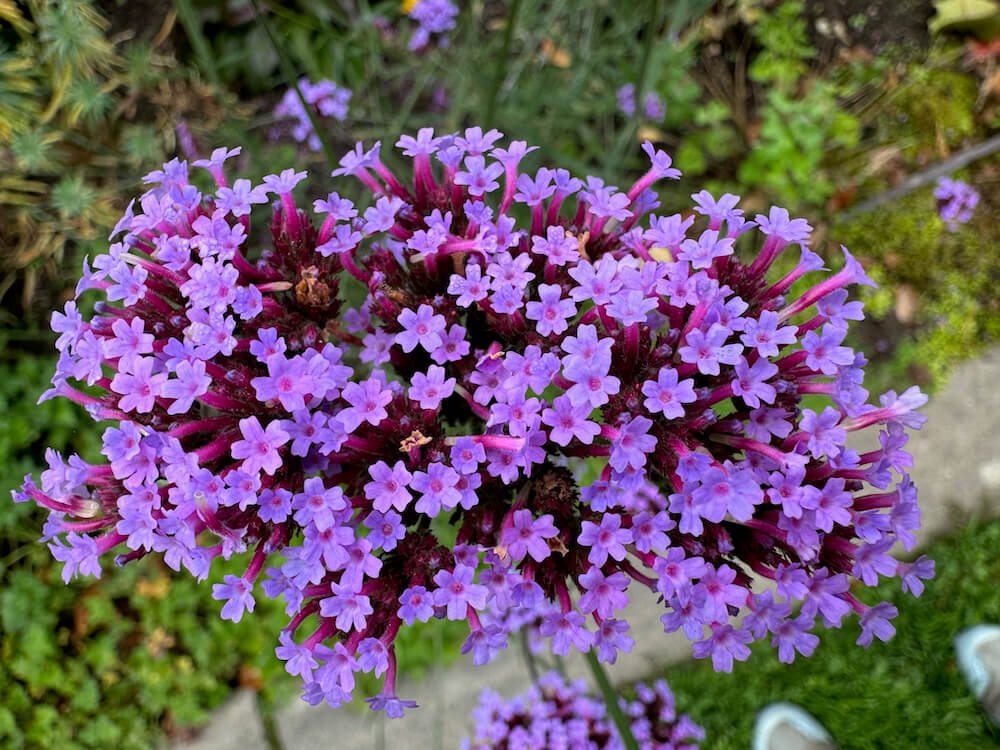
Verbena bonariensis
Deciduous perennial with clusters of violet purple flowers floating above the foliage. Grows 4 to 6 feet tall. Ideal for borders, pollinator gardens, and naturalistic plantings. Zones: 7 to 11.
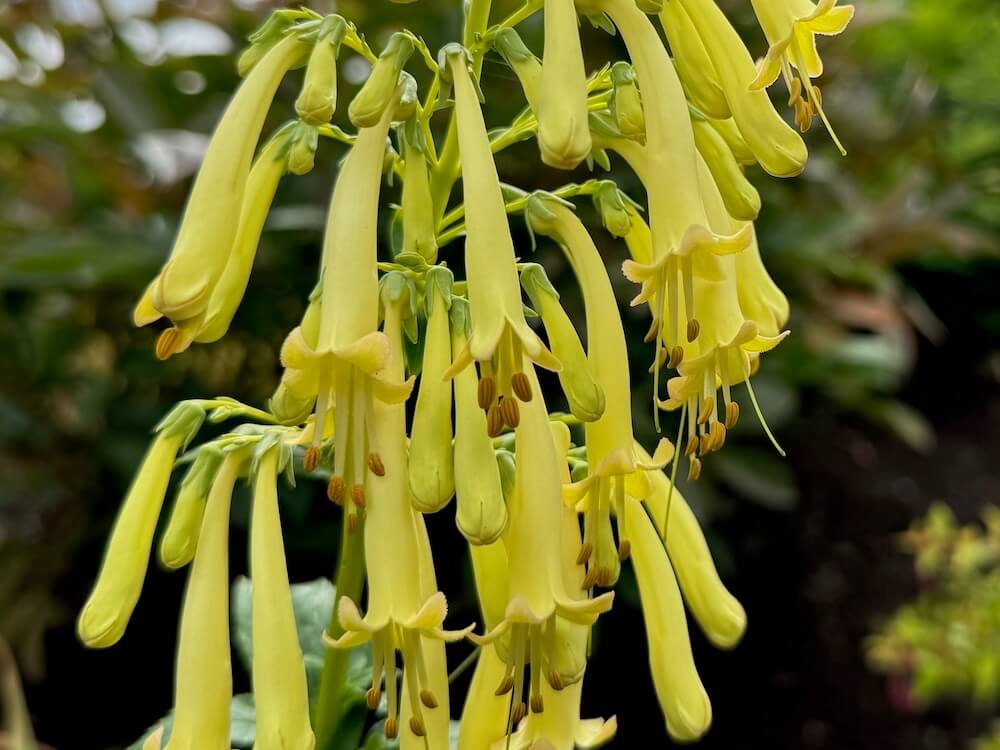
Phygelius 'Candy Drops Cream’
Deciduous perennial with tubular creamy yellow flowers. Grows 18 to 24 inches tall. Ideal for borders, containers, and hummingbird garden plantings. Zones: 7 to 10.
Other Notable Summer/Fall Blooming Shrubs for Hummingbirds
Solidago 'Goldkind': Dense clusters of bright golden-yellow flowers, providing abundant nectar
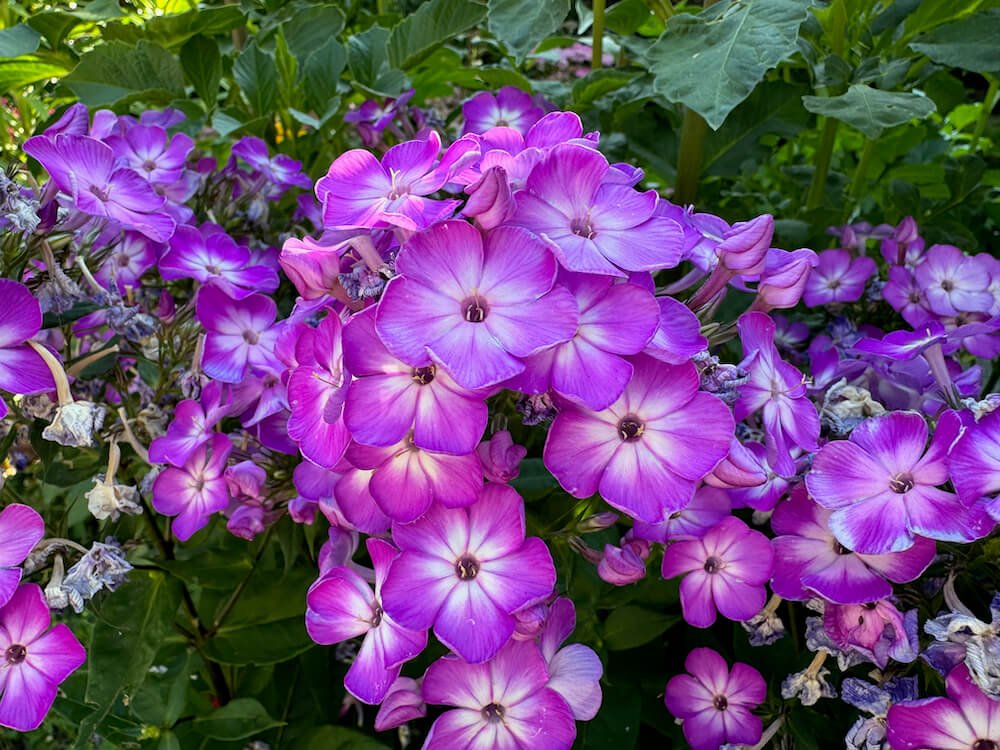
Phlox 'Flame Coral Red': Vibrant coral-red flower clusters bloom above compact foliage
Agastache mexicana 'Balsumlora': Upright spikes of rosy pink to magenta tubular flowers
Gaura lindheimeri ‘Bantam Pink’: Airy sprays of bright pink butterfly-like flowers
Lobelia tupa: Towering spikes of fiery scarlet-red tubular flowers provide an exceptional nectar source