
Summer Blooming Shrubs
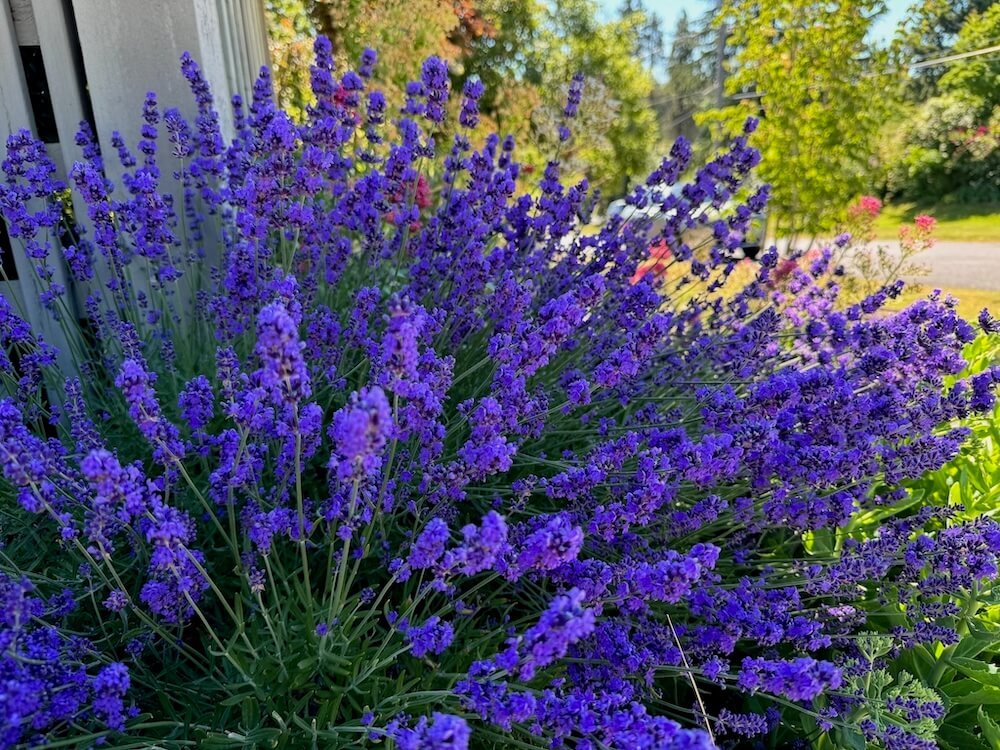
Lavandula angustifolia ‘Hidcote'
Evergreen shrub with narrow gray-green foliage and deep purple fragrant flowers forming dense mound. Grows 18 to 24 inches tall, tolerates pruning, ideal for low hedges, borders, and edging. Zones: 5 to 9.
Summer blooming shrubs carry the garden through its most colorful season, producing waves of blooms when many spring flowers have faded. Their blossoms span a wide range of hues and forms, from airy clusters to dense panicles, often set against full, leafy growth. These shrubs provide lasting interest in borders, foundation plantings, and mixed landscapes, with many continuing to flower well into late summer.
Selected for reliable performance and extended bloom time, they contribute both structure and seasonal color during the warmest months. Some attract pollinators with nectar-rich flowers, while others add texture through foliage or growth habit. Whether used as focal points or woven into larger plantings, summer bloomers help maintain continuity and visual interest across the growing season.
ROCK ROSE (Cistus)
01


Rock rose brings summer color and a natural, sun-loving character to the garden. Cistus x purpureus is especially valued for its papery, rose-like blooms in shades of pink with darker markings at the base, set against aromatic, gray-green foliage. Its dense, slightly spreading habit forms a cohesive mound that provides structure and texture in dry, open settings.
These shrubs are well-suited to areas where good drainage and full sun allow them to thrive. Cistus x hybridus ‘Mickie’ adds a brighter note with white flowers and variegated foliage that brings additional color when not in bloom. Cistus salviifolius ‘Prostratus’ offers a lower, spreading form that works well as a groundcover or edging plant. These selections provide extended seasonal bloom and drought tolerance in warm, well-drained landscapes.
HYDRANGEA
02
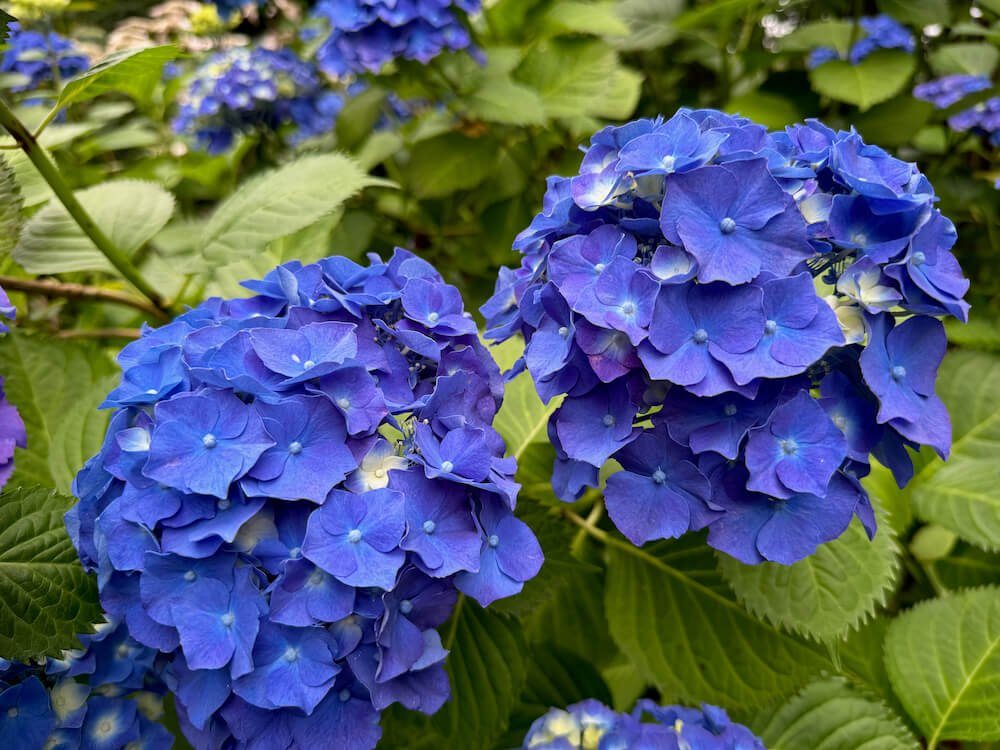
Summer-blooming hydrangeas bring abundant color and volume to the garden, with flowers from mid-summer into fall. Selections such as Hydrangea macrophylla ‘Merritts Supreme’ (shown here) are grown for their large, rounded flower heads in rich pink to blue tones that create a full, layered display against lush green foliage. Their substantial blooms add presence in partially shaded settings.
These shrubs work well as focal points in the garden. Hydrangea macrophylla ‘Horwack’ Pistachio introduces a more unusual palette, with flowers shifting through soft green and pink tones, while Hydrangea paniculata ‘Limelight’ offers large, conical blooms that emerge green and mature to creamy white. Together, these selections provide long-lasting color, strong visual impact, and reliable performance.
ST. JOHN’S WORT (Hypericum)
03
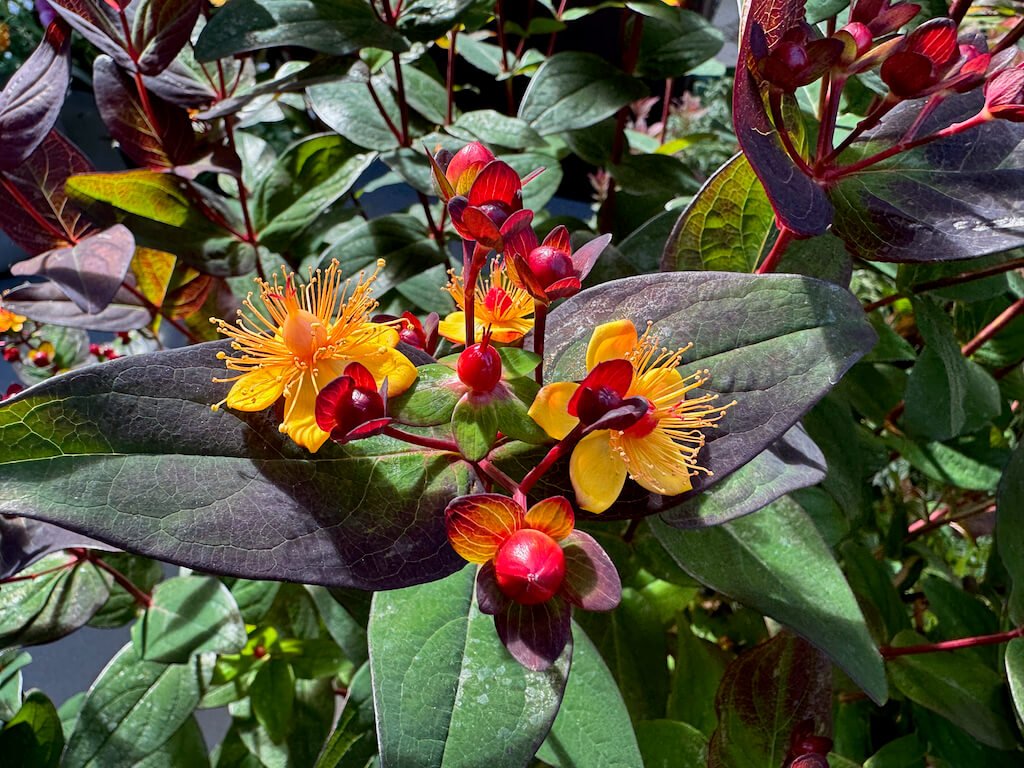
Summer-blooming hypericum shrubs bring bright color and lasting interest to the garden, with flowers appearing from early to mid-summer followed by ornamental berries. Selections such as Hypericum x inodorum ‘Kolros’ are grown for their clear yellow flowers and showy soft pink berries, creating a layered effect against dense green foliage. Their compact habit and steady performance add structure and seasonal continuity in a range of settings.
These shrubs work well in borders, low hedges, or mixed plantings where their flowers and fruit provide continued interest. Hypericum androsaemum ‘Albury Purple’ (shown here) adds contrast with dusky purple-toned foliage and darker berries, while Hypericum x inodorum ‘Kolsan’offers bright berries and a slightly more upright form. Together, these selections provide long-lasting color, textural contrast, and reliable structure from summer into fall.
LAVANDER (Lavandula)
04
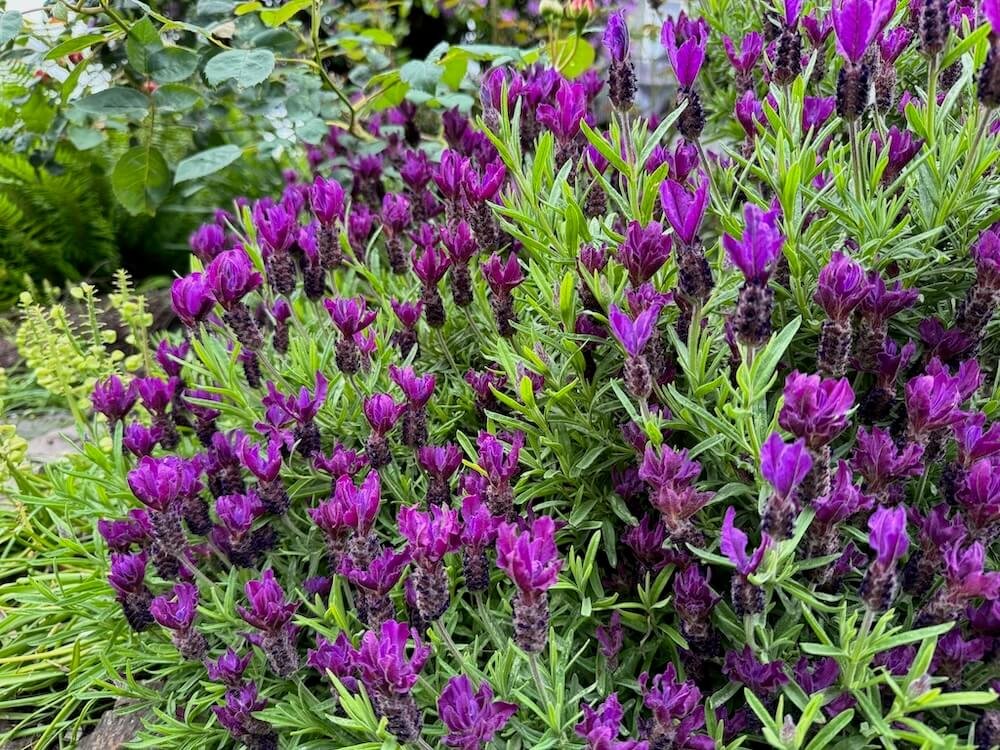
Summer-blooming lavender brings color, fragrance, and fine texture to the garden, with flowers appearing from early summer into mid-season. Lavandula angustifolia ‘Hidcote’ is grown for its compact habit and deep purple blooms that create a defined, structured look, while Lavandula stoechas ‘Anouk Deep Rose’ (shown here) adds distinctive flower heads with rich rose tones and upright bracts. Silvery-green foliage forms a cohesive backdrop and enhances the overall effect.
These shrubs work well in borders, edging, or containers where their scent and color can be enjoyed. Lavandula angustifolia ‘Platinum Blonde’ introduces variegated foliage in green and cream, adding brightness and contrast throughout the season. Together, these selections provide a balanced combination of color, fragrance, and structure in summer plantings.
BLUEBEARD (Caryopteris)
05
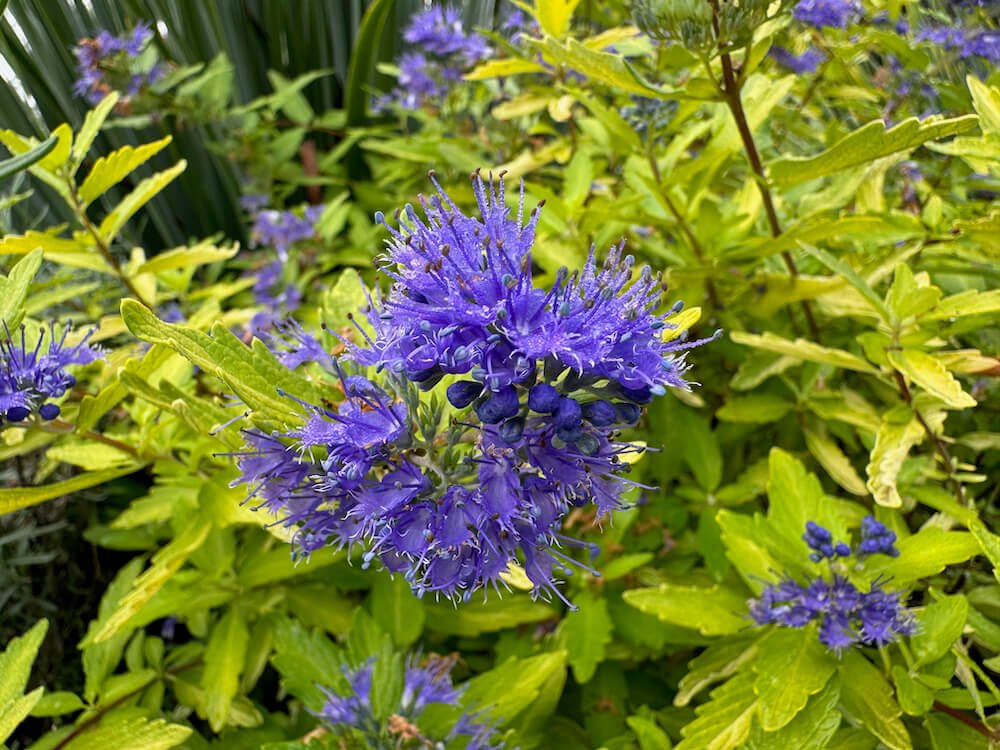
Summer-blooming bluebeard brings late-season color to the garden, with flowers appearing from mid to late summer and often continuing into early fall. Caryopteris x clandonensis ‘Dark Knight’ is grown for its deep blue flowers and silvery foliage, creating strong contrast and a rich display that stands out in sunny settings. Its naturally compact, mounded habit provides structure while and pollinators.
These shrubs work well in borders, pollinator gardens, or mixed plantings where late-season color is needed. Caryopteris x clandonensis ‘Gold Crest’ (shown here) adds brightness with golden foliage that highlights the blue flowers, while Caryopteris divaricata ‘Snow Fairy’ introduces variegated leaves and a softer, more relaxed habit. Together, these selections provide extended bloom, textural contrast, and reliable performance in warm, well-drained landscapes.
ROSE (Rosa)
06
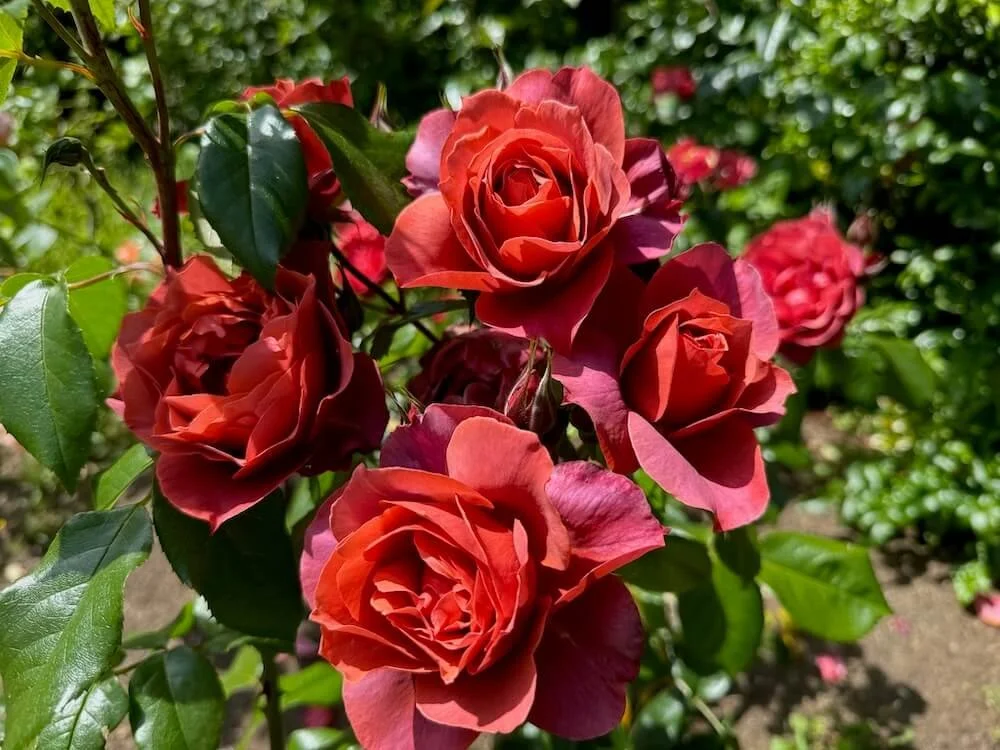
Summer-blooming roses bring continuous color and form to the garden, with flowers appearing from late spring through summer and often into early fall. Rosa ‘DayDream’ is a shrub rose grown for its mauve-pink flowers, which open in single to semi-double form, creating a soft, open display against clean green foliage. Its upright habit and steady flowering provide structure and repeat interest.
These shrubs work well in borders, formal beds, or mixed plantings where their blooms can be easily seen. Rosa ‘Amber Sunblaze’ offers a compact form with warm apricot-toned flowers suited to smaller spaces or edging, while Rosa ‘Hot Cocoa’(shown here) adds a distinctive element with smoky, russet-orange blooms that deepen in color. Together, these selections provide long-lasting color and reliable performance across a range of garden settings.
HIBISCUS
07

Summer-blooming hibiscus shrubs bring bold color and a strong vertical element to the garden, with flowers appearing from mid to late summer and continuing into early fall. Selections such as Hibiscus syriacus x paramutabilis ‘Rose Moon’ are grown for their large, pink blooms that create a full, showy display against upright branching. Their consistent flowering and structured habit add both height and seasonal interest in sunny locations.
These shrubs fit naturally into borders, hedges, or focal plantings where their blooms stand out. Hibiscus syriacus ‘Blushing Bride’ (shown here) offers a more delicate look with pale, blush-toned blooms, while Hibiscus syriacus ‘Minsyble9’ adds a modern touch with rich lavender colored flowers and a refined form. Together, these selections provide long-lasting color, attract pollinators, and bring a bold, tropical feel to late-season plantings.
BUTTERFLY BUSH (Buddleia)
08
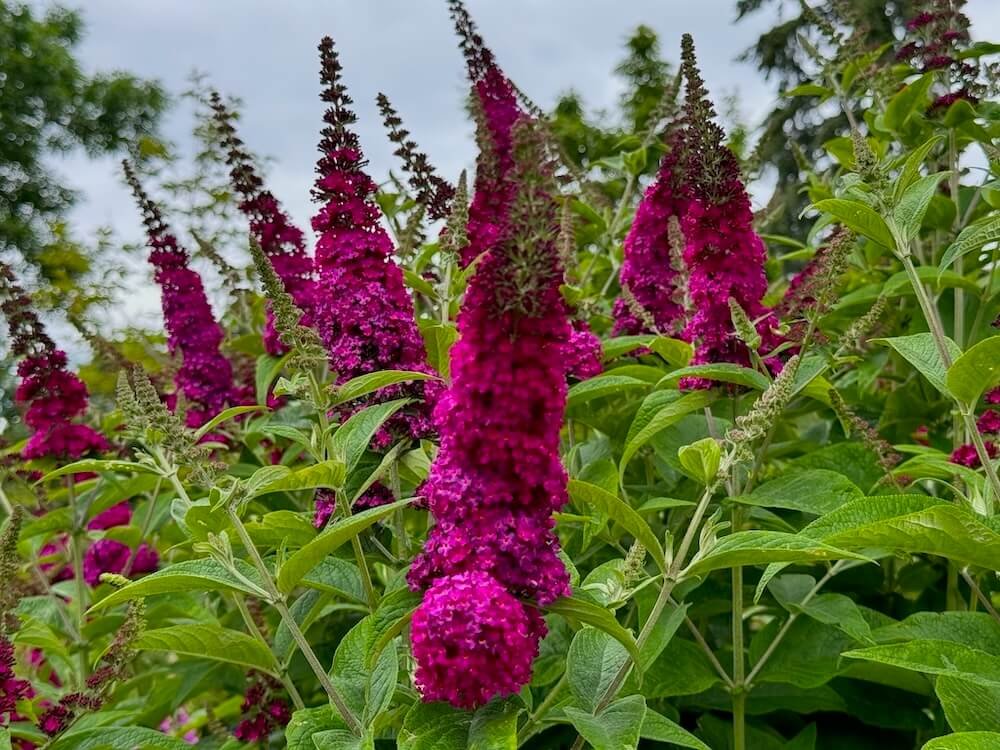
Summer-blooming butterfly bush brings bold color and movement to the garden, with flowers appearing from mid-summer into early fall. Buddleia davidii ‘Miss Molly’ (shown here) is grown for its richly saturated red to magenta flower spikes that stand out clearly against gray-green foliage, creating a strong visual display. Its arching branches and continuous bloom add a sense of movement while drawing in butterflies and other pollinators.
These shrubs work well in borders, pollinator gardens, or as focal plantings where their flowers can be fully appreciated. Their open, airy habit blends easily with surrounding plants while still providing structure and height. Together, they offer long-lasting color, wildlife appeal, and a dynamic presence in summer plantings.
CINQUEFOIL (Potentilla)
09
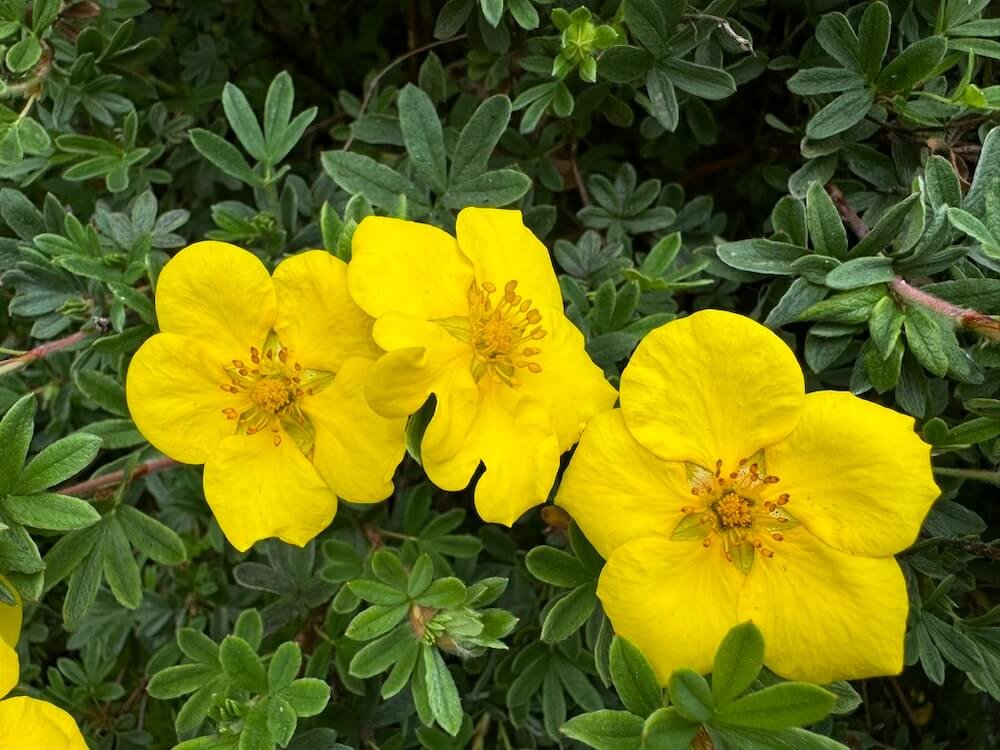
Summer-blooming potentilla shrubs bring steady color and a fine-textured presence to the garden, with flowers appearing from late spring through summer and often continuing into early fall. Potentilla fruticosa ‘Goldfinger’ (shown here) is grown for its bright yellow blooms that hold their color well, creating a cheerful display against soft, green foliage. Their naturally compact, mounded habit provides a tidy structure that blends easily into a range of planting styles.
These shrubs work well in borders, low hedges, or mass plantings where consistent color is desired. Potentilla fruticosa ‘Abbotswood’ offers a softer look with clean white flowers that brighten the planting and pair easily with other colors. Together, these selections provide long-lasting bloom, durability, and reliable performance in sunny garden settings.
FUCHSIA
10
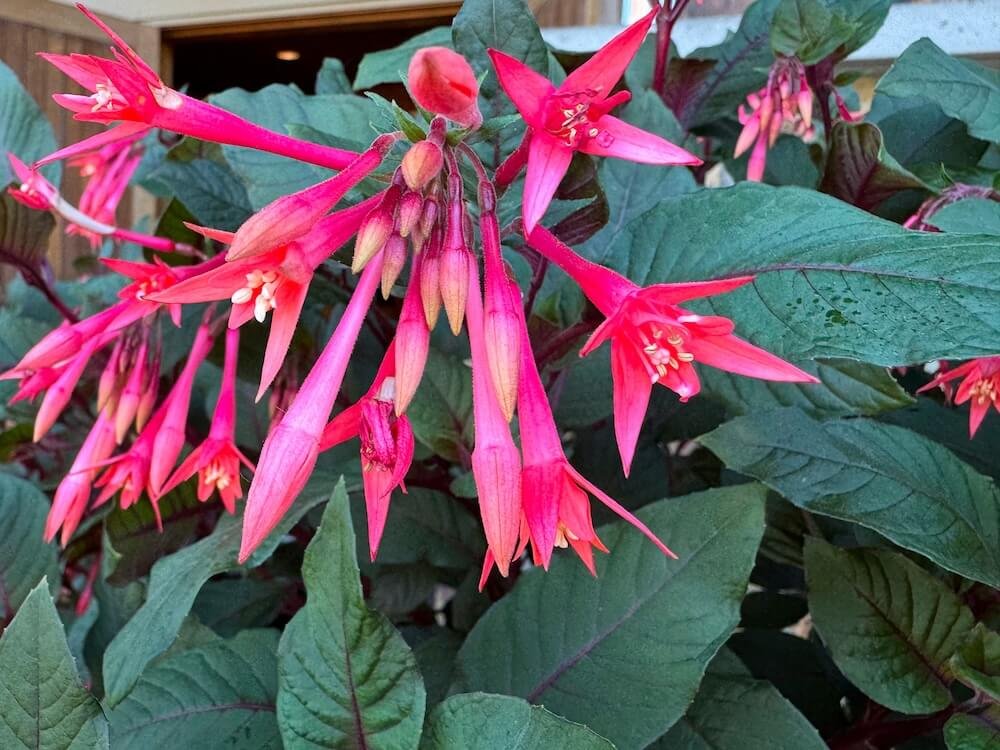
Summer-blooming fuchsia shrubs bring bright color to the garden, with flowers appearing from early summer into fall. Selections such as Fuchsia ‘Gartenmeister Bonstedt’ (shown here) are grown for their upright habit and bold tubular blooms in shades of coral-orange and red. Their arching branches and continuous flowering create a graceful effect, especially in partially shaded settings where many other shrubs are less showy.
These shrubs perform well in borders, containers, or sheltered garden beds where their pendulous flowers can be easily seen. Fuchsia ‘Minnesota’ offers a hardier option with classic pink and purple blooms, while Fuchsia ‘Whiteknights Pearl’ provides a softer look with pale pink, elegant flowers that brighten shaded areas. Together, these selections deliver long-lasting color, attract hummingbirds, and add a graceful texture to summer plantings.
WAXLEAF PRIVET (Ligustrum japonicum)
11
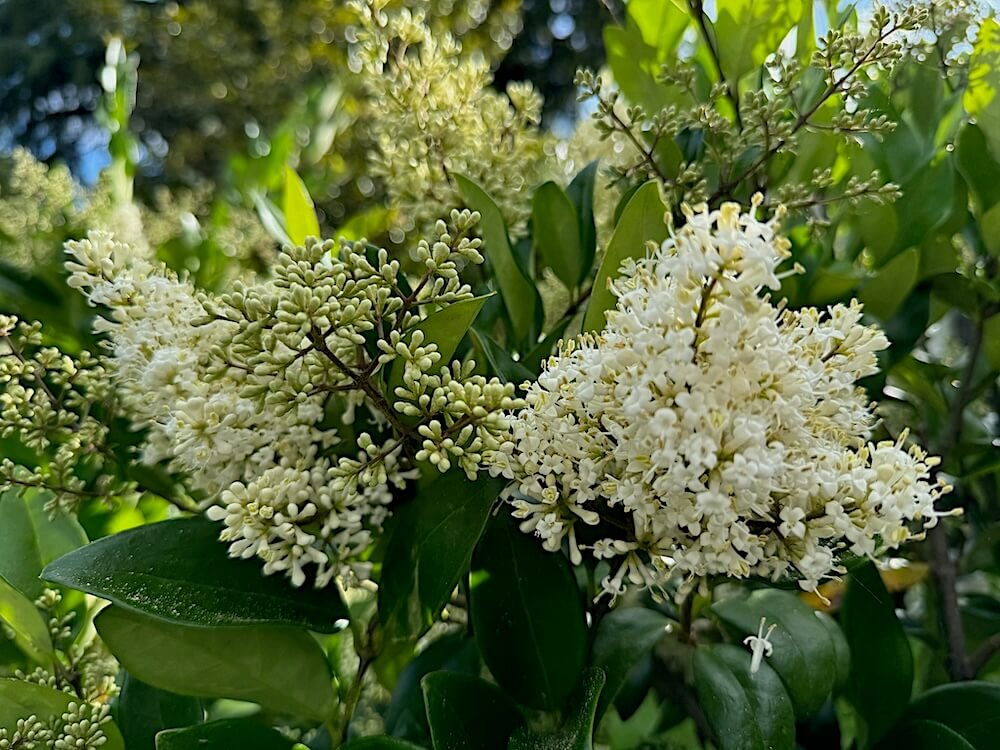
Waxleaf privet brings glossy evergreen foliage and clusters of fragrant summer flowers to the garden while maintaining a dense, structured appearance throughout the year. Ligustrum japonicum (shown here) is grown for its leathery dark green leaves and upright branching habit that becomes topped with creamy white flower clusters in summer. The blooms attract pollinators while creating contrast against the bold evergreen foliage and sturdy branching structure.
Dense foliage and a naturally full habit allow this shrub to function as both a flowering accent and a strong background plant within the landscape. Its broad leaves create a heavier texture than many summer-blooming shrubs, helping anchor mixed borders and evergreen planting combinations. Later in the season, dark berries and persistent foliage continue extending visual interest after the flowers have faded.
HEBE (Veronica)
12
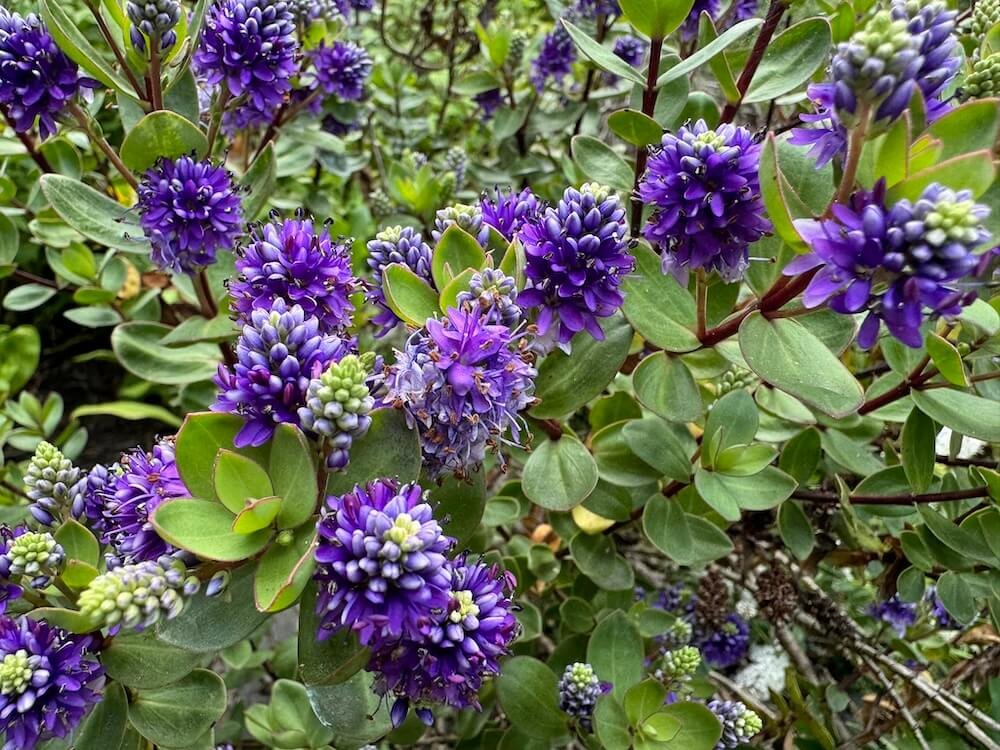
Hebes bring compact evergreen structure and long-lasting flower spikes to the garden during the height of summer, adding color when many spring shrubs have already faded. Veronica x franciscana ‘Blue Gem’ (shown here) is grown for its glossy dark green foliage and dense violet-purple flower spikes that attract pollinators through the warmer months. The tidy branching habit and evergreen leaves provide year-round texture while helping define borders and smaller planting spaces.
Foliage color and leaf shape broaden the visual role of hebes well beyond their flowering season. Veronica pinguifolia develops thick blue-gray leaves and white flowers that create a softer, coastal appearance, while Veronica albicans ‘Red Edge’ produces rounded silvery-green foliage edged in burgundy beneath clusters of pale lavender and white flowers. Their compact forms and varied foliage tones create contrast among neighboring shrubs, ornamental grasses, and drought-tolerant perennials.
MOCK ORANGE (Philadelphus)
13
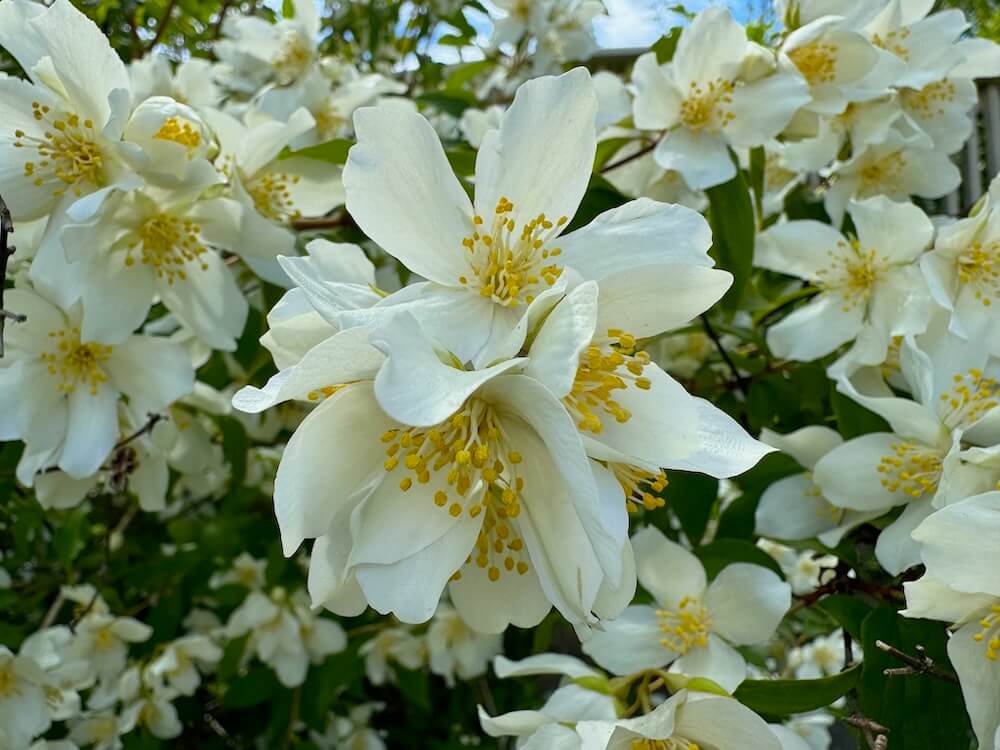
Mock oranges fill the summer garden with citrus-like fragrance and masses of white flowers that brighten the landscape during the warmer months. Philadelphus coronarius (shown here) is grown for its arching branches and clusters of creamy white blooms that release a strong sweet scent in early summer. The flowers stand out clearly against fresh green foliage, creating a lighter appearance among darker evergreen shrubs and denser planting combinations.
Fragrance remains one of the defining qualities of these shrubs, especially when planted near windows, patios, and pathways where the blooms can be appreciated up close. Philadelphus ‘Belle Etoile’ produces larger white flowers marked with rich purple centers that add depth and contrast during bloom season. Their relaxed branching habits and abundant flowering help soften borders and create a fuller layered look in mixed shrub plantings.
ALLSPICE (Calycanthus)
14
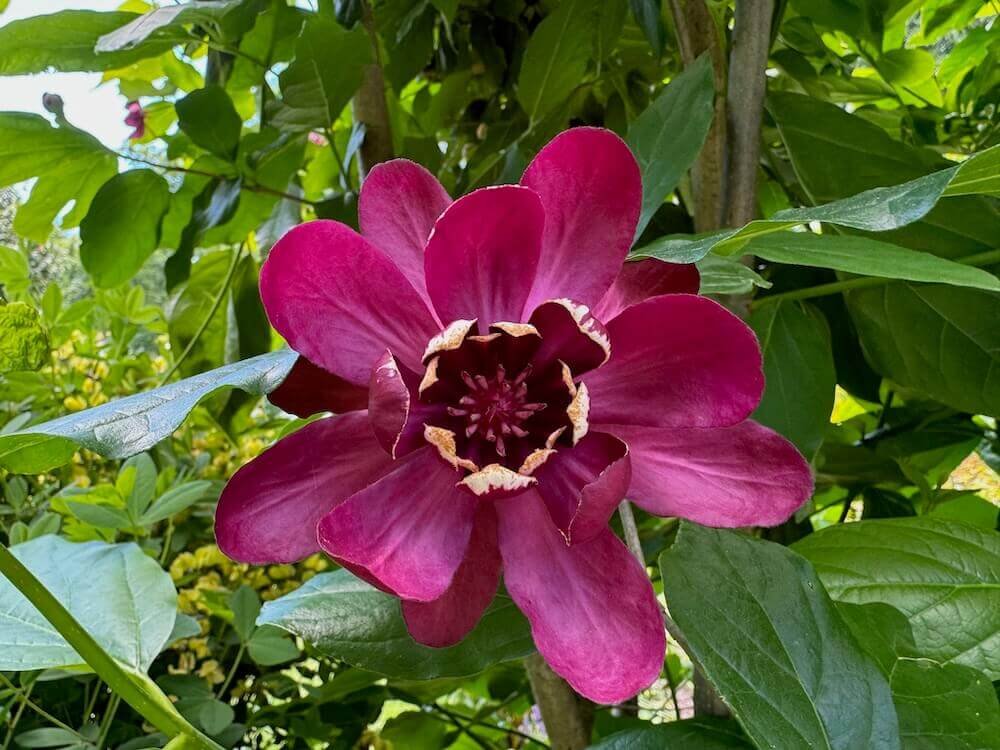
Allspice shrubs bring large richly colored flowers and bold foliage into the garden as summer borders begin reaching their peak. Calycanthus ‘Hartlage Wine’ (shown here) is grown for its oversized deep wine-red flowers that stand out clearly against broad green leaves in late spring and early summer. The blooms create a tropical appearance while the dense foliage gives the shrub a substantial presence throughout the growing season.
Broad leaves and upright branching allow this shrub to contribute texture even when not in flower. The large foliage contrasts effectively with finer-textured shrubs and ornamental grasses, helping create depth within mixed plantings and woodland borders. During warm weather, the flowers and foliage add fragrance and rich color that continue extending seasonal interest after many spring shrubs have faded.
ORANGE JESSAMINE (Cestrum)
15
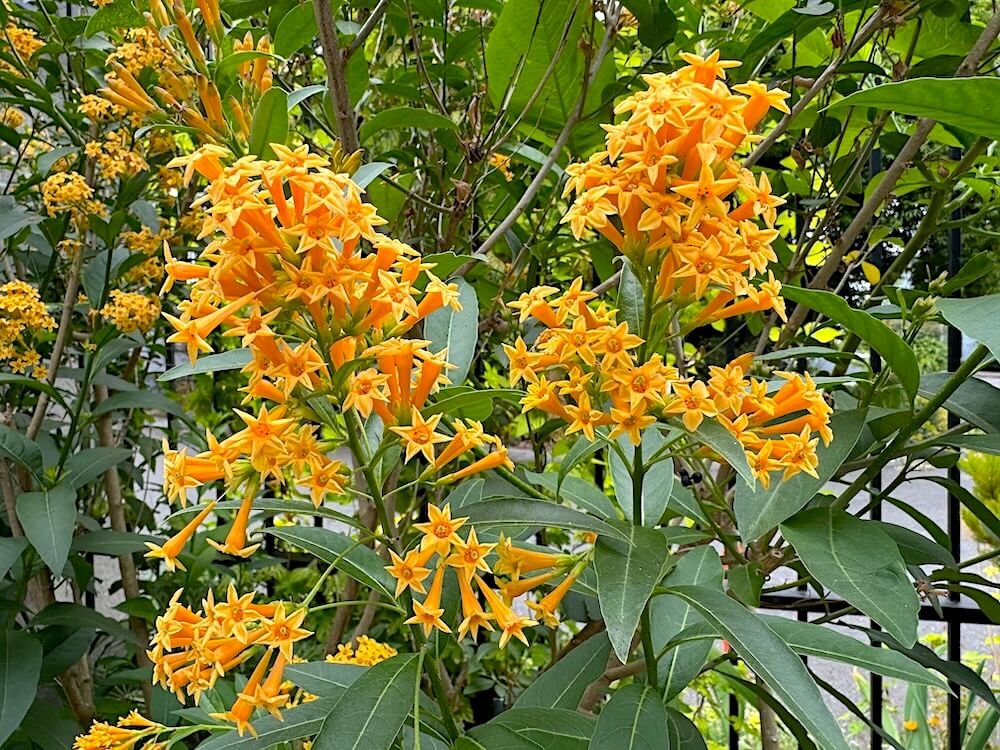
Orange jessamines bring clusters of warm-colored tubular flowers to the garden during summer, adding bright color against dense evergreen foliage. Cestrum aurantiacum ‘Orange Zest’ (shown here) is grown for its glowing orange blooms that appear in rounded clusters above fresh green leaves through the warmer months. The flowers create a tropical effect in the landscape while attracting hummingbirds and standing out clearly against neighboring shrubs and perennials.
The upright branching habit and evergreen foliage allow this shrub to continue contributing structure long after the main flowering period has passed. Its softer leaf texture pairs well with broader-leaved tropical plants, ornamental grasses, and bold summer perennials in warm-climate gardens and sheltered borders. Repeated flowering through the season helps maintain color and movement during the height of summer.
SMOKE BUSH (Cotinus)
16
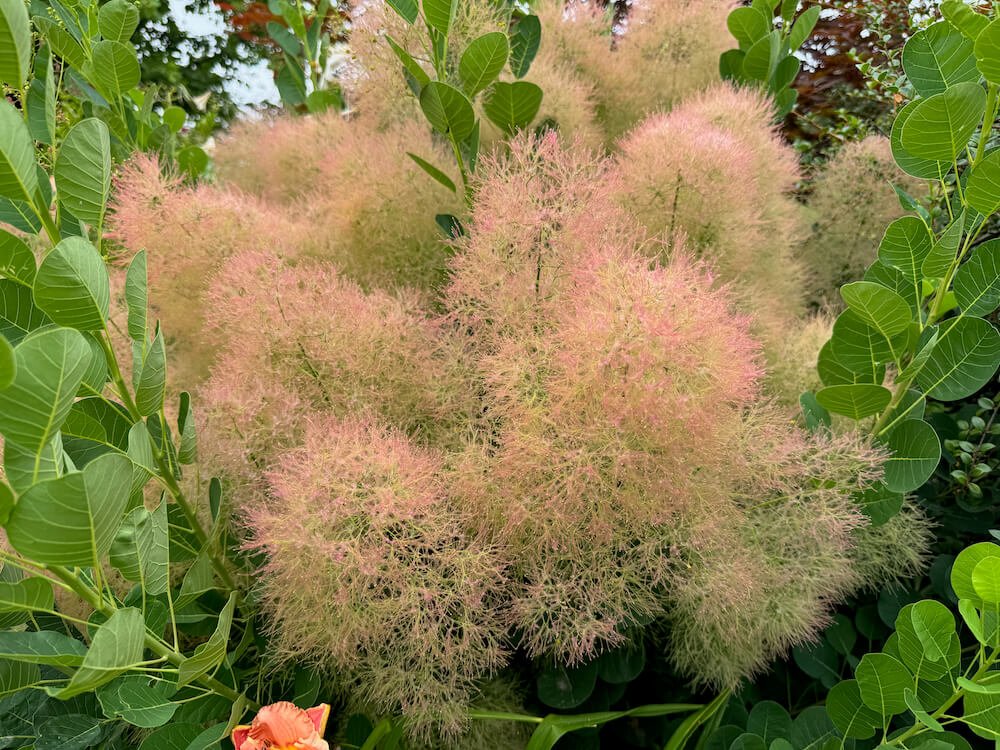
Smoke bushes create a hazy cloud of color in the summer garden, producing airy plumes that rise above rounded foliage and give the shrub its distinctive appearance. Cotinus coggygria ‘Young Lady’ (shown here) is grown for its abundant soft pink flower plumes that develop across compact branching in summer above blue-green leaves. The mist-like flower effect adds movement and softness while contrasting with neighboring shrubs that have heavier flower forms or denser foliage.
Foliage color broadens the visual impact of smoke bushes well beyond their blooming season. Cotinus coggygria ‘Royal Purple’ develops rich burgundy-purple leaves that deepen in color through summer and create dramatic contrast against green and silver foliage plants nearby. Their open branching habits and shifting foliage tones help introduce depth and layered color into borders, large shrub plantings, and dry garden settings.
GARDENIA
17
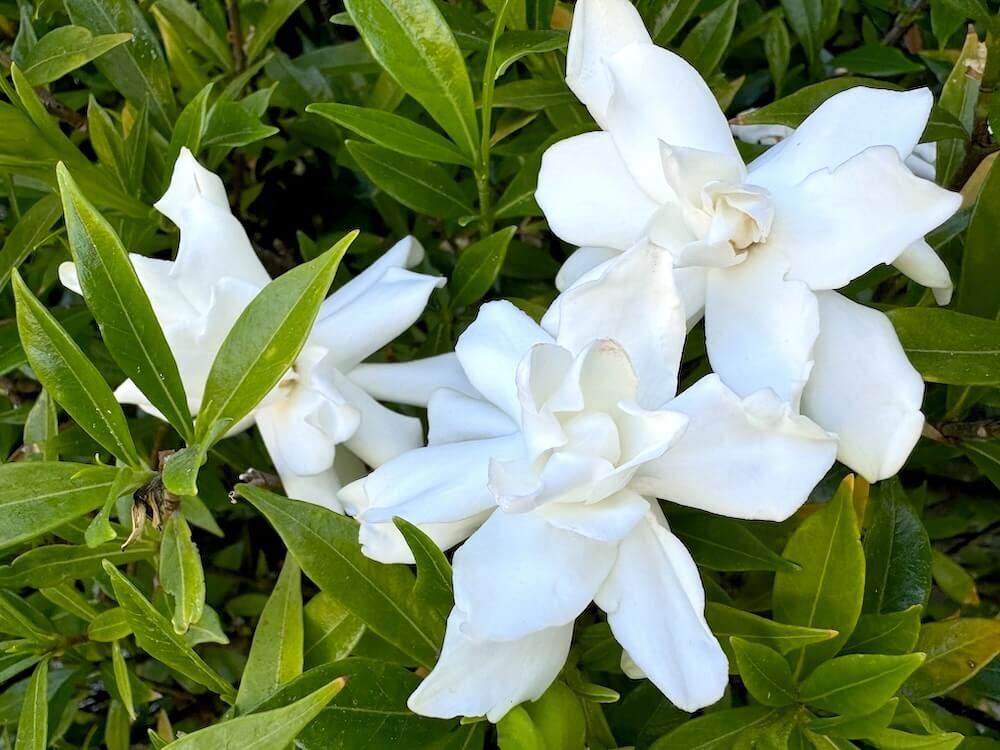
Gardenias fill the summer garden with intensely fragrant white flowers that stand out clearly against deep glossy evergreen foliage. Gardenia jasminoides ‘Frostproof’ (shown here) is grown for its creamy double blooms and improved cold tolerance, allowing the shrub to maintain a lush tropical appearance in a wider range of climates. The flowers open gradually through the warm season, creating strong contrast against dark green leaves and adding fragrance to patios, entryways, and sheltered borders.
The evergreen foliage remains visually prominent even when the shrub is not in bloom, contributing a polished texture throughout the year. Dense branching and rich leaf color allow gardenias to anchor mixed shrub plantings while pairing effectively with finer-textured perennials and lighter foliage nearby. Their bold flowers and glossy leaves bring a more refined character to summer landscapes without relying solely on seasonal color.
MOUNTAIN LAUREL (Kalmia)
18

Mountain laurels produce intricate clusters of cup-shaped flowers in late spring and early summer, bringing detailed texture and soft color to woodland garden settings. Kalmia latifolia ‘Pink Charm’ (shown here) is grown for its deep pink buds that open to pale pink flowers marked with darker rose banding across glossy evergreen foliage. The tightly packed flower clusters create a layered effect that stands out clearly against the shrub’s dense branching habit.
Evergreen leaves allow these shrubs to maintain structure long after the flowering period has passed. Kalmia latifolia develops broad dark green foliage with its pale pink blossoms that pairs effectively with rhododendrons, pieris, and other woodland shrubs while adding depth to shaded planting combinations. Their twisting branches and clustered blooms contribute a more intricate appearance than many larger-flowered summer shrubs, extending visual interest across multiple seasons.