
COMPLETE GUIDE
TO HYDRANGEAS
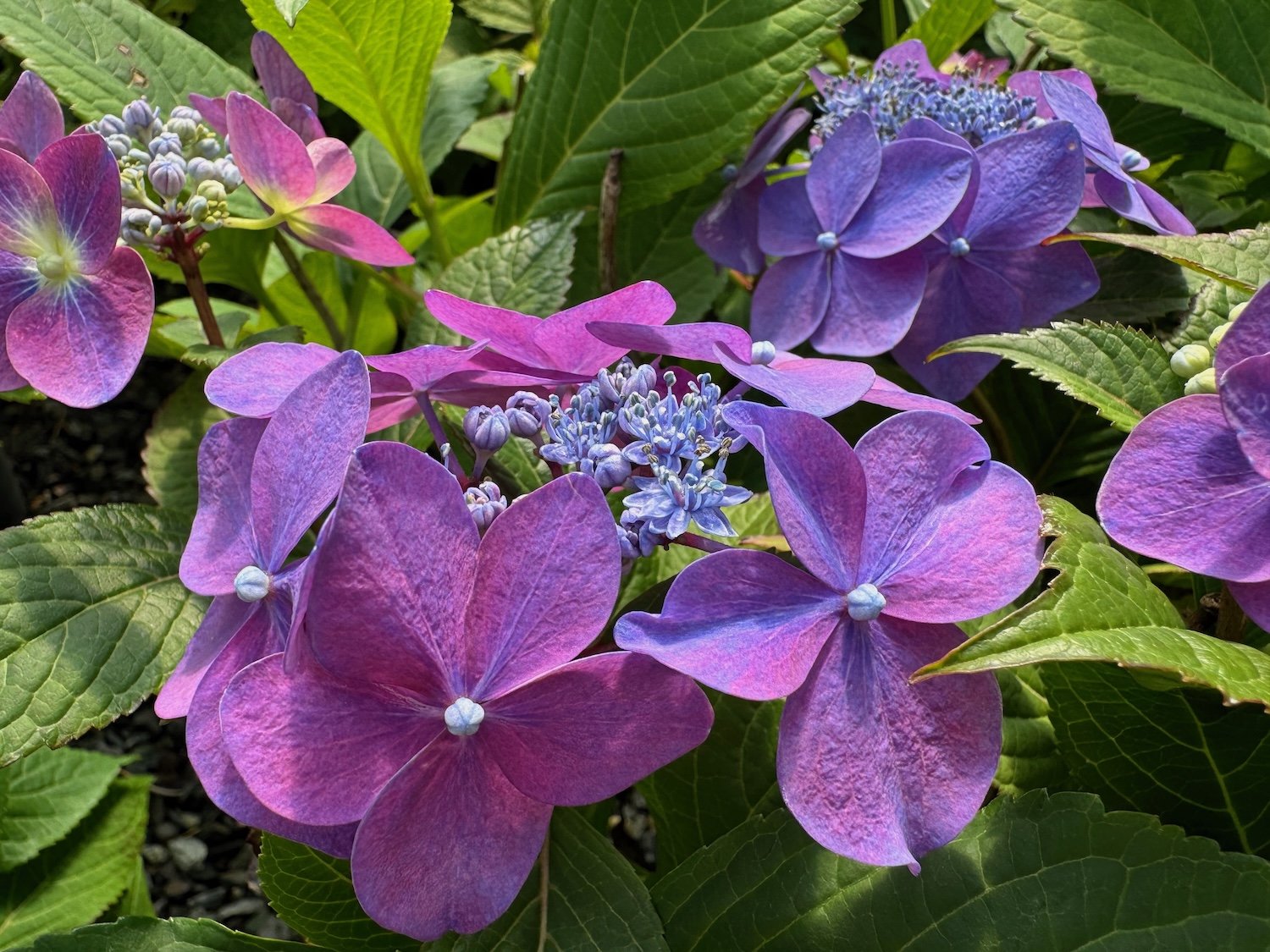
Hydrangeas bring long-lasting color and presence to the garden, producing generous clusters of blooms in shades of blue, pink, white, green, and purple through summer and into fall. Their flowers range from large mopheads and airy lacecaps to cone-shaped panicles and rounded forms, while lush foliage adds fullness throughout the growing season. These shrubs add structure to borders and foundations while creating a space that feels abundant, welcoming, and full throughout the changing seasons.
Planted with intention, hydrangeas provide months of interest and fit naturally into a wide range of garden styles. Different species and cultivars bloom at different times, extending color and offering variation in size, flower form, and texture. Over time, you may begin to anticipate their changing displays and look forward to the familiar rhythm they bring to the garden each year.
UNDERSTANDING HYDRANGEAS
Flower Types:
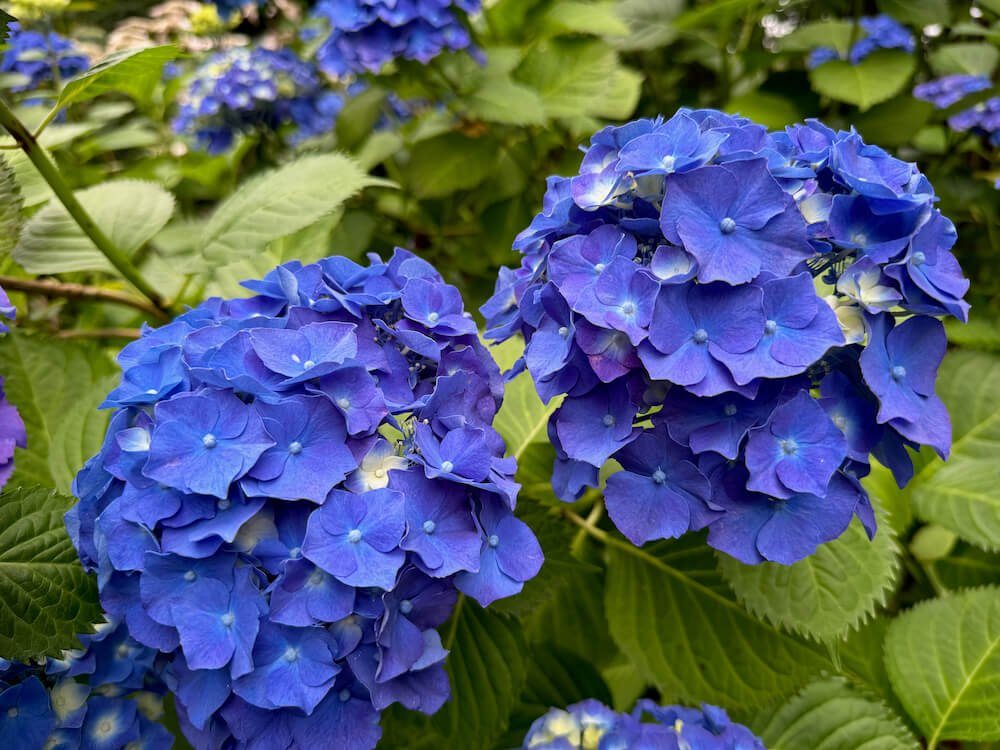
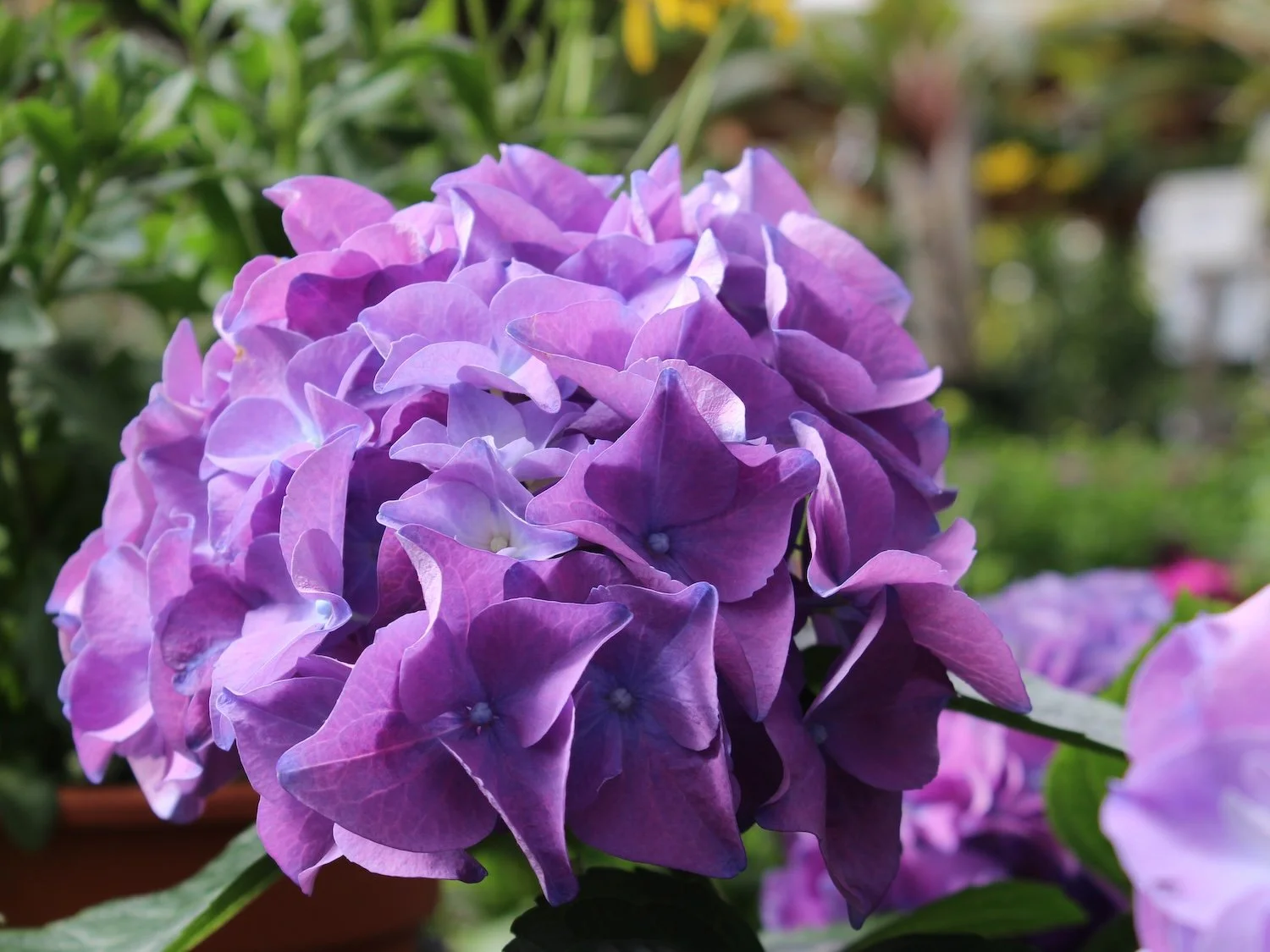
Hydrangeas produce a wide range of flower forms, each creating a different look in the garden. Mophead hydrangeas develop large rounded flower clusters, lacecaps feature flattened blooms surrounded by showy outer florets, and panicle hydrangeas produce cone-shaped flower heads that often change color as they age. Other groups, such as oakleaf, smooth, and climbing hydrangeas, contribute additional textures and growth habits.
Bloom Timing:
Different hydrangea types flower at different times, allowing bloom periods to extend from late spring through fall. Careful selection of early, midseason, and late-blooming varieties can create a succession of color and help maintain interest for several months.
Old Wood vs New Wood:
Understanding whether a hydrangea blooms on old wood or new wood helps explain where flower buds are located and how much of the plant can safely be removed. Bigleaf hydrangeas (Hydrangea macrophylla), including mophead and lacecap varieties, generally set their flower buds on stems produced the previous year, so severe pruning may remove next season's blooms. Panicle hydrangeas (Hydrangea paniculata), on the other hand, develop flower buds on new spring growth and are much more forgiving of pruning. Some newer reblooming selections are capable of flowering on both old and new wood, providing an extra margin of error for gardeners and extending the bloom season.
Sun and Shade Preferences:
Light requirements vary among hydrangea groups, and choosing the right location has a significant impact on flowering and overall plant health. Bigleaf hydrangeas (Hydrangea macrophylla), including mophead and lacecap types, generally perform best with morning sun and afternoon shade, especially in warmer climates where intense afternoon heat can cause wilting and faded flowers. Mountain hydrangeas (Hydrangea serrata) have similar preferences and are particularly well suited to lightly shaded gardens.
Panicle hydrangeas (Hydrangea paniculata) are the most sun-tolerant group and typically produce the strongest stems and heaviest flowering when grown in full sun. Smooth hydrangeas (Hydrangea arborescens) adapt to either full sun or partial shade but benefit from some afternoon protection in hot regions, while oakleaf hydrangeas (Hydrangea quercifolia) thrive in partial shade and woodland settings, although established plants tolerate more sun when provided with adequate moisture. Matching the species to the available light helps promote vigorous growth, abundant blooms, and healthier foliage throughout the season.
Flower Color Changes:
Flower color in some bigleaf and lacecap hydrangeas (Hydrangea macrophylla) can vary depending on soil chemistry. In acidic soils, aluminum becomes more available to the plant, often producing blue or purple flowers, while more alkaline conditions limit aluminum uptake and encourage pink tones. White-flowering hydrangeas, along with most panicle and oakleaf hydrangeas, generally retain their natural color regardless of soil conditions.
Although flower color can be influenced, the process is gradual rather than immediate. To encourage blue flowers, gardeners commonly apply aluminum sulfate and maintain a soil pH below about 6.0. To promote pink flowers, garden lime can be used to raise the pH above approximately 6.5. Changes may take several months or even a full growing season to become apparent, and some cultivars naturally display lavender or mixed shades that cannot be completely altered. A soil test is the most reliable way to determine whether adjustments are needed and to avoid making unnecessary changes.

Mophead & Lacecap Hydrangeas
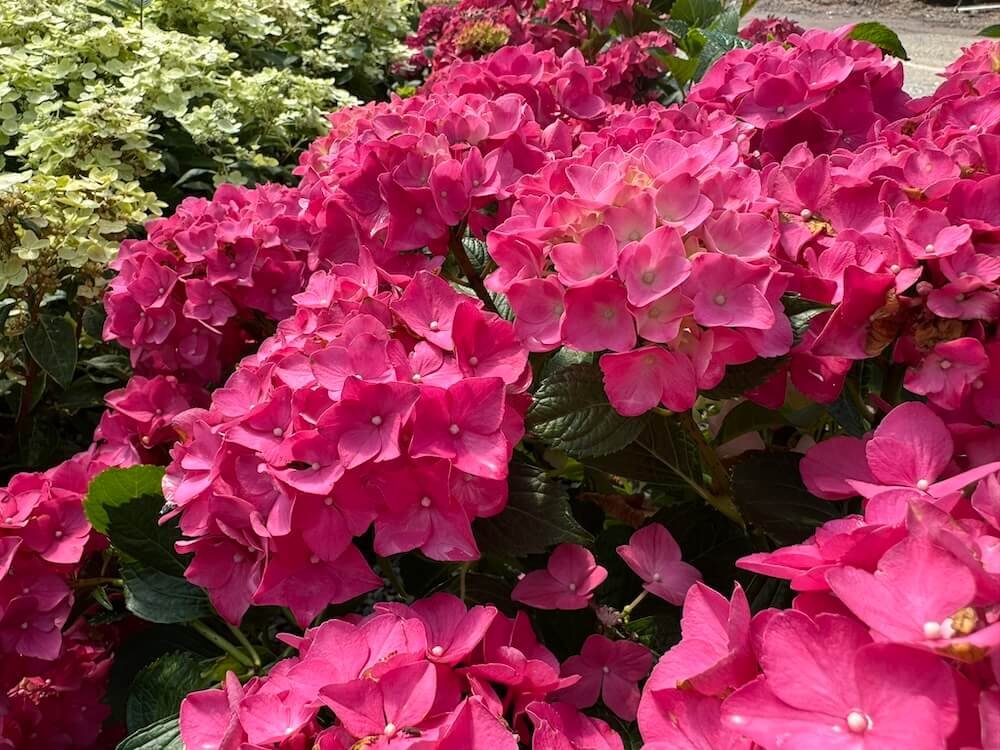
Hydrangea macrophylla 'Glowing Embers'
Deciduous shrub with rich green foliage and large mophead blooms, shifting from rosy pink to deep mauve. Forms rounded growth, and grows 4 to 6 feet tall. Ideal for borders, hedges, and colorful seasonal displays. Zones: 6 to 9.
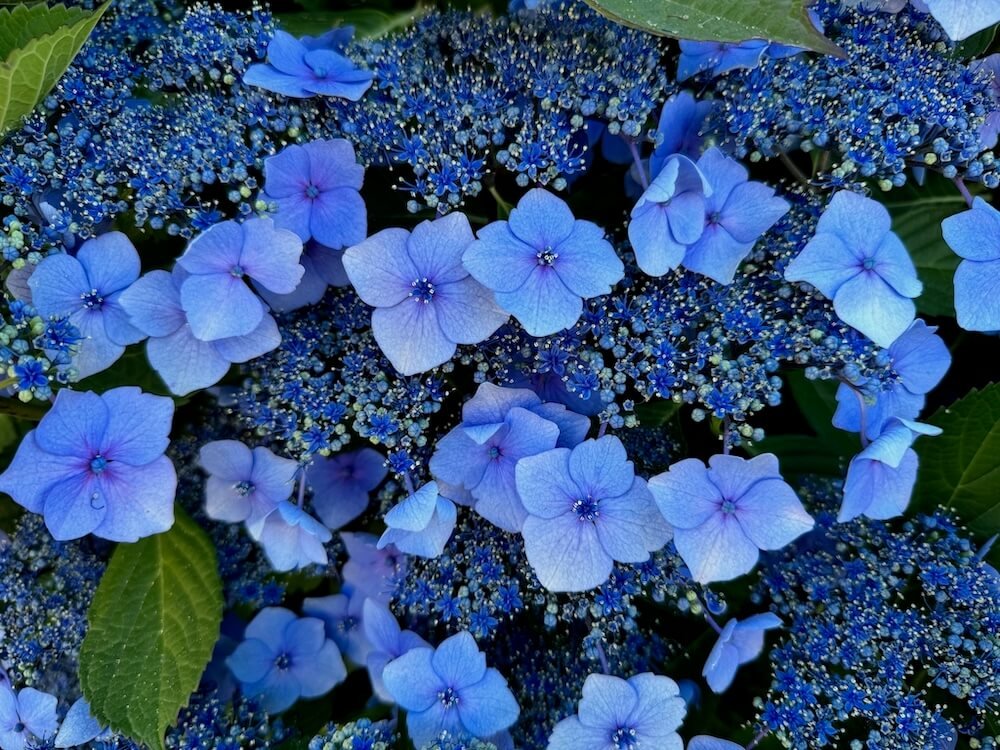
Hydrangea macrophylla 'Blaumeise'
Deciduous shrub with rich green foliage and large lacecap blooms in vivid blue tones adding lasting garden color. Forms rounded growth, and grows 4 to 6 feet tall. Ideal for borders, hedges, and seasonal displays. Zones: 6 to 9.
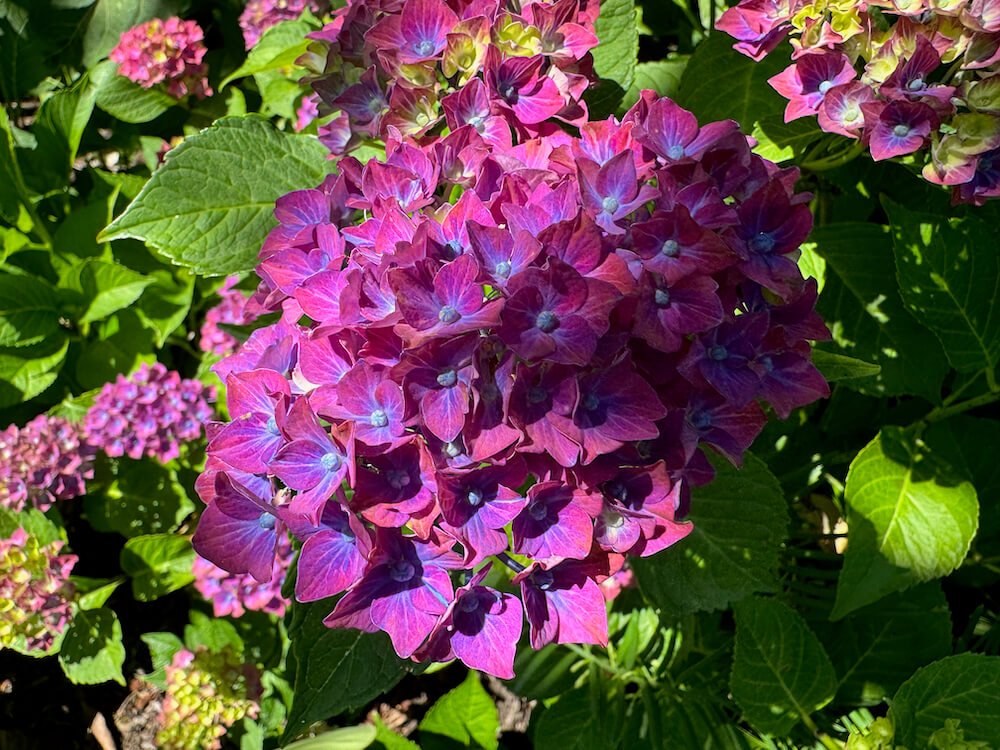
Hydrangea macrophylla 'Horwack'
Deciduous shrub with deep green foliage and large mophead blooms in vivid pink tones with contrasting blue centers adding bold garden color. Forms rounded growth, and grows 3 to 5 feet tall. Ideal for borders, hedges, and seasonal displays. Zones: 5 to 9.
Other Notable Mophead & Lacecap Hydrangeas
Hydrangea macrophylla 'CAMFRE29': Large mophead blooms in vivid lavender pink to rich blue tones
Hydrangea macrophylla 'HORTHAMP': Full rounded flower heads in saturated pink or deep blue
Hydrangea macrophylla ‘Ragra’: Mophead blooms emerge lime green before maturing to rose tones
Hydrangea macrophylla 'Variegata': lacecap flowers with blue fertile centers and white petals; white variegation
Hydrangea macrophylla subsp. serrata 'SMHSMAKF2MT': Delicate lacecap blooms with rich pink to violet blue tones
DESIGN IDEAS & GARDEN USES
Foundation Plantings:
Hydrangeas provide dependable structure and long-lasting seasonal color around homes and buildings. Their generous flower displays soften architectural lines and create a fuller, more established appearance within the landscape.
Borders and Mixed Plantings:
Hydrangeas blend well with perennials, evergreens, and other shrubs, adding texture and seasonal rhythm to layered plantings. Different flower forms and sizes allow them to serve as focal points or supporting elements within larger designs.
Woodland and Shade Gardens:
Many hydrangeas pair naturally with ferns, hostas, and other shade-loving plants. Their foliage and blooms help brighten partially shaded spaces and contribute a softer, more relaxed character.
Hedges and Screening:
Larger hydrangea varieties can be planted in groups to create informal screens, define property lines, or add privacy. Their dense foliage and substantial flower displays help create seasonal structure without appearing overly formal.
Containers and Small Spaces:
Compact varieties perform well in containers and smaller garden settings where space is limited. Their long bloom period and manageable size allow patios, entryways, and terraces to benefit from seasonal color and structure.
Four-Season Interest:
Hydrangeas contribute more than summer flowers alone. Seed heads, peeling bark, changing foliage color, and winter structure can extend visual interest well beyond peak flowering season.
Panicle Hydrangeas
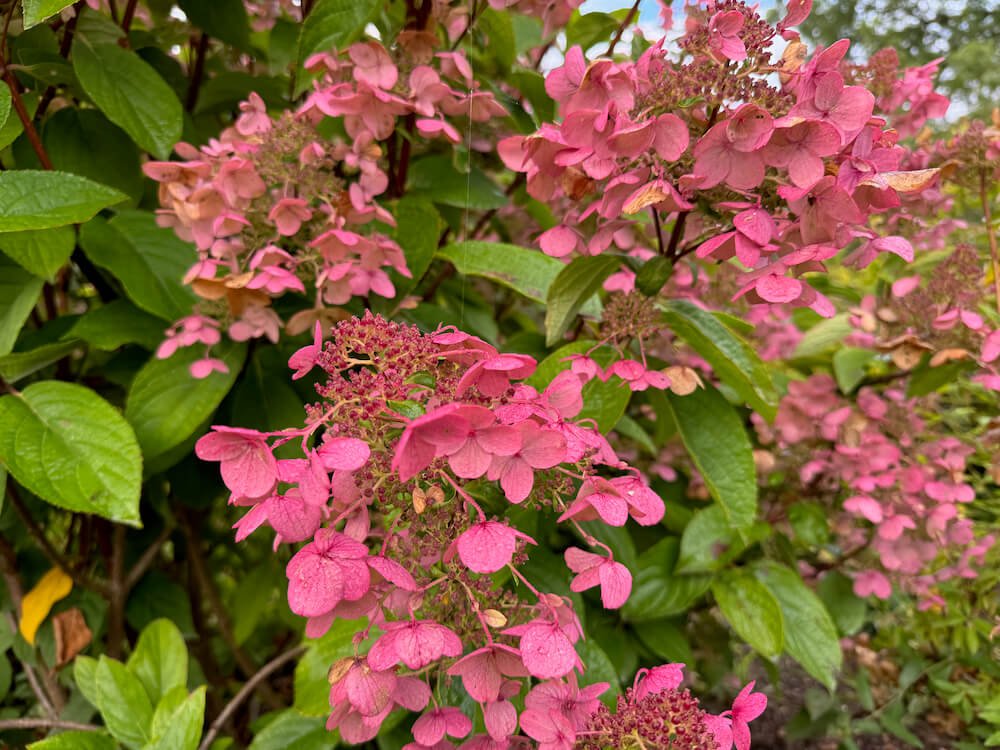
Hydrangea paniculata 'Wim's Red'
Deciduous shrub with deep green foliage and large cone shaped blooms aging from white to pink and deep red, adding changing seasonal color. Grows 6 to 8 feet tall, and ideal for hedges, borders, and focal plantings. Zones: 4 to 8.
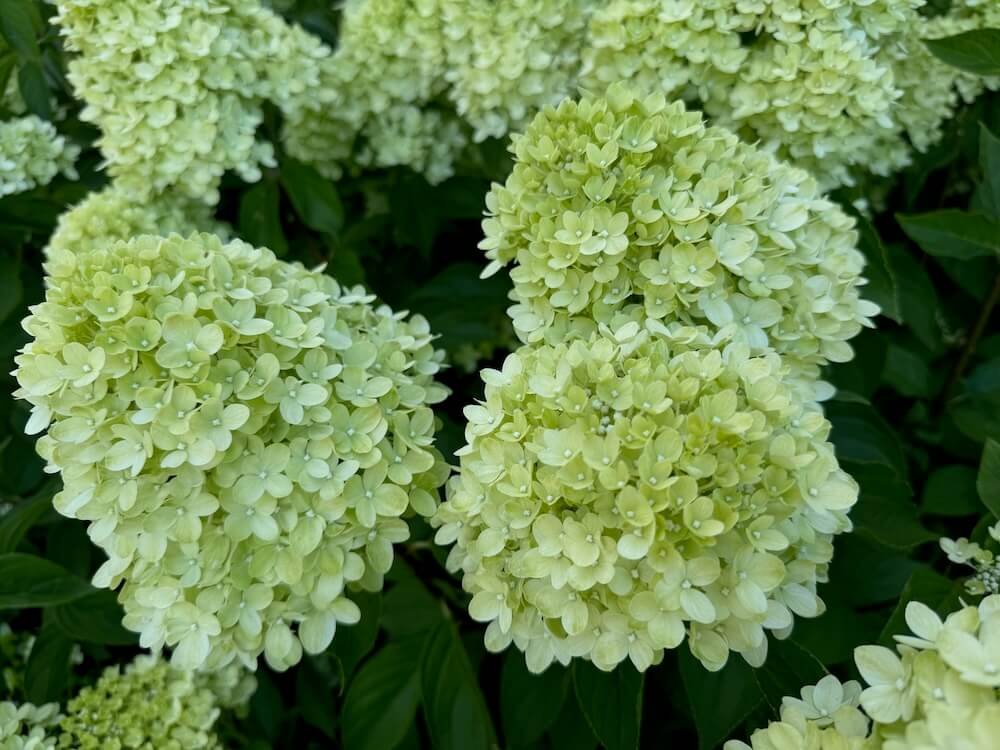
Hydrangea paniculata 'Little Lime'
Deciduous shrub with lush green foliage and compact cone shaped blooms emerging soft green and aging blush pink, adding long lasting color. Grows 3 to 5 feet tall. Ideal for borders, low hedges, and foundation plantings. Zones: 3 to 8.
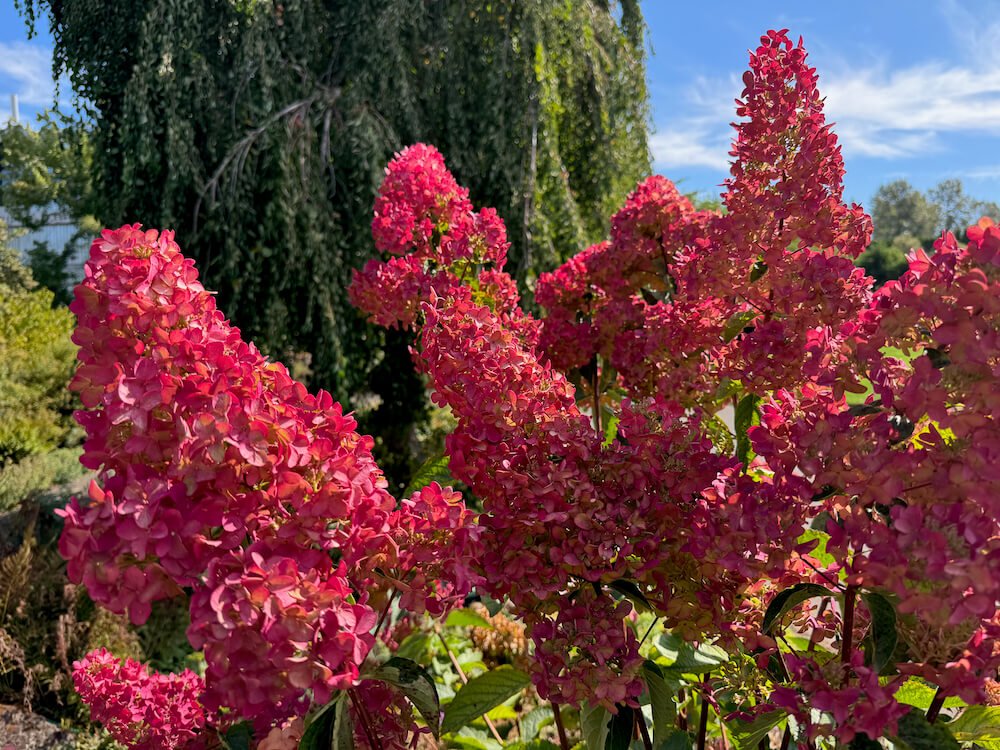
Hydrangea paniculata 'Renba'
Deciduous shrub with broad green foliage and compact cone shaped blooms emerging creamy white and aging rich pink red. Grows 6 to 8 feet tall, ideal for hedges, borders, and focal plantings. Zones: 3 to 8.
Other Notable Panicle Hydrangeas
Hydrangea paniculata ‘Limelight’: Large cone shaped flowers emerge soft lime green, aging to blush pink tones
Hydrangea paniculata 'RUBY': Large flower panicles open creamy white and mature to rich ruby red
Hydrangea paniculata 'SMHPLQF': Cone shaped blooms open creamy white and deepen to rich pink
PLANTING, CARE & MAINTENANCE
Site Selection & Planting:
Proper placement is one of the most important factors in long-term hydrangea success. Most hydrangeas perform best in locations with rich, moisture-retentive soil and protection from intense afternoon sun, though requirements vary by type. Planting holes should be wider than the root ball rather than excessively deep, allowing roots to establish outward into surrounding soil. Thoughtful spacing at planting time also helps accommodate mature size and improve airflow as plants grow.
Watering:
Hydrangeas prefer consistently moist soil, particularly during establishment and periods of hot, dry weather. Their large leaves and abundant flower production can increase water needs during summer. Deep watering encourages stronger root development and helps improve resilience during warmer conditions.
Fertilizing & Mulching:
Hydrangeas are not heavy feeders and generally require little fertilizer to thrive. In spring, apply a slow-release balanced fertilizer, such as a 10-10-10 or similar all-purpose product, following label directions. A mature shrub typically requires only about ½ to 1 cup of granular fertilizer spread evenly around the drip line. Compost or well-rotted manure can also be used to supply nutrients naturally. Avoid overfeeding, especially with high-nitrogen fertilizers, since excessive growth can lead to fewer flowers and weaker stems.
A 2 to 3 inch layer of organic mulch, such as shredded bark or compost, helps retain moisture, regulate soil temperature, and gradually improve soil quality over time. In many cases, one spring application and annual mulching are all that established hydrangeas require to produce vigorous growth and reliable flowering.
Pruning & Deadheading:
If pruning is needed, timing depends on the type of hydrangea. Old wood bloomers, including many bigleaf hydrangeas (Hydrangea macrophylla), are best pruned soon after flowering, while panicle hydrangeas (Hydrangea paniculata), which bloom on new wood, are typically pruned in late winter or early spring. If you're unsure which type you have, a simple approach is to wait until spring and look for swelling buds. Then remove only the spent flower heads, cutting just above the highest pair of healthy buds, or prune farther down to reduce size. This method helps preserve next season's blooms while allowing you to shape the plant without sacrificing flowers.
Soil Health:
Healthy soil supports stronger growth, fuller foliage, and more reliable flowering. Hydrangeas generally perform best in organically rich soil that retains moisture while still draining well. Some varieties may also show flower color changes influenced by soil chemistry.
Winter Protection:
Late frosts and winter weather can damage flower buds on some varieties, particularly those blooming on old wood. Mulch helps insulate roots during temperature fluctuations, while sheltered planting locations reduce winter stress. Leaving spent flower heads through winter may also provide some protection for developing buds beneath them.
Long-Term Growth:
As hydrangeas mature, some varieties gradually become wider and fuller than expected. Proper spacing and occasional thinning help maintain healthy structure and reduce overcrowding. Established plants often become increasingly floriferous and develop a stronger presence in the landscape over time.
Specialty Hydrangeas
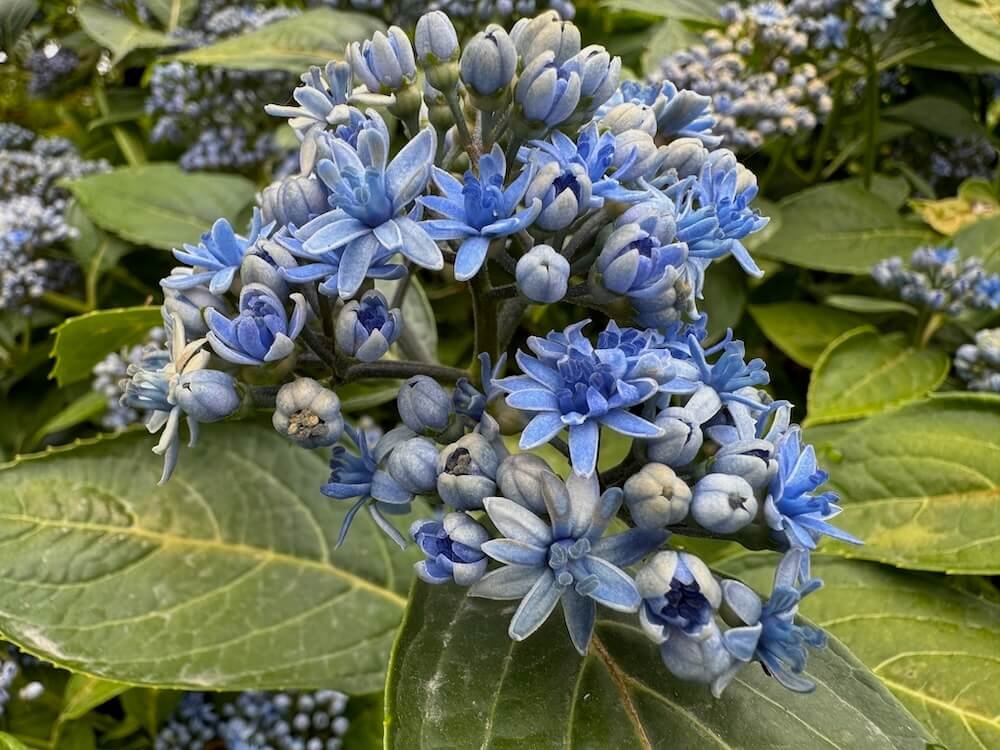
Dichroa Versicolor
Evergreen shrub with glossy green foliage and clusters of lavender blue flowers followed by metallic blue berries, adding multi season color. Grows 4 to 6 feet tall. Ideal for borders, woodland gardens, and sheltered plantings. Zones: 7 to 9.
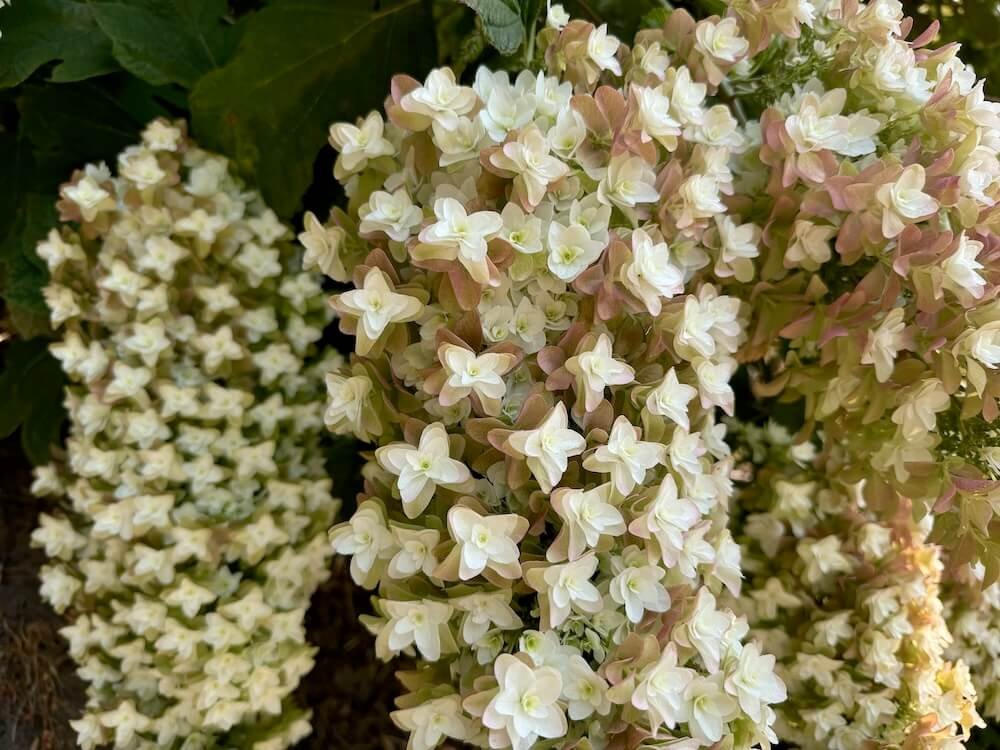
Hydrangea quercifolia 'Snowflake'
Deciduous shrub with large oakleaf foliage and layered double white cone shaped blooms aging soft pink. Grows 6 to 8 feet tall. Ideal for hedges, borders, and woodland gardens. Zones: 5 to 9.
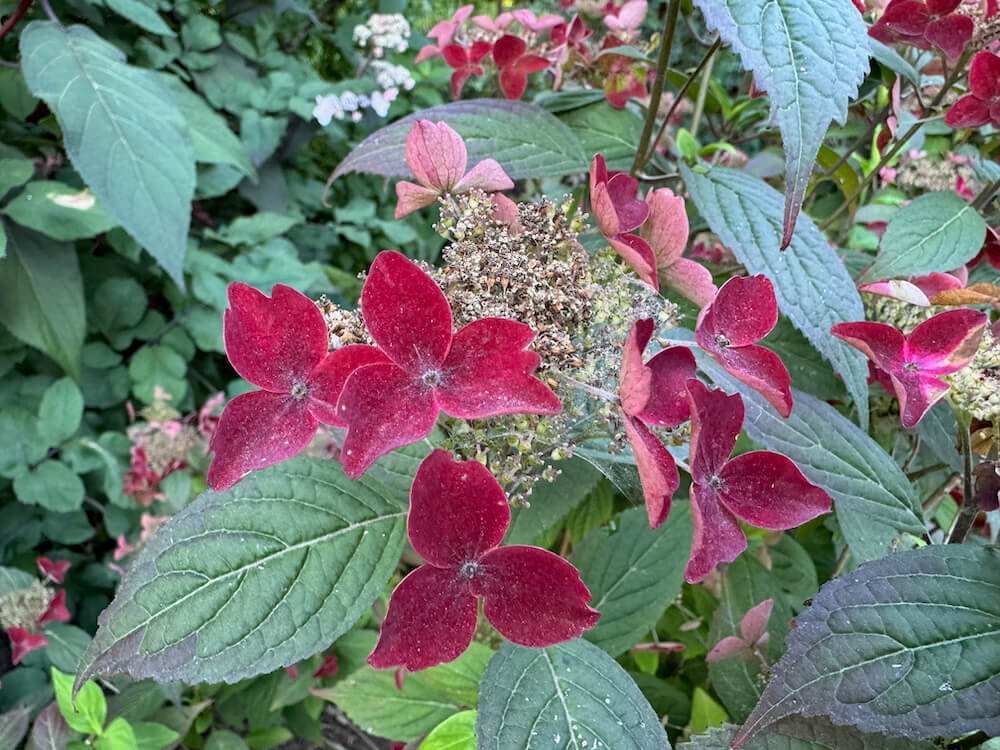
Hydrangea serrata 'Beni Gaku'
Deciduous shrub with delicate green foliage and lacecap blooms featuring white florets surrounding deep pink fertile flowers, adding layered seasonal color. Grows 4 to 5 feet tall. Ideal for borders, woodland gardens, and foundation plantings. Zones: 6 to 9.
Other Notable Specialty Hydrangeas
Hydrangea arborescens 'Abetwo': Rounded flower clusters emerge soft green and mature to creamy white
Hydrangea aspera ‘Monpulsel’: Lacecap blooms with lavender purple centers and soft pink outer florets; burgundy foliage
Hydrangea involucrata: Fuzzy flower buds open to soft lavender pink lacecap blooms with violet blue centers
Hydrangea serrata ‘Kiyosumi’: Lacecap flowers with blue to lavender centers surrounded by soft pink or pale blue florets
Hydrangea serrata 'O-amacha Nishiki': Soft pink to pale lavender lacecap blooms surround violet blue centers; white variegated foliage