
Best Groundcovers
for Pollinators
Groundcovers that support pollinators provide valuable pollen resources while helping to cover soil and fill open spaces throughout the landscape. Many produce masses of flowers that bloom over extended periods, creating concentrated foraging opportunities for bees and other beneficial insects. In addition to their wildlife value, these plants help suppress weeds, reduce erosion, and soften transitions between larger plantings, contributing both ecological benefits and practical function to the garden.
SUPPORTING POLLINATORS WITH GROUNDCOVERS
Early-season resources:
Many pollinators emerge when few plants are flowering, making early-blooming groundcovers especially valuable. Low-growing plants that flower in late winter and spring help provide nectar and pollen during a period when food sources can be limited, supporting bees and other beneficial insects as they become active.
Flowers where pollinators naturally forage:
Many native bees spend much of their time searching for food close to the ground. Groundcovers create broad carpets of bloom that are easy to locate and move between, allowing pollinators to forage efficiently while expending less energy.
Making use of overlooked garden space:
Groundcovers transform areas beneath shrubs, along pathways, and at the front of borders into productive habitat. Rather than leaving these spaces as mulch or bare soil, flowering groundcovers can contribute additional food sources without competing with larger plants.
Reliable return year after year:
Most groundcovers gradually expand over time, creating larger displays of flowers with relatively little maintenance. As plantings mature, they often become increasingly valuable to pollinators by providing greater quantities of blooms across a wider area.

Early Season Pollinator Groundcovers
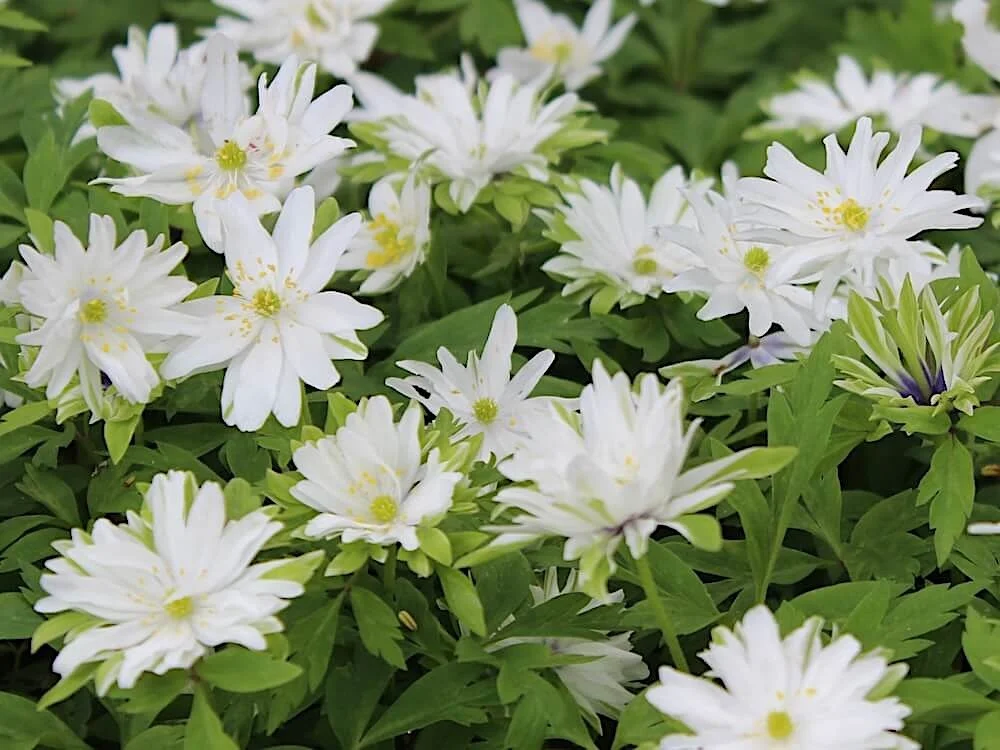
Anemone nemorosa 'Bracteata Plena'
Deciduous perennial with fully double white flowers. Forms a woodland carpet and grows 4 to 8 inches tall. Ideal for woodland gardens, shaded borders, and naturalized plantings. Zones: 4 to 8.
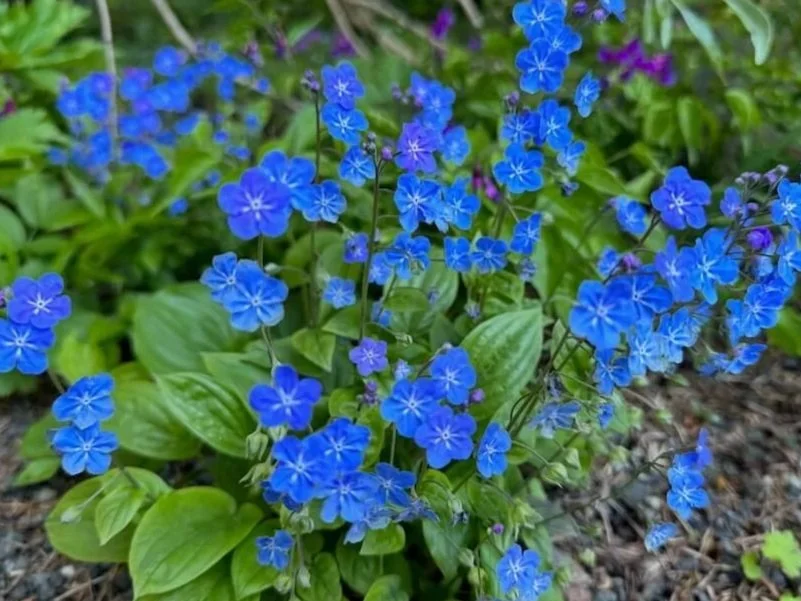
Omphalodes verna
Evergreen perennial with masses of bright forget me not blue flowers supporting early season pollinator activity. Grows 4 to 8 inches tall. Ideal for woodland gardens, shaded borders, and underplanting beneath shrubs. Zones: 4 to 9.
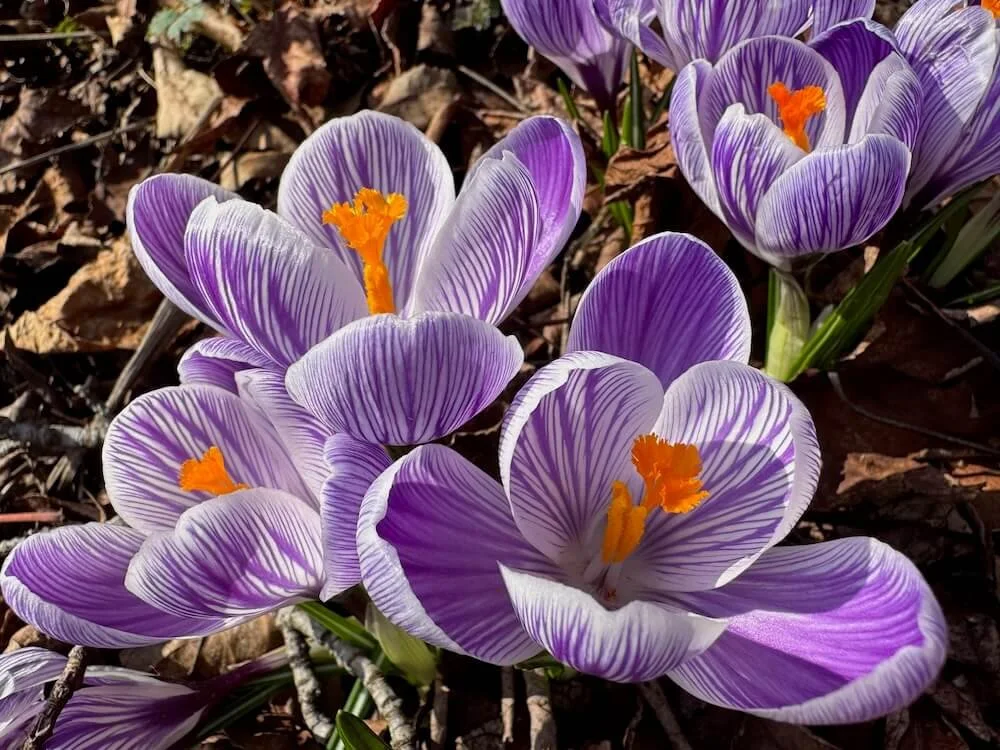
Crocus vernus 'Pickwick'
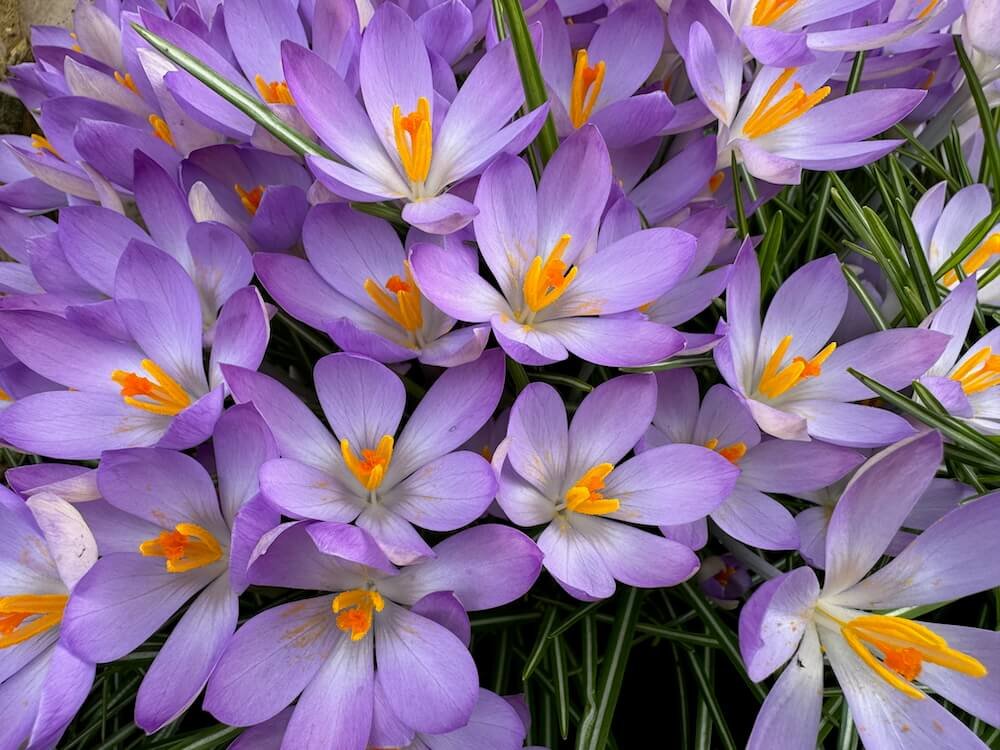
Deciduous perennial with narrow grassy foliage and large white flowers striped with violet purple. Forms a low clumping habit and grows 4 to 6 inches tall. Ideal for rock gardens, borders, and naturalized plantings. Zones: 3 to 8.
Other Notable Early Season Pollinator Groundcovers
Erica carnea 'Springwood White': Masses of pure white bell shaped flowers brighten the garden from winter into early spring
Primula vulgaris 'Lilacina Plena': Fully double soft lilac flowers provide early season color
Epimedium grandiflorum 'Red Queen': Graceful deep rose red flowers, highlighting prominent pollen bearing stamens
Eranthis hyemalis: Golden yellow cup shaped flowers emerge in late winter with bright yellow centers that draw early pollinators
Bergenia cordifolia 'Winter Glow': Clusters of rosy pink flowers rise above the foliage in early spring
CREATING A POLLINATOR FRIENDLY GROUND LAYER
Planting in drifts:
Grouping groundcovers in larger masses creates a stronger visual display and makes flowers easier for pollinators to locate. Repeated groupings throughout the garden can encourage insects to move between different planting areas while increasing overall pollinator activity.
Combining bloom periods:
Selecting groundcovers with staggered flowering times helps maintain a more consistent supply of nectar and pollen. Early-season bloomers can be paired with longer-flowering varieties to support pollinators over a much longer portion of the year.
Providing flower diversity:
Different pollinators are attracted to different flower shapes and structures. Incorporating a variety of groundcovers with open flowers, clustered blooms, and daisy-like forms helps support a wider range of bees, hoverflies, butterflies, and other beneficial insects.
Layering with shrubs and perennials:
Groundcovers are most effective when combined with larger plants. Together they create a layered landscape that provides food at multiple heights while adding texture, seasonal interest, and ecological value throughout the garden.
Long Blooming Pollinator Groundcovers
Geranium x cantabrigiense 'Biokovo'
Evergreen perennial with aromatic green foliage and soft pink flowers fading to white. Grows 6 to 12 inches tall. Ideal for edging, woodland gardens, and underplanting beneath shrubs. Zones: 4 to 8.

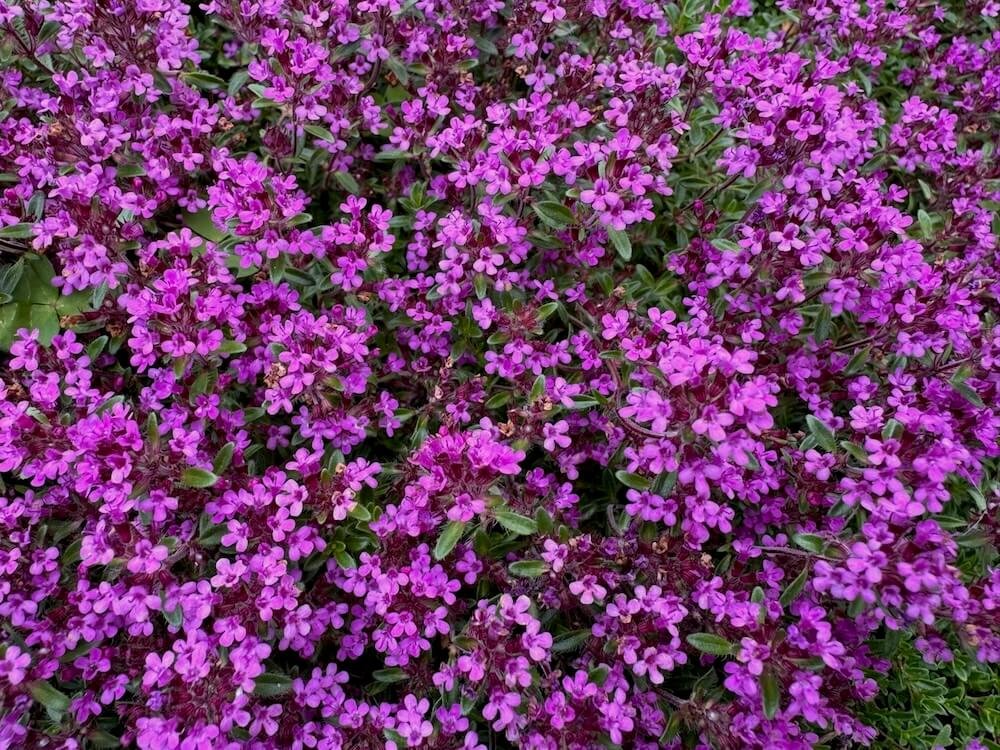
Thymus serpyllum ‘Coccineus'
Evergreen perennial with aromatic green foliage and vivid crimson pink flowers. Grows 2 to 4 inches tall. Ideal for rock gardens, pathway edges, between stepping stones, and sunny slopes. Zones: 4 to 9.
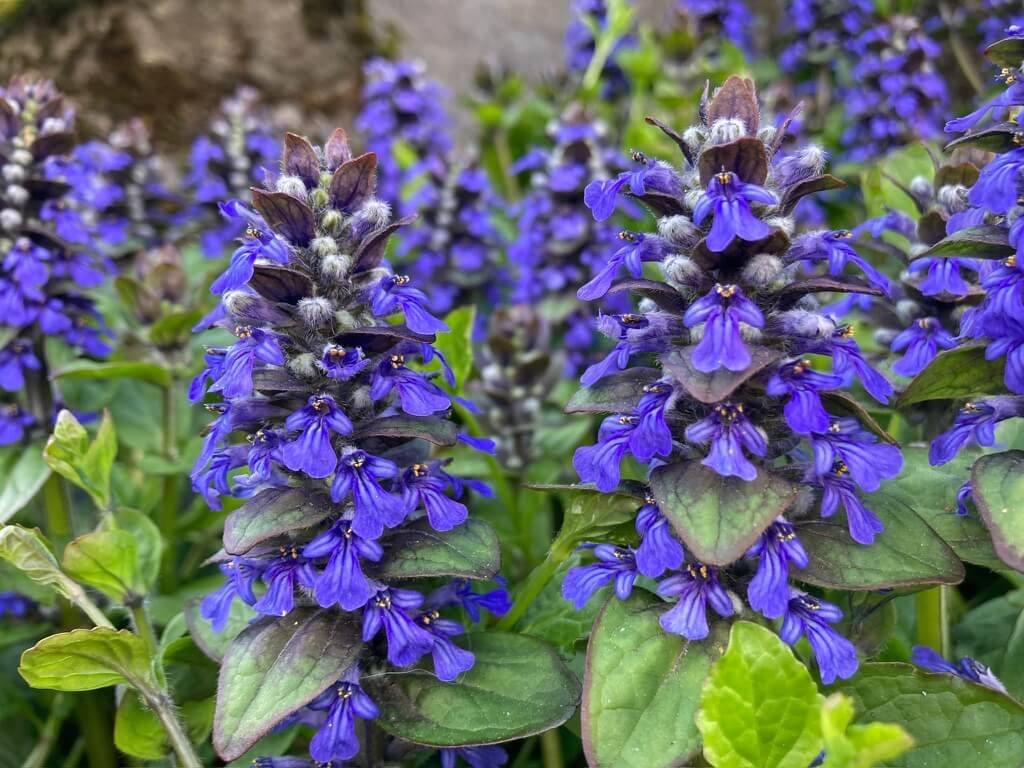
Ajuga reptans
Evergreen perennial with spikes of blue flowers supporting pollinator activity in spring. Forms a dense spreading groundcover and grows 4 to 8 inches tall. Ideal for woodland gardens, and shaded borders. Zones: 3 to 9.
Other Notable Long Blooming Pollinator Groundcovers
Origanum ‘Bristol Cross’: Clusters of rosy pink flowers emerge from colorful bracts, creating a long lasting display
Veronica peduncularis 'Georgia Blue': Brilliant sky blue flowers with white centers form a carpet of color in early spring
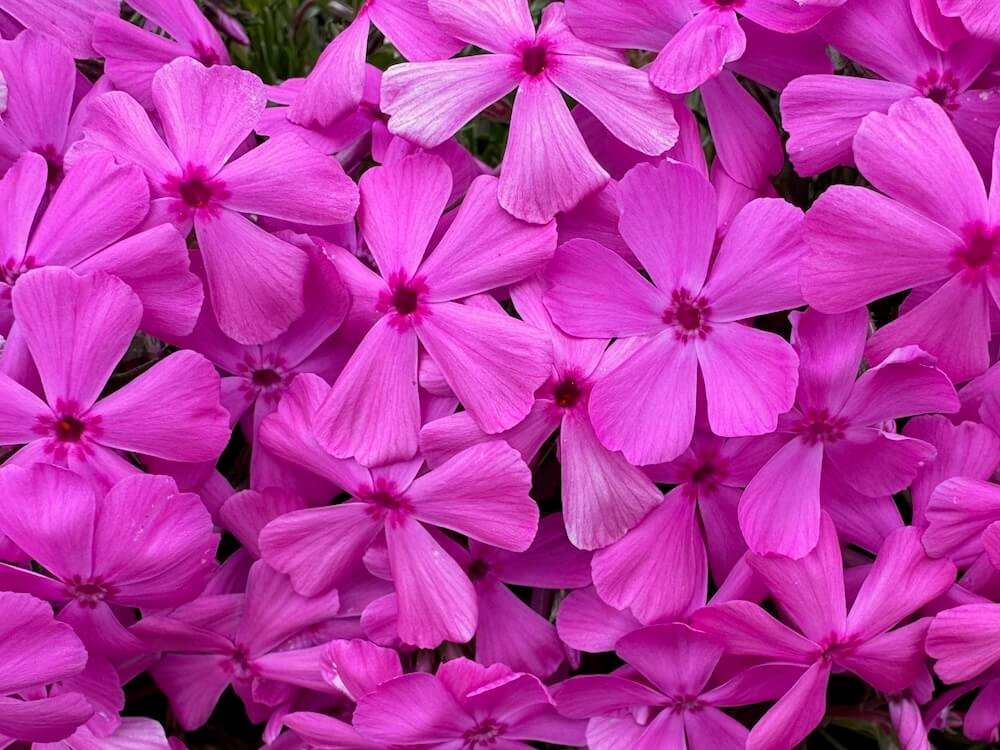
Phlox subulata ‘Spring Scarlet’: Masses of vivid scarlet pink flowers blanket the foliage in a vibrant spring display
Armeria pseudarmeria Dreameria 'Daydream': Rounded clusters of soft pink flowers rise above the foliage
Erigeron glaucus ‘Bountiful’: Lavender pink daisylike flowers with golden centers provide continuous color from late spring into fall