
Best Shrubs for Hedging
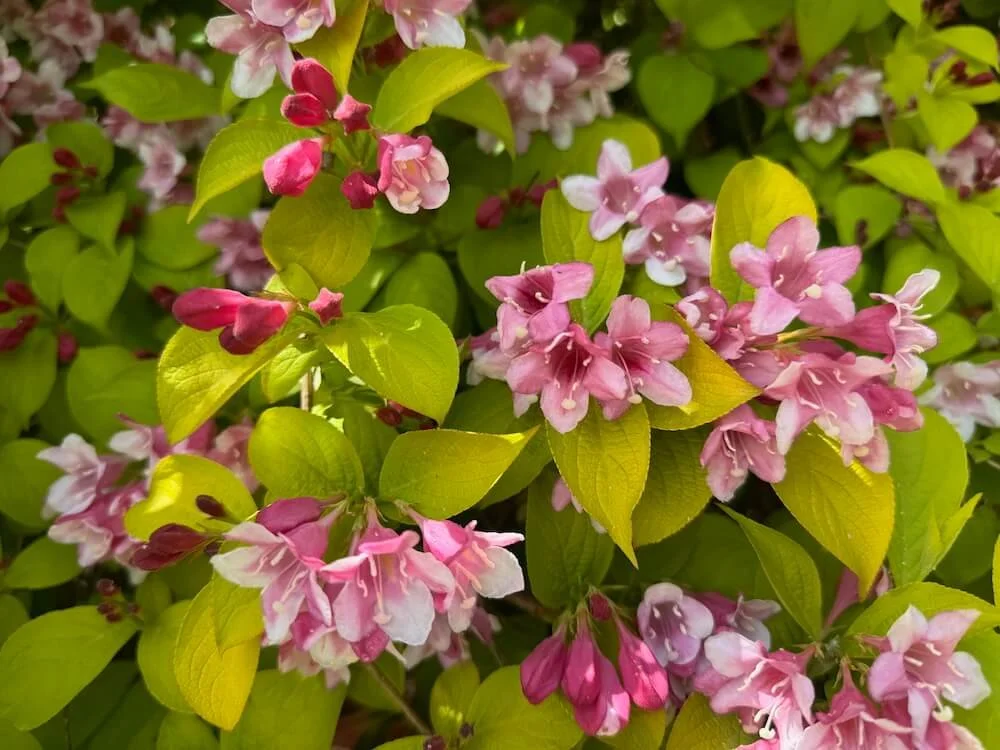
Weigela 'Looymansii Aurea'
Deciduous shrub with golden yellow foliage and soft pink spring flowers. Attracts pollinators and grows 4 to 6 feet tall. Ideal for informal hedges, borders, and bright seasonal structure. Zones: 4 to 8.
Shrubs selected for hedging and privacy provide structure, enclosure, and year-round presence in the landscape. From neatly clipped formal hedges to relaxed, natural screens, these plants define boundaries while softening views and reducing noise and wind. Evergreen options offer consistent coverage, while deciduous selections can add seasonal interest with flowers, foliage color, or berries.
The best choices balance density, growth rate, and adaptability to local conditions. Some varieties respond well to regular shaping, creating clean lines, while others form thick, informal barriers with minimal maintenance. Whether used to frame a garden, block unwanted views, or create a quiet retreat, well-chosen shrubs bring both function and visual cohesion to outdoor spaces.
Considerations for Hedge Plants
Purpose & Function: Define what you want the hedge to do; whether it’s providing privacy, forming a low border, acting as a windbreak, or simply adding structure. The intended use will guide decisions on height, density, and overall form.
Plant Type & Characteristics: Consider whether the hedge should be evergreen or deciduous, along with its mature size, growth rate, and branching habit. These factors determine how quickly it fills in, how dense it becomes, and how well it responds to pruning.
Site Conditions: Evaluate light exposure, soil type, drainage, moisture levels, and environmental factors such as wind or heat. Matching plants to these conditions is essential for long-term health and performance.
Aesthetic Preferences: Think about the visual qualities you want, including foliage color, flowering, fragrance, and seasonal changes. Decide whether you prefer a uniform look or a more natural, mixed planting style.
Maintenance Requirements: Consider how much time and effort you’re willing to invest in pruning, shaping, and general care. Some hedges require frequent trimming to maintain a formal appearance, while others can be left largely unpruned.
Spacing & Planting Strategy: Plan spacing based on the plant’s mature width rather than its size at planting to ensure proper fill and airflow. Decide between a single row for simplicity or a staggered double row for a denser, more immediate screen.
Budget & Timeline: Balance the cost of plant size and quantity with how quickly you want the hedge to establish. Larger plants provide instant impact but are more expensive, while smaller plants are more economical but require time to fill in.
Regulatory & Neighbor Considerations: Check local regulations, HOA guidelines, and property line setbacks before planting. Also consider how the hedge may affect neighboring properties, including light, views, and shared boundaries.
VIBURNUM
01

Highlights ►
6 to 12 ft tall
5 to 10 ft wide
Full sun
Evergreen
Dense privacy
Moderate growth
Tolerates pruning
Flowers
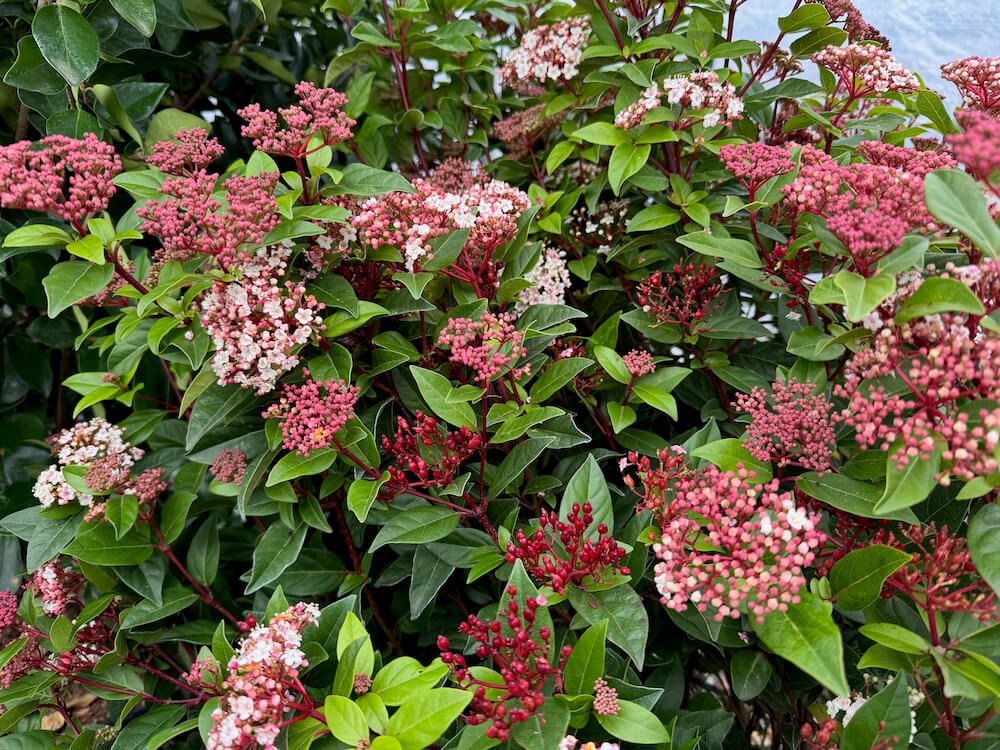
Viburnums are among the most adaptable shrubs for hedging, valued for their seasonal interest, and ability to function as both formal and informal screens. Evergreen selections like Viburnum tinus ‘Spirit’ (shown here) form naturally compact, leafy structures that respond well to clipping, making them ideal for neat, year-round hedges, while lower-growing types such as Viburnum davidii create tidy, mounded borders or low hedges with glossy foliage, providing consistent coverage and structure even in more challenging garden conditions.
For taller screening, Viburnum rhytidophyllum offers a vigorous, upright habit with large, leathery leaves that create substantial coverage. Across the genus, viburnums provide flowers, berries, and foliage interest, making them reliable, multi-season choices for privacy and structure in the landscape.
PRIVET (Ligustrum)
02
Highlights ►
8 to 15 ft tall
4 to 8 ft wide
Full sun
Evergreen
Dense privacy
Fast growth
Tolerates pruning
Flowers
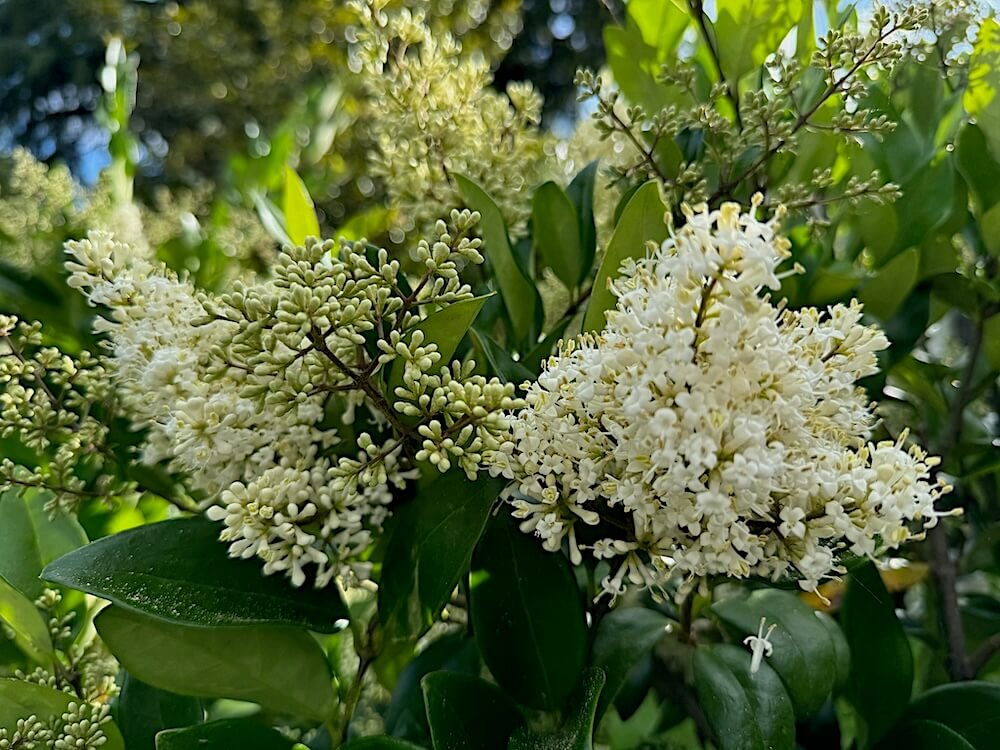
Privet hedges offer dense foliage and a naturally upright habit, making them effective for both formal borders and taller privacy screens. Broadleaf types such as Ligustrum japonicum (shown here) develop into full, tightly branched hedges with glossy green leaves that respond well to pruning, creating a clean, structured appearance.
With regular trimming, Ligustrum species form a uniform surface that provides consistent coverage throughout the growing season. At the same time, they can also be allowed to grow more freely for a softer, informal look with added texture. Across the group, these shrubs are valued for their adaptability, fast growth, and ability to provide year-round structure, texture, and reliable coverage in a wide range of garden styles.
CAMELLIA
03
Highlights ►
6 to 12 ft tall
5 to 10 ft wide
Partial shade
Evergreen
Dense privacy
Slow growth
Tolerates pruning
Showy flowers
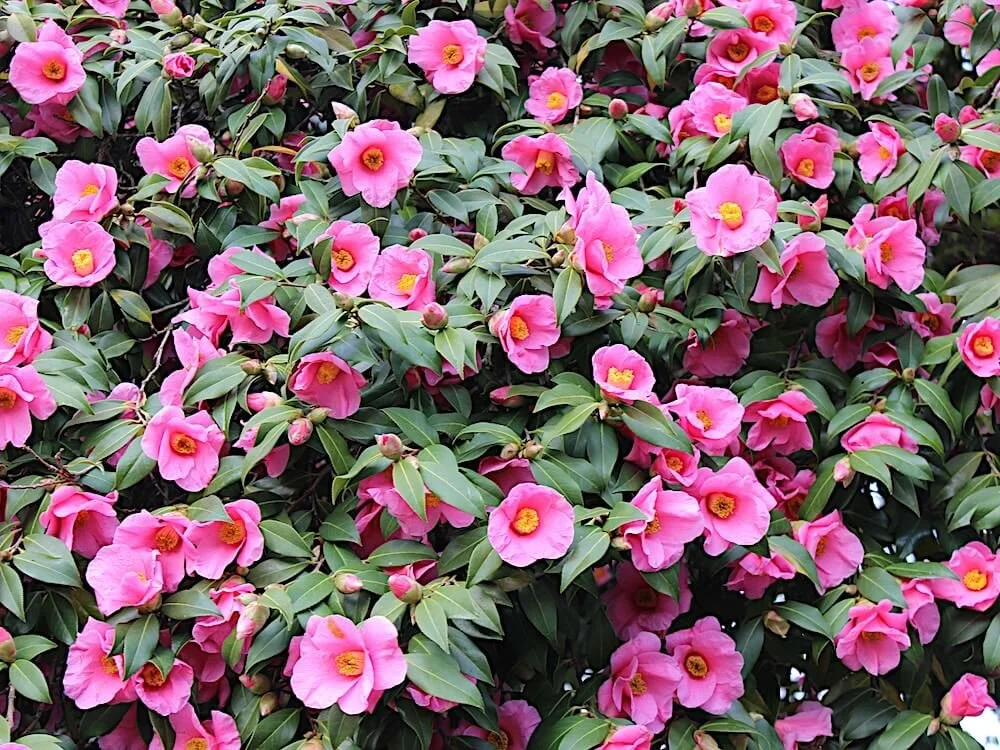
Camellias make effective hedge plants, combining dense evergreen foliage with seasonal flowering to create structure and privacy throughout the year. Camellia japonica ‘Lucy Hester’ is grown for its upright habit and soft pink blooms that add color against a backdrop of glossy green leaves. Their naturally full growth allows them to form a cohesive screen while maintaining a refined, formal appearance with minimal shaping.
They are well suited to hedges, borders, or foundation plantings where year-round coverage and spring bloom are desired. Camellia x williamsii ‘Mary Christian’ (shown here) offers a graceful form with pale pink flowers, while Camellia japonica ‘Matterhorn’ provides a clean, vertical presence with white blooms that stand out against the foliage. Together, these selections create structured hedges with seasonal color and a polished, evergreen presence.
Related: See All Camellias ➔
DOGWOOD (Cornus)
04
Highlights ►
6 to 10 ft tall
6 to 10 ft wide
Full sun
Deciduous
Moderate privacy
Fast growth
Tolerates pruning
Flowers
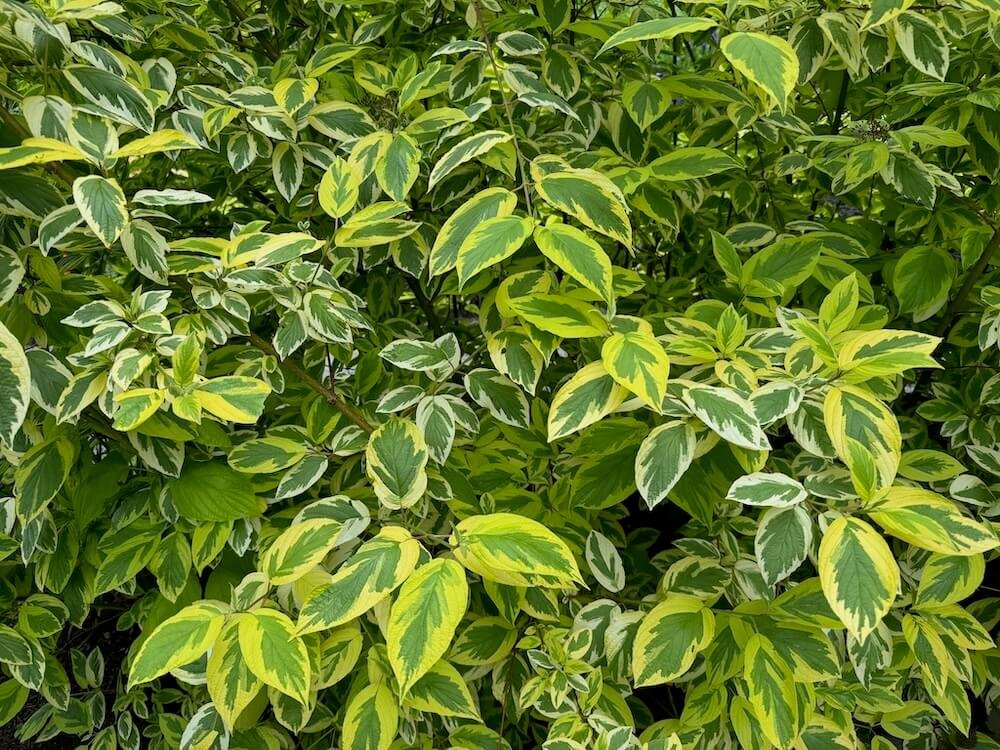
Dogwood shrubs can be used effectively as deciduous hedge plants, offering dense growth and multi-season interest while forming a natural, informal screen. Cornus sericea ‘Hedgerows Gold’ (shown here) is grown for its variegated foliage in green and yellow tones, creating a bright, textured backdrop that fills in well as a hedge during the growing season. Its branching habit allows it to form a cohesive planting while adding seasonal variation.
They are well suited to informal hedges, borders, or mass plantings where structure and adaptability are important. After leaf drop, the shrubs reveal vividly colored stems, with Cornus sericea ‘Flaviramea’ displaying bright yellow stems and Cornus alba ‘Elegantissima’ contributing red-toned stems that stand out through winter. Together, these selections provide dependable seasonal coverage, varied foliage color, and bold stem color for winter interest in hedge plantings.
LILAC (Syringa)
05
Highlights ►
8 to 15 ft tall
6 to 12 ft wide
Full sun
Deciduous
Moderate privacy
Moderate growth
Prune after flowering
Fragrant flowers
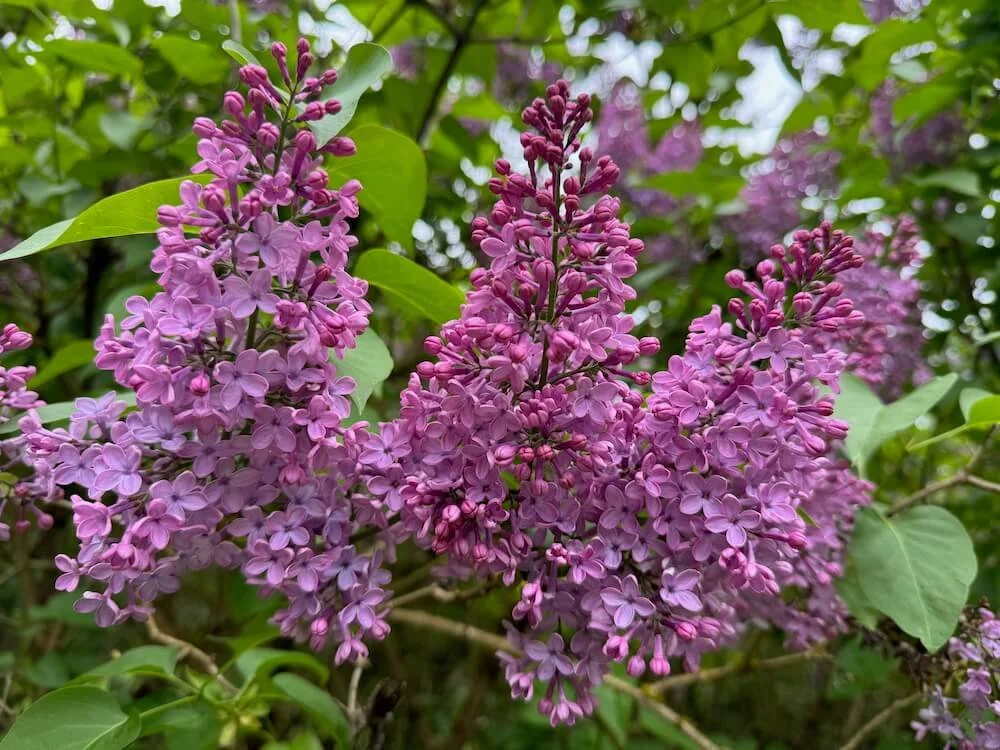
Lilacs offer a more relaxed approach to hedging, valued for their fragrant spring blooms and upright, multi-stemmed growth that creates a soft, seasonal screen rather than a tightly clipped barrier. Traditional forms such as Syringa vulgaris and its cultivars develop into dense, deciduous backdrops that work well for informal hedges, providing height, privacy, and a profusion of flowers in late spring. Selections such as Syringa x ‘Old Glory’ (shown here) add richly colored blooms with a classic form, enhancing the overall display.
For smaller spaces or lower borders, reblooming types like Syringa x ‘Bloomerang Dark Purple’ form compact mounds with repeat flowering, offering a more controlled edge while still delivering fragrance and color. While not suited to formal shearing, lilacs bring structure, scent, and seasonal interest to hedges and boundary plantings.
Related: Explore All Lilacs ➔
CHERRY LAUREL (Prunus)
06
Highlights ►
10 to 20 ft tall
6 to 12 ft wide
Full sun
Evergreen
Dense privacy
Fast growth
Tolerates pruning
Flowers
Laurel shrubs make excellent hedging plants, offering dense evergreen foliage and strong structure suited to both low borders and taller privacy screens. Upright forms such as Prunus lusitanica ‘Angustifolia’ develop into refined, closely branched hedges with glossy leaves that respond well to pruning, creating a polished, formal look.
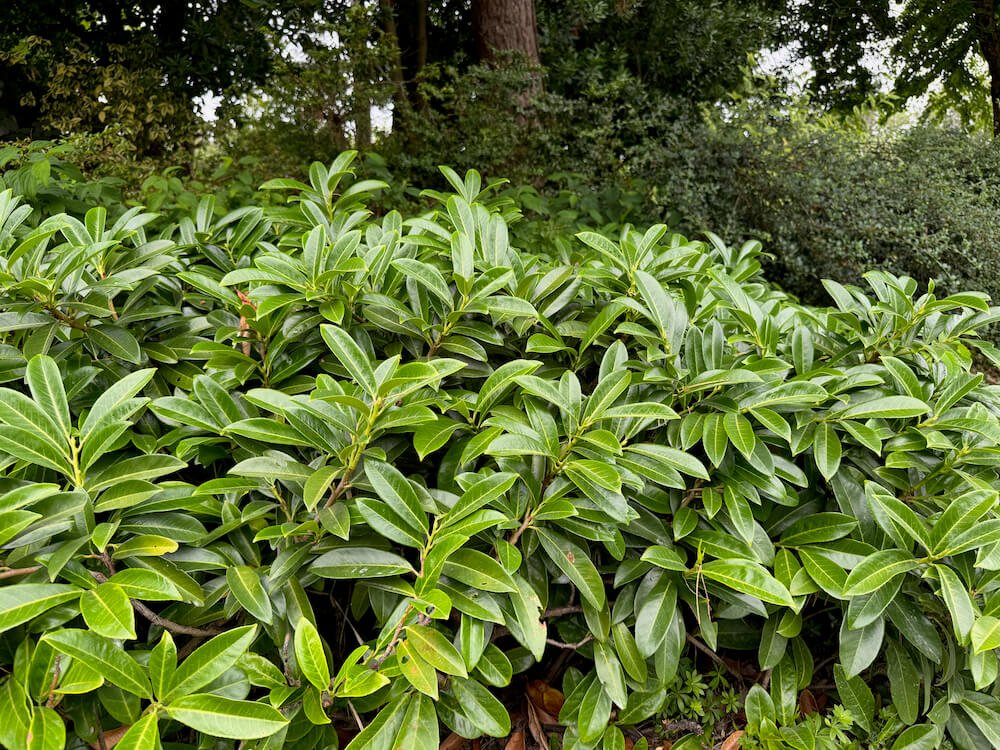
At the opposite end, Prunus laurocerasus ‘Mount Vernon’ (shown here) provides a low, spreading option, forming a broad, ground-hugging hedge that works especially well in shaded or woodland settings, where its compact habit and lustrous foliage create a dense layer for edging or subtle screening. Across the group, these shrubs are valued for their adaptability, evergreen presence, and ability to provide year-round structure, texture, and reliable coverage in a wide range of garden styles.
LAVENDER (Lavandula)
07
Highlights ►
1 to 3 ft tall
2 to 4 ft wide
Full sun
Evergreen
Low privacy
Moderate growth
Tolerates light pruning
Fragrant flowers
Lavender makes an excellent choice for low hedging, combining aromatic foliage, compact growth, and a naturally tidy habit that defines edges with both structure and seasonal color. Variegated selections such as Lavandula angustifolia ‘Platinum Blonde’ add an extra layer of interest, with green and cream foliage that brightens borders even when not in bloom. Its summer flowers attract pollinators and bring fragrance and movement to the garden.
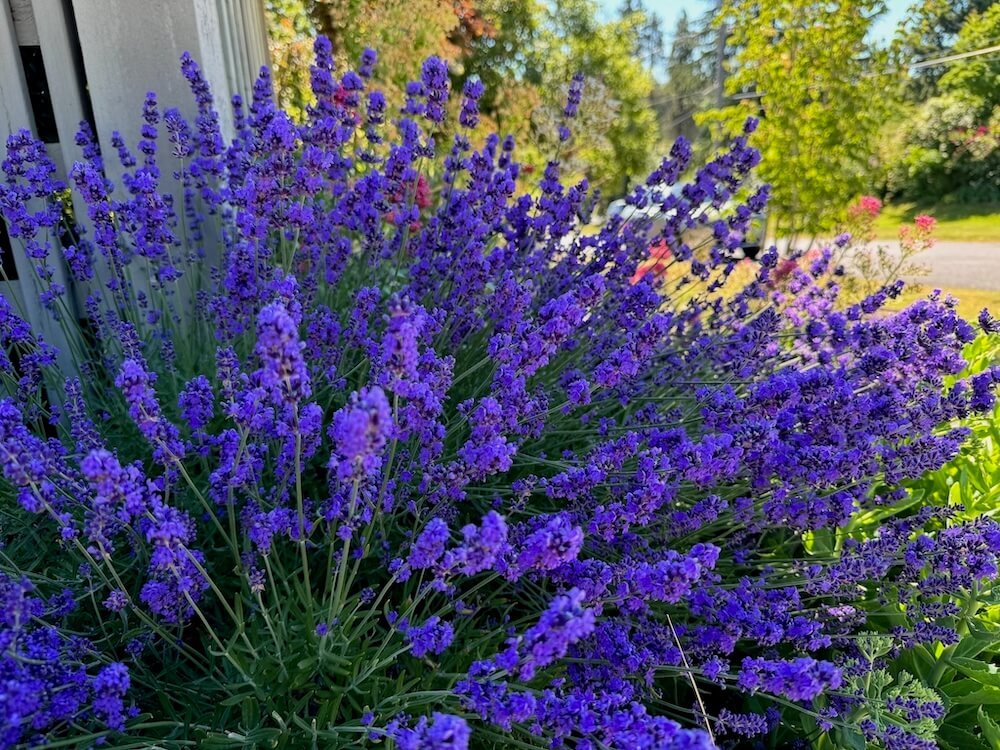
Lavandula angustifolia ‘Hidcote’ (shown here) forms a tighter, more compact hedge with deep purple flowers, making it especially suited to a neat, formal look. Lavandula angustifolia ‘Munstead’ has a slightly more relaxed habit, producing softer purple tones and showing greater tolerance to heat. With light pruning, these selections maintain a tidy shape while providing color, scent, and texture throughout the growing season.
YEW (Taxus)
08

Highlights ►
4 to 12 ft tall
4 to 10 ft wide
Shade
Evergreen
Dense privacy
Slow growth
Tolerates pruning
Flowers (inconspicuous)
Yew shrubs are well suited to hedging, with dense evergreen foliage and an exceptional ability to withstand repeated pruning, making them useful for both formal and informal screens. Their fine-textured needles and compact branching create long-lasting hedges that perform well even in shaded settings, forming solid, structured backdrops with minimal gaps.
Taxus x media ‘H.M. Eddie’ (shown here) develops a narrow, upright form that is especially useful for taller privacy hedges with a strong vertical presence. In contrast, Taxus baccata ‘Fastigiata Aurea’ offers a more architectural, columnar silhouette, with golden-toned foliage that brings added color and brightness to structured plantings. With regular trimming, they maintain a crisp, defined appearance, or can be allowed to grow more freely for a softer effect, providing reliable year-round structure.
HAWTHORN (Rhaphiolepis)
09
Highlights ►
4 to 6 ft tall
3 to 5 ft wide
Full sun
Evergreen
Dense for privacy
Moderate growth
Flowers
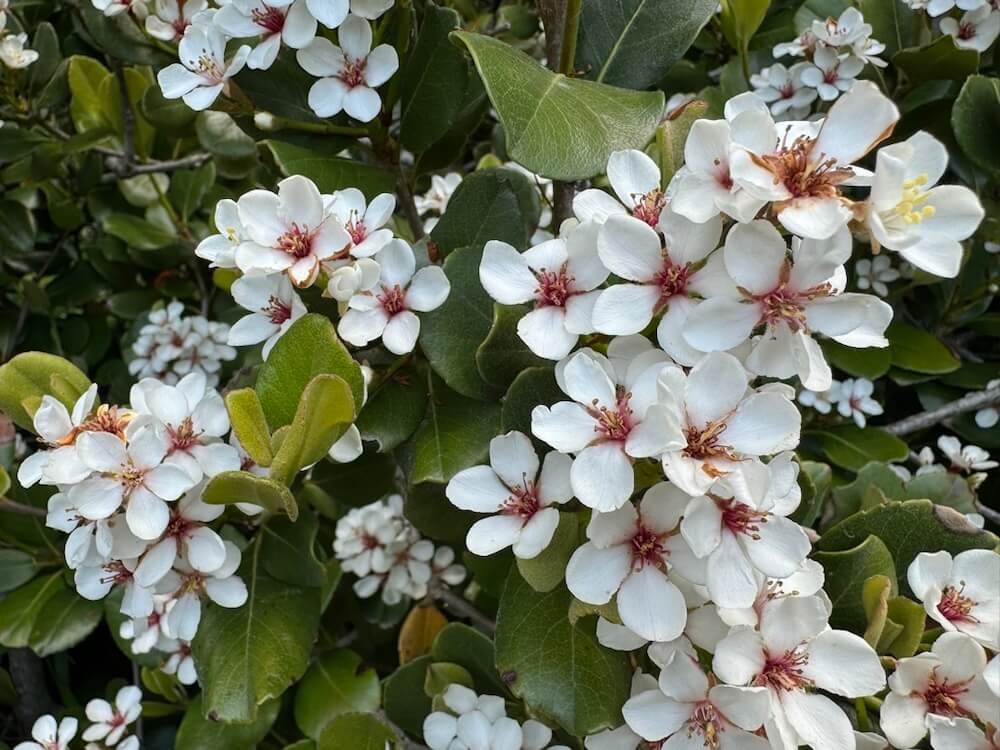
Hawthorn makes an effective choice for low to medium height hedging, combining dense evergreen foliage with a naturally rounded habit that creates a full, cohesive screen. Glossy, leathery leaves form a tidy backdrop, while clusters of spring flowers support pollinators. Its adaptability to heat, coastal exposure, and urban conditions makes it a dependable option for a range of landscapes, including challenging sites with wind, salt, and reflected heat exposure.
Rhaphiolepis indica forms a compact, mounded hedge with a refined texture, making it well suited to foundation plantings and lower borders. Rhaphiolepis umbellata (shown here) develops a broader, more robust form with larger leaves, creating a fuller hedge. With occasional pruning, both can be maintained as neat, structured hedges or allowed to grow more freely for a softer effect, providing reliable year-round structure.
HEAVENLY BAMBOO (Nandina)
10
Highlights ►
3 to 8 ft tall
2 to 4 ft wide
Full sun
Evergreen
Light privacy
Moderate growth
Minimal pruning needed
Flowers
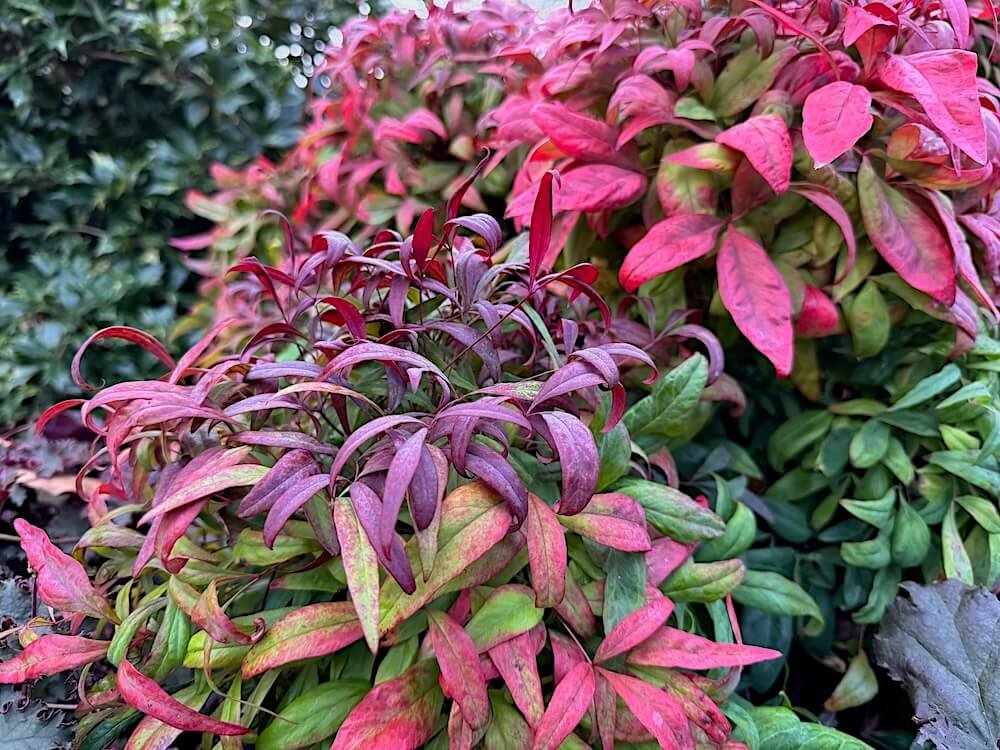
Heavenly bamboo makes a versatile hedge plant, offering fine texture and year-round color while forming a light, layered screen. Nandina domestica ‘Gulf Stream’ is grown for its dense, upright habit and foliage that shifts through green, orange, and red tones, creating a cohesive hedge with seasonal variation. Its compact growth allows it to fill in evenly with minimal pruning, while maintaining a clean, structured appearance.
They are well suited to low hedges, borders, or foundation plantings where structure and color are desired without a heavy, formal look. Nandina domestica ‘Fire Power’ (shown here) provides a lower, mounded form with foliage that turns vivid red in cooler weather, while Nandina domestica ‘Monfar’ offers a more upright habit with bright red new growth. Together, these selections provide dependable coverage, changing foliage color, and a refined presence in hedge plantings.
MEXICAN ORANGE BLOSSOM (Choisya)
11

Highlights ►
4 to 8 ft tall
4 to 8 ft wide
Full sun
Evergreen
Dense privacy
Moderate growth
Tolerates pruning
Fragrant flowers
Mexican orange blossom makes an effective hedge plant, combining dense evergreen foliage with fragrant flowers to create a full, polished screen. Choisya ternata is grown for its naturally rounded habit and glossy green leaves, along with clusters of white, citrus-scented flowers that appear in spring and often again later in the season. Its consistent growth and tidy form allow it to knit together into a cohesive hedge with minimal pruning, forming a dense, uniform barrier that maintains its shape year-round.
They are well suited to hedges, borders, or foundation plantings where year-round structure and seasonal bloom are desired. Choisya ternata ‘Sundance’ (shown here) adds golden foliage that brightens the planting, while Choisya x dewitteana ‘Aztec Pearl’ offers a finer texture with narrow leaves and delicate white flowers. Together, these selections provide evergreen coverage, fragrance, and a refined presence in hedge plantings.
WILLOW (Salix-shrub forms)
12
Highlights ►
6 to 15 ft tall
6 to 12 ft wide
Full sun
Deciduous
Moderate privacy
Fast growth
Tolerates heavy pruning
Flowers
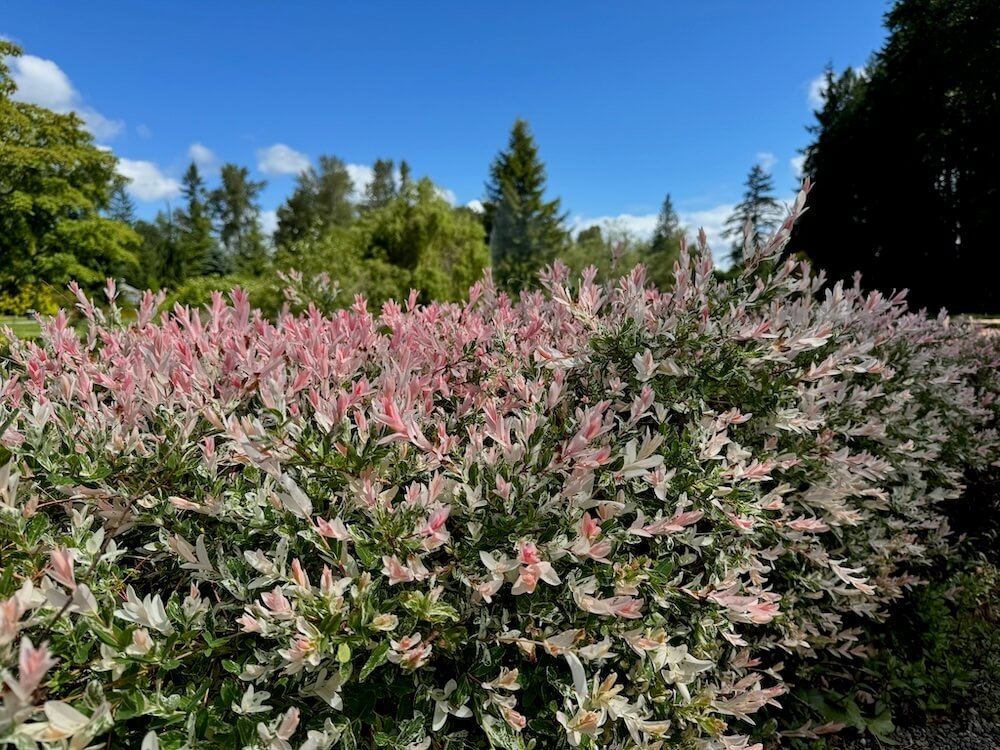
Willow hedges are selected for their rapid growth and adaptability, forming effective screens in a wide range of conditions, including damp soils and exposed, windy sites. Many develop into dense, flexible hedges that establish quickly and are easily propagated from cuttings, making them a practical choice for larger plantings.
Compact forms such as Salix purpurea ‘Nana’ create low, finely textured hedges with good deer resistance, while Salix integra ‘Flamingo’ (shown here) adds a brighter element with variegated foliage flushed in pink, cream, and green. With regular pruning, willows can be maintained as tidy boundaries or allowed to grow more freely for a softer effect. Across the group, they offer seasonal color, strong structure, and valuable habitat for pollinators and beneficial insects.
ABELIA
13
Highlights ►
3 to 6 ft tall
3 to 6 ft wide
Full sun
Evergreen
Light privacy
Moderate growth
Tolerates pruning
Long blooming flowers
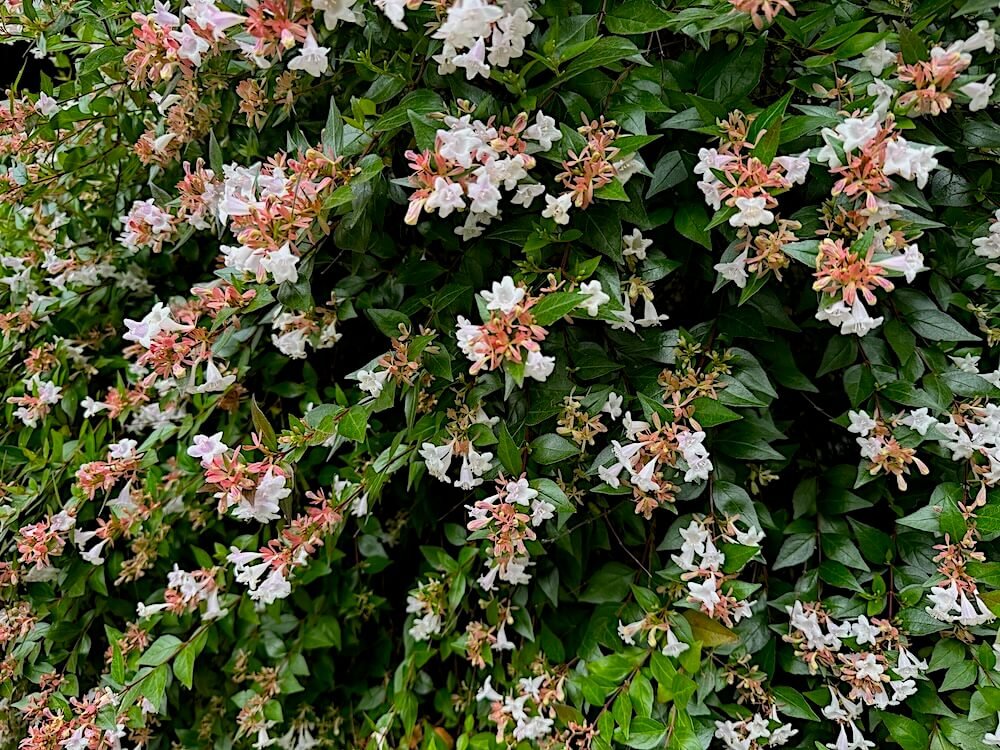
Abelias are multi-purpose shrubs well suited for informal hedging, valued for their graceful, arching branches that knit together to create a dense, lightly screening backdrop. Selections such as Abelia x grandiflora (shown here) develop into airy yet full hedges, offering extended summer bloom with small, fragrant flowers that draw in pollinators, while remaining adaptable and easy to maintain.
More compact cultivars like Abelia x grandiflora ‘Kaleidoscope’ add a lower, colorful layer, with foliage that shifts through tones of yellow, gold, orange, and green over the seasons. Across the genus, abelias are notably resilient—tolerating dry conditions once established and rarely troubled by pests—making them reliable, multi-season choices for soft, flowering hedges.
BOXWOOD (Buxus)
14
Highlights ►
2 to 6 ft tall
2 to 5 ft wide
Partial shade
Evergreen
Dense privacy
Slow growth
Excellent pruning tolerance
Flowers-subtle
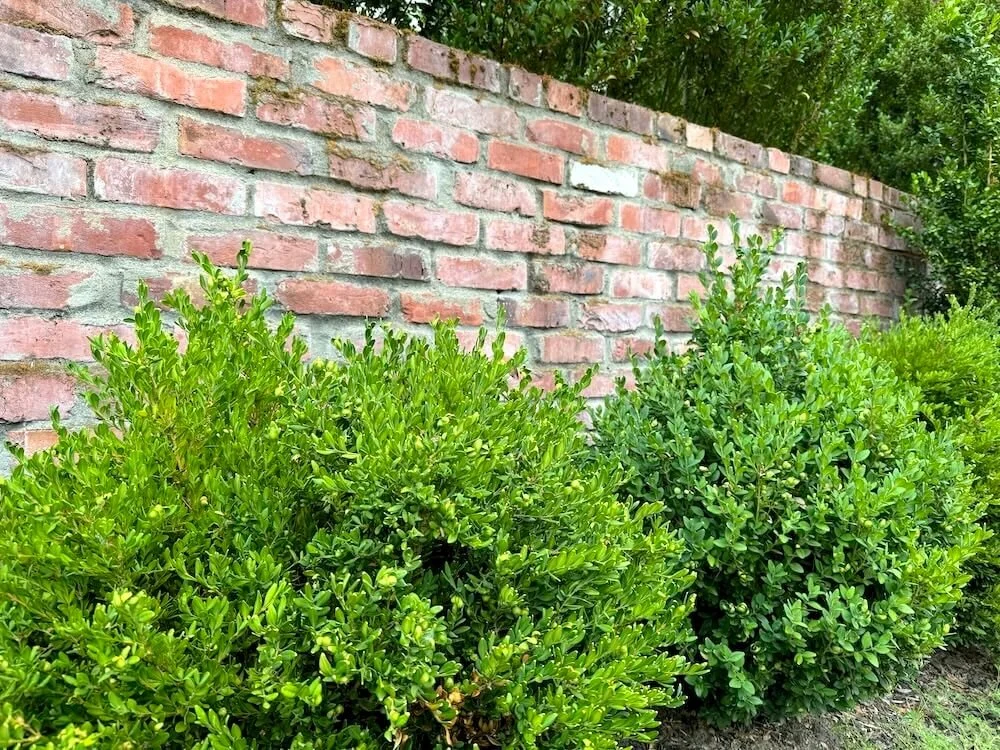
Boxwoods are classic hedging shrubs valued for their dense, evergreen foliage and exceptional response to pruning, making them one of the best choices for creating clean, structured lines in the landscape. Their naturally compact growth and small, leathery leaves form a tight surface that can be shaped into low borders or taller privacy screens, while remaining low maintenance.
Cultivars such as Buxus microphylla var. ‘Winter Gem’ (shown here) are especially prized for holding rich green color through winter, while Buxus microphylla var. ‘Green Beauty’ offers a slightly fuller habit with good heat tolerance. Across the genus, boxwoods provide reliable year-round structure and versatility, working equally well in formal hedges, foundation plantings, and clipped garden designs.
WEIGELA
15

Highlights ►
4 to 8 ft tall
4 to 8 ft wide
Full sun
Deciduous
Moderate privacy
Moderate growth
Prune after flowering
Flowers
Weigela makes an effective choice for informal hedging, combining arching growth with dense foliage that creates a full, flowering screen. Weigela florida is grown for its naturally spreading habit and profusion of tubular blooms in shades of pink in late spring, often followed by lighter repeat flowering. Its adaptable nature and easy response to pruning allow it to fill in quickly while maintaining a relaxed, cohesive form, creating a dense, visually appealing hedge that softens garden boundaries beautifully.
Weiglea is well suited to borders, low hedges, or mixed plantings where seasonal color and soft structure are desired. Weigela florida ‘Kolsunn’ (shown here) adds improved reblooming with soft pink flowers and variegated foliage that brightens the planting, while Weigela ‘Looymansii Aurea’ offers golden leaves that contrast with its soft pink blooms. Together, these selections provide dependable coverage, layered color, and a natural, flowering hedge effect.
SPOTTED LAUREL (Aucuba)
16
Highlights ►
6 to 10 ft tall
5 to 8 ft wide
Shade
Evergreen
Dense privacy
Moderate growth
Tolerates pruning
Flowers
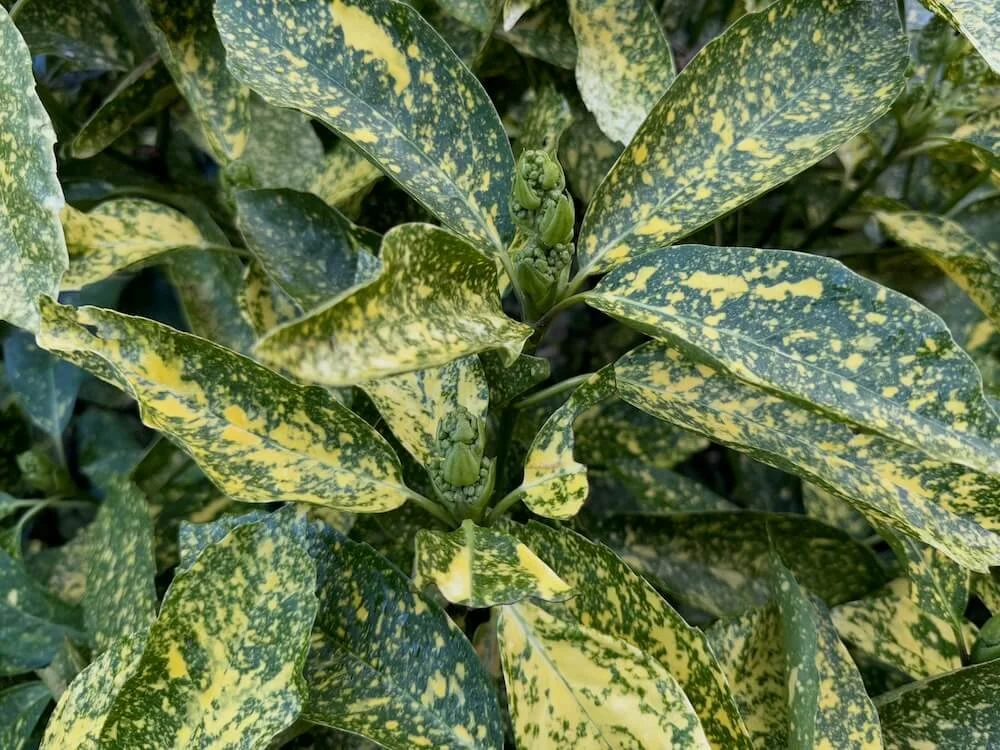
Spotted laurel makes an effective hedge plant, valued for its dense evergreen foliage and ability to form a full, reliable screen even in shaded conditions. Aucuba japonica ‘Variegata’ (shown here) is grown for its broad, glossy leaves splashed with yellow, creating a bright, patterned backdrop that holds its color throughout the year. Its naturally upright, bushy habit allows it to knit together into a cohesive hedge with minimal pruning.
They are well suited to hedges, borders, or foundation plantings where year-round coverage and tolerance of shade are important. Aucuba japonica ‘Gold Dust’ offers heavily speckled foliage for a more diffuse golden effect, while Aucuba japonica ‘Mr. Goldstrike’ features larger leaves with bold yellow markings that stand out more distinctly. Together, these selections provide dependable structure, vibrant foliage contrast, and a strong evergreen presence in hedge plantings.
HOLLY (Ilex)
17
Highlights ►
6 to 15 ft tall
4 to 10 ft wide
Full sun
Evergreen
Dense privacy
Slow growth
Tolerates pruning
Flowers
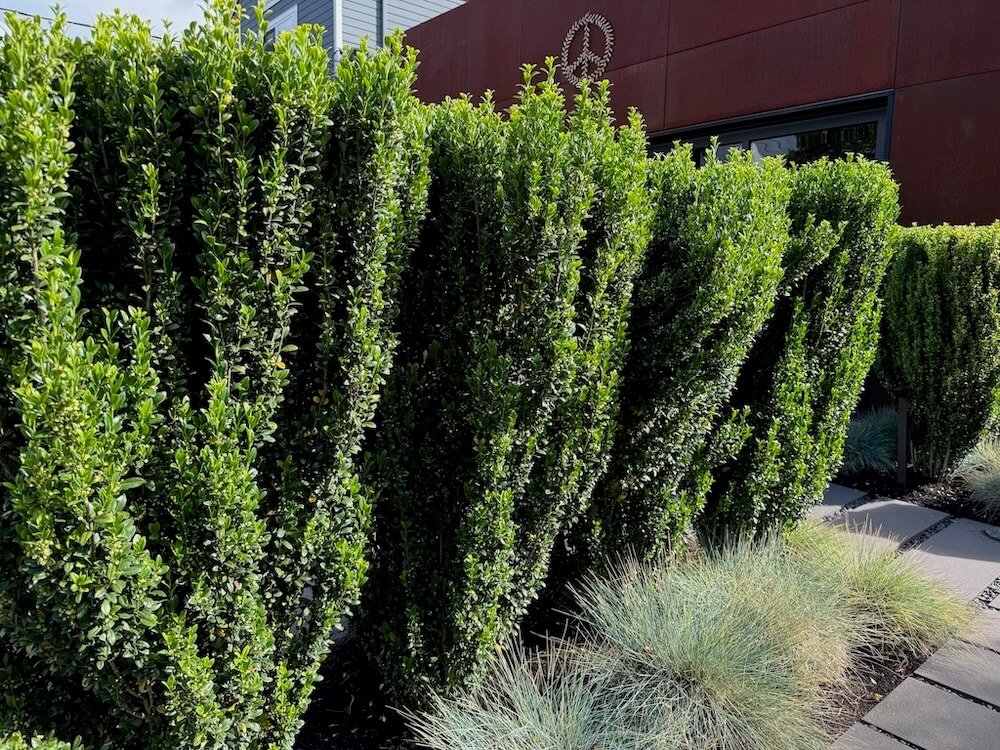
Hollies are versatile hedging shrubs appreciated for their evergreen foliage, strong structure, and ability to create both formal and informal screens. Fine-textured types such as Ilex crenata ‘Compacta’ form dense, compact hedges that can be clipped into clean lines, often serving as a boxwood alternative, while narrow, upright selections like Ilex crenata ‘Sky Pencil’ (shown here) are useful for vertical accents or tight spaces within a hedge design.
For larger, more protective screens, Ilex x meserveae ‘Blue Princess’ offers a broader, more vigorous habit with glossy, spined leaves and good cold tolerance. Across the genus, hollies provide year-round coverage, architectural form, and seasonal interest, making them reliable choices for structure and privacy in the landscape.