Potentilla thurberi 'Monarch's Velvet' | Monarch's Velvet Cinquefoil

$0.00

DESCRIPTION
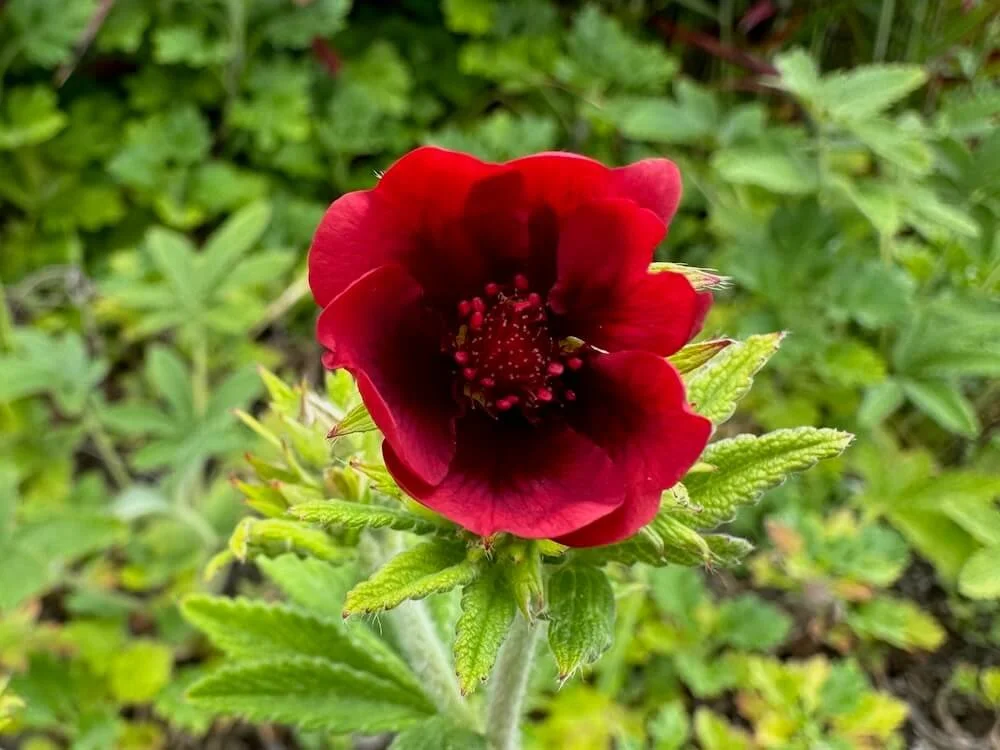
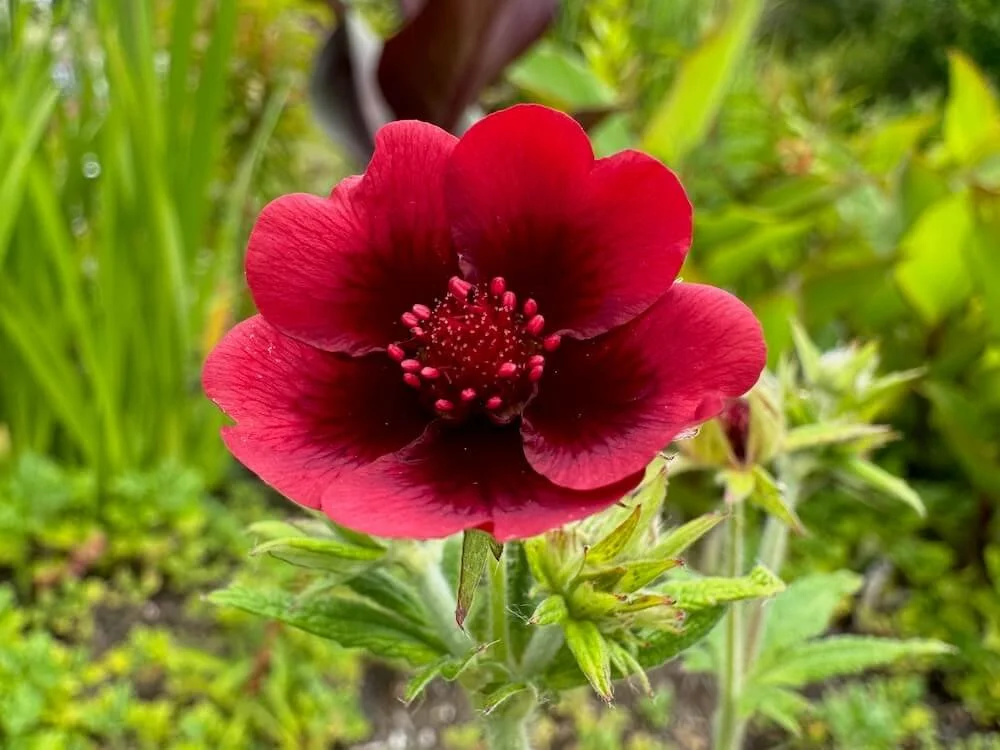
Potentilla thurberi ‘Monarch’s Velvet’ forms a clump of finely divided green foliage that creates a light, textured presence in the garden. From early to midsummer, often extending into late summer, deep red velvety flowers with a darker central eye rise on slender stems above the leaves, each five petaled bloom adding sustained color over many weeks.

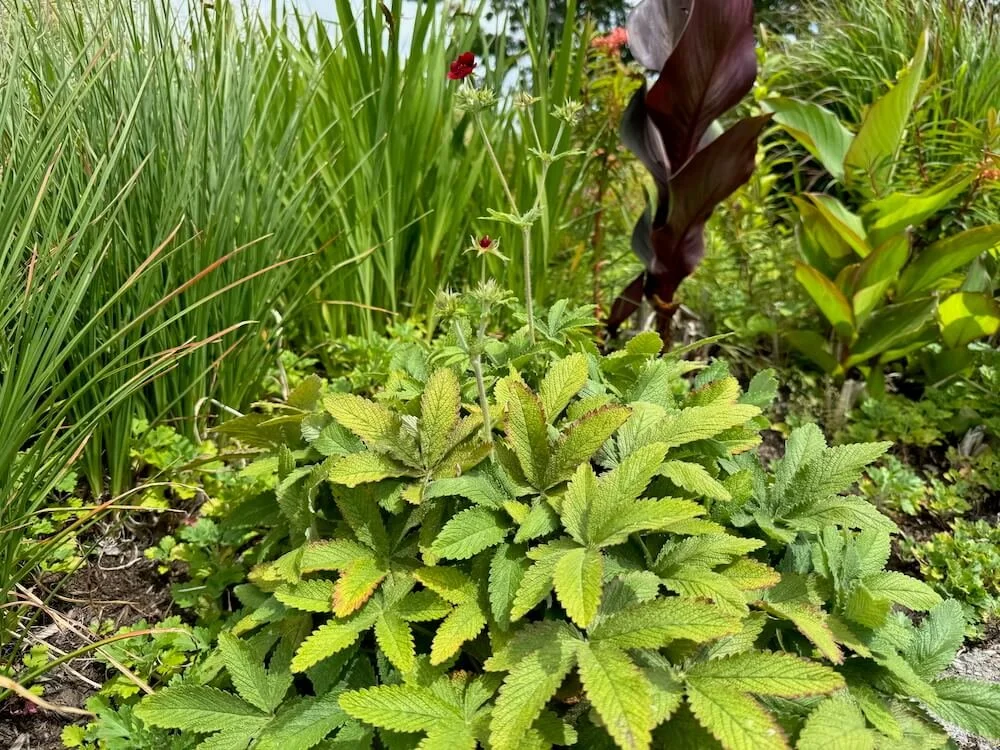
Native to the southwestern United States and northern Mexico, the species grows naturally in upland meadows and mountain slopes. In garden settings, ‘Monarch’s Velvet’ lends itself to sunny borders, cottage plantings, and naturalistic designs, where its airy stems weave easily among grasses and perennials.

DESCRIPTION
Potentilla thurberi ‘Monarch’s Velvet’ forms a clump of finely divided green foliage that creates a light, textured presence in the garden. From early to midsummer, often extending into late summer, deep red velvety flowers with a darker central eye rise on slender stems above the leaves, each five petaled bloom adding sustained color over many weeks.

Native to the southwestern United States and northern Mexico, the species grows naturally in upland meadows and mountain slopes. In garden settings, ‘Monarch’s Velvet’ lends itself to sunny borders, cottage plantings, and naturalistic designs, where its airy stems weave easily among grasses and perennials.

 
  • Family: Rosaceae
    Height: 24 to 30 inches
    Width: 18 to 24 inches
    Foliage color: Soft green finely divided foliage forming a loose upright clump
    Flower color: Deep velvety maroon red flowers with dark centers
    Bloom time: Early summer to late summer
    Light requirements: Full sun to light partial shade
    Water requirements: Moderate moisture in well drained soil; drought tolerant once established
    Maintenance: Low; cut back spent stems after flowering to promote continued bloom and maintain shape
    Growing zone: USDA zones 5 to 8
    Wildlife attractors: Attracts bees and butterflies

    This plant can be seen at the Center for Urban Horticulture.
    Print Information

    Buy Plants