Rodgersia podophylla | Rodger's Flower

$0.00

DESCRIPTION
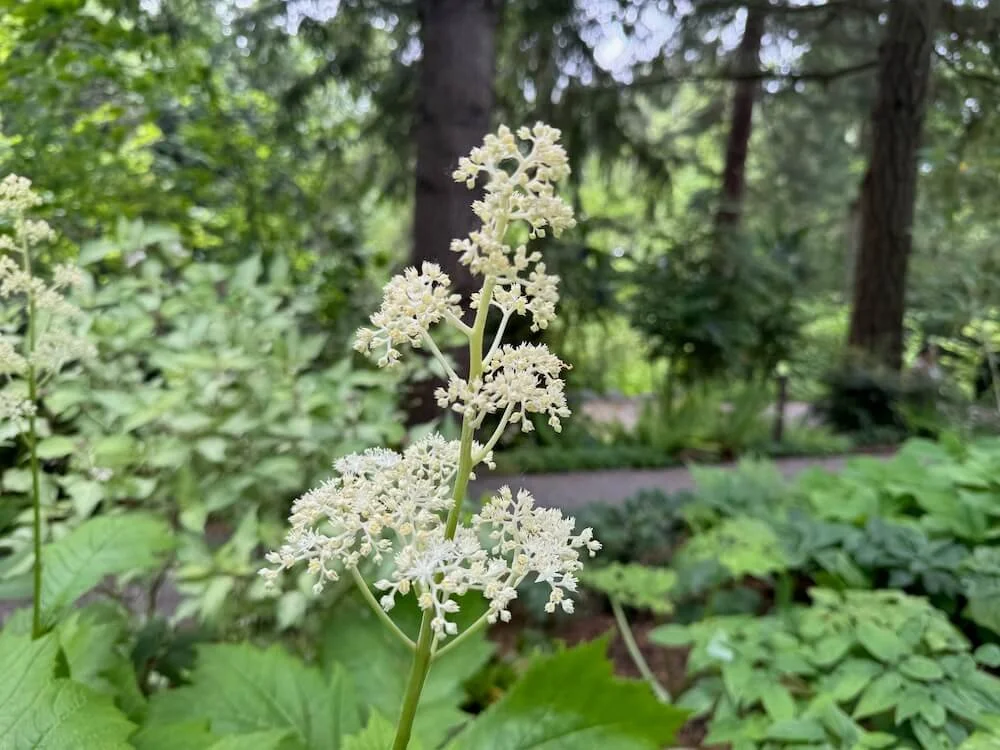
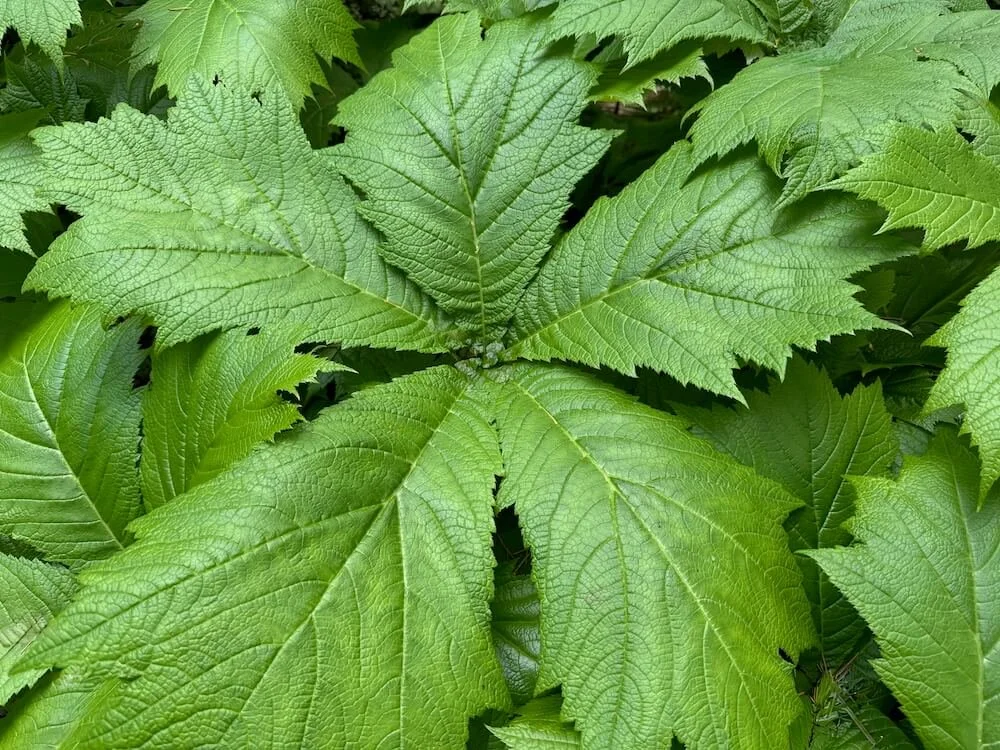
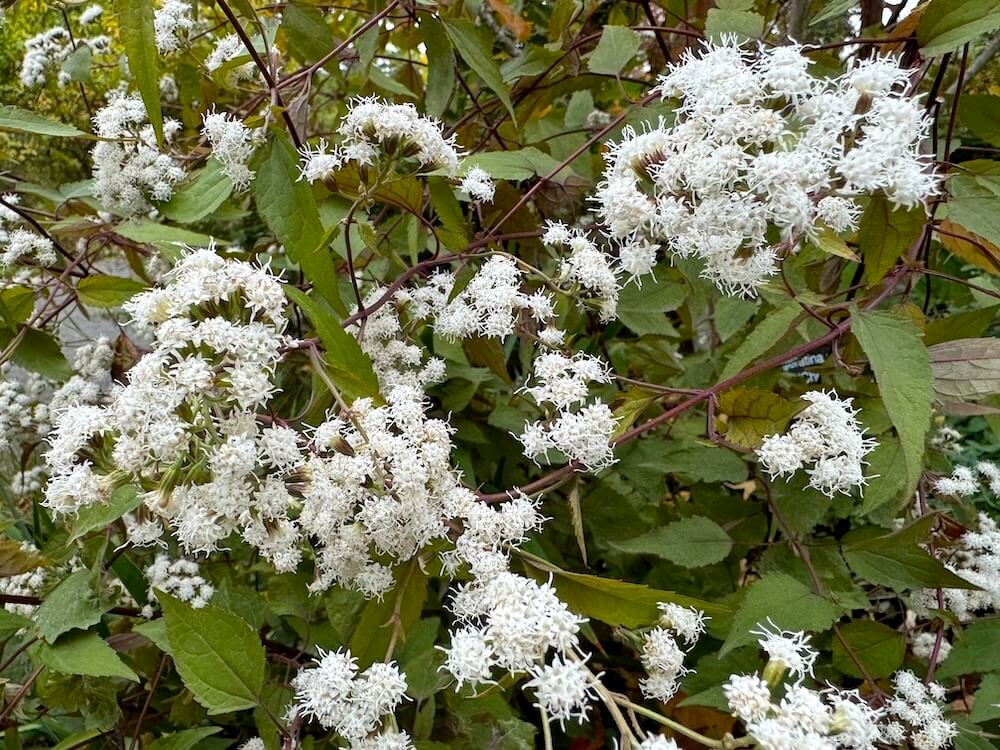
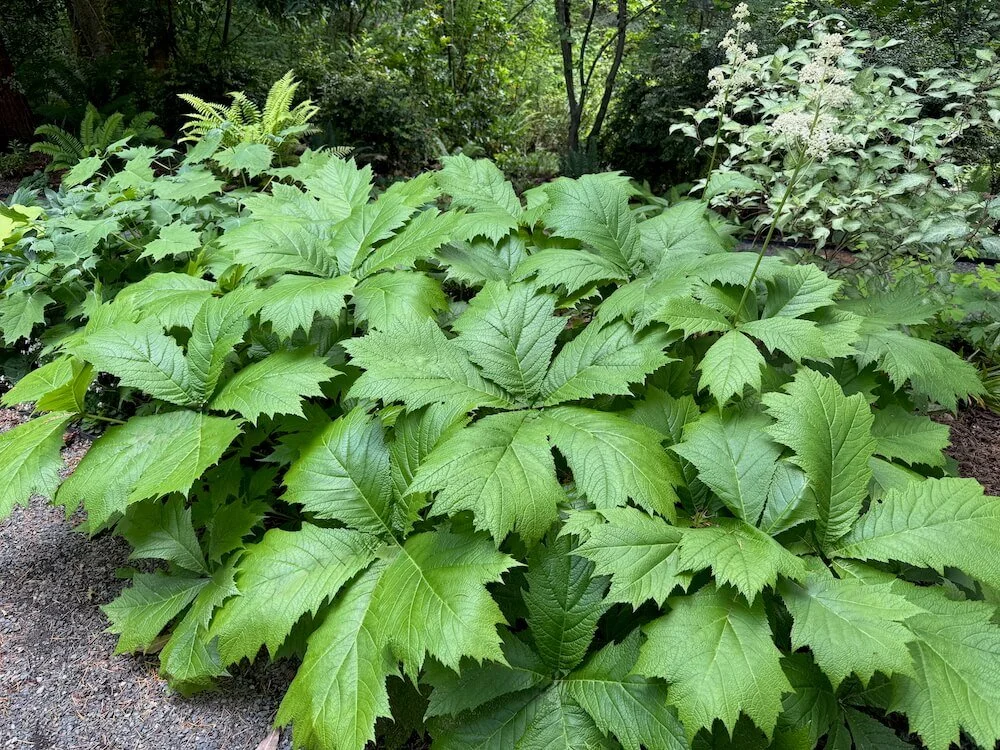
Rodgersia podophylla forms bold, palmate leaves divided into broad, toothed leaflets that emerge bronze tinted in spring before maturing to deep green. The large foliage creates a substantial presence in shaded plantings. In early to midsummer, tall plumes of creamy white flowers rise above the leaves, composed of many small blooms that open in airy panicles and age to soft pink tones.

Native to woodland regions of Japan and Korea, the species grows along forest margins and moist mountain slopes. In gardens, it lends structure to shaded borders, woodland settings, and water side plantings where its dramatic foliage and upright flower panicles provide seasonal interest.

DESCRIPTION
Rodgersia podophylla forms bold, palmate leaves divided into broad, toothed leaflets that emerge bronze tinted in spring before maturing to deep green. The large foliage creates a substantial presence in shaded plantings. In early to midsummer, tall plumes of creamy white flowers rise above the leaves, composed of many small blooms that open in airy panicles and age to soft pink tones.

Native to woodland regions of Japan and Korea, the species grows along forest margins and moist mountain slopes. In gardens, it lends structure to shaded borders, woodland settings, and water side plantings where its dramatic foliage and upright flower panicles provide seasonal interest.

 
  • Family: Saxifragaceae
    Height: 36 to 48 inches
    Width: 36 to 60 inches
    Foliage color: Large bold palmate leaves emerging bronze in spring and maturing to rich green
    Flower color: Creamy white to soft pink plumes held above the foliage
    Bloom time: Early to mid summer
    Light requirements: Partial shade to full shade
    Water requirements: Consistent moisture in rich humus soil that remains evenly moist
    Maintenance: Low; divide clumps in early spring and provide mulch to retain soil moisture
    Growing zone: USDA zones 5 to 8
    Wildlife attractors: Attracts bees and other pollinators

    This plant can be seen at the Bellevue Botanical Garden.
    Print Information

    Buy Plants