
Best Shrubs
to Attract
Hummingbirds
Shrubs that attract hummingbirds add color, motion, and seasonal interest to the landscape, with blooms appearing at different times from spring through fall. Their flowers help brighten borders, and create a garden that feels more dynamic and immersive throughout the year. As hummingbirds return to favored feeding areas, these shrubs can bring a greater sense of activity and connection to the garden, turning everyday moments outdoors into something more engaging and memorable.
WHY SHRUBS ARE IMPORTANT TO HUMMINGBIRDS
Reliable nectar sources:
Flowering shrubs provide dependable nectar over longer periods than many perennials, making them especially valuable during seasonal transitions when fewer plants are in bloom. Early and late flowering shrubs can help support hummingbirds during migration and cooler weather when food sources may be limited.
Shelter and protection:
Dense branching creates protected spaces where hummingbirds can rest, perch, and take cover from wind, rain, and predators. Evergreen shrubs are particularly important in cooler climates, offering year-round shelter even when other plants have gone dormant.
Nesting habitat:
Many shrubs provide safe nesting locations concealed within dense foliage and branching structures. Fine twigs, bark fibers, moss, and nearby plant material can also supply useful nesting materials during breeding season.
Territory and feeding routes:
Hummingbirds are highly territorial and often establish regular feeding patterns throughout the garden. Shrubs help create protected pathways and visual boundaries that hummingbirds repeatedly travel between while feeding and resting.
Seasonal continuity:
By combining shrubs with different bloom periods, gardens can provide a more continuous source of nectar from late winter into fall. This steady availability encourages repeat visits and helps sustain hummingbird activity across changing seasons.

Winter Blooming Shrubs for Hummingbirds
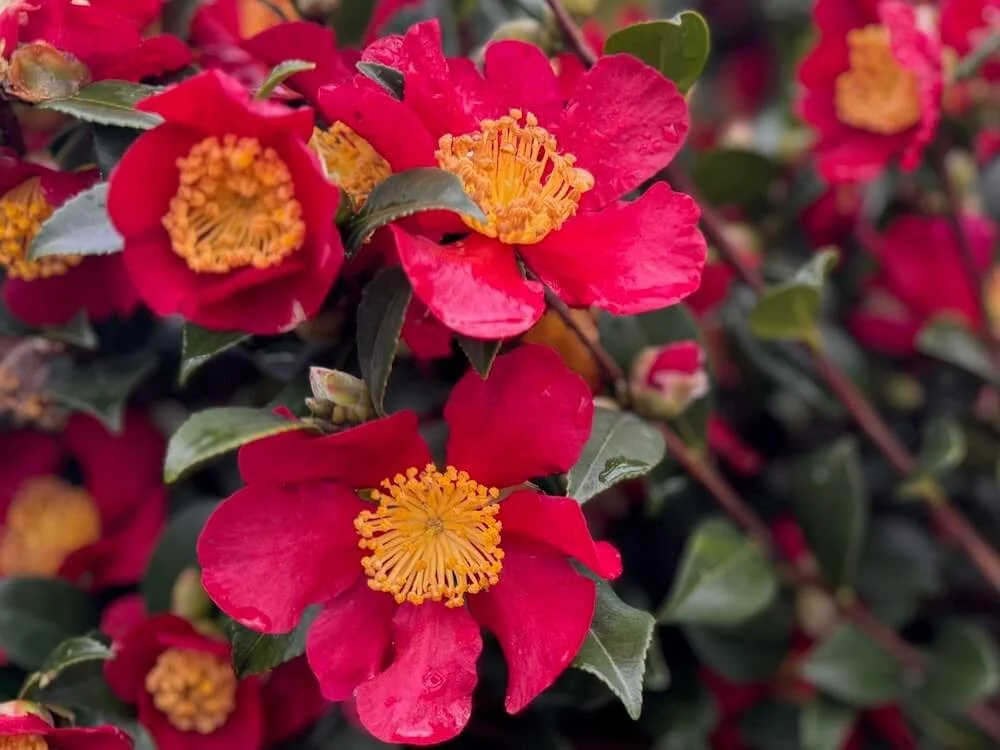
Camellia sasanqua 'Yuletide'
Evergreen shrub with glossy dark green foliage forming dense cover. Produces vivid red flowers with prominent golden stamens that attract hummingbirds. Grows 6 to 10 feet tall, ideal for winter interest and sheltered plantings. Zones: 7 to 9.
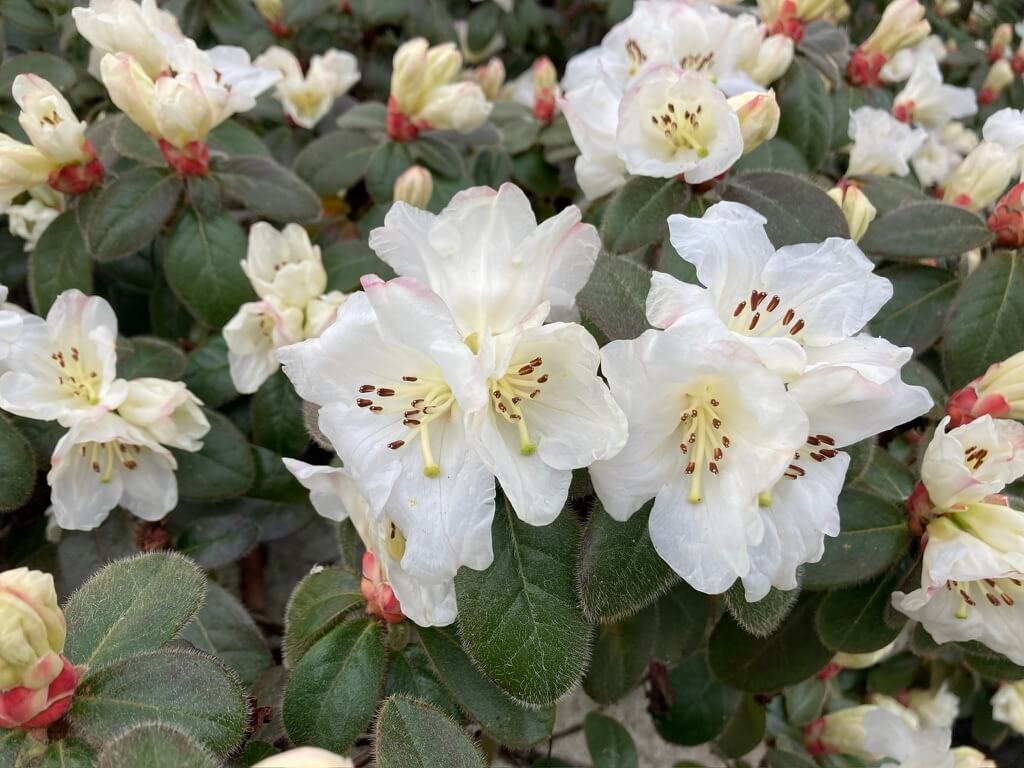
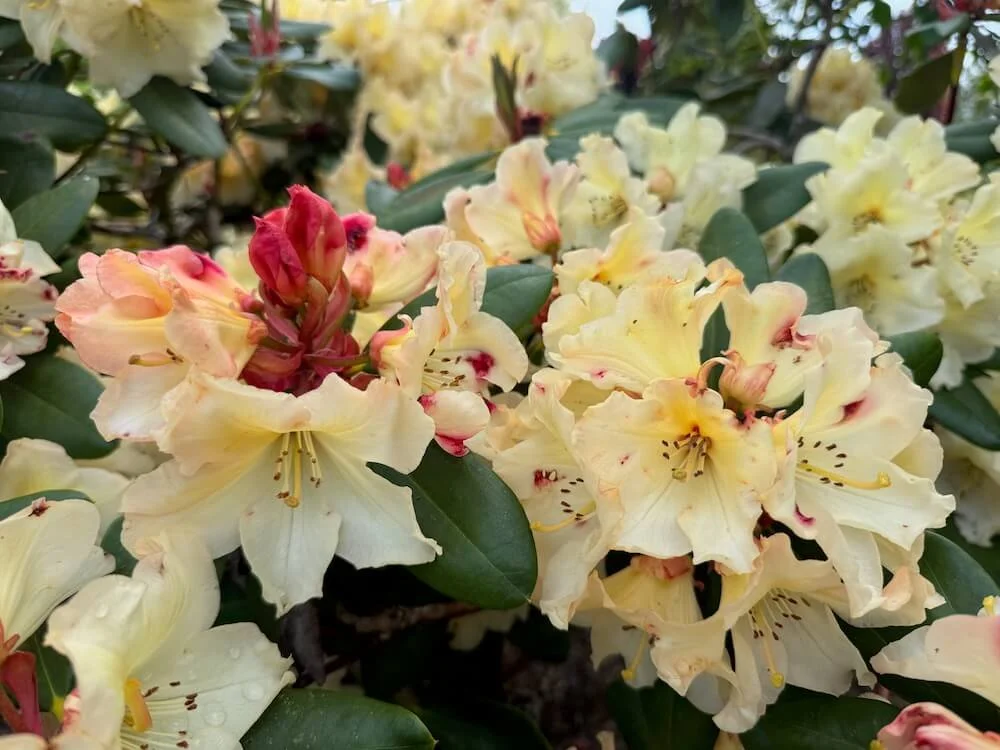
Rhododendron ‘Snow Lady’
Evergreen shrub with dense dark green foliage and pure white spring flowers with prominent anthers. Attracts pollinators, forms tidy compact growth, and grows 2 to 3 feet tall. Ideal for low hedges, borders, and formal woodland edges. Zones: 5 to 8.

Hamamelis x intermedia ‘Jelena’
Deciduous shrub with vase-shaped branching and copper orange fragrant winter flowers. Attracts pollinators, and develops layered growth. Grows 10 to 15 feet tall, ideal for screens, borders, and seasonal structure. Zones: 5 to 8.
Other Notable Winter Blooming Shrubs for Hummingbirds
Arctostaphylos densiflorus 'Sentinel': Clusters of soft pink, urn shaped flowers
Daphne odora ‘Aueromarginata’: Pale pink buds open to white flushed flowers with rich fragrance
Edgeworthia chrysantha ‘Akebono’: Pendant clusters of deep orange yellow flowers
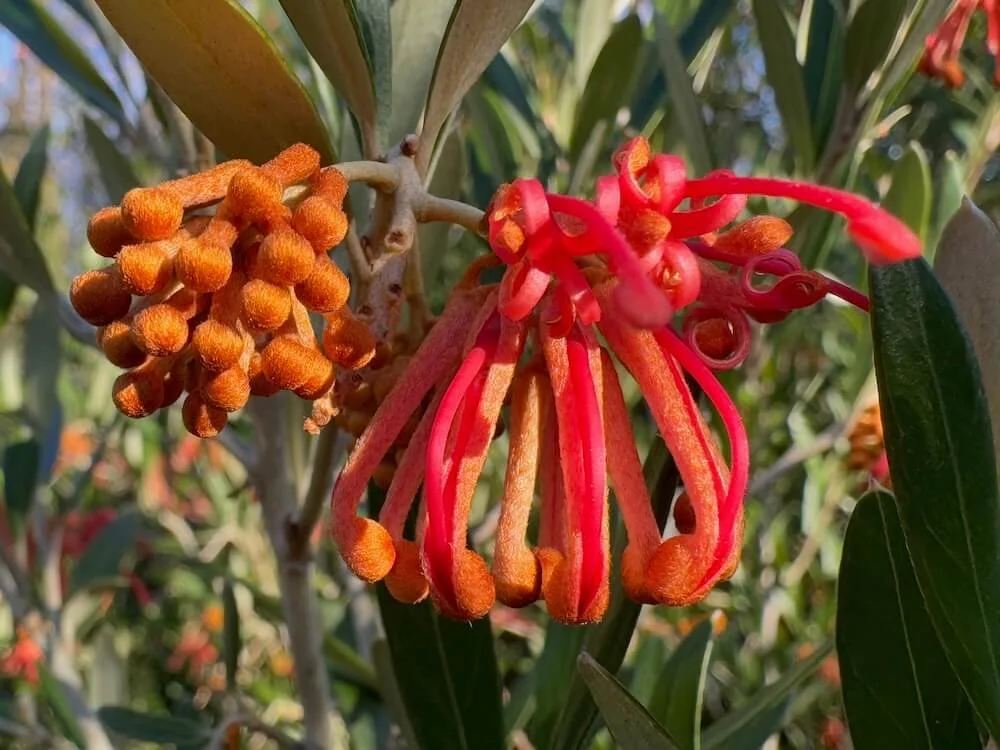
Grevillea victoriae 'Marshall Olbricht': Curved orange red flowers bloom over a long season
Pieris japonica 'Shy': Cascading blush pink flower clusters
Sarcococca confusa: Small creamy, fragrant white flowers tucked beneath the foliage
DESIGNING A HUMMINGBIRD-FRIENDLY GARDEN
Layered plantings:
Combining shrubs of different heights creates a more natural environment that offers both feeding opportunities and protected cover. Taller shrubs can provide shelter and perching areas, while lower flowering plants fill in nectar sources closer to the ground.
Bloom succession:
Selecting shrubs with staggered flowering times helps maintain nectar availability over a longer season. Pairing winter, spring, summer, and fall bloomers creates a garden that remains active and visually interesting for both hummingbirds and gardeners.
Grouping plants together:
Planting shrubs in clusters or repeated groupings makes flowers easier for hummingbirds to locate while creating greater visual impact in the landscape. Larger masses of blooms are often more attractive to visiting birds than isolated individual plants.
Balancing sun and shelter:
Hummingbirds feed most actively in sunny areas but also rely on nearby cover for protection and resting. Designing planting areas with both open flowering spaces and sheltered shrubs helps create a more comfortable environment throughout the day.
Combining shrubs with other plants:
Shrubs pair naturally with perennials, vines, grasses, and small trees that also attract hummingbirds. Mixing plant forms and textures creates layered habitat while extending bloom season and increasing overall garden diversity.
Small-space gardens and containers:
Even small gardens, patios, and balconies can support hummingbirds when flowering shrubs are incorporated into containers or compact planting areas. Dwarf and container-friendly shrubs help bring nectar sources closer to outdoor living spaces where hummingbird activity can be enjoyed up close.
Spring Blooming Shrubs for Hummingbirds
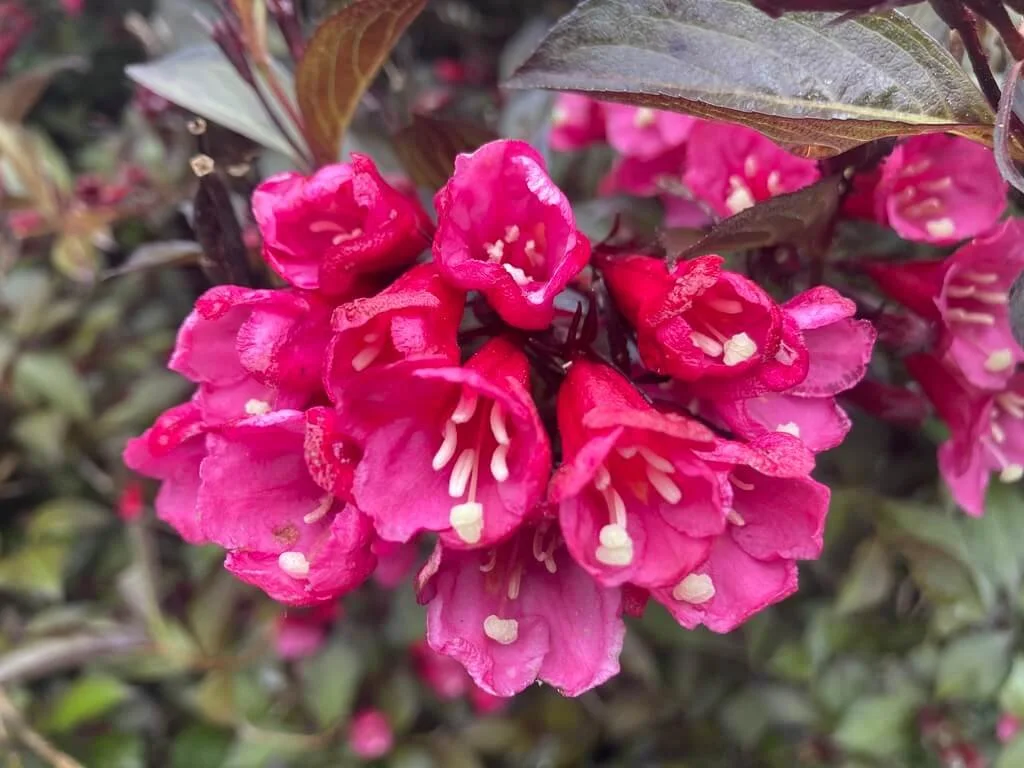
Weigela florida ‘Alexandra’
Deciduous shrub with deep burgundy foliage forming a dense mound. Produces funnel-shaped rosy pink flowers, and grows 4 to 6 feet tall. Ideal for borders and wildlife plantings. Zones: 4 to 8.
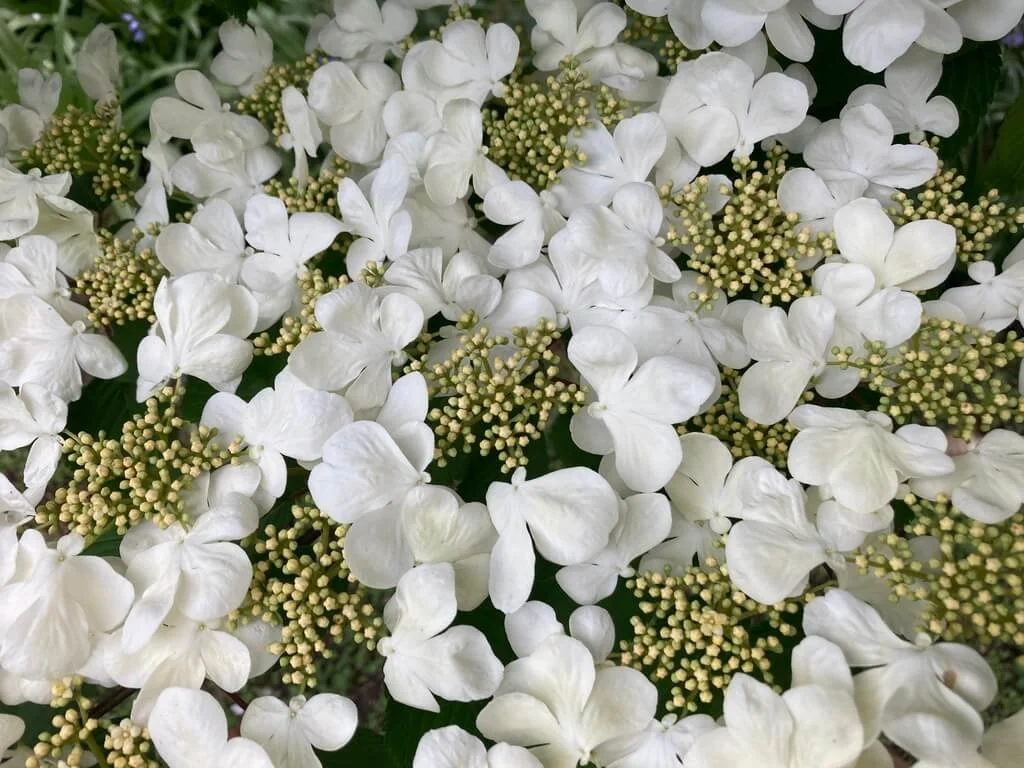
Viburnum plicatum ‘Mariesii’
Deciduous shrub with layered branching and green foliage; forming a horizontal habit. Produces lacecap white flowers, and grows 8 to 12 feet tall. Ideal for borders and woodland wildlife plantings. Zones: 5 to 8.
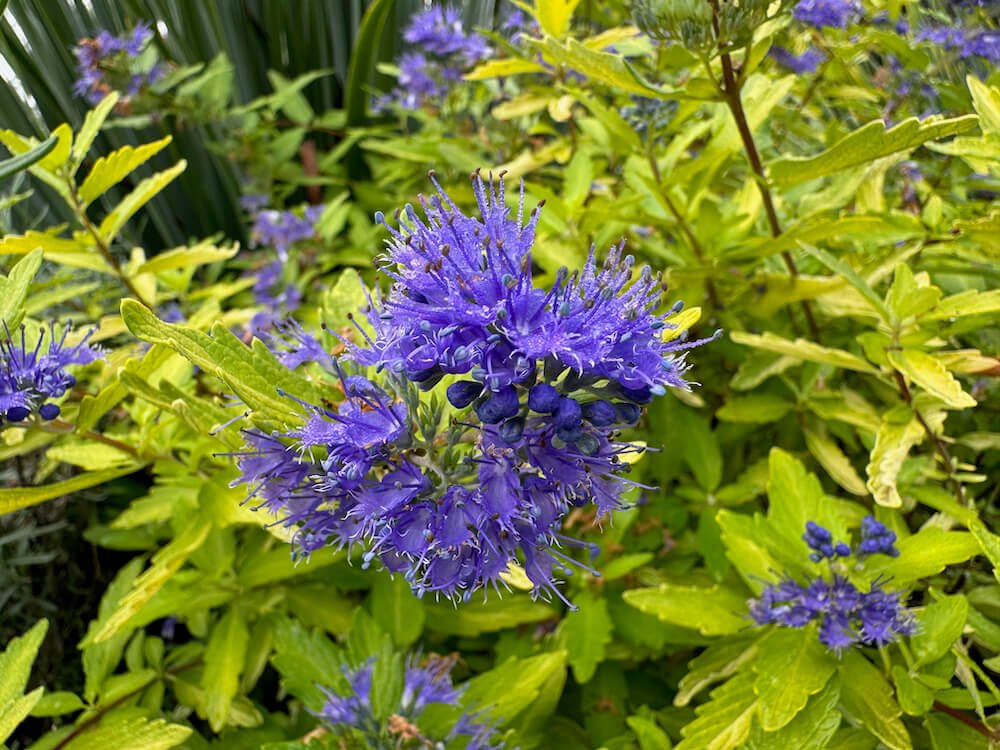
Caryopteris x clandonensis 'Gold Crest'
Deciduous shrub with aromatic golden foliage forming a soft mound. Produces clusters of blue flowers, and grows 2 to 3 feet tall. Ideal for borders and sunny wildlife plantings. Zones: 5 to 9.
Other Notable Spring Blooming Shrubs for Hummingbirds
Callistemon 'Woodlander's Hardy Red': Vivid crimson red bottlebrush flowers packed with nectar
Camellia japonica ‘Annie Wylam’: Large semi double flowers in soft rosy pink
Ceanothus thyrsiflorus 'Victoria': Dense clusters of rich cobalt blue flowers
Rhododendron occidentale: Fragrant trumpet shaped, soft pink flowers with an orange throat
Ribes sanguineum 'Pulborough Scarlet': Dangling clusters of deep rosy red to crimson pink flowers
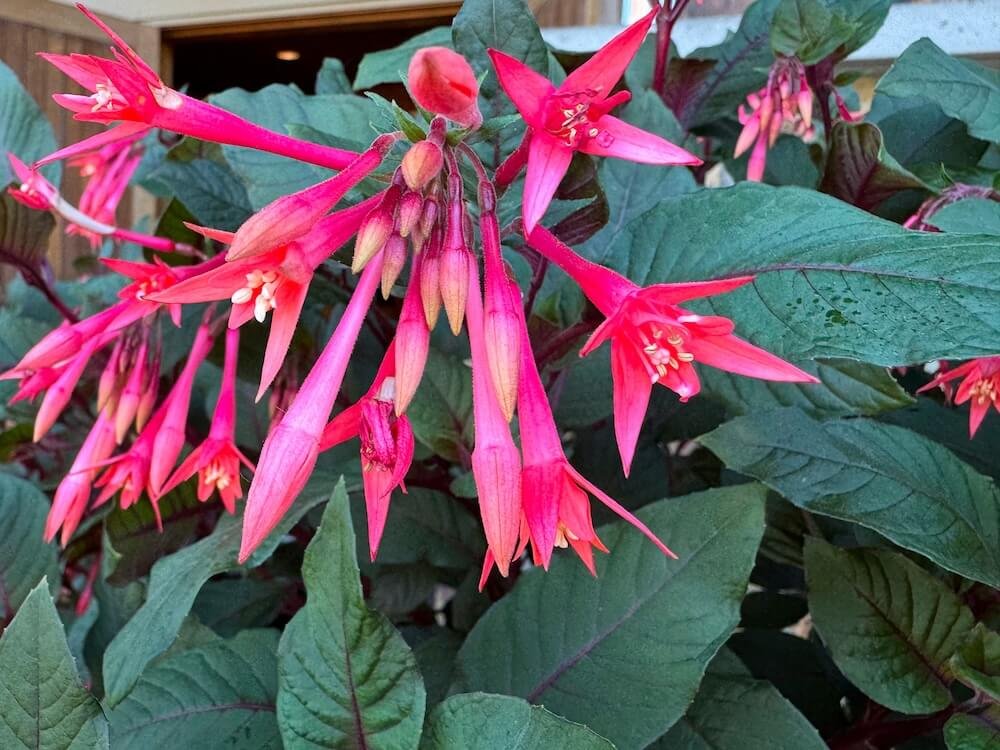
CREATING YEAR-ROUND HUMMINGBIRD ACTIVITY
Winter and early spring blooms:
In milder regions, winter and very early spring flowering shrubs can provide important nectar when few other plants are blooming. These early food sources are especially valuable for overwintering hummingbirds and those arriving during migration.
Summer flowering shrubs:
Summer-blooming shrubs provide reliable nectar during the most active feeding season, often flowering continuously for weeks or months. Combining several summer bloomers helps maintain consistent garden activity during warmer weather.
Fall nectar sources:
Late-season flowering shrubs help support hummingbirds as natural food availability begins to decline. Fall bloomers can be especially important during migration periods when birds require dependable energy sources before cooler weather arrives.
Evergreen structure:
Evergreen shrubs continue providing shelter, perching areas, and protection throughout the year even when flowers are absent. Dense evergreen foliage also helps moderate wind and weather exposure within the garden.
Overlapping bloom periods:
Selecting shrubs with overlapping flowering times helps reduce gaps in nectar availability between seasons. Gardens designed with continuous bloom succession tend to attract more regular hummingbird activity and encourage longer visits throughout the year.
Creating long-term habitat:
Over time, layered shrub plantings create a more stable and familiar environment that hummingbirds return to repeatedly. Mature gardens with reliable nectar, shelter, and seasonal continuity often support increased hummingbird activity year after year.
Summer/Fall Blooming Shrubs for Hummingbirds
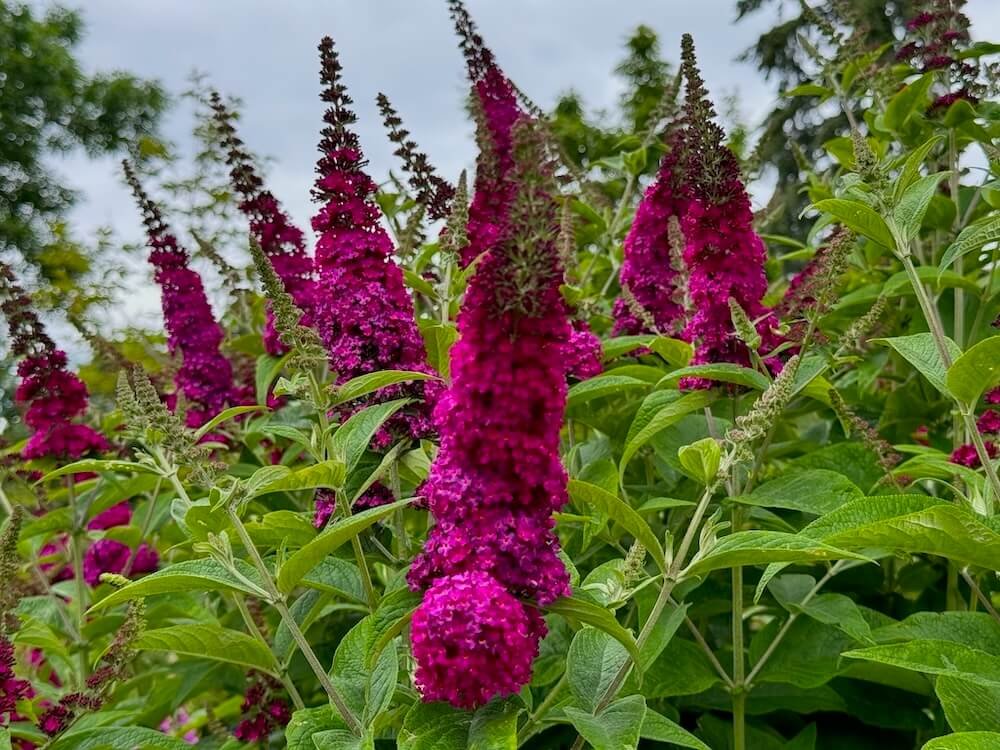
Buddleia davidii 'Miss Molly'
Deciduous shrub with gray-green foliage forming an upright habit. Produces fragrant deep red flower spikes, and grows 4 to 6 feet tall. Ideal for borders and wildlife plantings. Zones: 5 to 9.
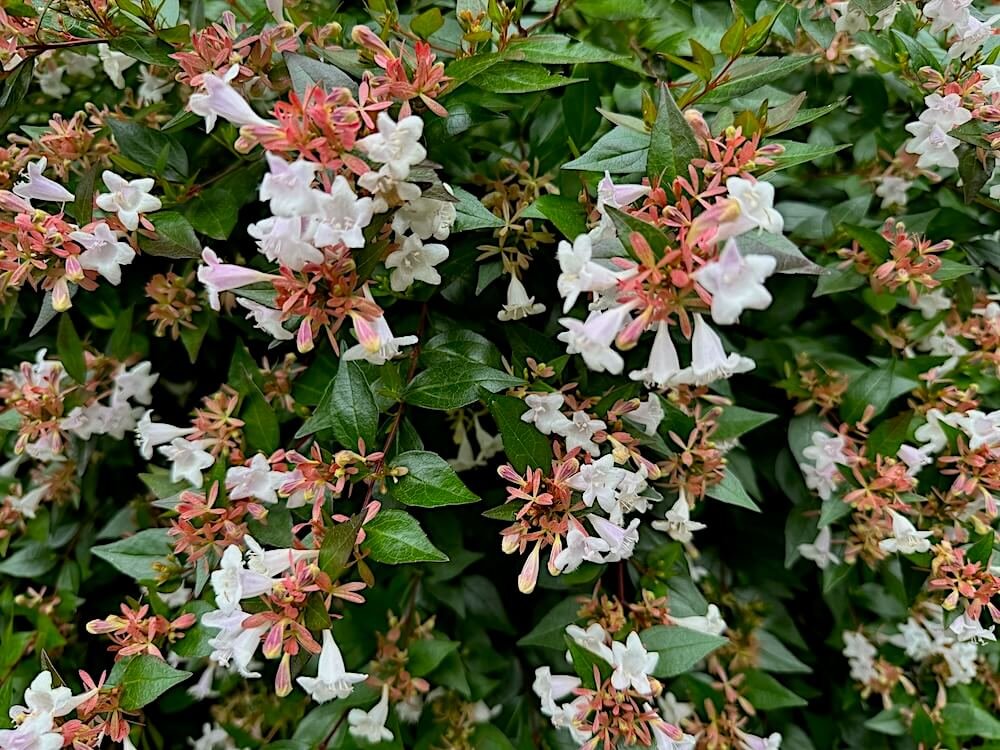
Abelia x grandiflora
Semi-evergreen shrub with glossy green foliage forming airy cover. Produces small tubular white to pale pink flowers that attract hummingbirds. Grows 4 to 6 feet tall; ideal for wildlife plantings and informal hedges. Zones: 6 to 9.
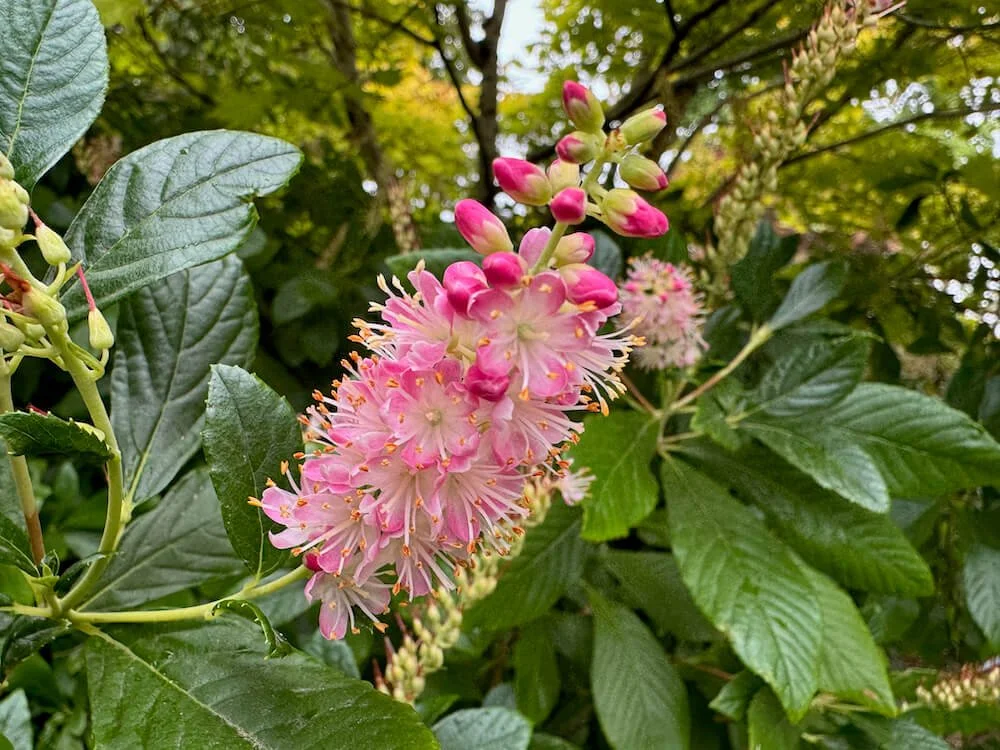
Clethra alnifolia 'Ruby Spice'
Deciduous shrub with glossy green foliage forming a dense, upright habit. Produces fragrant rose-pink flower spikes, and grows 4 to 6 feet tall. Ideal for woodland edges and wildlife plantings. Zones: 4 to 9.
Other Notable Summer/Fall Blooming Shrubs for Hummingbirds
Fuchsia ‘Dark Eyes’: Pendulous flowers with crimson red sepals and a violet purple corolla
Hibiscus x moscheutos 'Kopper King': Enormous white flowers and a deep burgundy red eye
Kalmia latifolia 'Pink Charm': Rounded clusters of bright rosy pink cup shaped flowers
Salvia pachyphylla: Violet blue flower spikes emerging from rosy lavender pink bracts
Yucca filamentosa ‘Bright Edge’: Tall spikes of creamy white bell shaped flowers