Rhododendron campylocarpum ssp. caloxanthum | Discolor Rhododendron

$0.00

DESCRIPTION
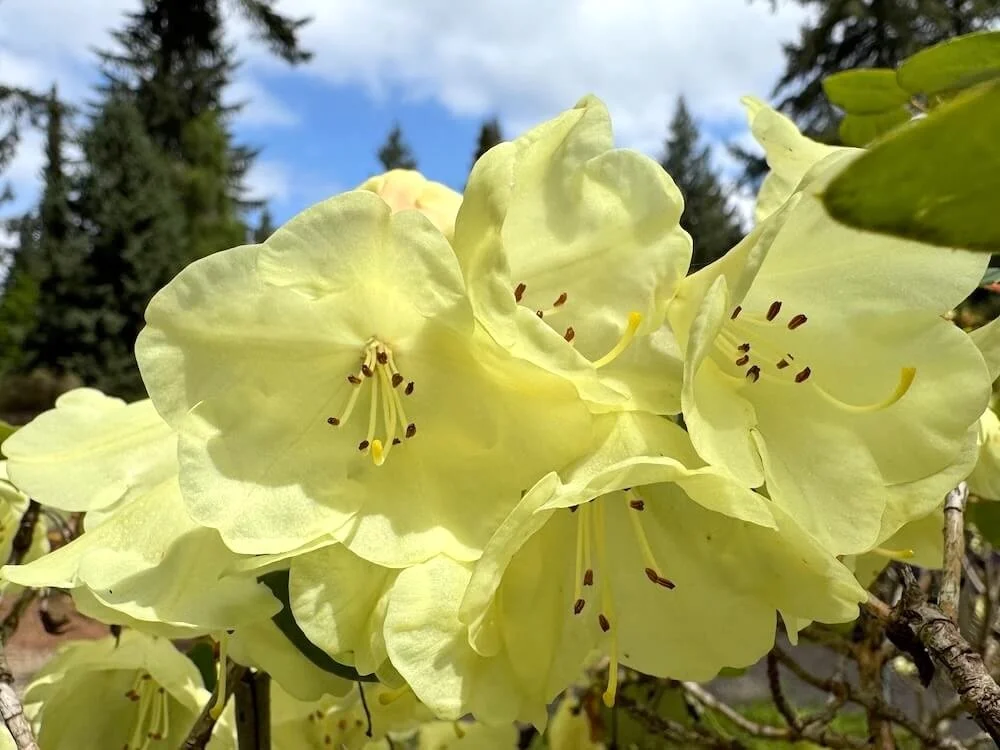
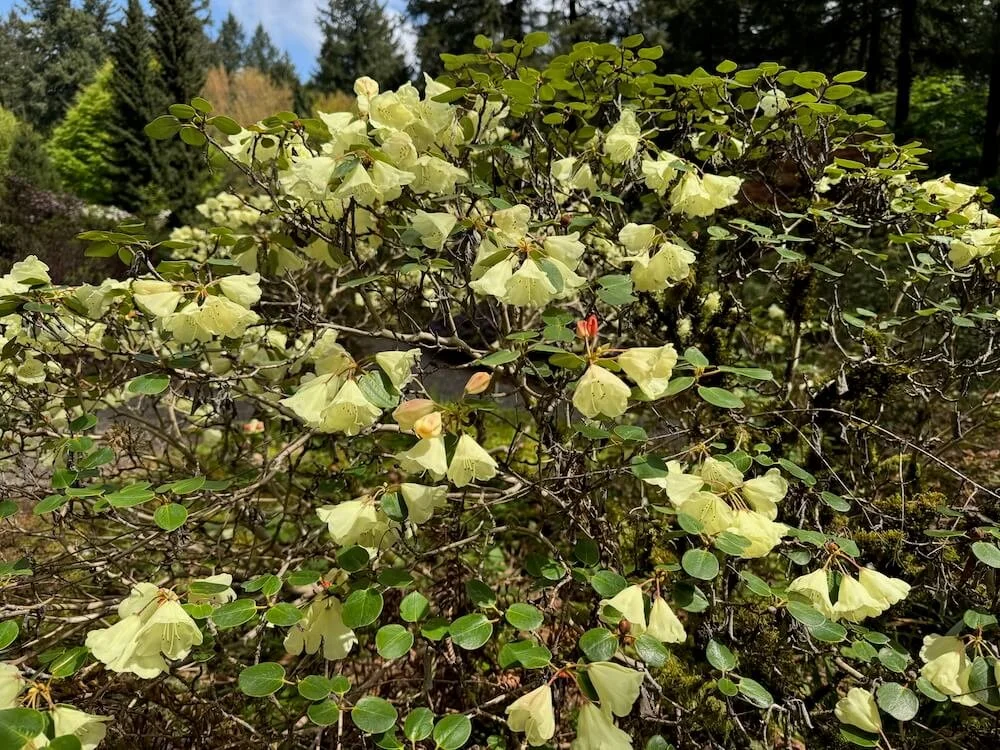
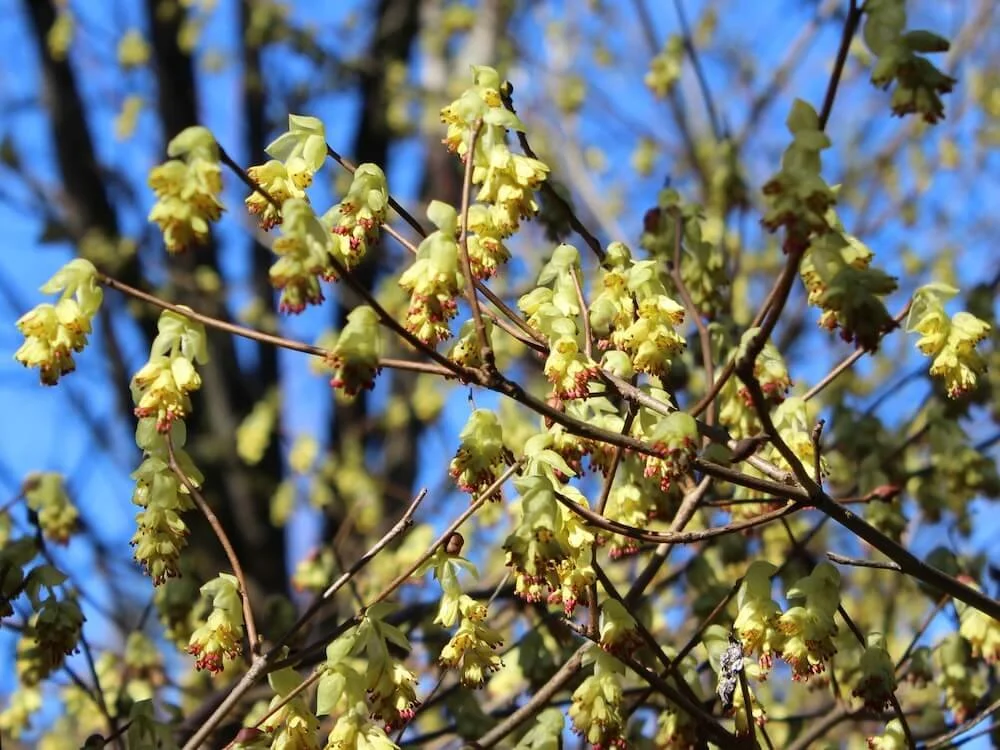
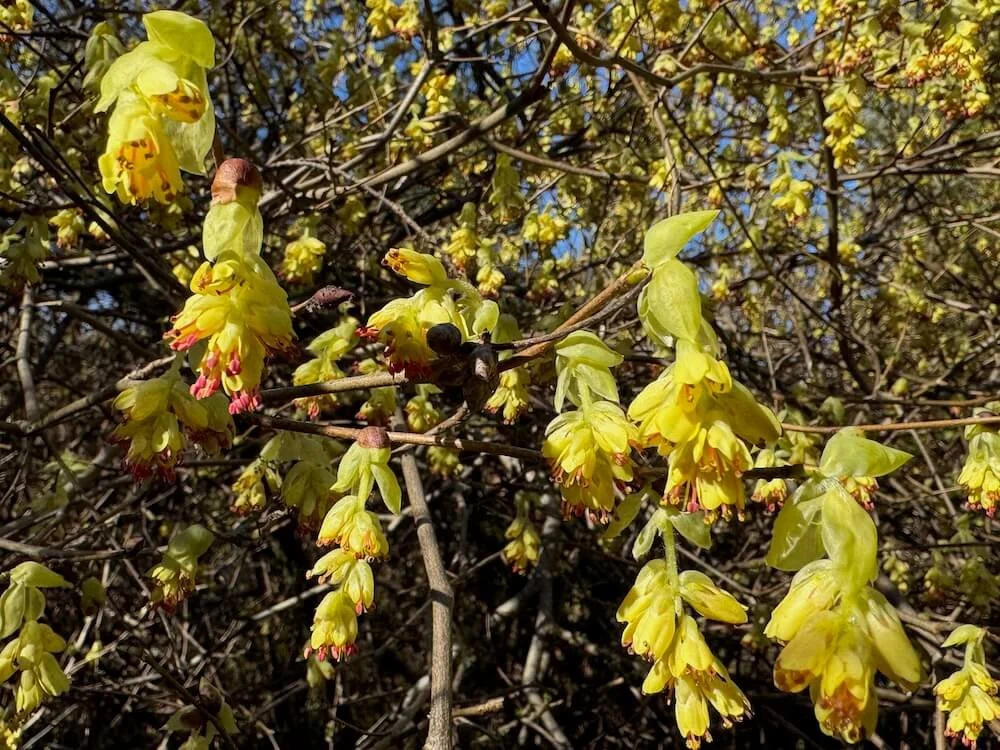
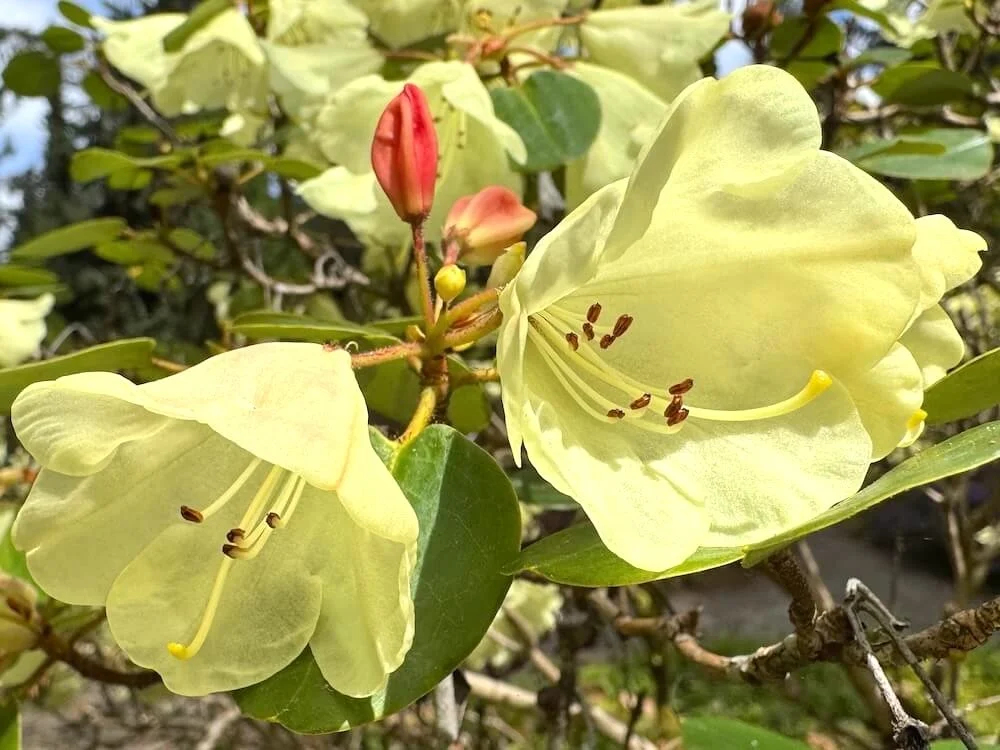
Rhododendron campylocarpum subsp. caloxanthum is an evergreen rhododendron with rounded, glossy green leaves, forming a compact, free-flowering shrub. In spring, deep orange to orange-scarlet buds open into clusters of bell-shaped flowers in pale primrose to brighter yellow. Trusses are usually loose, carrying several blooms, and some flowers show a subtle reddish basal blotch that adds depth near the throat.

This subspecies is native to the eastern Himalaya region, extending through parts of Tibet and western Yunnan into northeastern Myanmar. It is sometimes listed under the synonym Rhododendron caloxanthum. Grown for its spring flower clusters and tidy evergreen structure, it suits woodland settings and sheltered garden plantings where the yellow bells can be enjoyed up close.

DESCRIPTION
Rhododendron campylocarpum subsp. caloxanthum is an evergreen rhododendron with rounded, glossy green leaves, forming a compact, free-flowering shrub. In spring, deep orange to orange-scarlet buds open into clusters of bell-shaped flowers in pale primrose to brighter yellow. Trusses are usually loose, carrying several blooms, and some flowers show a subtle reddish basal blotch that adds depth near the throat.

This subspecies is native to the eastern Himalaya region, extending through parts of Tibet and western Yunnan into northeastern Myanmar. It is sometimes listed under the synonym Rhododendron caloxanthum. Grown for its spring flower clusters and tidy evergreen structure, it suits woodland settings and sheltered garden plantings where the yellow bells can be enjoyed up close.

 
  • Family: Ericaceae
    Height: 2 to 3.5 ft
    Width: 2 to 3.5 ft
    Foliage color: Evergreen, dark glossy round green foliage
    Flower color: Pale primrose to sulfur-yellow, bell-shaped flowers; deep orange buds
    Bloom time: Early to mid spring
    Light requirements: Part shade
    Water requirements: Moderate
    Maintenance: Low — prune lightly after bloom
    Growing zone: USDA zones 7 to 8
    Wildlife attractors: Flowers attract bees and other pollinators; dense evergreen structure can provide cover for small birds

    This plant can be seen at the Rhododendron Species Botanical Garden.
    Print Information

    Buy Plants