DESCRIPTION
Fritillaria meleagris produces slender stems topped with nodding, bell-shaped flowers marked by a distinctive checkered pattern in shades of purple, plum, and soft rose. The delicate blooms appear in mid to late spring, hanging gracefully above narrow, grasslike green leaves that add a fine-textured presence throughout the flowering period. The patterned petals create subtle depth and visual movement as the flowers sway gently in spring breezes.
Native to damp meadows and open woodlands across Europe, Fritillaria meleagris fits naturally into woodland borders, naturalized plantings, and meadow-style gardens, where it weaves easily among spring bulbs and early perennials. It also performs well beneath deciduous trees, offering seasonal color before overhead canopies fully leaf out.
DESCRIPTION
Fritillaria meleagris produces slender stems topped with nodding, bell-shaped flowers marked by a distinctive checkered pattern in shades of purple, plum, and soft rose. The delicate blooms appear in mid to late spring, hanging gracefully above narrow, grasslike green leaves that add a fine-textured presence throughout the flowering period. The patterned petals create subtle depth and visual movement as the flowers sway gently in spring breezes.
Native to damp meadows and open woodlands across Europe, Fritillaria meleagris fits naturally into woodland borders, naturalized plantings, and meadow-style gardens, where it weaves easily among spring bulbs and early perennials. It also performs well beneath deciduous trees, offering seasonal color before overhead canopies fully leaf out.

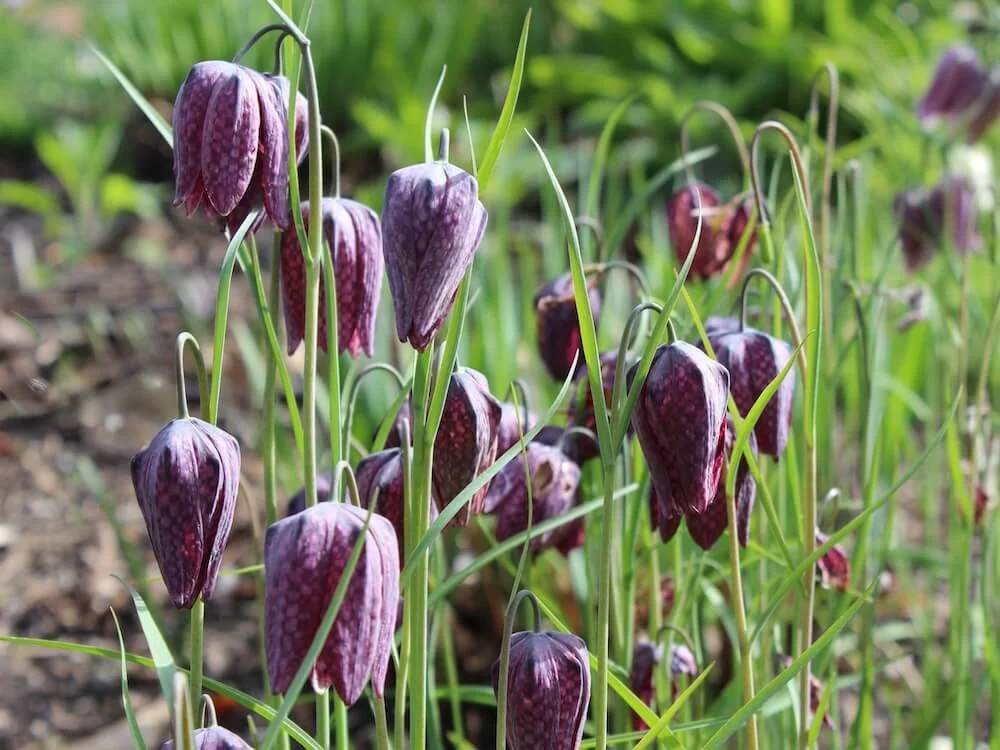 Image 1 of 3
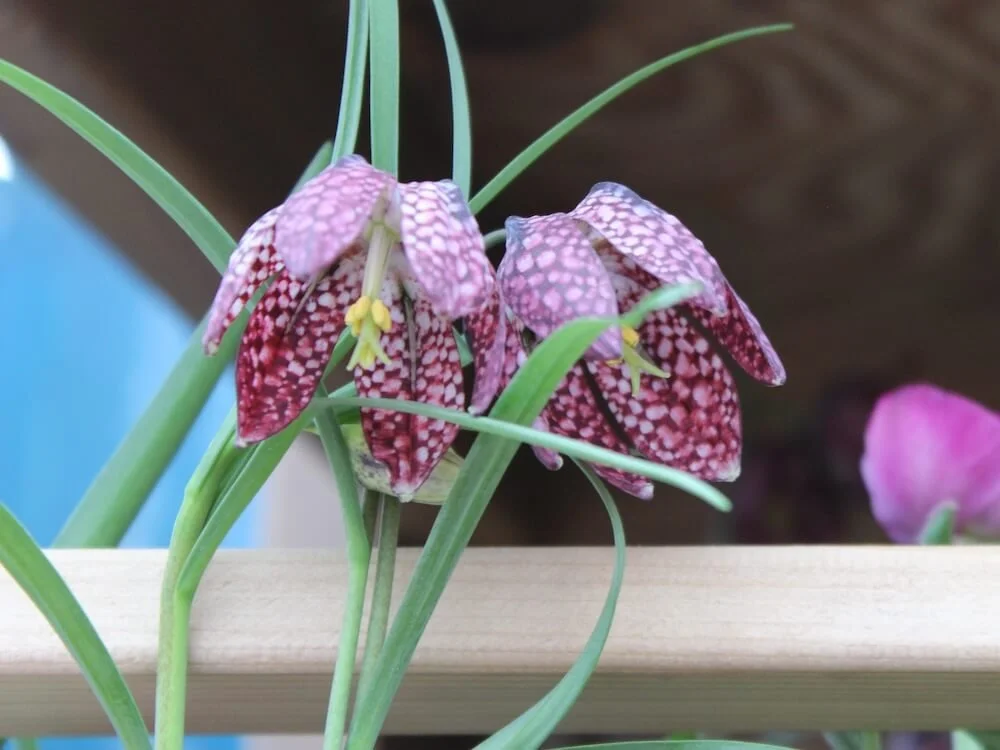 Image 2 of 3
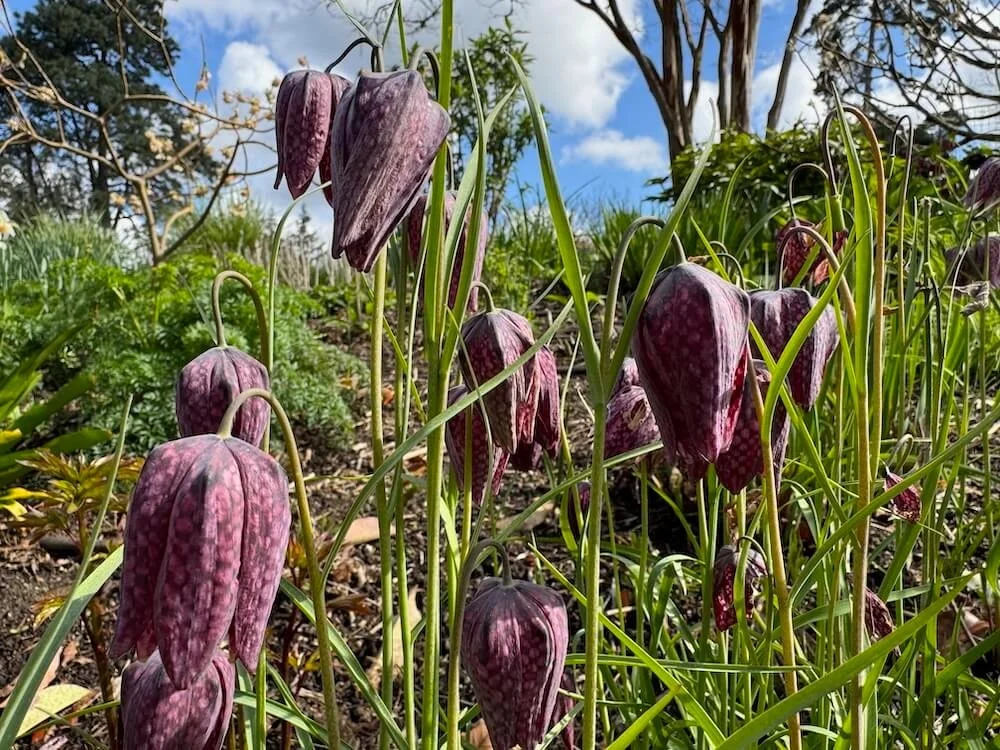 Image 3 of 3