
Drought Tolerant Perennials

Hylotelephium spectabile 'Autumn Joy'
Deciduous perennial with succulent blue green foliage and rosy pink flower clusters. Forms a sturdy upright clumping habit and grows 18 to 24 inches tall. Ideal for borders, gravel gardens, and drought tolerant plantings. Zones: 3 to 9.
Drought tolerant perennials bring lasting color and texture to the garden while thriving with relatively little water once established. Adapted to dry conditions and summer heat, many offer extended bloom periods, attractive foliage, and dependable performance with minimal attention. Their diverse forms and growth habits make them well suited to borders, pollinator gardens, slopes, and other challenging sites. By choosing plants that are naturally suited to drier conditions, gardeners can create landscapes that are both beautiful and better prepared for periods of hot, dry weather.
IRIS
01

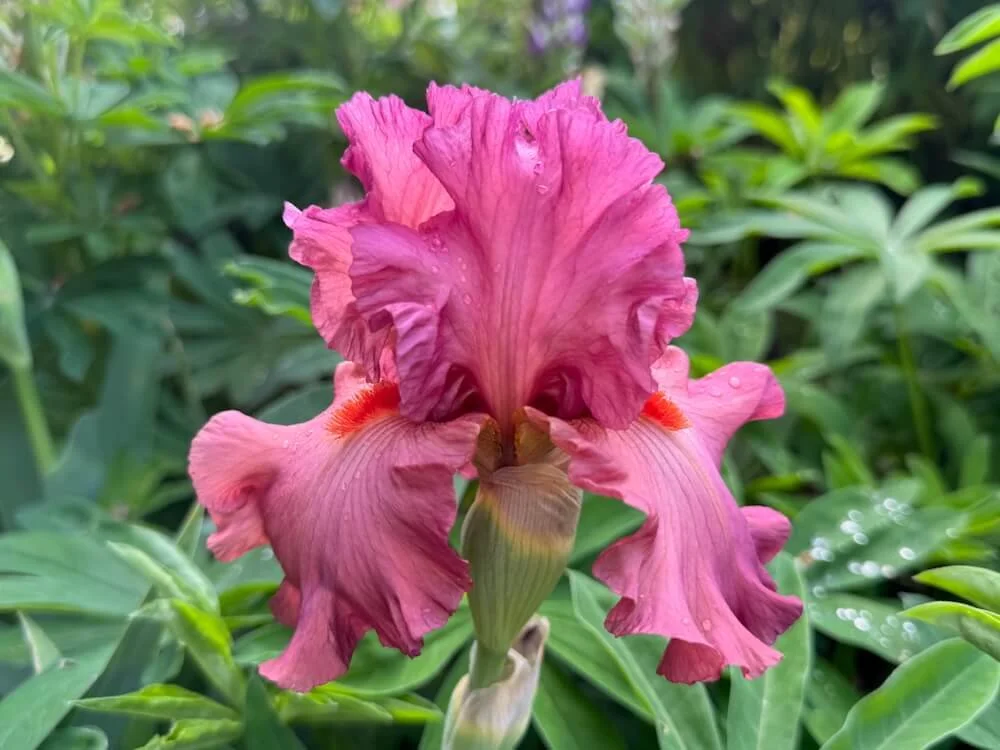
Irises bring dramatic flowers and sword-like foliage to dry gardens, where many varieties perform beautifully with modest summer watering. Iris 'Code Red' (shown here) produces rich mauve-red blooms that rise above fans of upright leaves, creating bold accents in sunny borders. The strong vertical foliage provides structure before and after flowering, adding rhythm and contrast among softer-textured companions. Their ability to handle heat and bright conditions makes them valuable additions to water-wise landscapes.
Flower color and foliage details give each selection a distinct personality. Iris 'Rasputin' bears velvety purple blooms, while Iris ensata 'Variegata' offers creamy-striped foliage that remains attractive long after the flowers have faded. Their elegant forms pair naturally with salvias, ornamental grasses, and silver-leaved perennials, bringing color and refinement to drought-conscious plantings.
MULLEIN (Verbascum)
02

Mulleins bring height and texture to dry gardens, where their deep roots allow them to prosper through hot summers. Verbascum nigrum var. album (shown here) produces elegant white flowers arranged along tall spires, while Verbascum phoeniceum 'Antique Rose' offers soft rosy-pink blooms that add a romantic touch to borders. Their vertical flower stems create strong lines among lower-growing perennials, adding depth and visual interest. The rosettes of foliage provide texture long before flowering begins.
Flower colors and forms vary across the genus, offering numerous possibilities for water-wise designs. Verbascum nigrum bears warm yellow flowers that brighten summer plantings and contrast beautifully with blue and purple companions. Their stately silhouettes pair naturally with grasses, salvias, and yarrows, creating relaxed combinations inspired by open meadows and dry landscapes.
BEARDTONGUE (Penstemon)
03
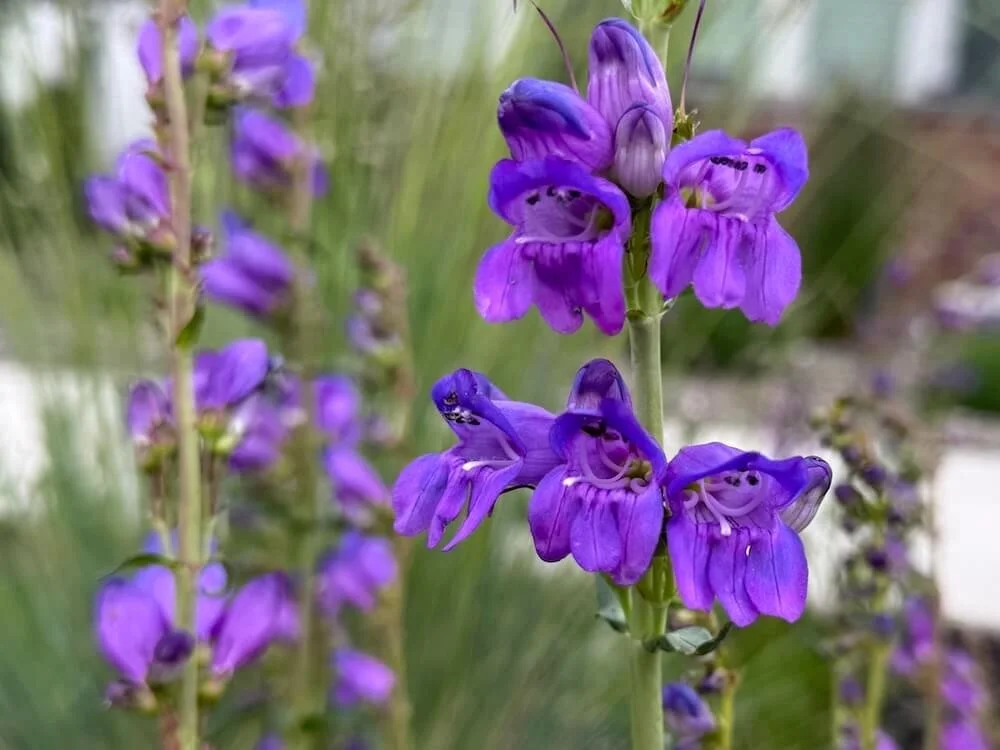
Beardtongues bring vibrant color and upright form to dry gardens, where their western heritage allows them to flourish in sunny, well-drained conditions. Penstemon strictus (shown here) produces spikes of rich violet-blue flowers above tidy green foliage, while Penstemon eatonii adds brilliant scarlet blooms that create vivid contrasts in spring and early summer. Their slender flower stems rise gracefully above the foliage, bringing height and rhythm to borders and naturalistic plantings. The blooms provide bursts of color without requiring generous irrigation during the warm season.
Flower shape and color vary among the different selections. Penstemon ‘Enor’ bears deep violet-purple tubular flowers that complement silver foliage and ornamental grasses. Their airy forms blend beautifully with salvias, yarrows, and other drought-adapted perennials, creating colorful displays with a distinctly western character.
SEDUM (Hylotelephium)
04
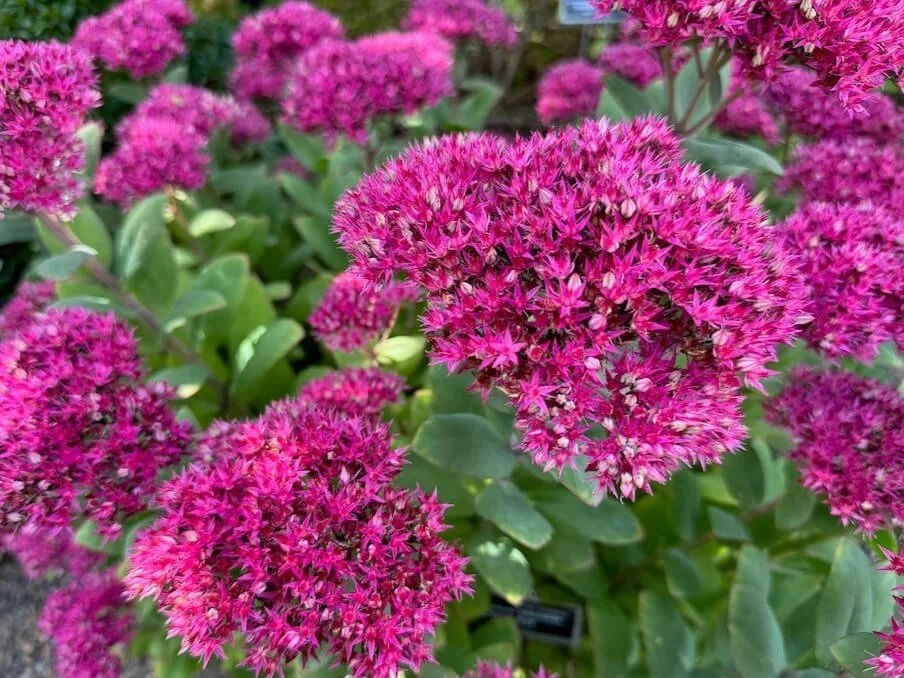
Sedums bring substance and late-season color to dry gardens, where their succulent foliage allows them to flourish through heat and periods of limited rainfall. Hylotelephium spectabile 'Class Act' (shown here) produces broad blue-green leaves topped with large rosy-pink flower heads. The thick stems and fleshy foliage provide texture long before the flowers appear, adding interest even during the hottest months of the year.
The changing colors of the flower heads extend the appeal of these drought-adapted perennials. Hylotelephium 'TNSEDECF' develops rich pink blooms, while Hylotelephium spectabile 'Autumn Joy' matures from soft pink to coppery rose as the season progresses. Their sturdy forms pair beautifully with grasses, salvias, and other sun-loving companions in water-wise plantings.
FOUNTAIN GRASS (Pennisetum)
05
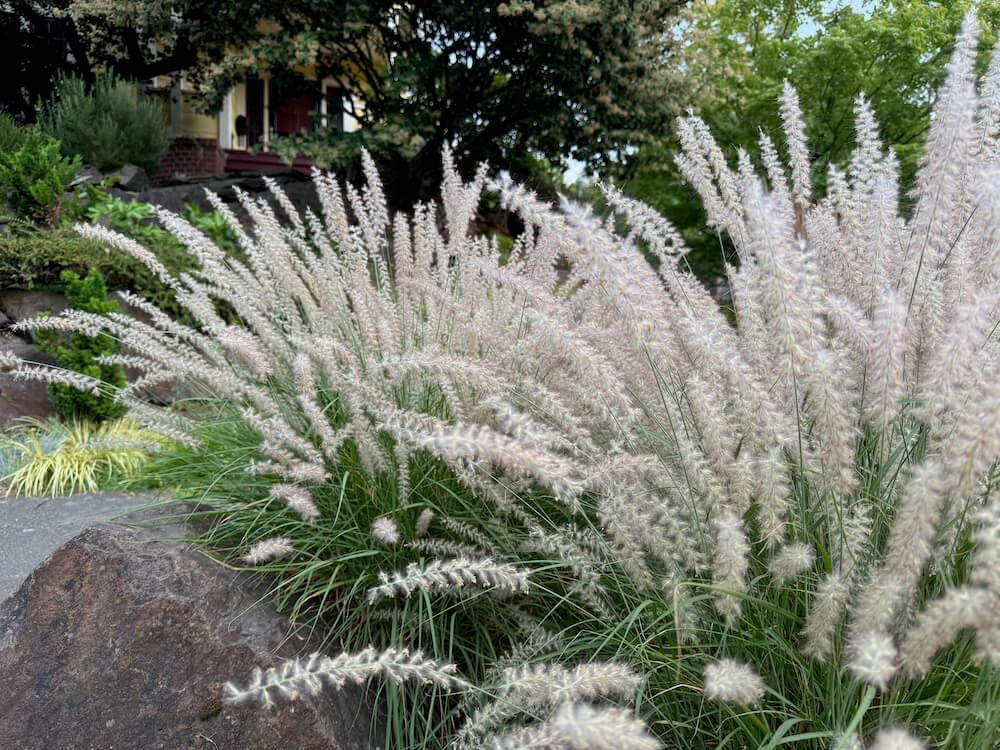
Fountain grasses bring softness and movement to dry gardens, where their arching foliage and deep roots allow them to thrive through warm, sunny summers. Pennisetum alopecuroides 'Red Head' produces large burgundy flower plumes that gradually age to silvery tan, creating changing color and texture from late summer into fall. The flowing leaves and bottlebrush flowers sway gracefully in the breeze, lending a relaxed character to borders and naturalistic plantings. Their long season of interest adds beauty well beyond flowering.
Differences in flower color and habit give each selection a distinct presence. Pennisetum orientale (shown here) bears silky pink plumes, while Pennisetum alopecuroides 'Hameln' produces compact buff-colored flower spikes. Their graceful forms blend beautifully with salvias, sedums, and Mediterranean perennials in water-wise landscapes.
Related: Explore All Grasses ➔
SPURGE (Euphorbia)
06
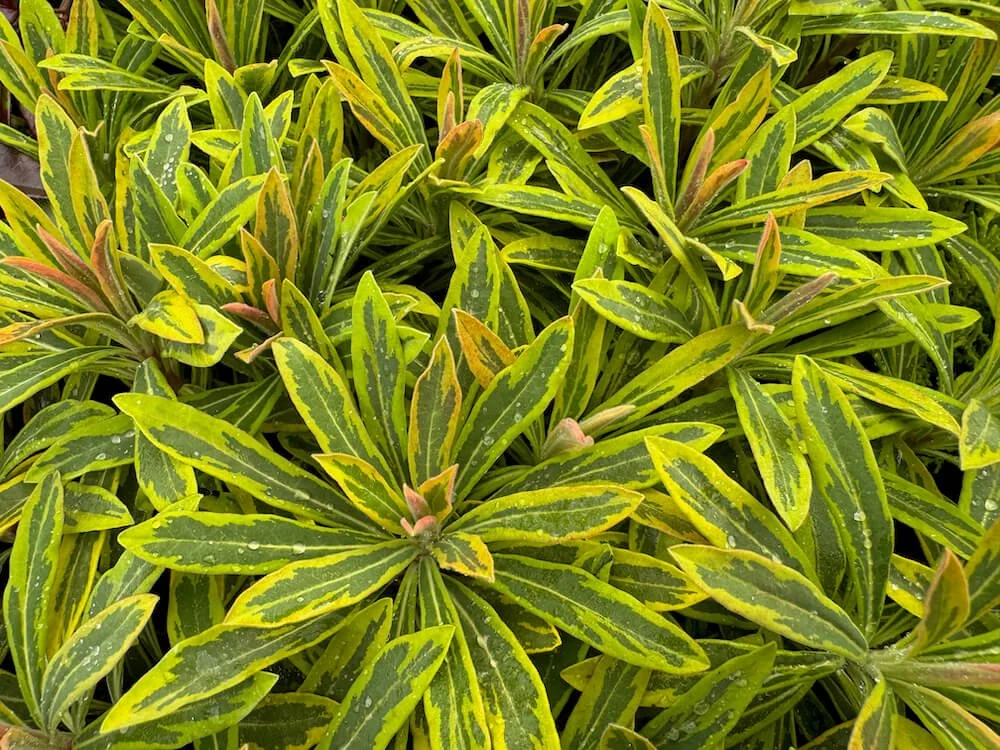
Spurges bring bold foliage and striking flower bracts to dry gardens, where their Mediterranean origins allow them to thrive with minimal water. Euphorbia amygdaloides 'Ruby Glow' combines dark burgundy foliage with vivid chartreuse flower heads, creating dramatic contrasts from spring onward. The upright stems and evergreen character provide structure when surrounding perennials have faded. Their distinctive forms add texture and color while remaining well suited to sunny, well-drained landscapes.
Foliage tones and flower colors vary widely among the different selections. Euphorbia x martinii ‘Ascot Rainbow’ (shown here) displays variegated leaves flushed with pink and cream, while Euphorbia characias 'Dwarf' forms compact mounds topped with lime-green flower spikes. Their sculptural qualities make them standout companions for grasses and other drought-adapted perennials.
GLOBE ARTICHOKE (Cynara)
07
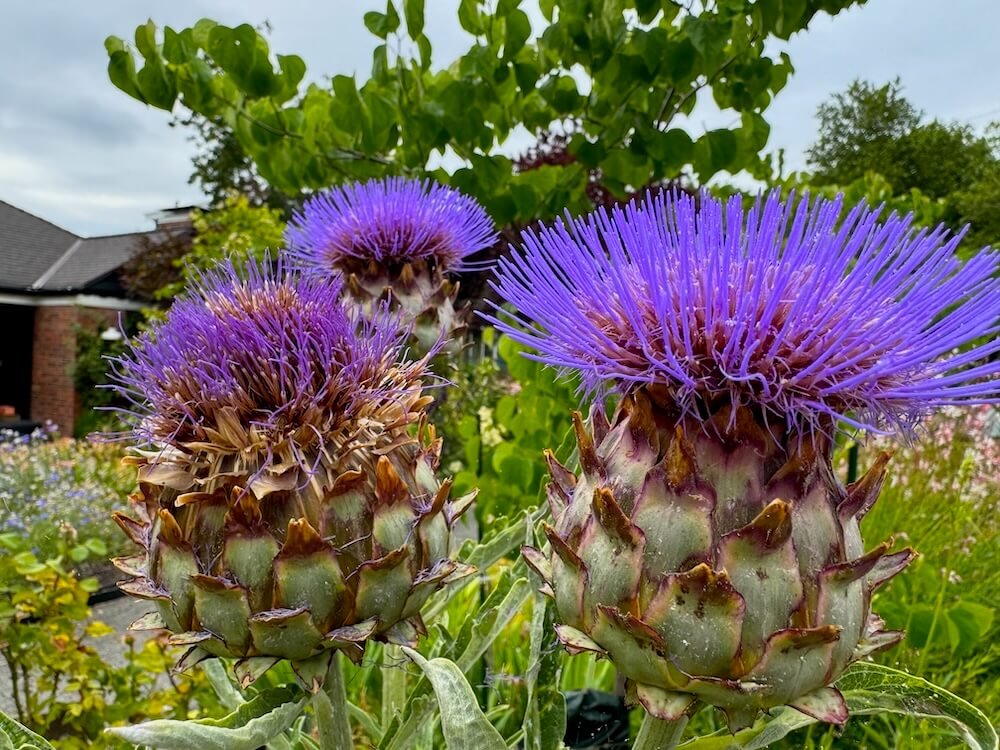
Globe artichoke brings bold structure and Mediterranean character to dry gardens, where its large silvery foliage thrives in heat and lean soils. Cynara cardunculus (shown here) forms dramatic mounds of deeply cut leaves that provide striking contrast to finer-textured companions. Towering stems rise above the foliage in summer, carrying enormous thistle-like flowers in shades of violet and purple. The sculptural form gives borders and gravel gardens a strong architectural presence that persists.
Texture and scale are among the greatest strengths of this drought-adapted perennial. The metallic foliage catches the light and creates a cool counterpoint to warm-colored flowers and ornamental grasses. Its commanding silhouette and Mediterranean heritage make it a natural choice for water-wise plantings that emphasize bold forms and dramatic contrasts.
FOXTAIL LILY (Eremurus)
08
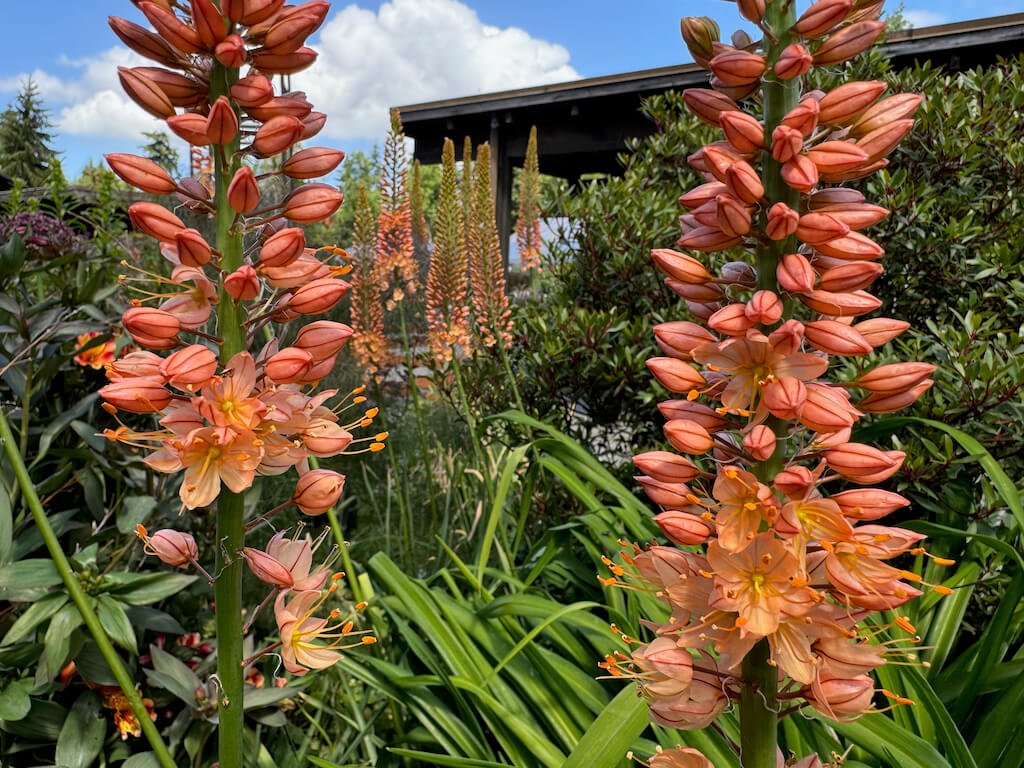
Foxtail lilies bring height and drama to dry gardens, where their deep roots and desert ancestry allow them to prosper in sunny, well-drained conditions. Eremurus x isabellinus 'Cleopatra' (shown here) sends up towering flower spikes packed with glowing orange florets that open gradually from the bottom upward. The slender stems rise above low foliage, creating a striking vertical accent that stands out among mounded perennials and ornamental grasses. Their unusual form lends a sense of elegance to summer borders.
The flower spikes create an architectural effect in the landscape. As the blooms catch the sunlight, they add warmth and movement without overwhelming surrounding plants. Their upright habit and drought tolerance make them effective in gravel gardens and Mediterranean-style plantings, where bold silhouettes and seasonal highlights are key elements of the design.
WOOLLY SUNFLOWER (Eriophyllum)
09
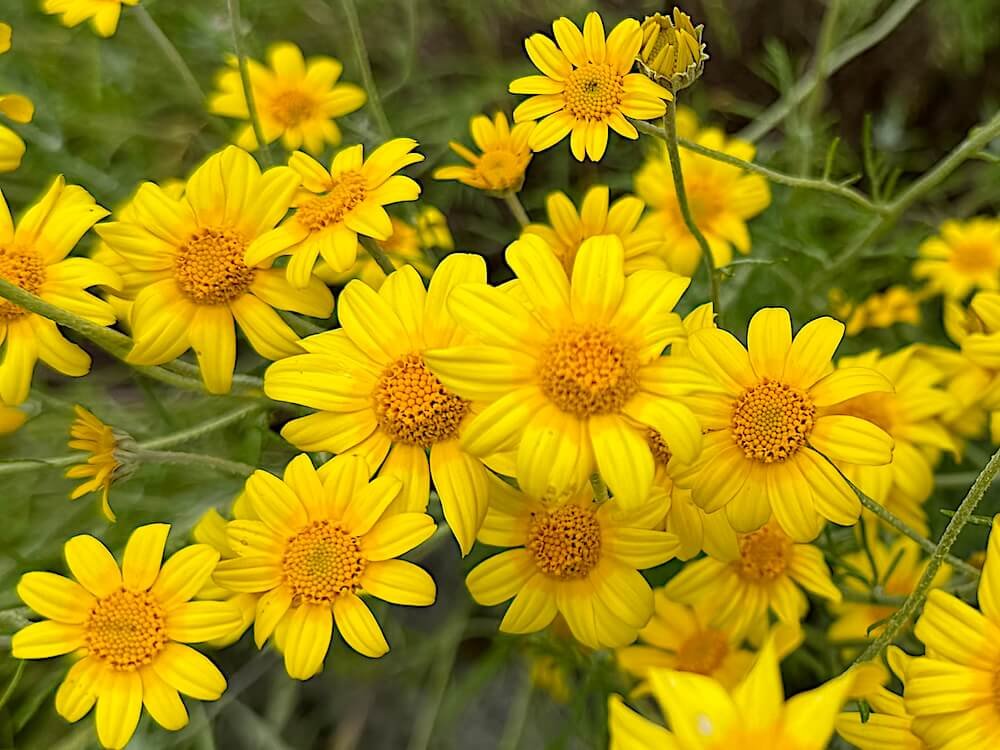
Woolly sunflower is perfectly adapted to dry landscapes, where its silvery green foliage and colorful flowers shine through the heat of summer. Eriophyllum lanatum (shown here) forms low mounds of finely divided leaves covered in soft hairs that help conserve moisture and reflect sunlight. Bright golden-yellow daisies rise above the foliage, creating vivid splashes of color that echo the wildflower displays of western grasslands. Its rugged nature allows it to flourish where water is scarce and conditions are challenging.
The contrast between the woolly leaves and sunny blooms gives this perennial much of its charm. The flowers seem to hover above the silver-gray foliage, bringing brightness and texture to naturalistic plantings. Its compact habit and drought tolerance make it especially effective alongside native grasses, penstemons, and other western species in low-water gardens inspired by regional landscapes.
RED HOT POKER (Kniphofia)
10
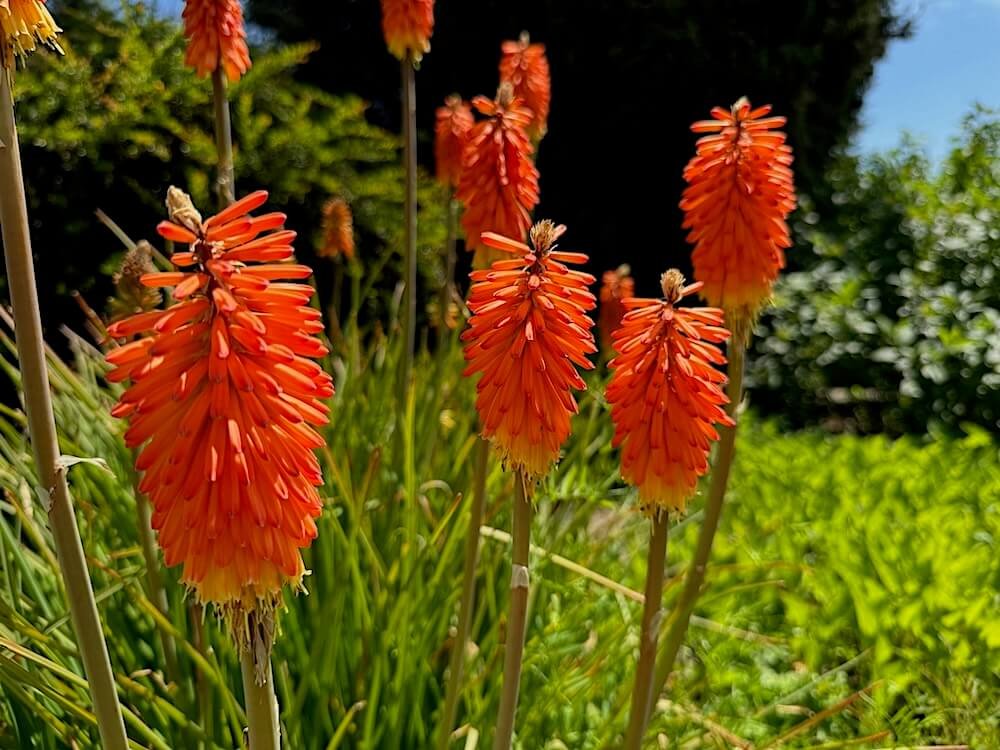
Red hot pokers bring bold color and dramatic silhouettes to dry gardens, where their deep roots and tough constitution allow them to flourish in sunny conditions. Kniphofia 'Fire Glow' (shown here) produces fiery orange-red flower spikes that rise above clumps of arching foliage, creating vivid vertical accents through summer. The grass-like leaves provide texture throughout the year, while the torch-shaped blooms add energy and movement to borders and gravel gardens. Their striking forms stand out even from a distance.
Flower colors range from intense shades to softer tones. Kniphofia 'Citrina' bears elegant pale yellow spikes that provide a cooler contrast among warm-colored companions. The upright flower stems weave beautifully through ornamental grasses and Mediterranean perennials, bringing seasonal drama to water-wise landscapes designed for long-lasting summer interest.
MISCANTHUS
11
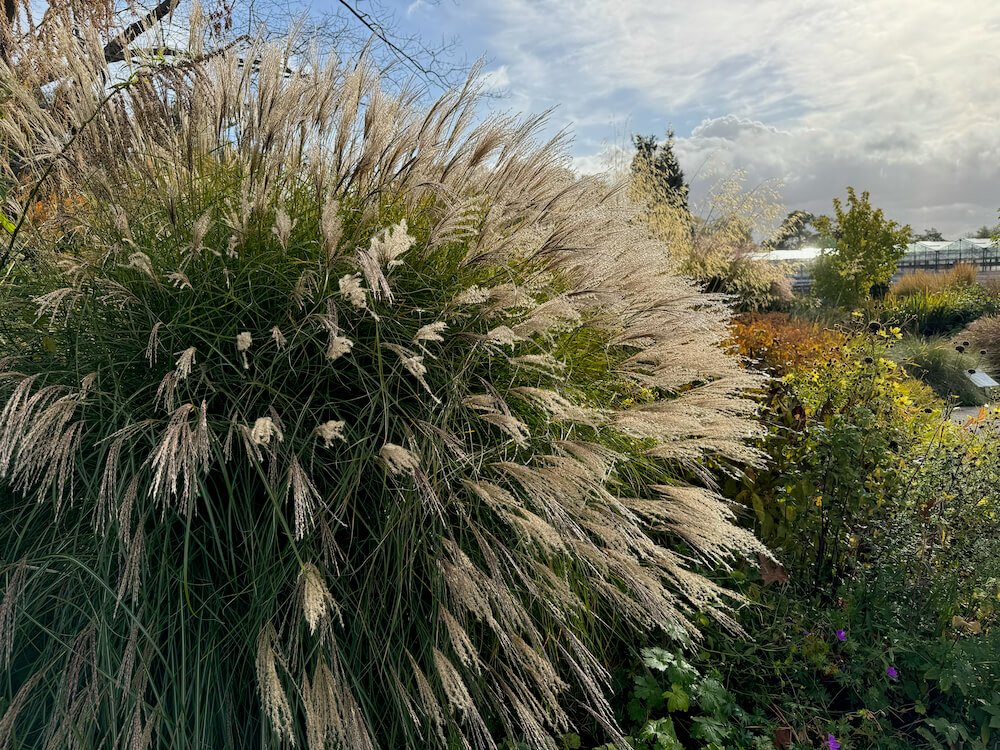
Miscanthus brings graceful movement and year-round texture to dry gardens, where its extensive root system allows it to perform well with limited water. Miscanthus sinensis 'Adagio' (shown here) forms elegant mounds of fine green foliage topped with soft plumes in late summer and fall. The arching leaves create a fountain-like effect that softens hard edges and add motion to sunny borders. Their changing colors and persistent seed heads extend the season beyond flowering.
Foliage patterns give each selection its own distinctive character. Miscanthus sinensis 'Gold Bar' displays bold horizontal bands across the leaves, while Miscanthus sinensis 'Morning Light' offers narrow blades edged in silver. Their airy forms provide beautiful contrast with flowering perennials and drought-adapted shrubs.
TICKSEED (Coreopsis)
12
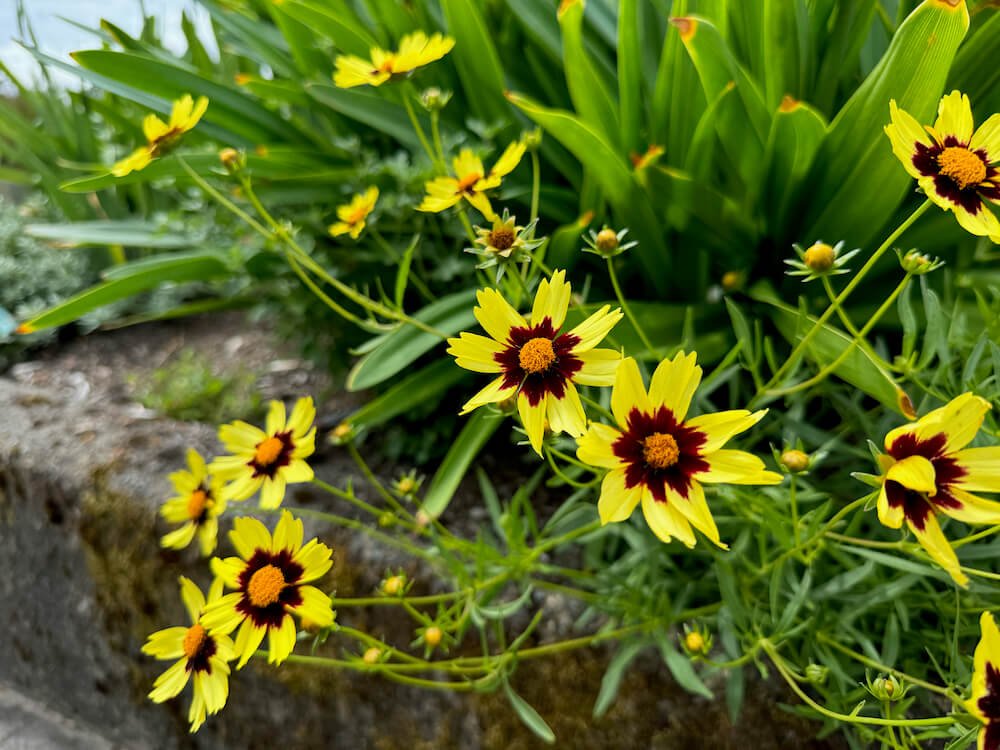
Coreopsis brings bright color to dry gardens, where its long flowering season and sun-loving nature make it a standout in water-wise plantings. Coreopsis 'Cosmic Eye' (shown here) produces golden yellow flowers marked with deep red centers above tidy green foliage. The bright blooms continue through much of summer, bringing warmth and contrast to borders, meadow plantings, and gravel gardens. Their ability to thrive in heat makes them valuable during the driest months.
Flower form and color vary widely among the different selections. Coreopsis 'Jethro Tull' bears distinctive fluted apricot petals, while Coreopsis 'Red Elf' offers rich ruby-red blooms with golden centers. Their vibrant flowers mingle beautifully with salvias, grasses, and other drought-adapted companions, creating colorful summer combinations.
Related: Explore All Tickseed ➔
VALERIAN (Centranthus)
13
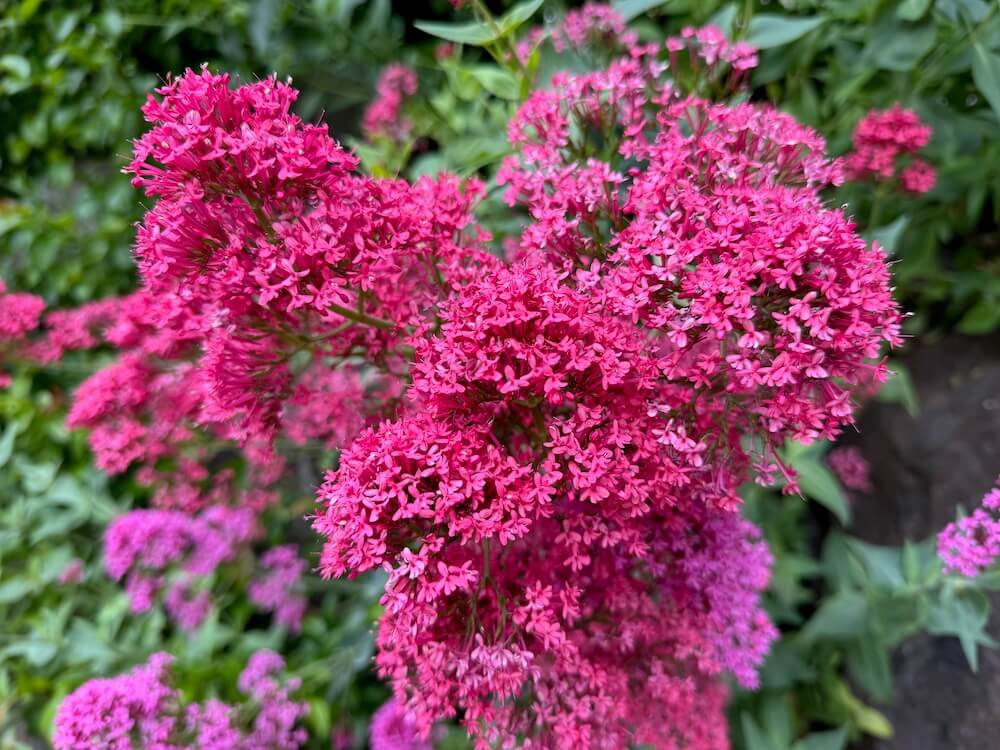
Valerian thrives in sunny, dry conditions, where its deep roots and carefree nature allow it to flourish with little supplemental water. Centranthus ruber (shown here) produces loose clusters of rosy-red flowers held above blue-green foliage, creating a soft, cottage-garden effect from late spring through summer. The airy stems weave naturally among neighboring plants, bringing color and a sense of lightness to borders, gravel gardens, and rocky slopes.
The informal growth habit gives this perennial a relaxed appearance that blends easily into water-wise landscapes. Flower clusters seem to float above the foliage, creating contrast with bold-leaved companions and ornamental grasses. Its ability to self-seed gently into cracks, walls, and dry corners adds charm and spontaneity, allowing the garden to evolve naturally while maintaining color through the warmest months of the year.
SEDGE (Carex)
14
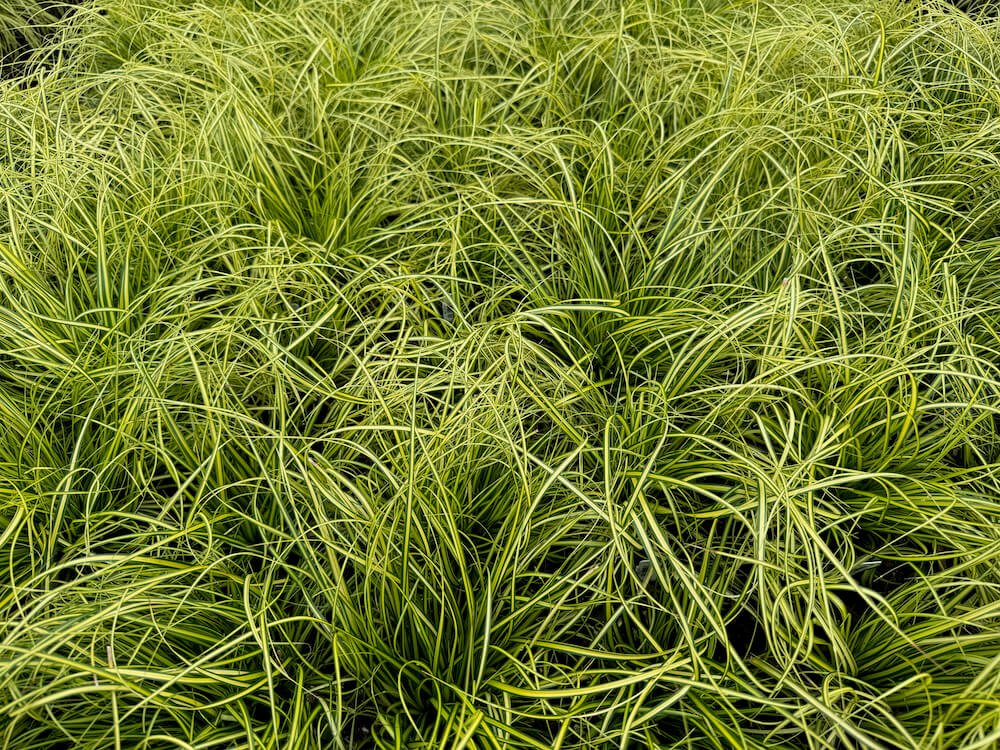
Sedges offer year-round foliage for dry gardens, where their arching leaves provide contrast without demanding frequent watering. Carex morrowii 'Ice Dance' brightens the landscape with green leaves edged in crisp white, while Carex tenuiculmis ‘Cappuccino’ introduces warm bronze and copper tones that add depth to mixed plantings. Their fountain-like forms soften hard edges and bring a relaxed character to borders, pathways, and naturalistic designs.
Foliage color and texture provide much of the appeal of these adaptable perennials. Carex oshimensis 'Eversheen' (shown here) produces narrow leaves striped with gold and green, creating a luminous effect throughout the seasons. The fine blades mingle beautifully with stones, grasses, and flowering companions, adding movement and subtle color to water-wise gardens without requiring constant attention.
PINEAPPLE LILY (Eucomis)
15
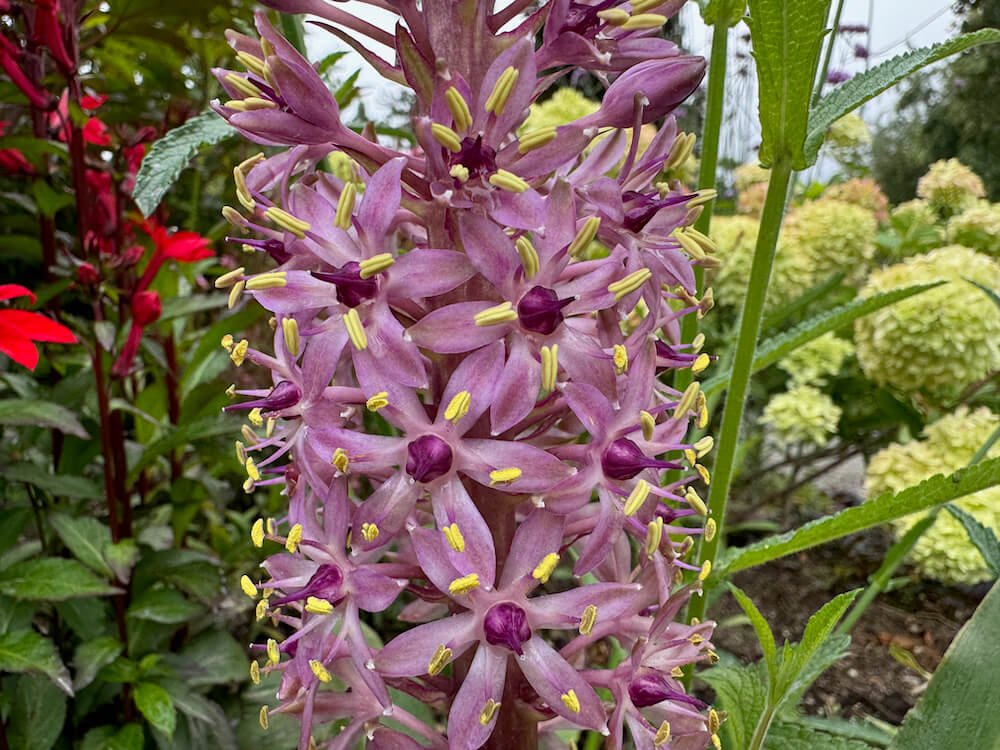
Pineapple lilies bring bold form and exotic character to drought-tolerant plantings, where their upright flower spikes and broad foliage provide a distinctive midsummer display. Eucomis 'Rhode Island Red' (shown here) produces rich burgundy foliage topped with rosy flower clusters crowned by leafy bracts, while Eucomis comosa 'Glow Sticks' bears pale green flowers above dark stems that add striking contrast. Their sculptural forms create focal points that stand out beautifully among lower-growing companions and gravel gardens.
The unusual flower heads lend a tropical feeling to sunny borders without overwhelming neighboring plants. Their architectural silhouettes pair beautifully with ornamental grasses, sedums, and salvias, creating compositions rich in texture, color, and late-season interest through the warmest months of summer.
Related: Explore All Bulbs ➔
BLUE GRAMA GRASS (Bouteloua)
16
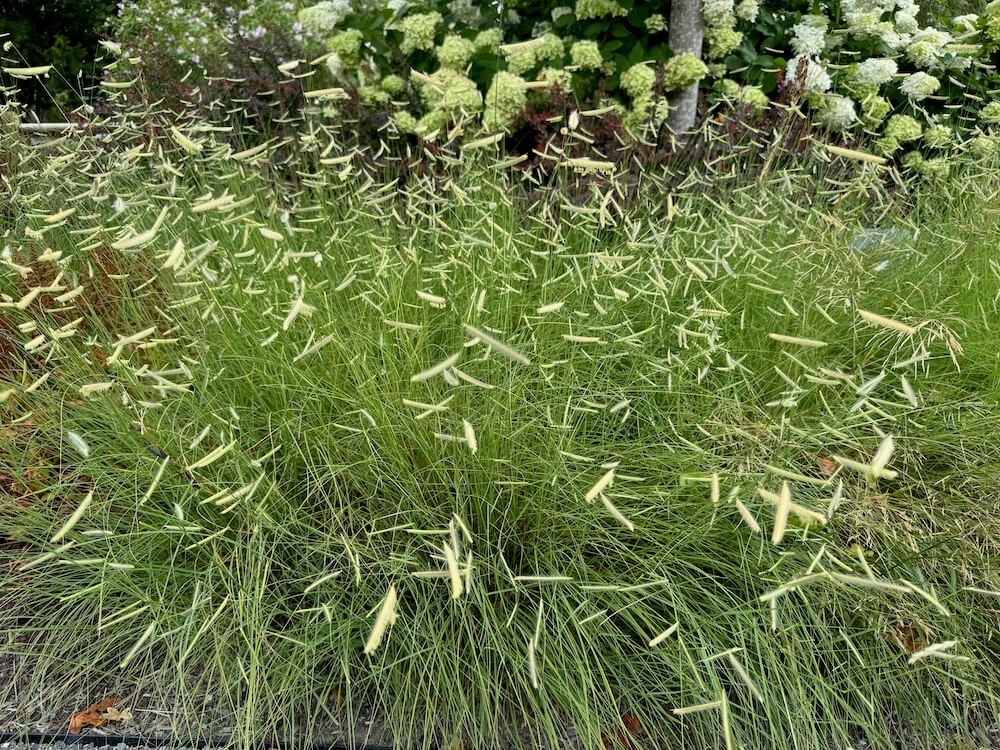
Blue grama grass brings movement and texture to dry gardens, where its prairie heritage allows it to flourish with minimal supplemental water. Bouteloua gracilis 'Blonde Ambition' (shown here) produces distinctive chartreuse seed heads that mature to blond tones and hover horizontally above the blue-green foliage like tiny pennants. The airy flower stems sway gracefully in the breeze, creating a sense of motion that enlivens sunny borders and naturalistic plantings.
Much of the beauty of this ornamental grass comes from its unusual seed heads and changing seasonal colors. The fine foliage remains attractive through summer and often persists into winter, extending its visual appeal. Its upright habit and drought tolerance make it a striking companion for coneflowers, salvias, and other sun-loving perennials in water-wise landscapes.