
Fragrant Shrubs
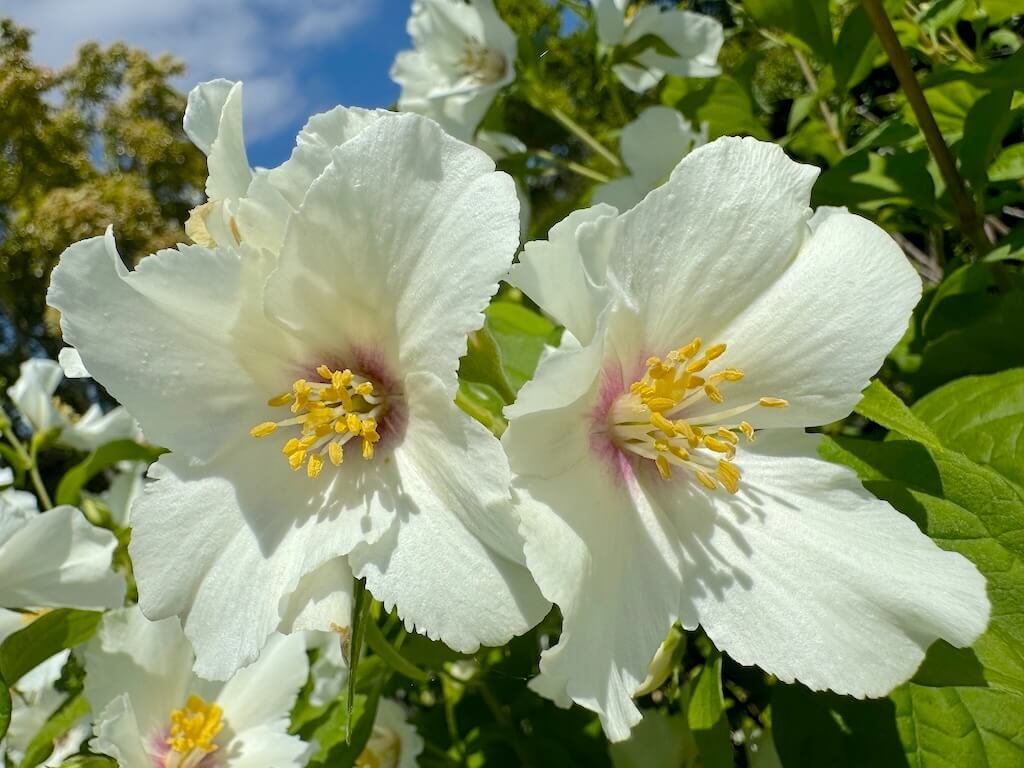
Philadelphus ‘Belle Etoile’
Deciduous shrub with arching branches and large, fragrant white flowers with purple centers. Attracts pollinators, and grows 4 to 6 feet tall. Tolerates pruning; ideal for informal hedges, borders, and seasonal screening. Zones: 4 to 8.
Shrubs with fragrance bring an added sensory layer to the garden, releasing scent that drifts through the air from spring into summer and, in some cases, beyond. Their flowers range from soft whites and pinks to deeper tones, often paired with foliage that enhances their presence even when not in bloom. These shrubs add structure to borders and hedges while creating a space that feels inviting, memorable, and full, throughout the changing seasons.
Planted where their scent can be easily noticed, they help shape how a garden is experienced day to day. Different varieties release fragrance at different times, extending the season and adding variety. Over time, you may begin to associate certain scents with specific moments, creating a garden that feels familiar, comforting, and distinctly your own.
LILAC (Syringa)
01

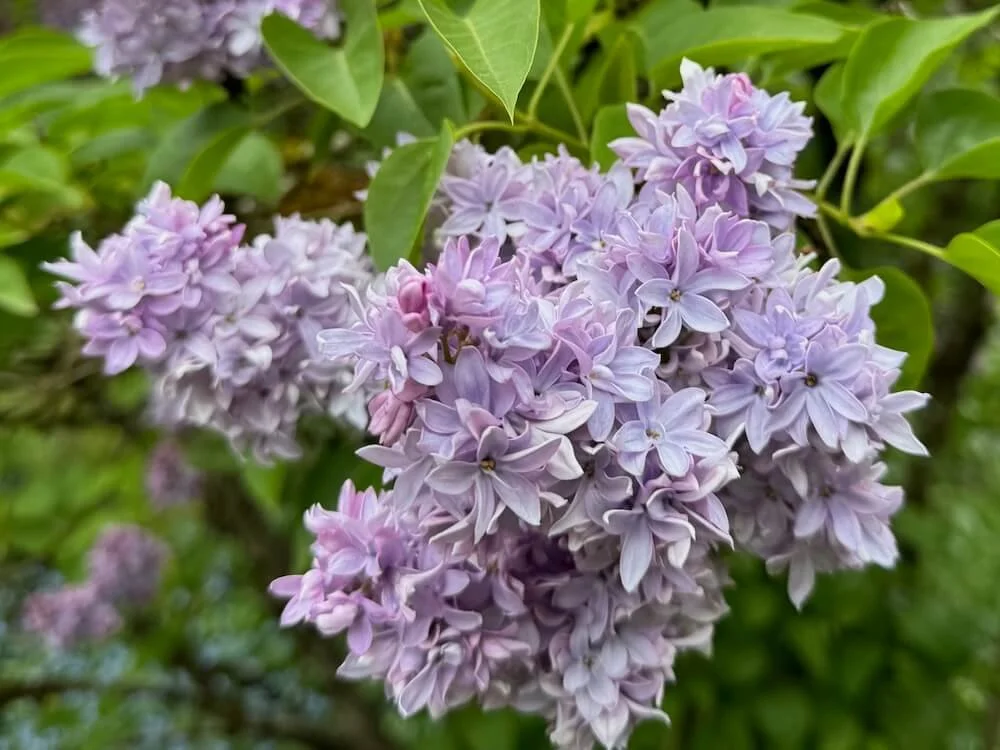
Lilacs fill the spring garden with a rich, lingering fragrance, releasing their scent from dense clusters of blooms that open along upright branches. Syringa x hyacinthiflora ‘Declaration’ is grown for its vivid reddish-purple flowers that appear early in the season, offering both strong color and a pronounced perfume. Its sturdy, upright habit supports abundant flowering while creating a full, leafy presence.
A natural choice for borders or informal hedges, these shrubs bring both structure and scent to the landscape. Syringa vulgaris ‘Arch McKean’ offers deep purple blooms with a classic lilac fragrance, while Syringa vulgaris ‘President Grevy’ (shown here) adds large, double lavender-blue flowers with a full, layered look and notable scent. Together, these selections provide intense fragrance, varied color, and a timeless presence in the spring garden.
Related: Explore All Lilacs ➔
ROSE (Rosa)
02
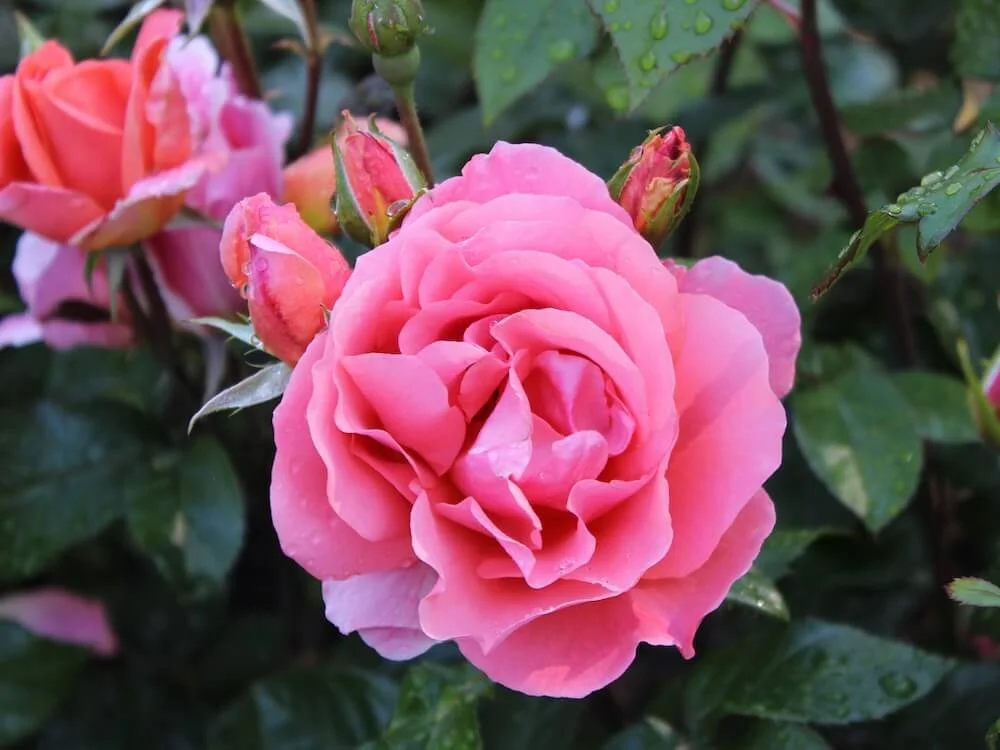
Roses bring layered fragrance to the garden, with scents ranging from soft and sweet to rich and complex as blooms open through the season. Rosa ‘Sweet Fragrance’ (shown here) is grown for its salmon-pink to peach-toned flowers and notably strong perfume, creating a consistent and inviting presence from late spring into fall. Its upright habit and repeat flowering allow both bloom and scent to build steadily over time.
A classic choice for borders or dedicated rose plantings, these shrubs offer both visual appeal and aromatic depth. Rosa ‘Roald Dahl’ provides warm apricot blooms with a gentle tea fragrance, while Rosa ‘Perfume Factory’ adds rich violet flowers with an intense, lingering scent. Together, these selections provide continuous bloom, varied fragrance, and a refined presence that enhances outdoor spaces throughout the growing season.
Related: See All Roses ➔
MOCK ORANGE (Philadelphus)
03
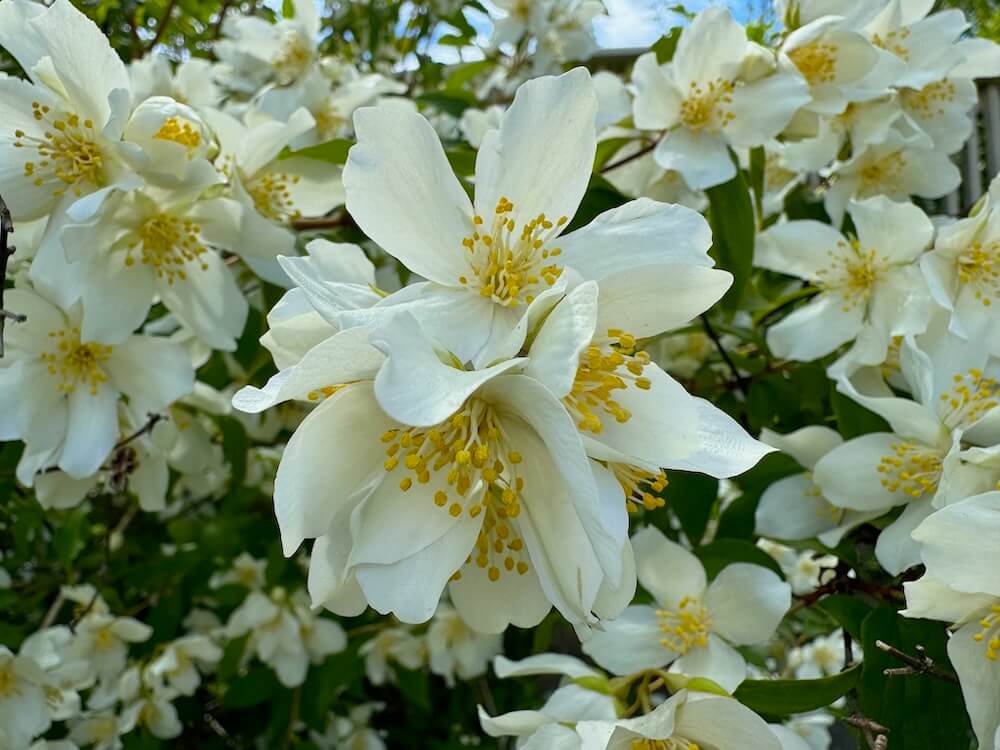
Mock orange is prized for its fragrance, filling the garden with a fresh, citrus-like scent during late spring to early summer when its white blossoms open along arching branches. Philadelphus coronarius (shown here) is grown for its profusion of simple, white flowers and strong, sweet perfume that carries easily through the landscape, especially noticeable in warm evenings and along pathways near seating areas. Its upright to slightly spreading habit creates a full, leafy presence that supports the floral display.
A classic addition to borders or informal hedges, these shrubs bring both structure and scent to the planting. Philadelphus ‘Belle Etoile’ offers a more refined look, with white flowers marked by a soft purple eye and a similarly rich fragrance. Together, these selections provide abundant bloom, notable scent, and a graceful presence that enhances outdoor spaces during the flowering season.
TREE PEONY (Paeonia)
04
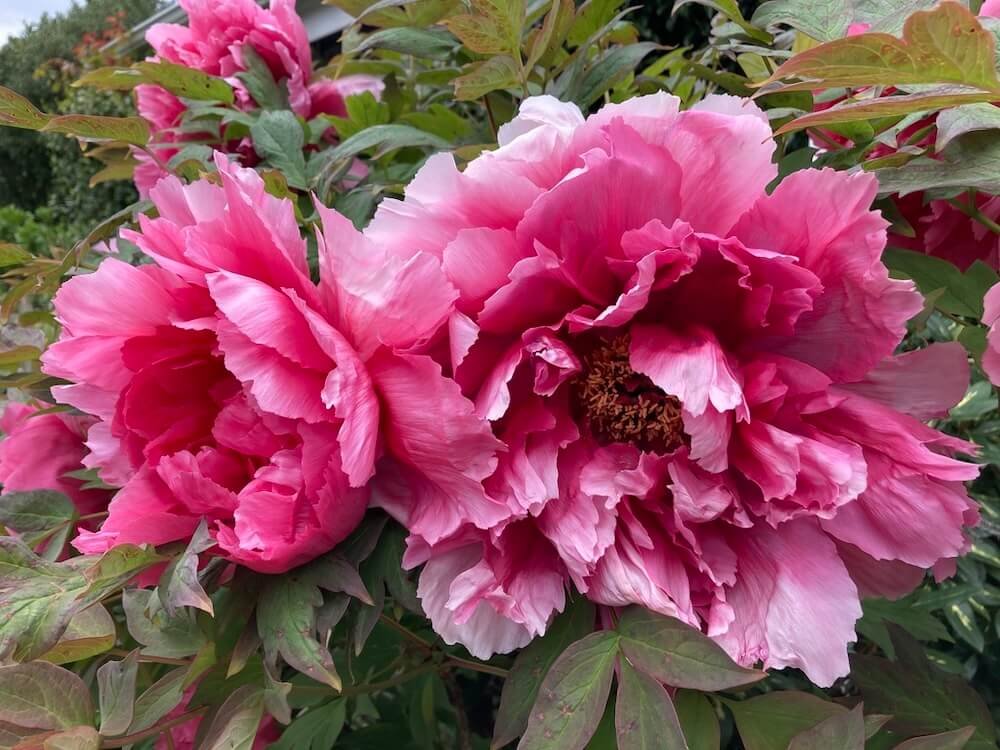
Tree peonies offer a subtle, refined fragrance paired with exceptionally large, elegant blooms that open in mid to late spring. Paeonia x suffruticosa ‘Zi Er Qiao’ (shown here) is grown for its full, ruffled flowers in deep rosy pink, with softer, lighter outer petals that create a layered, dimensional effect. Its woody framework supports these expansive blooms, giving the plant a graceful, established presence in the garden, where each bloom becomes a focal point during the peak flowering season.
A distinctive addition to borders or focal plantings, these shrubs bring both scale and seasonal fragrance to the landscape. Paeonia ‘Hephestos’ offers deep red flowers with a rich tone and soft scent, while Paeonia ‘Ruffled Sunset’ adds warm coral and peach hues with gently fragrant, ruffled petals. Together, these selections provide nuanced fragrance, bold blooms, and a refined, memorable display in the spring garden.
OSMANTHUS
05
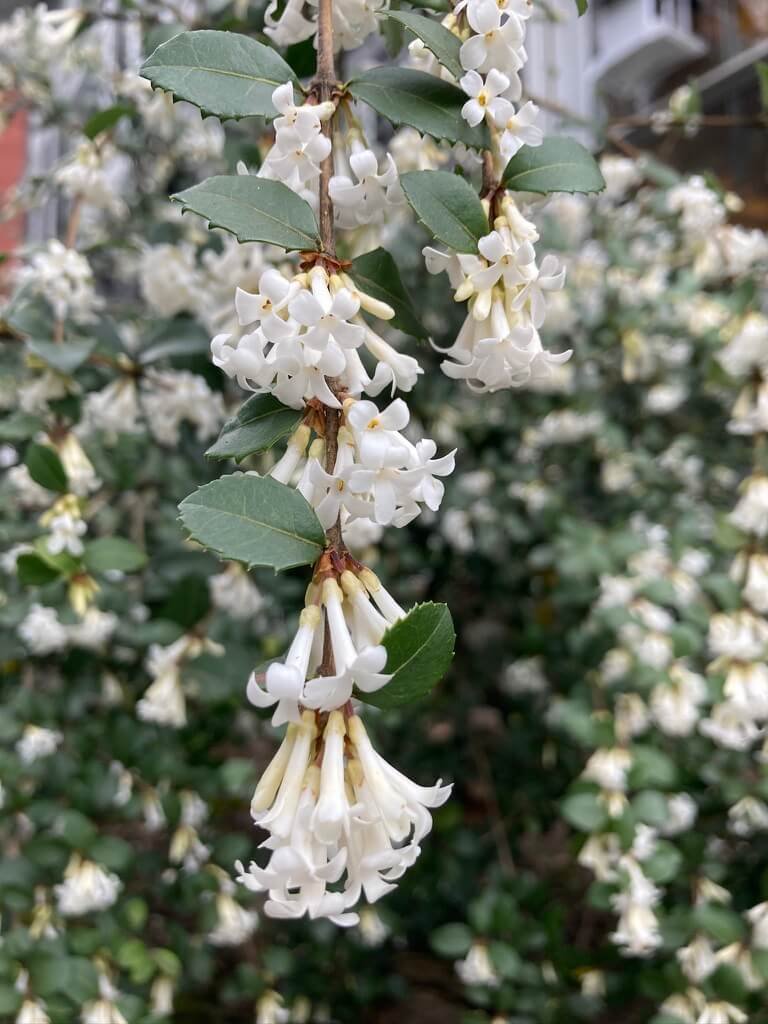
Osmanthus offers a subtle but pervasive fragrance, releasing a sweet, apricot-like scent that can carry through the garden even when the flowers are small and understated. Osmanthus x burkwoodii is grown for its dense evergreen foliage and clusters of tiny white blooms in spring, producing a noticeable fragrance that belies their size. Its naturally compact, upright habit creates a consistent, structured presence in the landscape.
A versatile addition to hedges, borders, or foundation plantings, these shrubs combine scent with year-round foliage interest. Osmanthus heterophyllus ‘Goshiki’ adds variegated leaves in shades of green, cream, and pink for visual contrast, while Osmanthus delavayi (shown here) offers a softer, more arching form with abundant white flowers and a similar sweet fragrance. Together, these selections provide layered texture, reliable structure, and a gentle but persistent fragrance throughout the growing season.
DAPHNE
06
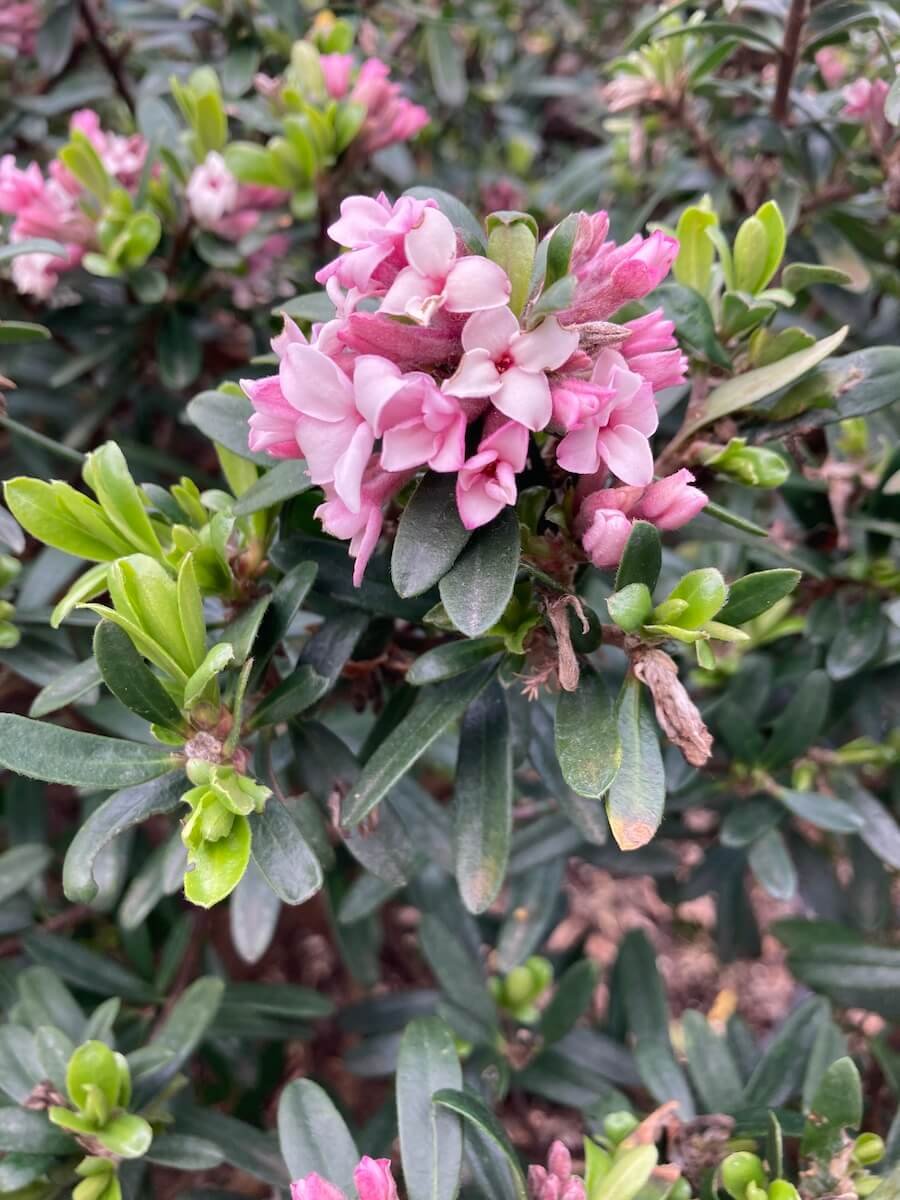
Daphne is known for its concentrated, sweet fragrance, with small flowers that release a powerful scent out of proportion to their size. Daphne x transatlantica ‘Pink Fragrance’ (shown here) is grown for its soft pink blooms that appear over a long season, often from spring into fall, creating a steady and noticeable perfume in the garden. Its compact habit and fine-textured foliage provide a tidy, consistent presence that supports continuous flowering.
A refined addition to borders, rock gardens, or near walkways, these shrubs are best placed where their scent can be fully enjoyed. Daphne x susannae ‘Lawrence Crocker’ offers a low, spreading form with rosy-pink flowers, while Daphne x burkwoodii ‘Carol Mackie’ adds variegated foliage edged in cream with pale pink blooms. Together, these selections provide extended bloom, layered foliage interest, and a lingering fragrance that enhances the garden throughout the season.
MEXICAN ORANGE (Choisya)
07
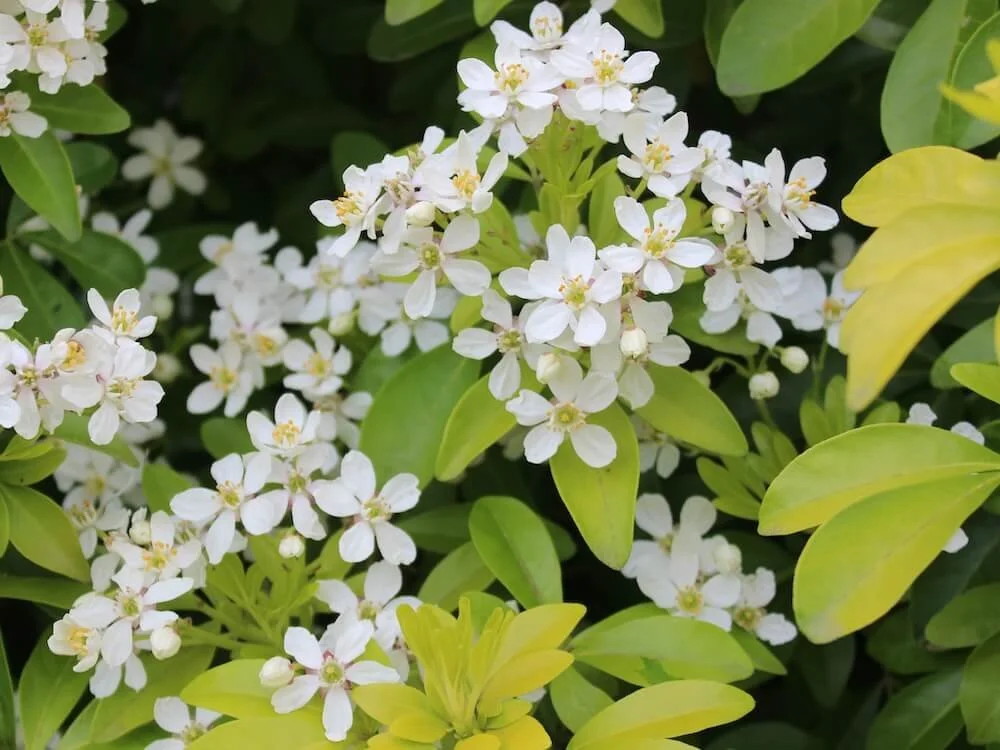
Mexican oranges are appreciated for their intensely fragrant flowers and aromatic evergreen foliage, bringing scent and structure to the garden throughout the year. Choisya x dewitteana ‘Aztec Pearl’ produces masses of star-shaped white flowers with a sweet citrus fragrance that can perfume an entire planting area during bloom. The finely divided glossy foliage releases its own pleasant scent when brushed, extending the appeal beyond the flowering season.
Fragrance remains the defining feature of this group, making these shrubs especially valuable near entrances, patios, and walkways. Choisya ternata bears clusters of richly scented white blossoms, while Choisya ternata ‘Sundance’ (shown here) combines the same fragrant flowers with luminous golden foliage. Their rounded forms and aromatic foliage add beauty and perfume to the landscape while pairing naturally with daphnes, gardenias, and other fragrant shrubs.
LAVENDER (Lavandula)
08
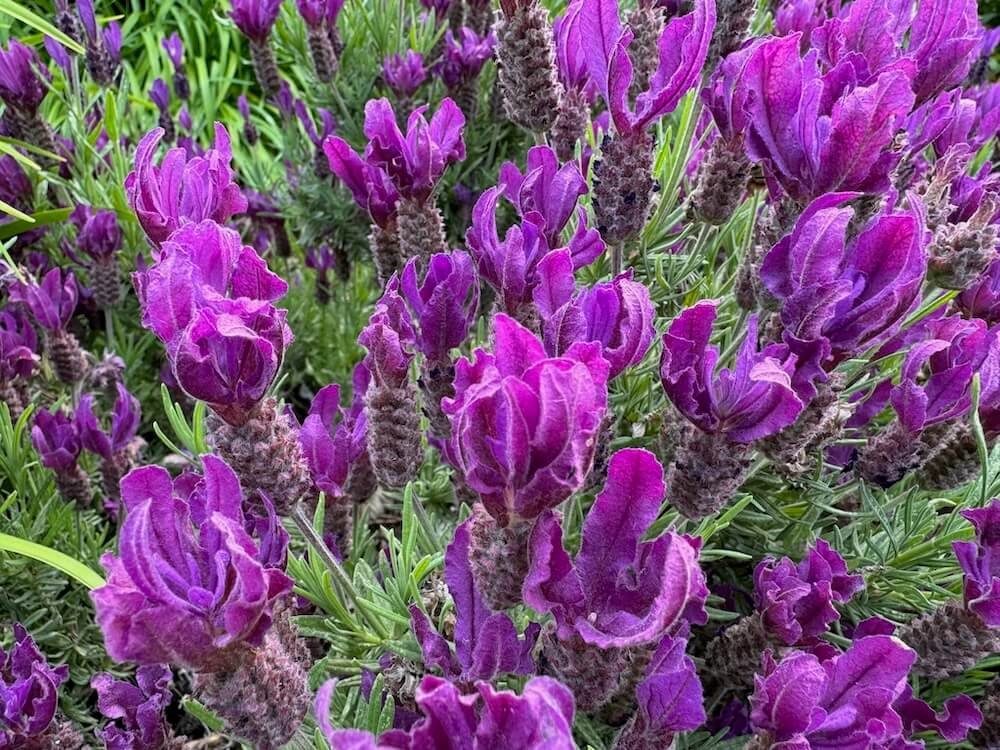
Lavenders fill the garden with a distinctive herbal fragrance carried by both their flowers and foliage, making them among the most aromatic shrubs for sunny landscapes. Lavandula stoechas ‘Anouk Deep Rose’ (shown here) produces deep rose-purple flower heads topped with colorful bracts that add another layer of visual interest while releasing a rich scent during bloom. The silver-green foliage remains fragrant throughout the year, providing sensory appeal even when the plants are not flowering.
Scent lingers in the air whenever the foliage is brushed or warmed by the sun. Lavandula angustifolia ‘Platinum Blonde’ combines fragrant lavender-blue flowers with striking cream-edged foliage, while Lavandula angustifolia ‘Hidcote’ is known for its intensely scented deep purple flower spikes. Their compact forms and aromatic character make them excellent additions near walkways, patios, and seating areas where their fragrance can be enjoyed up close.
GARDENIA
09
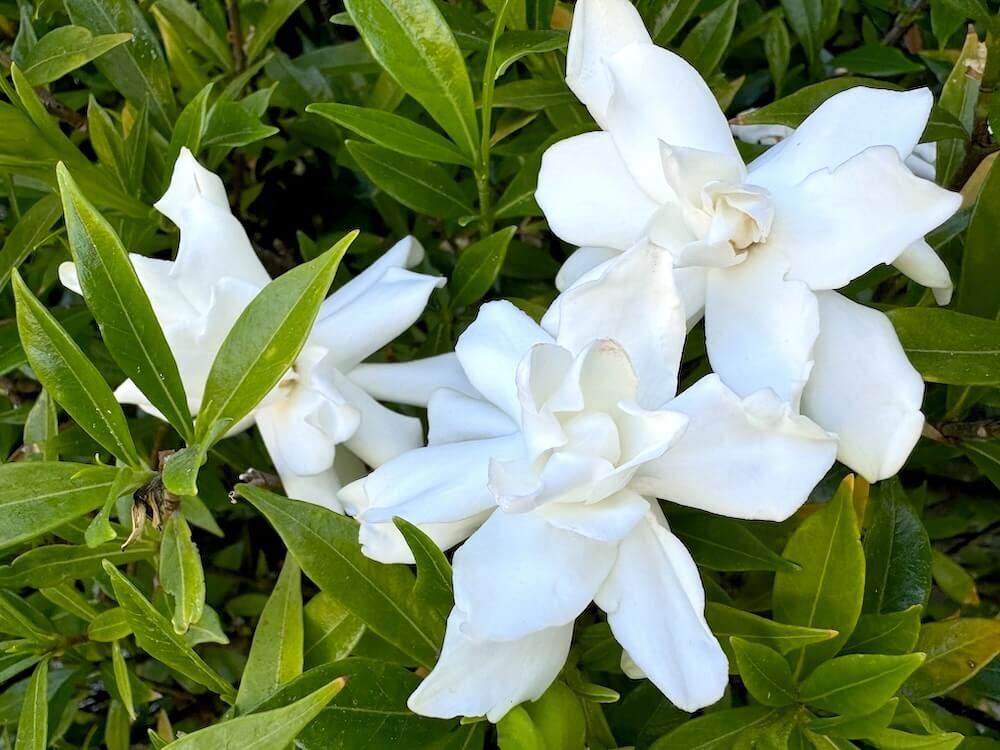
Gardenias bring a rich, unmistakable fragrance to the garden, with creamy white blooms that release a strong, sweet scent during late spring and into summer. Gardenia jasminoides ‘Frostproof’ (shown here) is grown for its glossy, dark green foliage and double white flowers that create a clean, luminous display. Its compact, rounded habit supports consistent flowering while holding a polished, evergreen presence throughout the year.
A refined choice for borders, foundation plantings, or patio areas, this shrub allows its fragrance to be fully appreciated up close, especially near entryways, seating areas, and frequently used outdoor living spaces. The blooms stand out clearly against the dense foliage, creating both visual and aromatic impact during the flowering season. Together, these qualities provide lasting fragrance, structured form, and a classic presence in the landscape.
CAMELLIA
10
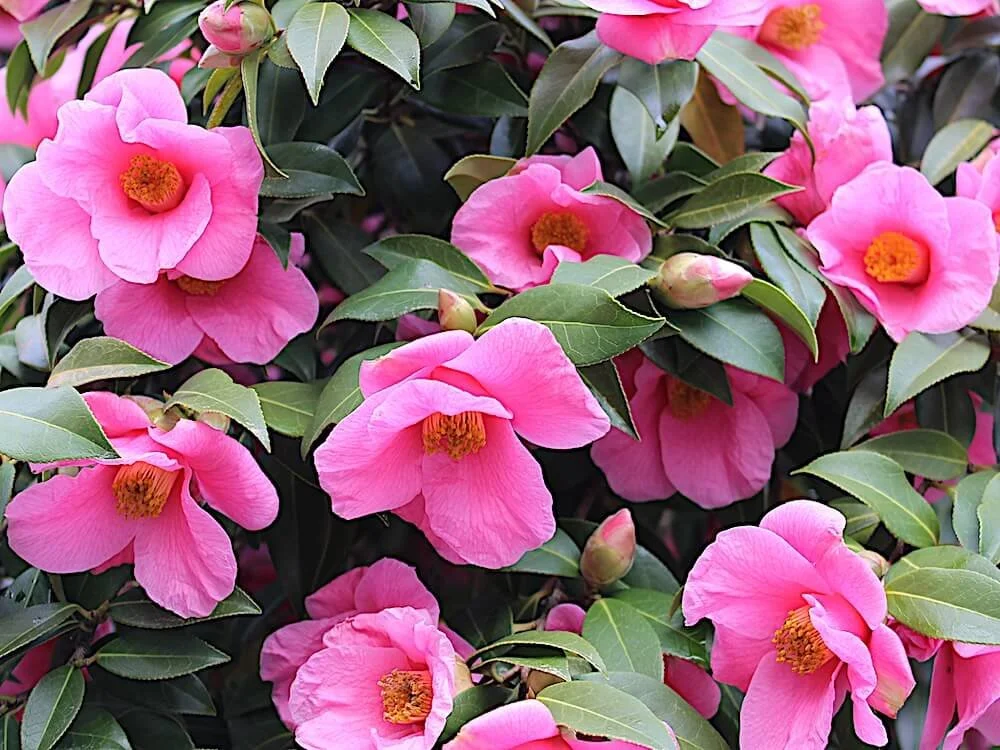
Camellias are not often associated with fragrance, but certain species and hybrids add a sweet scent to their elegant winter and spring displays. Camellia x lutchuensis ‘Minato-no-Akebono’ produces soft pink flowers with a delicate fragrance inherited from its scented parentage, bringing an added sensory dimension to the garden during the cooler months. Glossy evergreen foliage provides a rich backdrop for the blooms while contributing structure throughout the year.
Camellia tsaii var. synaptica bears small white blossoms with a sweet scent, while Camellia x williamsii ‘Mary Christian’ (shown here) combines graceful pink flowers with light fragrance and excellent garden presence. Their scented blooms make these camellias especially rewarding near paths, courtyards, and entrances where visitors can appreciate both their beauty and perfume at close range.
Related: Explore All Camellias ➔
STAR ANISE (Illicium)
11
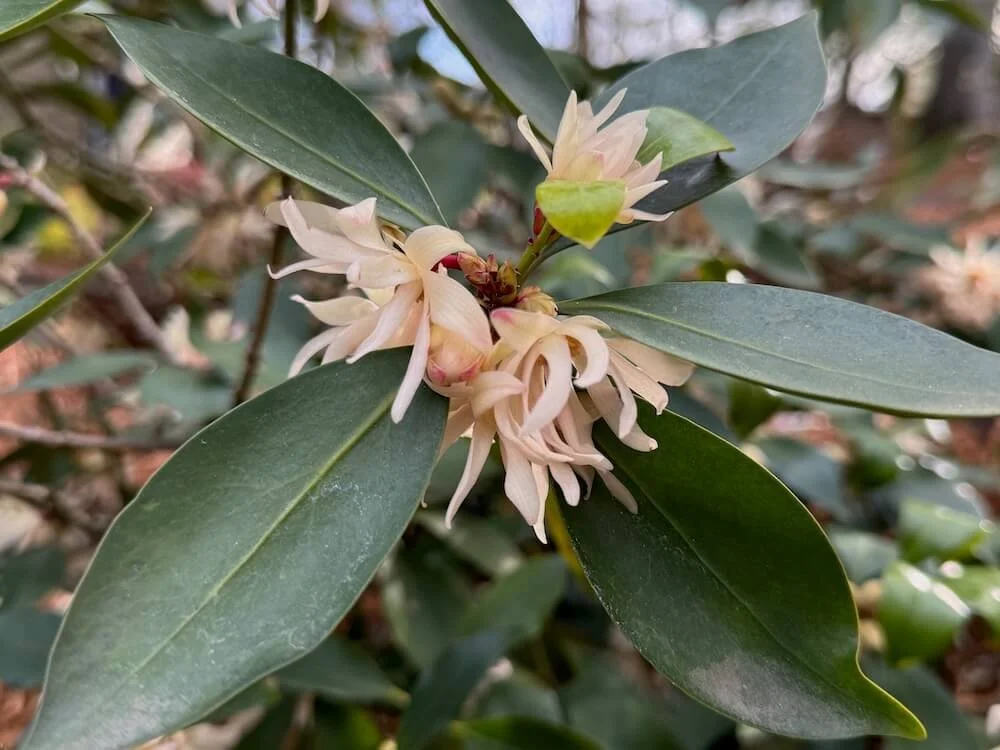
Japanese star anise brings fragrance to the garden through its aromatic evergreen foliage, which releases a distinctive spicy scent when touched or brushed. Illicium anisatum produces glossy dark green leaves and creamy white flowers with subtle burgundy tones near their centers, creating interest in shaded landscapes throughout the year. The broad evergreen foliage contributes a lush appearance while adding fragrance to woodland gardens, pathways, and sheltered planting areas.
Unlike many fragrant shrubs that rely primarily on their flowers, the appeal of Japanese star anise comes largely from its scented foliage. Illicium anisatum ‘HinPurlf’ (shown here) develops rich burgundy-purple new growth and stems that contrast beautifully with mature green leaves. Their dense branching and aromatic leaves make these shrubs especially effective near entrances, garden paths, and seating areas where both fragrance and foliage can be appreciated.
ALLSPICE (Calycanthus)
12
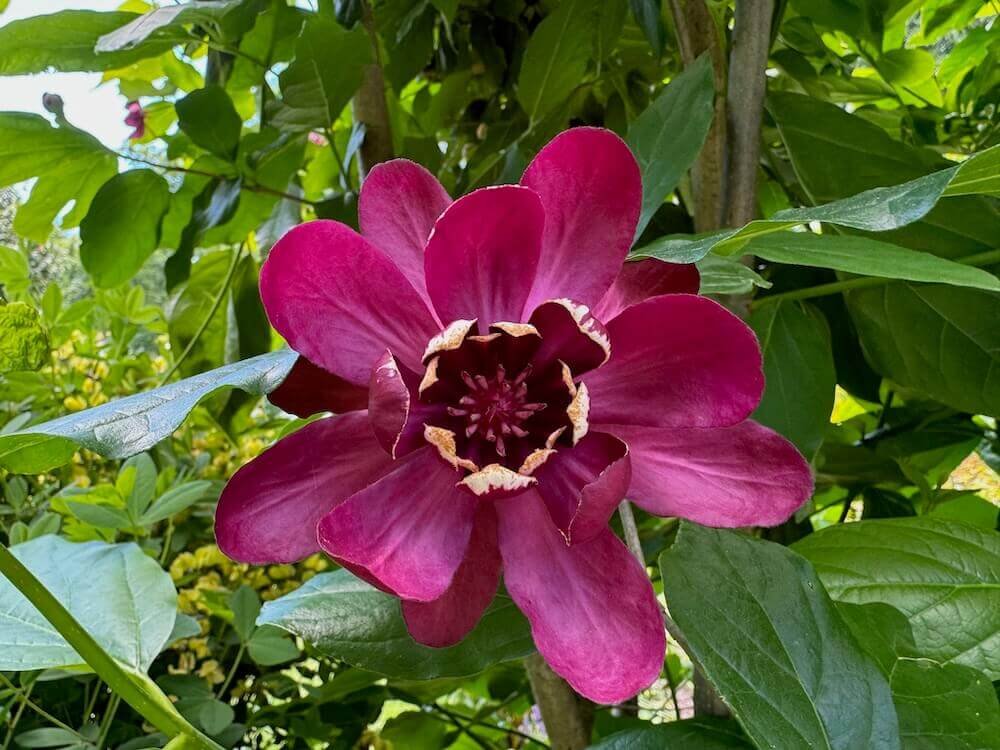
Allspice adds fragrance to the garden through both its flowers and foliage, creating an experience that appeals to more than just the eye. Calycanthus ‘Hartlage Wine’ (shown here) produces large wine-red flowers with a pale center that release a light sweet fragrance during bloom. The broad deciduous foliage forms a lush backdrop for the flowers and contributes additional scent when the leaves are crushed or brushed.
Unlike many fragrant shrubs that concentrate their perfume in clusters of small blossoms, allspice pairs fragrance with unusually large flowers and bold foliage. The blooms appear over an extended period in late spring and early summer, bringing color and subtle scent to garden spaces. Its combination of flower size, foliage texture, and aromatic qualities makes it well suited for planting near patios, pathways, and other areas where visitors can experience its fragrance up close.
RHODODENDRON
13
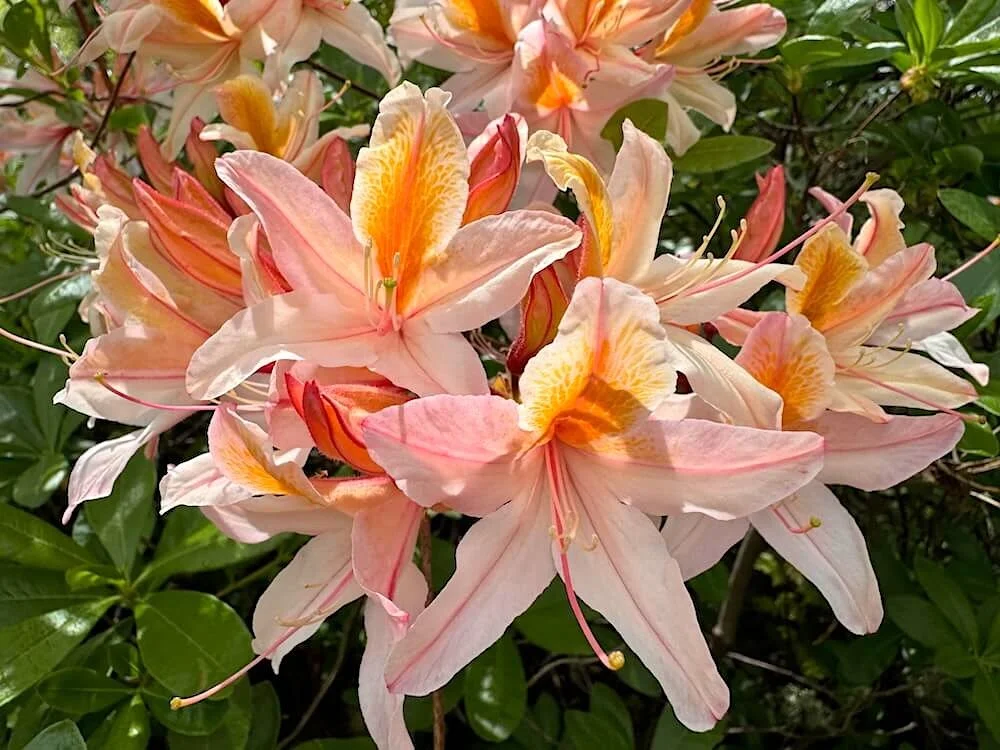
While many rhododendrons are grown primarily for their flowers, a select group adds fragrance during spring bloom. Rhododendron occidentale (shown here) produces large white to soft pink flowers often marked with orange blotches, releasing a sweet spicy fragrance that carries through the landscape. The open branching habit allows the scent to disperse easily, creating an experience that appeals to both sight and smell.
Fragrance varies from delicate to rich depending on the selection. Rhododendron occidentale ‘Irene Koster’ bears pale pink flowers with a sweet scent, while Rhododendron prinophyllum ‘Marie Hoffman’ produces rosy-pink blossoms with a pronounced clove-like fragrance. Their scented blooms add another dimension to woodland gardens and mixed borders, especially when planted where visitors can encounter their perfume during spring walks.
Related: See All Rhododendrons ➔
SKIMMIA
14
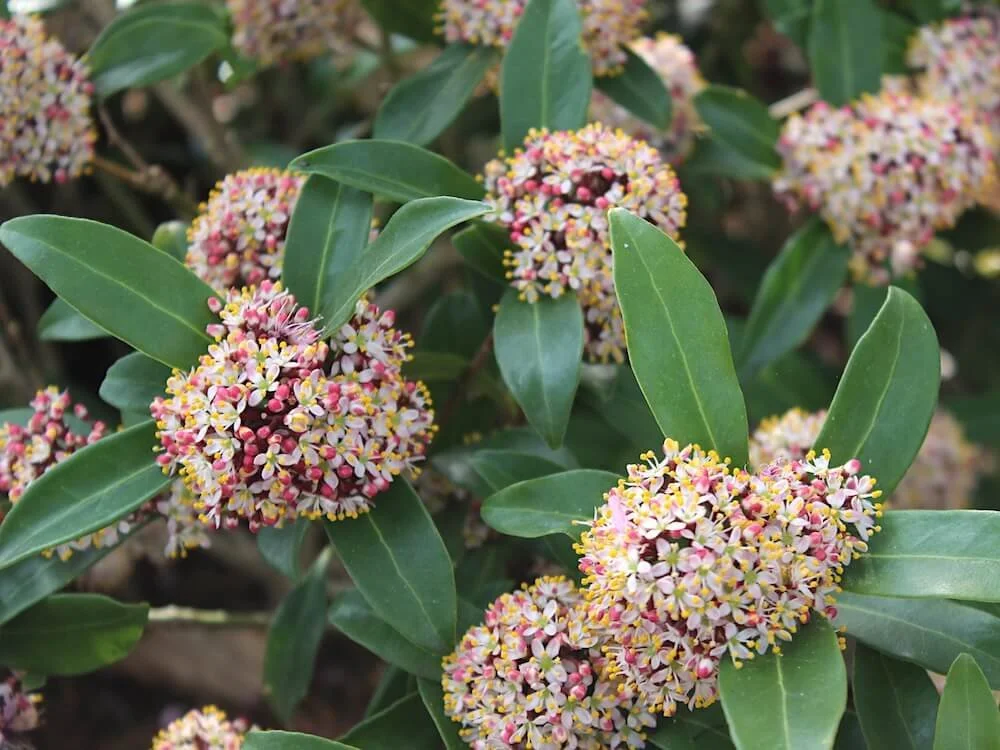
Skimmias contribute fragrance during the cooler months of the year, when clusters of flower buds begin opening and their sweet scent becomes noticeable in sheltered garden spaces. Male Skimmia japonica (shown here) plants are particularly valued for their abundant creamy-white flower clusters, which are often more fragrant and showier than those of female selections. Their glossy evergreen foliage provides a lush backdrop for the blooms while adding structure to woodland gardens and shaded borders.
The fragrance of skimmias is often subtle but rewarding when encountered at close range along pathways and near entrances. Skimmia reevesiana produces fragrant white flowers followed by bright red berries on a single plant, extending its ornamental season well beyond flowering. Their compact evergreen forms and scented blooms bring beauty, fragrance, and seasonal interest to shaded landscapes where many flowering shrubs struggle to perform.
WITCH HAZEL (Hamamelis)
15
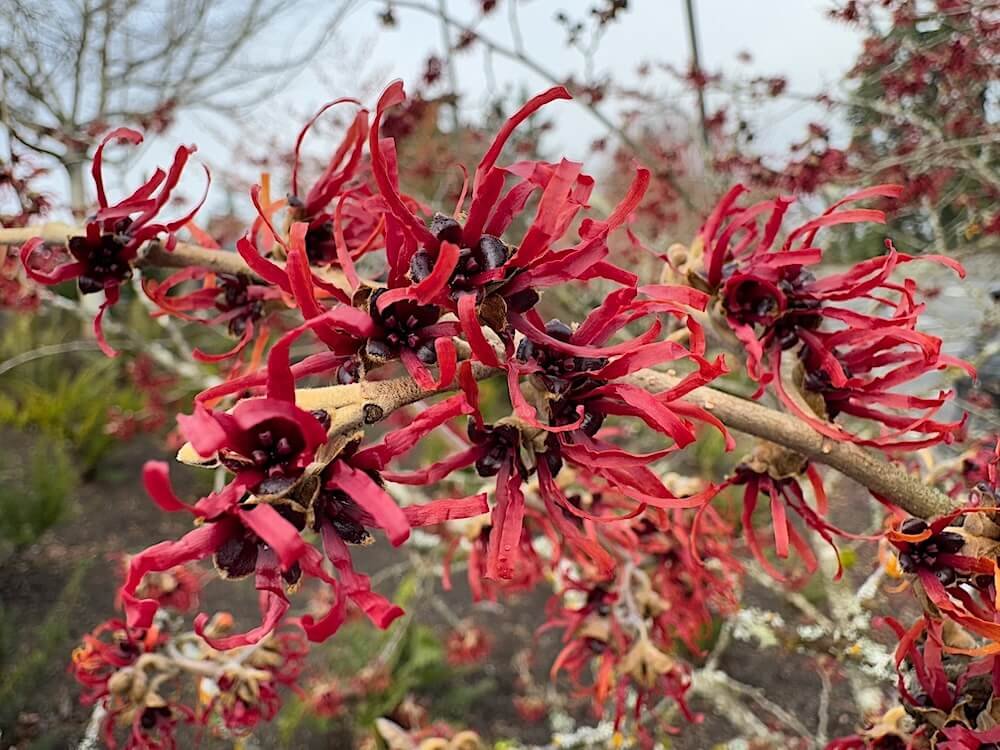
Witch hazels bring fragrance into the garden when little else is blooming, filling the winter air with a sweet, spicy scent carried by their ribbon-like flowers. Hamamelis x intermedia ‘Diane’ (shown here) produces deep copper-red blooms that appear on bare branches, creating both visual interest and fragrance during the coldest months. The flowers emerge before the foliage, allowing their color and scent to take center stage.
Their perfume is often most noticeable on mild winter days when the flowers begin to unfurl. Hamamelis x intermedia ‘Jelena’ bears glowing orange, copper, and amber-toned flowers, while Hamamelis x intermedia ‘Winter Beauty’ produces clusters of fragrant golden-yellow blooms along the branches. These shrubs are especially effective near entrances, walkways, and windows where their unusual flowers and seasonal fragrance can be enjoyed throughout winter.
Related: Explore All Witch Hazels ➔
SUMMERSWEET (Clethra)
16
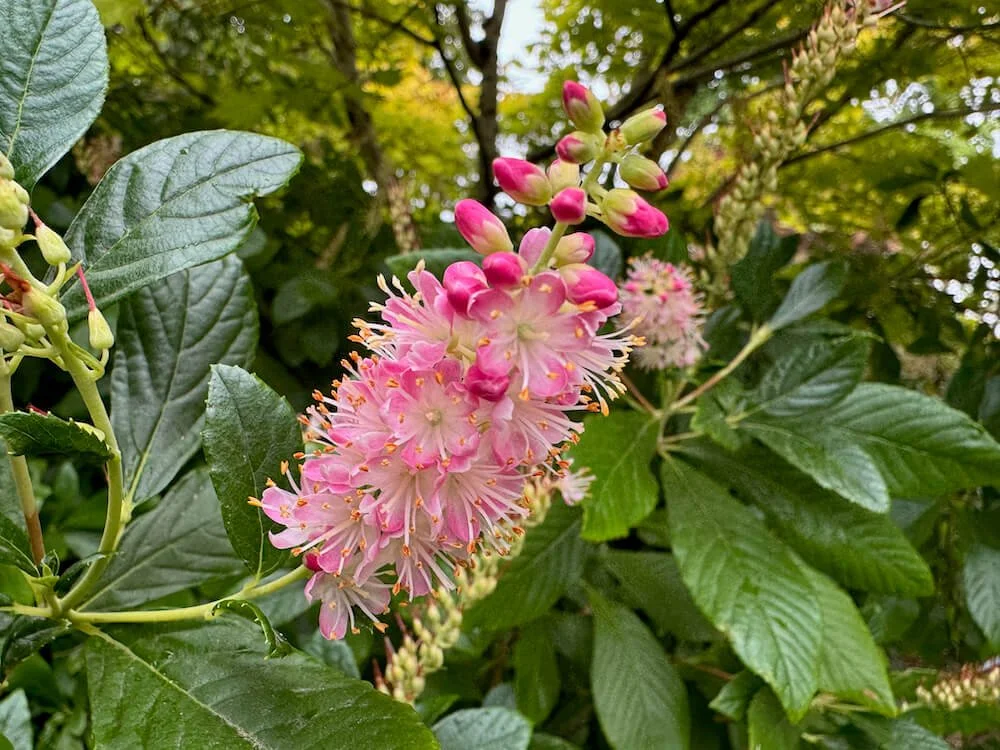
Summersweet brings a warm, spicy-sweet fragrance to the garden during mid to late summer, when many other shrubs have finished blooming. Clethra alnifolia ‘Ruby Spice’ (shown here) is grown for its upright spikes of rosy-pink flowers that open gradually from base to tip, creating a long-lasting and noticeably scented display. Its glossy green foliage forms a dense backdrop that enhances both the color and fragrance of the blooms.
A reliable choice for borders, naturalized areas, or near outdoor living spaces, this shrub allows its scent to be enjoyed during the height of the season. Its upright, suckering habit can create a fuller planting over time, adding both structure and coverage. Together, these qualities provide consistent summer bloom, appealing fragrance, and a soft, natural presence in the landscape.
PAPER BUSH (Edgeworthia)
17
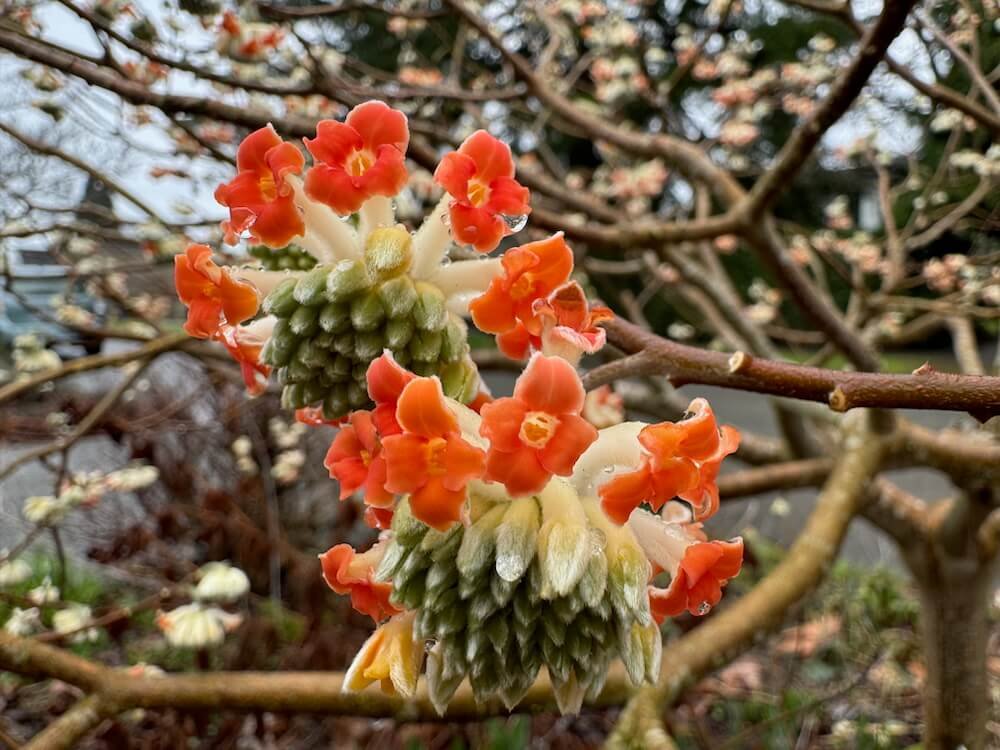
Paper bush carries a clean, sweet fragrance that emerges in late winter, with rounded clusters of tubular flowers opening along bare branches before the foliage appears. Edgeworthia chrysantha is grown for its soft yellow blooms and smooth, architectural stems that create a sculptural presence in the garden. The flowers release a noticeable scent on mild days, adding interest at a time when few other shrubs are in bloom.
An elegant choice for sheltered borders or near walkways, this shrub allows its fragrance to be appreciated during the quieter months of the year. Edgeworthia chrysantha ‘Akebono’ (shown here) offers a warmer display, with peach to apricot-toned buds opening to soft yellow flowers, adding subtle color variation along with the same gentle scent. Together, these selections provide early-season bloom, refined structure, and a soft, lingering fragrance in the landscape.
VIBURNUM
18

Viburnums can fill the garden with fragrance long before many other shrubs awaken, carrying a sweet perfume through the late winter and early spring landscape. Viburnum x bodnantense ‘Dawn’ (shown here) produces clusters of pink tubular flowers along bare branches, allowing both the color and scent to stand out clearly against the dormant garden. The blossoms often appear over an extended period, creating repeated opportunities to enjoy their fragrance during mild weather.
Few shrubs announce the changing seasons as effectively as the fragrant blooms of bodnant viburnums. Viburnum x bodnantense ‘Pink Dawn’ bears deeper pink flower clusters that open gradually along the stems, releasing a rich sweet scent into the surrounding air. Their upright branching structure and early flowering habit make them excellent choices near windows, entryways, and garden paths where their fragrance can be noticed during the quiet months of the year.
SWEET BOX (Sarcococca)
19
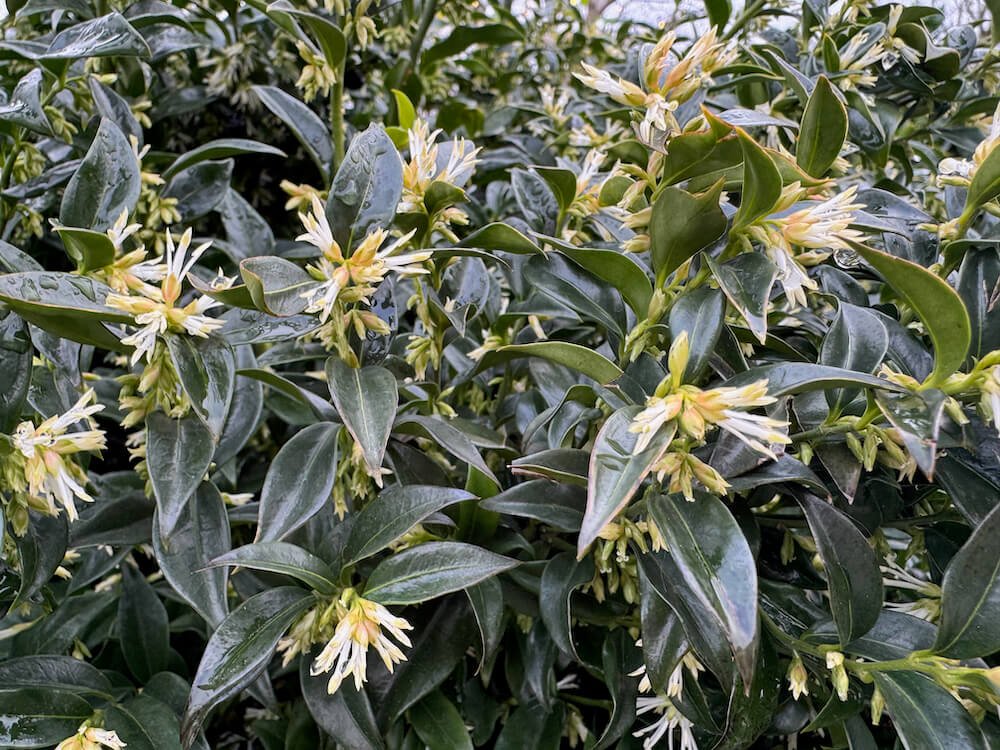
Sarcococca delivers an unexpected burst of fragrance in the quietest part of the season, with small, creamy-white flowers that release a strong, sweet scent in winter. Sarcococca confusa (shown here) is grown for its glossy, dark green foliage and upright habit, forming a dense evergreen presence that quietly supports this highly aromatic display. The flowers are modest in appearance but carry a noticeable perfume that drifts through the garden.
A welcome addition to shaded borders, pathways, or foundation plantings, these shrubs allow their fragrance to be appreciated where it matters most. Sarcococca hookeriana var. humilis offers a lower, more spreading form, making it well suited for groundcover or edging while still producing the same fragrant winter blooms. Together, these selections provide year-round structure, seasonal scent, and a refined presence in the landscape.