
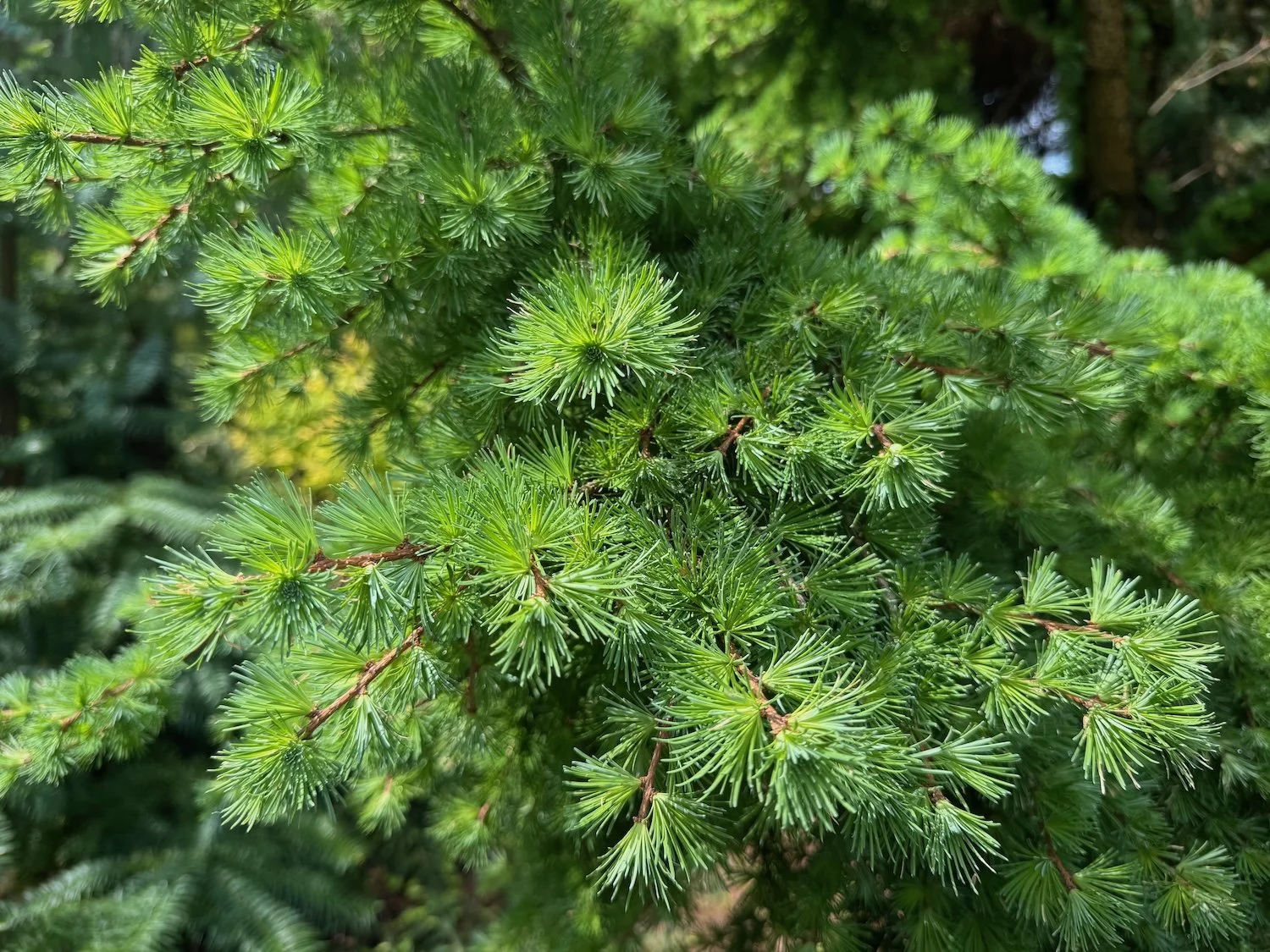
COMPLETE GUIDE
TO CONIFERS
Conifers bring structure, texture, and enduring beauty to the garden, offering a remarkable range of sizes, forms, and foliage colors that provide interest in every season. From towering evergreens to compact dwarf selections, they can serve as focal points, screening plants, foundation shrubs, or subtle accents in mixed borders and rock gardens. Needles and scales may appear in shades of green, blue, silver, and gold, adding contrast and depth to the landscape. With their diverse growth habits and long-lived nature, conifers provide year-round character and help create a sense of permanence and balance within the garden.
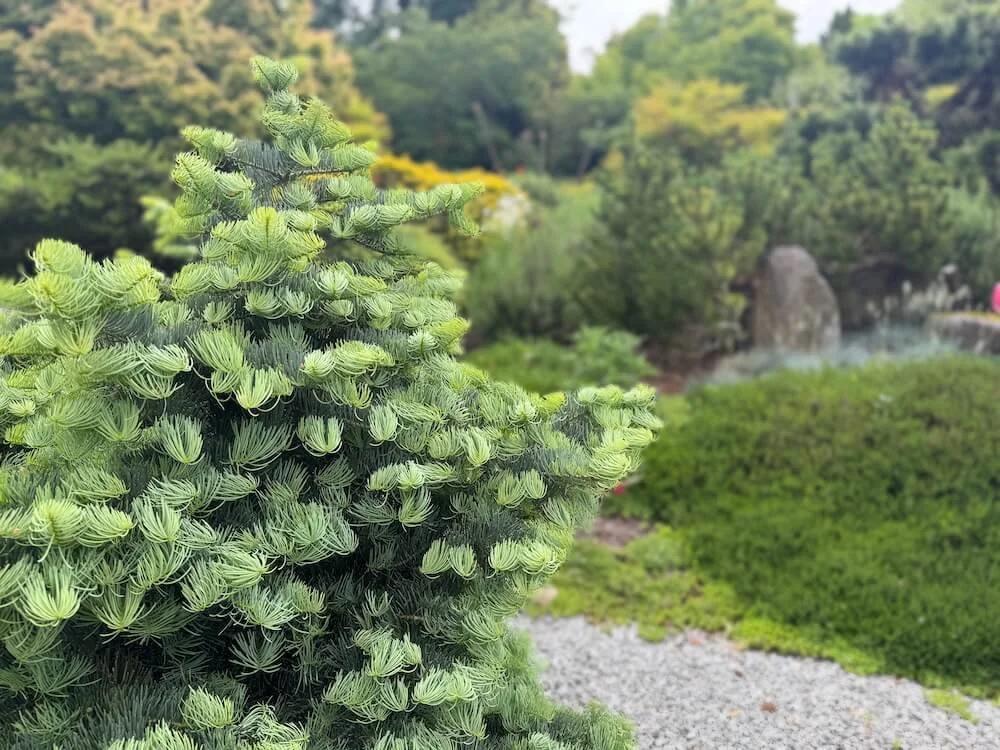
CHOOSING & DESIGNING WITH CONIFERS
Size and growth rates:
Conifers are available in a wide range of sizes, from miniature selections suited to troughs and containers to large specimens that become major landscape features. Understanding mature size and growth rate is one of the most important considerations when selecting a conifer. Dwarf and slow-growing varieties are often ideal for smaller gardens, while larger forms can provide screening, privacy, and year-round structure.
Color and texture:
Conifers offer foliage colors ranging from deep green to silver-blue, golden yellow, and variegated combinations. Needle length, texture, and branching patterns vary considerably among species, creating opportunities to combine contrasting colors and textures throughout the landscape. Many cultivars maintain their color year-round, while some develop enhanced winter coloration.
Forms and habits:
Conifers occur in upright, pyramidal, mounding, spreading, globe-shaped, prostrate, and weeping forms. Their diverse habits make them valuable as focal points, foundation plants, rock garden specimens, or structural elements within mixed borders. Combining different forms adds depth and visual interest throughout the year.
Seasonal interest:
Unlike many plants that are appreciated primarily during flowering season, conifers provide permanent structure and color throughout the year. They contribute texture during winter, complement spring-flowering shrubs and bulbs, and serve as a backdrop for summer and autumn displays.
Companion plants:
Conifers combine beautifully with heathers, heucheras, hostas, ornamental grasses, Japanese maples, hydrangeas, rhododendrons, spring bulbs, and flowering perennials. Their evergreen foliage helps anchor plantings and provides contrast to seasonal flowers and deciduous shrubs.
Garden uses:
Conifers are exceptionally versatile and can be used in foundation plantings, mixed borders, rock gardens, woodland settings, containers, and screening applications. Their year-round presence and diverse forms make them valuable in gardens of every size.

Architectural Conifers
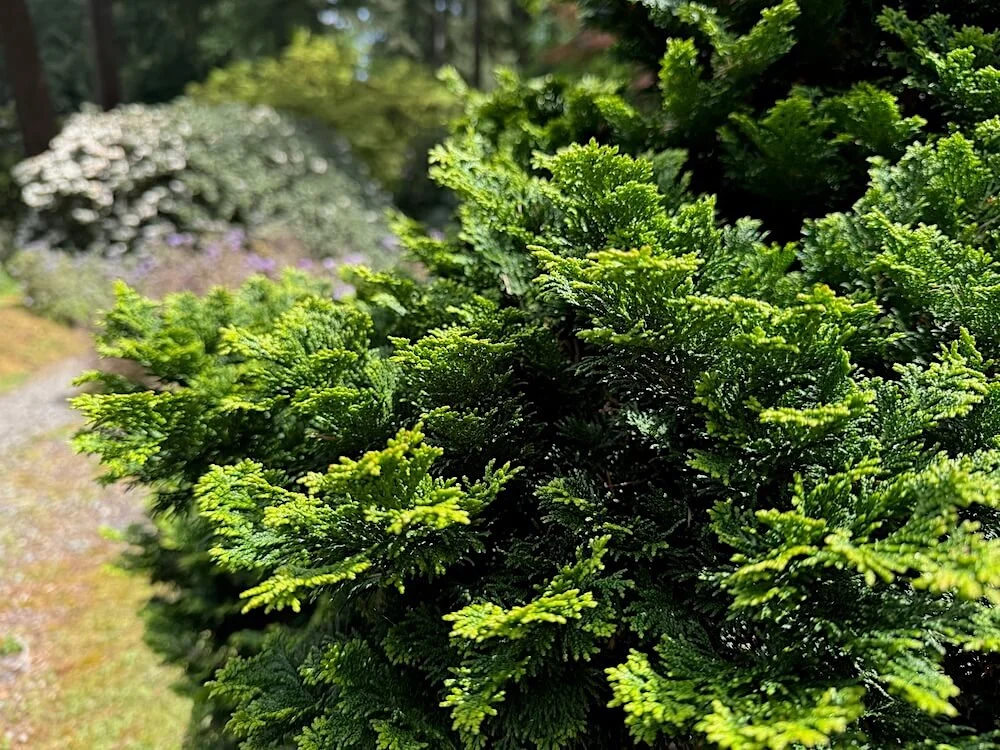
Chamaecyparis obtusa 'Hage'
Evergreen conifer with green fan shaped foliage and layered branching. Grows 3 to 5 feet tall. Ideal for rock gardens, borders, containers, and Japanese inspired plantings. Zones: 5 to 8.
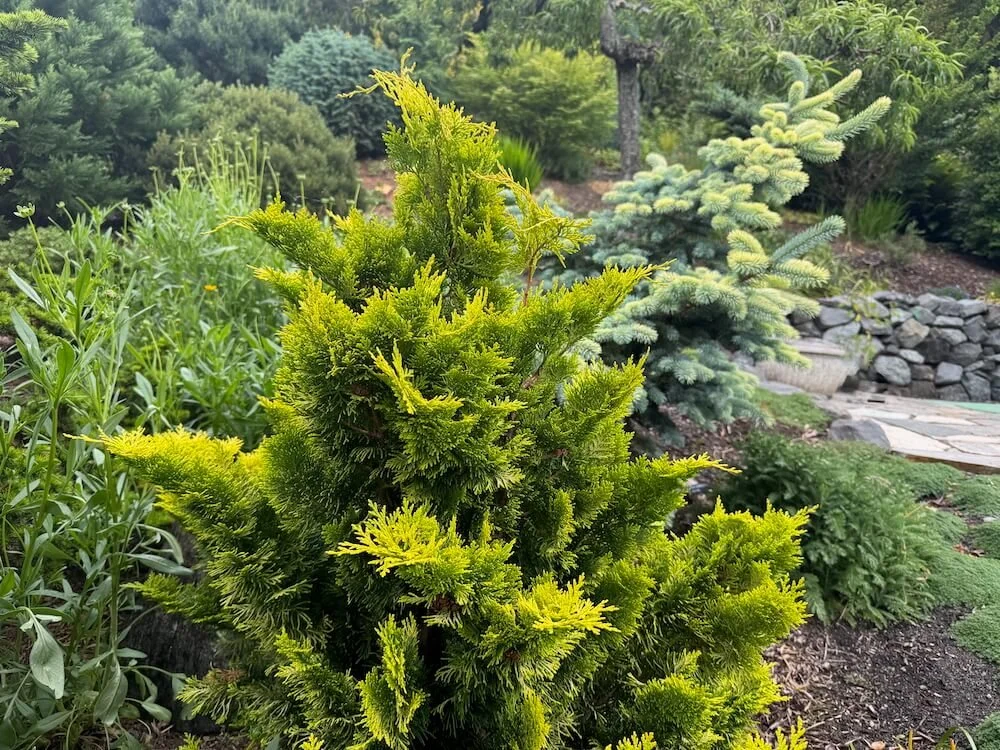
Chamaecyparis obtusa 'Sunspray'
Evergreen conifer with bright golden foliage highlighted by green interior growth. Grows 6 to 10 feet tall. Ideal for borders, specimen plantings, and containers. Zones: 5 to 8.
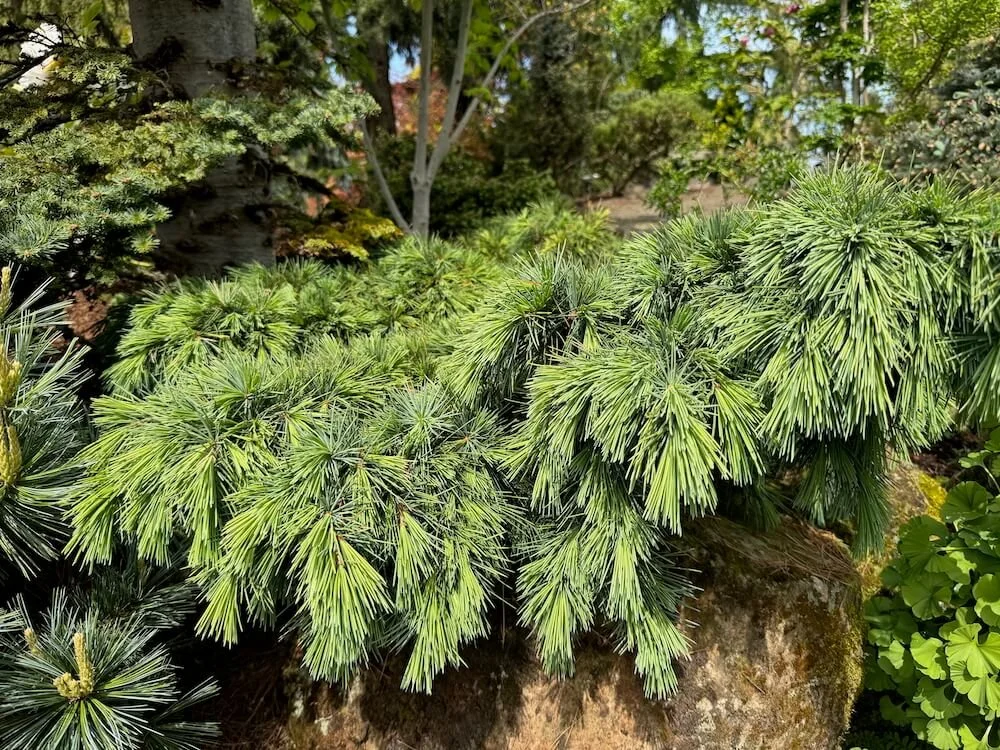
Cedrus libani 'Hedgehog'
Evergreen conifer with soft blue green needles and dense tufted branching. Grows 2 to 3 feet tall. Ideal for rock gardens, troughs, containers, and collector plantings. Zones: 6 to 9.
Other Notable Architectural Conifers
Larix kaempferi 'Wolterdingen': Dense cascading branches and finely textured foliage create a sculptural form
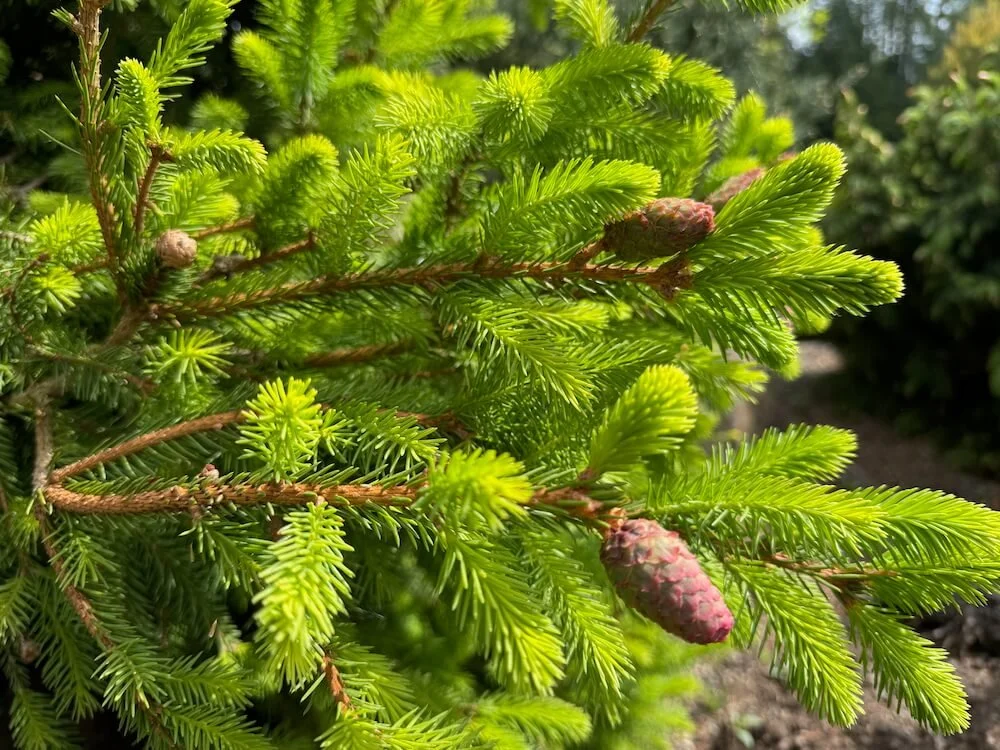
Picea orientalis 'Ferny Creek Prostrate': Gracefully spreading branches and a low layered habit
Abies concolor 'La Veta': Soft silvery blue needles and a compact upright form provide year round structure
Tsuga mertensiana 'Elizabeth': Delicate branching and a broadly mounded habit create an elegant focal point
Pinus monticola 'Halloween Broom': Dense branching and a naturally compact shape form a distinctive silhouette
PLANTING CONIFERS
When to plant:
Conifers can be planted in spring or fall, with March through May and September through October often providing the most favorable conditions for establishment. Soil temperatures between about 50°F and 70°F encourage active root growth while avoiding the stresses associated with summer heat and frozen ground. In colder climates, spring planting allows roots additional time to establish before winter.
Where to plant:
Most conifers perform best with at least 6 to 8 hours of direct sunlight per day, although some species tolerate partial shade. Morning and midday sun are especially beneficial for maintaining dense growth and rich foliage color. Sites with good air circulation and protection from excessively dry winter winds help reduce stress and improve long-term performance.
How to plant:
Prepare the planting area by loosening the soil and incorporating compost or aged bark if necessary to improve structure and drainage. Most conifers are sold in one- to three-gallon containers, and the planting hole should be two to three times wider than the root ball but no deeper. Position the plant so the top of the root ball sits at or slightly above the surrounding soil level. Planting too deeply can contribute to root decline and poor vigor. Backfill carefully, water thoroughly, and continue regular watering during the first growing season while roots establish.
Soil:
Conifers generally perform best in fertile, well-drained soil with a slightly acidic pH between about 5.5 and 6.8, although individual species vary. Incorporating compost, leaf mold, or aged pine bark before planting helps improve soil structure and moisture retention. Heavy clay soils benefit from additional organic matter to improve drainage, while sandy soils often require amendments to retain moisture and nutrients. A light application of a balanced slow-release fertilizer such as 10-10-10 or 14-14-14 mixed into the planting area according to label directions can support early root establishment. After planting, apply a 2 to 3 inch layer of shredded bark, pine bark, wood chips, or leaf mold around the root zone, keeping mulch several inches away from the trunk to promote good air circulation and discourage rot.
Watering:
Newly planted conifers generally benefit from about 1 inch of water per week, applied once or twice weekly depending on rainfall and soil conditions. Established plants become increasingly drought tolerant but benefit from occasional deep watering every 10 to 14 days during extended dry periods. Deep watering encourages stronger root systems and improves resistance to heat and drought.
Growing conifers in containers:
Many dwarf conifers adapt exceptionally well to container culture. Use a high-quality potting mix composed primarily of aged bark or peat moss, supplemented with compost and coarse materials such as perlite or pumice to improve drainage. Avoid heavy garden soils, which can become compacted and restrict root growth. Container-grown plants require more frequent watering than those growing in the ground and may need additional winter protection in colder climates.
Colorful Conifers
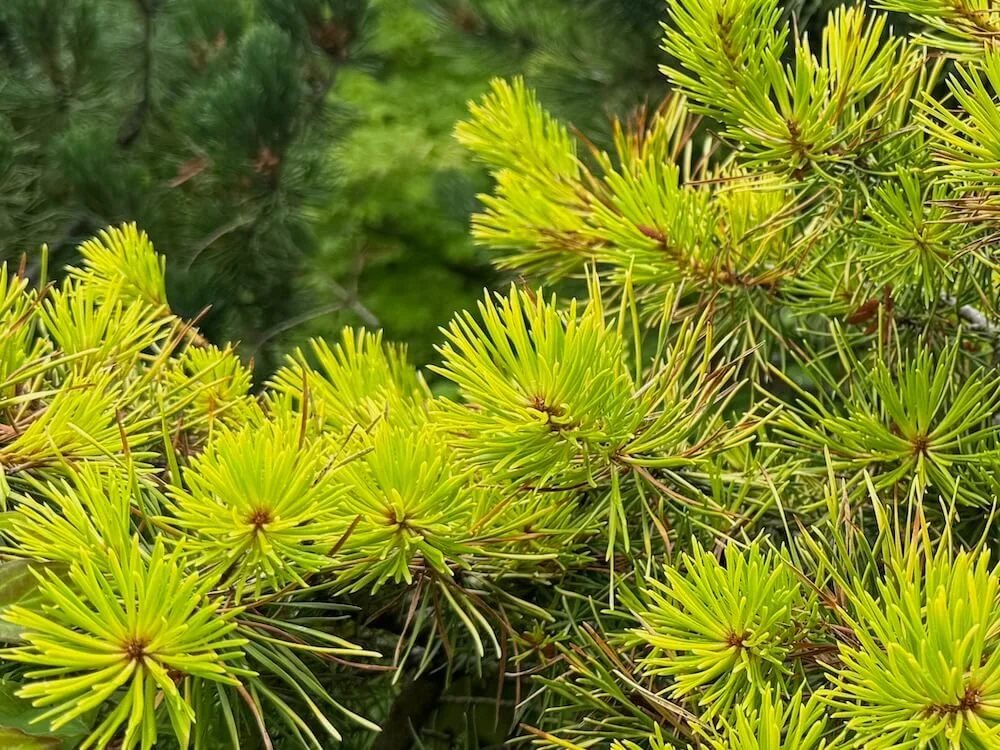
Pinus contorta var. latifolia x banksiana 'Golden Stryker'
Evergreen conifer with golden needles and dense upright branching. Grows 8 to 12 feet tall. Ideal for specimen plantings, borders, screens, and four season gardens. Zones: 2 to 7.
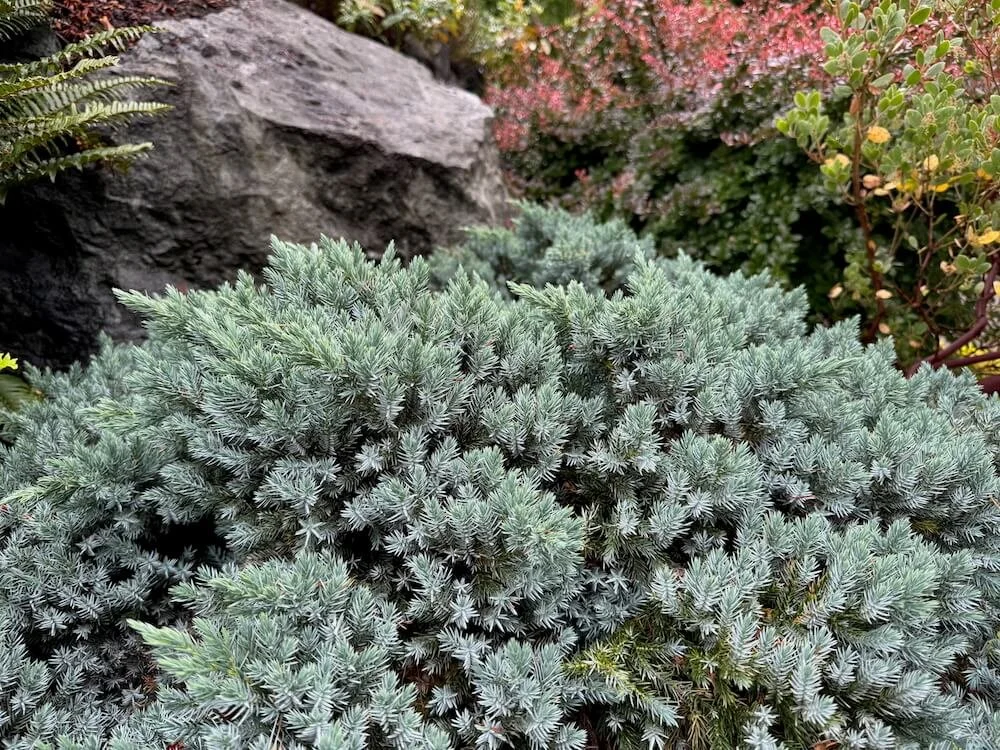
Juniperus squamata 'Blue Star'
Evergreen conifer with silvery blue needles and dense star shaped growth. Grows 1 to 3 feet tall. Ideal for rock gardens, pathway edges, containers, and foundation plantings. Zones: 4 to 8.
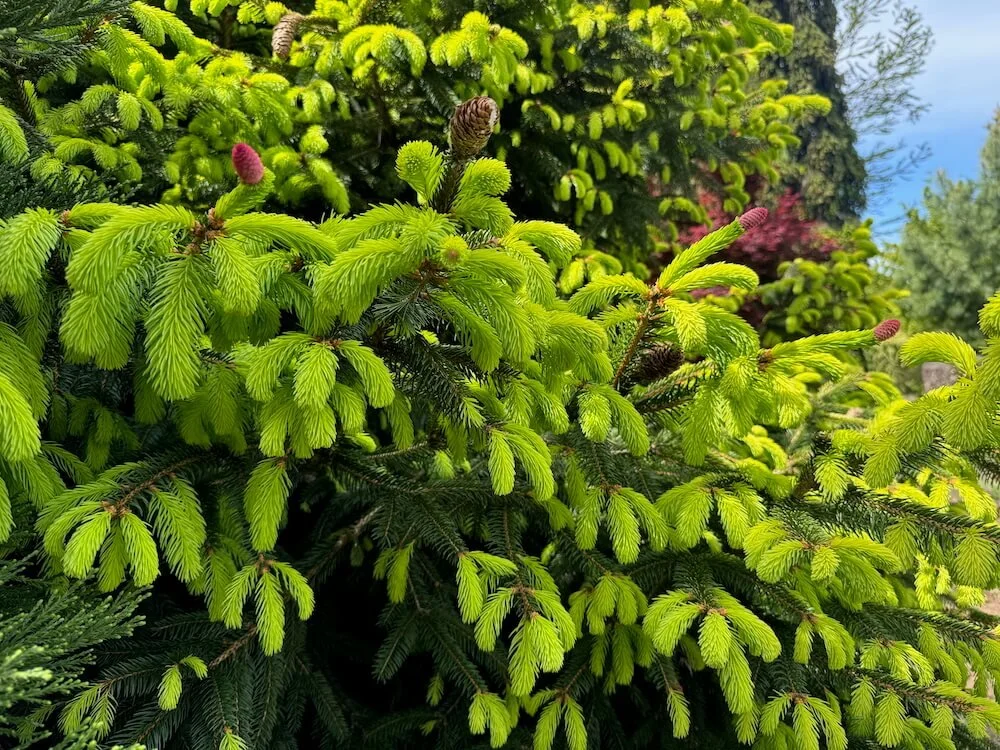
Picea abies 'Acro-Yellow'
Evergreen conifer with bright yellow new growth contrasting with deep green needles. Grows 3 to 5 feet tall. Ideal for rock gardens, collector plantings, borders, and four season landscapes. Zones: 3 to 7.
Other Notable Colorful Conifers
Juniperus conferta ‘Golden Blue Pacific’: Bright golden new growth contrasts beautifully with blue green needles
Picea abies 'Perry's Gold': Brilliant golden foliage intensifies in spring and remains a standout feature
Taxus baccata 'Fastigiata Aurea': Upright branches are clothed in rich golden yellow foliage
Juniperus chinensis 'Expansa Variegata': Blue green foliage highlighted with creamy white variegation
Pinus mugo 'Carstens': Soft green needles transform to vibrant golden yellow in winter
CARING FOR CONIFERS
Fertilizing and mulching:
Most established conifers require relatively little supplemental feeding. An annual application of a balanced slow-release fertilizer such as 10-10-10, 14-14-14, or similar formulations in early spring is usually sufficient. Plants growing in poor soils may benefit from a second light feeding approximately 6 to 8 weeks later, but fertilizing after midsummer should be avoided to prevent tender late-season growth. A 2 to 3 inch layer of pine bark, shredded bark, wood chips, or leaf mold helps conserve moisture, moderate soil temperatures, and gradually improve soil quality.
Pruning and shaping:
Most conifers require little pruning beyond removing dead, damaged, or crowded branches. Light shaping is best performed in late winter or early spring before new growth begins. Many species do not readily regenerate from old wood, so excessive pruning should be avoided. Pines may be controlled by shortening new candles in spring, while junipers and other scale-leaved conifers respond best to selective thinning rather than shearing.
Winter care:
Young or newly planted conifers may benefit from protection against drying winter winds and heavy snow accumulation. Maintaining mulch around the root zone helps moderate temperature fluctuations and conserve soil moisture. Watering thoroughly before the ground freezes can help reduce winter desiccation, particularly for broadleaf and dwarf conifers growing in exposed locations.
Pests and diseases:
Conifers are generally long-lived and relatively trouble-free but may occasionally be affected by spider mites, aphids, scale insects, bagworms, needle cast diseases, cankers, or root rot. Proper spacing, good drainage, and maintaining overall plant health help minimize most problems. Prompt removal of dead or diseased branches improves air circulation and reduces the spread of disease.
Wildlife value:
Conifers provide year-round shelter, nesting sites, and protection for birds and beneficial wildlife. Their dense branches offer cover during severe weather and help create a more diverse and resilient garden ecosystem. Evergreen structure also contributes significantly to winter interest when many other plants are dormant.
Dwarf Conifers for Small Gardens
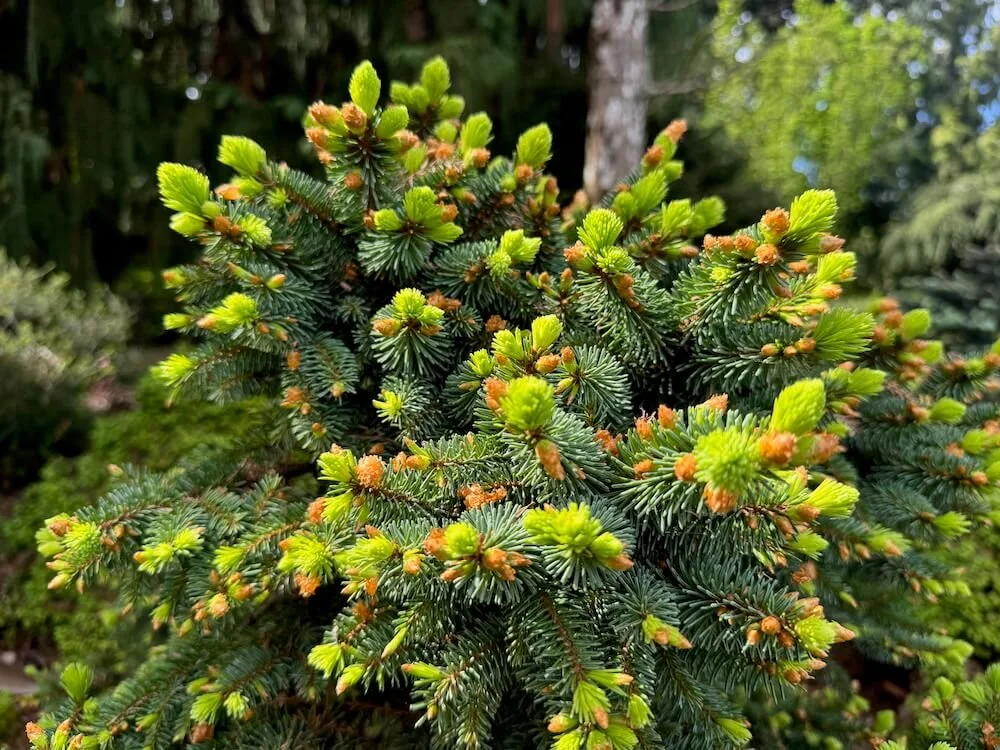
Tsuga canadensis 'Horsford Dwarf'
Evergreen conifer with soft dark green needles and finely textured branching. Grows 2 to 3 feet tall. Ideal for rock gardens, foundation plantings, containers, and woodland settings. Zones: 3 to 7.
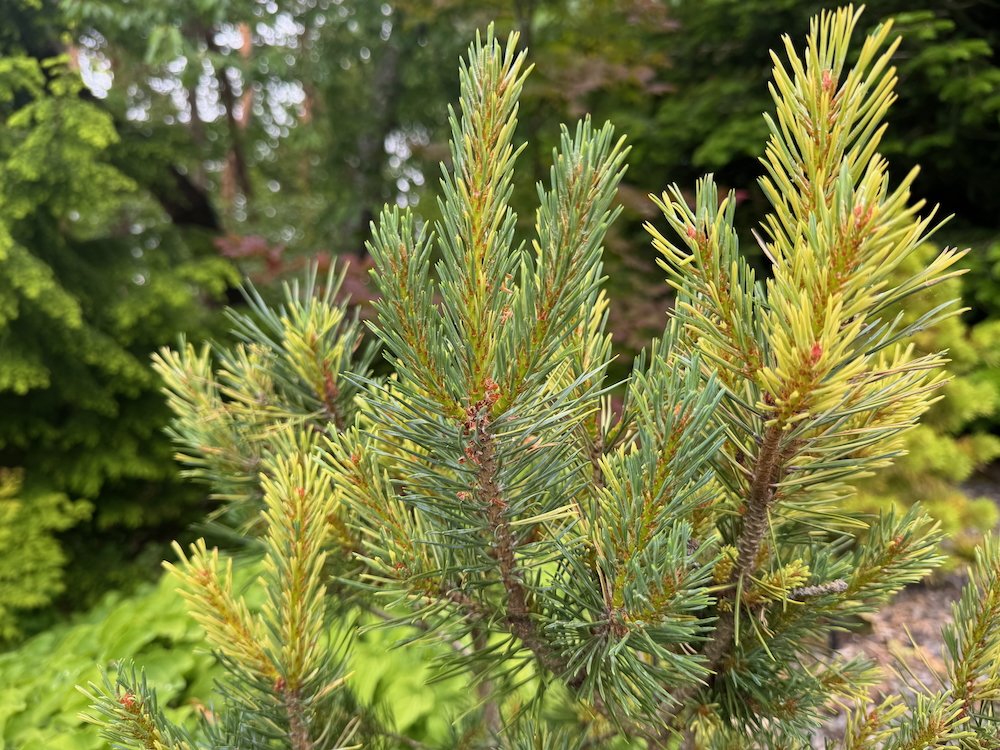
Pinus sylvestris 'Bleu Cheese'
Evergreen conifer with soft blue green needles and dense tufted branching. Grows 1 to 2 feet tall. Ideal for rock gardens, troughs, containers, and collector plantings. Zones: 3 to 7.
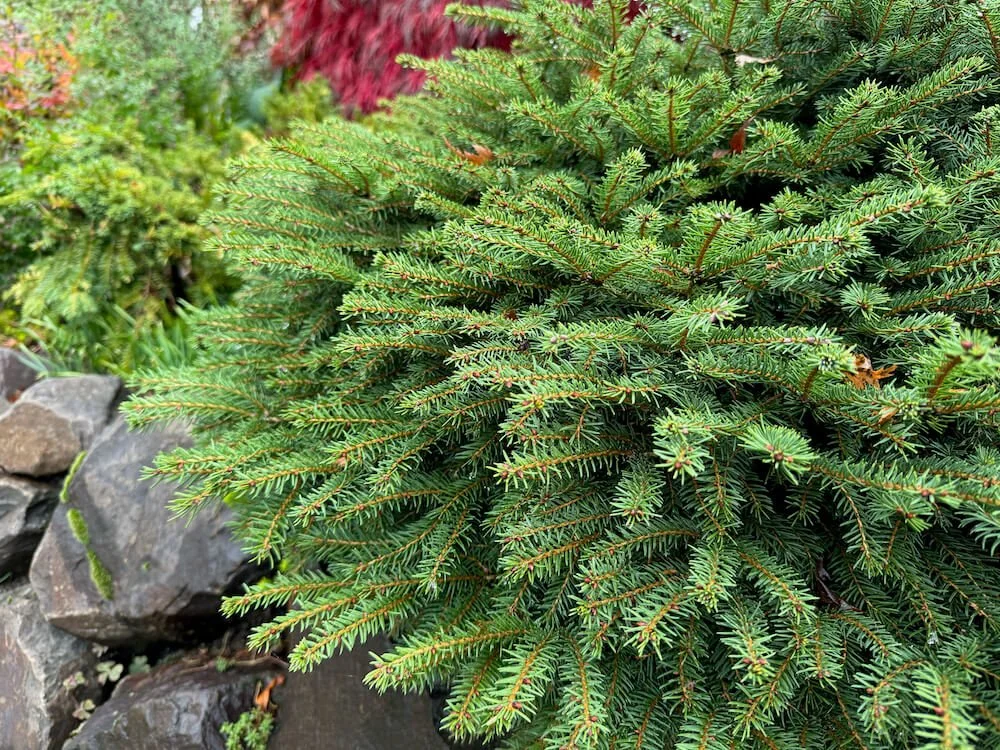
Picea abies 'Pumila'
Evergreen conifer with rich green needles and dense layered branching. Grows up to 4 feet tall. Ideal for foundation plantings, rock gardens, and borders. Zones: 3 to 7.
Other Notable Dwarf Conifers
Podocarpus nivalis: Compact branching and a low growing habit make this versatile for small spaces
Picea engelmannii 'Talbot Lake': Dense growth and a slow growing rounded form
Pinus strobus 'Minuta': Tiny soft needles and an exceptionally compact habit create a refined dwarf accent
Picea mariana 'Ericoides': Narrow upright branching and slow growing dwarf habit
Juniperus horizontalis 'Copper Harbor': A low spreading habit and restrained growth make this ideal for rock gardens
GARDEN TOURS • OREGON
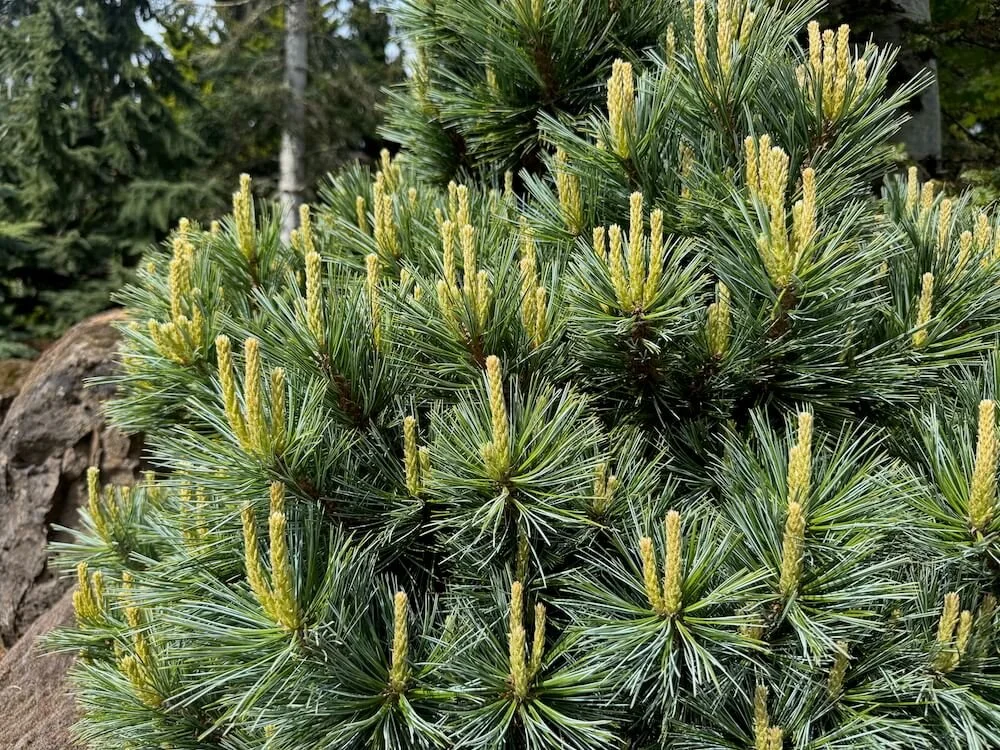
The Oregon Garden
The conifer collection at the Oregon Garden features an extensive range of dwarf, weeping, and unusual conifers. Displayed throughout beautifully designed landscapes, their distinctive textures, colors, and forms are woven into naturalistic plantings that offer an inspiring destination for gardeners, plant enthusiasts, and photographers seeking ideas for four-season gardens.