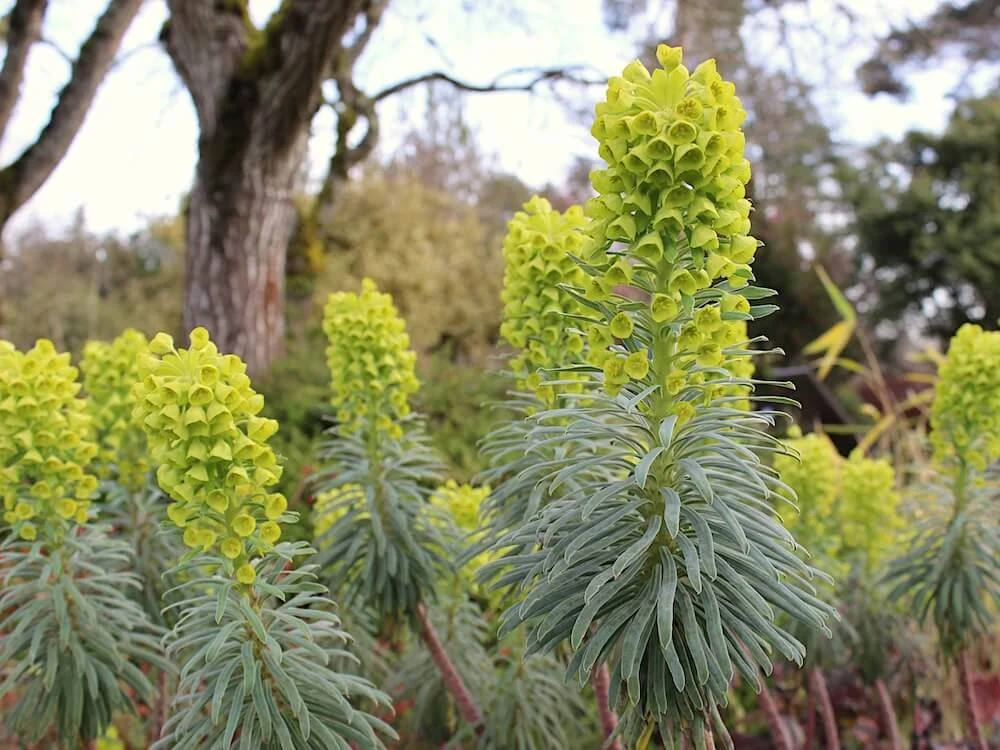
Euphorbia characias 'Bruce's Dwarf' | Bruce's Dwarf Spurge

$0.00

DESCRIPTION
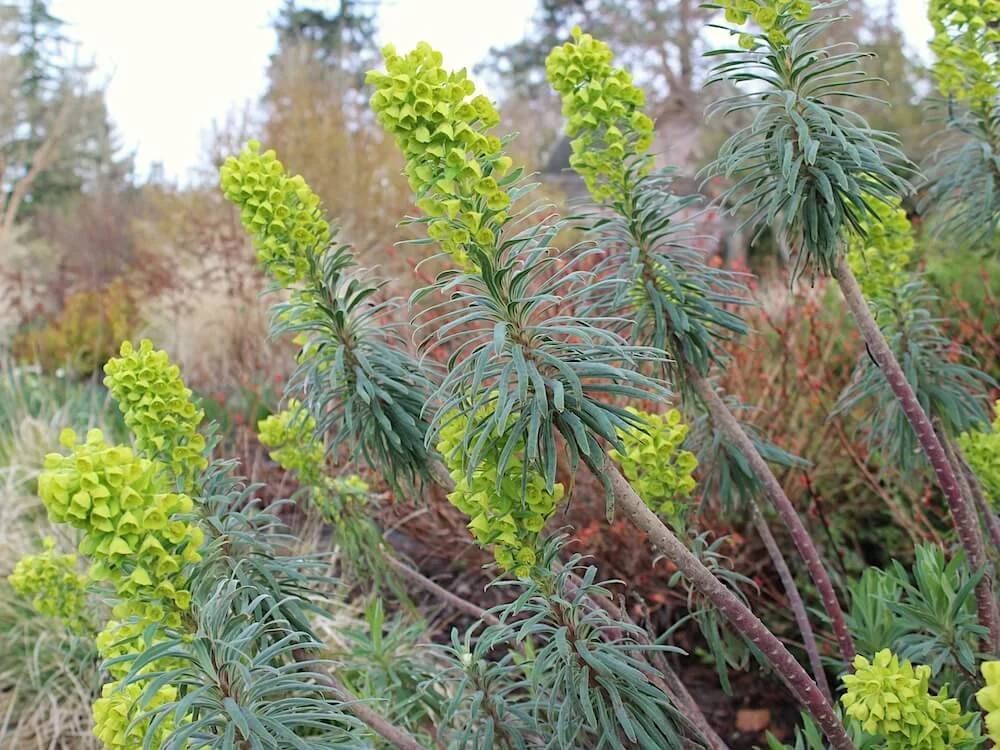
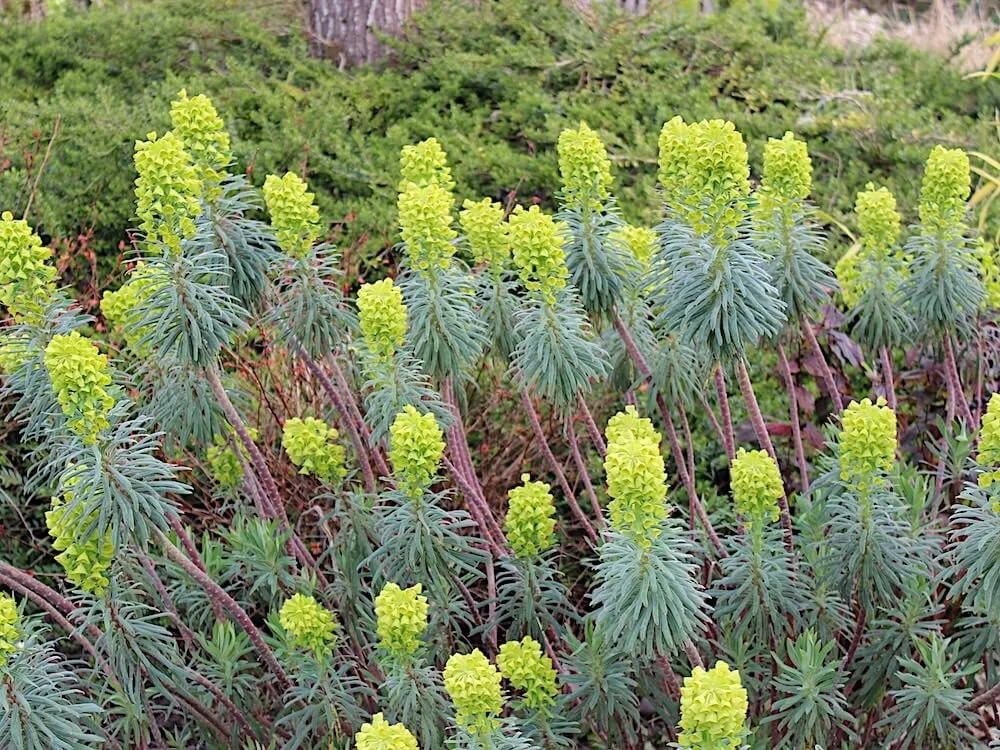
Euphorbia characias ‘Bruce’s Dwarf’ forms dense, upright mounds of narrow blue-green foliage that remain present through the year, creating steady structure in the garden. In early to mid-spring, domed clusters of chartreuse bracts surround tiny central flowers, producing a soft glow that persists for many weeks and brings brightness to borders and containers.

Selected from Mediterranean populations of the species and refined in cultivation for compact habit and consistent flowering, it reflects the sun-drenched landscapes where wild forms evolved. Durable evergreen growth and long-lasting spring display provide dependable texture and color across the changing seasons.

DESCRIPTION
Euphorbia characias ‘Bruce’s Dwarf’ forms dense, upright mounds of narrow blue-green foliage that remain present through the year, creating steady structure in the garden. In early to mid-spring, domed clusters of chartreuse bracts surround tiny central flowers, producing a soft glow that persists for many weeks and brings brightness to borders and containers.

Selected from Mediterranean populations of the species and refined in cultivation for compact habit and consistent flowering, it reflects the sun-drenched landscapes where wild forms evolved. Durable evergreen growth and long-lasting spring display provide dependable texture and color across the changing seasons.

 
  • Family: Euphorbiaceae
    Height: 18–24 in
    Width: 24–30 in
    Foliage color: Blue-green evergreen foliage forming dense upright compact clumps
    Flower color: Chartreuse yellow bracts with contrasting darker centers in clusters
    Bloom time: Late winter through spring
    Light requirements: Full sun to light partial shade
    Water requirements: Low to moderate, well-drained soil, drought tolerant once established
    Maintenance: Low; cut back spent flowering stems after bloom and wear gloves to avoid sap irritation
    Growing zone: USDA zones 7–10
    Wildlife attractors: Bees and other pollinators

    This plant can be seen at the Bellevue Botanical Garden.

    Print Information

    Buy Plants