Ricinus communis 'Carmencita' | Carmencita Castor Oil Plant

$0.00

DESCRIPTION
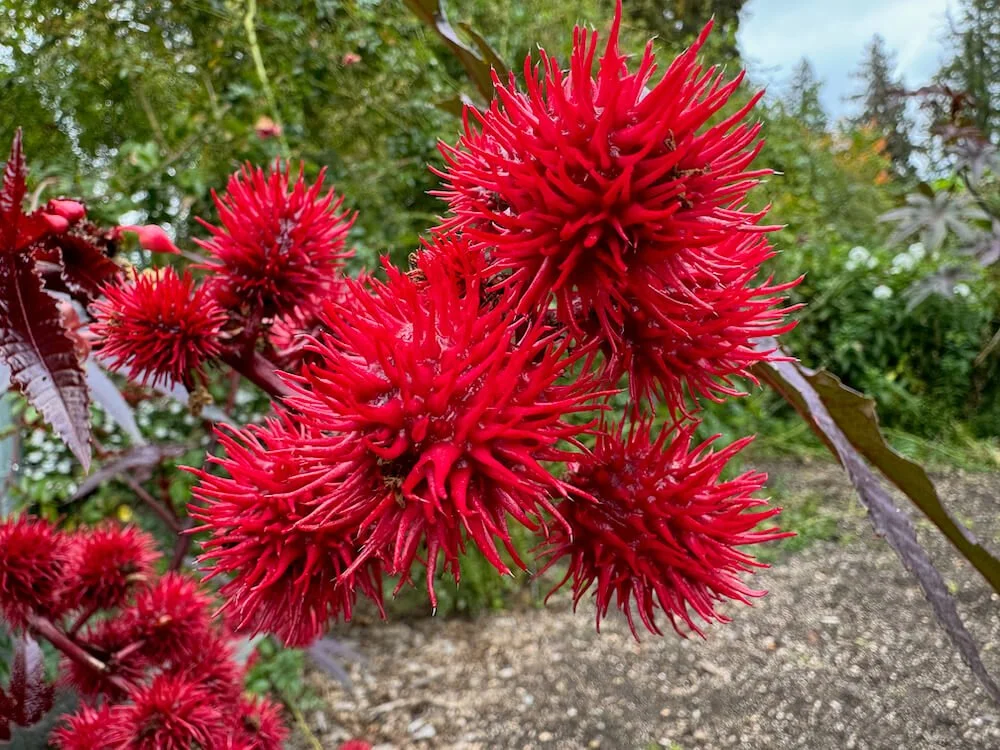
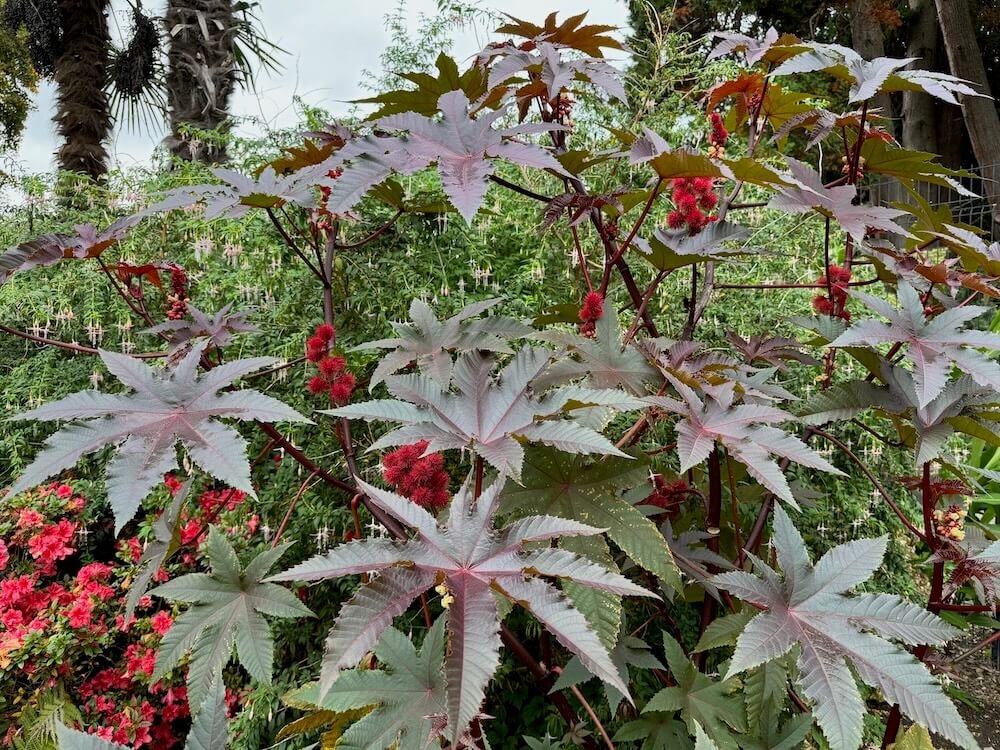
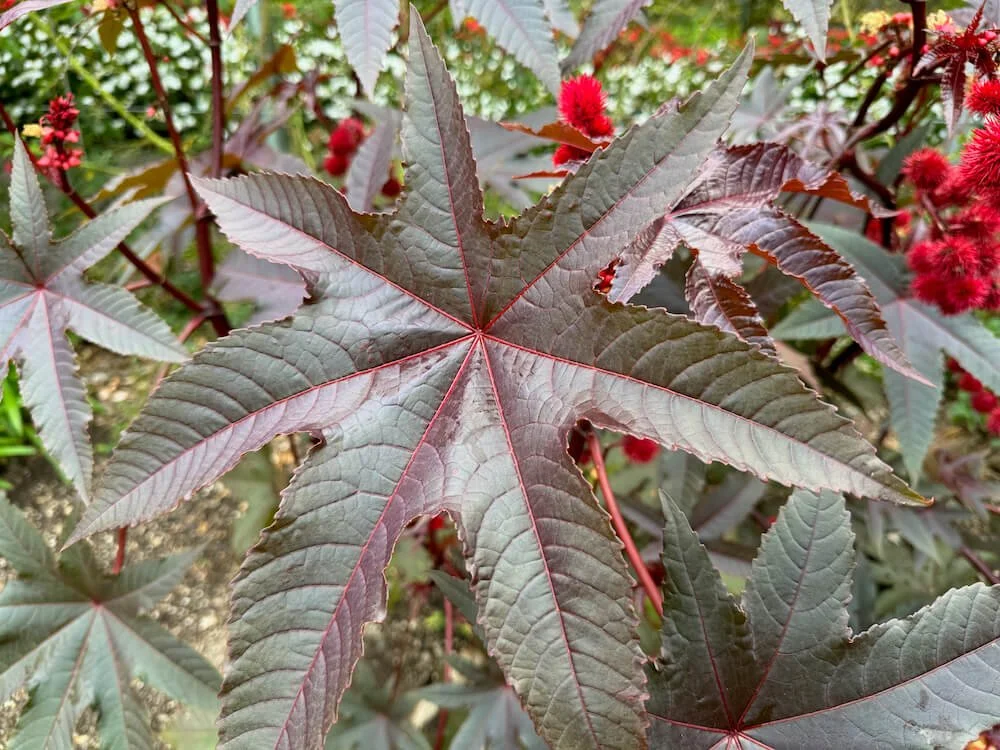
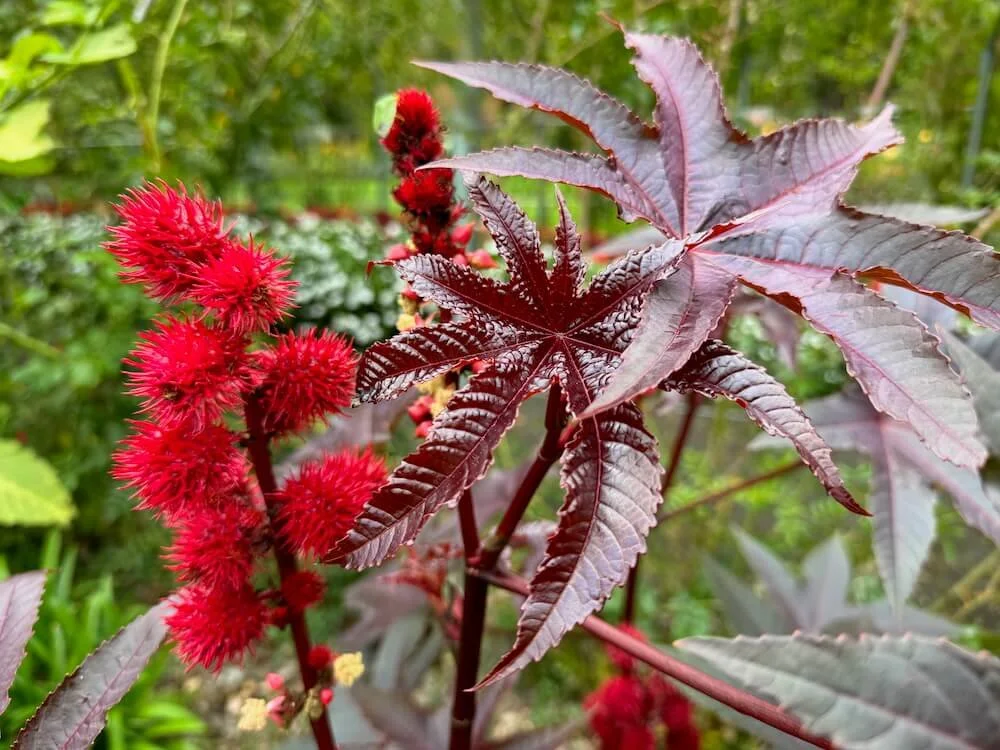
Ricinus communis ‘Carmencita’ develops large, palmate leaves in rich burgundy to deep red tones, each blade divided into sharply pointed lobes with a glossy surface and red tinted stems. In mid to late summer, upright clusters of small red flowers appear above the foliage, followed by vivid red, spiny seed capsules that add continued color and texture through the season.

Originating from tropical Africa, the species has long been cultivated worldwide, with ‘Carmencita’ selected for ornamental display. In garden settings, it serves as a bold focal point in borders, contemporary plantings, and seasonal containers where dramatic foliage and colorful seed heads create vertical emphasis.

DESCRIPTION
Ricinus communis ‘Carmencita’ develops large, palmate leaves in rich burgundy to deep red tones, each blade divided into sharply pointed lobes with a glossy surface and red tinted stems. In mid to late summer, upright clusters of small red flowers appear above the foliage, followed by vivid red, spiny seed capsules that add continued color and texture through the season.

Originating from tropical Africa, the species has long been cultivated worldwide, with ‘Carmencita’ selected for ornamental display. In garden settings, it serves as a bold focal point in borders, contemporary plantings, and seasonal containers where dramatic foliage and colorful seed heads create vertical emphasis.

 
  • Family: Euphorbiaceae
    Height: 6 to 10 feet
    Width: 3 to 5 feet
    Foliage color: Deep red to bronze palmate leaves with a glossy surface
    Flower color: Bright red female flower spikes above smaller yellow male flowers
    Bloom time: Summer to early fall
    Light requirements: Full sun
    Water requirements: Moderate
    Maintenance: Moderate; handle carefully due to highly toxic seeds and remove spent flower spikes to limit reseeding
    Growing zone: USDA zones 9 to 11 grown as an annual in cooler climates
    Wildlife attractors: Not noted for attracting wildlife and generally avoided due to toxicity

    This plant can be seen at the Point Defiance Park.

    Print Information

    Buy Plants