

COMPLETE GUIDE
TO JAPANESE PIERIS
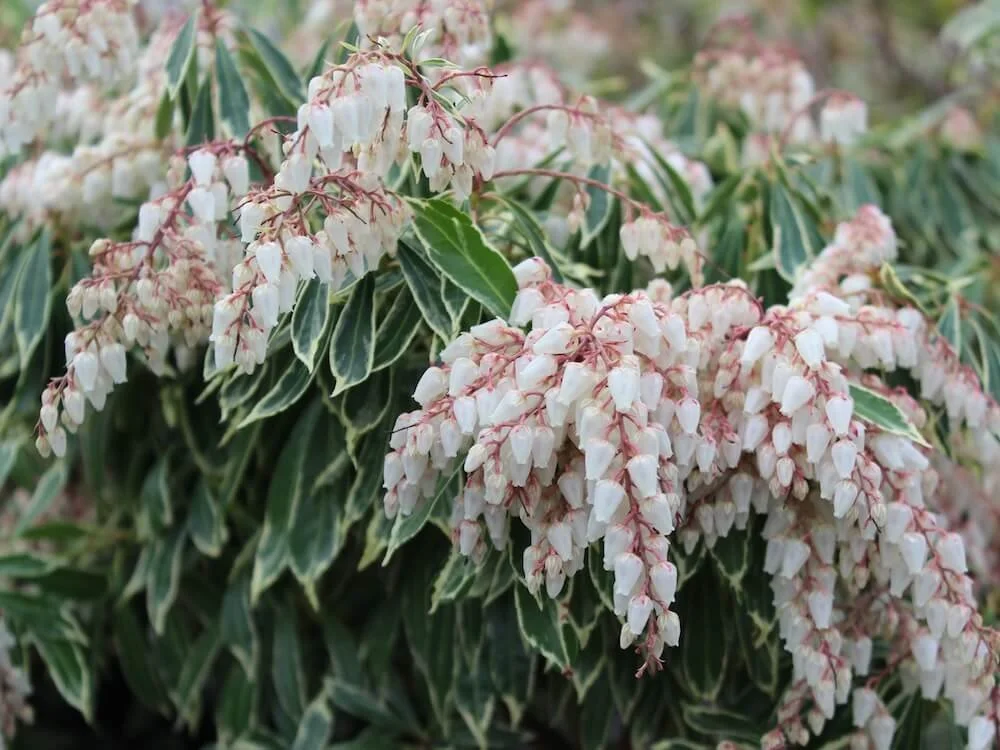
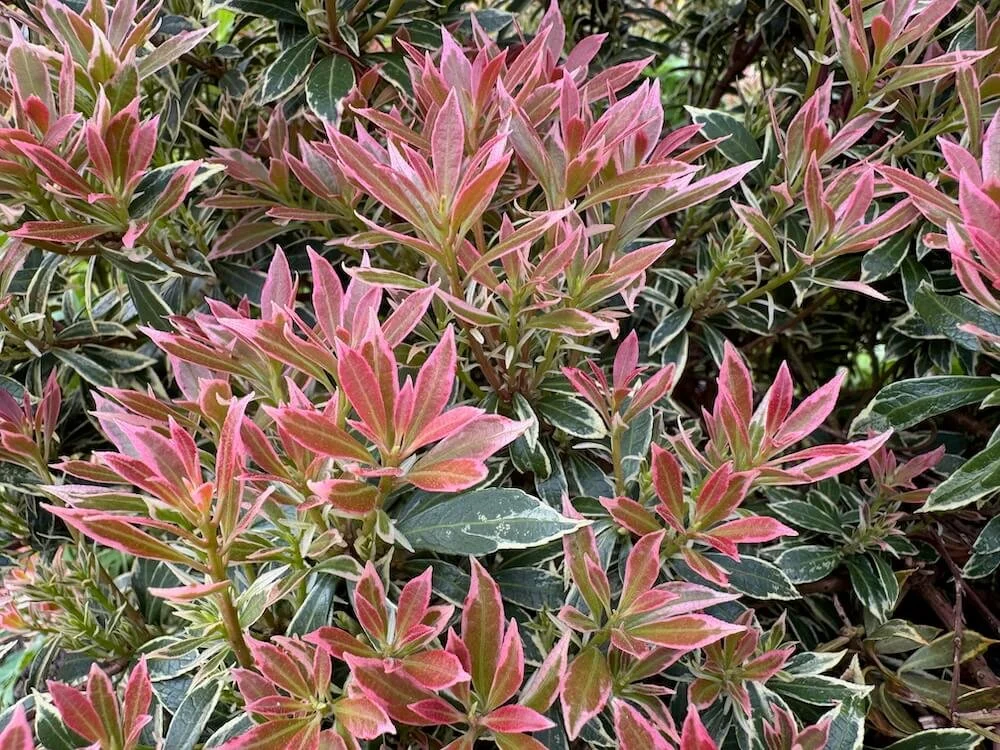
Japanese pieris brings year-round structure and refined seasonal detail to the garden, combining glossy evergreen foliage with late winter to early spring chains of bell-shaped flowers that hang like delicate strands along the stems. New growth often emerges in shades of red, bronze, or soft pink before maturing to deep green, adding a shifting layer of color even when the plant is not in bloom.
Well-suited to woodland borders, foundation plantings, and containers, it performs best in sheltered settings, where its naturally compact habit requires little shaping. A complete guide explores standout cultivars, planting considerations, and design uses to help you incorporate this elegant shrub with confidence across a range of garden styles.
CHOOSING THE RIGHT LOCATION
Drainage:
Good drainage is essential, as pieris roots are sensitive to standing water and can decline in poorly drained soil. Avoid low areas where water collects, and improve heavy or compacted soil with organic matter. If needed, plant slightly raised to help excess moisture move away from the roots.
Space and mature size:
Plan for the plant’s full width and height at maturity to prevent crowding and excessive pruning later. Adequate spacing allows pieris to maintain its natural form while improving air circulation, which helps reduce the risk of disease and supports long-term plant health.
Wind protection:
Select a sheltered site protected from strong or drying winds, which can cause leaf scorch, bud damage, and winter desiccation. Exposure to persistent wind is especially problematic in colder months, when plants are more vulnerable. Positioning pieris near a structure, fence, or among other plantings can create a more stable microclimate that supports healthier foliage and more reliable flowering.
Plant role in the landscape:
Consider how pieris will function within the overall design before planting. It can serve as a focal point, a structural anchor in mixed borders, or part of a layered woodland planting. Its evergreen presence provides year-round form, while early spring flowers and colorful new growth add seasonal interest. Placement should allow these qualities to be visible and appreciated, whether viewed up close or from a distance.
Companion planting:
Select neighboring plants that thrive in similar acidic, well-drained soil and partial shade conditions. Pairing pieris with other acid-loving shrubs such as rhododendrons, camellias, or azaleas creates a cohesive planting, while shade-tolerant perennials like ferns and hellebores help fill in the understory. Thoughtful combinations enhance visual continuity and ensure all plants perform well together without competing for unsuitable conditions.
Access to water:
Ensure the planting location allows for consistent watering, especially during the first growing season when roots are establishing. Pieris performs best with evenly moist soil, so proximity to an irrigation system or ease of hand watering will make ongoing care more manageable. Sites that are difficult to reach or prone to drying out too quickly may lead to stress and reduced vigor over time.

White-Flowered Pieris Varieties


Other Compact / Dwarf Pieris with White Flowers
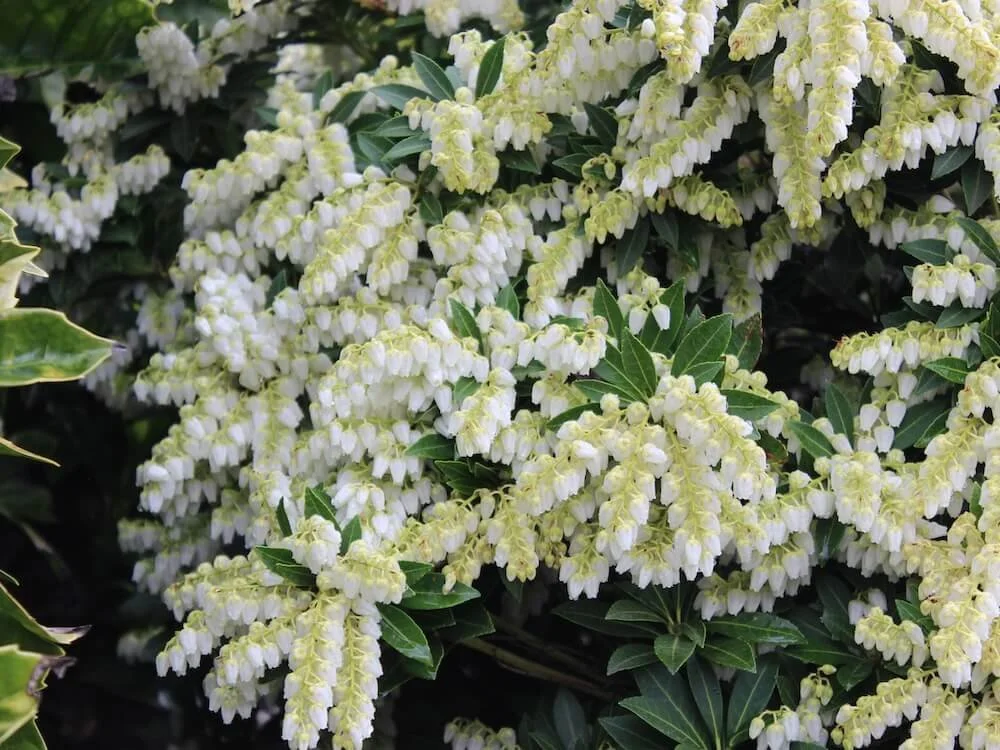
Pieris japonica (species): abundant white, bell-shaped flowers
‘Cavatine’: dense, heavy white bloom
‘Prelude’: compact with soft pink new growth fading to green
‘Mountain Fire’: bright red new growth and white flowers
‘Dorothy Wyckoff’: compact to upright, soft pink buds opening to white flowers
‘Tiki’: compact with tiered, “layered” white flower clusters
‘Purity’: larger than true dwarfs, noted for long, pure white flower trusses
‘Mountain Snow’: improved cold tolerance, white flowers
Other Medium to Large Pieris with White Flowers
‘Mountain Fire’: vivid red new growth, white flowers
‘Snowdrift’: long, pendulous white flower clusters
‘Red Mill’: strong grower with white blooms and bronze-red new growth
‘Temple Bells’: long clusters of white flowers and bronze-tinged new growth
‘Debutante’: classic, widely planted, dependable white blooms
‘Forest Flame’: vivid red new growth, with white flowers
‘Red Mill’: bronze to red new growth with a dense habit and white flower clusters

PLANTING JAPANESE PIERIS
When to plant:
In milder regions, plant during the cooler parts of the year, with March through May and September through October often providing the most favorable conditions for establishment. Soil temperatures between about 50°F and 70°F encourage active root growth while avoiding the stresses associated with summer heat and winter cold. In colder climates, spring planting is preferred so roots have time to establish before winter. Avoid planting during periods of heat stress or when the ground is frozen or waterlogged.
Where to plant:
Select a site with full sun to light shade, ideally receiving 4 to 6 hours of direct light each day. Morning sun with protection from intense afternoon heat is especially beneficial, helping preserve foliage quality and encouraging consistent flowering. In cooler coastal climates, many varieties tolerate additional sunlight provided soil moisture remains consistent. A sheltered location protected from drying winds will support healthier growth, reduce leaf scorch, and improve the longevity of flowers and emerging foliage.
How to plant:
Prepare the planting area by loosening the soil and incorporating organic material such as compost, leaf mold, or aged pine bark. Most Pieris are sold in 1 to 3 gallon containers, and the planting hole should be about two to three times wider than the root ball but no deeper. Position the plant so the top of the root ball sits 1 to 2 inches above the surrounding soil level, as planting too deeply can reduce vigor and increase the risk of root problems. Backfill carefully, firming the soil lightly to remove air pockets without excessive compaction. Water thoroughly after planting, then continue with regular deep watering during the establishment period while roots spread into the surrounding soil.
Soil:
Pieris performs best in organically rich, acidic soil with excellent drainage and a pH between 5.0 and 6.0. Incorporating pine bark, peat moss, compost, or leaf mold before planting helps improve soil structure and maintain proper acidity. Heavy clay soils benefit from additional pine bark to improve drainage, while sandy soils often require more organic matter to retain moisture. A light application of a fertilizer formulated for acid-loving plants, such as 4-3-4 or 4-6-4, can support early root establishment. After planting, apply a 2- to 3-inch layer of pine bark, shredded bark, pine needles, or leaf mold, keeping mulch several inches away from the stems to reduce the risk of rot.
Watering and fertilizing:
Newly planted Pieris benefit from about 1 inch of water per week, applied once or twice weekly depending on rainfall and soil conditions. Established plants prefer evenly moist soil and benefit from occasional deep watering every 7 to 10 days during extended dry periods. Feed in early spring with a slow-release fertilizer formulated for acid-loving plants, such as 4-3-4 or 4-6-4. Plants growing in poor soils may benefit from a second light feeding 6 to 8 weeks later, but fertilizing after midsummer should be avoided to prevent tender late-season growth.
Spacing:
Allow adequate space based on the plant’s mature width, typically ranging from 3 to 8 feet depending on the variety. Proper spacing improves air circulation, which helps reduce the risk of fungal issues and allows the plant to develop its natural shape without crowding.
Growing in containers:
In areas with alkaline or poorly draining soil, container growing offers a reliable alternative. Use a generously sized pot with drainage holes and fill it with a high-quality mix formulated for acid-loving plants. Containers will require more frequent watering and occasional feeding, but they provide greater control over soil conditions and placement.
Pink-Flowered Pieris Varieties


Other Compact / Dwarf Shrubs with Pink Flowers
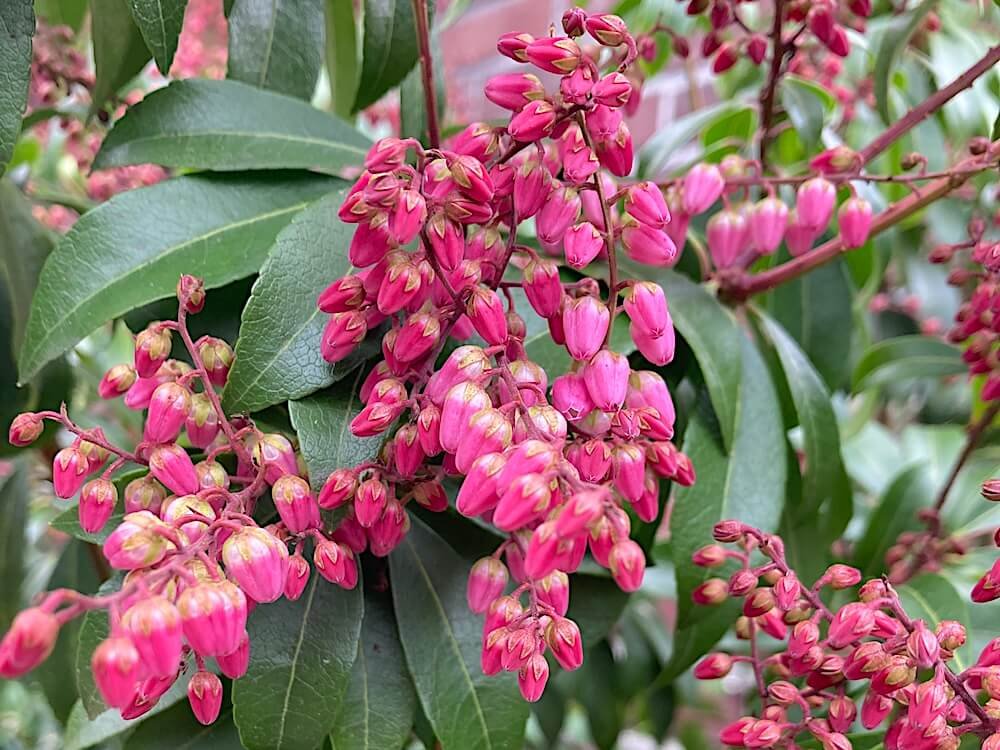
‘Sly’: dense, low-growing form with rosy-pink flowers and neat evergreen foliage
‘Interstella’: rich pink buds opening lighter pink, often with attractive new growth color
‘Katsura’: copper-red spring growth, with pink buds opening pale pink
‘Pink Delight’: bronze-toned new foliage, with pink flowers fading lighter as they age
‘Flamingo’: bright pink flowers paired with soft pink new growth
‘Bonfire’: compact habit with red new growth and pink to pink-white flowers
‘Blush’: rosy-pink flower clusters with dense evergreen foliage
‘Bonfire’: compact form with fiery red new growth and pink to soft pink-white flowers
Other Medium to Large Shrubs with Pink Flowers
‘Glowing Hearts’: upright, fuller habit with deep pink to red-toned flowers
‘Valley Valentine’: deep maroon buds opening to rich rose-red flowers
‘Valley Rose’: pastel pink flower clusters against deep green evergreen foliage
‘Christmas Cheer’: early blooming with two-toned pink flowers
‘Firecrest’: red new growth maturing green, with rosy-pink flowers in spring
‘Shojo’: intense scarlet new foliage with rosy-pink flowers
MAINTENANCE & CARE
Watering:
Keep soil consistently moist, especially during the growing season, providing roughly 1 inch of water per week through rainfall or irrigation. Avoid letting soil dry out completely, but do not allow it to remain saturated, as roots are sensitive to poor drainage. Container-grown plants dry out more quickly and will require more frequent watering, particularly in warm weather.
Amendments and fertilizer:
Feed in early spring with a fertilizer formulated for acid-loving plants, such as those used for rhododendrons and azaleas. Follow label directions to avoid overfeeding, which can damage roots. Plants grown in containers benefit from lighter, more frequent applications during the growing season to maintain steady growth.
Mulch:
Apply a 2 to 3 inch layer of organic mulch around the base to help conserve moisture, regulate soil temperature, and suppress weeds. Keep mulch a few inches away from the main stem to prevent rot. Materials such as pine bark or pine needles are especially beneficial, as they gradually support soil acidity.
Pruning and deadheading:
Pieris maintains an attractive natural shape and generally requires minimal pruning. Remove dead, damaged, or crossing branches as needed, and shape lightly after flowering if desired. Since flower buds form on the previous year’s growth, pruning should be done immediately after bloom. Removing spent flower clusters is optional but can help direct energy back into foliage and root development.
Propagation:
Can be propagated from seed, though cultivars are best reproduced from softwood cuttings taken in late spring to early summer after flowering. Cuttings root best in a controlled, humid environment.
Overwintering:
Cold, drying winds can damage foliage and developing flower buds. Planting in a protected location is the best defense, but in exposed sites, a temporary wind barrier such as burlap can help reduce damage. Water plants היט well in late fall before the ground freezes to minimize winter desiccation.
Pests and diseases:
Lace bugs are the most common pest, causing stippled yellowing on leaves. Monitor the undersides of foliage and treat early with insecticidal soap or neem oil if needed. Good air circulation helps reduce the likelihood of fungal issues such as leaf spot or root problems associated with overly wet soil.
General maintenance:
Avoid cultivating deeply around the base, as roots are shallow and easily disturbed. Periodically check soil acidity and adjust if needed to maintain healthy green foliage and consistent flowering.
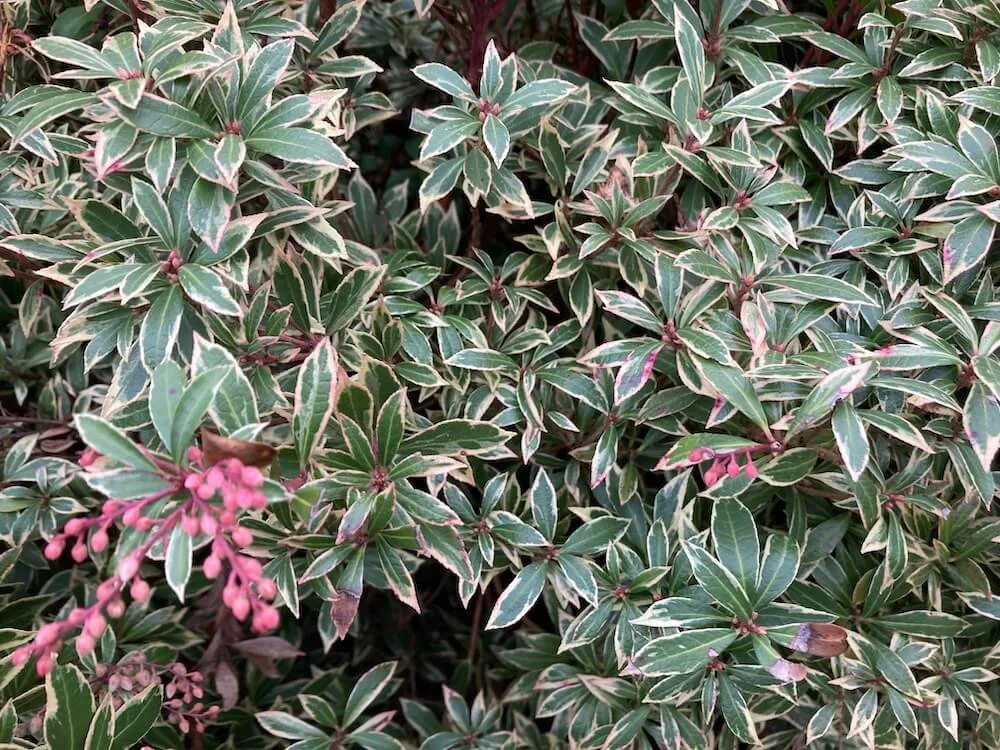
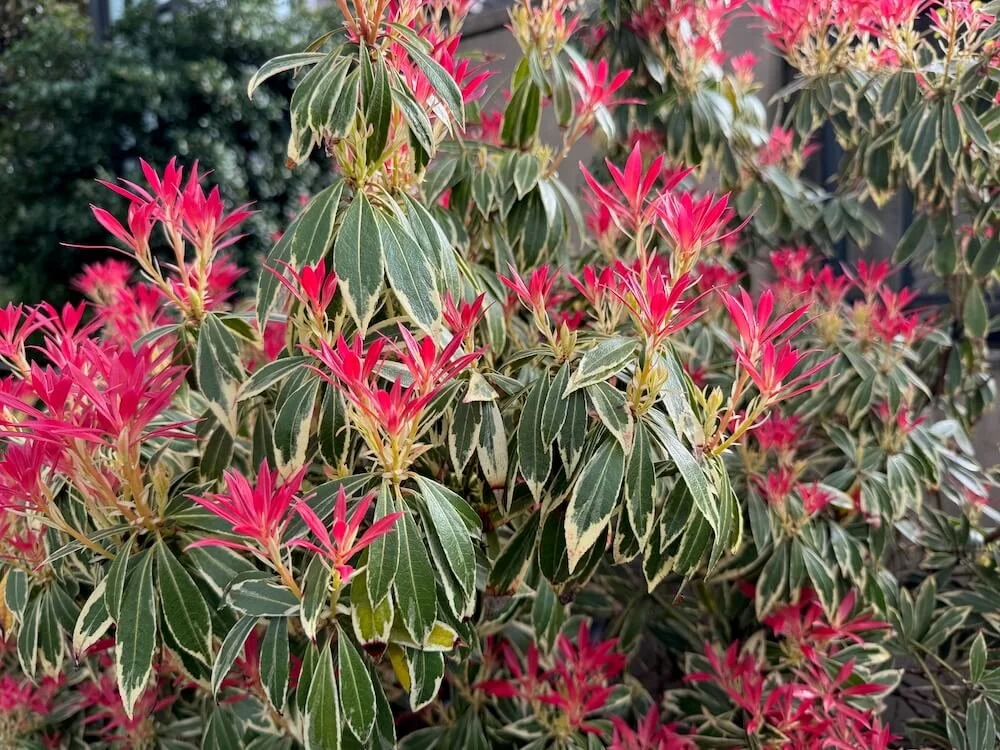
Variegated Foliage Varieties
Other Variegated Foliage Varieties
‘Flaming Silver’: red new growth, leaves edged in creamy white, with white flowers
‘Ralto’: compact habit with bright pink flower buds opening soft pink
‘Variegata’: dark green leaves bordered in white, paired with white flower clusters
‘Little Heath’: fine-textured foliage edged in white, with soft pink new growth
‘Little Heath Green’: subtle variegation and white flowers
‘Silver Splendor’: narrow leaves with pronounced white margins, with white blooms