
Shade Tolerant Shrubs
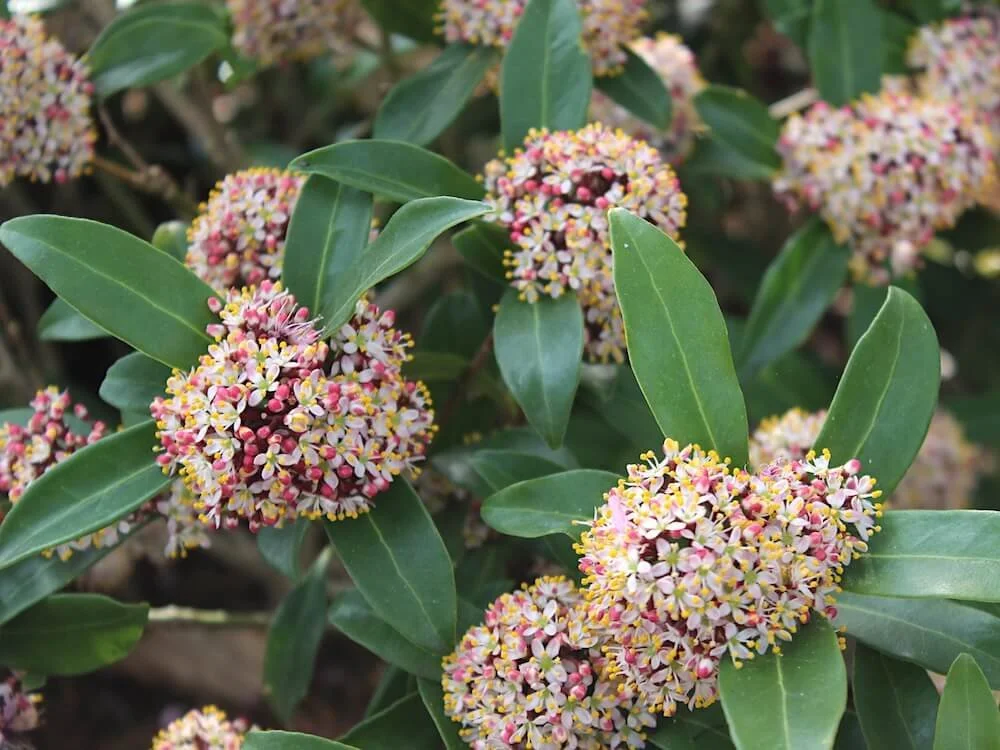
Skimmia japonica (Male)
Evergreen shrub with glossy dark green foliage and fragrant white spring flowers, forms dense compact growth, grows 3 to 4 feet tall, tolerates pruning, ideal for low hedges, borders, and shade plantings. Zones: 6 to 8.
Shade-tolerant shrubs bring structure and softness to areas where direct sun is limited, offering foliage and flowers that thrive in lower light conditions. Leaves range from deep green to glossy or variegated tones, often catching available light and brightening darker corners. These shrubs add form to borders and foundations while creating a space that feels calm, layered, and full, throughout the seasons.
Planted with intention, they help make shaded areas feel complete rather than overlooked. Different varieties provide contrast in texture and form, adding depth without relying on strong sunlight. Over time, you may find these quieter spaces become some of the most enjoyable parts of the garden, offering a sense of enclosure and ease.
JAPANESE ARALIA (Fatsia japonica)
01

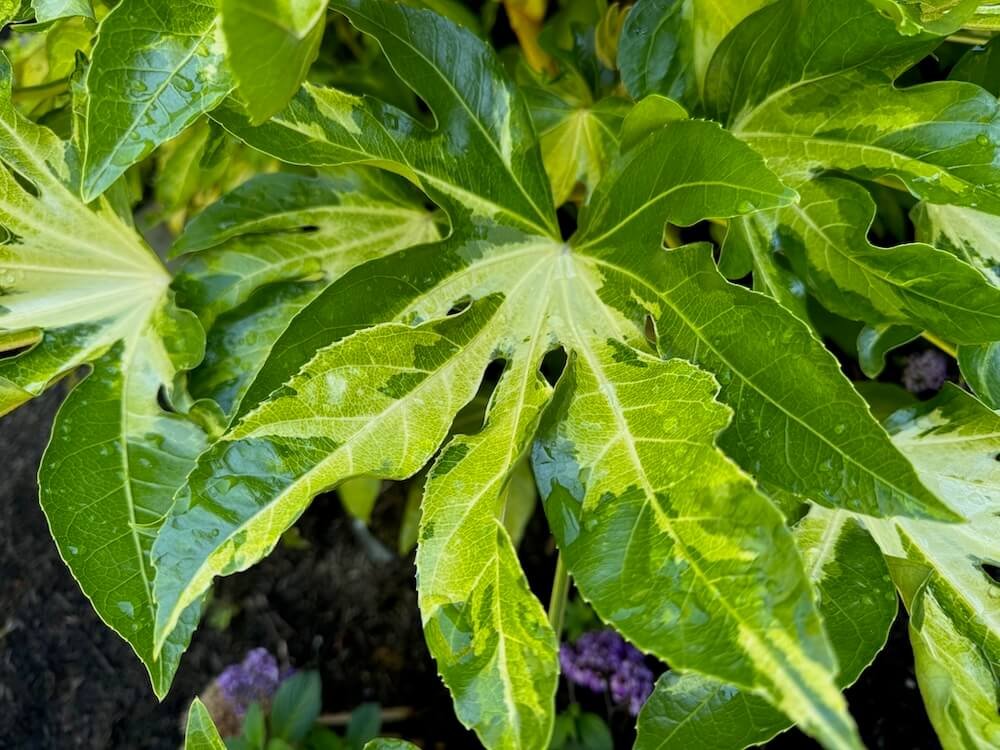
Japanese aralia thrives in shaded garden settings, bringing bold texture and evergreen structure to areas where many shrubs struggle to perform. Fatsia japonica is grown for its large, glossy, deeply lobed leaves that create a strong architectural presence throughout the year. Its ability to flourish in low light makes it especially valuable for north-facing exposures or sheltered garden spaces, where its broad foliage helps brighten and anchor the planting.
A natural choice for woodland edges, shaded borders, or foundation plantings, this shrub maintains a full, layered appearance with minimal effort. Fatsia japonica ‘Murakumo Nishiki’ (shown here) adds variegated foliage with soft, irregular patterning that lifts darker areas, while Fatsia japonica ‘Spider’s Web’ introduces speckled white markings across green leaves for added contrast. Together, these selections provide year-round structure, striking foliage, and reliable performance in shaded landscapes.
MOUNTAIN LAUREL (Kalmia)
02
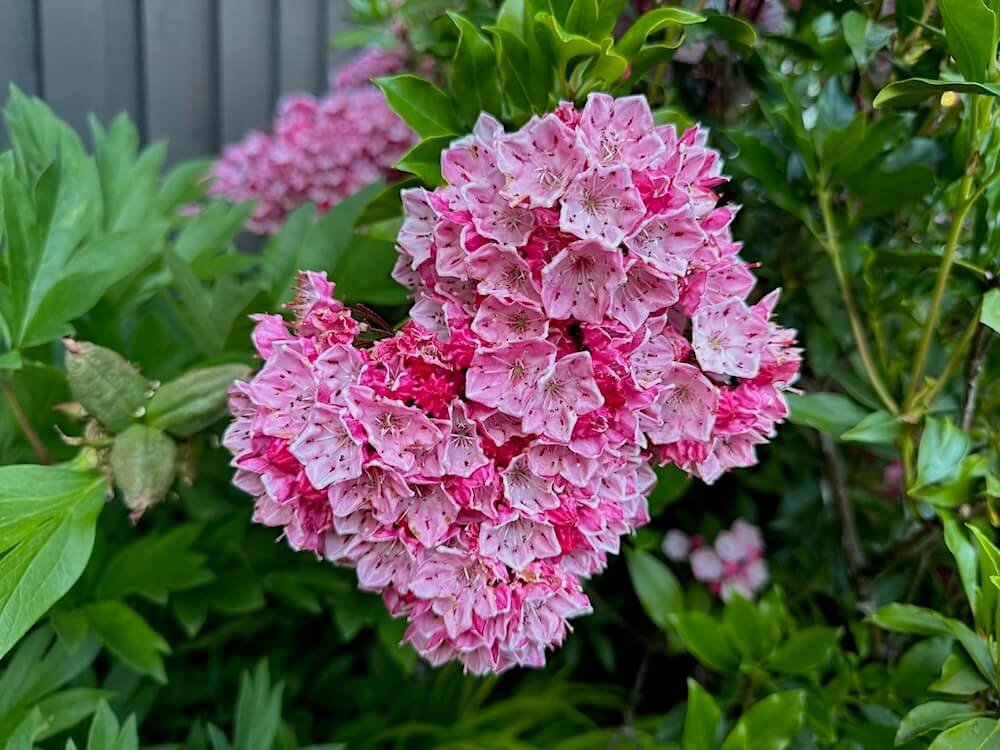
Mountain laurel maintains its dense evergreen foliage and refined form in dappled light, making it well suited to gardens with limited direct sun. Kalmia latifolia is grown for its glossy leaves and clusters of cup-shaped flowers that appear in late spring, ranging from soft pink to white. Its naturally compact growth creates a consistent, structured presence that holds well beneath taller trees or along shaded borders, while maintaining strong foliage density and structure throughout the entire growing season.
An excellent option for woodland plantings, foundation beds, or sheltered slopes, this shrub develops a full, balanced habit with minimal intervention. Kalmia latifolia ‘Pink Charm’ (shown here) adds clear pink flowers with deeper markings, bringing a brighter, more defined display to shaded settings. Together, these selections provide evergreen structure, seasonal bloom, and dependable performance in partially shaded landscapes.
LEUCOTHOE
03

Leucothoe performs reliably in low-light conditions, bringing graceful form and year-round foliage interest to shaded garden spaces. Leucothoe fontanesiana ‘Rainbow’ (shown here) is grown for its arching habit and variegated leaves in shades of green, cream, and pink, creating a layered, softly shifting display. Its ability to maintain color and structure without direct sun makes it especially useful for brightening darker planting areas where contrast and subtle color variation help define the overall space.
An excellent addition to woodland borders, foundation plantings, or shaded slopes, this shrub maintains a full, flowing presence with minimal care. Leucothoe fontanesiana ‘Zeblid’ adds deeper tones, with foliage emerging burgundy, maturing to green, and returning to red in cooler weather. Together, these selections provide continuous foliage interest, refined texture, and dependable performance in shaded landscapes.
CAMELLIA
04

Camellias perform exceptionally well in filtered light, maintaining glossy evergreen foliage and consistent flowering in sheltered, shaded garden settings. Camellia japonica ‘Chandleri Elegans Variegated’ is grown for its rosy pink, peony-form blooms with a distinctive center of white petaloids that create a full, layered effect. Its dense growth and lustrous leaves provide a refined backdrop that holds structure throughout the year.
A natural fit for foundation plantings, or protected courtyards, these shrubs develop a full, balanced presence with minimal effort. Camellia japonica ‘Pearl Maxwell’ (shown here) offers soft pink, semi-double flowers with a gentle, luminous quality, while Camellia x williamsii ‘Freedom Bell’ adds deeper pink blooms with a more open, graceful form. Together, these selections provide extended seasonal color, evergreen structure, and reliable performance in partially shaded landscapes.
Related: Explore All Camellias ➔
HYDRANGEA
05
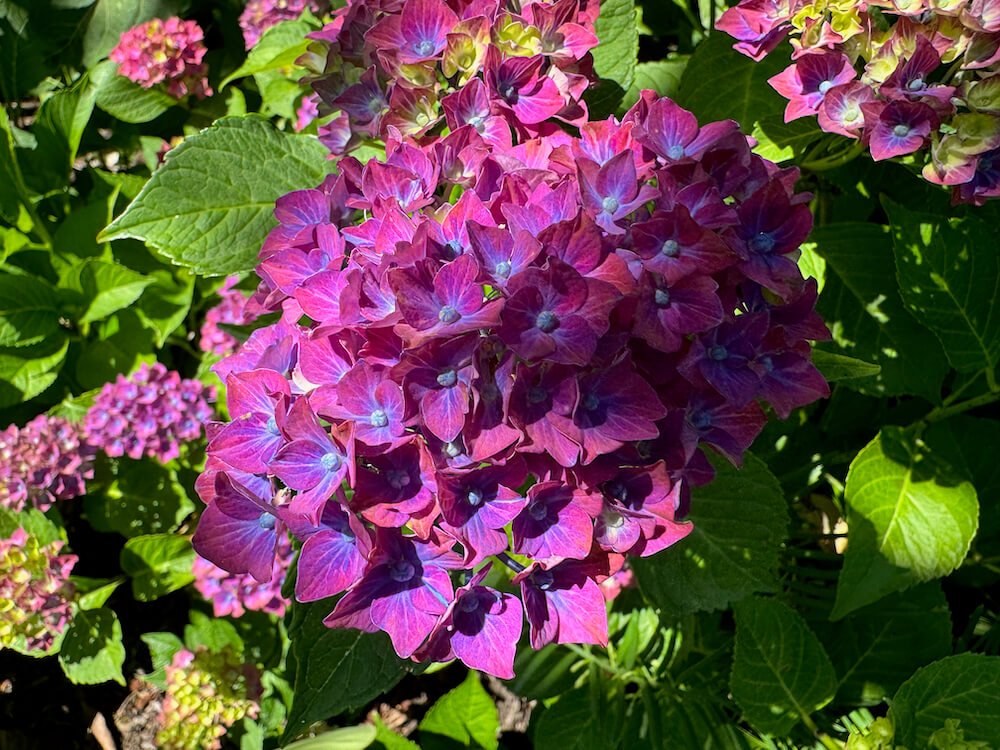
Hydrangeas bring bold foliage and large flower displays to parts of the garden where many flowering shrubs struggle, making them valuable choices for bright shade and morning sun. Hydrangea macrophylla ‘Horwack’ Pistachio (shown here) produces distinctive mophead flowers that age through shades of green, pink, and burgundy, creating a changing display over an extended season. Large leaves add texture to shaded borders and woodland-edge plantings.
Hydrangea macrophylla ‘Magical Crimson’ develops blooms that deepen to rich crimson and burgundy tones as they mature, while Hydrangea macrophylla ‘Variegata’ features green leaves edged in creamy white that brighten darker corners of the garden. Their combination of foliage, flower color, and seasonal interest helps illuminate shaded spaces while blending beautifully with other woodland companions.
Related: See All Hydrangeas ➔
MEXICAN ORANGE BLOSSOM (Choisya)
06

Mexican orange blossom adapts well to partial shade, maintaining evergreen structure and consistent flowering even in filtered light. Choisya ternata is grown for its naturally rounded habit and glossy green leaves, along with clusters of white, citrus-scented flowers that appear in spring and often repeat later in the season. Its ability to perform in less direct sun makes it a useful choice for brightening sheltered garden areas.
A strong option for foundation plantings, sheltered borders, or courtyard gardens, this shrub retains a full, cohesive form with minimal effort. Choisya ternata ‘Sundance’ (shown here) adds golden foliage that brings light to shadier spaces, while Choisya x dewitteana ‘Aztec Pearl’ offers a finer texture with narrow leaves and delicate white flowers. Together, these selections provide evergreen presence, fragrance, and reliable performance in partially shaded landscapes.
PIERIS
07

Pieris adapts well to filtered light, maintaining evergreen structure and vibrant new growth even in sheltered garden settings. Pieris japonica ‘Dorothy Wyckoff’ is grown for its deep pink flower buds that open to soft blush blooms in early spring, creating a gentle, layered display against glossy foliage. Its naturally compact habit allows it to hold a consistent shape while adding seasonal color in lower light conditions.
A refined addition to woodland borders, foundation plantings, or shaded beds, this shrub develops a full, balanced presence with minimal care. Pieris japonica ‘Little Heath’ offers a smaller form with variegated foliage edged in cream, while Pieris japonica ‘Katsura’ (shown here) adds striking new growth in shades of red and bronze that gradually mature to green. Together, these selections provide year-round structure, evolving foliage color, and reliable performance in shaded landscapes.
Related: See All Pieris ➔
ANISE (Illicium)
08
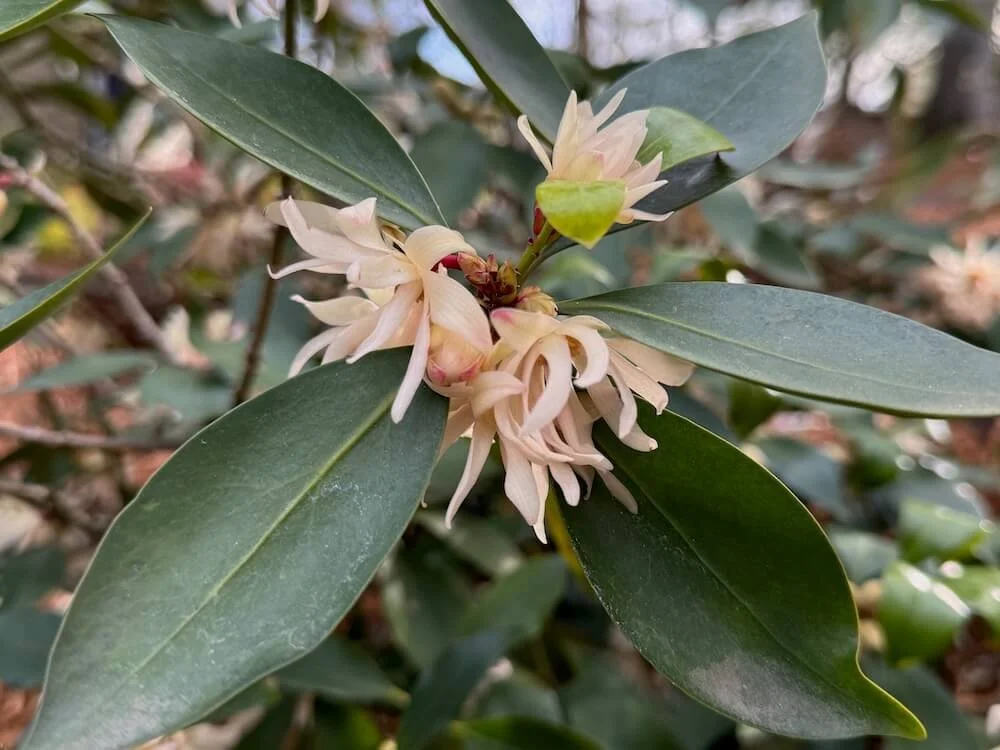
Anise shrubs hold their structure and rich foliage color well in shaded settings, making them a dependable choice for low-light areas of the garden. Illicium anisatum is grown for its glossy, deep green leaves that create a dense, evergreen presence throughout the year. Its ability to thrive in filtered light or deeper shade allows it to form a consistent backdrop in sheltered planting areas, while maintaining strong foliage color and structure even in darker conditions.
A strong option for woodland borders, foundation plantings, or shaded screens, this shrub maintains a full, layered form with minimal care. Illicium anisatum ‘HinPurlf’ (shown here) adds soft white flowers paired with burgundy-toned stems, introducing subtle contrast against the dark foliage. Together, these selections provide evergreen structure, refined texture, and reliable performance in shaded landscapes.
RHODODENDRON
09

Rhododendrons are among the most effective shrubs for bringing color and presence to partially shaded gardens, where their evergreen foliage creates structure throughout the year. Rhododendron 'Dr. H.C. Dresselhuys' produces large clusters of rosy pink flowers that stand out beautifully against dark green leaves in spring. The broad foliage creates a rich woodland character, helping anchor planting beds.
A wide range of flower colors and foliage effects allows rhododendrons to play many different roles in the landscape. Rhododendron ‘Unique’ Variegated (shown here) combines white-margined leaves with pale pink blooms, while Rhododendron 'Nova Zembla' produces brilliant red flower trusses that command attention from across the garden. Their evergreen framework provides year-round substance, while the spring flowers create dramatic focal points among and other shade-loving plants.
Related: Explore All Rhododendrons ➔
YEW (Taxus)
10
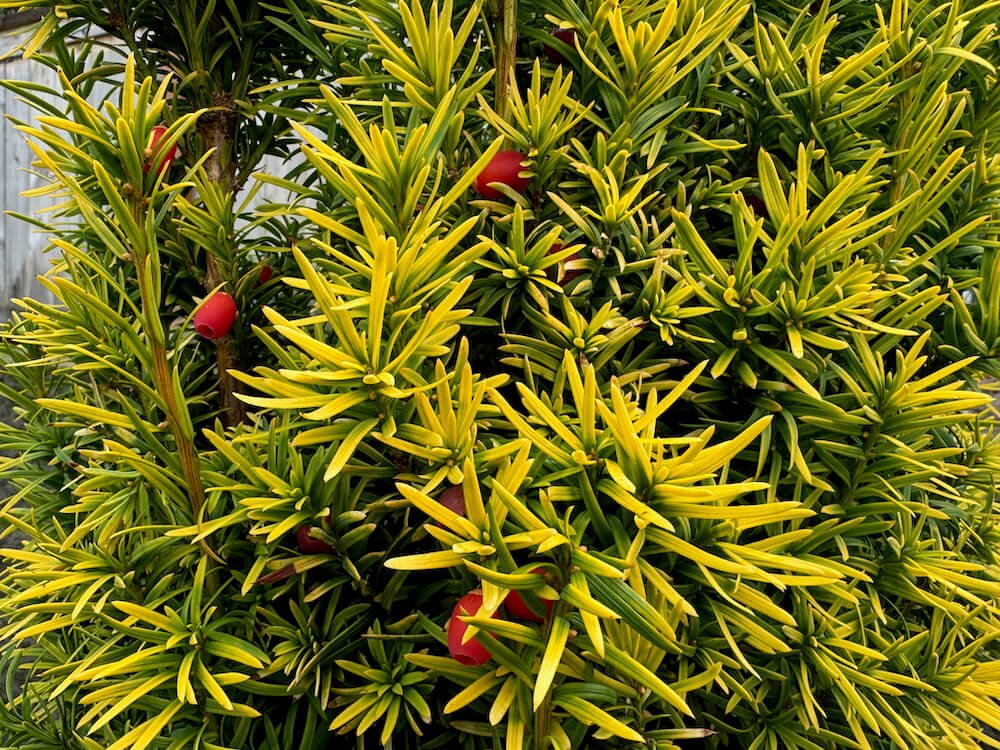
Yews bring strong evergreen form and texture to shaded gardens, where many shrubs become sparse or lose visual impact. Taxus baccata 'Fastigiata Aurea' (shown here) develops a narrow upright habit with golden-yellow new growth that brightens darker areas of the landscape. The dense needle-like foliage provides year-round structure while creating a refined backdrop for flowering shrubs, ferns, and woodland perennials.
Growth habit and foliage color offer a variety of design possibilities within shade-tolerant plantings. Taxus x media 'H.M. Eddie' forms a broad evergreen shrub with rich green foliage, while Cephalotaxus harringtonii 'Prostrata' spreads gently with soft dark green needles that create a layered, flowing appearance. Their evergreen presence helps define garden spaces throughout the year while adding texture and contrast beneath taller trees and larger shrubs.
DAPHNE
11
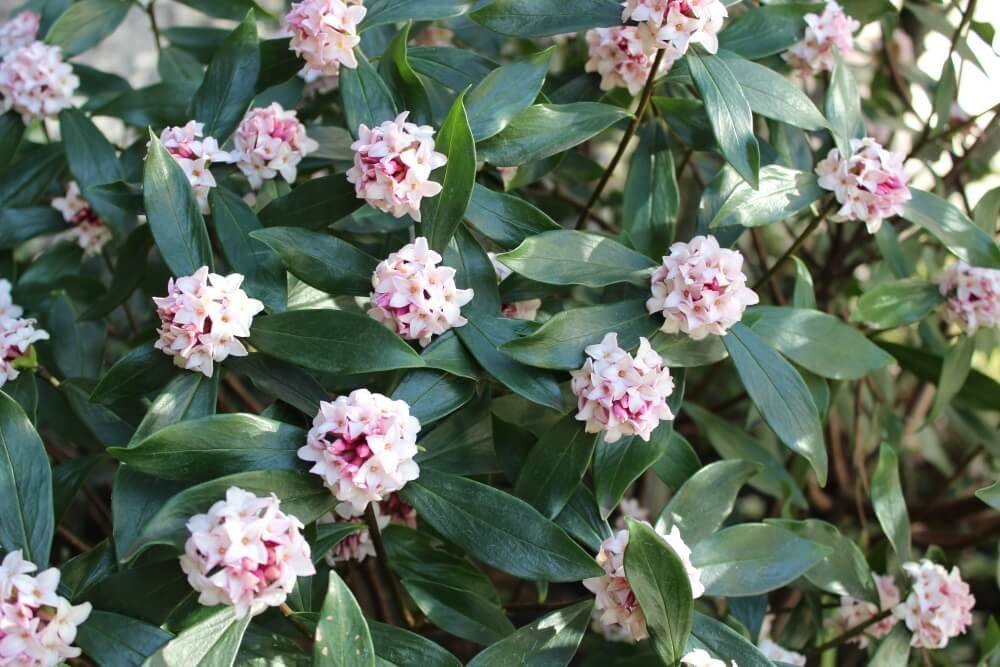
Daphnes bring beauty and refinement to partially shaded gardens, where their compact forms and evergreen foliage provide interest throughout the year. Daphne odora (shown here) is especially well suited to sheltered woodland settings, producing glossy green leaves and clusters of pink-tinged flowers during late winter and early spring. The rounded habit fits naturally into smaller garden spaces, helping soften pathways, foundations, and shaded borders.
Each species and hybrid contributes a slightly different character to the landscape. Daphne x transatlantica ‘Summer Ice’ develops a neat mounded form with an exceptionally long flowering season, while Daphne x burkwoodii 'Carol Mackie' combines soft pink flowers with attractive variegated foliage. Their manageable size make them effective accents among and other shade-loving plants, bringing color and detail to areas where bold flowering displays are often less common.
VIBURNUM
12
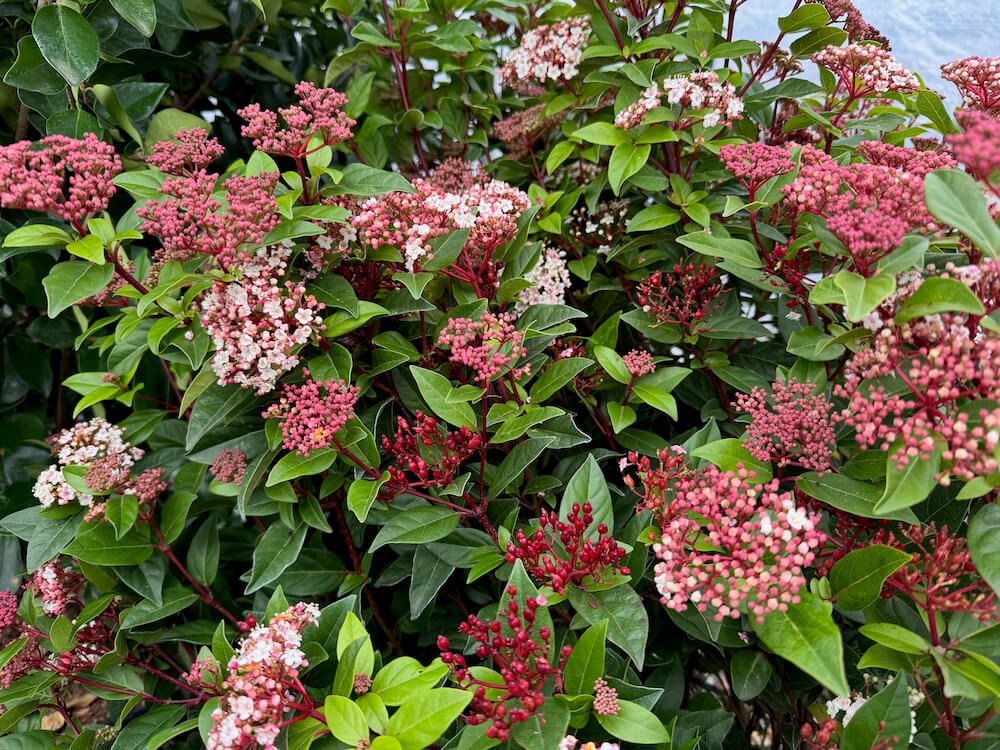
Viburnums offer a remarkable range of foliage textures and forms for shaded gardens, bringing year-round interest to areas beneath trees and along woodland edges. Viburnum tinus 'Spirit' (shown here) produces clusters of pink buds that open to white flowers against glossy evergreen foliage, adding brightness to partially shaded landscapes. Its dense habit and attractive leaves help create structure and visual weight where flowering options can sometimes be limited.
Leaf texture plays a major role in the appeal of many shade-tolerant viburnums. Viburnum davidii forms low mounded shrubs with distinctive deeply veined evergreen leaves, while Viburnum rhytidophyllum develops large corrugated foliage that creates a bold tropical effect in the garden. Their contrasting forms and foliage characteristics add depth and variety to shaded plantings while helping create a lush woodland atmosphere throughout the year.
SKIMMIA
13

Skimmia brings glossy evergreen foliage and subtle seasonal detail to shaded garden spaces, holding its form well in low-light conditions. Skimmia japonica (Male) is grown for its dense, compact habit and clusters of fragrant flower buds that form in fall and persist through winter before opening in early spring. Its consistent structure and tolerance of shade make it a dependable presence in sheltered plantings.
A reliable choice for woodland borders, foundation plantings, or shaded containers, this shrub maintains a neat, balanced form with minimal effort. Skimmia reevesiana (shown here) offers the added benefit of both male and female flowers on the same plant, followed by bright red berries that bring extended seasonal interest. Together, these selections provide evergreen structure, subtle bloom, and reliable performance in shaded landscapes.
SALAL (Gaultheria)
14

Salal thrives beneath tree canopies and in low-light settings, forming a dense, evergreen layer that brings structure and continuity to shaded landscapes. Gaultheria shallon (shown here) is grown for its leathery, glossy green leaves and naturally spreading habit, creating a lush, cohesive groundcover. Its ability to grow in dry shade once established makes it especially valuable in challenging sites where many shrubs struggle.
Well suited to woodland plantings, shaded slopes, or naturalized areas, this shrub fills in gradually to create a soft, uniform carpet. Small, urn-shaped flowers appear in late spring, followed by dark purple berries that add seasonal interest and support wildlife. Together, these qualities provide durable coverage, subtle texture, and dependable performance in shaded garden environments.
FUCHSIA
15
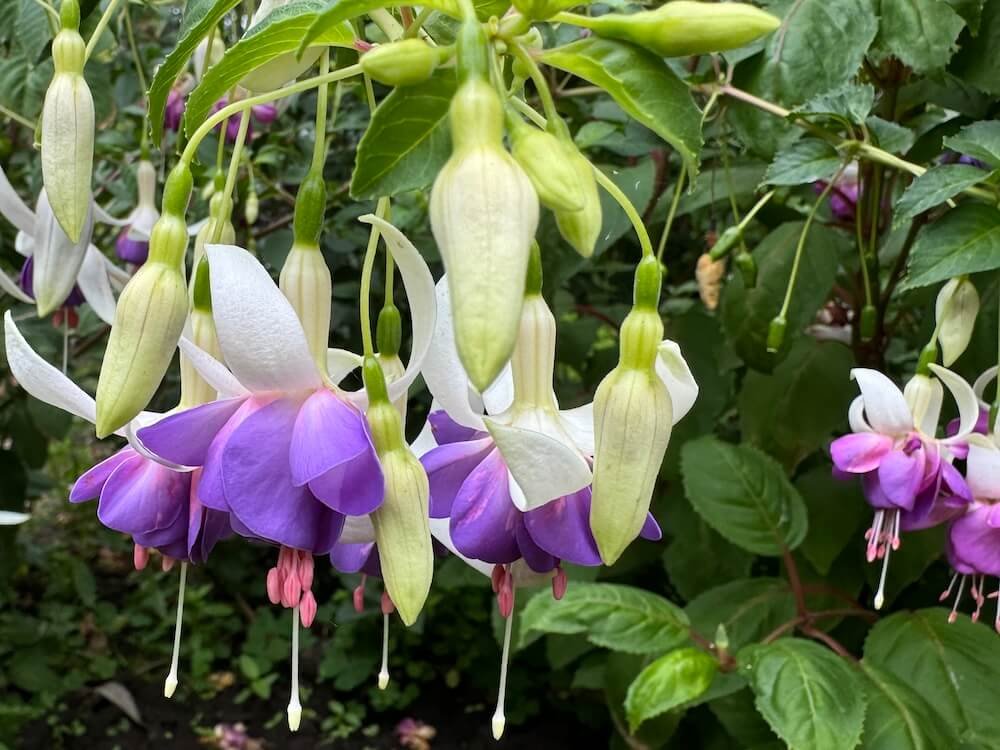
Fuchsias bring color and movement to shaded garden spaces, producing pendant blooms that stand out even in lower light conditions. Fuchsia ‘Delta’s Sarah’ (shown here) is grown for its double flowers with white sepals and soft lavender-blue corollas, creating a cool-toned, luminous display. Its arching habit allows the flowers to hang freely, adding depth and visual interest where sunlight is limited.
Well suited to containers, hanging baskets, or shaded borders, these shrubs maintain steady flowering with minimal direct sun. Fuchsia ‘Machu Pichu’ offers vibrant pink and purple tones with a slightly more upright habit, while Fuchsia ‘Minnesota’ provides a hardy option with bright pink and purple blooms that persist through the season. Together, these selections provide continuous color, graceful form, and reliable performance in shaded garden settings.
SWEET BOX (Sarcococca)
16
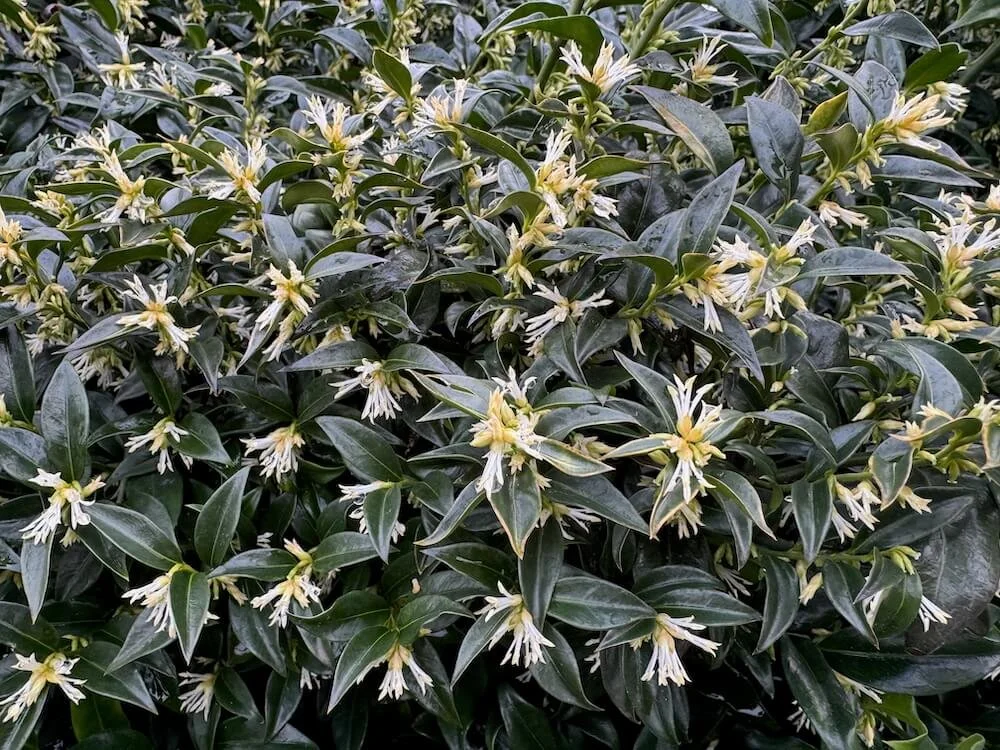
Sweet box brings subtle structure and fragrance to shaded garden spaces, performing reliably where light is limited. Sarcococca confusa (shown here) is grown for its glossy, dark green leaves and small, creamy-white flowers that appear in winter, releasing a strong, sweet scent that carries through the garden. Its dense, upright habit forms a consistent evergreen presence that holds well in sheltered conditions, creating a calm, refined backdrop that enhances surrounding plantings year-round.
A dependable choice for woodland edges, foundation plantings, or shaded pathways, this shrub maintains a full, layered form with minimal effort. Sarcococca hookeriana var. humilis offers a lower, more spreading habit, making it well suited for groundcover or edging while still providing the same fragrant winter blooms. Together, these selections provide year-round structure, seasonal fragrance, and reliable performance in shaded landscapes.
JAPANESE SPOTTED LAUREL (Aucuba)
17
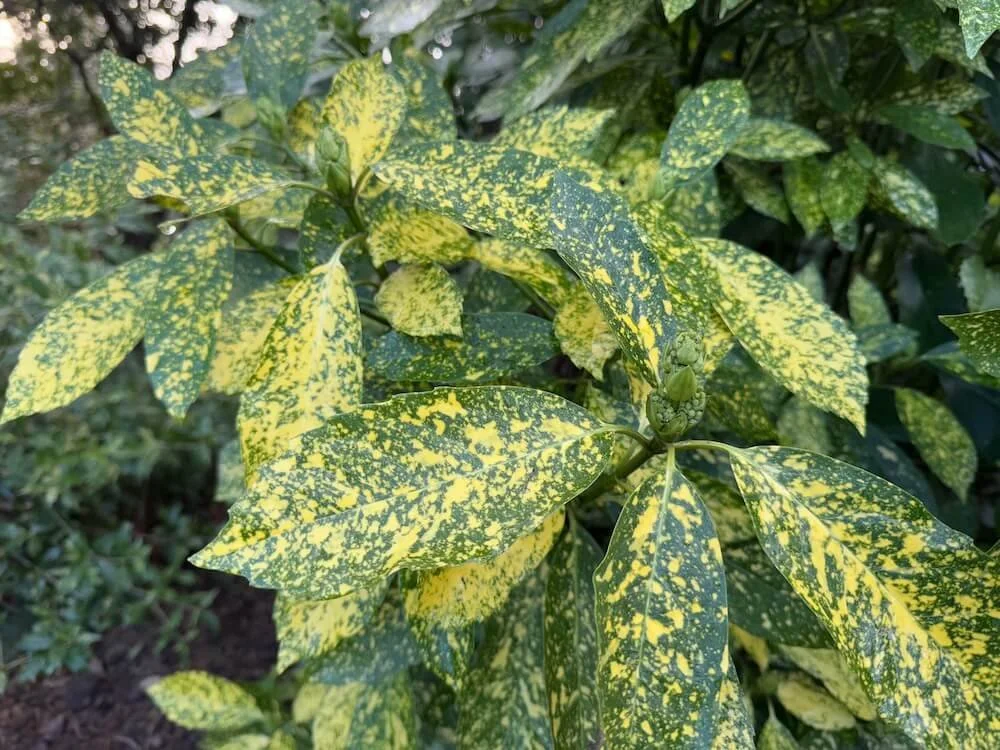
Japanese spotted laurel brings bold foliage and dependable structure to shaded garden spaces, where its glossy leaves maintain strong color even in low light. Aucuba japonica ‘Variegata’ (shown here) is grown for its broad green leaves splashed with yellow, creating a bright, patterned display that lifts darker planting areas. Its dense, upright habit forms a consistent presence while requiring little maintenance in sheltered conditions.
A reliable choice for foundation plantings, woodland borders, or shaded hedges, this shrub develops a full, layered form with minimal effort. Aucuba japonica ‘MonHinsuru’ adds finer, more irregular variegation for a softer, mottled effect, while Aucuba japonica ‘Mr. Goldstrike’ features larger leaves with bold yellow markings that stand out more distinctly. Together, these selections provide year-round structure, vivid foliage contrast, and strong performance in shaded landscapes.