
Shrubs with Berries
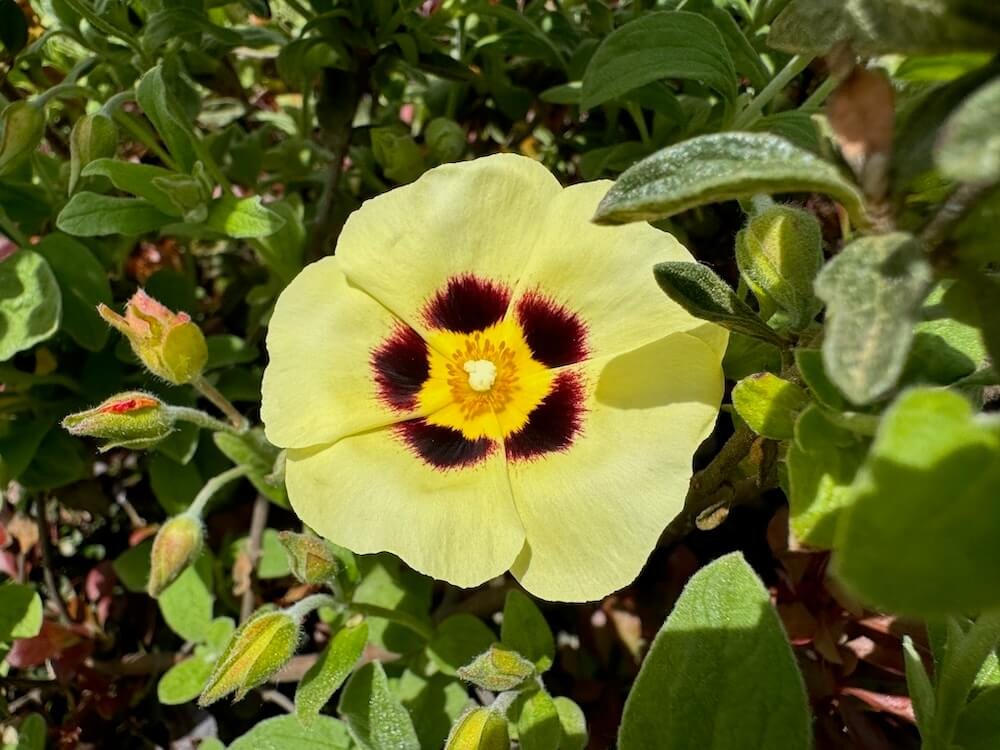
x Halimiocistus wintonensis 'Merrist Wood Cream'
Evergreen shrub with narrow gray-green foliage and creamy yellow flowers with maroon centers. Grows 2 to 3 feet tall, tolerates pruning; ideal for low hedges, and borders. Zones: 8 to 10.
Sun loving shrubs thrive in bright, open conditions, producing strong growth and abundant flowering with plenty of direct light. Their blooms range from soft pastels to bold, saturated tones, often set against dense foliage that holds up well in heat. These shrubs bring energy and structure to borders, foundation plantings, and exposed areas of the garden.
Selected for their tolerance of full sun, they perform reliably in warm, dry conditions once established. Many offer extended bloom periods, while others contribute texture through foliage or growth habit. Whether used as focal points or grouped for impact, sun loving shrubs provide consistent color and form in the brightest parts of the landscape.
COTONEASTER
01

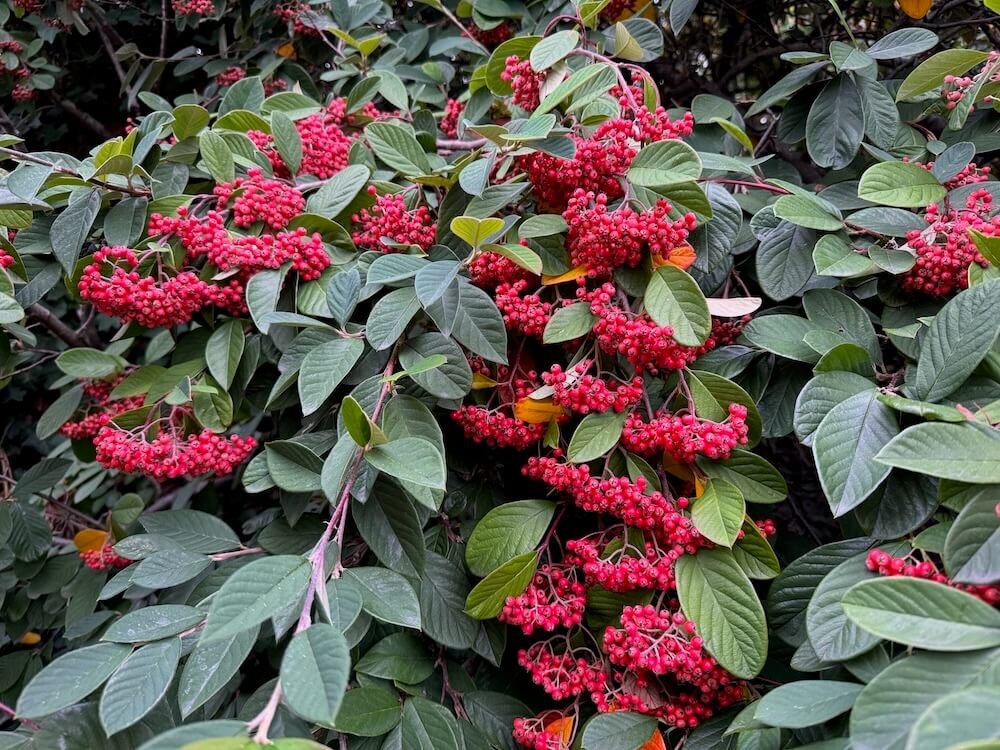
Cotoneaster shrubs bring strong wildlife value to the garden, with flowers in late spring followed by abundant berries that persist into fall and winter. Cotoneaster coriaceus (shown here) is grown for its glossy evergreen foliage and heavy crops of red berries that attract birds, creating a layered display against dense branching. Cotoneaster franchetii adds orange to red fruit along arching stems, extending seasonal interest while supporting bird activity.
These shrubs are well suited to borders, hedges, or naturalized plantings where their berries can be easily accessed by wildlife. Cotoneaster horizontalis offers a distinctive herringbone branching pattern with red fall berries, while Cotoneaster horizontalis ‘Cheney’ provides a lower, more compact form with variegated foliage that adds brightness and contrast. Together, these selections provide dependable berry production, varied structure, and strong habitat value for birds.
OREGON GRAPE (Mahonia)
02
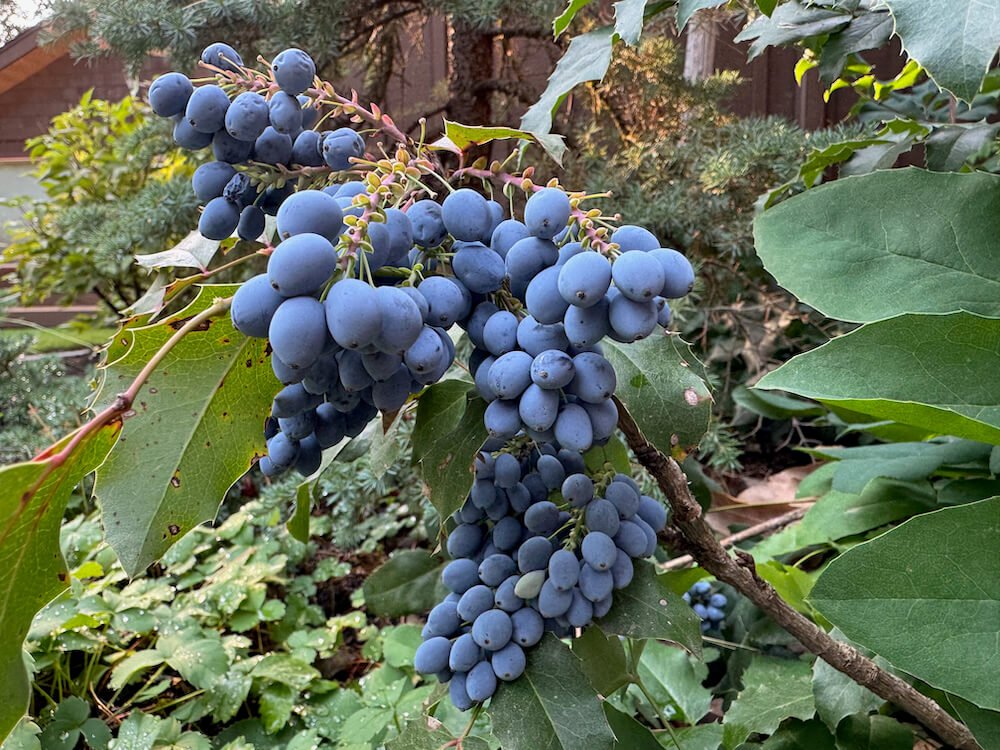
Oregon grape shrubs bring strong wildlife value to the garden, with bright yellow flowers in late winter to early spring followed by clusters of blue to purple berries that attract birds. Mahonia aquifolium is grown for its glossy, holly-like foliage and abundant fruit, creating a layered display that supports wildlife while providing year-round structure. Its dense habit and reliable berry production make it a consistent food source in garden settings.
They are well suited to woodland edges, borders, or naturalized plantings where birds can easily access the fruit. Mahonia repens (shown here) offers a lower, spreading form with similar berries, while Mahonia x media ‘Charity’ provides taller structure with abundant blooms and fruit. Mahonia eurybracteata subsp. ganpinensis ‘Soft Caress’ adds fine, spineless foliage and a softer texture. Together, these selections provide seasonal color, varied form, and dependable habitat value for birds.
HONEYSUCKLE (Lonicera)
03

Honeysuckle shrubs provide strong habitat value, producing small flowers followed by berries that attract birds through the growing season. Lonicera ligustrina ‘Lemon Beauty’ (shown here) is grown for its variegated green and yellow foliage and compact, dense habit, with inconspicuous flowers giving way to dark berries that contribute to wildlife support. Its tidy form adds structure while offering seasonal interest.
These shrubs are well suited to borders, low hedges, or mass plantings where birds can easily access shelter and fruit. Lonicera nitida ‘Twiggy’ offers a finer texture with a more upright, compact habit, while Lonicera pileata forms a low, spreading groundcover with small leaves and berry production close to the ground. Together, these selections provide dependable cover, subtle flowering, and consistent habitat value for birds in a range of garden settings.
ROCK ROSE (Cistus)
04
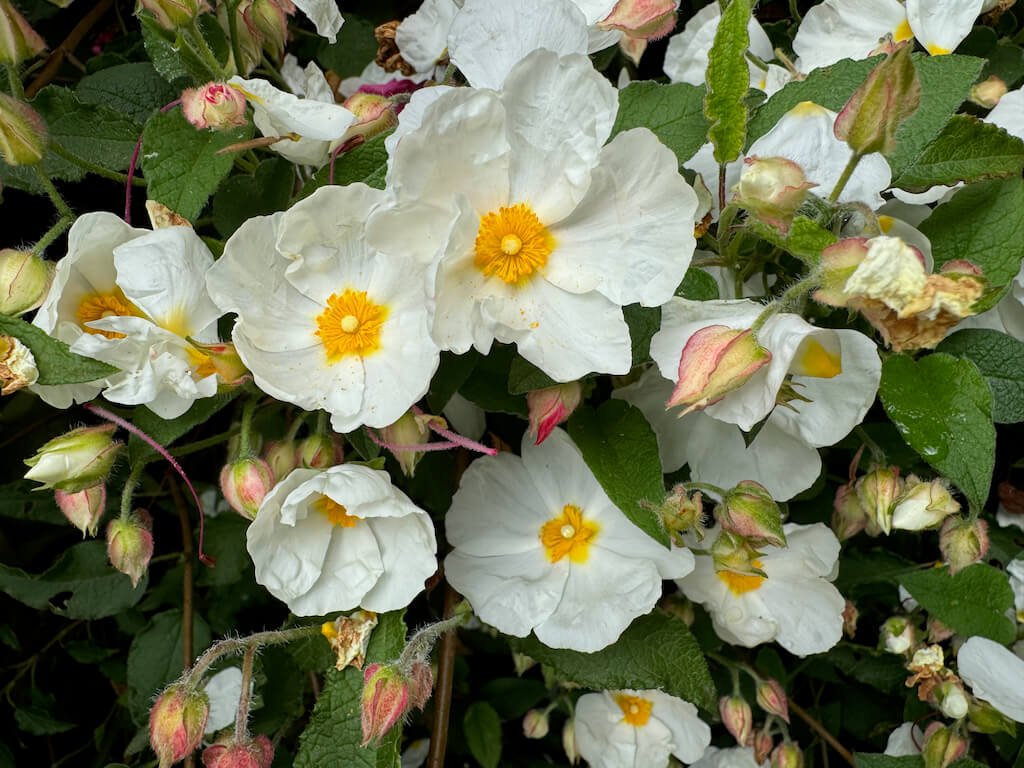
Thriving in full sun, rock roses grow in bright, open conditions, performing best in full sun where heat and light bring out both flowering and foliage color. Cistus x purpureus is grown for its papery, rose-like blooms in shades of pink with darker markings at the base, typically appearing from late spring into early summer against aromatic gray-green foliage. Its dense, slightly spreading habit creates a cohesive form that holds up well in exposed sites.
They are well suited to slopes, gravel gardens, or dry borders where full sun and sharp drainage are essential. Cistus salviifolius ‘Prostratus’ (shown here) offers a lower, spreading habit with white flowers that create a softer, ground-hugging display, while Cistus x hybridus ‘Mickie’ adds variegated foliage that brings brightness even when not in bloom. Together, these selections provide reliable flowering, strong sun tolerance, and a durable, textural presence in warm garden settings.
LAVENDER (Lavandula)
05
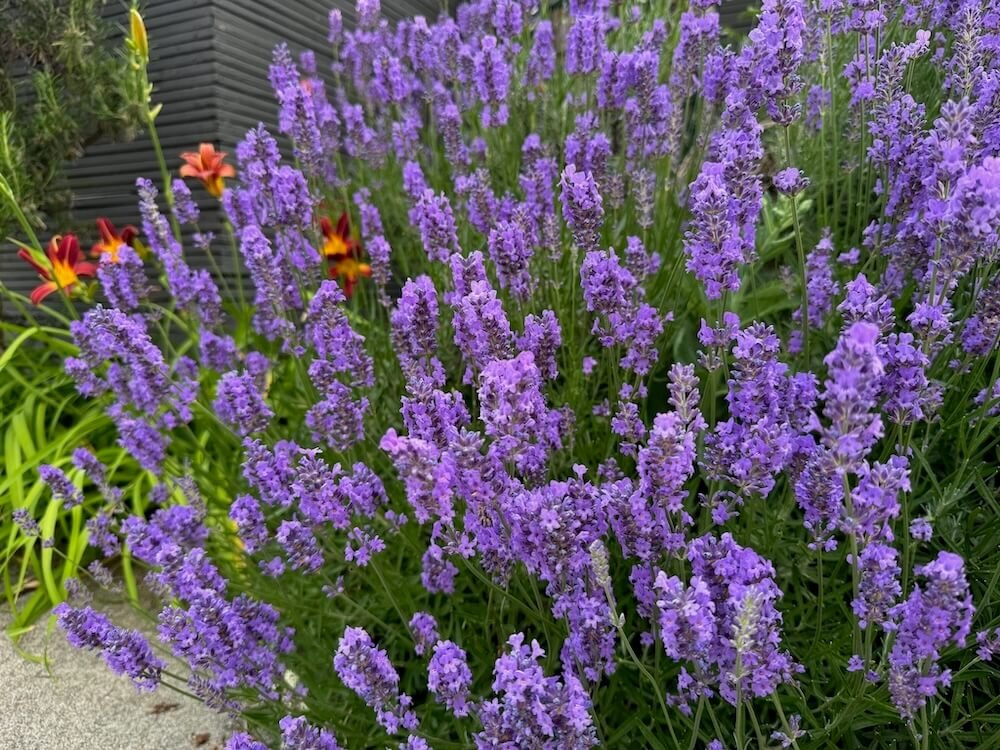
At its best in full sun, lavender brings fragrance, color, and fine texture to the garden, with blooms appearing from early to mid-summer and often continuing with repeat flowering. Lavandula angustifolia ‘Munstead’ (shown here) is grown for its compact habit and soft purple flower spikes, set against silvery-green foliage that reflects light and performs best in bright, open conditions. Its tidy form and steady bloom create a cohesive presence in sunny plantings.
They are well suited to borders, edging, or gravel gardens where full sun and good drainage support strong growth and flowering. Lavandula stoechas ‘Otto Quast’ adds distinctive flower heads with deep purple tones and upright bracts, while Lavandula x allardii ‘Meerlo’ introduces variegated foliage in green and cream, adding brightness even when not in bloom. Together, these selections provide reliable flowering, aromatic foliage, and strong performance in sun-filled garden settings.
SPIRAEA
06

Thriving in full sun, spirea shrubs provide reliable flowering and fine-textured structure, with blooms appearing from late spring into summer depending on the selection. Spiraea betulifolia ‘Tor’ is grown for its compact habit and clusters of white flowers in late spring, creating a clean display against dense green foliage that develops best in bright conditions. Its naturally tidy form holds well with minimal intervention.
Spirea are well suited to borders, low hedges, or mass plantings where full sun supports strong flowering and compact growth. Spiraea nipponica offers arching branches covered in small white blooms in late spring, while Spiraea japonica ‘Minspil04’ (shown here) adds vibrant pink flowers paired with colorful foliage. Together, these selections provide dependable bloom, varied color, and strong performance in sunny garden settings.
LAVENDER COTTON (Santolina)
07
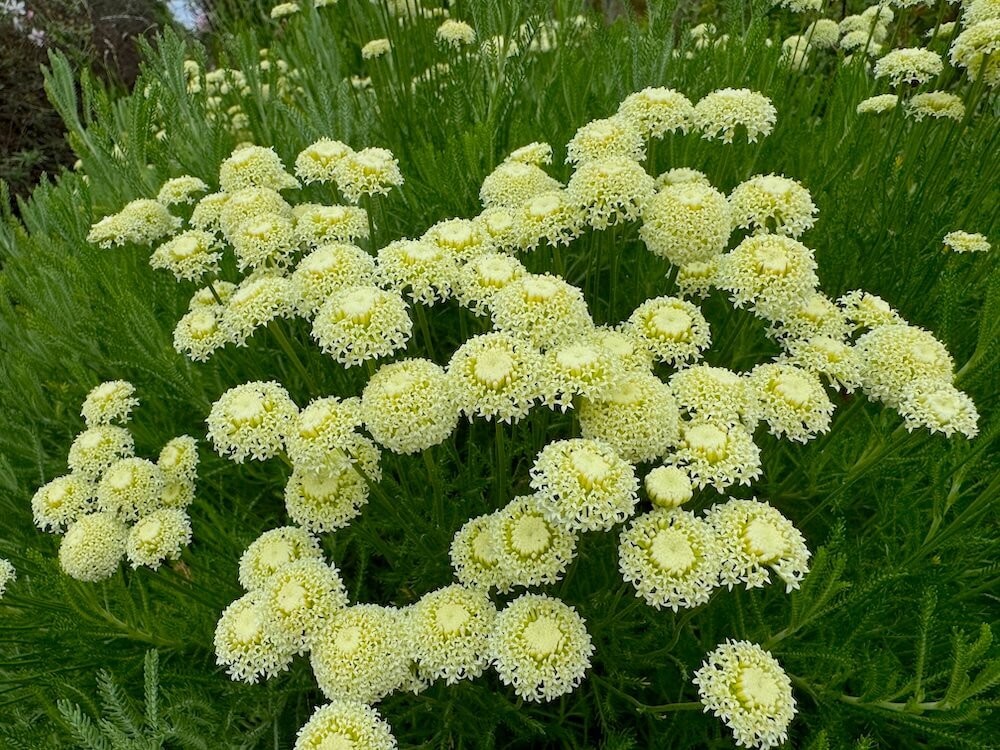
Well-suited to full sun, lavender cotton offers fine texture and drought-tolerant structure, with small button-like flowers appearing in early to mid-summer. Santolina chamaecyparissus ‘Lemon Queen’ (shown here) is grown for its soft gray-green foliage and pale yellow blooms that create a light, airy display in bright conditions. Its compact, mounded habit holds its shape well and performs best in open, sunny sites with minimal care.
Lavender Cotton is well suited to borders, edging, or gravel gardens where full sun and sharp drainage support strong growth. Santolina chamaecyparissus ‘Pretty Carroll’ adds a slightly fuller habit with deeper yellow flowers, providing a warmer contrast against the silvery foliage. Together, these selections provide consistent form, subtle color, and reliable performance in sun-filled, dry garden settings.
ROSES (Rosa)
08
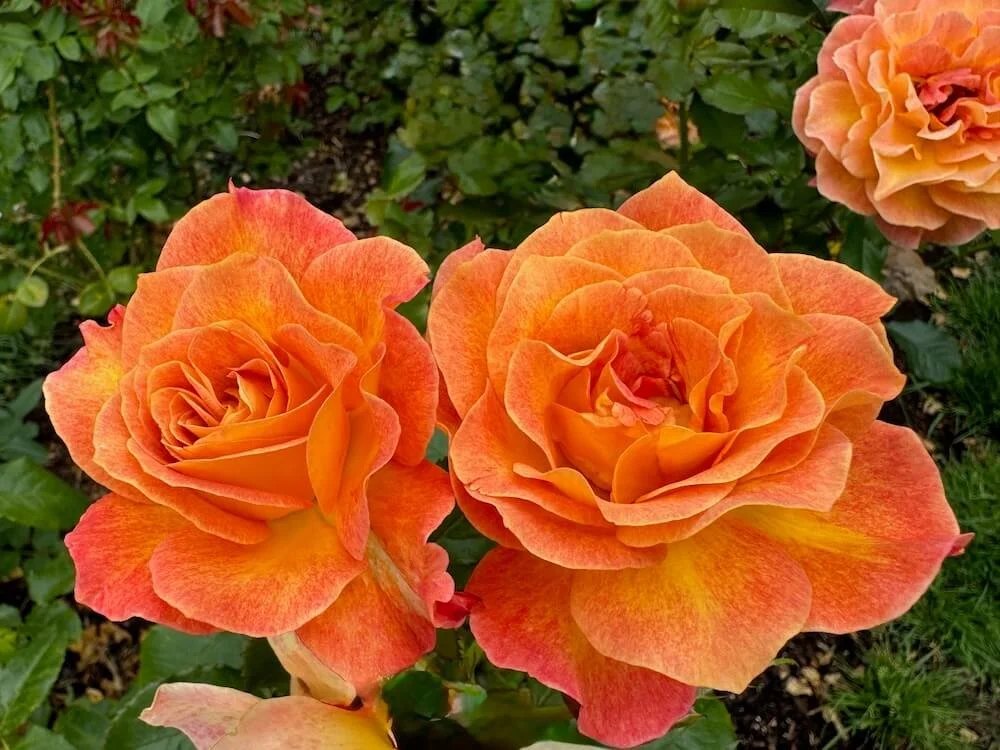
Thriving in full sun, roses deliver strong flowering and classic form, with blooms appearing from late spring through summer and often continuing into fall. Rosa ‘Rosie the Riveter’ (shown here) is grown for its warm apricot to orange blooms with a soft, ruffled form, developing best in bright conditions where color and fragrance are most pronounced. Its upright habit and steady flowering create a full, showy display in sunny garden settings.
Roses are well suited to borders, focal plantings, or rose beds where full sun supports vigorous growth and repeat bloom. Rosa ‘Sally Holmes’ offers large clusters of creamy white, lightly fragrant flowers with a more open, airy form, while Rosa ‘Twilight Zone’ adds deep, rich purple blooms that create strong contrast. Together, these selections provide continuous color, varied flower form, and reliable performance in sun-filled landscapes.
Related: Explore All Roses ➔
SPRUCE (Picea)
09
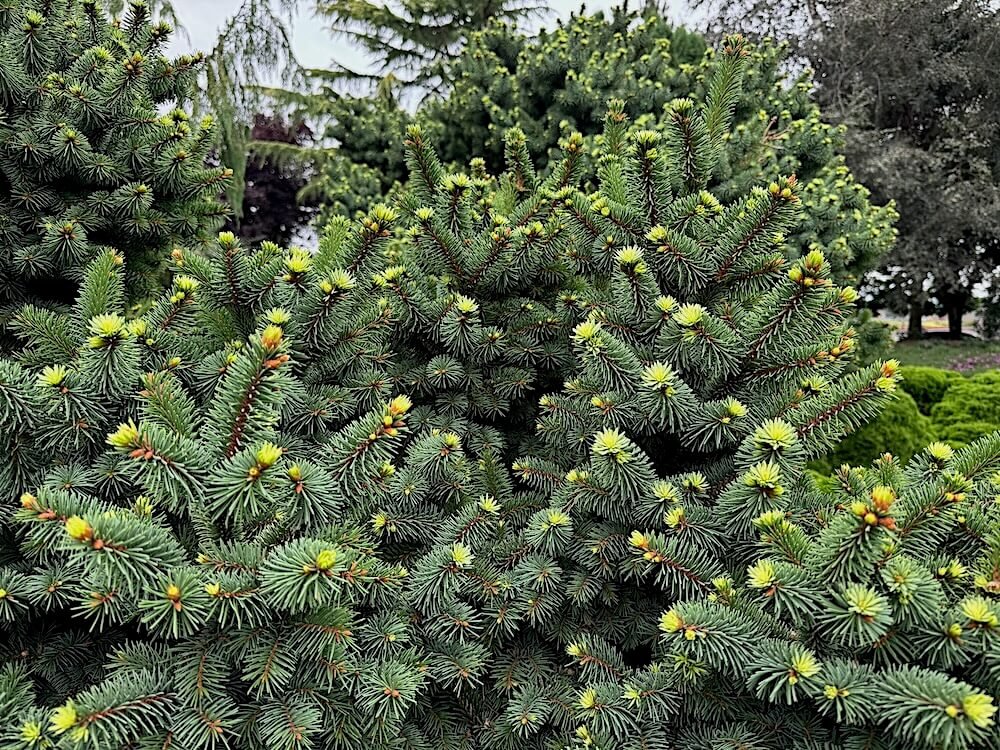
Well-suited to full sun, spruce shrubs provide strong structure and year-round color, performing best in bright, open conditions where their form and foliage can fully develop. Picea abies ‘Pumila’ is grown for its compact, mounded habit and dense green needles that hold their shape with minimal intervention, creating a consistent presence in sunny settings. Its slow growth and natural form make it easy to maintain while thriving in full sun.
Spruce are well suited to rock gardens, borders, or foundation plantings where light and good drainage support their performance. Picea omorika ‘Pimoko’ offers a neat, rounded shape with fine-textured needles, while Picea orientalis ‘Ferny Creek Prostrate’ forms a low, spreading habit that works well as a groundcover. Picea pungens ‘Mrs. Cesarini’ (shown here) adds silvery-blue foliage that stands out in bright light. Together, these selections provide sun tolerance and year-round structure in garden settings.
Related: See All Conifers ➔
BLUEBEARD (Caryopteris)
10
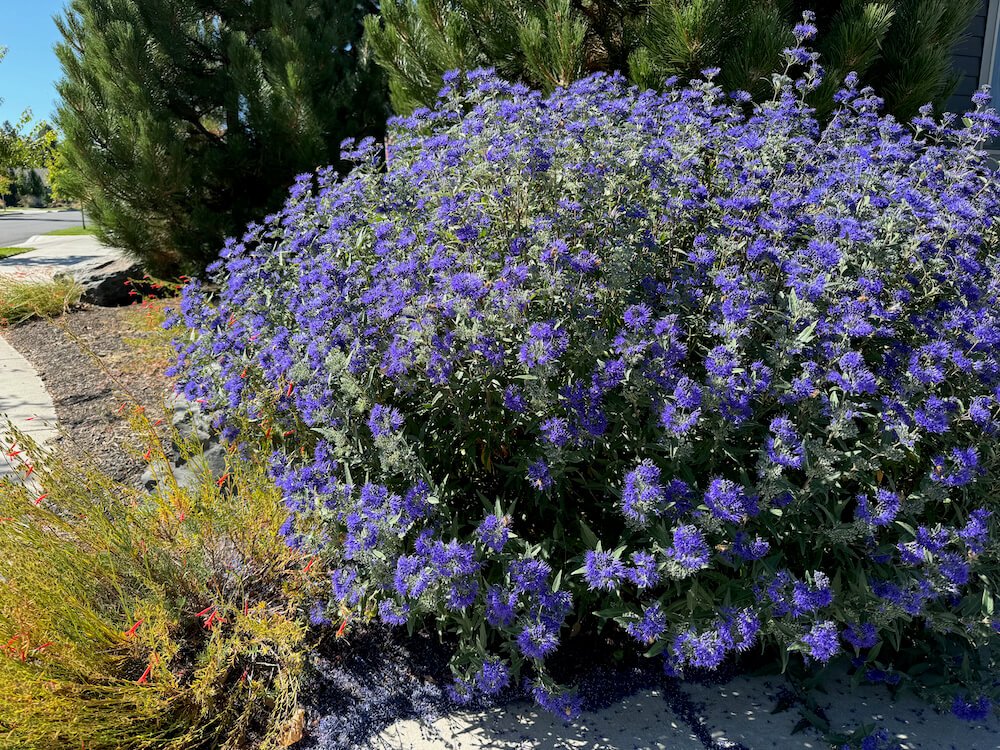
Flourishing in full sun, bluebeard brings late-season color and fine texture to the garden, with flowers appearing from mid to late summer and often continuing into early fall. Caryopteris x clandonensis ‘Dark Knight’ (shown here) is grown for its deep blue flowers and silvery foliage, creating strong contrast and a rich display in bright conditions. Its compact, mounded habit holds its shape well and performs best with ample sunlight.
They are well suited to borders, dry gardens, or open plantings where full sun supports strong flowering and compact growth. Caryopteris x clandonensis ‘Gold Crest’ adds brightness with golden foliage that highlights the blue flowers, while Caryopteris divaricata ‘Snow Fairy’ introduces variegated leaves and a softer, more relaxed form. Together, these selections provide dependable bloom, contrasting foliage, and a vibrant presence in sunny garden settings.