Grevillea x 'Poorinda Leane' | Poorinda Leane Grevillea

$0.00

DESCRIPTION
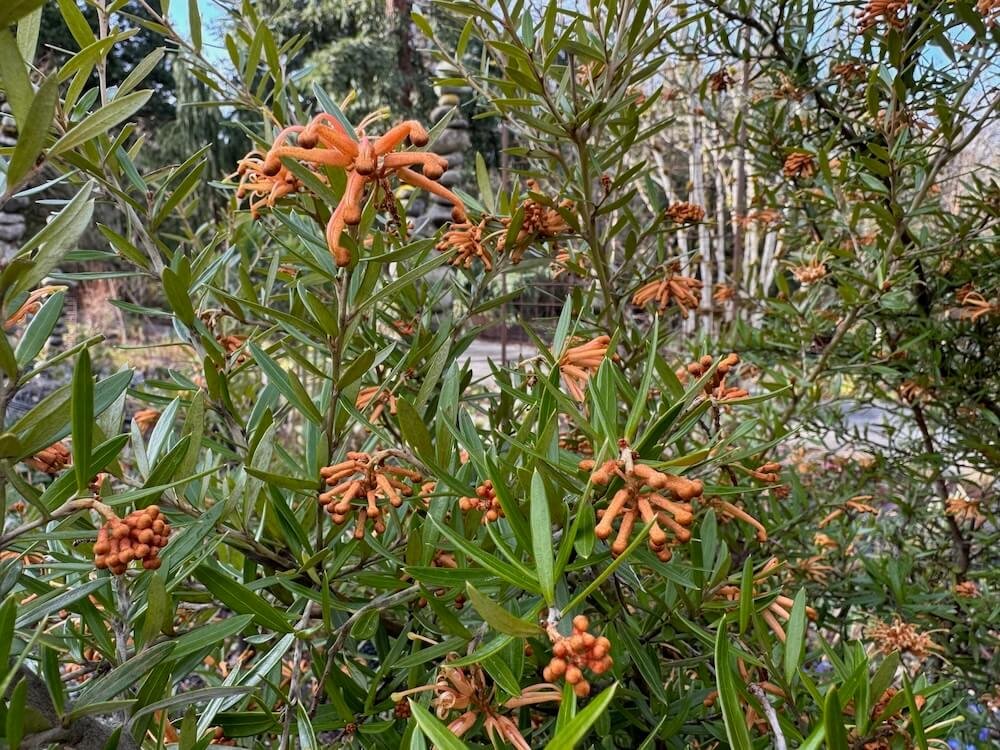
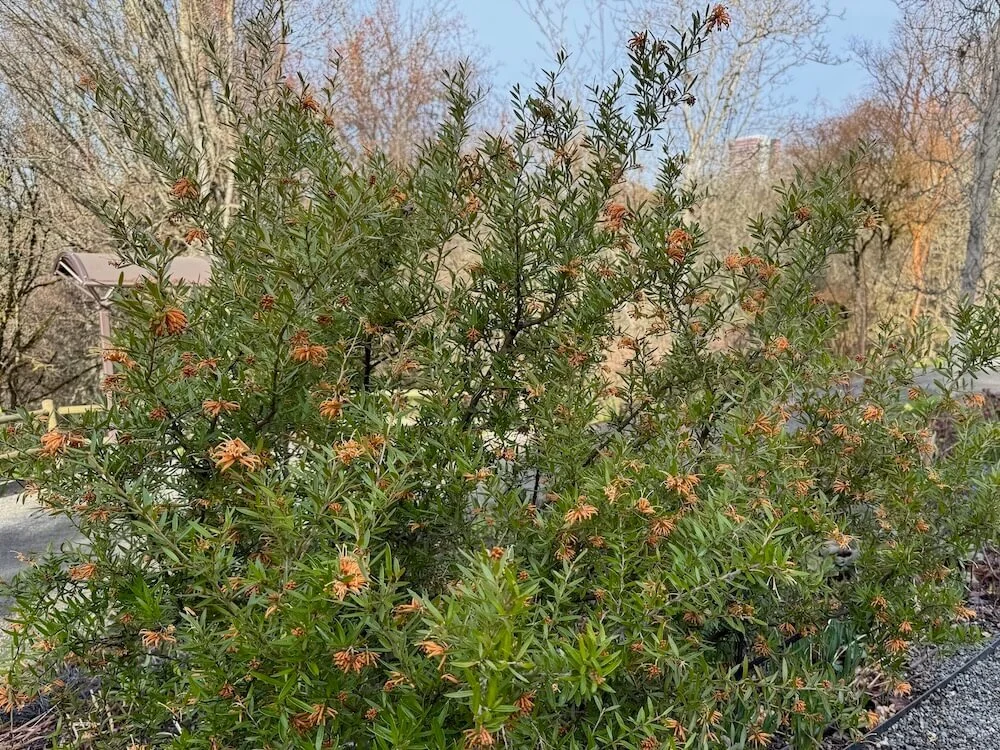
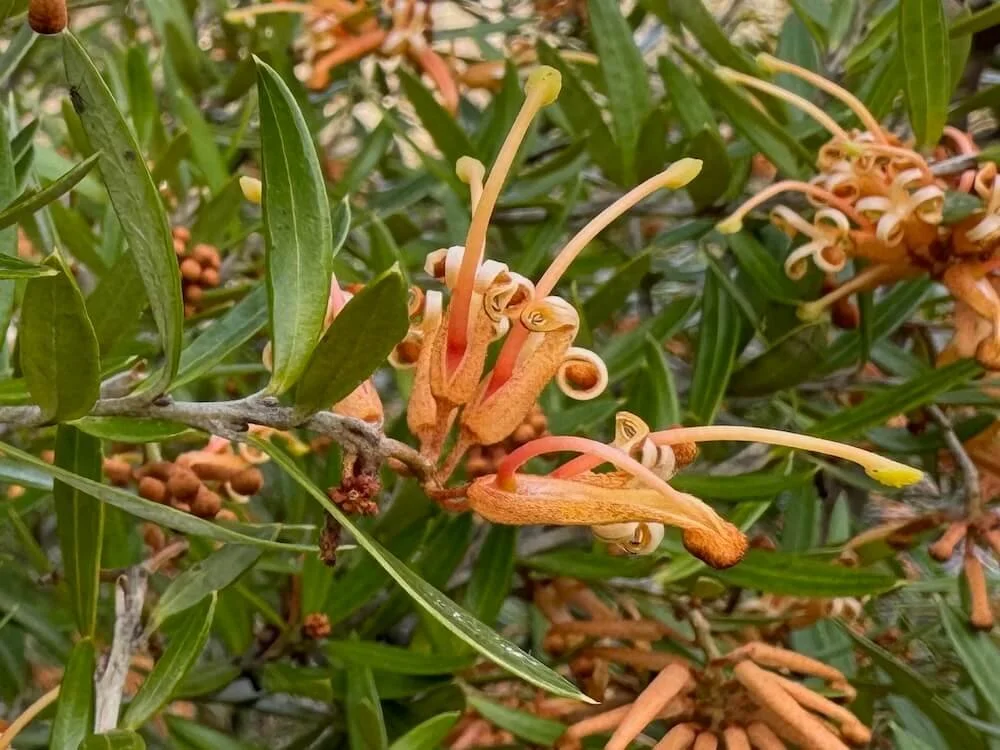
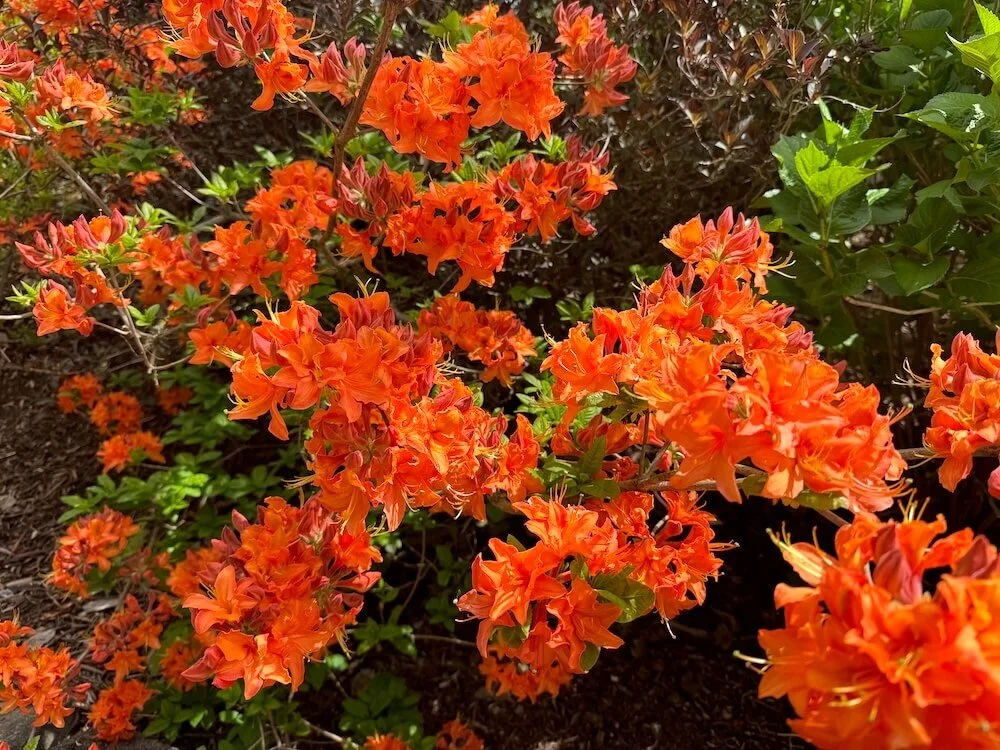
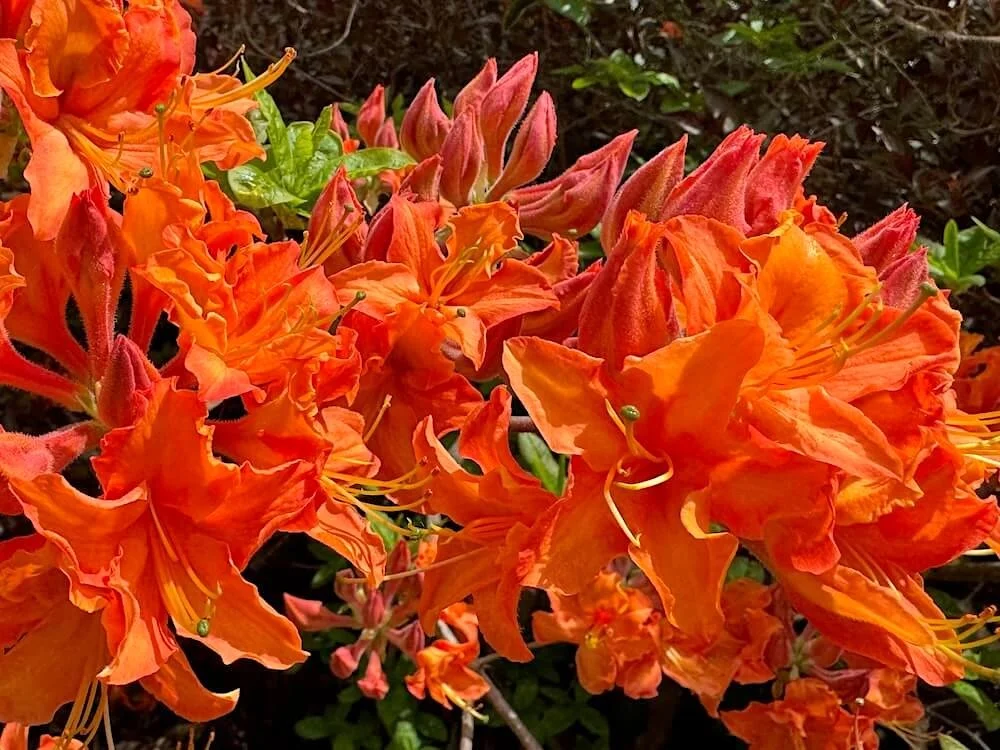
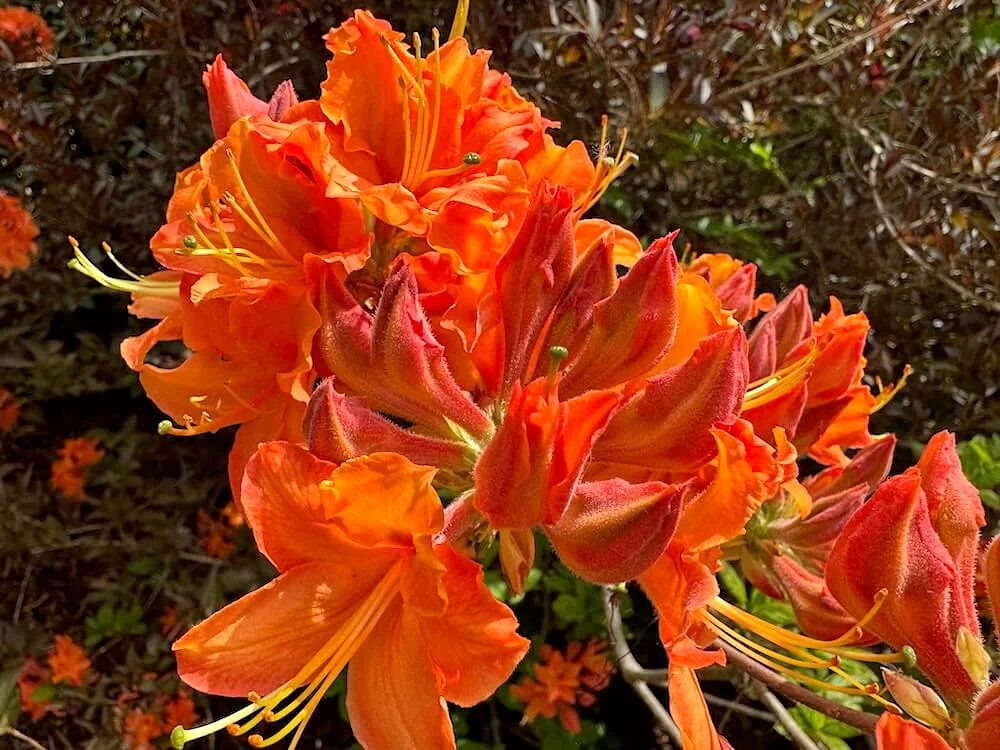
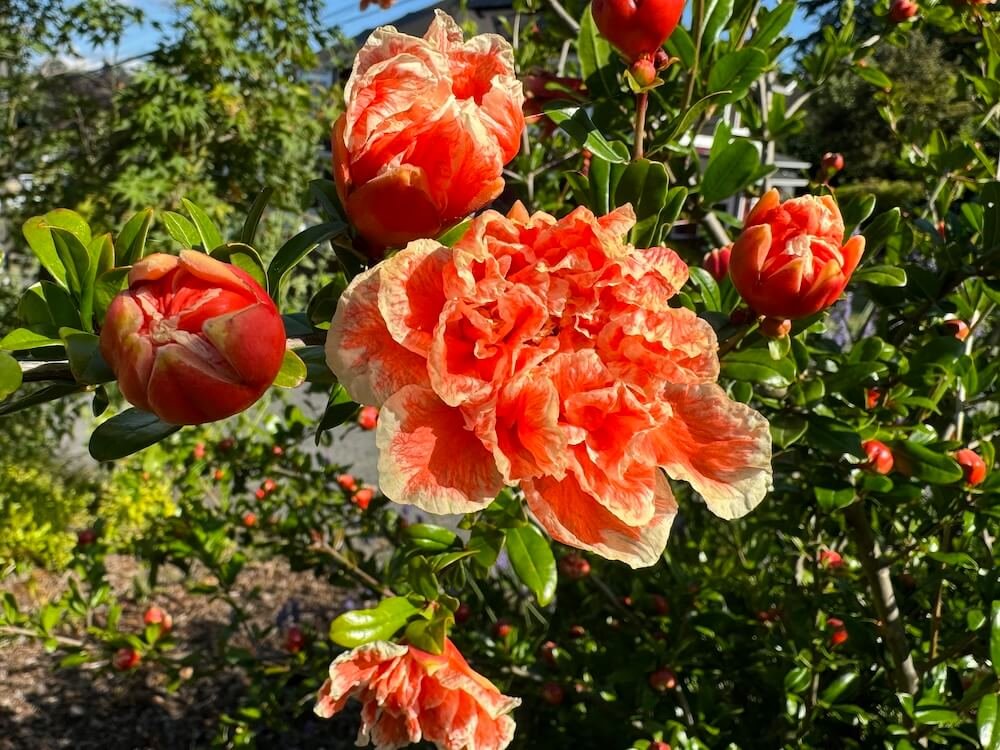
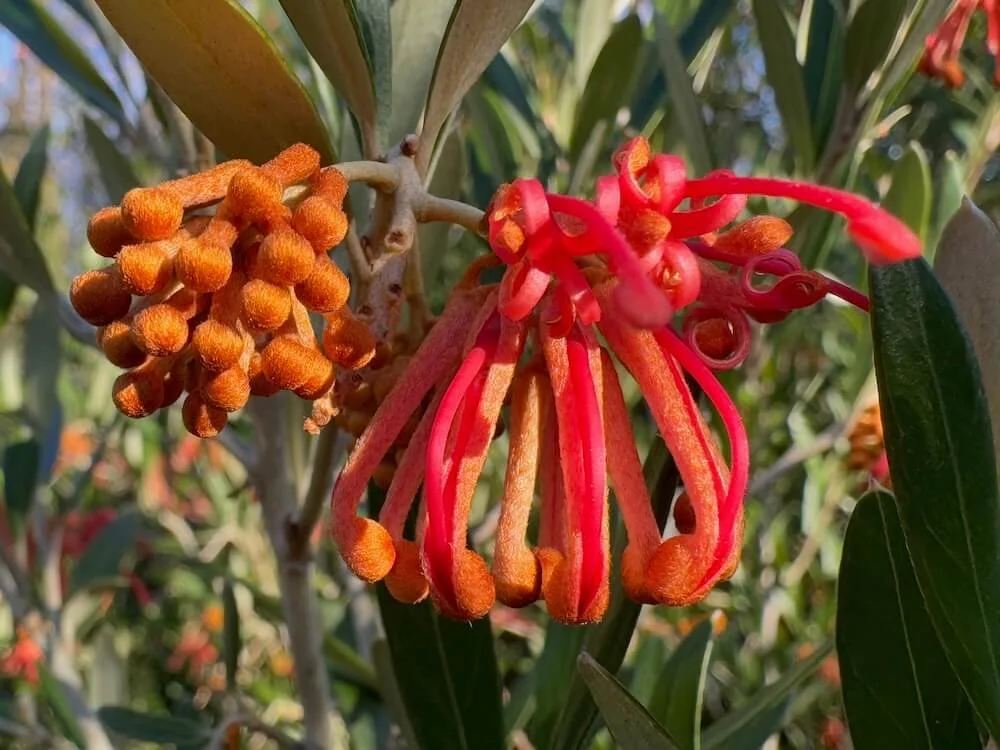
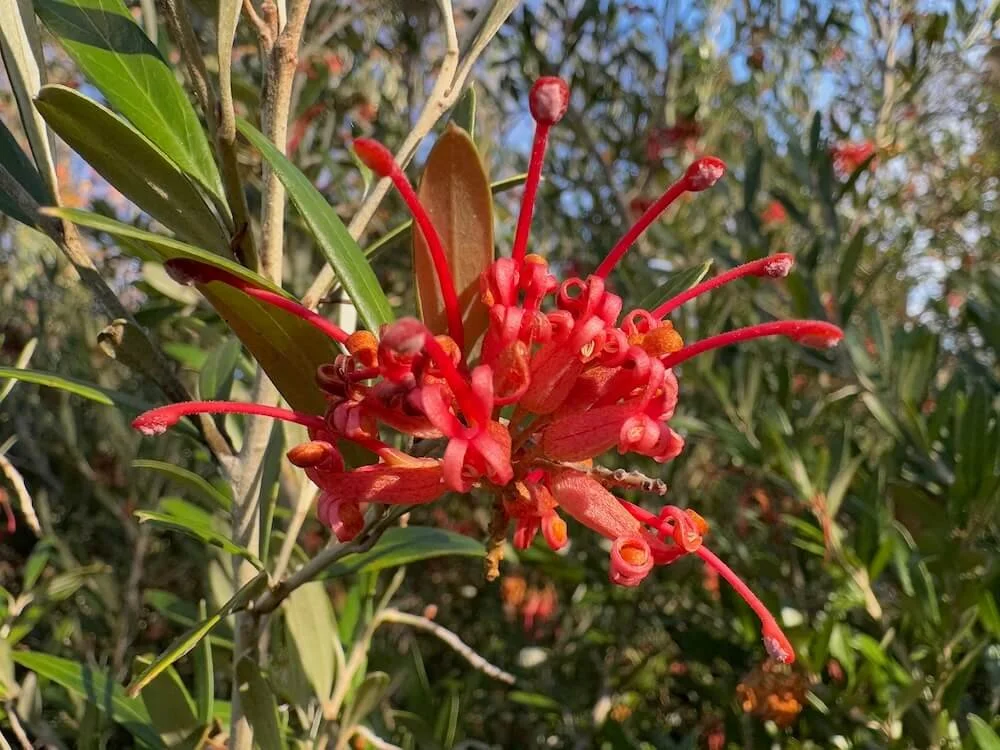
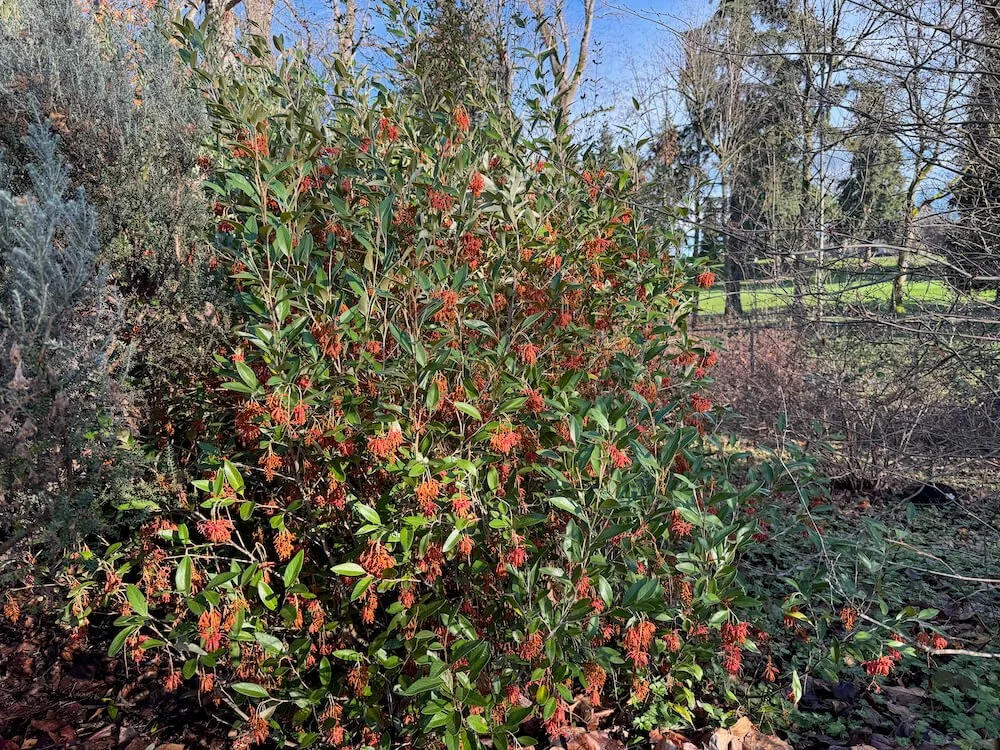
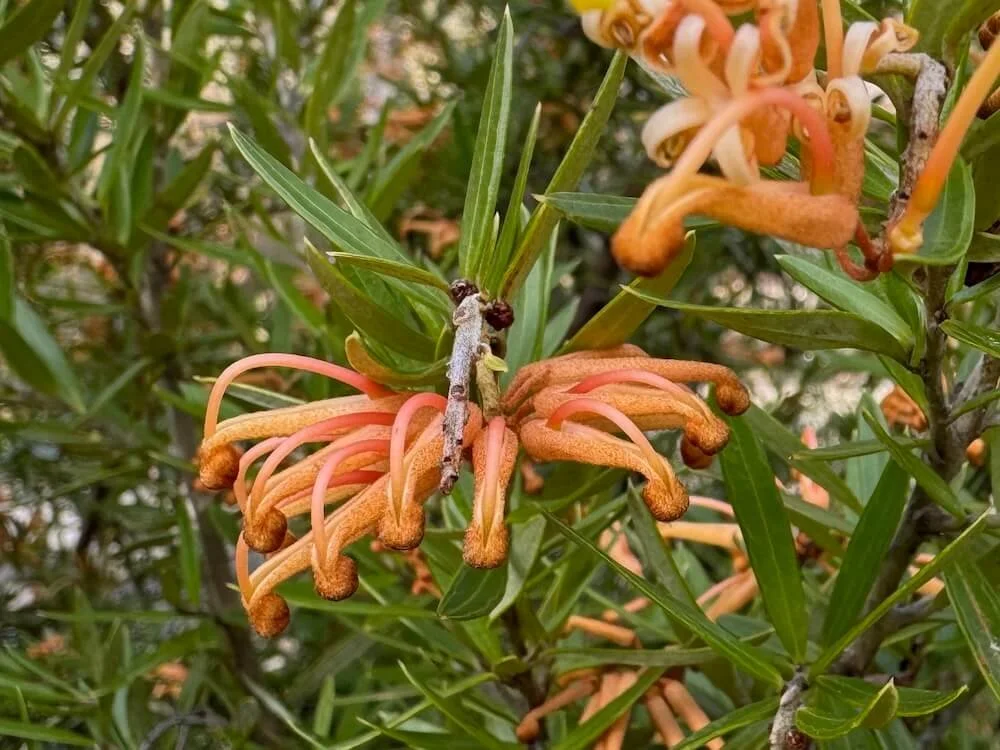
Grevillea × 'Poorinda Leane' produces clusters of soft orange flowers from late winter into spring, the curved blooms opening in rounded heads along the stems and offering nectar for visiting birds. The blossoms appear among finely divided, fern-like leaves that create a soft, feathery texture along the branches. The gray-green foliage forms a dense evergreen canopy that adds year-round interest.

This hybrid originated in Australia through breeding within the Grevillea genus. In gardens it brings evergreen structure and seasonal color to borders, wildlife plantings, and mild-climate landscapes where the nectar-rich flowers support visiting birds.

DESCRIPTION
Grevillea × 'Poorinda Leane' produces clusters of soft orange flowers from late winter into spring, the curved blooms opening in rounded heads along the stems and offering nectar for visiting birds. The blossoms appear among finely divided, fern-like leaves that create a soft, feathery texture along the branches. The gray-green foliage forms a dense evergreen canopy that adds year-round interest.

This hybrid originated in Australia through breeding within the Grevillea genus. In gardens it brings evergreen structure and seasonal color to borders, wildlife plantings, and mild-climate landscapes where the nectar-rich flowers support visiting birds.

 
  • Family: Proteaceae
    Height: 8 to 12 feet
    Width: 8 to 12 feet
    Foliage color: Gray-green finely divided fern like leaves with a soft feathery texture
    Flower color: Soft orange to coral spider-like flower clusters with long curved styles
    Bloom time: Late winter through spring
    Light requirements: Full sun
    Water requirements: Low; very well drained soil drought tolerant once established
    Maintenance: Low; prune lightly after flowering to maintain shape and encourage dense branching avoid excessive fertilization and summer irrigation
    Growing zone: USDA zones 9 to 11
    Wildlife attractors: Hummingbirds, bees and other nectar feeding pollinators

    This plant can be seen at the Bellevue Botanical Garden.
    Print Information

    Buy Plants