Pittosporum tenuifolium 'Irene Patterson' | Irene Patterson Pittosporum

$0.00

DESCRIPTION
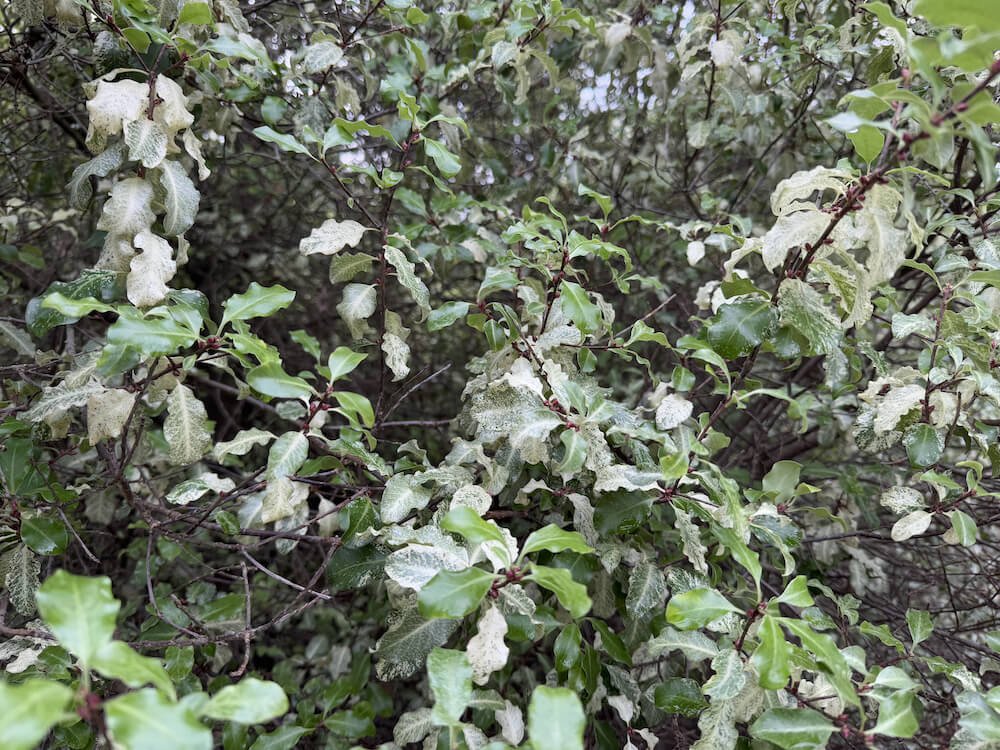
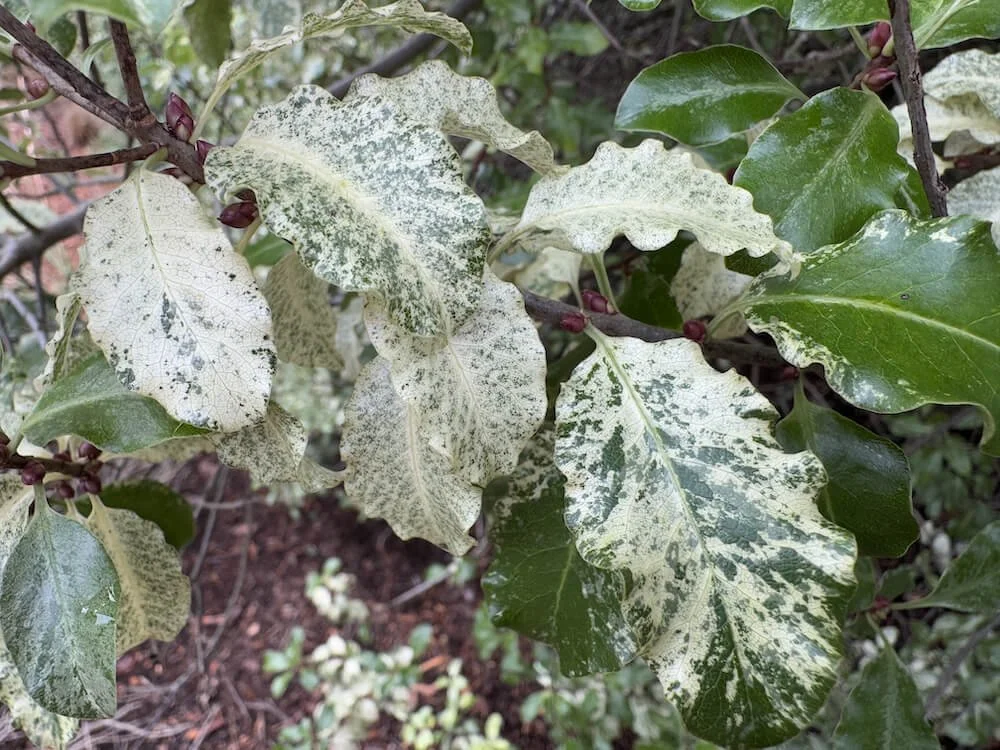
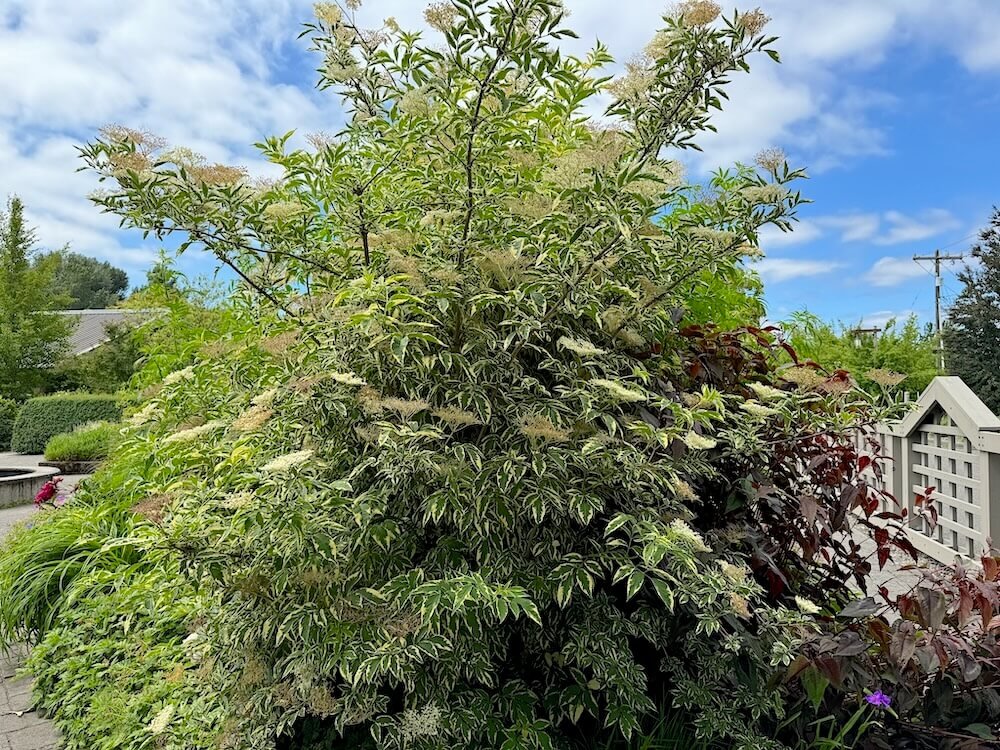
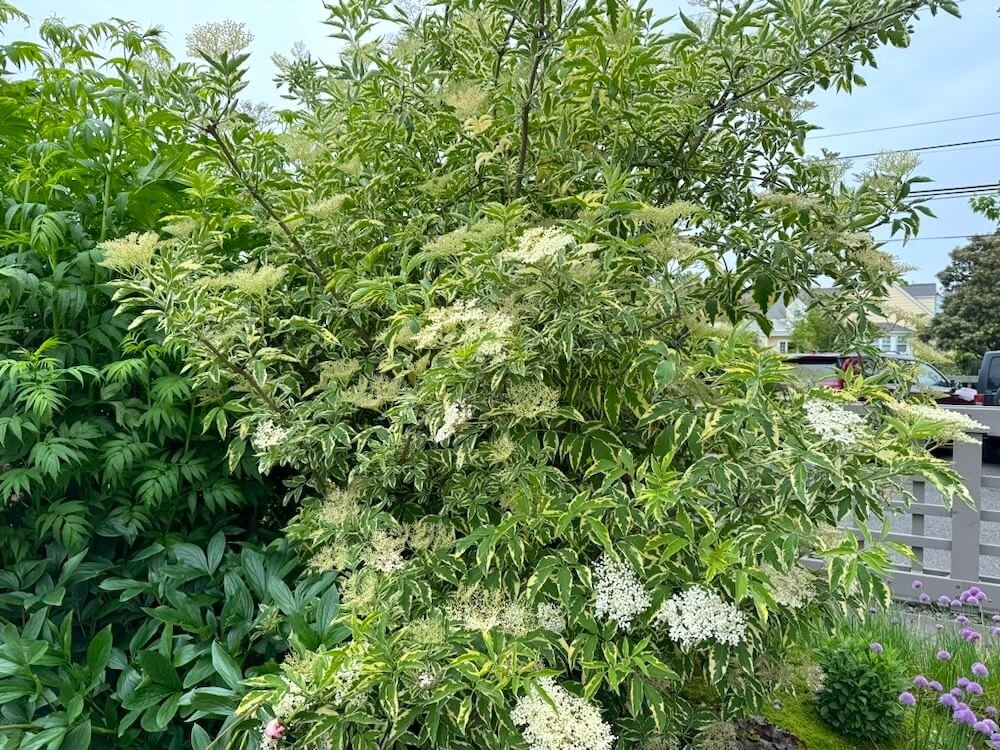
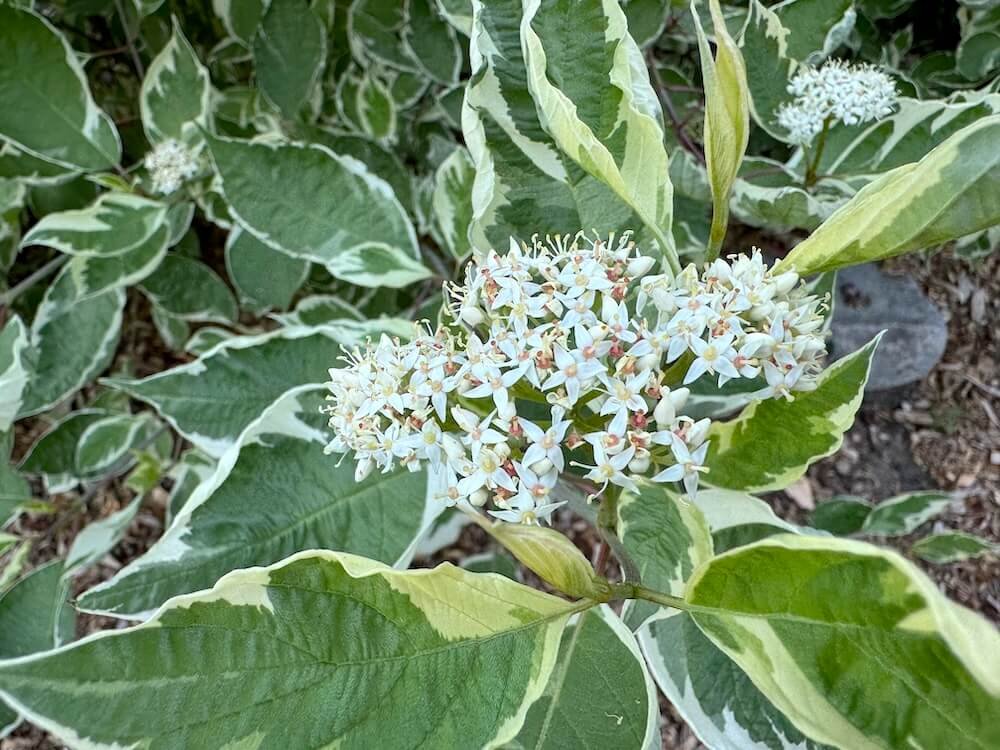
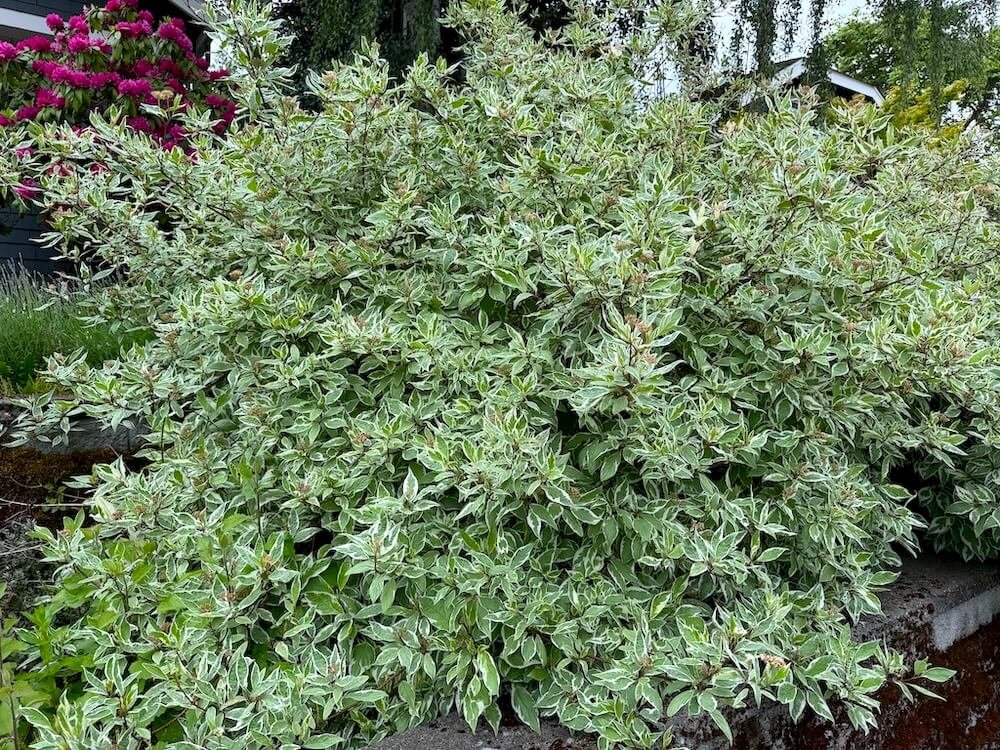
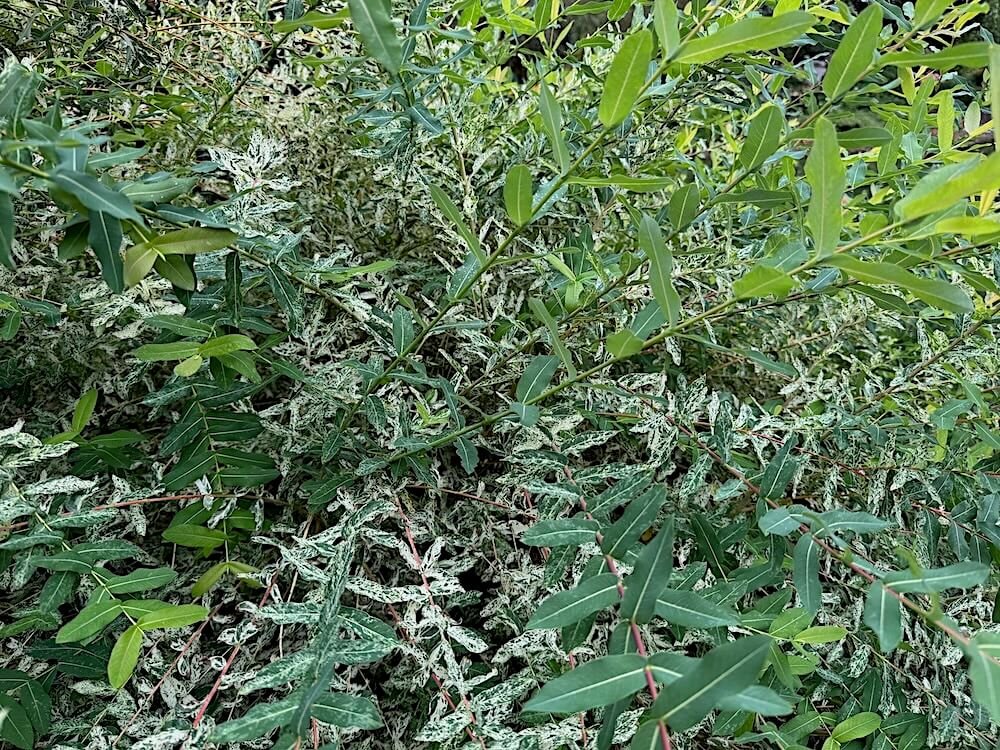
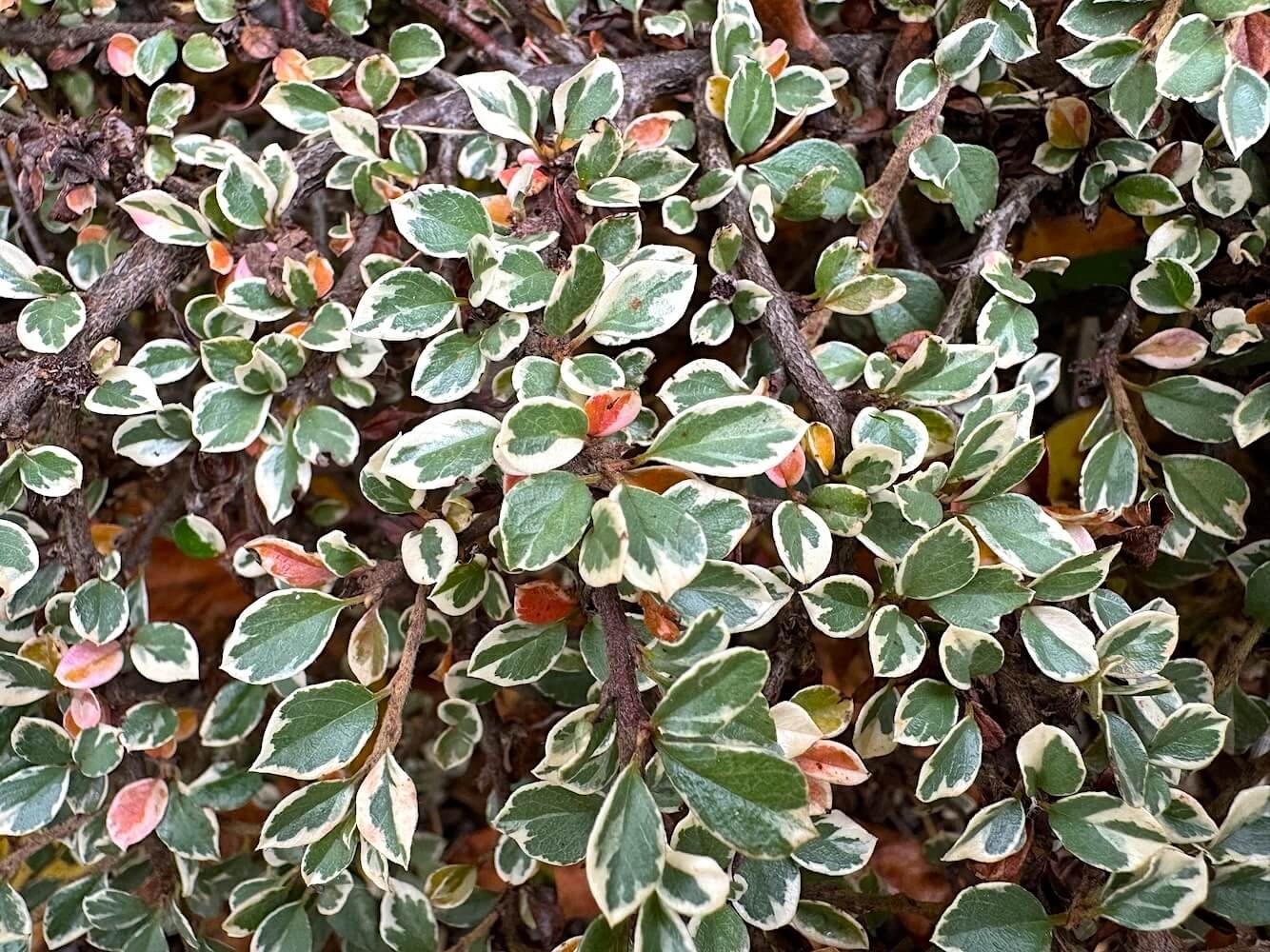
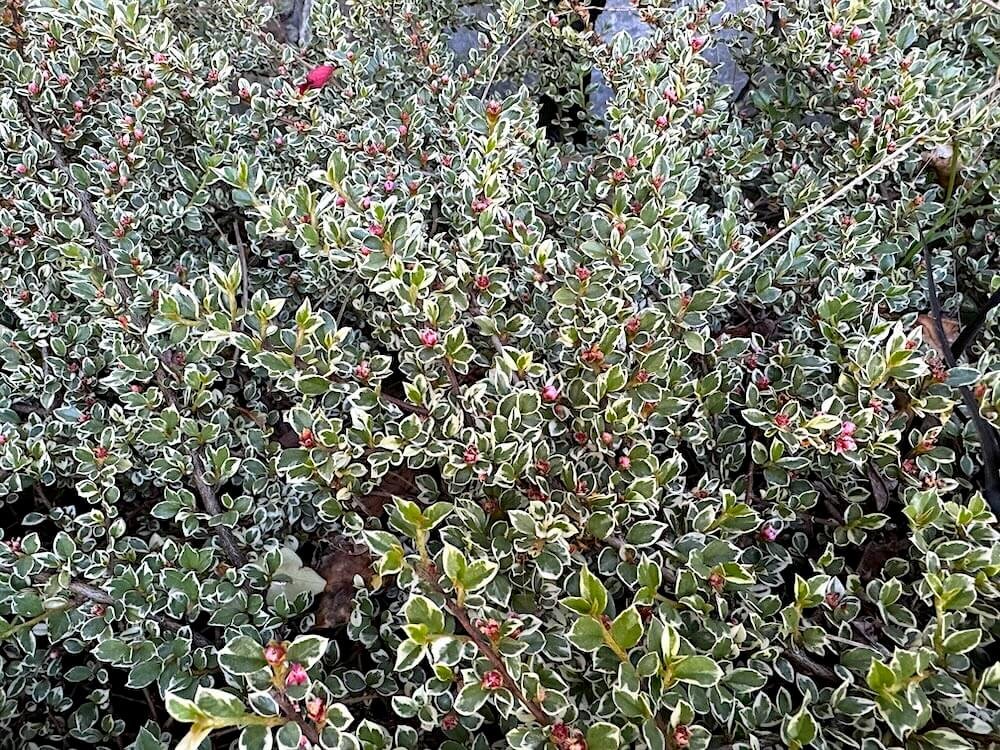
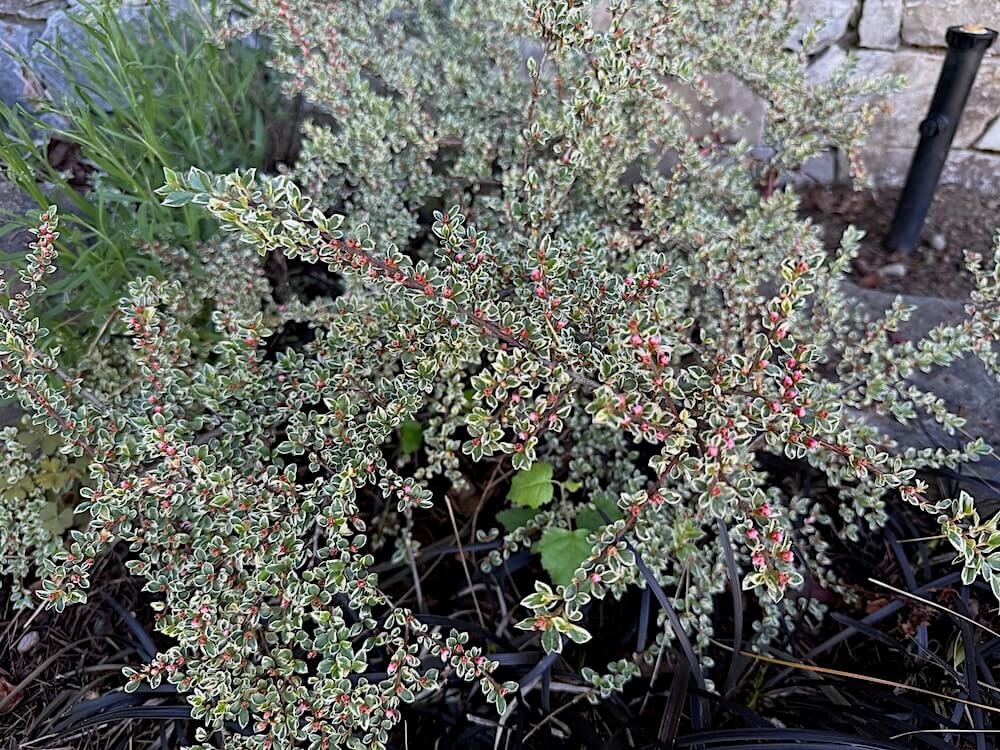
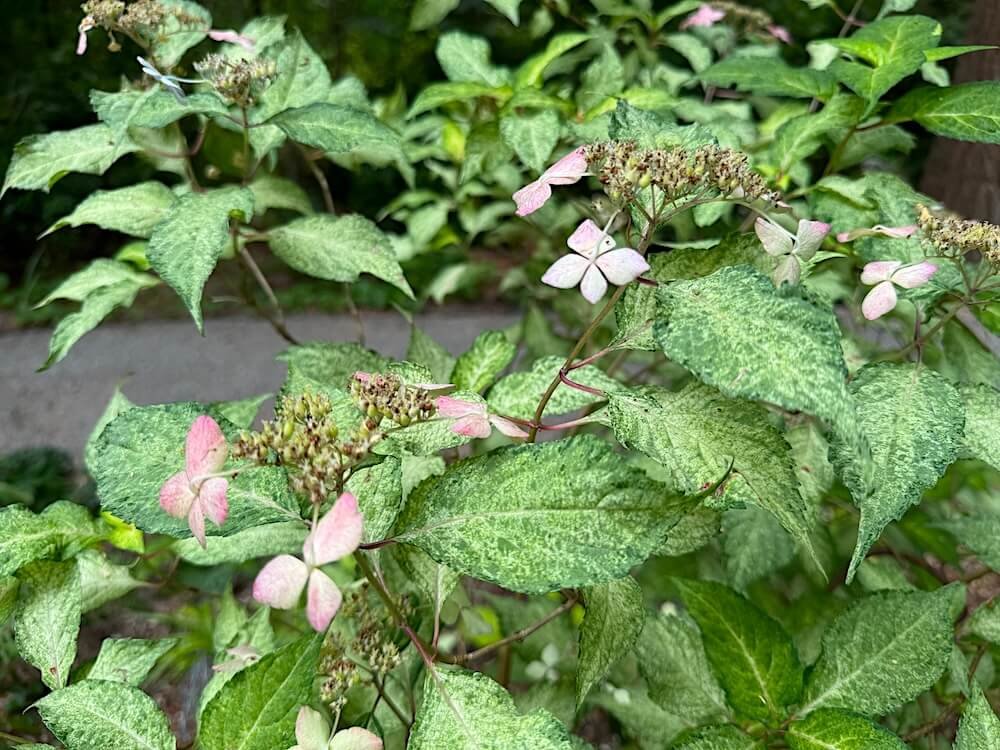
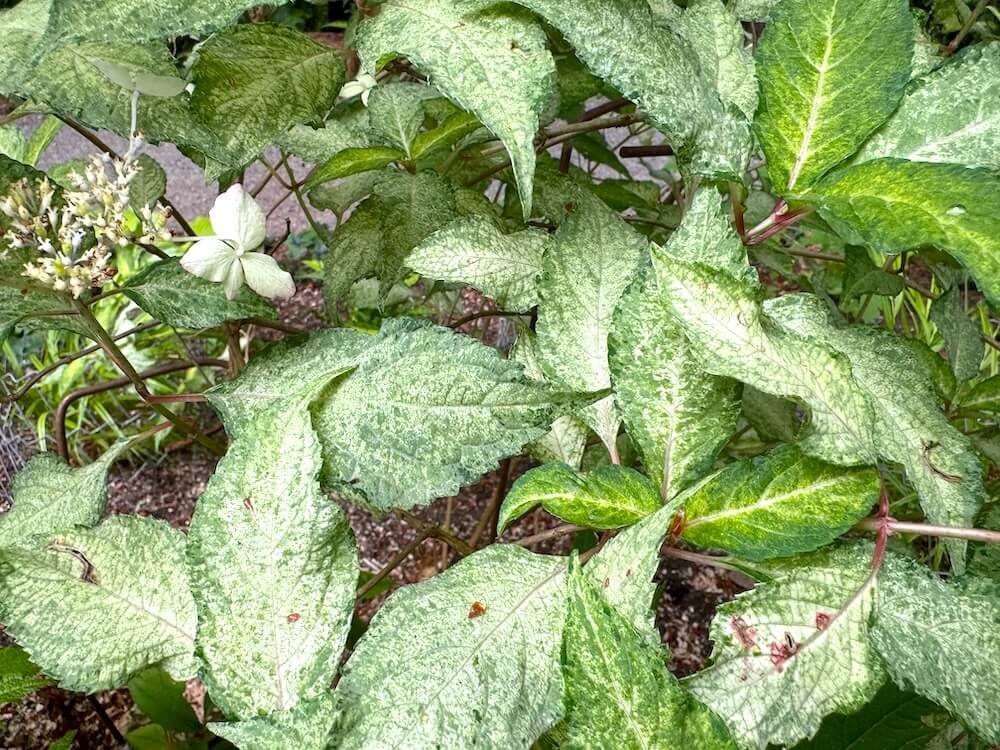
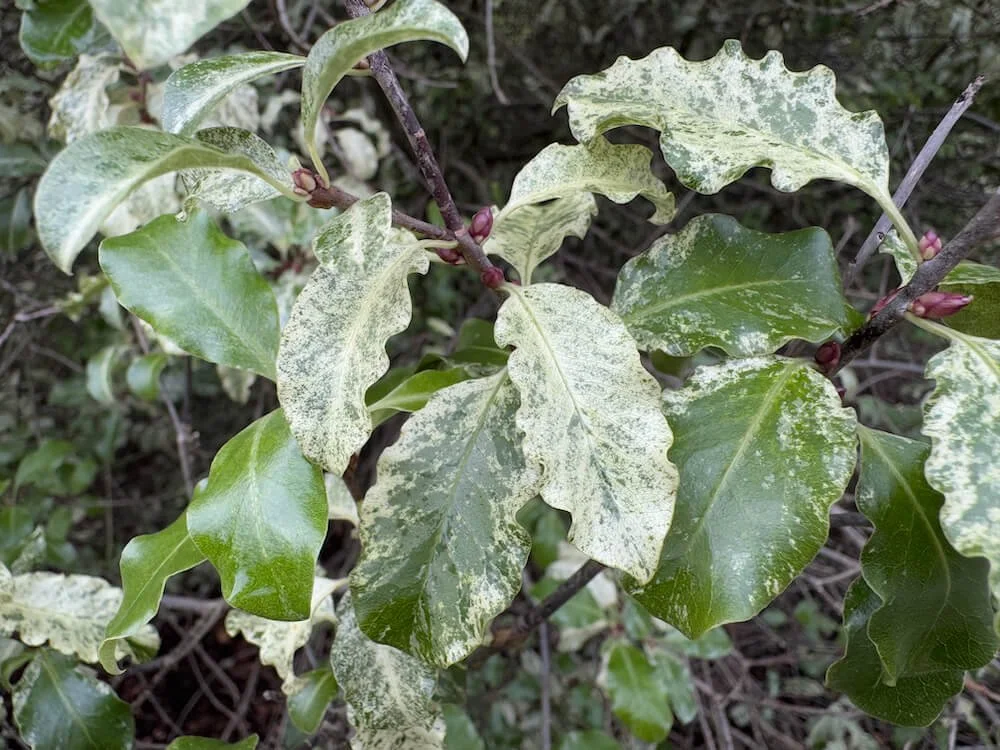
Pittosporum tenuifolium 'Irene Patterson' produces small, dark maroon to near-black flowers in late spring, the blooms releasing a light honey fragrance as they open along the slender stems. The blossoms appear among variegated leaves marked with irregular creamy white and soft green mottling across the surface. The oval foliage has gently wavy margins and is carried on dark stems, creating a layered pattern of light and shadow throughout the plant.

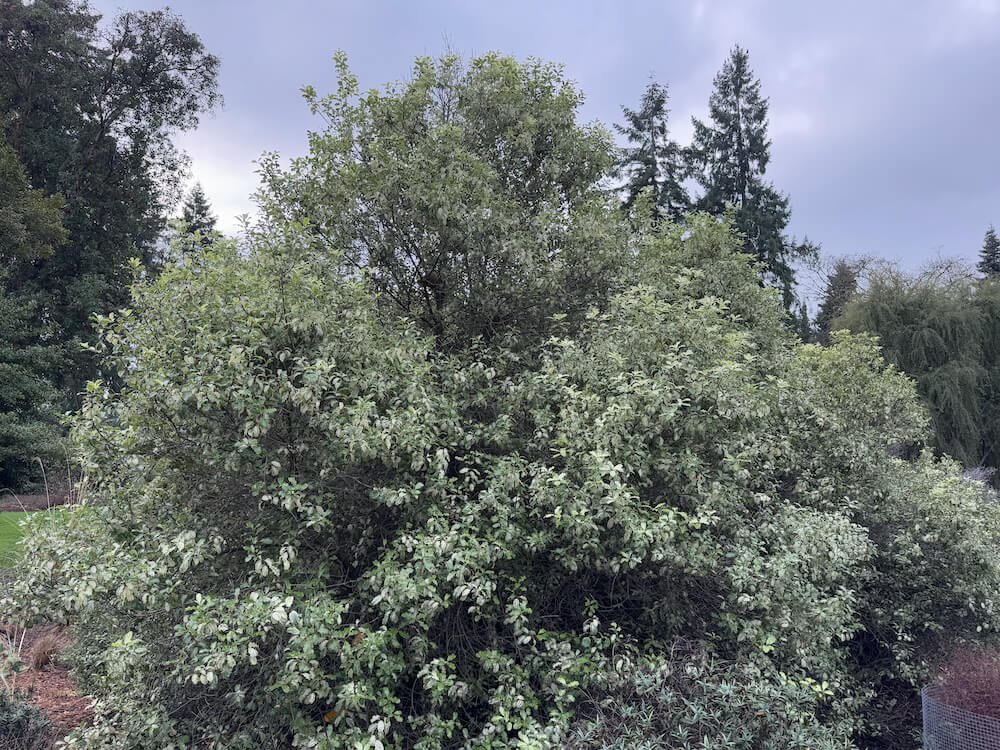
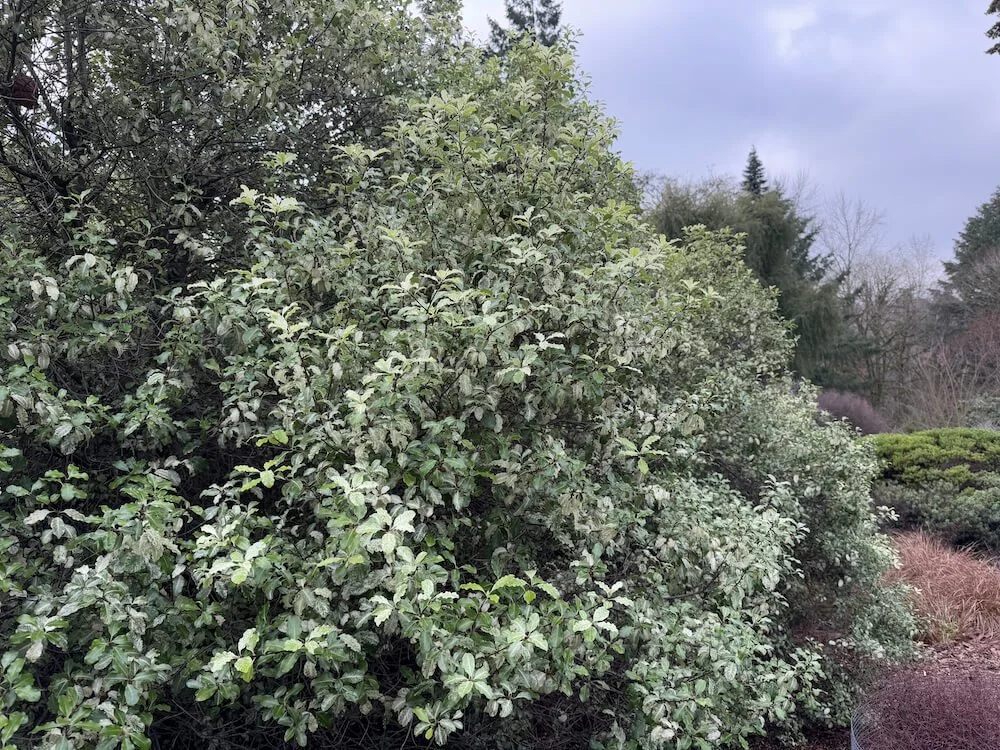
This cultivar traces its heritage to Pittosporum tenuifolium native to New Zealand. In gardens it provides evergreen structure for borders, hedges, and sheltered plantings where the mottled foliage adds year-round color and texture.

DESCRIPTION
Pittosporum tenuifolium 'Irene Patterson' produces small, dark maroon to near-black flowers in late spring, the blooms releasing a light honey fragrance as they open along the slender stems. The blossoms appear among variegated leaves marked with irregular creamy white and soft green mottling across the surface. The oval foliage has gently wavy margins and is carried on dark stems, creating a layered pattern of light and shadow throughout the plant.

This cultivar traces its heritage to Pittosporum tenuifolium native to New Zealand. In gardens it provides evergreen structure for borders, hedges, and sheltered plantings where the mottled foliage adds year-round color and texture.

 
  • Family: Pittosporaceae
    Height: 8 to 12 feet
    Width: 6 to 10 feet
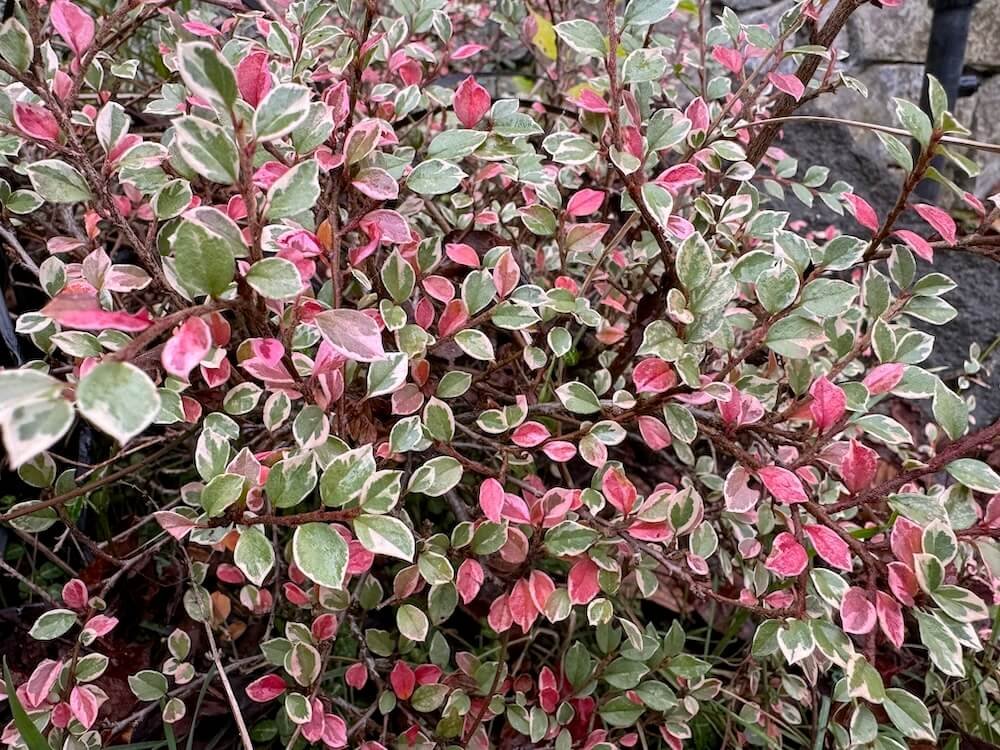
    Foliage color: Small glossy oval leaves marbled green and creamy white often flushed pink in cooler weather
    Flower color: Small deep purple to reddish purple flowers often inconspicuous but lightly fragrant
    Bloom time: Late spring; often May to June
    Light requirements: Full sun to partial shade
    Water requirements: Average well drained soil with moderate moisture during the growing season
    Maintenance: Low; prune lightly to shape and maintain a dense compact habit and remove reverted green shoots
    Growing zone: USDA zones 7 to 10
    Wildlife attractors: Bees and other pollinating insects

    This plant can be seen at the Washington Park Arboretum.
    Print Information

    Buy Plants