Vaccinium nummularia | Himalayan Whortleberry

$0.00

DESCRIPTION
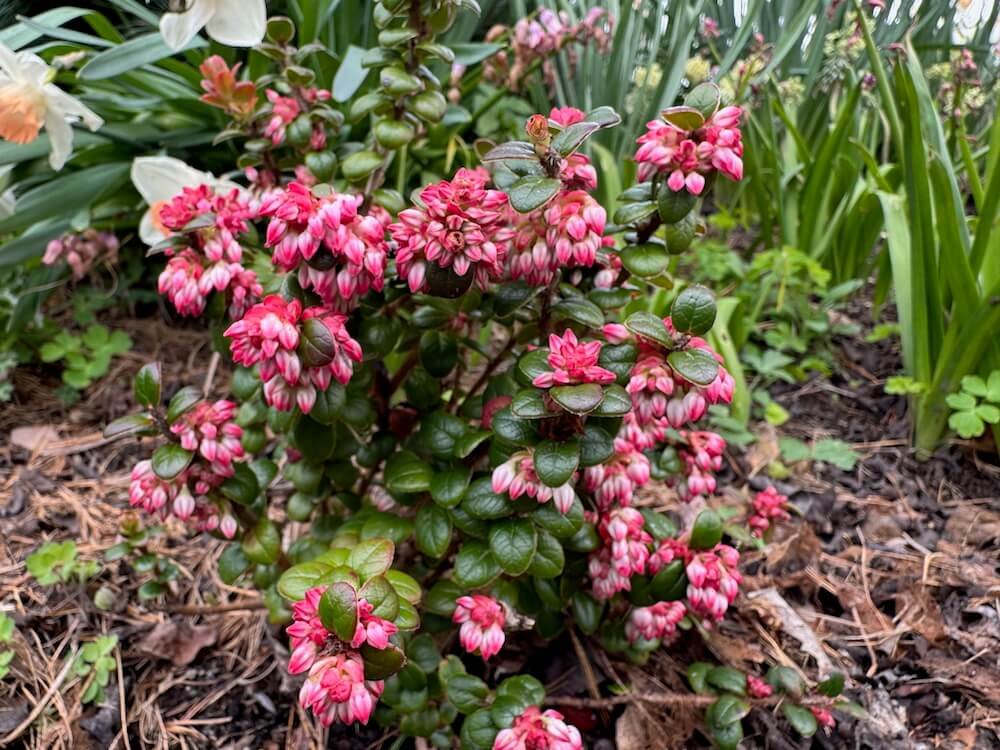
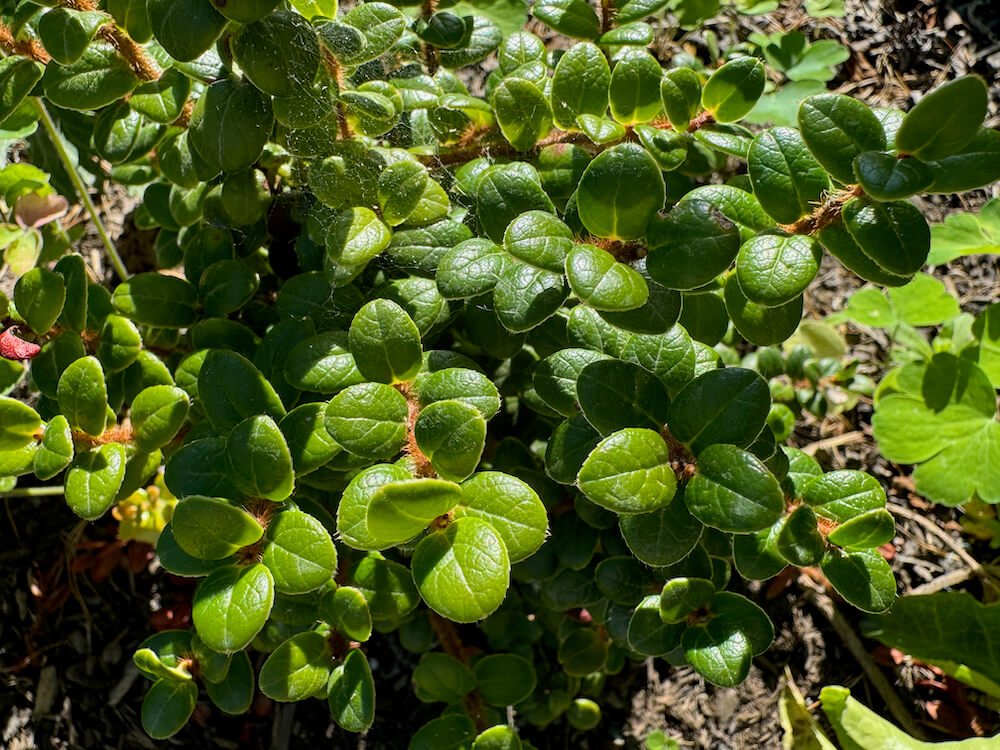
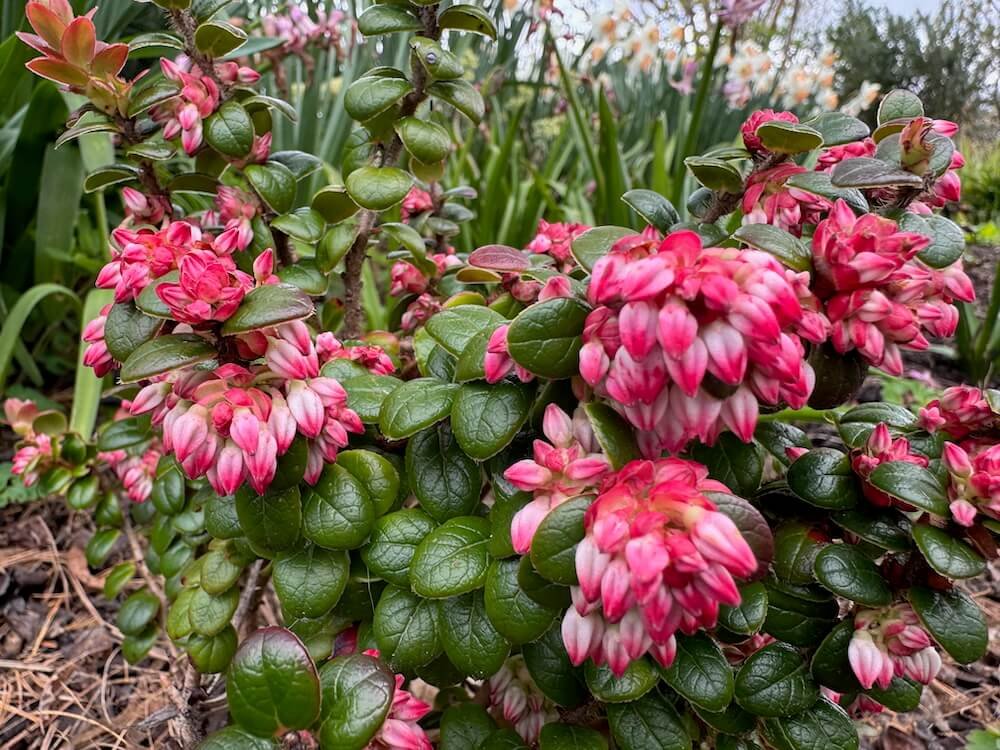
Vaccinium nummularia produces small, urn-shaped pink to reddish flowers in spring, nestled closely along the stems and followed by dark, berry-like fruit. Rounded, coin-shaped leaves are small, glossy, and deep green, forming a dense, trailing mat that hugs the ground and creates a finely textured surface. The foliage remains neat and closely spaced, with flowers appearing just above the leaves and blending into the overall form.

Native to the Himalayan region, this species reflects adaptation to cool, mountainous environments and low-growing habitats. It is well suited to rock gardens, alpine plantings, and along paths, where its compact growth and evergreen foliage provide structure and seasonal interest.

DESCRIPTION
Vaccinium nummularia produces small, urn-shaped pink to reddish flowers in spring, nestled closely along the stems and followed by dark, berry-like fruit. Rounded, coin-shaped leaves are small, glossy, and deep green, forming a dense, trailing mat that hugs the ground and creates a finely textured surface. The foliage remains neat and closely spaced, with flowers appearing just above the leaves and blending into the overall form.

Native to the Himalayan region, this species reflects adaptation to cool, mountainous environments and low-growing habitats. It is well suited to rock gardens, alpine plantings, and along paths, where its compact growth and evergreen foliage provide structure and seasonal interest.

 
  • Family: Ericaceae
    Height: 12 in to 24 in
    Width: 24 in to 36 in
    Foliage color: Small rounded deep green leaves with a smooth surface and dense compact habit
    Flower color: Tiny urn shaped white to pink flowers borne singly or in small clusters
    Bloom time: Late spring to early summer
    Light requirements: Partial shade to full sun in cooler climates
    Water requirements: Moderate to high; prefers consistently moist acidic soil
    Maintenance: Low; prune lightly after fruiting to shape and remove weak or crowded growth
    Growing zone: USDA zones 7 to 9
    Wildlife attractors: Pollinators attracted to nectar rich flowers and birds attracted to berries

    This plant can be seen at the Bellevue Botanical Garden.
    Print Information

    Buy Plants