
Spring Blooming Groundcovers

Primula vulgaris 'Belarina Lively Lilac'
Deciduous groundcover with fully double white blooms brushed and edged in lilac and purple. Forms a compact mounded habit and grows 4 to 6 inches tall. Ideal for borders, containers, and woodland garden displays. Zones: 4 to 8.
Spring blooming groundcovers bring fresh color and seasonal interest to the garden, spreading across the landscape with carpets of flowers as the growing season begins. Their blooms range from soft whites and pinks to shades of purple, blue, and yellow, often appearing above foliage that helps fill spaces between shrubs, pathways, and borders. These plants add texture and continuity while creating a space that feels bright, inviting, and full throughout the changing season, helping transition the garden from early spring into the abundance of late spring and beyond.
BUGLEWEED (Ajuga)
01

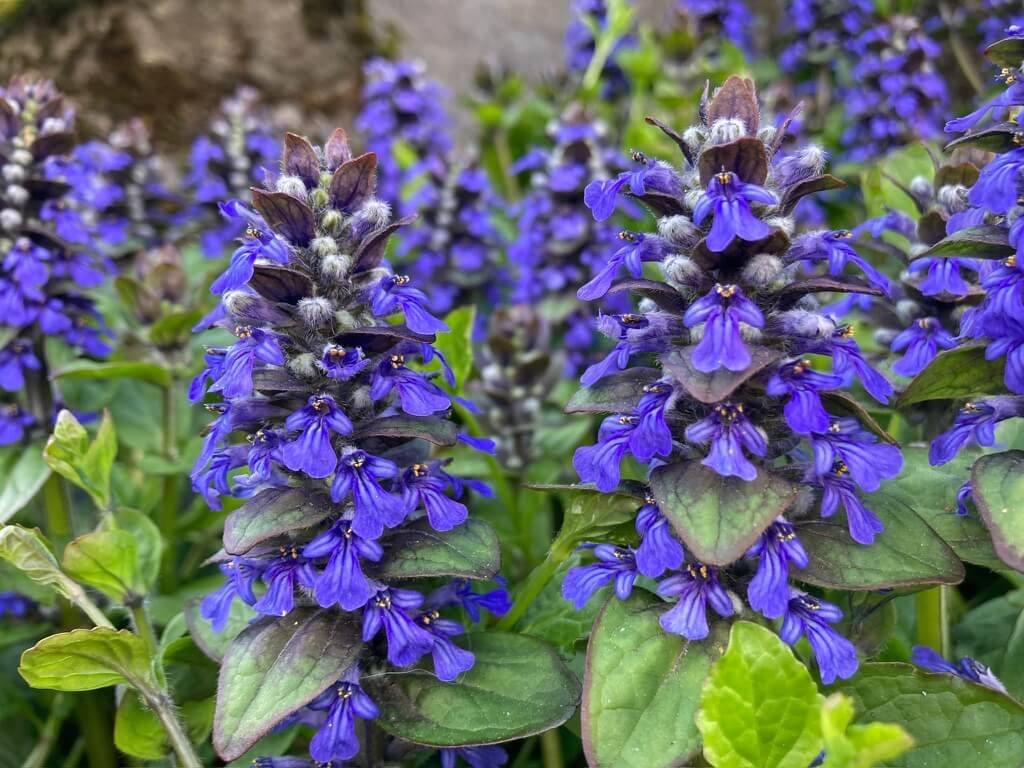
Bugleweed spreads quickly through the spring garden, forming dense carpets of foliage topped with upright flower spikes that bring color early in the season. Ajuga reptans (shown here) is grown for its blue to violet flower spikes that rise above low-growing foliage, creating a broad display across borders and shaded planting areas. Its spreading habit help maintain seasonal interest while adding texture to mixed plantings.
A useful addition to woodland gardens, borders, or groundcover plantings, these perennials provide color and texture as spring progresses. Ajuga reptans ‘Burgundy Glow’ offers variegated foliage in shades of green, cream, and burgundy, while Ajuga reptans ‘Mahogany’ adds deep bronze-purple leaves for stronger contrast throughout the season. Together, these selections provide colorful foliage, spring bloom, and a refined presence in the garden.
CORAL BELLS (Heuchera)
02
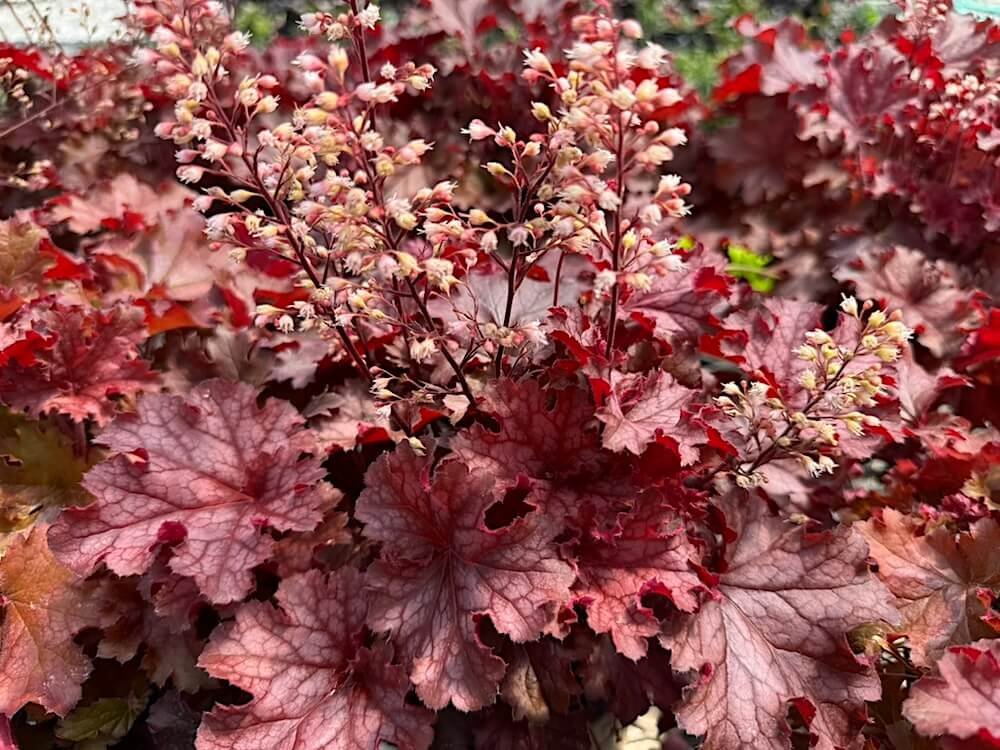
Coral bells create lasting interest through colorful foliage that remains prominent well beyond the spring flowering season, bringing texture and contrast to garden spaces. Heuchera ‘Red Lightning’ is grown for its chartreuse leaves marked with bold red veining that create a dramatic display across low mounds of foliage. Its dense habit and distinctive leaf coloration help maintain seasonal interest to mixed plantings.
A valuable addition to borders, woodland gardens, or groundcover plantings, these perennials provide color and texture as spring progresses. Heuchera ‘Ruby Tuesday’ (shown here) offers rich ruby-red foliage, while Heuchera ‘Spellbound’ adds silvery-purple leaves with darker veining and changing seasonal tones for stronger contrast throughout the season. Together, these selections provide colorful foliage, subtle spring bloom, and a refined presence in the garden.
Related: Explore All Heucheras ➔
ANEMONE
03
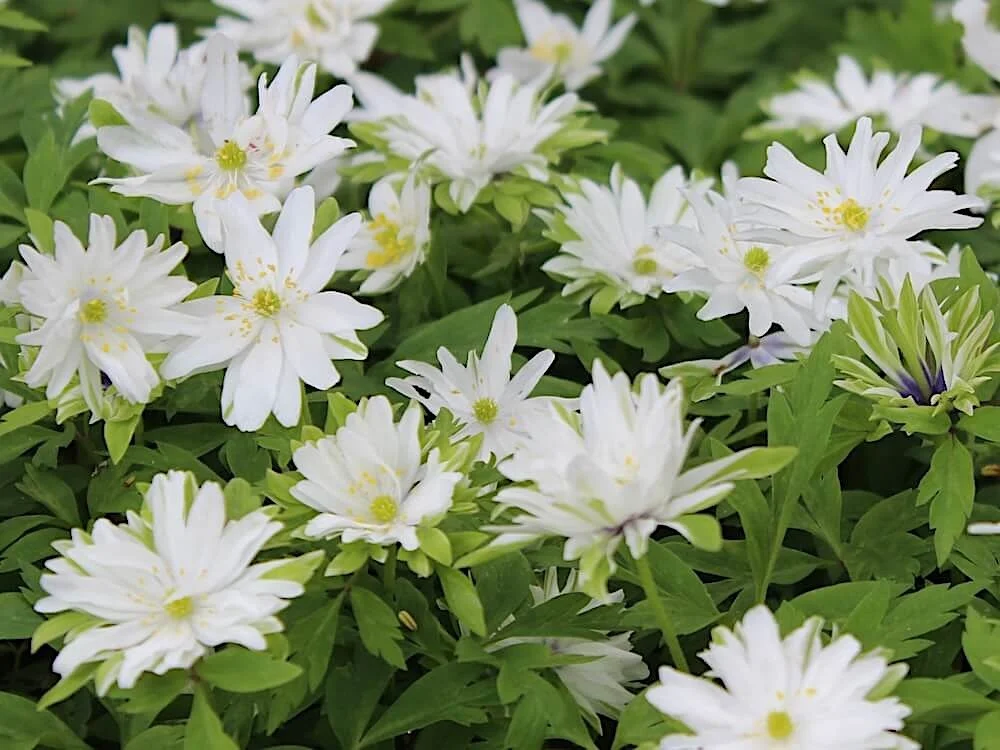
Spring blooming anemones spread through the garden with low carpets of foliage and delicate flowers that appear early in the season beneath trees and among emerging perennials. Anemone nemorosa ‘Robinsoniana’ is grown for its soft lavender-blue flowers that create a gentle display across woodland plantings and shaded borders. Its spreading habit and early bloom period help maintain seasonal interest while adding texture and coverage to mixed plantings.
A charming addition to woodland gardens, borders, or groundcover plantings, these perennials provide color and texture as spring progresses. Anemone nemorosa ‘Bracteata Plena’ (shown here) offers fully double white flowers with layered petals, while Anemone nemorosa ‘Green Dragon’ adds unusual green-tipped flowers with distinctive foliage detail. Together, these selections provide varied flower forms, early spring color, and a refined presence in the garden.
CROCUS
04
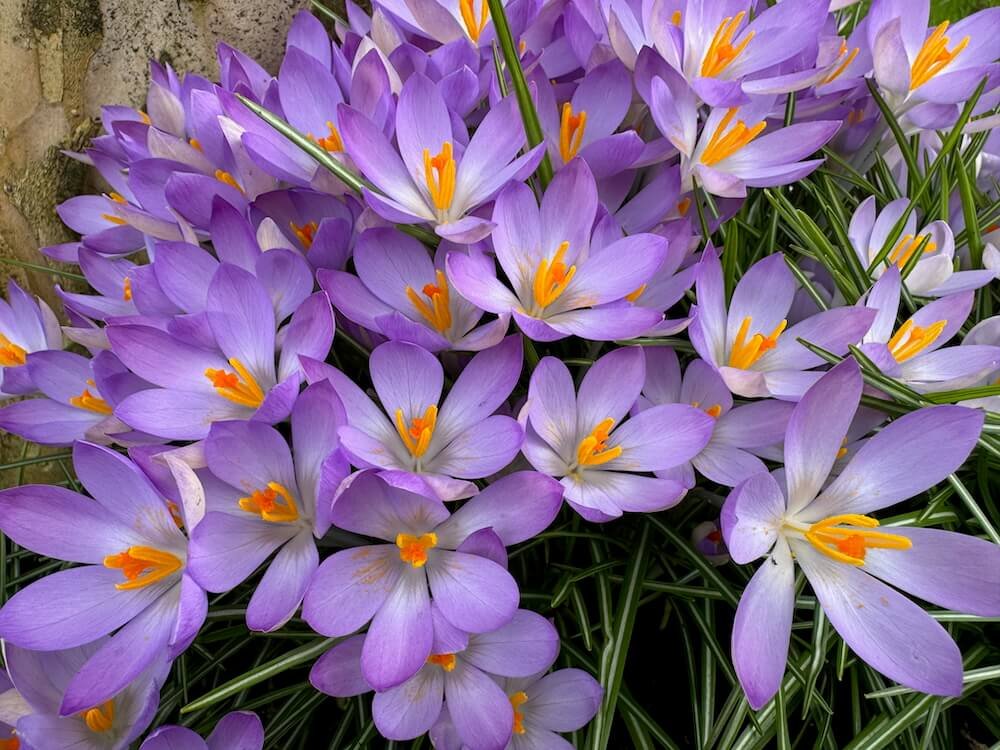
Crocuses emerge among the earliest flowers of the season, bringing bright color and low-growing interest to the spring garden after winter fades. Crocus tommasinianus ‘Whitewell Purple’ (shown here) is grown for its rich violet-purple blooms that open above narrow grassy foliage, creating a broad display across borders and naturalized spaces. Its spreading habit and early flowering help maintain seasonal interest while adding texture and coverage to mixed plantings.
A pretty addition to rock gardens, borders, or groundcover plantings, these perennials provide color and texture as spring progresses. Crocus vernus ‘Jeanne d’Arc’ offers crisp white flowers, while Crocus vernus ‘Pickwick’ adds large silvery-lavender blooms marked with distinctive purple striping for stronger contrast throughout the season. Together, these selections provide early spring bloom and varied flower color.
BERGENIA
05
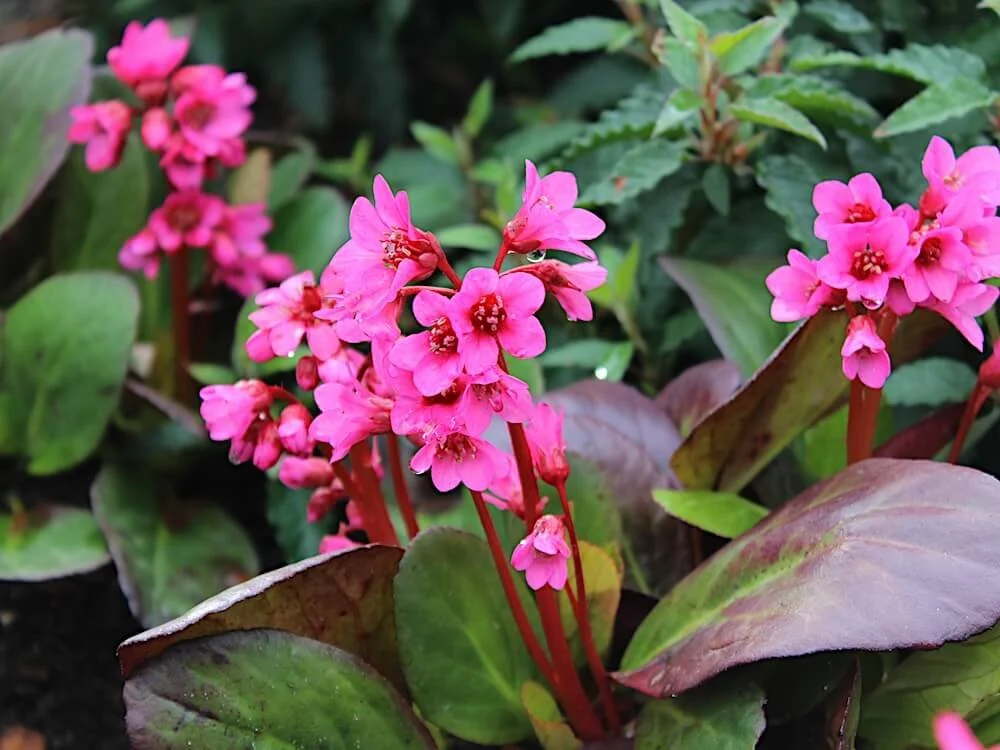
Bergenias provide broad evergreen foliage and early flowers that create bold texture and seasonal color across the spring garden. Bergenia ‘Flirt’ (shown here) is grown for its bright pink flower clusters that rise above compact mounds of rounded green leaves, creating a colorful display early in the season. Its dense habit and substantial foliage help maintain seasonal interest while adding texture and coverage to mixed plantings.
A dependable addition to borders, woodland gardens, or groundcover plantings, these perennials provide color and texture as spring progresses. Bergenia ‘Bressingham White’ offers clean white flower clusters, Bergenia ‘Winter Glow’ brings rosy-pink blooms and foliage that develops rich burgundy tones in cooler weather while Bergenia cordifolia ‘Tubby Andrews’ adds cream-edged variegated foliage with soft pink blooms for stronger contrast throughout the season. Together, these selections provide evergreen structure, spring bloom, and a refined presence in the garden.
PRIMROSE (Primula)
06

Primroses brighten the spring garden with low clusters of flowers that emerge early in the season, bringing color to borders and shaded spaces. Primula sieboldii (shown here) is grown for its delicate pink to lavender flowers held above soft green foliage, creating a broad display beneath trees and among woodland plantings. Its clumping habit and early flowering period help maintain seasonal interest to mixed plantings.
A colorful addition to woodland gardens, borders, or groundcover plantings, these perennials provide color and texture as spring progresses. Primula elatior offers soft yellow flowers with deeper centers, while Primula vulgaris ‘Prima Bella Creme’ adds creamy pale yellow blooms paired with dark foliage for stronger contrast throughout the season. Together, these selections provide early spring bloom, soft texture, and a refined presence in the garden.
CREEPING PHLOX (Phlox)
07
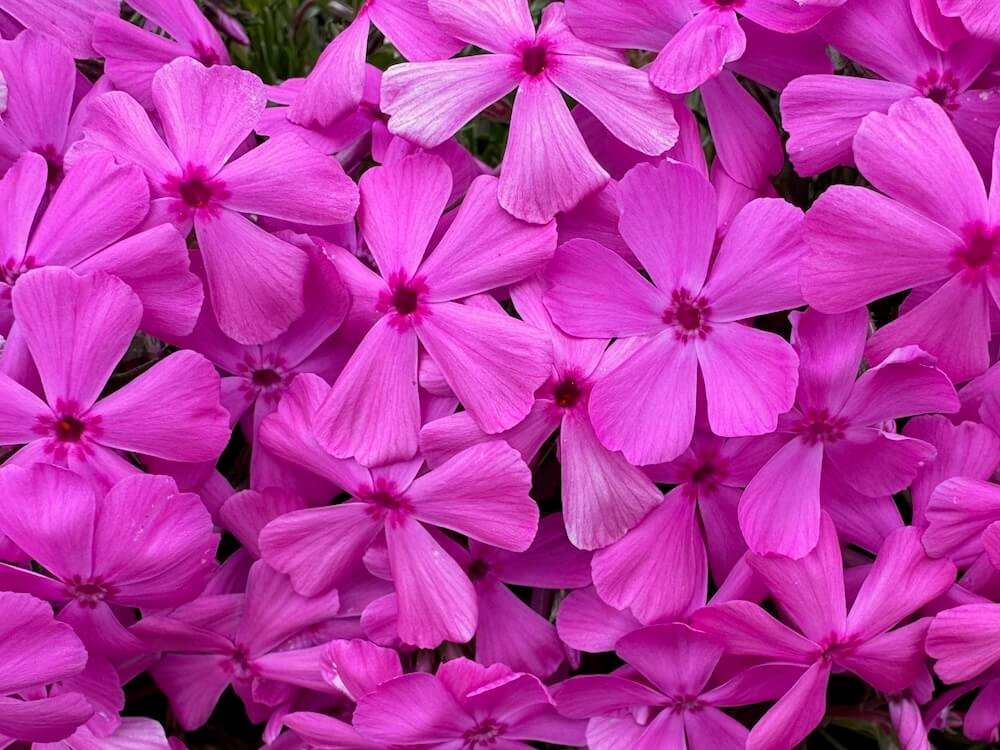
Creeping phlox blankets the spring garden with dense carpets of foliage and abundant flowers that create broad swaths of color early in the season. Phlox subulata ‘Ruby Riot’ (shown here) is grown for its rich rosy-red blooms that nearly cover the evergreen foliage, creating a vibrant display across slopes, borders, and rock gardens. Its spreading habit and heavy flowering help maintain seasonal interest while adding texture and coverage to mixed plantings.
A colorful addition to rock gardens, borders, or groundcover plantings, these perennials provide color and texture as spring progresses. Phlox subulata ‘Purple Beauty’ offers soft violet-purple flowers, while Phlox subulata ‘Spring Scarlet’ adds vivid scarlet-red blooms for stronger contrast throughout the season. Together, these selections provide abundant spring bloom, colorful flower displays, and a refined presence in the garden.
CRANESBILL (Geranium)
08
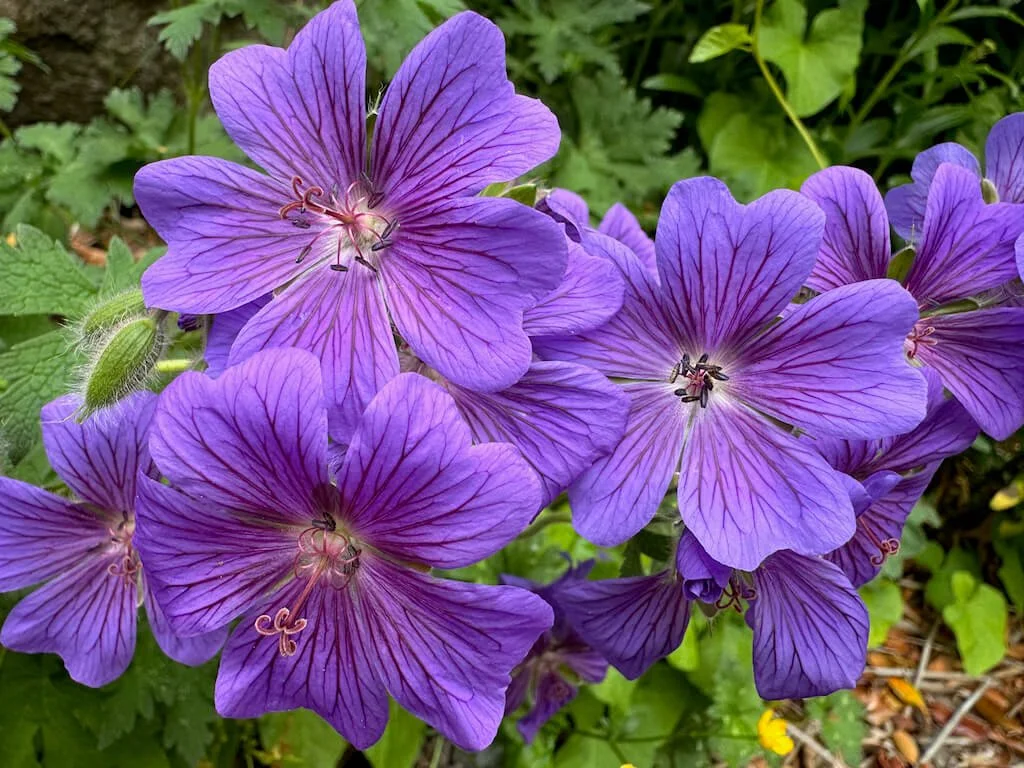
Hardy geraniums spread gently through the spring garden, forming low mounds of foliage covered with flowers that provide long-lasting seasonal color. Geranium x magnificum (shown here) is grown for its large violet-blue flowers with darker veining that create a broad display above deeply divided green foliage. Its mounding habit and generous flowering period help maintain seasonal interest while adding texture and coverage to mixed plantings.
A useful addition to borders, woodland gardens, or groundcover plantings, these perennials provide color and texture as spring progresses. Geranium x cantabrigiense ‘Biokovo’ offers pale pink flowers that soften toward white, while Geranium sanguineum ‘Max Frei’ adds vivid rosy-magenta blooms for stronger contrast throughout the season. Together, these selections provide extended spring bloom, soft texture, and a refined presence in the garden.
MANZANITA (Arctostaphylos)
09
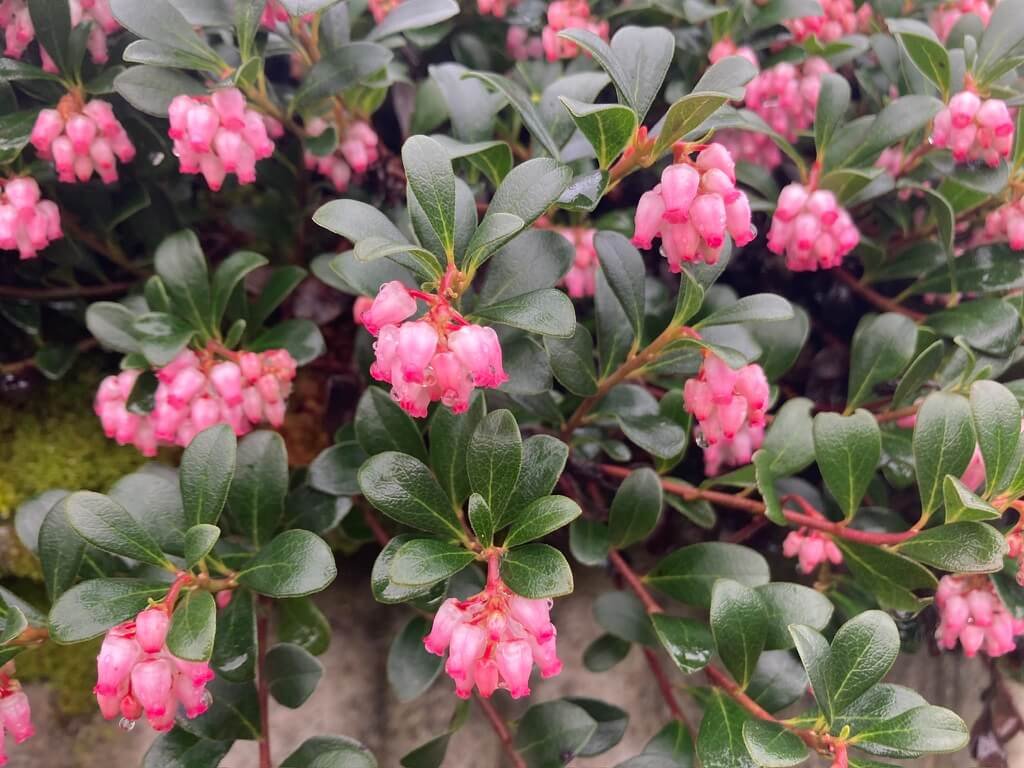
Arctostaphylos groundcovers create broad evergreen mats that bring structure and seasonal interest while producing delicate flowers in early spring. Arctostaphylos uva-ursi ‘Vancouver Jade’ (shown here) is grown for its dense, glossy green foliage and clusters of soft pink urn-shaped flowers that appear above trailing stems. Its spreading habit and year-round coverage help maintain seasonal interest while adding texture and coverage to mixed plantings.
A valuable addition to slopes, woodland edges, or groundcover plantings, these shrubs provide color and texture as spring progresses. Arctostaphylos ‘Pacific Mist’ offers silvery blue-green foliage with a taller, spreading habit that forms broad carpets across the landscape. Together, these selections provide evergreen structure, early spring bloom, and a refined presence in the garden.
GENTIAN (Gentiana)
10
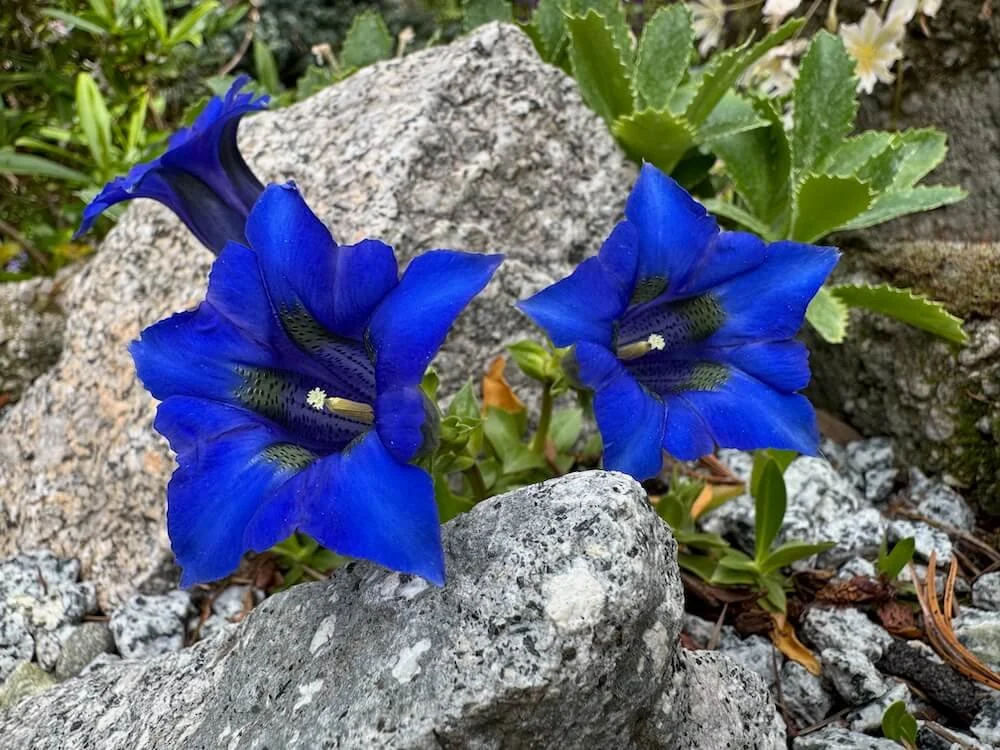
Gentians bring intense jewel-toned color into the garden during spring, producing oversized trumpet-shaped flowers close to the ground above compact evergreen foliage. Gentiana acaulis (shown here) is grown for its vivid cobalt-blue blooms marked with olive-green spotting inside the throats, opening above low mats of glossy deep green leaves in cool weather. The saturated flower color stands out dramatically against rocks, gravel, and emerging spring foliage while creating a concentrated burst of color.
The low alpine habit allows gentians to settle naturally into rock gardens, troughs, and sharply drained borders where smaller plants can be appreciated up close. Thick evergreen foliage forms tight cushions that remain attractive after flowering, helping maintain texture through the growing season. Their oversized flowers and compact growth create a striking contrast between delicate alpine scale and bold spring color.
POACHED EGG PLANT (Limnanthes)
11
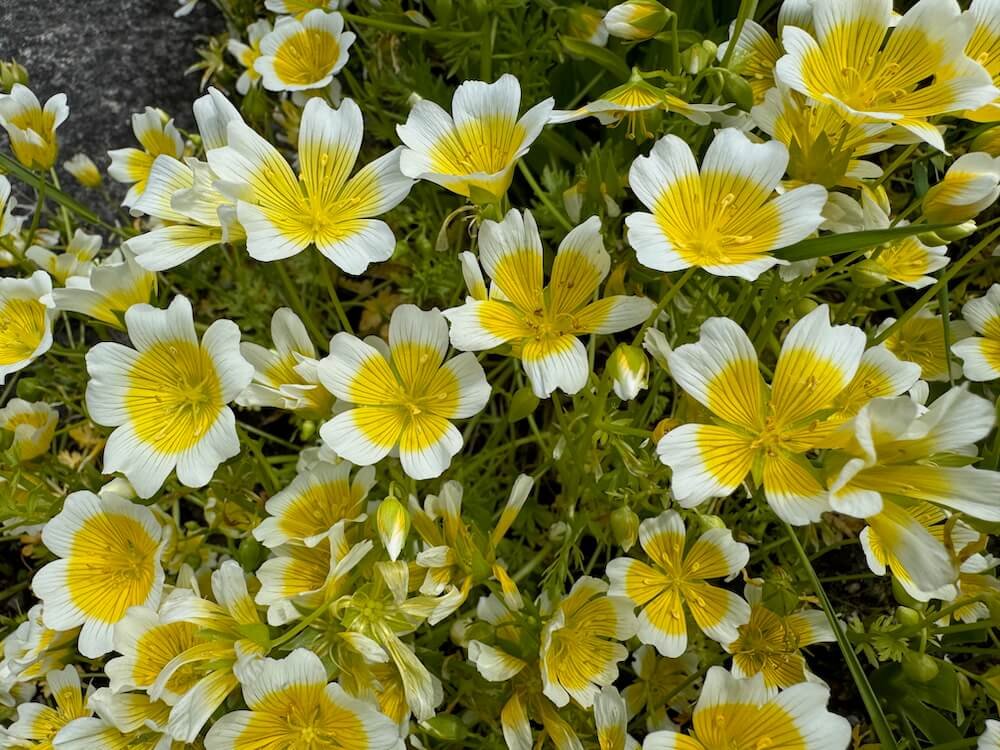
Poached egg plants spread across the garden with cheerful cup-shaped flowers that brighten the landscape during spring and early summer. Limnanthes douglasii (shown here) is grown for its low mounding habit and distinctive white flowers ringed with bright yellow centers that resemble miniature fried eggs scattered across the foliage. The blooms appear in abundance above finely divided light green leaves, creating a lively carpet of color.
The airy foliage and freely flowering habit give this groundcover a lighter more informal character than denser spring bloomers. Its low spreading growth works especially well among bulbs, rocks, and cottage-style plantings where the flowers can drift naturally between neighboring plants. As the season warms, the masses of white and yellow blooms help introduce brightness and movement close to the ground.
PERIWINKLE (Vinca)
12
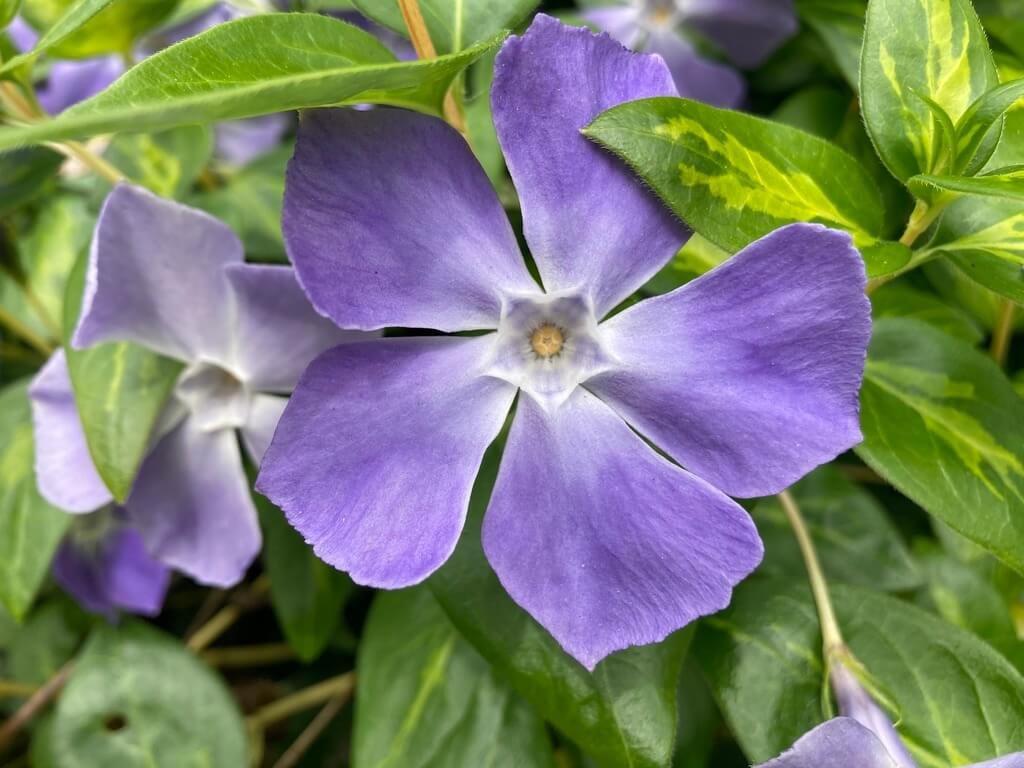
Vinca spreads steadily through the spring garden, forming evergreen mats of foliage accented by flowers that bring color early in the season. Vinca major ‘Maculata’ (shown here) is grown for its glossy green leaves marked with golden-yellow centers and soft violet-blue flowers that appear above trailing stems. Its vigorous habit and year-round foliage help maintain seasonal interest while adding texture and coverage to mixed plantings.
A practical addition to woodland gardens, slopes, or groundcover plantings, these perennials provide color and texture as spring progresses. Vinca minor ‘Bowles’ offers rich violet-blue flowers with a more compact, dense habit that creates a fuller appearance throughout the season. Together, these selections provide evergreen structure, spring bloom, and a refined presence in the garden.
LITHODORA
13
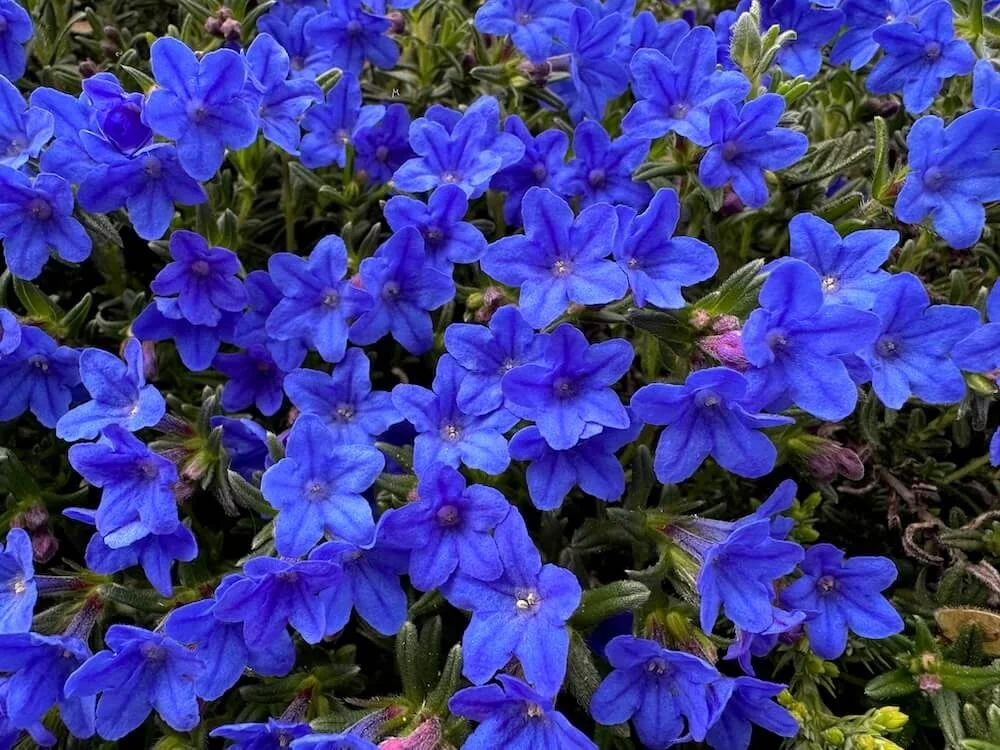
Lithodoras spread across the garden with deep blue star-shaped flowers that create intense spring color above low evergreen foliage. Lithodora diffusa ‘Grace Ward’ (shown here) is grown for its vivid gentian-blue blooms that cover the plant in spring and often continue appearing sporadically into summer. The narrow dark green leaves form dense trailing mats that spill naturally over rocks, retaining walls, and the edges of raised beds.
The saturated flower color creates a striking contrast against gravel, stone, and silver foliage plants in alpine and Mediterranean-style gardens. Its low cascading habit helps soften hard edges while remaining close to the ground, allowing the brilliant blue flowers to appear almost carpet-like during peak bloom. Even outside the flowering season, the evergreen foliage continues adding fine texture and structure to sunny well-drained plantings.
SPURGE (Euphorbia)
14
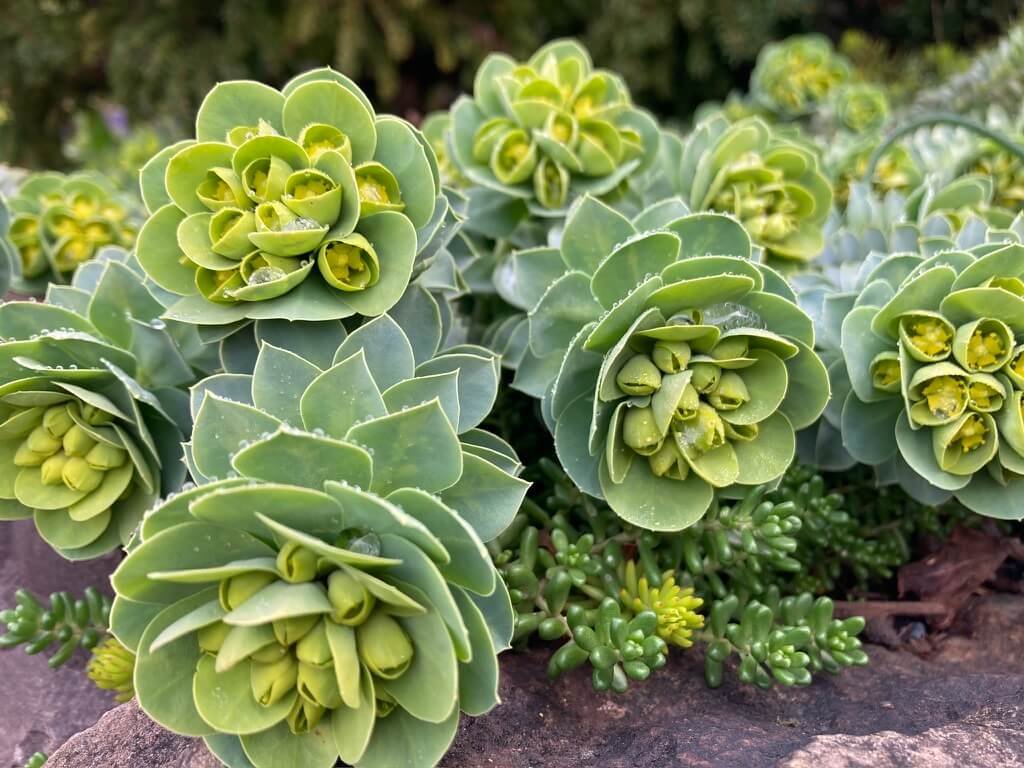
Spurge groundcovers bring sculptural foliage and luminous spring color into the garden, creating bold texture close to the ground as the season begins warming. Euphorbia myrsinites (shown here) is grown for its trailing blue-gray stems densely covered with fleshy spiral-arranged leaves and topped with chartreuse flower bracts in spring. The geometric foliage pattern gives the plant a striking architectural appearance that stands out clearly among softer alpine and rock garden companions.
Foliage color shifts add another layer of seasonal interest across the planting surface. Euphorbia cyparissias ‘Fens Ruby’ develops fine needle-like foliage flushed with burgundy and bronze tones beneath glowing yellow-green flower bracts during spring. Its softer feathery texture contrasts strongly with stone, gravel, and broader-leaved groundcovers while helping create movement and color variation in sunny dry borders.
CYCLAMEN
15
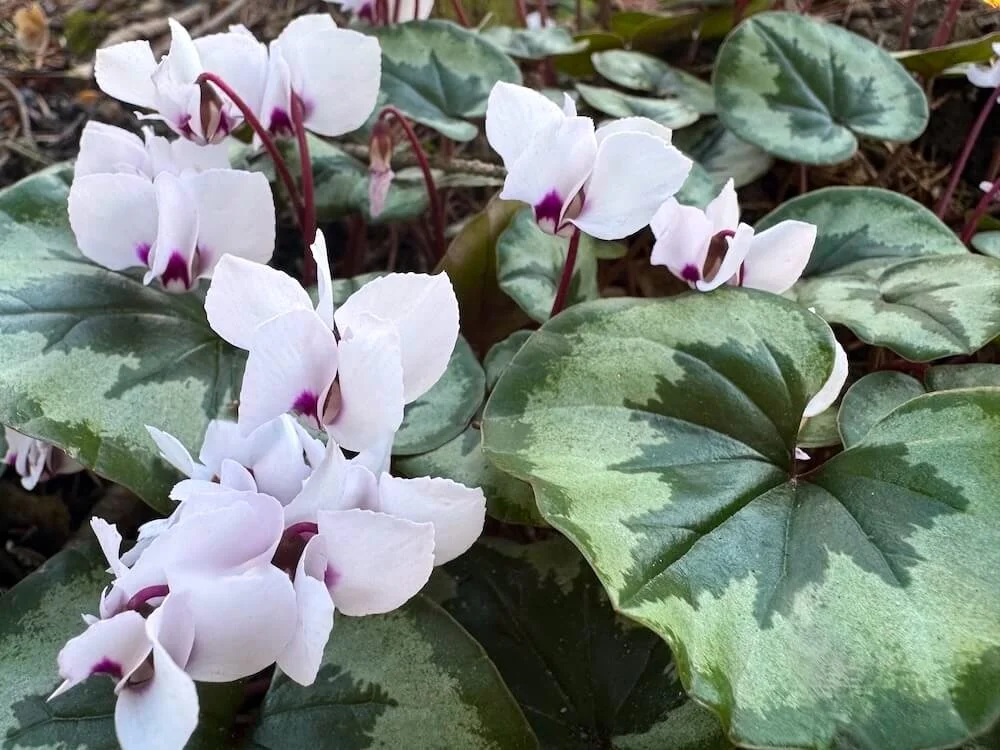
Cyclamen emerge early in the season with delicate flowers and patterned foliage that create low-growing interest across the spring garden. Cyclamen coum is grown for its rounded leaves and upswept pink flowers that appear close to the ground, creating a colorful display beneath trees and among woodland plantings. Its spreading habit and early flowering help maintain seasonal interest while adding texture and coverage to mixed plantings.
A charming addition to woodland gardens, borders, or groundcover plantings, these perennials provide color and texture as spring progresses. Cyclamen coum subsp. coum f. pallidum ‘Album’ (shown here) offers pure white flowers, while Cyclamen coum Pewter Group adds silvery pewter-patterned foliage paired with lavender blooms for stronger contrast throughout the season. Together, these selections provide early spring bloom, distinctive foliage, and a refined presence in the garden.
ROCK CRESS (Aubretia)
16
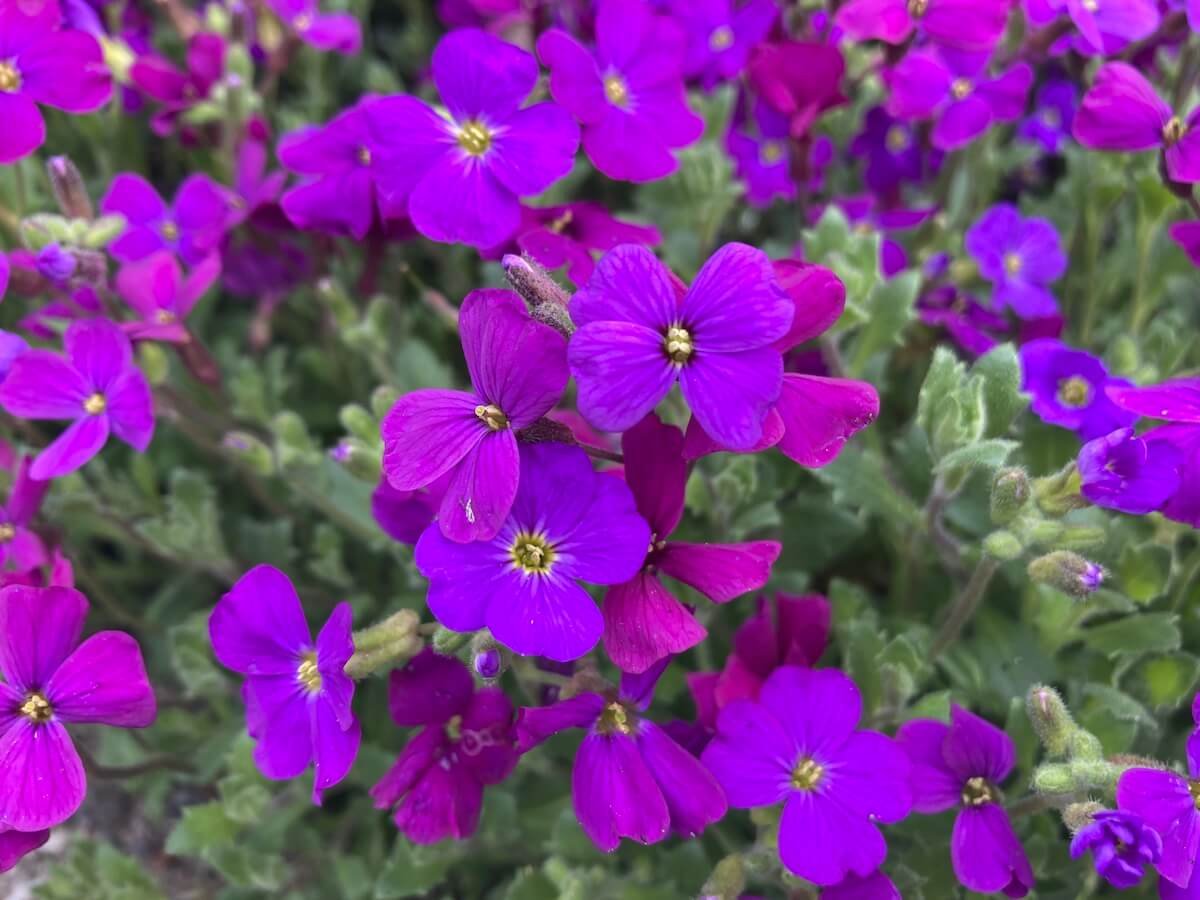
Rock cress blankets the spring garden with dense mats of foliage and masses of flowers that brighten borders early in the season. Aubrieta ‘Axcent Light Blue’ is grown for its soft lavender-blue blooms that nearly cover the foliage, creating a broad display across walls, slopes, and garden edges. Its spreading habit and heavy flowering help maintain seasonal interest while adding texture and coverage to mixed plantings.
A charming addition to rock gardens, borders, or groundcover plantings, these perennials provide color and texture as spring progresses. Aubrieta deltoidea (shown here) offers vivid purple to violet flowers held above low-growing evergreen foliage, creating a more natural appearance throughout the season. Together, these selections provide abundant spring bloom, colorful flower displays, and a refined presence in the garden.
PHYLLIOPSIS
17
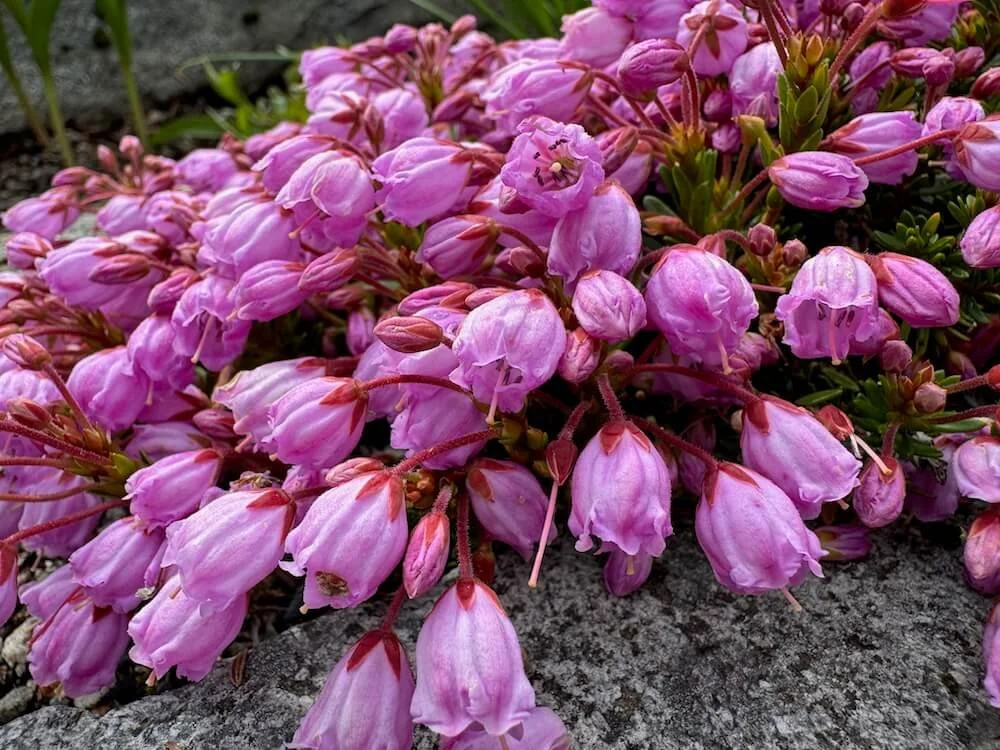
Phylliopsis forms low evergreen mats covered in soft bell-shaped flowers during spring, bringing delicate color and fine texture to alpine gardens and woodland edges. x Phylliopsis hillieri ‘Sugar Plum’ (shown here) is grown for its dense needle-like foliage and clusters of pink urn-shaped flowers that appear along the stems in early spring. The blooms create a subtle haze of color across the foliage while softening the appearance of rocks, gravel, and sharply drained planting areas.
Its compact spreading habit allows this groundcover to settle neatly between stones and along the fronts of borders without appearing coarse or heavy. The evergreen foliage maintains a refined texture throughout the year, creating contrast against broader-leaved woodland plants and darker conifers nearby. During flowering season, the pastel blooms and fine foliage help introduce a quieter more understated layer of spring color close to the ground.
NAVELWORT (Omphalodes)
18
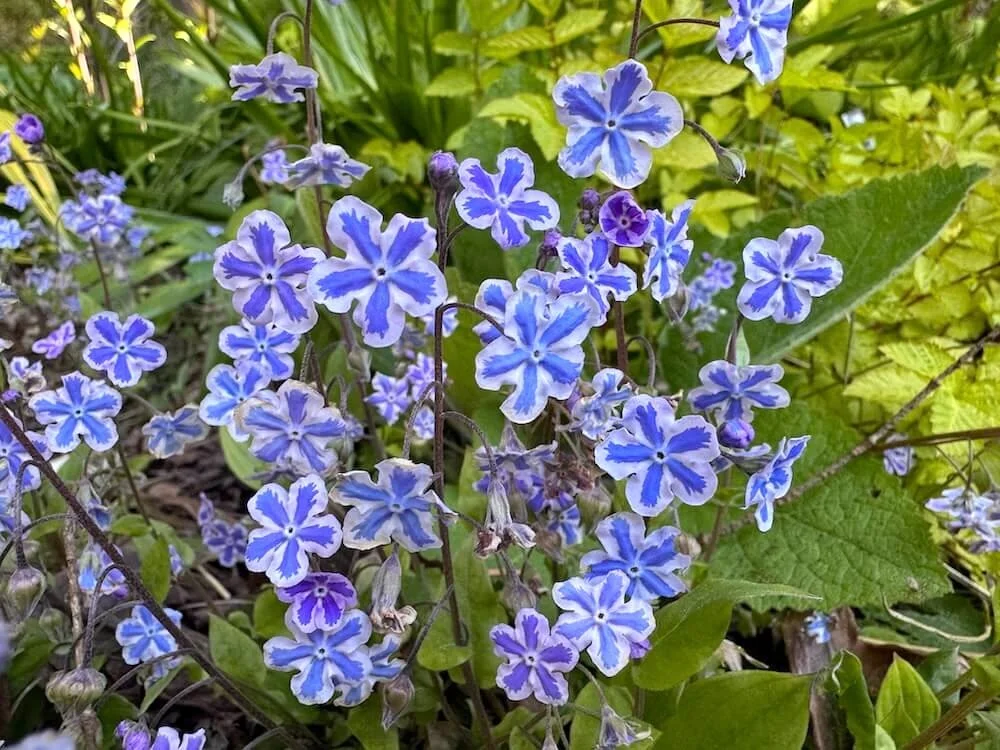
Navelwort spreads gently through the spring garden, forming low carpets of foliage covered with small flowers that brighten shaded spaces early in the season. Omphalodes cappadocica ‘Starry Eyes’ (shown here) is grown for its blue flowers edged in white that create a broad display above soft green foliage beneath trees and along borders. Its spreading habit and long-lasting bloom period help maintain seasonal interest while adding texture and coverage to mixed plantings.
A delightful addition to woodland gardens, borders, or groundcover plantings, these perennials provide color and texture as spring progresses. Omphalodes verna offers bright forget-me-not blue flowers that spread naturally through shaded garden areas for stronger seasonal impact. Together, these selections provide early spring bloom, soft texture, and a refined presence in the garden.
DEADNETTLE (Lamium)
19

Deadnettles spread quickly across the spring garden, forming colorful mats of foliage topped with flowers that brighten shaded spaces early in the season. Lamium maculatum ‘Orchid Frost’ (shown here) is grown for its silver foliage edged in green and soft lavender-pink flowers that create a broad display beneath trees and along borders. Its trailing habit and long-lasting foliage help maintain seasonal interest while adding texture and coverage to mixed plantings.
A valuable addition to woodland gardens, borders, or groundcover plantings, these perennials provide color and texture as spring progresses. Lamium maculatum ‘Beacon Silver’ offers bright silver foliage with pale pink flowers, while Lamium maculatum ‘Anne Greenaway’ adds variegated green and gold foliage paired with rosy-purple blooms for stronger contrast throughout the season. Together, these selections provide colorful foliage, spring bloom, and a refined presence in the garden.
BARRENWORT (Epimedium)
20
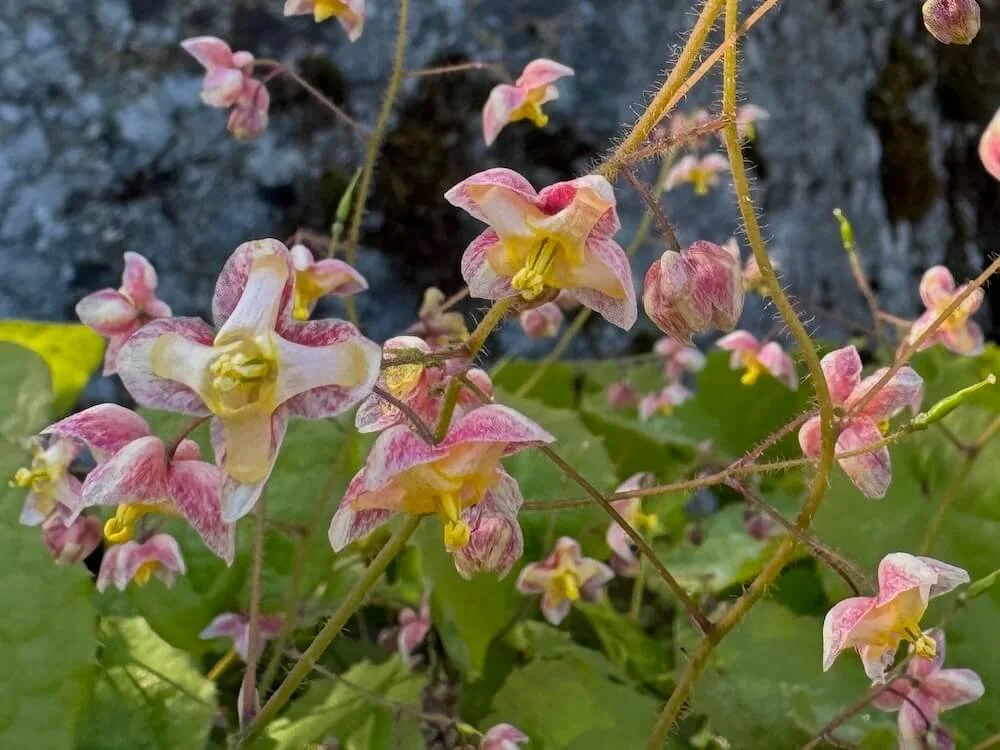
Barrenwort forms graceful carpets of foliage and delicate spring flowers that bring texture and seasonal color to shaded garden spaces. Epimedium x cantabrigiense ‘Red Form’ (shown here) is grown for its nodding flowers in soft rose-pink and creamy tones with yellow centers, creating a light display beneath trees and along woodland borders. Its spreading habit and changing foliage tones help maintain seasonal interest while adding texture and coverage to mixed plantings.
A dependable addition to woodland gardens, borders, or groundcover plantings, these perennials provide color and texture as spring progresses. Epimedium x rubrum offers red and yellow flowers with bronzy spring foliage, while Epimedium grandiflorum ‘Queen Esta’ adds larger soft pink blooms with elegant spurred petals for stronger contrast throughout the season. Together, these selections provide early spring bloom, distinctive foliage, and a refined presence in the garden.