
COMPLETE GUIDE
TO RHODODENDRONS
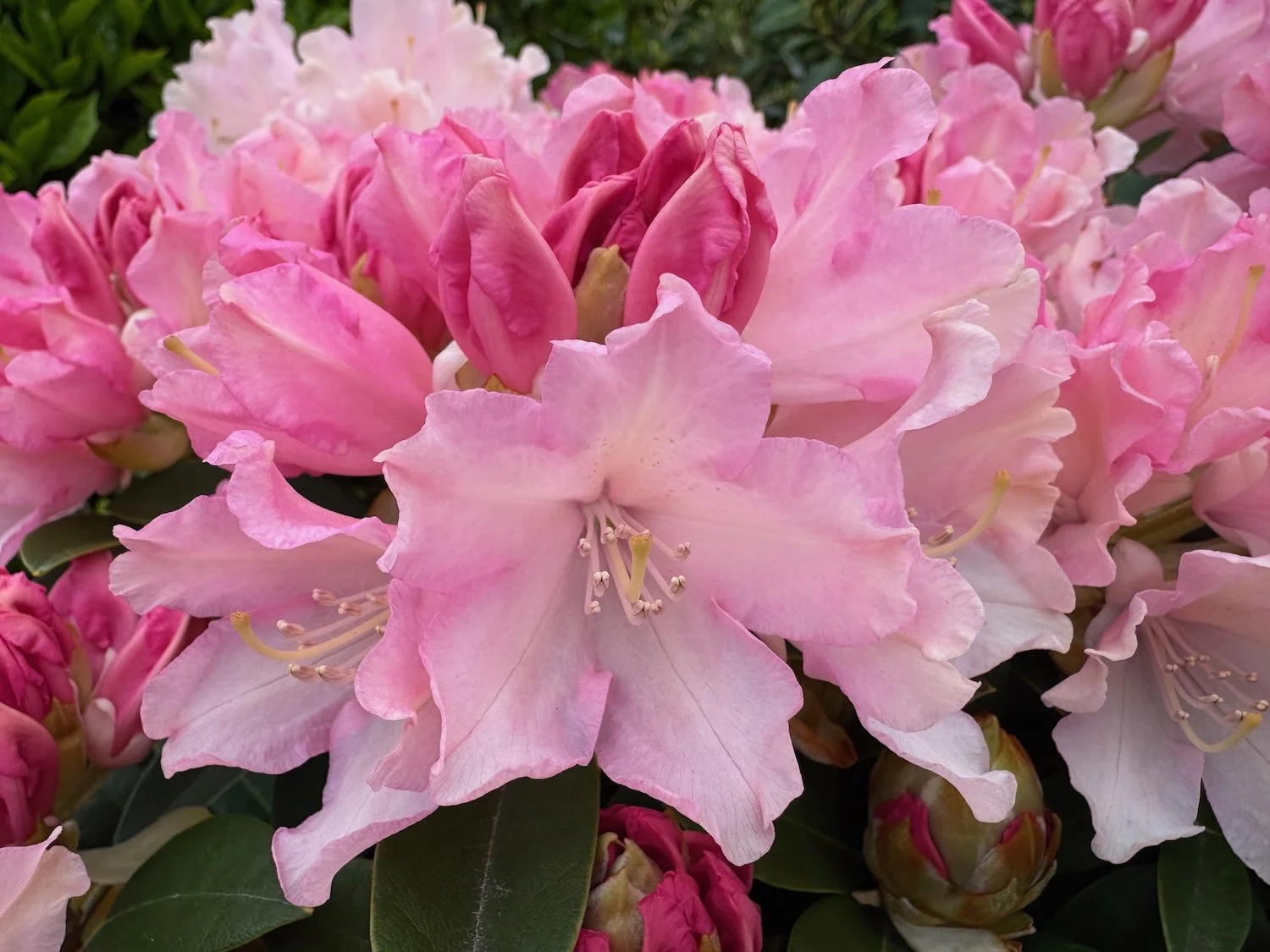
Rhododendrons bring structure and seasonal color to the garden through a diversity of forms, from low mounding varieties to evergreen shrubs anchoring woodland landscapes year-round. Their blooms range from soft whites and blush pinks to vivid reds, purples, oranges, and yellows, often appearing in large trusses that create displays in spring. Evergreen foliage adds lasting presence even when plants are not in flower, with some varieties valued for leaf texture, indumentum, or colorful new growth as much as their blossoms.
With thousands of species and cultivars available, rhododendrons serve many roles in the landscape, including foundation plantings, screening, containers, and small-space gardens. Some are prized for fragrance, others for exceptional cold hardiness or unusual flowers, while compact alpine forms suit rock gardens and tighter spaces. A complete guide explores the range of rhododendrons available, along with planting, care, bloom timing, and standout varieties to help gardeners choose selections suited to climate and design style.
PLANTING RHODODENDRONS
When to plant:
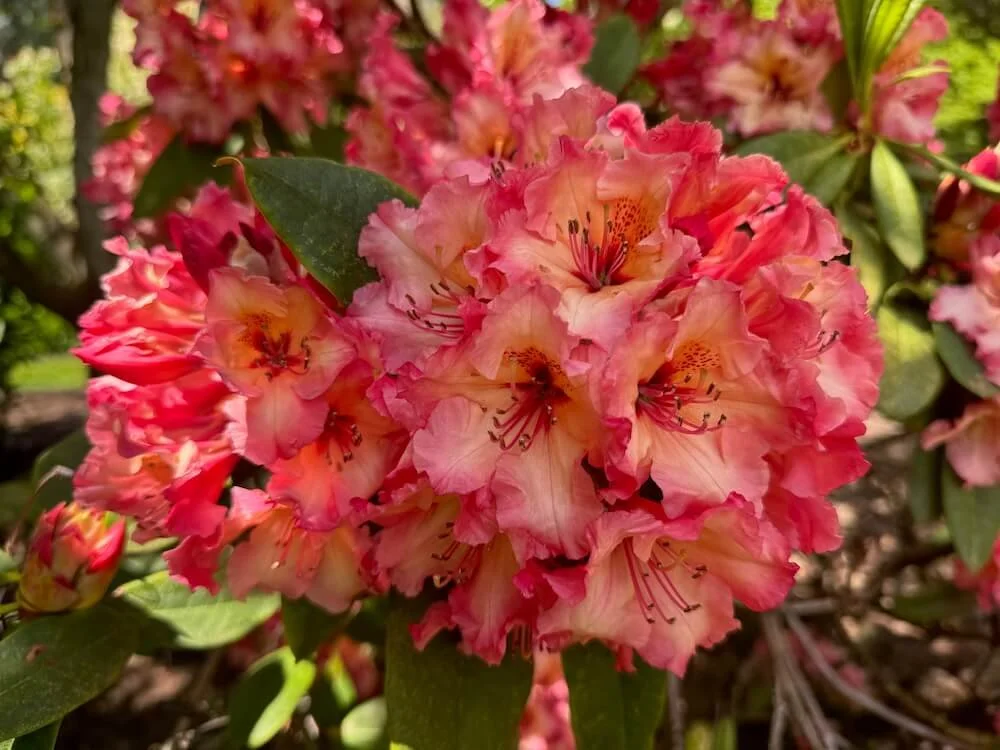
In mild climates, rhododendrons can be planted in early spring or fall, with March through May and September through October often providing the most favorable conditions for establishment. Soil temperatures between about 50°F and 70°F encourage active root growth while avoiding the stresses associated with summer heat and winter cold. In colder regions, spring planting is preferred to allow roots time to establish before winter. Avoid planting during periods of extreme heat, drought, or frozen soil conditions.
Where to plant:
Choose a location with filtered sunlight or partial shade, ideally receiving about 3 to 6 hours of morning sun or bright indirect light each day. Protection from intense afternoon sun is especially important in warmer climates, where excessive heat can scorch foliage and shorten flower longevity. Many rhododendrons perform well beneath high tree canopies or along woodland edges where they receive shelter from heat and drying winds. In cooler coastal regions, some varieties can tolerate 6 or more hours of direct sun if soil moisture remains consistent and plants are protected from drying conditions. Good air circulation around the plant helps reduce disease problems and promotes healthier foliage.
How to plant:
Prepare the planting area by loosening the soil and incorporating compost, aged pine bark, or other organic materials to improve drainage and soil structure. Most rhododendrons are sold in one- to three-gallon containers, and the planting hole should be two to three times wider than the root ball but no deeper. Position the plant so the top of the root ball sits 1 to 2 inches above the surrounding soil level, as rhododendrons have shallow roots and are susceptible to problems when planted too deeply. Gently loosen circling roots if present, backfill carefully without excessive compaction, and water thoroughly to settle the soil and eliminate air pockets. Continue regular watering during the first growing season while roots establish into the surrounding soil.
Soil:
Rhododendrons perform best in fertile, organically rich soil with excellent drainage and a slightly acidic pH between about 4.5 and 6.0. Incorporating compost, leaf mold, aged pine bark, or other organic materials before planting helps improve soil structure, moisture retention, and long-term root health. Heavy clay soils should be amended with pine bark and compost to improve drainage, while sandy soils benefit from additional organic matter to retain moisture and nutrients. A light application of a fertilizer formulated for acid-loving plants, such as 4-3-4, 4-6-4, or similar azalea and rhododendron fertilizers, mixed into the soil according to label directions can help support early root establishment. After planting, apply a 2 to 4 inch layer of pine bark, shredded bark, pine needles, leaf mold, or compost around the root zone. Keep mulch several inches away from the main stems to maintain good air circulation and reduce the risk of rot. Maintaining healthy soil conditions supports stronger growth, improved flowering, and healthier evergreen foliage.
Watering and fertilizing:
Regular watering is particularly important during establishment and periods of prolonged drought. Newly planted rhododendrons generally benefit from about 1 inch of water per week, applied once or twice weekly depending on rainfall and soil conditions. Because of their shallow root systems, established plants also benefit from occasional deep watering every 7 to 10 days during extended periods of hot, dry weather. Rhododendrons prefer evenly moist conditions but dislike saturated soil. Fertilizing is usually best done in early spring, just before new growth begins, using a slow-release fertilizer formulated for acid-loving plants with an analysis such as 4-3-4 or 4-6-4. Plants growing in poor soils may benefit from a second light feeding about 6 to 8 weeks later, but fertilizing after midsummer should be avoided because late growth may be more susceptible to winter injury. Excess fertilizer can damage roots and encourage excessive foliage growth at the expense of flowering.
Spacing:
Allow enough room for mature width and height, as overcrowding can reduce airflow and increase the likelihood of fungal disease. Proper spacing also allows plants to maintain their natural shape without excessive pruning and ensures flowers remain visible throughout the shrub.
Growing in containers:
Compact rhododendrons and dwarf varieties can perform well in containers when planted in a well-drained mix designed for acid-loving plants. Containers should have adequate drainage holes and may require more frequent watering and feeding than in-ground plantings. Smaller varieties are especially useful for patios, courtyards, and small-space gardens.

Compact & Dwarf Rhododendrons
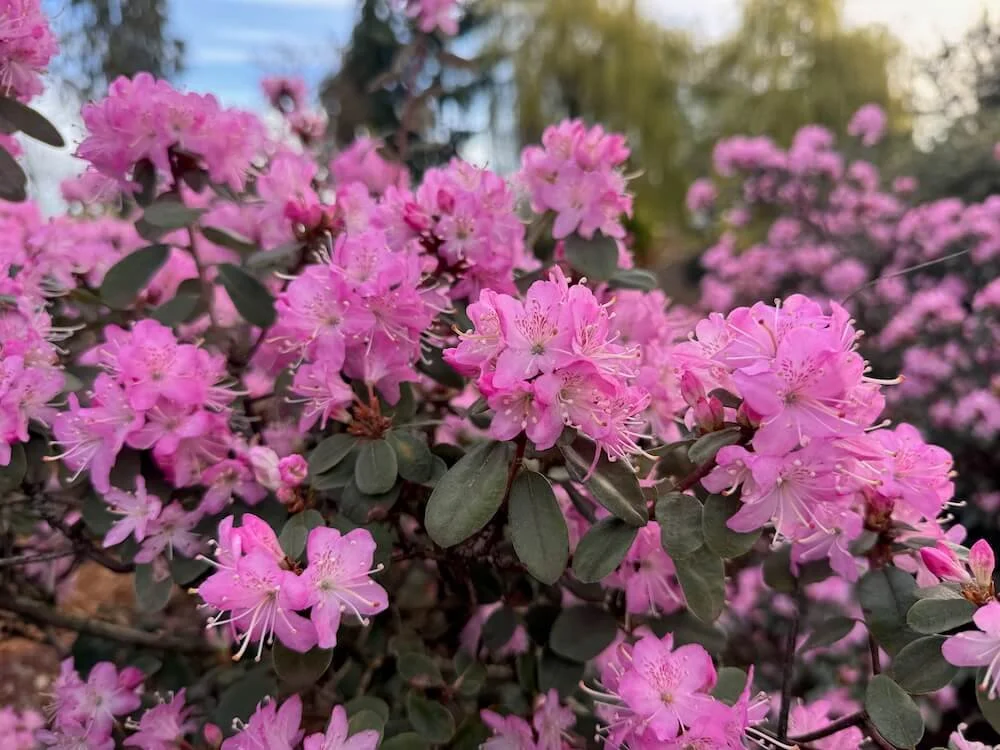
Rhododendron racemosum 'Rock Rose'
Evergreen shrub with aromatic small green foliage and soft pink spring flowers. Forms airy compact growth, attracts pollinators, and grows 2 to 3 feet tall. Ideal for woodland borders, low hedges, and naturalistic plantings. Zones: 6 to 8.
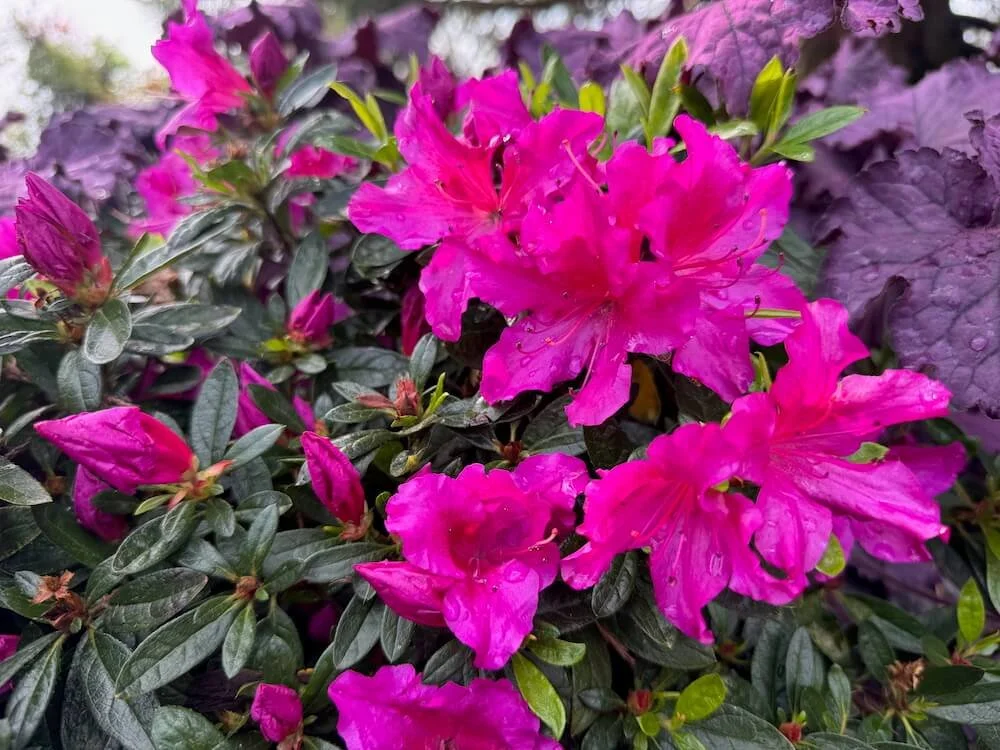
Rhododendron x 'RLH1-14P14'
Evergreen shrub with small glossy green foliage and vivid magenta blooms creating bold spring color in a compact form. Develops a dense mounded habit and grows 2 to 3 feet tall. Ideal for borders, low hedges, and woodland plantings. Zones: 6 to 9.
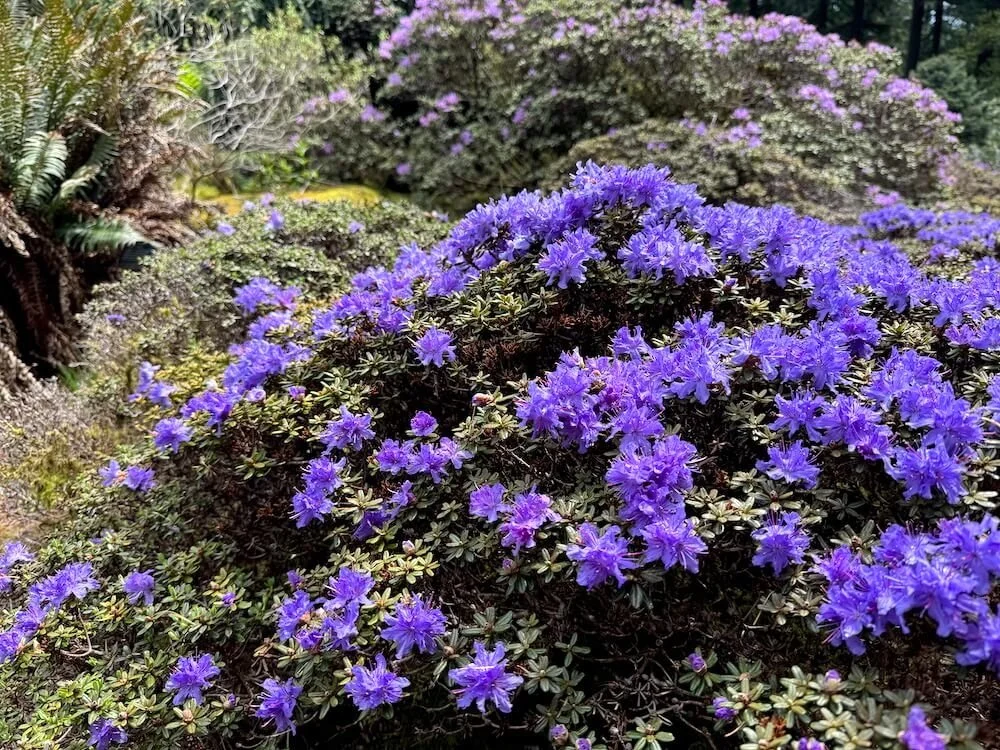
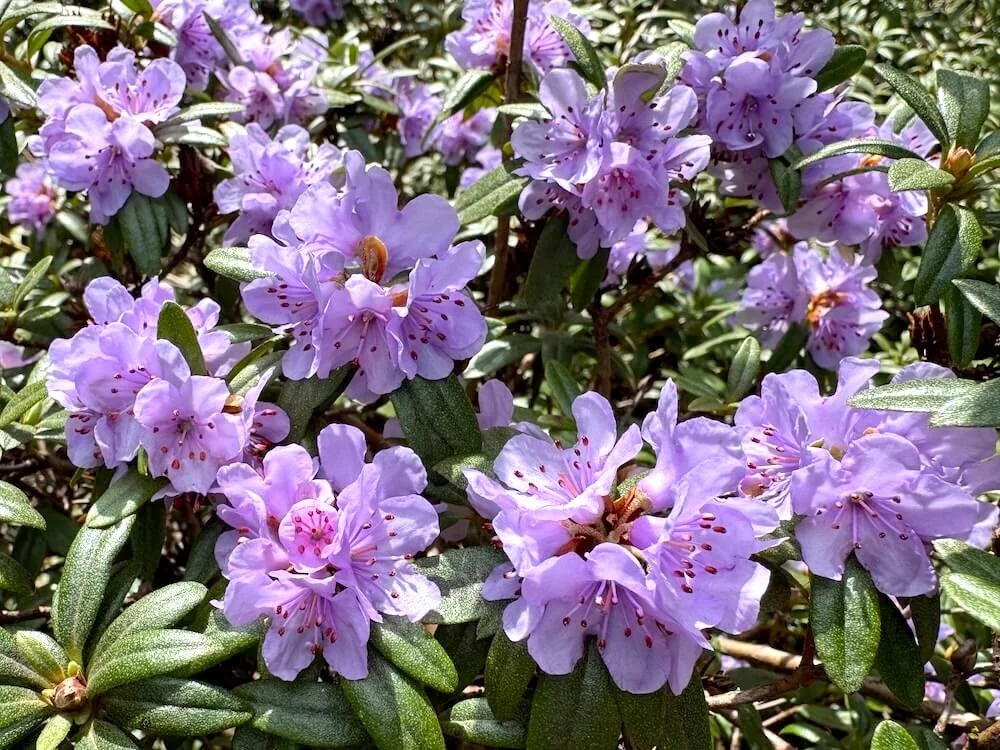
Rhododendron impeditum
Evergreen shrub with small aromatic blue green foliage and violet spring flowers. Forms low spreading growth, grows 1 to 2 feet tall, and attracts pollinators. Ideal for edging, rock gardens, and woodland borders. Zones: 5 to 8.
Other Notable Compact & Dwarf Rhododendrons
Rhododendron 'Wee Bee': Rose-pink buds, opening to frilled lighter pink blossoms
Rhododendron 'Ginny Gee': Bright rose-pink buds, opening to soft blush-pink blooms
Rhododendron 'Patty Bee': Clear soft yellow funnel-shaped flowers
Rhododendron keiskei 'Yaku Fairy': Pale yellow to creamy-yellow blossoms
Rhododendron camtschaticum: Reddish-purple to lavender or rose-purple
Rhododendron yakushimanum: Soft pink in bud, fading to white
RHODODENDRON MAINTENANCE & CARE
Watering:
Rhododendrons prefer evenly moist soil, particularly during establishment and periods of prolonged dry weather. Their shallow root systems dry out more quickly than deeply rooted shrubs, making consistent moisture important, especially during summer heat. Avoid overly wet conditions, as poorly drained soil can lead to root problems.
Fertilizing & Mulching:
Feed lightly in early spring with a fertilizer formulated for acid-loving plants if growth appears weak or foliage lacks color. Excess fertilizer can damage sensitive roots and encourage soft growth that is more vulnerable to stress and winter damage. Maintain a layer of organic mulch around the root zone to help retain moisture, moderate soil temperature, and reduce weed competition. Pine bark, pine needles, or shredded leaves work well and gradually contribute organic matter as they decompose.
Pruning & Deadheading:
Most rhododendrons require minimal pruning beyond removing dead, damaged, or crowded branches. Light shaping can be done after flowering if needed, since next year’s flower buds begin forming soon afterward. Older, overgrown plants can often be rejuvenated with more substantial pruning over time. Removing spent flower trusses is optional but can improve appearance and direct energy toward foliage, root growth, and future flower production rather than seed development. Care should be taken not to damage emerging buds beneath old flower clusters.
Soil health:
Healthy soil is one of the most important factors in long-term rhododendron performance. Acidic, organically rich soil supports stronger growth, healthier foliage, and improved flowering. Periodically checking soil pH can help identify issues before plants begin showing stress symptoms.
Winter protection:
Cold winds and winter sun can damage evergreen foliage and flower buds, particularly on exposed sites. Mulch helps insulate shallow roots during temperature swings, while sheltered planting locations reduce winter stress and desiccation.
Pests and diseases:
Common issues include lace bugs, root rot, and fungal leaf spots. Proper spacing, good airflow, and well-drained soil help prevent many problems before they become severe. Regular observation of foliage and overall vigor can help catch issues early.
Long-term growth:
As rhododendrons mature, some varieties may gradually become wider or taller than expected. Periodic thinning and thoughtful spacing at planting time help maintain healthy structure and reduce overcrowding within the landscape.
Large Screening Rhododendrons
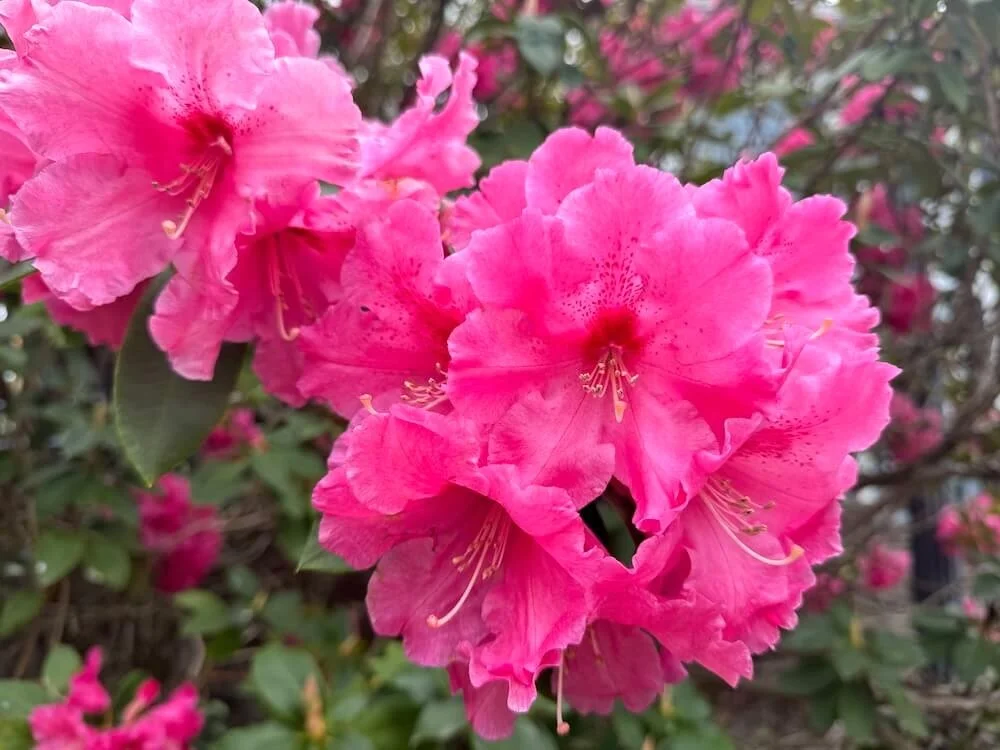
Rhododendron 'Dexter's Giant Red'
Evergreen shrub with large dark green foliage and bold red spring flowers. Attracts pollinators, forms dense upright growth, and grows 8 to 12 feet tall. Ideal for tall hedges, screens, and woodland borders. Zones: 6 to 8.
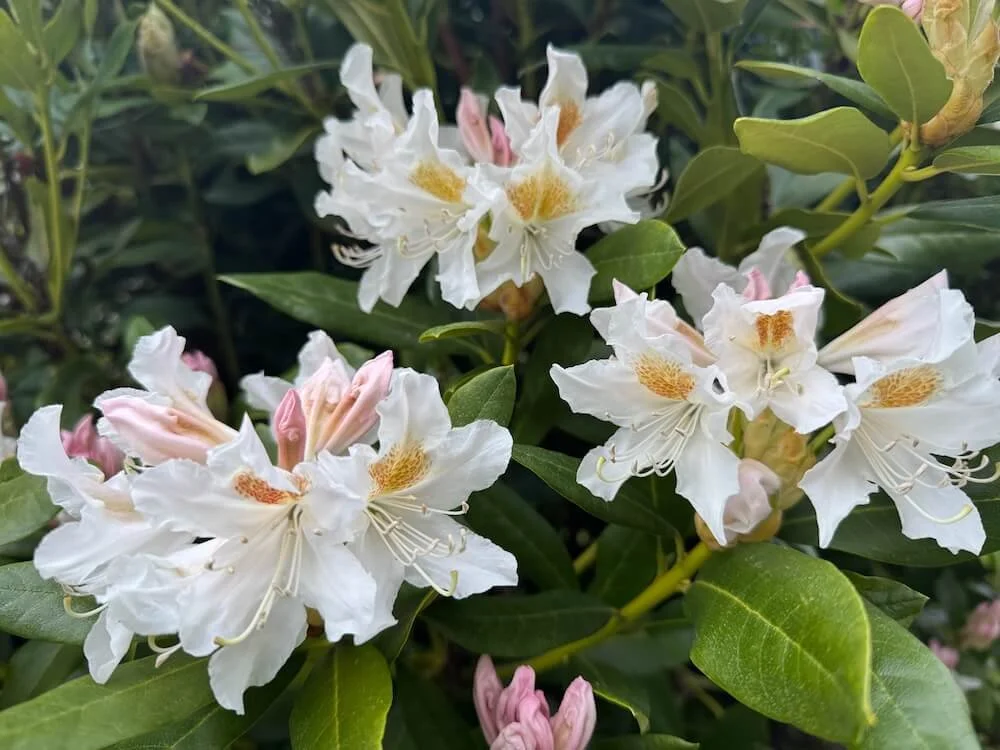
Rhododendron 'Cunningham's White'
Evergreen shrub with broad glossy green foliage and creamy white flowers with yellow throats. Forms full rounded growth, grows 6 to 10 feet tall, and ideal for hedges, screening, and shaded foundation plantings. Zones: 5 to 8.
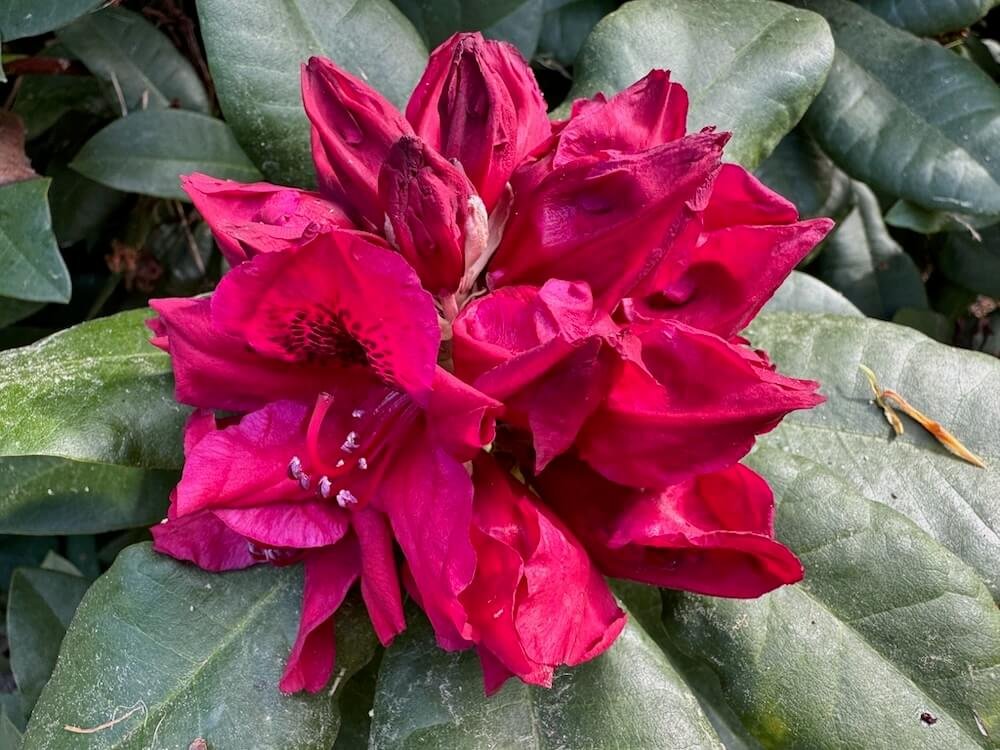
Rhododendron x 'Nova Zembla'
Evergreen shrub with leathery dark green foliage and vivid red flower trusses. Develops vigorous upright growth, and grows 6 to 8 feet tall. Ideal for privacy plantings, screens, and woodland structure. Zones: 4 to 8.
Other Notable Large Screening Rhododendrons
Rhododendron 'America': Purplish-red with dark red spotting
Rhododendron 'Anah Krusche': Reddish-purple, often with a deep purplish-red blotch
Rhododendron 'Dr. H.C. Dresselhuys': Purple-red to bright pink-red
Rhododendron 'Leo Friedman': Rose-red tubular flowers
Rhododendron degronianum: Pale pink-to-white flowers, sometimes with subtle red spotting
Rhododendron yunnanense: White to blush pink with red spotting in the throat
DESIGN USES FOR RHODODENDRONS
Foundation plantings:
Rhododendrons are widely used around homes and buildings where their evergreen foliage provides year-round structure and their spring flowers add seasonal color. Compact and medium-sized varieties work especially well beneath windows or along entryways, softening architectural lines without overwhelming the space.
Hedges and screening:
Larger evergreen rhododendrons can form dense privacy screens or informal hedges that provide year-round coverage. Broad foliage creates a lush backdrop in the landscape, while spring flowering adds seasonal interest that changes dramatically throughout the blooming period.
Specimen plants:
Distinctive varieties with unusual flowers, foliage, bark, or growth habits can serve as focal points within the garden. Large flower trusses, colorful new growth, silver indumentum, or architectural branching structures often become standout features when given enough space to mature naturally.
Small-space gardens:
Compact and dwarf rhododendrons allow gardeners to enjoy rhododendrons even in limited spaces. Smaller varieties fit comfortably into narrow borders, courtyard gardens, foundation beds, and urban landscapes where larger rhododendrons would become oversized over time.
Rock gardens and alpine plantings:
Low-growing alpine and dwarf species are well-suited to rock gardens, raised beds, and slopes where excellent drainage can be maintained. Their smaller leaves and compact habits blend naturally with stones, gravel, and other alpine plants without appearing heavy or overgrown.
Containers:
Many compact rhododendrons adapt well to containers, particularly varieties with dense growth and smaller mature sizes. Containers allow gardeners to control soil conditions more easily while adding evergreen structure and seasonal flowers to patios, decks, and entryways.
Mixed shrub borders:
Rhododendrons combine well with other acid-loving shrubs such as camellias, pieris, hydrangeas, and conifers. Combining varieties with different bloom times, foliage textures, and plant forms creates layered plantings with year-round interest.
Wildlife-friendly gardens:
Flowering rhododendrons attract pollinators such as bees and hummingbirds during bloom season, while evergreen branches provide shelter and structure within the garden year-round. Dense plantings can also create protected habitat for small birds and beneficial insects.
Fragrant Rhododendrons
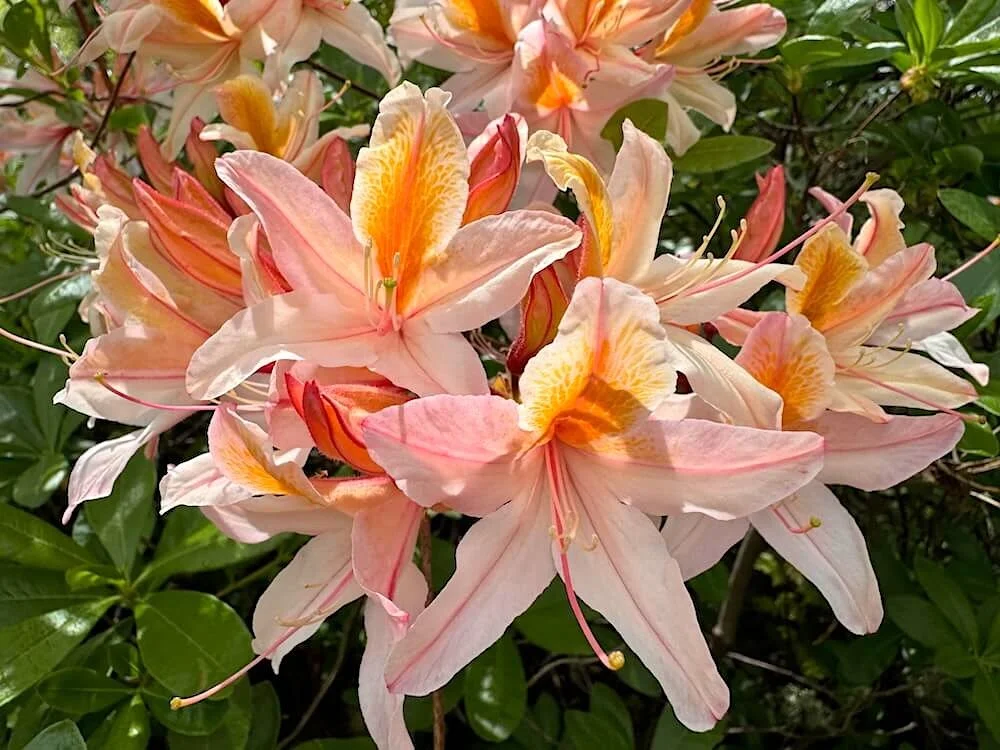
Rhododendron occidentale
Deciduous shrub with soft green foliage and fragrant white to pink spring flowers, often with a deep orange throat. Forms open upright growth, and grows 6 to 8 feet tall. Ideal for woodland borders and habitat plantings. Zones: 5 to 8.

Rhododendron 'Mrs. Betty Robertson'
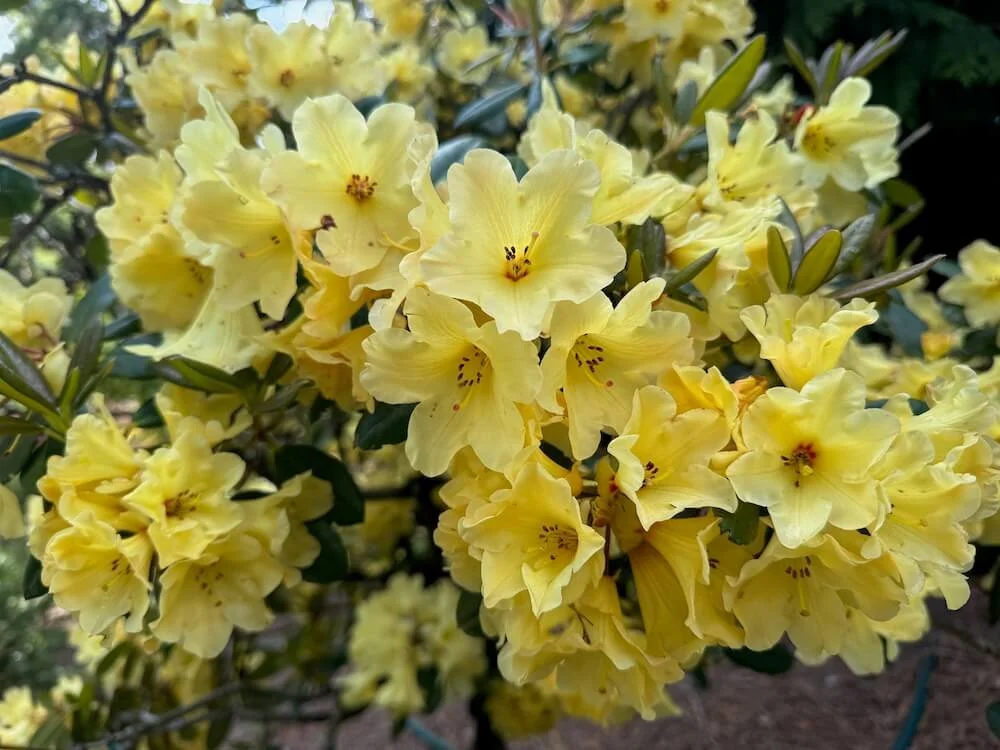
Evergreen shrub with glossy dark green foliage, rosy pink buds and soft yellow spring flowers. Attracts pollinators, forms dense rounded growth, and grows 4 to 6 feet tall. Ideal for borders, hedges, and woodland gardens. Zones: 6 to 8.
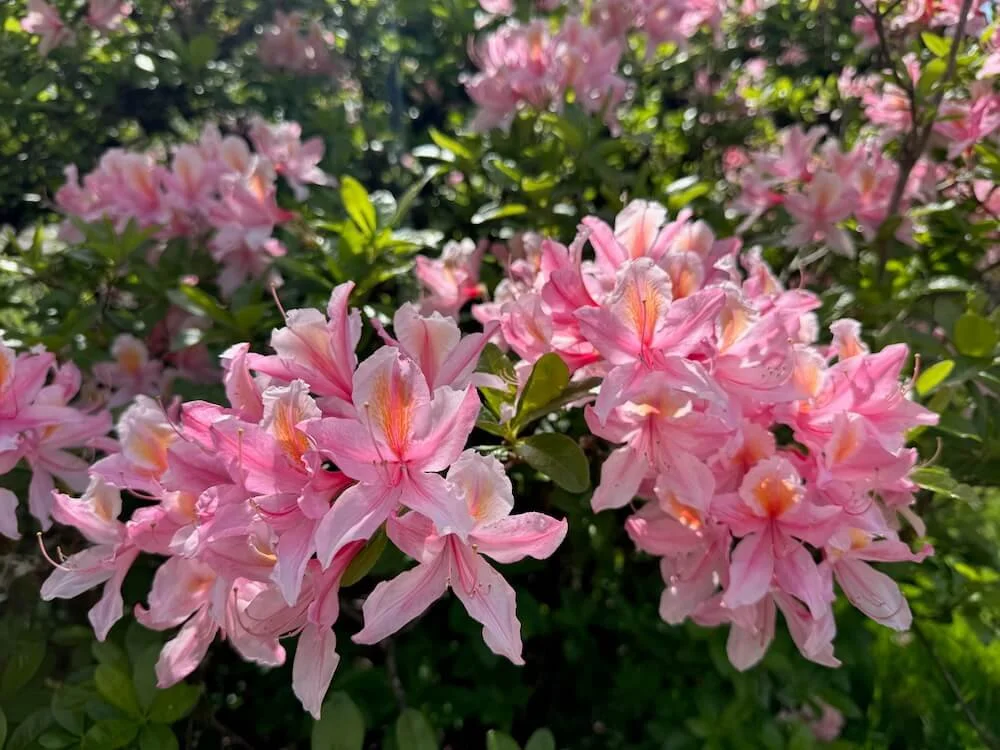
Rhododendron o. 'Irene Koster'
Deciduous shrub with soft green foliage and fragrant blush pink spring flowers. Attracts pollinators and hummingbirds, forms graceful upright growth, and grows 6 to 8 feet tall. Ideal for woodland borders and habitat plantings. Zones: 6 to 8.
Other Notable Fragrant Rhododendrons
Rhododendron arborescens: White to pale pink with a sweet fragrance, with a yellow throat
Rhododendron prinophyllum 'Marie Hoffman': Bright pink to rich pink blooms, fragrant and showy
Rhododendron canescens: Pink to pale pink clusters (occasionally white)
Rhododendron calendulaceum: Bright orange flowers, often with yellow or red tones
Rhododendron x kosteranum 'Northern Hi-Lights': Creamy white flowers with a bold golden-yellow blotch
GARDEN TOURS • OREGON

The rhododendron collection at Crystal Springs Rhododendron Garden showcase thousands of rhododendrons in a peaceful setting of lakes, streams, waterfalls, and wooded pathways. Colorful spring displays and carefully curated companion plantings create one of the Pacific Northwest’s premier destinations for gardeners, flower enthusiasts, and photographers.