
Fall Blooming Shrubs

Hydrangea quercifolia 'Snowflake'
Deciduous shrub with oakleaf foliage and layered double white summer flowers with cone-shaped blooms. Grows 6 to 8 feet tall, tolerates pruning, ideal for informal hedges, screens, and borders. Zones: 5 to 9.
Fall blooming shrubs extend the garden’s display as the season begins to shift, offering fresh color when many plants are starting to fade. Their flowers range from soft whites and pinks to deeper purples and blues, often paired with foliage that may take on warm autumn tones. These shrubs add depth and contrast to borders and provide a welcome burst of late-season interest.
Chosen for their ability to perform as temperatures cool, they help bridge the transition from late summer into autumn. Some continue to attract pollinators, while others contribute texture through branching structure or persistent blooms. Planted where their color can be appreciated up close, fall bloomers bring a sense of continuity and quiet richness to the landscape.
HIBISCUS
01

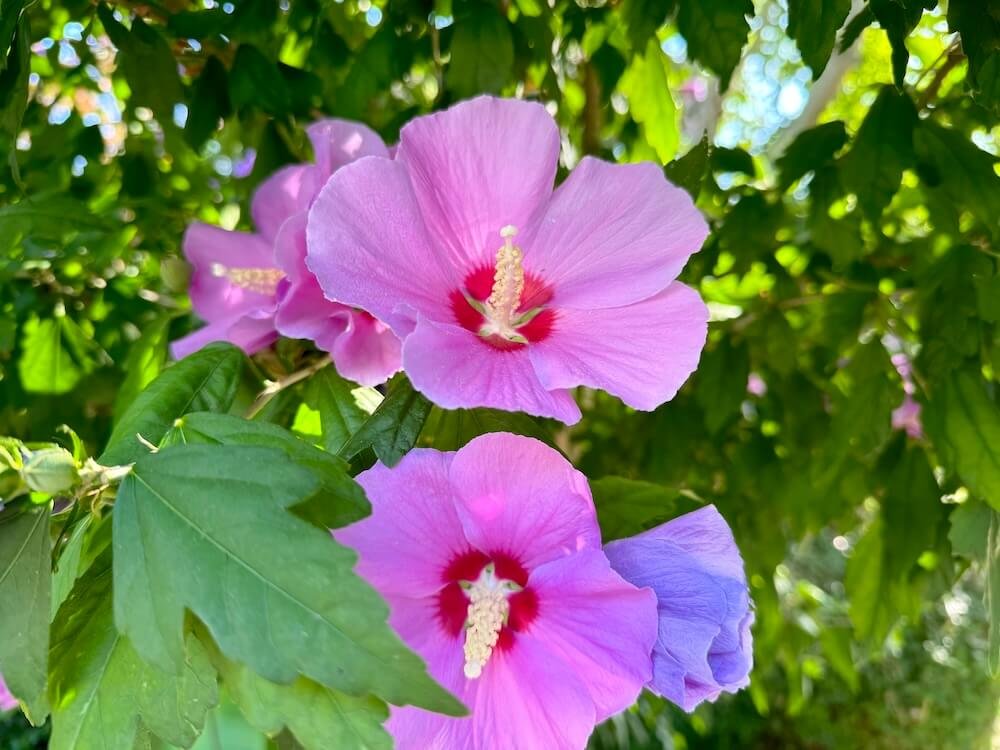
Summer to fall-blooming hibiscus shrubs bring bold color and a strong vertical element to the garden, with flowers appearing from mid to late summer and continuing into early fall. Selections such as Hibiscus syriacus x paramutabilis ‘Rose Moon’(shown here) are grown for their large, pink blooms with red centers that create a full, showy display against upright branching. Their consistent flowering and structured habit add both height and seasonal interest, particularly in sunny locations.
These shrubs fit naturally into borders, hedges, or focal plantings where their blooms stand out. Hibiscus syriacus ‘Blushing Bride’ offers a more delicate look with pale, blush-toned blooms, while Hibiscus syriacus ‘Minsyble9’ adds a modern touch with rich lavender colored flowers and a refined form. Together, these selections provide long-lasting color, attract pollinators, and bring a bold, tropical feel to late-season plantings.
CAMELLIA
02
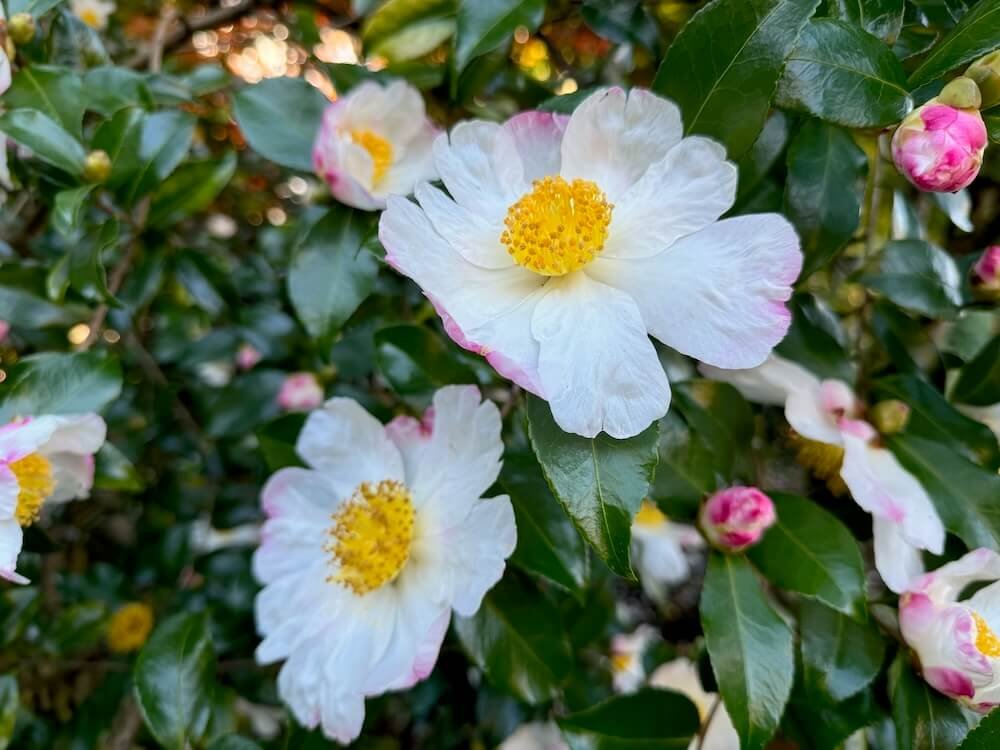
Fall-blooming camellias extend the season with elegant flowers and glossy evergreen foliage, beginning in autumn and continuing into early winter. Camellia sasanqua ‘Setsugekka’ is grown for its large, white, lightly fragrant blooms that create a clean, luminous display against dark green leaves. Its upright habit and steady flowering provide both height and seasonal interest as other plants begin to fade.
These shrubs work well in borders, hedges, or foundation plantings where their blooms can be clearly seen. Camellia sasanqua ‘Shishi Gashira’ offers a more compact, spreading form with dark pink flowers, while ‘Sparkling Burgundy’ adds depth with rich mauve pink blooms against darker foliage. ‘Hana Jiman’ (shown here) brings fuller, white flowers, tipped in rose-pink that enhance the overall display. Together, these selections provide long-lasting color, evergreen structure, and a polished presence in fall and early winter gardens.
CHINESE PLUMBAGO (Ceratostigma)
03
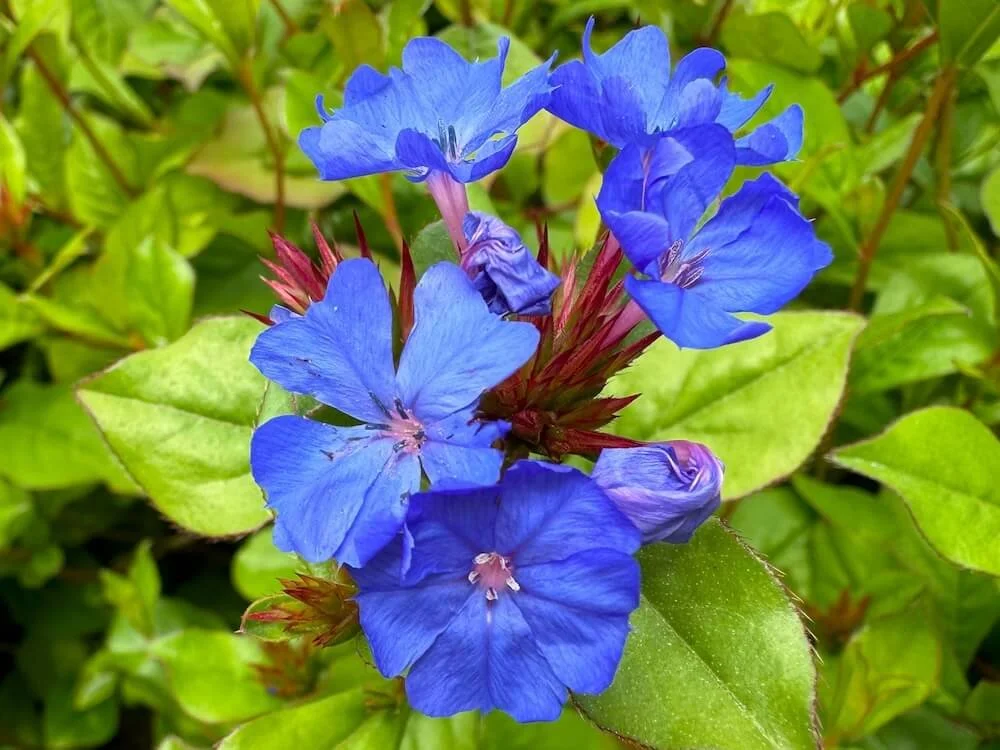
Chinese plumbago extends garden color well into fall with clusters of vivid blue flowers that appear as many summer shrubs begin fading from the landscape. Ceratostigma willmottianum (shown here) is grown for its rich cobalt-blue blooms carried along reddish stems above narrow green foliage in late summer and autumn. The intense flower color becomes especially noticeable during cooler weather, creating contrast against the changing tones of surrounding fall foliage.
Autumn color adds another layer of interest as the foliage gradually shifts to shades of burgundy and red later in the season. The open branching habit gives the shrub a lighter appearance that pairs effectively with ornamental grasses, late-season perennials, and darker evergreen backdrops. Its combination of blue flowers, red stems, and colorful foliage helps maintain strong visual interest deep into fall.
SUMMERSWEET (Clethra)
04
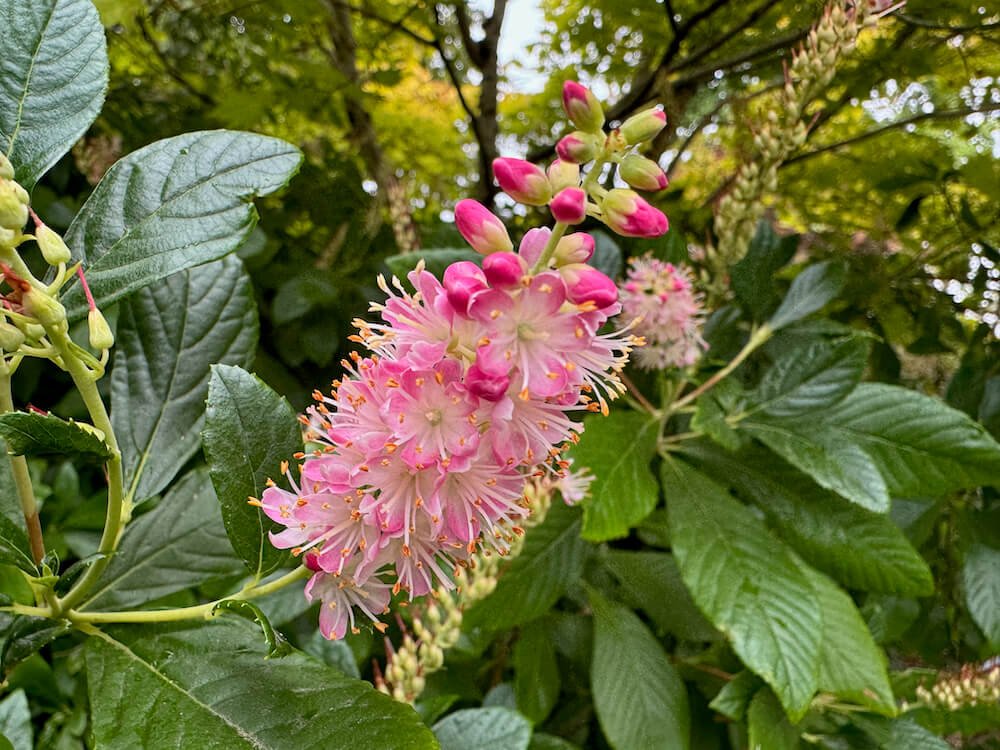
Fall-blooming summersweet extends seasonal interest with lingering flowers and developing fall color, carrying the garden from late summer into early autumn. Clethra alnifolia ‘Ruby Spice’ (shown here) is grown for its compact habit and upright spikes of fragrant pink flowers that attract pollinators and brighten partially shaded settings. As the season progresses, its foliage turns soft shades of yellow, adding a second layer of color that complements the fading blooms.
These shrubs work well in borders, woodland edges, or foundation plantings where their fragrance and form can be enjoyed. Their dense, upright growth provides structure while blending easily with surrounding plants. Together, these selections offer late-season color, scent, and reliable performance in moisture-retentive soils.
OAKLEAF HYDRANGEA
05
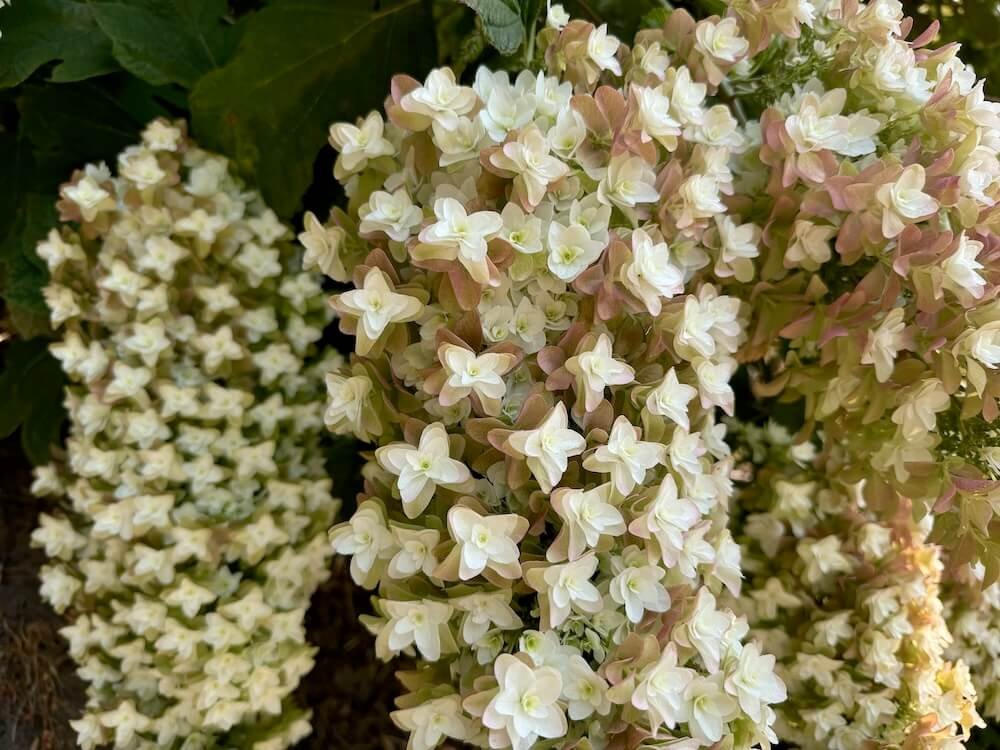
Oakleaf hydrangea brings layered interest to the fall garden, with its display building from late summer into autumn as foliage and flowers shift in color. Hydrangea quercifolia is grown for its bold, oak-shaped leaves that turn rich shades of red, burgundy, and bronze, creating a warm backdrop as the season progresses. Its conical flower heads, which begin white, age to soft pink and tan, adding depth and texture alongside the changing foliage.
These shrubs work well in borders, woodland edges, or foundation plantings where their seasonal color can be clearly seen. Hydrangea quercifolia ‘Snowflake’ (shown here) adds a more layered effect with double white blooms that age gracefully, extending visual interest into fall. Together, these selections provide strong structure, multi-season color, and a natural, textural presence in autumn landscapes.
BLUEBEARD (Caryopteris)
06
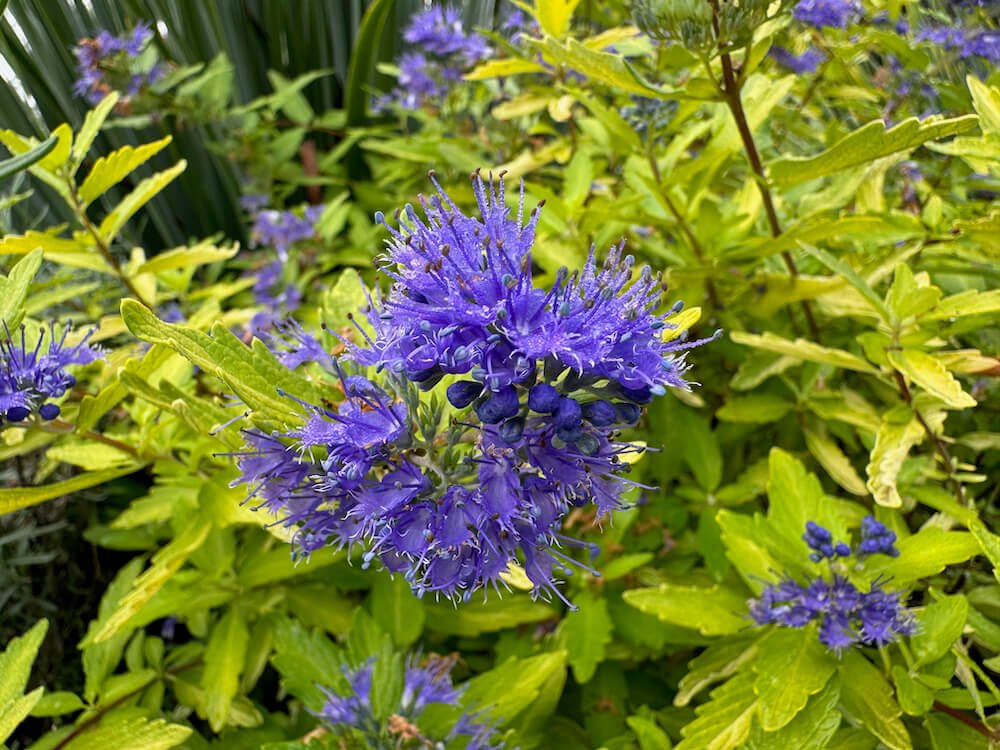
Late summer to fall-blooming bluebeard brings late-season color and fine texture to the garden, with flowers appearing from mid to late summer and often continuing into early fall. Caryopteris x clandonensis ‘Dark Knight’ is grown for its deep blue flowers and silvery foliage, creating strong contrast and a rich display that stands out in sunny settings. Its naturally compact, mounded habit provides structure while supporting continuous bloom and pollinator activity.
These shrubs work well in borders, pollinator gardens, or mixed plantings where late-season color is needed. Caryopteris x clandonensis ‘Gold Crest’ (shown here) adds brightness with golden foliage that highlights the blue flowers, while Caryopteris divaricata ‘Snow Fairy’ introduces variegated leaves and a softer, more relaxed habit. Together, these selections provide extended bloom, textural contrast, and reliable performance in warm, well-drained landscapes.
STRAWBERRY TREE (Arbutus)
07
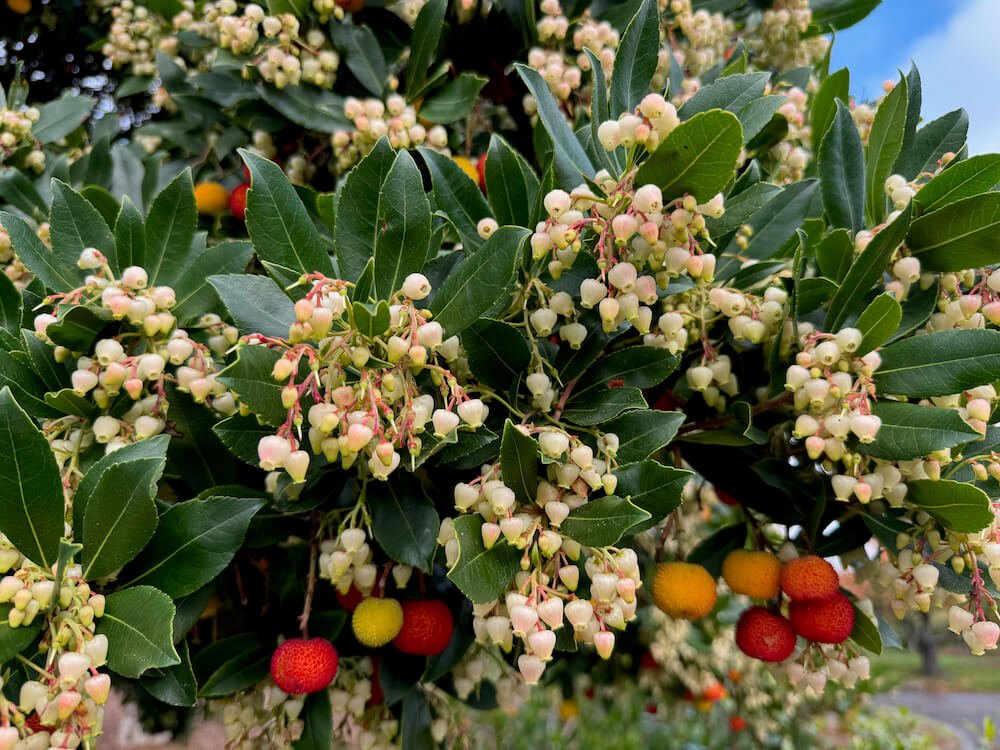
Strawberry trees bring unusual late-season interest to the garden, producing clusters of dangling white to pale pink flowers just as many flowering shrubs are beginning to fade for the year. Arbutus unedo ‘Compacta’ (shown here) is grown for its dense evergreen foliage and urn-shaped blooms that appear in fall alongside ripening strawberry-like fruit from the previous season. The overlapping display of flowers and fruit creates multiple layers of texture and color within the shrub at the same time.
Evergreen foliage and reddish bark allow this shrub to remain visually effective well beyond its flowering period. The compact branching habit works especially well in Mediterranean-style plantings, sheltered borders, and mixed evergreen combinations where the glossy leaves provide contrast against finer or silver-toned foliage nearby. As cooler weather arrives, the combination of flowers, fruit, and evergreen structure helps extend garden interest deep into the fall season.
DAISY BUSH (Brachyglottis)
08
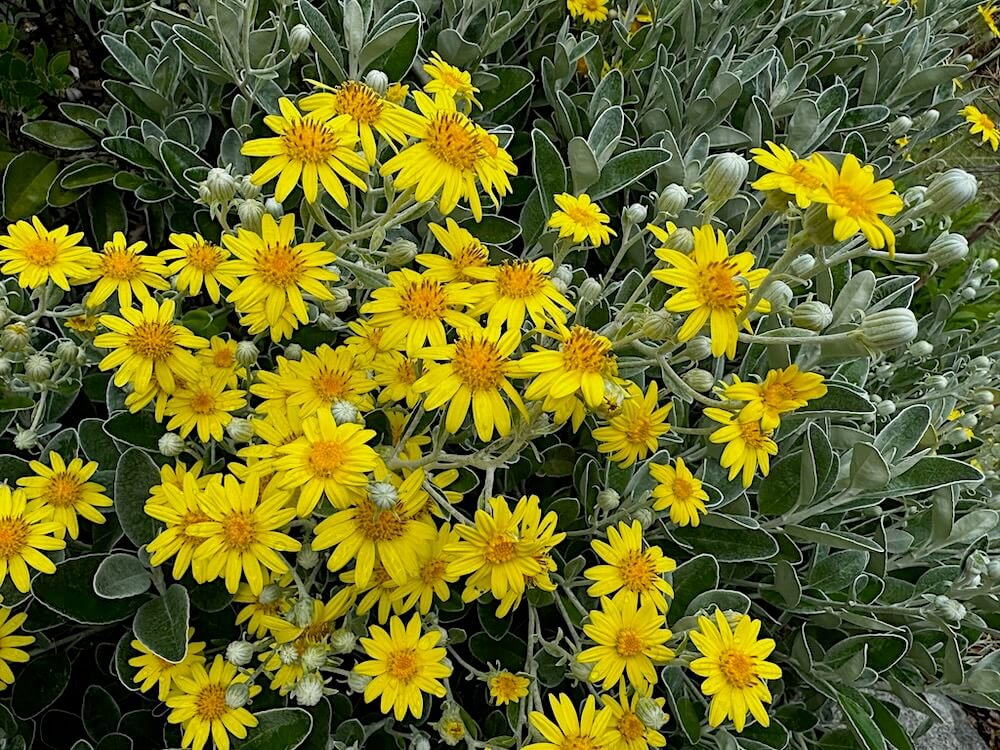
Daisy bushes bring silver-toned foliage and bright yellow flowers into the garden as the colors of late season begin to shift toward autumn. Brachyglottis greyi (shown here) is grown for its felted gray-green leaves and clusters of golden daisy-like blooms that appear above the foliage in late summer and fall. The reflective foliage helps brighten surrounding plantings while the flowers provide warm color during a period when many shrubs are beginning to slow down.
The dense evergreen habit gives this shrub a strong visual presence even when it is not in bloom. Silvery foliage contrasts effectively with darker evergreens, burgundy leaves, and ornamental grasses, helping create depth in coastal gardens and dry borders. Its softly textured leaves and rounded form also help balance sharper architectural plants nearby.
ABELIA
09
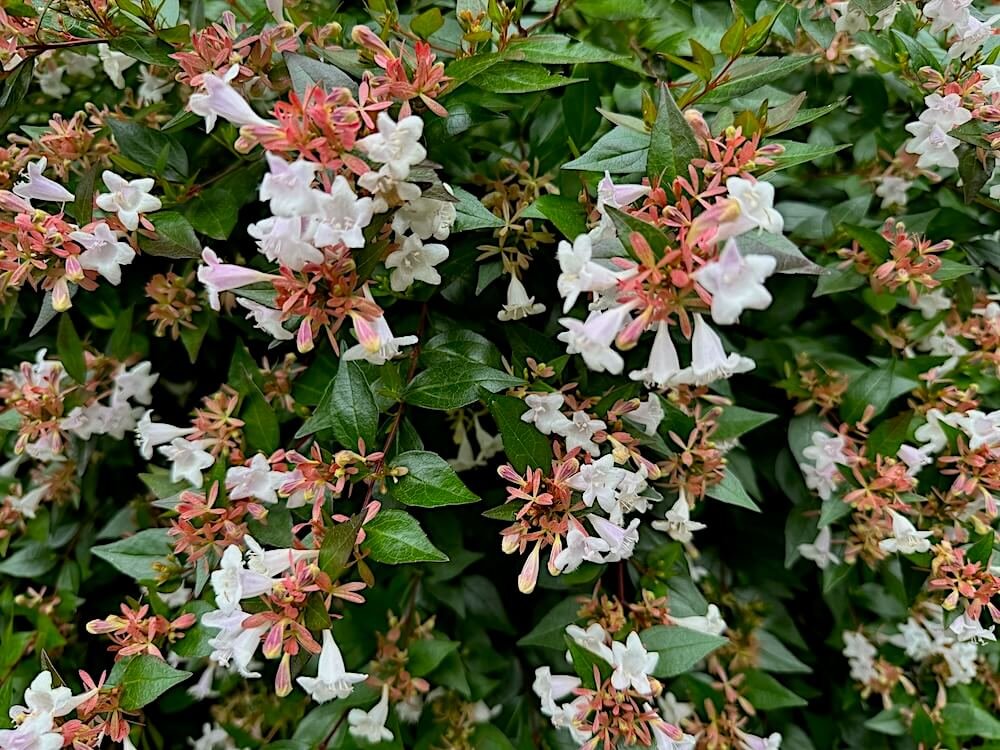
Fall-blooming abelias extend the season with soft color and fine texture, flowering from late summer into early autumn while foliage gradually shifts in tone. Abelia x grandiflora (shown here) is grown for its arching habit and clusters of small, lightly fragrant flowers that create a delicate, continuous display against glossy foliage. As temperatures cool, the leaves often take on bronze or purplish tones, adding a second layer of seasonal interest.
These shrubs work well in borders, low hedges, or mixed plantings where their form and movement can be appreciated. Abelia schumannii adds a more refined presence with graceful branching and soft pink blooms, while Abelia x grandiflora ‘Kaleidoscope’ introduces variegated foliage in shades of gold, green, and orange that intensify in fall. Together, these selections provide extended bloom, shifting foliage color, and a light, flowing structure in autumn gardens.
LAVENDER COTTON (Santolina)
10
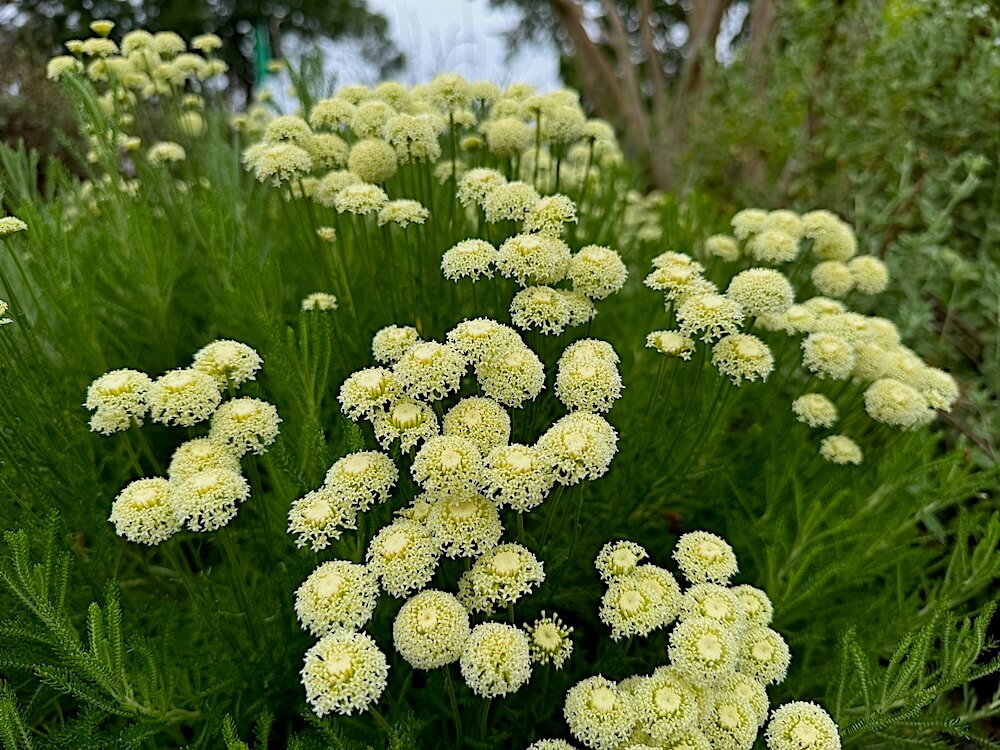
Lavender cotton brings finely textured evergreen foliage and button-like flowers into the garden as late-season borders shift toward autumn color. Santolina chamaecyparissus ‘Lemon Queen’ (shown here) is grown for its soft green foliage and creamy pale yellow flower heads that rise above compact mounding stems in late summer and fall. The lighter flower color creates a softer appearance in the landscape while the aromatic foliage continues adding texture after blooming slows.
Bright flower color gives Santolina chamaecyparissus ‘Pretty Carol’ a bolder presence, producing vivid golden-yellow blooms above dense green foliage during the warmer months. The rounded habit and finely divided leaves help introduce contrast among broader-leaved shrubs, ornamental grasses, and drought-tolerant perennials nearby. Their compact forms and long-lasting foliage provide structure and texture well beyond the flowering season.
BEAUTYBERRY (Callicarpa)
11
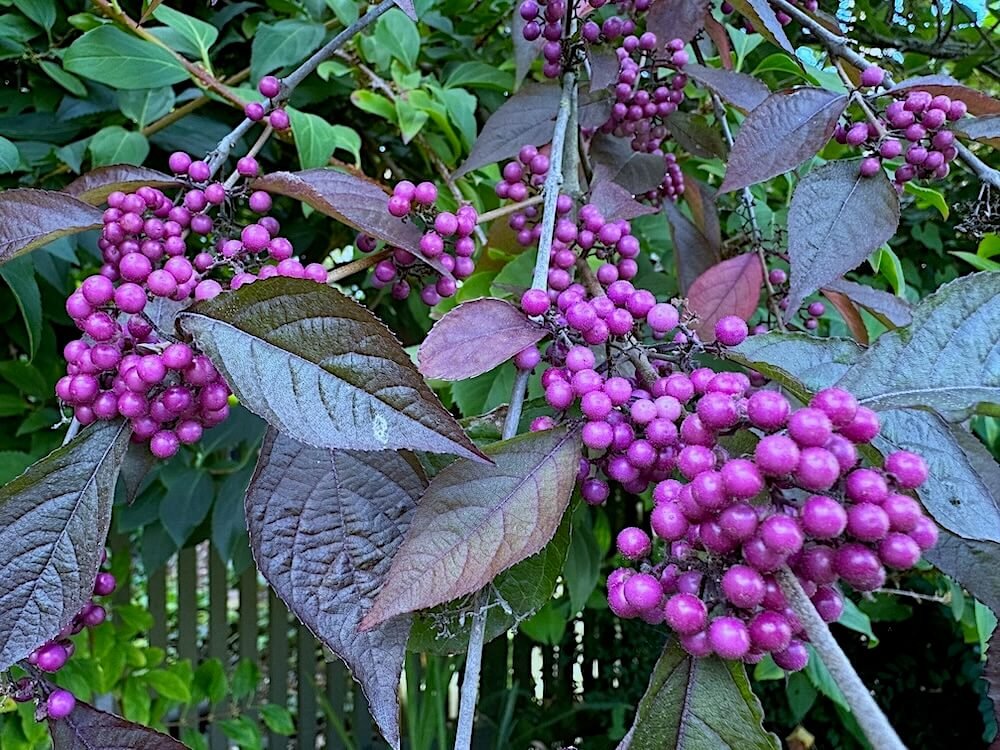
Fall-blooming beautyberry brings vivid color and distinctive texture to the garden as the season shifts, with its display building from late summer into fall. Callicarpa bodinieri var. giraldii ‘Profusion’ (shown here) is grown for its abundant clusters of bright purple berries that line the stems, creating a striking effect against the foliage. As the season progresses, the leaves turn soft yellow, adding a second layer of color.
These shrubs work well in borders or mixed plantings where their berries can be clearly seen. Their arching branches create a graceful form that integrates easily with surrounding plants while still standing out in the fall landscape. Together, these selections provide bold seasonal color, structural interest, and a distinctive presence as the garden transitions into autumn.
DOGWOOD (Cornus)
12
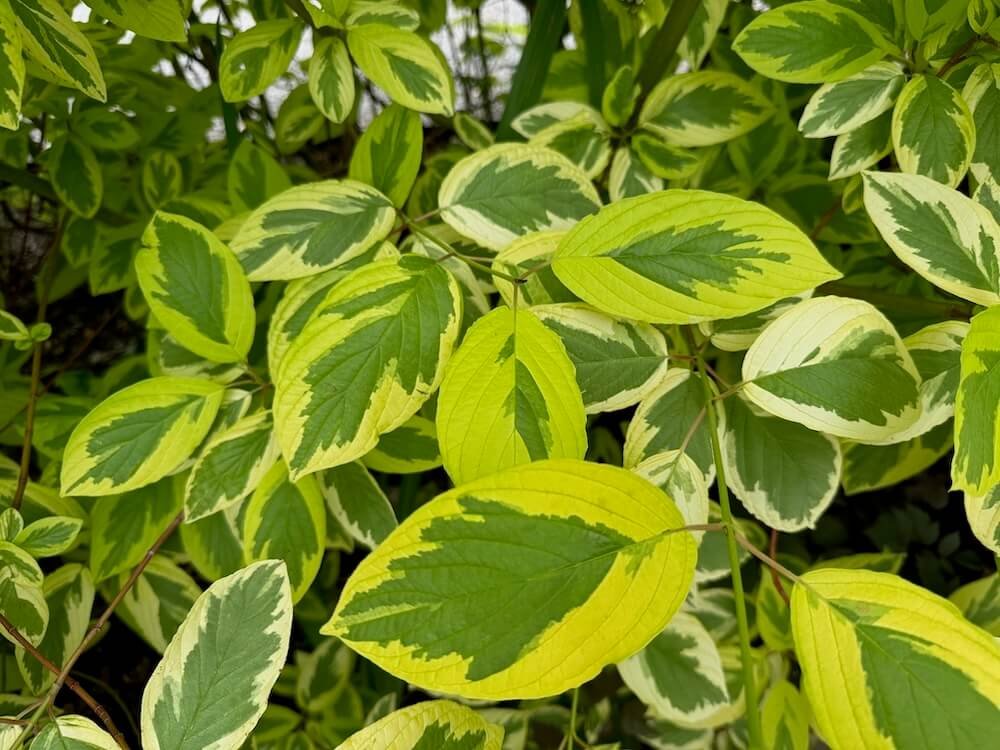
Dogwood shrubs bring strong seasonal contrast to the fall garden, with foliage and stems creating a layered display as temperatures cool. Leaves often shift into rich tones of red, purple, and burgundy before dropping, revealing vividly colored stems that stand out through late fall and winter. Cornus sericea ‘Isanti’ is grown for its compact habit and bright red stems, while Cornus sericea ‘Flaviramea’ offers a striking variation with clear yellow stems that add brightness to the landscape.
These shrubs work well in borders, mass plantings, or naturalized areas where their seasonal changes can be fully appreciated. Variegated selections such as Cornus alba ‘Elegantissima’ and Cornus sericea ‘Hedgerows Gold’ (shown here) add another layer of interest, with patterned foliage that enhances the display before fall color develops. Together, these selections provide bold foliage color, vibrant winter stems, and a dynamic presence from autumn into the colder months.
BURNING BUSH (Euonymus)
13
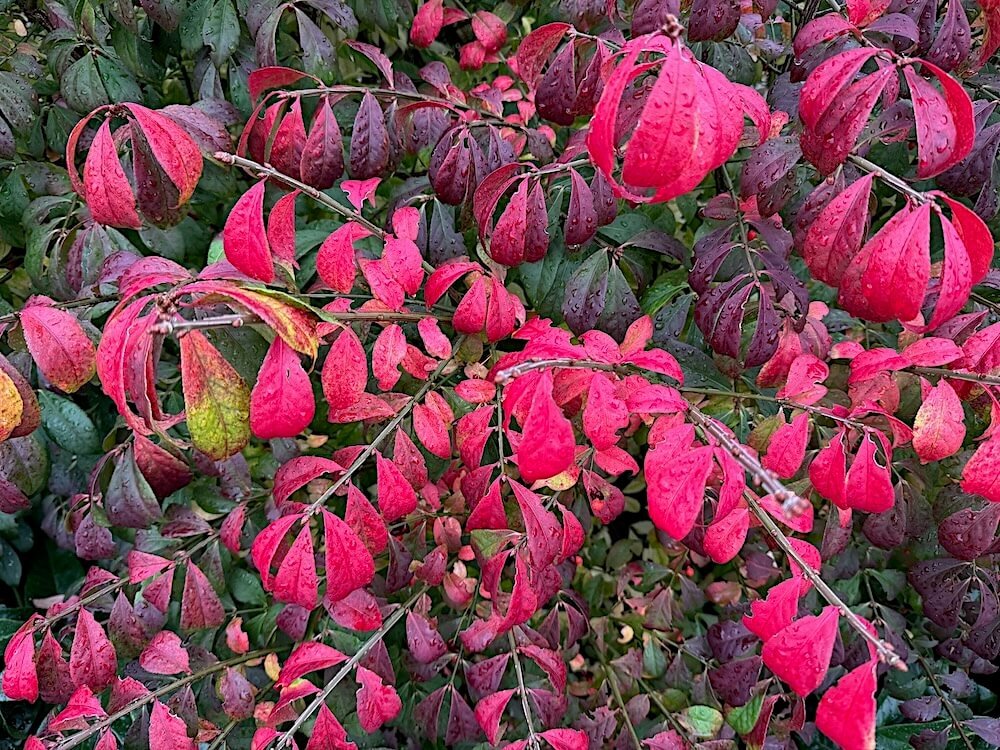
Burning bush brings vivid color to the fall garden, with its display centered on foliage rather than flowers. As temperatures cool, the leaves turn a brilliant, intense red, creating a bold, uniform effect that stands out across the landscape. Euonymus alatus is grown for this reliable fall color and its dense, branching habit, which provides a strong, structured presence throughout the season.
These shrubs work well in borders, hedges, or mass plantings where their fall color can be fully appreciated. Euonymus alatus ‘Monstrosus’ (shown here) adds a more distinctive form, with thicker, corky winged stems that create added texture and interest even after the leaves have dropped. Together, these selections provide intense seasonal color, structure, and a lasting visual impact in autumn gardens.