
Deer Resistant Shrubs

Juniperus c. 'Golden Blue Pacific'
Evergreen conifer with golden needle foliage, forming dense spreading growth. Provides shelter for birds, and grows 12 to 18 inches tall. Ideal for low hedges, borders, and erosion control. Zones: 5 to 9.
Deer resistant shrubs help protect plantings from browsing while still providing structure, texture, and seasonal interest in the landscape. Many feature aromatic foliage, leathery leaves, or subtle chemical properties that make them less appealing to deer. Their flowers and foliage offer a range of colors and forms, allowing for varied and visually appealing plant combinations.
Planted with intention, they reduce the likelihood of damage and help maintain the integrity of borders and hedges over time. While no plant is completely immune, these selections are less frequently disturbed, especially once established. Over time, you may notice fewer signs of browsing and enjoy a garden that remains more consistent, balanced, and intact throughout the seasons.

Considerations for Deer Resistant Plants
Deer Pressure Level: Assess how frequently deer visit and how heavily they browse in your area, as this influences how “resistant” a plant truly needs to be. In high-pressure areas, even moderately resistant plants may still be damaged.
Plant Palatability: Focus on shrubs with traits deer tend to avoid, such as aromatic foliage, leathery or coarse leaves, or toxic compounds. Resistance is relative, and deer may still sample plants during periods of scarcity.
Seasonal Vulnerability: Consider when plants are most at risk, especially tender new growth in spring or limited food availability in winter. Some shrubs are only resistant once mature but are vulnerable when young.
Plant Selection Strategy: Use a combination of highly resistant shrubs rather than relying on a single species. Grouping resistant plants together reduces the likelihood of deer targeting a specific area.
Site Placement: Position more vulnerable shrubs closer to the house or in protected areas, and use highly resistant varieties along the perimeter. Deer are less likely to approach areas with frequent human activity.
Aesthetic Preferences: Deer-resistant shrubs often include gray or textured foliage and may have more subtle flowers, so consider how these traits fit your overall design. Balance resistance with the look you want to achieve.
Maintenance Requirements: Monitor for browsing damage and be prepared to protect young plants with temporary barriers or repellents. Pruning may also be needed to reshape shrubs after minor deer damage.
Supplemental Protection: Even with resistant plants, additional measures like fencing, netting, or repellents may be necessary, especially during establishment. These strategies can significantly improve long-term success.
Water & Fertility Management: Avoid excessive fertilization, which can encourage lush, tender growth that attracts deer. Moderate watering and feeding help maintain tougher, less appealing foliage.
Local Observations: Pay attention to what deer are eating in nearby landscapes, as preferences can vary by region and season. Observing local patterns often provides the most reliable guidance for plant selection.
ROSEMARY (Rosmarinus)
01

Highlights ►
3 to 6 ft tall
3 to 5 ft wide
Full sun
Evergreen
Moderate growth
High resistance
Aromatic foliage
Flowers
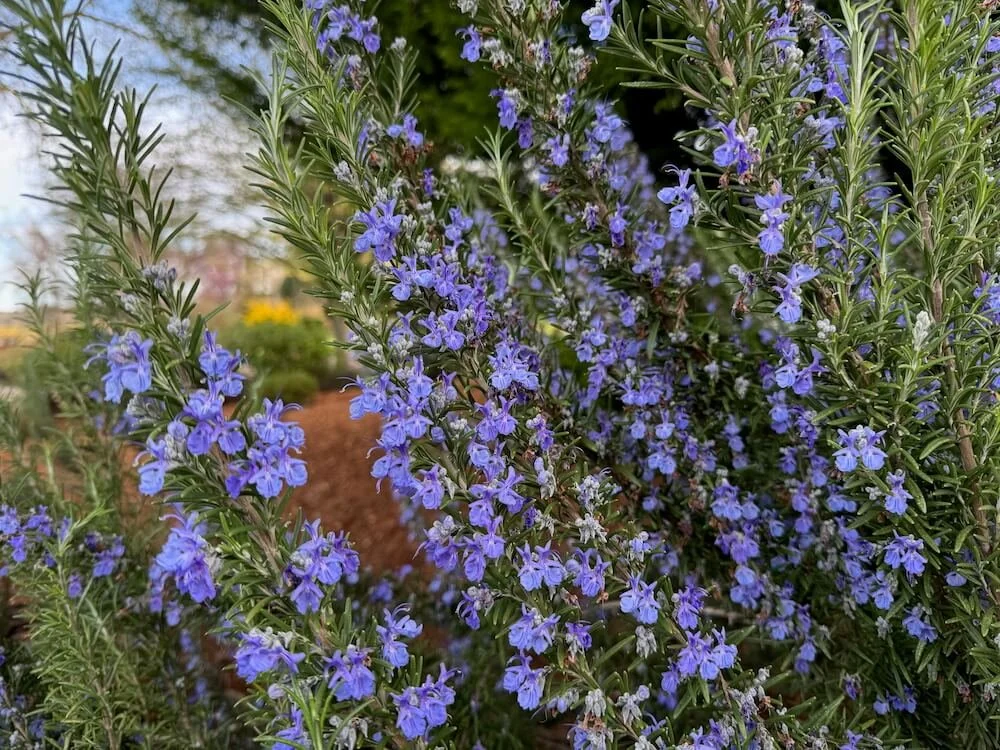
Rosemary offers strong deer resistance along with evergreen structure and fragrance, making it a reliable choice for gardens where browsing pressure is a concern. Rosmarinus officinalis is grown for its aromatic, needle-like foliage and small blue flowers that appear from late winter into spring. Its woody stems and strong scent help deter deer.
Well suited to borders, slopes, or herb plantings, this shrub performs best in sunny, well-drained sites where its natural form can develop fully. Rosmarinus officinalis ‘Prostratus’ adds a low, trailing habit that works well for groundcover or cascading over edges, while Rosmarinus officinalis ‘Tuscan Blue’ (shown here) offers a more upright form with larger, deep blue flowers. Together, these selections provide fragrance, structure, and dependable performance in landscapes where deer resistance is essential.
FOTHERGILLA
02
Highlights ►
3 to 6 ft tall
3 to 6 ft wide
Full sun
Deciduous
Slow growth
Moderate resistance
Aromatic foliage
Flowers
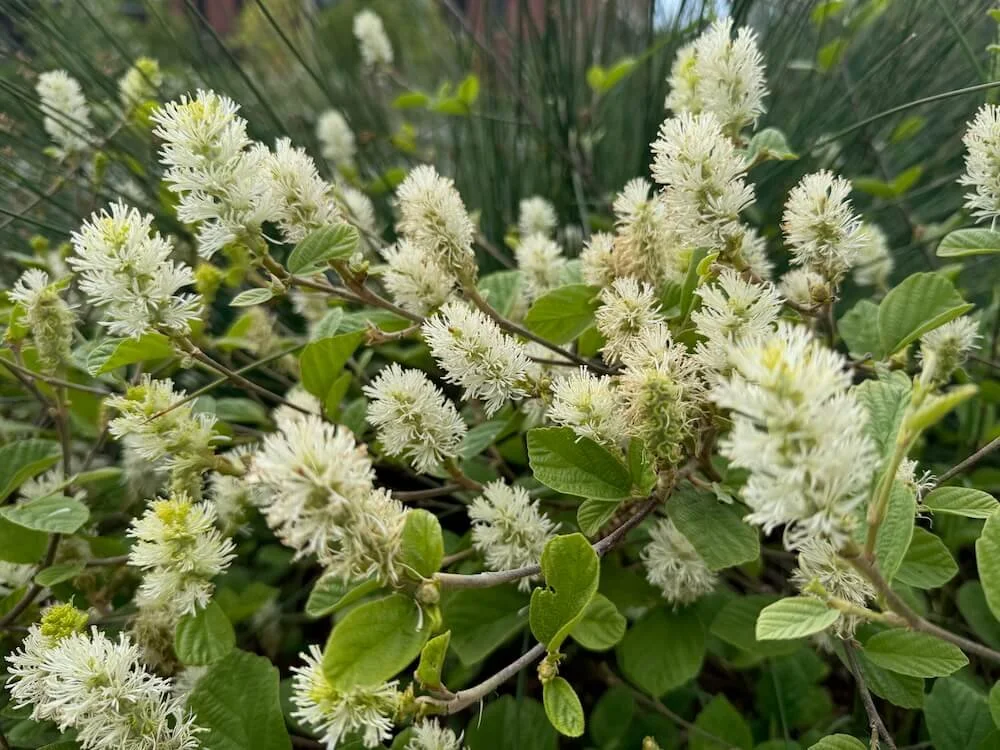
Fothergilla brings soft texture and seasonal interest while remaining relatively unbothered by deer in the landscape, even in mixed woodland plantings. Fothergilla gardenii (shown here) is grown for its compact habit and bottlebrush-like white flowers that appear in early spring, often before the foliage fully emerges. Its dense branching and lightly aromatic leaves make it less appealing to deer while providing consistent structure and seasonal change.
An excellent choice for borders, woodland edges, or naturalized areas, these shrubs maintain steady growth with little impact from wildlife browsing. Fothergilla x intermedia ‘Mount Airy’ offers a larger presence with abundant spring flowers and notable fall color in shades of yellow, orange, and red. Together, these selections provide soft bloom, strong seasonal interest, and dependable performance in deer-resistant plantings.
MOUNTAIN LAUREL (Kalmia)
03

Highlights ►
5 to 10 ft tall
5 to 10 ft wide
Partial shade
Evergreen
Slow growth
High resistance
Not aromatic
Flowers
Mountain laurel combines evergreen structure with dependable deer resistance, making it a steady presence in shaded garden settings with consistent year-round coverage. Kalmia latifolia is grown for its dense, glossy foliage and clusters of cup-shaped flowers that appear in late spring, ranging from soft pink to white. Its leathery leaves and naturally compact growth make it less appealing to deer while maintaining a consistent, structured presence, providing long-lasting form and reliable structure throughout the entire growing season.
A strong fit for borders, woodland edges, or foundation plantings, these shrubs maintain consistent coverage while experiencing minimal browsing damage from wildlife. Kalmia latifolia ‘Pink Charm’ (shown here) adds clear pink flowers with deeper markings, creating a brighter, more defined display in spring. Together, these selections offer evergreen form, seasonal color, and reliable performance in deer-resistant landscapes.
WINTERCREEPER (Euonymus fortuneii)
04
Highlights ►
2 to 4 ft tall
3 to 5 ft wide
Full sun
Evergreen
Moderate growth
Moderate resistance
Flowers
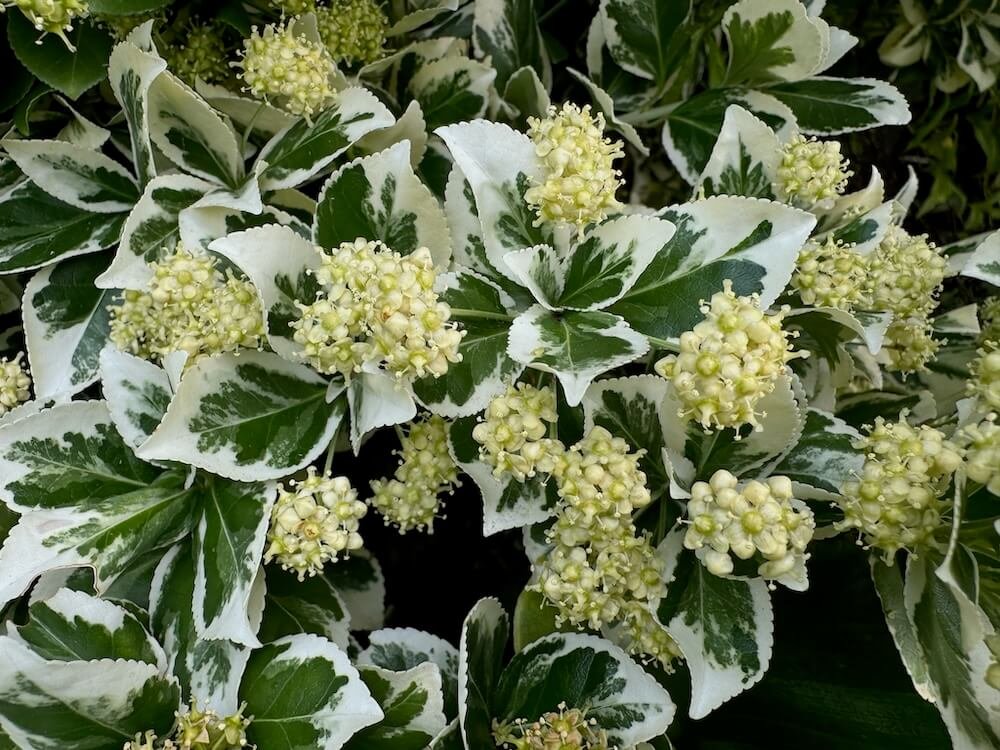
Wintercreeper provides adaptable evergreen coverage with foliage that is typically overlooked by deer, allowing it to maintain a dense, uniform appearance. Euonymus fortunei ‘Emerald Gaiety’ (shown here) is grown for its green leaves edged in white, forming a dense, low-growing mat or small shrub that provides consistent structure. Its leathery foliage and vigorous growth make it less appealing to deer while maintaining reliable groundcover or hedge form.
Ideal for borders, slopes, or low hedges, these shrubs perform dependably with minimal damage from wildlife. Euonymus fortunei ‘Moonshadow’ adds a bold yellow center with green margins for strong contrast, while Euonymus fortunei ‘Emerald ’n’ Gold’ offers green leaves edged in gold that take on pink tones in cooler weather. Together, these selections provide year-round coverage, varied foliage color, and dependable performance in deer-resistant plantings.
LAVANDER (Lavandula)
05
Highlights ►
1 to 3 ft tall
2 to 4 ft wide
Full sun
Evergreen
Moderate growth
High resistance
Aromatic foliage
Flowers
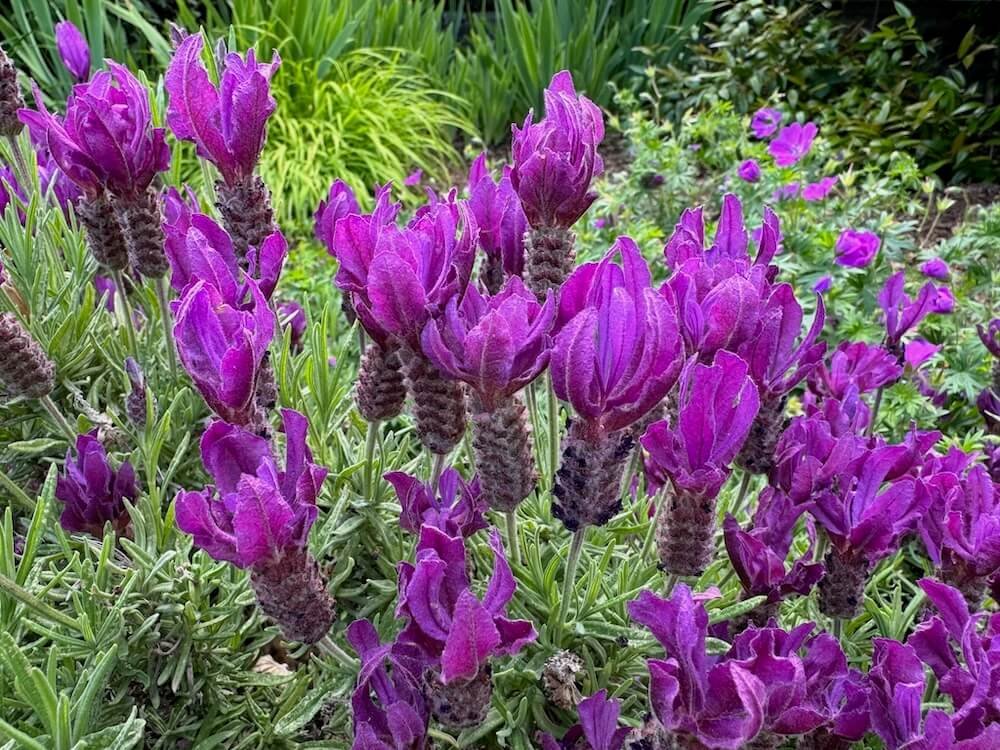
Lavender brings fragrance, texture, and natural resilience to the garden, with foliage and scent that deer tend to avoid in most settings. Lavandula angustifolia ‘Platinum Blonde’ is grown for its variegated green and cream foliage paired with soft purple flower spikes, creating a bright, refined display from late spring into summer. Lavandula angustifolia ‘Hidcote’ adds a more compact form with deep purple blooms that create a richer, more saturated look. Its aromatic oils and slightly woody stems contribute to its reduced appeal to deer while maintaining a tidy, structured presence.
Ideal for sunny borders, edging, or gravel plantings, this shrub holds up well with minimal interference from wildlife. Lavandula stoechas ‘Anouk Deep Rose’ (shown here) adds bold, deep rose-purple flower heads with distinctive upright bracts, bringing stronger color and contrast to the planting. Together, these selections provide dependable bloom, fragrant foliage, and consistent performance in deer-resistant garden settings
CINQUEFOIL (Potentilla)
06
Highlights ►
2 to 4 ft tall
2 to 4 ft wide
Full sun
Deciduous
Moderate growth
Moderate resistance
Not aromatic
Flowers
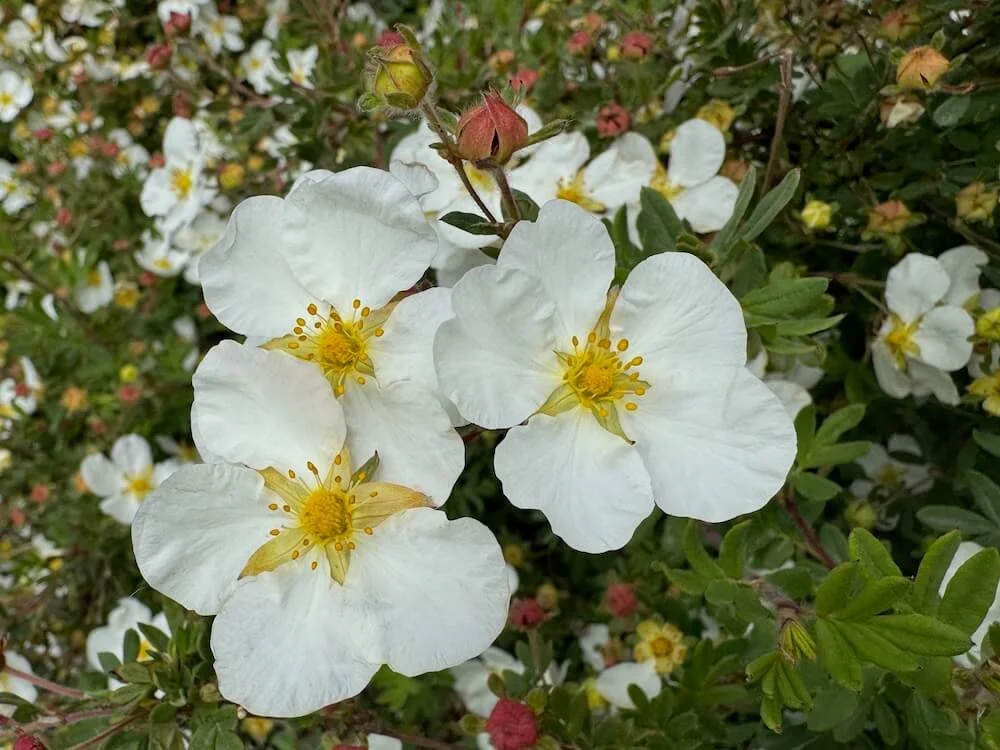
Cinquefoil delivers long-lasting color and compact growth, with foliage and texture that are generally not favored by deer in most garden conditions. Potentilla fruticosa is grown for its small, bright flowers that appear from late spring through summer and often into early fall, set against fine-textured green foliage. Its dense, mounded habit and slightly coarse texture make it less appealing to deer while maintaining consistent coverage.
A strong fit for borders, low hedges, or mass plantings, these shrubs maintain steady growth with minimal browsing damage. Potentilla fruticosa ‘Abbotswood’ (shown here) adds clean white flowers that brighten the planting, while ‘Goldfinger’ offers rich yellow blooms that hold their color well. Together, these selections provide long-lasting bloom, durable structure, and dependable performance in deer-resistant plantings.
BUTTERFLY BUSH (Buddleia)
07
Highlights ►
4 to 8 ft tall
4 to 8 ft wide
Full sun
Deciduous
Fast growth
Moderate resistance
Aromatic foliage
Flowers
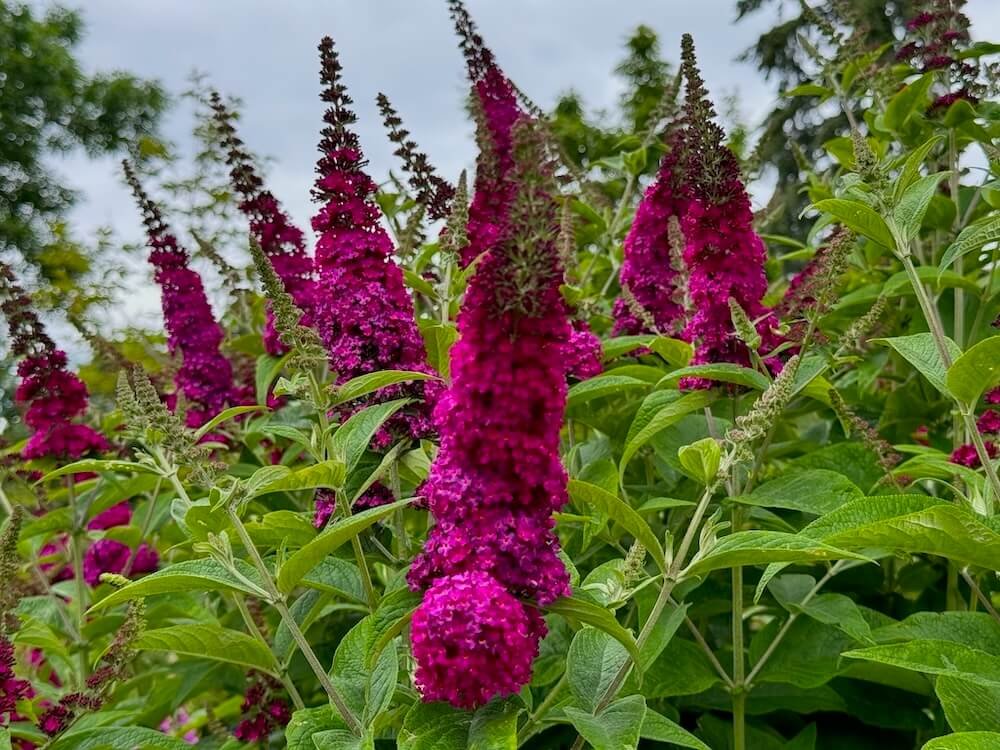
Butterfly bush offers bright summer color and a growth habit that is generally avoided by deer, making it a reliable choice in gardens with browsing pressure. Buddleia davidii ‘Miss Molly’ (shown here) is grown for its rich red flower spikes that appear from mid-summer into early fall, creating a bold display against gray-green foliage. Its slightly coarse leaves and aromatic qualities help reduce deer interest while still supporting pollinators throughout the season.
A natural fit for borders, open plantings, or wildlife-friendly areas, this shrub maintains strong performance with minimal interference from deer. Its upright, arching habit fills in quickly, forming a loose, flowering screen that adds both height and movement. Together, these qualities provide long-lasting bloom, dependable structure, and consistent performance in deer-resistant landscapes.
JUNIPER (Juniperus)
08
Highlights ►
2 to 10 ft tall
3 to 12 ft wide
Full sun
Evergreen
Moderate growth
High resistance
Aromatic foliage
Subtle flowers
Junipers provide tough, evergreen structure with prickly, aromatic foliage that naturally discourages deer browsing, even in exposed or drought-prone landscapes. Juniperus squamata ‘Blue Star’ is grown for its dense, mounded form and silvery-blue needles that provide year-round color. Its sharp, aromatic foliage is typically avoided by deer while maintaining a compact, consistent presence.
A natural choice for slopes, borders, or groundcover plantings, these shrubs maintain their shape and coverage with minimal impact from wildlife. Juniperus conferta ‘Golden Blue Pacific’ (shown here) adds a spreading habit with green and gold-toned foliage, while Juniperus horizontalis ‘Copper Harbor’ offers a low, trailing form that develops coppery tones in cooler weather. Together, these selections provide dependable structure, varied color, and reliable performance in deer-resistant landscapes.
BLUEBEARD (Caryopteris)
09
Highlights ►
2 to 4 ft tall
2 to 4 ft wide
Full sun
Deciduous
Moderate growth
Moderate resistance
Aromatic foliage
Flowers
Bluebeard brings late-season color and fine texture to the garden, with aromatic foliage that is typically avoided by deer. Caryopteris x clandonensis ‘Dark Knight’ is grown for its deep blue flowers that appear from mid to late summer, creating a strong contrast against silvery-green foliage. The scent and texture of the leaves help reduce browsing.
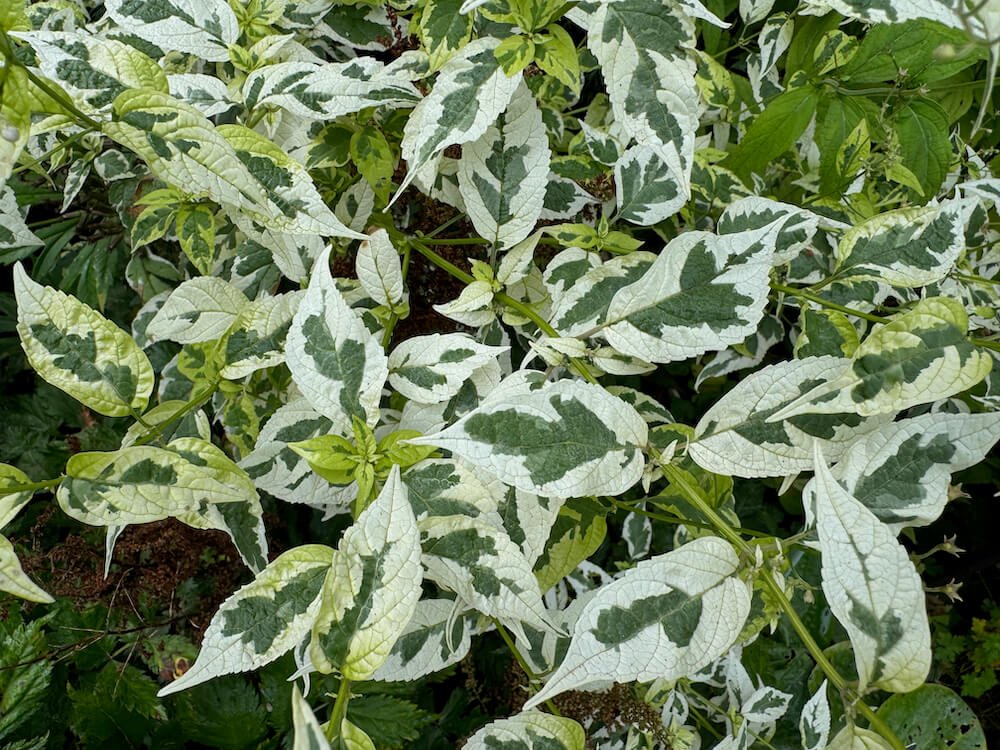
A valuable addition to borders, dry plantings, or sunny garden spaces, these shrubs hold their shape with minimal interference from wildlife. Caryopteris x clandonensis ‘Gold Crest’ adds golden foliage that brightens the planting, while Caryopteris divaricata ‘Snow Fairy’ (shown here) introduces variegated leaves and a softer, more relaxed form. Together, these selections provide dependable bloom, contrasting foliage, and consistent performance in deer-resistant landscapes.
PIERIS
10

Highlights ►
4 to 8 ft tall
4 to 8 ft wide
Partial shade
Evergreen
Slow growth
High resistance
Not aromatic
Flowers
Pieris provides early-season interest and evergreen structure, with qualities that make it less appealing to deer in many garden settings. Pieris japonica ‘Valley Valentine’ (shown here) is grown for its deep pink, urn-shaped flowers that appear from late winter into early spring, creating a rich display against glossy foliage. Its dense, compact habit maintains a full, consistent form while contributing reliable year-round presence.
A natural choice for woodland borders, foundation plantings, or shaded beds, these shrubs maintain their shape with minimal browsing. Pieris japonica ‘Cavatine’ offers a smaller, tidy form with white flowers, while Pieris japonica ‘Flaming Silver’ adds variegated foliage with pink-flushed new growth that brightens the planting. Together, these selections provide early bloom, layered foliage interest, and steady performance in deer-resistant landscapes.
Related: Explore All Pieris ➔
MEXICAN ORANGE (Choisya)
11
Highlights ►
5 to 8 ft tall
5 to 8 ft wide
Full sun to partial shade
Evergreen
Moderate growth
High resistance
Aromatic foliage
Flowers
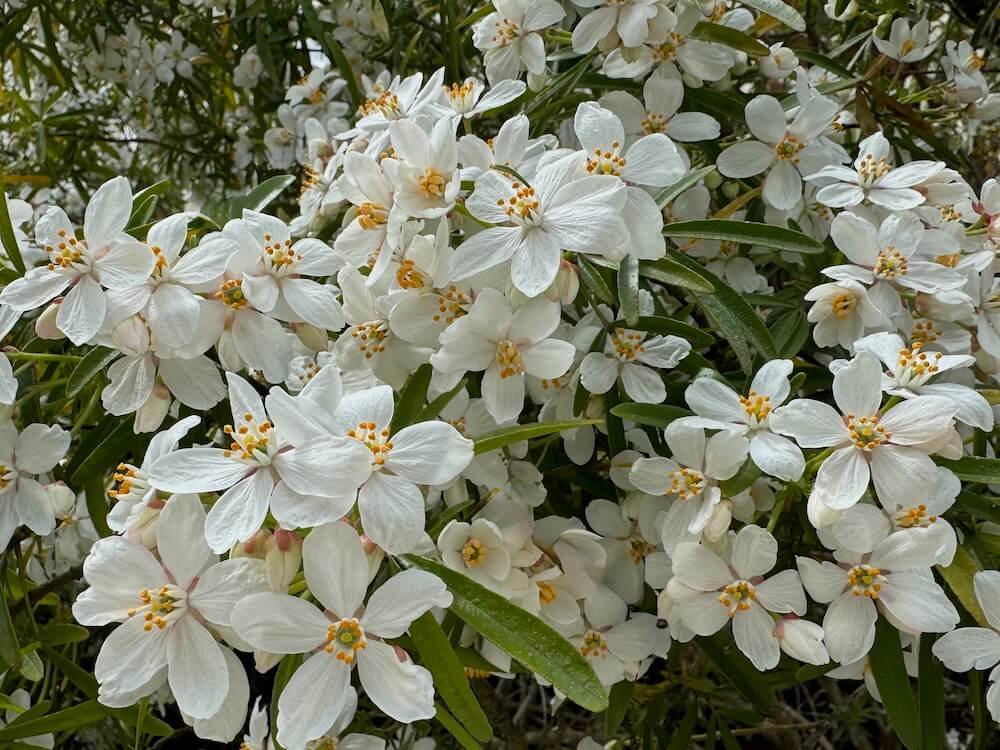
Mexican oranges combine fragrant evergreen foliage, aromatic oils, and natural deer resistance, making them useful additions to shrub borders where browsing pressure is a concern. Choisya x dewitteana ‘Aztec Pearl’ (shown here) produces masses of star-shaped white flowers above finely divided glossy foliage that releases a citrus fragrance when brushed. The refined leaf texture gives the shrub a lighter appearance while maintaining year-round structure and screening value within the landscape.
Fragrance remains one of the defining qualities of this group throughout the growing season. Choisya ternata bears clusters of white blossoms that often appear in spring and again later in the year, set against broad lustrous evergreen leaves. Their rounded forms and aromatic foliage bring texture and seasonal interest to deer-resistant plantings while complementing mahonias, daphnes, and other evergreen shrubs.
LAVENDER COTTON (Santolina)
12
Highlights ►
1 to 2 ft tall
2 to 3 ft wide
Full sun
Evergreen
Moderate growth
High resistance
Aromatic foliage
Flowers
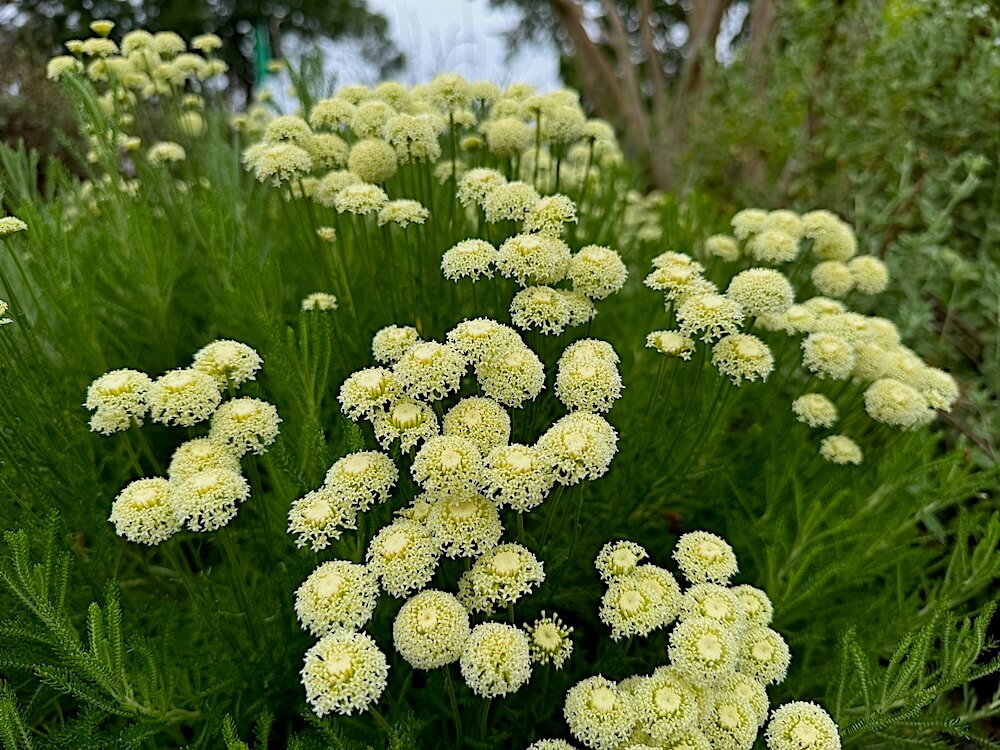
Lavender cotton offers aromatic foliage and a dry, finely textured presence that deer tend to avoid, making it especially useful in exposed, low-water gardens and sunny planting areas. Santolina chamaecyparissus ‘Pretty Carroll’ is grown for its compact, mounded habit and silvery foliage, with small yellow button-like flowers appearing in early to mid-summer. Its aromatic leaves and dry, somewhat woody texture help deter deer while maintaining a neat, consistent form.
Well suited to borders, edging, or gravel gardens, these shrubs perform reliably with minimal damage from wildlife. Santolina chamaecyparissus ‘Lemon Queen’ (shown here) adds a lighter tone with pale yellow blooms that brighten the planting while retaining the same deer-resistant qualities. Together, these selections provide durable structure, subtle seasonal color, and dependable performance in deer-resistant plantings.
WEIGELA
13
Highlights ►
4 to 8 ft tall
4 to 8 ft wide
Full sun
Deciduous
Moderate growth
Moderate resistance
Not aromatic
Flowers
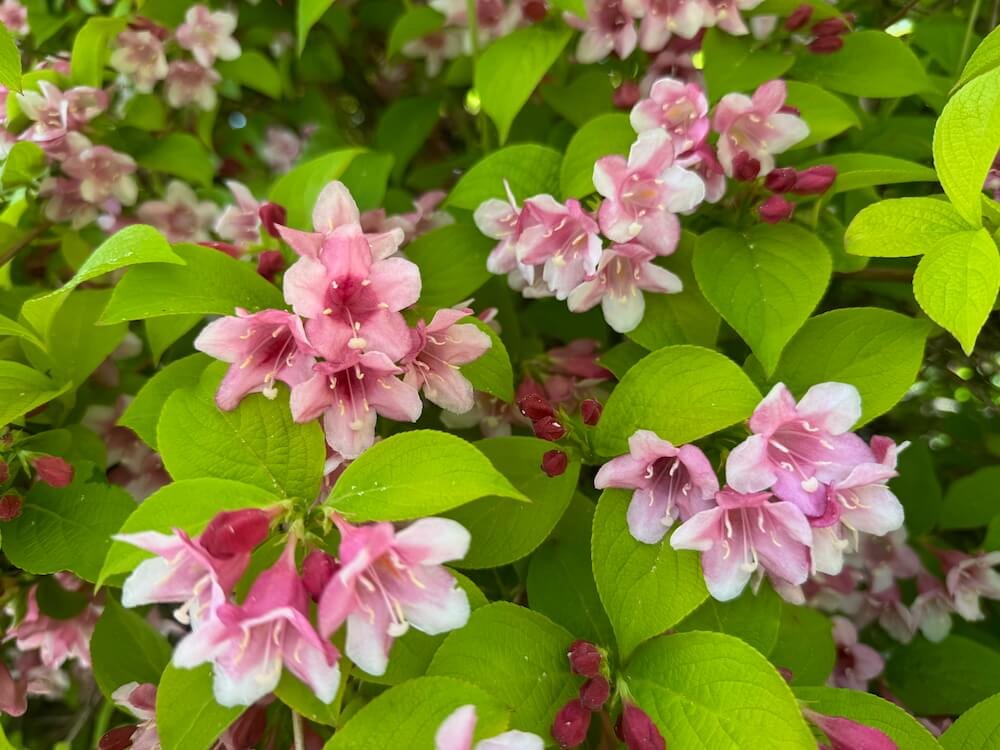
Weigela brings dependable spring color and a growth habit that is generally less appealing to deer, making it a useful option in landscapes with moderate browsing pressure. Weigela florida ‘Verweig’ is grown for its compact form and variegated foliage edged in cream and pink, paired with soft pink blooms that appear in late spring. Its fine branching and dense habit allow it to maintain a full appearance while its foliage texture helps reduce deer interest.
An excellent addition to borders, low hedges, or mixed plantings, these shrubs provide consistent coverage with minimal browsing damage. Weigela florida ‘Tango’ offers a compact, mounded form with bright pink flowers and yellow throats, while Weigela ‘Looymansii Aurea’ (shown here) adds golden foliage that brings contrast and brightness to the planting. Together, these selections provide layered color, seasonal bloom, and reliable performance in deer-resistant garden settings.
CALIFORNIA LILAC (Ceanothus)
14
Highlights ►
4 to 8 ft tall
6 to 8 ft wide
Full sun
Evergreen
Fast growth
Moderate to high resistance
Not aromatic
Flowers
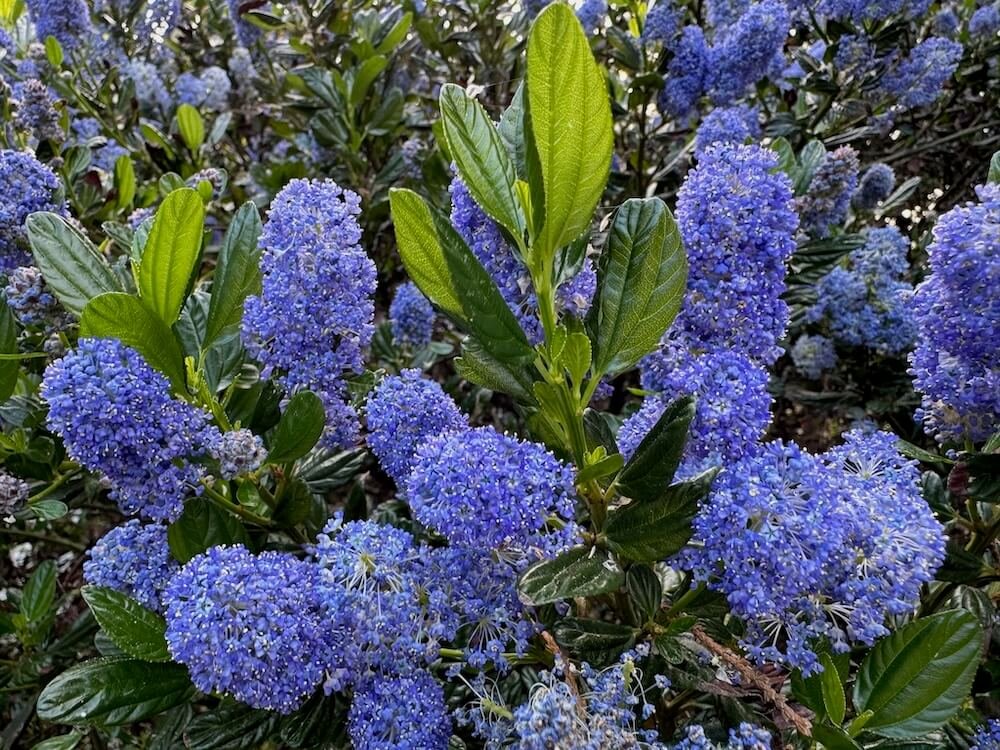
California lilacs combine evergreen structure with masses of vivid blue flowers, bringing strong seasonal color to deer-resistant shrub plantings. Ceanothus ‘Dark Star’ (shown here) is grown for its dense branching and intensely colored deep cobalt-blue flower clusters that cover the shrub in spring. The small leathery leaves and woody stems are generally less appealing to browsing deer, while the abundant blooms attract pollinators and create a dramatic display against the dark green foliage.
Texture and flower intensity make these shrubs valuable additions to sunny borders, slopes, and low-water landscapes. Ceanothus thyrsiflorus ‘Victoria’ produces large trusses of rich blue flowers above glossy evergreen foliage, creating broad sweeps of color during the flowering season. Their evergreen presence helps maintain year-round garden structure, while the fine-textured foliage contrasts with larger-leaved shrubs, ornamental grasses, and drought-tolerant perennials.
OREGON GRAPE (Mahonia)
15
Highlights ►
3 to 5 ft tall
3 to 5 ft wide
Full to part sun
Evergreen
Moderate growth
High resistance
Not aromatic
Flowers
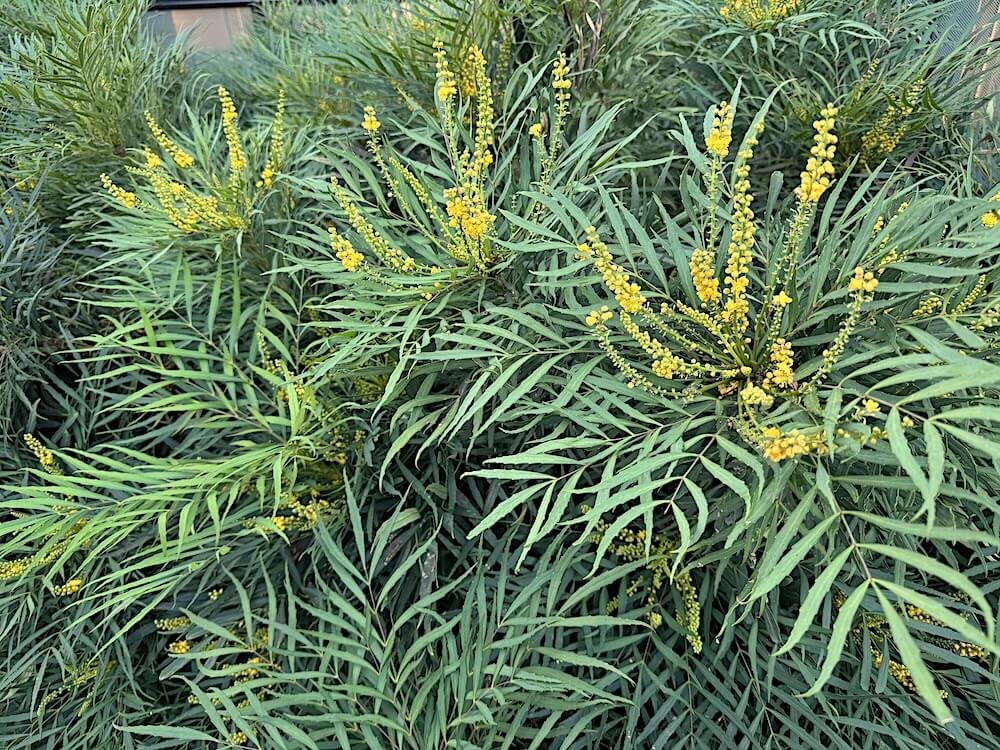
Oregon grapes bring evergreen foliage, flowers, and strong deer resistance to the garden with leathery leaves and coarse texture that browsing animals often avoid. Mahonia eurybracteata subsp. ganpinensis ‘Soft Caress’ (shown here) offers a different look, with finely divided foliage, while retaining the durability of mahonias. Clusters of yellow flowers add bright color against the dark foliage, creating interest during seasons when many other shrubs are relatively quiet.
Form and texture vary widely across the group, allowing mahonias to fill several different landscape roles. Mahonia x media ‘Charity’ develops tall upright stems topped with dramatic spikes of fragrant yellow flowers, while Mahonia repens spreads gradually as a low evergreen groundcover with holly-like foliage and blue berries. Their bold foliage patterns and year-round presence help create depth in woodland gardens, deer-resistant borders, and naturalistic plantings.
DAPHNE
16
Highlights ►
3 to 4 ft tall
3 to 4 ft wide
Partial shade
Evergreen
Slow growth
High resistance
Aromatic foliage
Flowers
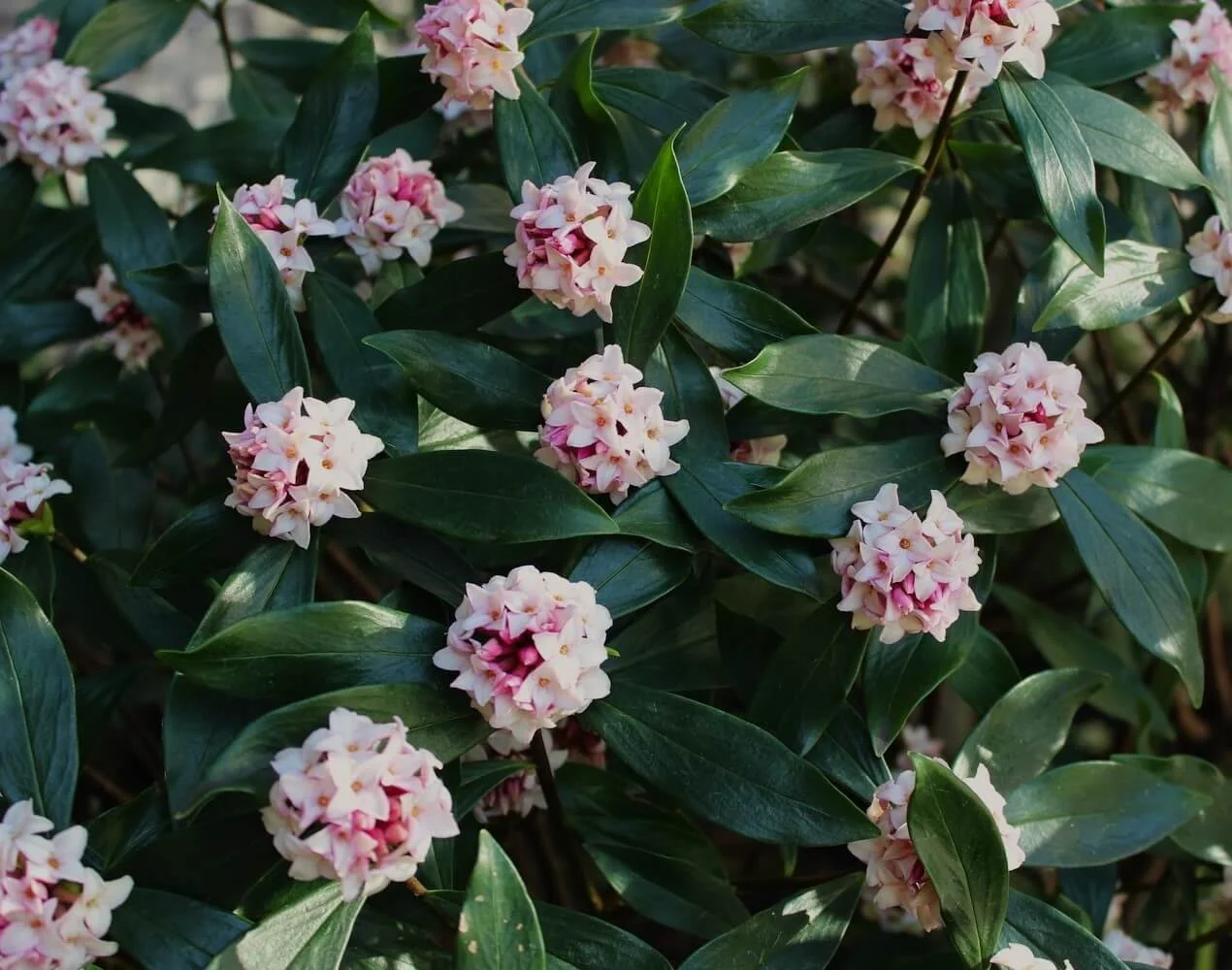
Daphnes combine evergreen foliage, intensely fragrant flowers, and moderate deer resistance through their aromatic leaves and stems, which are often overlooked by browsing deer. Daphne odora (shown here) produces clusters of pink buds that open to pale pink and white flowers, releasing a powerful sweet fragrance in late winter and early spring. The glossy evergreen foliage helps maintain year-round structure while bringing color and scent to sheltered garden spaces.
Foliage markings give individual selections distinct ornamental value beyond their flowers. Daphne odora ‘Aureomarginata’ develops dark green leaves edged in gold, while Daphne odora ‘Maejima’ features broader yellow variegation that brightens shaded borders throughout the year. Their compact habits make them especially useful near pathways, entrances, and seating areas where both foliage and fragrance can be appreciated up close.
STAR ANISE (Illicium)
17
Highlights ►
4 to 6 ft tall
3 to 5 ft wide
Part to full shade
Evergreen
Moderate growth
High resistance
Aromatic foliage
Flowers
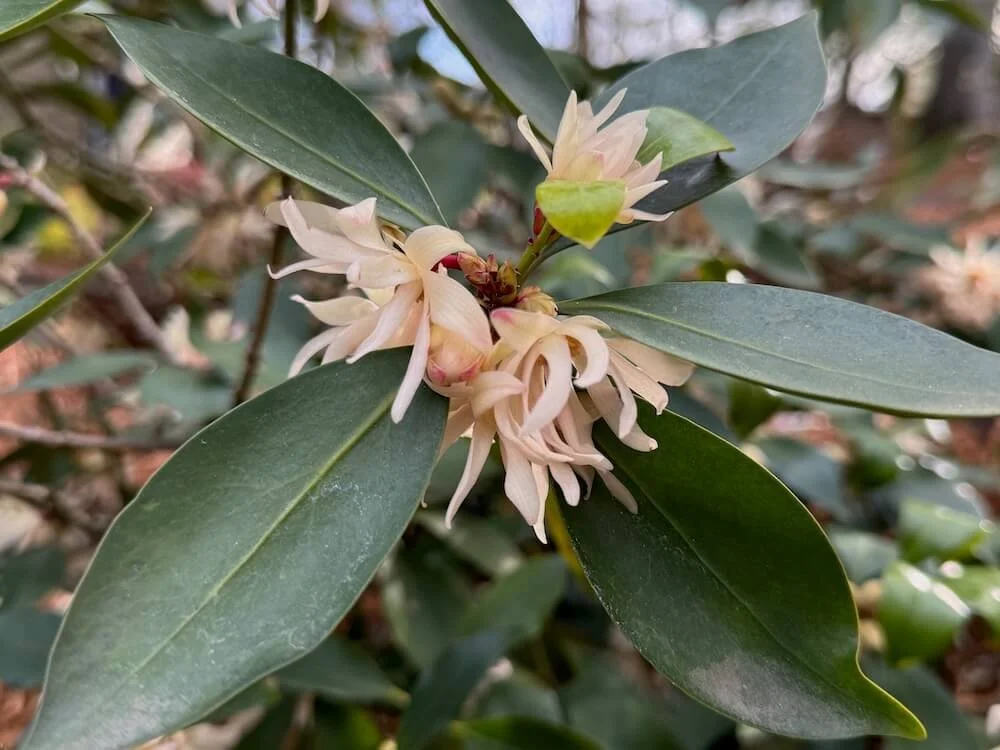
Japanese star anise combines evergreen foliage, unusual flowers, and natural deer resistance through aromatic leaves that browsing animals generally avoid. Illicium anisatum produces glossy dark green foliage and creamy white flowers with a hint of burgundy near the centers that appear among the leaves in spring. The dense branching habit creates a lush appearance throughout the year while adding texture and screening value to woodland gardens and shaded borders.
Foliage color adds another dimension to these distinctive shrubs. Illicium anisatum ‘HinPurlf’ (shown here) develops rich burgundy-purple new growth and stems that contrast with the mature green foliage, creating changing color through the growing season. Their broad evergreen leaves and layered branching help create depth in deer-resistant plantings while pairing effectively with ferns, mahonias, and other shade-loving shrubs.
GREVILLEA
18
Highlights ►
4 to 6 ft tall
4 to 6 ft wide
Full sun
Evergreen
Moderate growth
High resistance
Not aromatic
Flowers
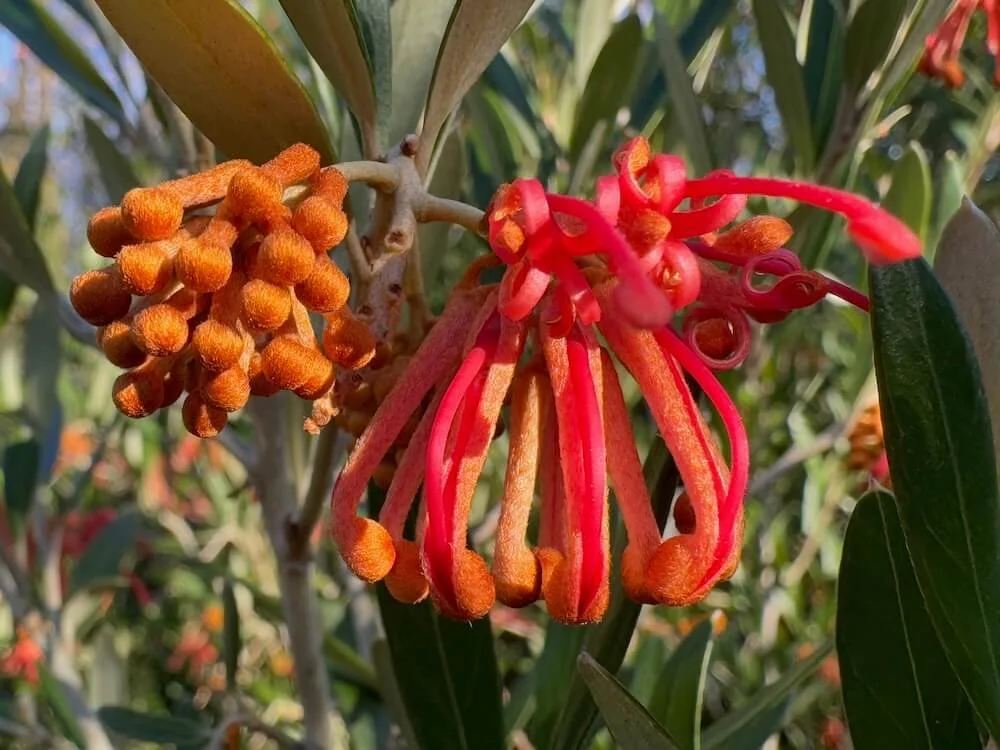
Grevilleas combine evergreen foliage, distinctive flowers, and natural deer resistance through their tough leaves and often prickly textures that browsing animals tend to avoid. Grevillea victoriae produces clusters of curved orange-coral to red flowers that stand out against gray-green foliage for extended periods of the year. The blooms attract hummingbirds while the dense branching habit provides year-round structure and texture in deer-resistant shrub borders.
Flower color and foliage texture create a wide range of landscape effects among grevillea selections. Grevillea victoriae ‘Marshall Olbricht’ (shown here) develops abundant orange-red flowers against silvery foliage, while Grevillea x ‘Poorinda Leane’ produces apricot flowers above gray-green leaves. Their fine-textured foliage and extended bloom periods bring color and visual interest to deer-resistant plantings while contrasting effectively with broader-leaved shrubs and grasses.
ROCK ROSE (Cistus)
19
Highlights ►
2 to 3 ft tall
4 to 6 ft wide
Full sun
Evergreen
Moderate growth
High resistance
Aromatic foliage
Flowers
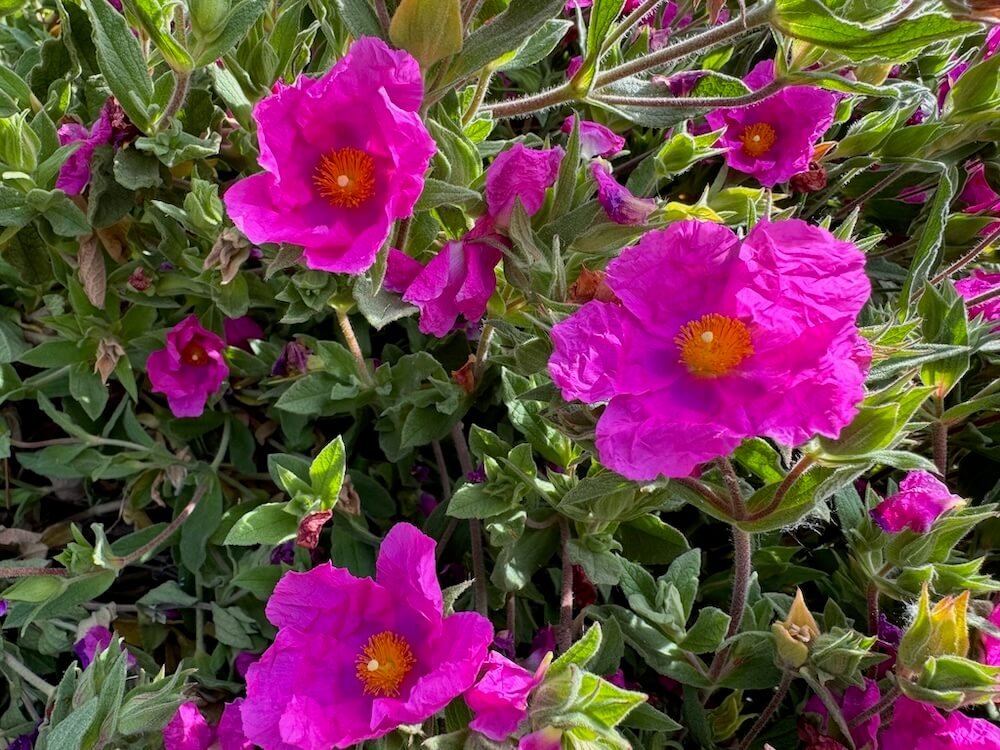
Rock roses combine aromatic evergreen foliage, drought tolerance, and strong deer resistance through their resinous leaves and rugged Mediterranean character. Cistus x pulverulentus ‘Sunset’ (shown here) produces masses of crinkled magenta-pink flowers with golden centers that cover the shrub in late spring and early summer above soft gray-green foliage. The blooms create a vivid display while the compact branching habit provides texture and form to deer-resistant landscapes.
Flower markings and foliage tones give different rock roses distinct personalities in the garden. Cistus x purpureus develops large rosy-purple flowers marked with deep maroon blotches near the petal bases, while Cistus x hybridus bears abundant white flowers with bright yellow centers against dark green leaves. Their informal habits and evergreen presence bring color and texture to deer-resistant plantings while blending naturally with lavender, grevilleas, and other sun-loving shrubs.
BOXWOOD (Buxus)
20
Highlights ►
2 to 6 ft tall
2 to 5 ft wide
Partial shade
Evergreen
Slow growth
Moderate resistance
Not aromatic
Subtle flowers
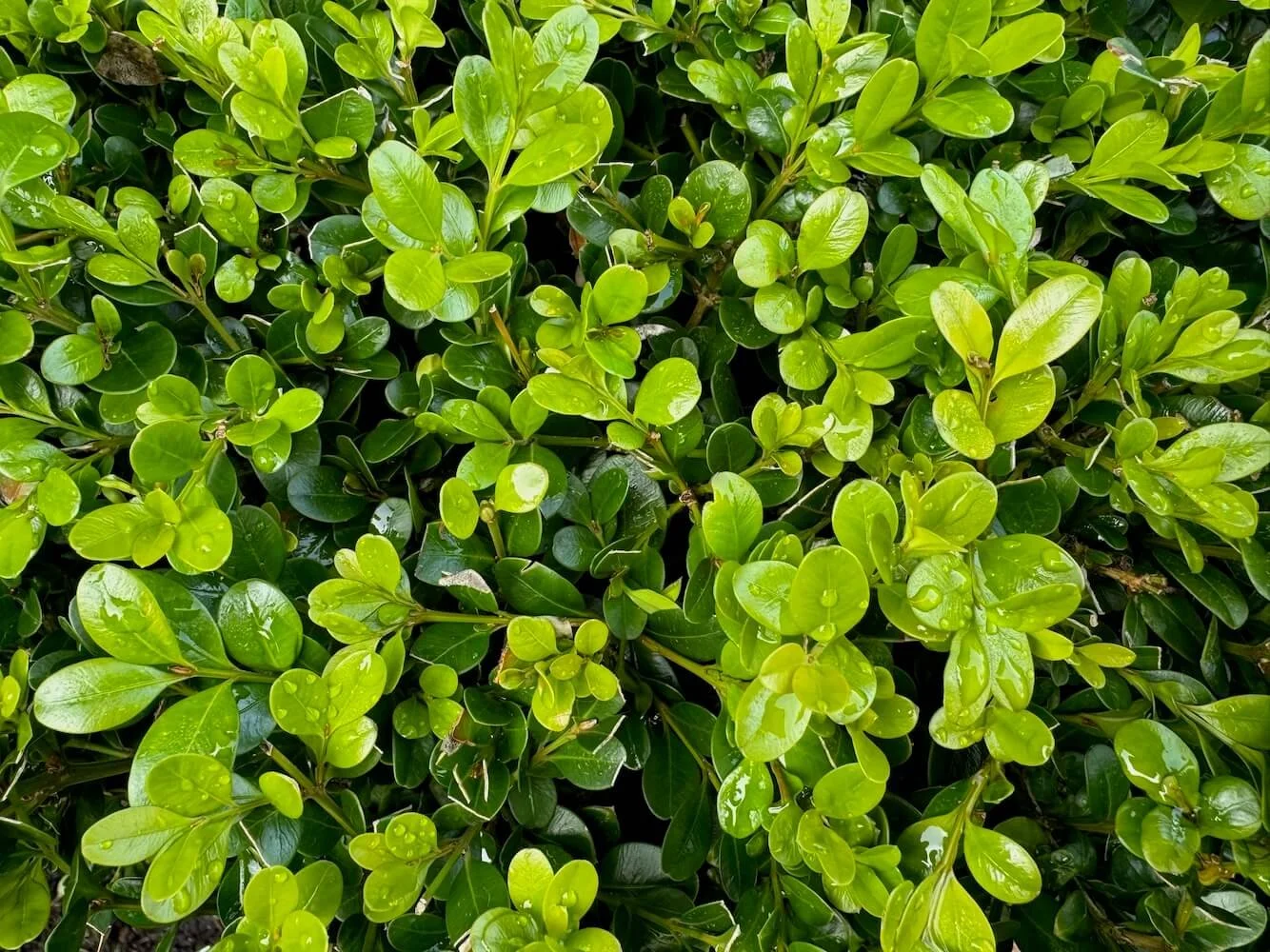
Boxwoods provide classic evergreen structure with foliage that is often avoided by deer, making them a dependable choice where browsing can be an issue. Buxus microphylla var. japonica ‘Green Beauty’ is grown for its dense, rounded habit and rich green leaves that hold their color well throughout the year. Buxus microphylla var. japonica ‘Winter Gem’ (shown here) offers a similar compact form with good winter color retention, maintaining a full, consistent appearance with minimal pruning.
A natural fit for hedges, borders, or foundation plantings, these shrubs maintain clean lines and structure with relatively little impact from wildlife. Buxus sempervirens ‘Variegata’ adds green leaves edged in creamy white, introducing brightness and contrast while retaining the same dependable form. Together, these selections provide strong evergreen presence, refined texture, and reliable performance in deer-resistant garden settings.