
Drought Tolerant Shrubs
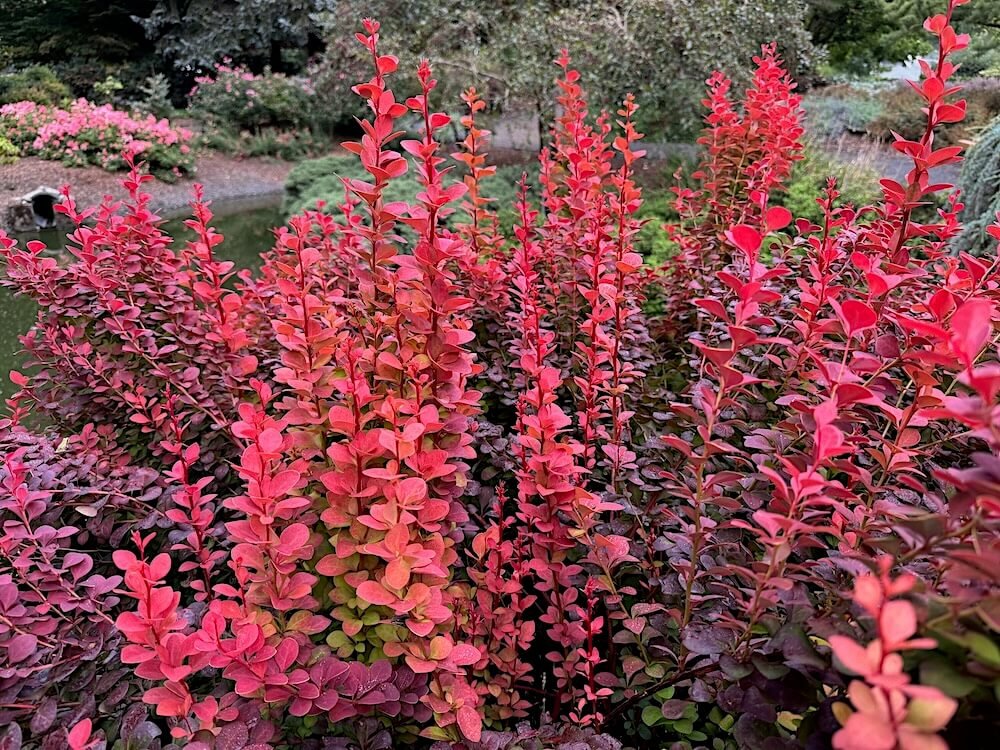
Berberis thunbergii 'Orange Rocket'
Deciduous shrub with narrow upright growth and bright orange red foliage in spring and summer with vivid fall color. Grows 4 to 5 feet tall, features sharp thorns; ideal for hedges, barriers, and borders. Zones: 4 to 9.
Drought tolerant shrubs provide reliable structure and color while requiring minimal water once established. Adapted to dry conditions, they often feature small or silvery leaves, thick foliage, or deep root systems that help conserve moisture. Their flowers range from soft neutrals to brighter seasonal tones, adding interest without demanding frequent irrigation.
Well-suited for water-wise landscapes, these shrubs perform in challenging sites such as slopes, exposed areas, and lean soils. Many require little maintenance beyond occasional pruning, making them practical for both formal and informal plantings. Used for hedging, screening, or as standalone accents, drought tolerant selections offer lasting performance with efficient water use.
SPIREA
01


Drought-tolerant spiraeas offer reliable color and fine texture while performing well in dry, well-drained conditions once established, making them useful additions to water-wise landscapes. Spiraea japonica ‘Goldflame’ is grown for its warm-toned foliage and clusters of rosy-pink flowers that appear in early to mid-summer, creating a bright display against golden new growth. Spiraea betulifolia ‘Tor’ adds white blooms in late spring, along with good resilience.
They are well suited to borders, low hedges, or mass plantings where durability and seasonal color are important. Spiraea nipponica offers arching branches covered in small white flowers in late spring, while Spiraea japonica ‘Minspil04’ (shown here) provides vibrant pink flowers paired with colorful foliage. Together, these selections provide dependable drought performance, and varied bloom color.
GREVILLEA
02
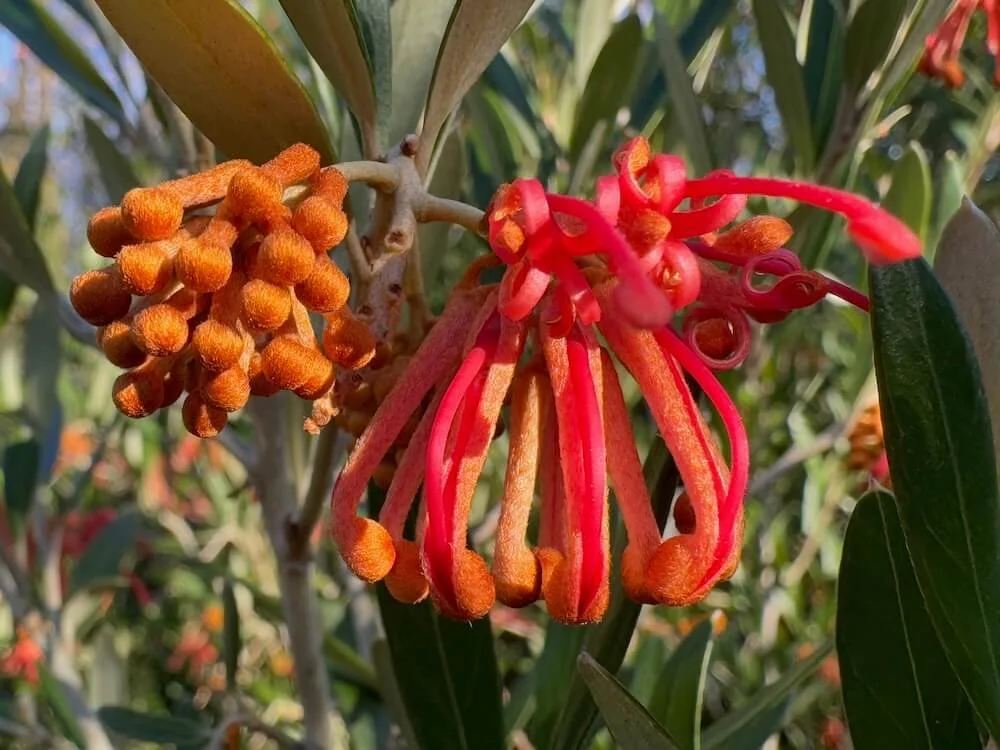
Drought-tolerant grevilleas offer bold color and distinctive texture while thriving in dry, well-drained conditions, making them well suited to water-wise landscapes. Grevillea victoriae is grown for its clusters of spider-like flowers in shades of orange to red, typically appearing from fall into winter and often continuing into early spring, set against narrow, gray-green foliage that adds contrast and a slightly silvery cast. Its open, branching habit creates a strong, informal structure, and once established, it requires minimal supplemental water.
They are well suited to slopes, coastal plantings, or dry borders where resilience and form are essential. Grevillea x ‘Poorinda Leane’ offers a more compact habit with soft orange blooms, while Grevillea victoriae ‘Marshall Olbricht’ (shown here) provides a fuller, denser presence with warm-toned flowers that stand out against the foliage. Together, these selections provide long-lasting color, and strong drought performance.
LAVENDER (Lavandula)
03
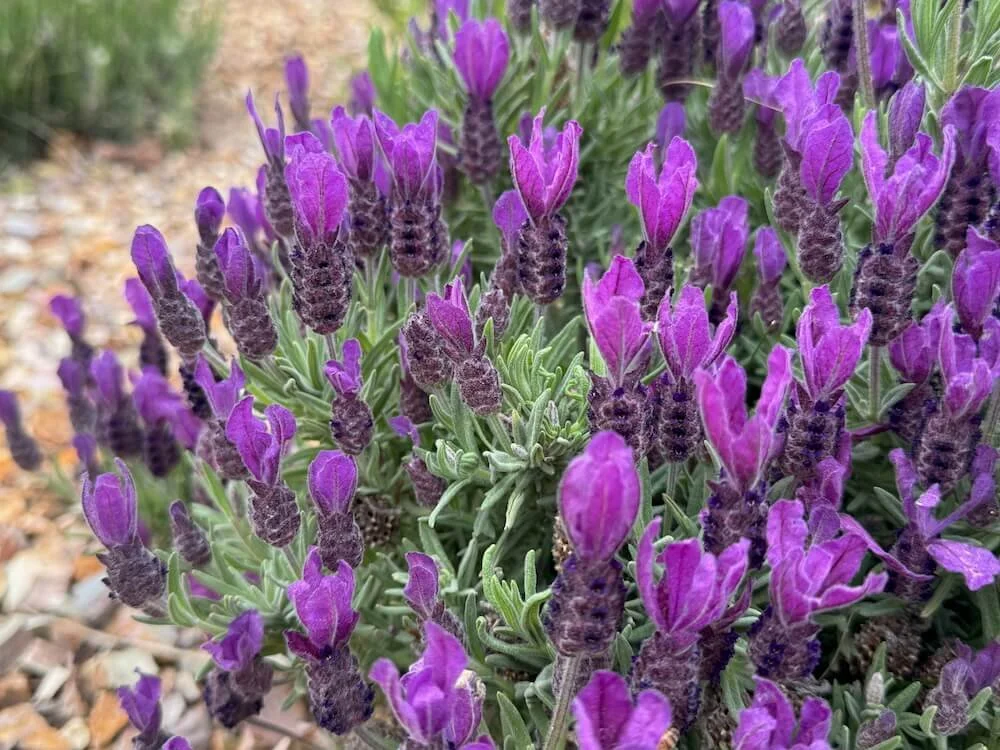
Lavenders are naturally adapted to dry climates, combining narrow foliage and deep-rooted growth that allow them to thrive with minimal supplemental water once established. Lavandula stoechas 'Primavera' (shown here) produces vibrant purple flower heads topped with showy bracts, creating a colorful display above silver-green foliage. The compact evergreen habit helps maintain structure in sunny landscapes while the aromatic leaves remain attractive through hot, dry weather.
Foliage color and flower form bring lasting interest to water-wise gardens throughout the growing season. Lavandula angustifolia ‘Munstead’ bears soft lavender-purple flower spikes above compact mounds of gray-green foliage, while Lavandula angustifolia ‘Hidcote’ produces deep purple blooms that create strong contrast against its silvery leaves. Their tolerance for heat, reflected sunlight, and lean soils makes them excellent companions for rock gardens, and other drought-conscious landscapes.
DAISY BUSH (Brachyglottis)
04
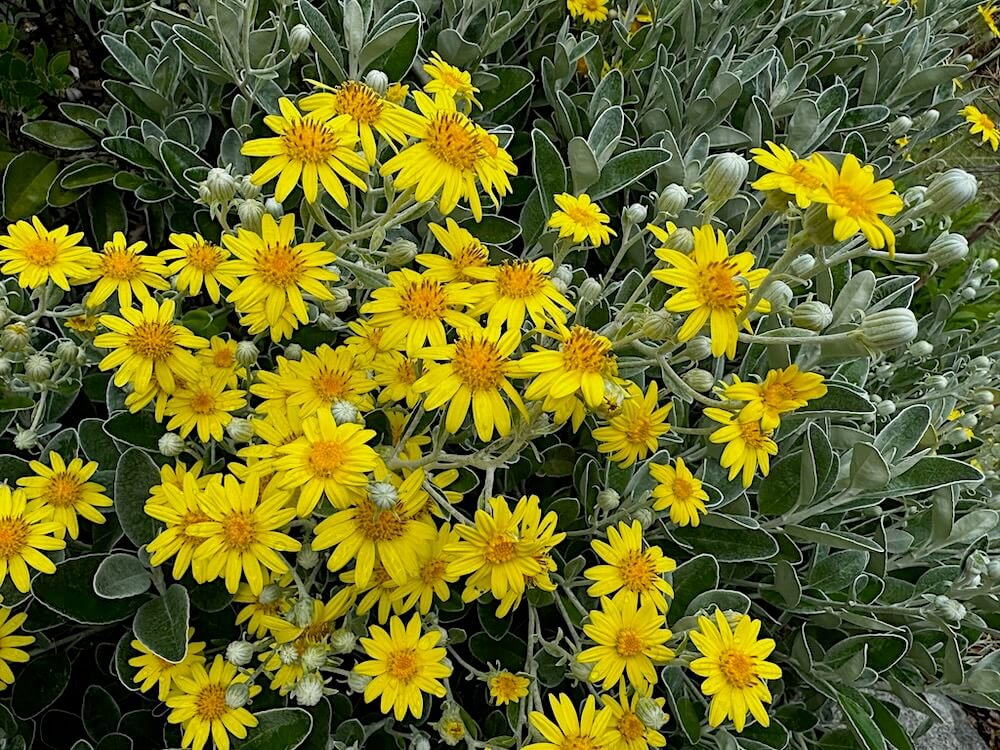
Daisy bush is well suited to dry gardens, combining drought tolerance with striking foliage that remains attractive throughout the year. Brachyglottis greyi (shown here) develops a dense framework of silvery-gray leaves covered in a soft felted texture that helps reduce moisture loss during warm weather. The reflective foliage brightens sunny planting areas and creates strong contrast with darker green shrubs, ornamental grasses, and flowering perennials.
Its foliage often provides as much visual impact as its flowers. Clusters of bright yellow daisy-like blooms appear above the silver leaves, creating a vivid color combination that stands out in water-wise landscapes. The shrub's compact form and tolerance for exposed conditions make it particularly effective on slopes, coastal sites, and other challenging locations where summer rainfall is limited and soils drain quickly.
JUNIPER (Juniperus)
05
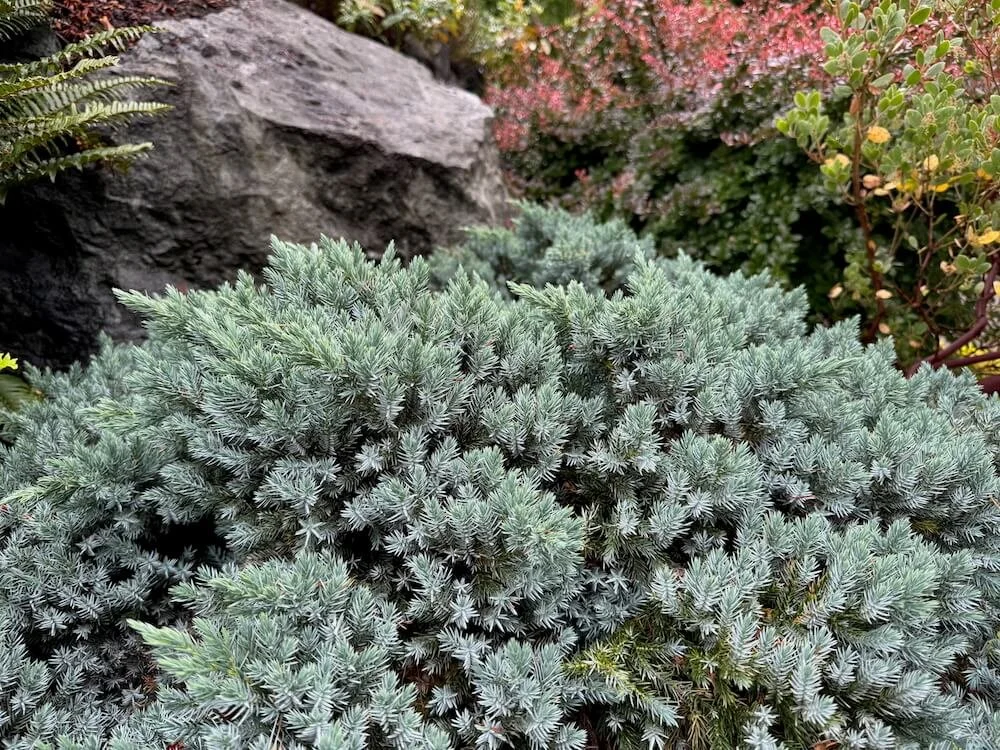
Drought-tolerant junipers provide year-round structure and texture while thriving in dry, well-drained conditions, making them reliable choices for water-wise landscapes. Juniperus squamata ‘Blue Star’ (shown here) is grown for its dense, compact form and silvery-blue needles, creating a low, mounded presence that holds its color throughout the year. Once established, it requires minimal water and performs well in exposed, sunny sites.
They are well suited to borders, slopes, rock gardens, or as groundcover where durability and low maintenance are essential. Juniperus chinensis ‘Expansa Variegata’ offers a more spreading habit with green foliage accented by creamy white variegation, adding contrast and brightness to the planting. Together, these selections provide strong drought performance and evergreen structure in dry garden settings.
HAWTHORN (Rhaphiolepis)
06
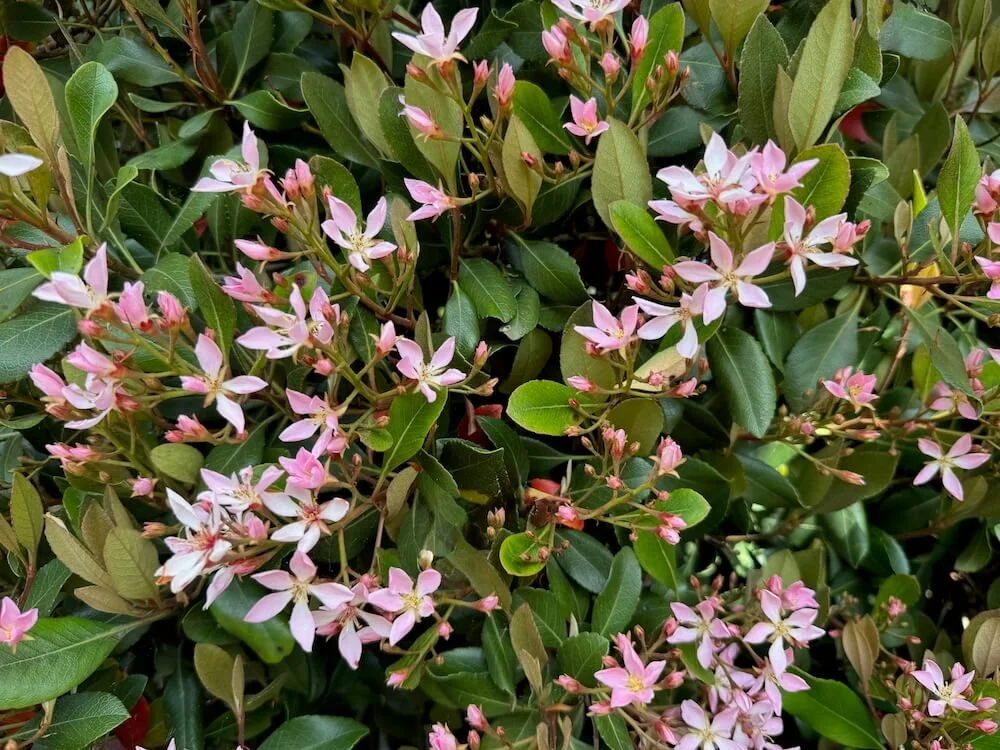
Indian hawthorns are naturally adapted to warm, dry conditions, making them excellent choices for landscapes where summer water is limited. Rhaphiolepis indica 'Conor' (shown here) forms a dense mound of glossy evergreen foliage that remains attractive through heat and bright sun. Clusters of soft pink flowers appear in spring, followed by dark berries that add another season of interest.
The combination of evergreen foliage and tolerance for challenging conditions allows these shrubs to perform in a wide range of settings. Rhaphiolepis indica produces rosy pink to white flower clusters above dark green leaves, while Rhaphiolepis umbellata develops larger foliage and a broader habit with white spring blooms. Their ability to withstand heat, coastal exposure, and lean soils makes them especially useful for slopes, and low-water gardens.
BUPLEURUM
07
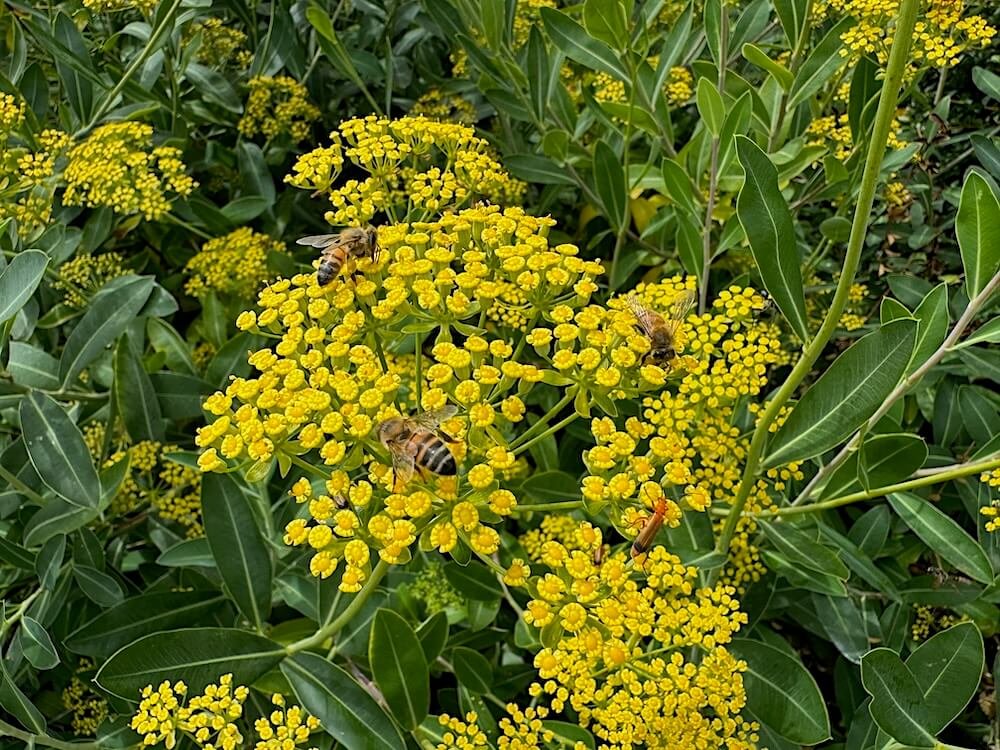
Shrubby hare's ear is well adapted to Mediterranean climates, where dry summers and lean soils encourage its naturally graceful form. Bupleurum fruticosum (shown here) develops blue-green evergreen foliage and airy clusters of chartreuse-yellow flowers that brighten the garden from late spring into summer. The narrow leaves and open branching habit help the plant withstand prolonged periods of heat while maintaining an elegant, relaxed appearance in water-wise landscapes.
Rather than relying on bold flowers or dense foliage, this shrub contributes movement and texture to drought-tolerant plantings. The soft yellow flower clusters mingle beautifully with ornamental grasses, lavender, and silver-leaved companions, creating a naturalistic effect that feels at home in sunny borders and gravel gardens. Its ability to thrive in exposed conditions and well-drained soils makes it especially suitable for low-water designs inspired by Mediterranean landscapes.
ITALIAN BUCKTHORN (Rhamnus)
08

Italian buckthorn thrives in dry, sunny conditions where its evergreen foliage and Mediterranean heritage allow it to cope with long periods of summer heat. Rhamnus alaternus ‘Argentiovariegata’ (shown here) produces glossy leaves edged in creamy white, creating a bright effect that stands out against darker shrubs and drought-tolerant companions. The leathery foliage helps conserve moisture while maintaining a fresh appearance.
Variegated foliage gives this shrub much of its ornamental appeal throughout the year. New growth emerges with subtle pink tones before maturing to green and cream, creating gentle color shifts across the plant. Its ability to prosper in rocky soils and coastal environments makes it particularly well suited to Mediterranean-style gardens, where evergreen form and foliage contrast are essential elements of the landscape.
COROKIA
09
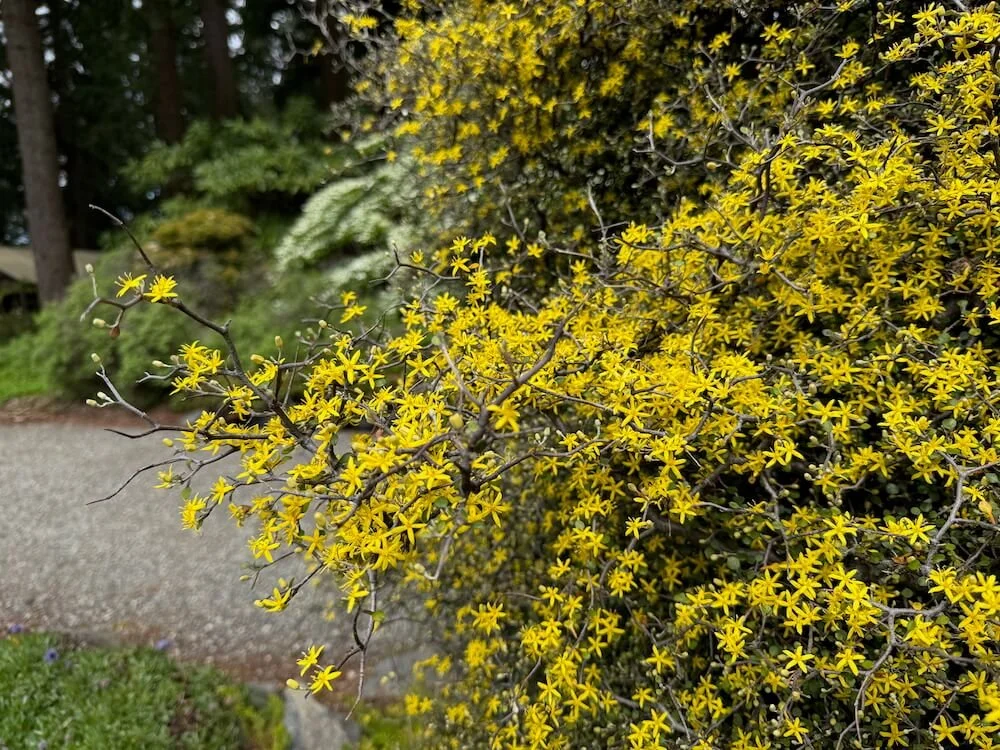
Corokia brings an unusual architectural quality to dry gardens, where its naturally wiry branching and small gray-green leaves are well adapted to heat and limited moisture. Corokia cotoneaster (shown here) develops a network of zigzag stems that creates interest even in winter, while tiny star-shaped yellow flowers appear in spring and are followed by orange-red berries. The fine-textured foliage give the shrub a distinctive appearance that stands apart from other plants.
Much of the appeal of corokia lies in its sculptural form rather than bold flowers or lush foliage. The intricate branching pattern catches the light and creates striking silhouettes, especially when paired with rocks, gravel, and silver-leaved companions. Its tolerance for wind, coastal exposure, and dry soils makes it an excellent choice for contemporary and Mediterranean-style landscapes.
CALIFORNIA LILAC (Ceanothus)
10
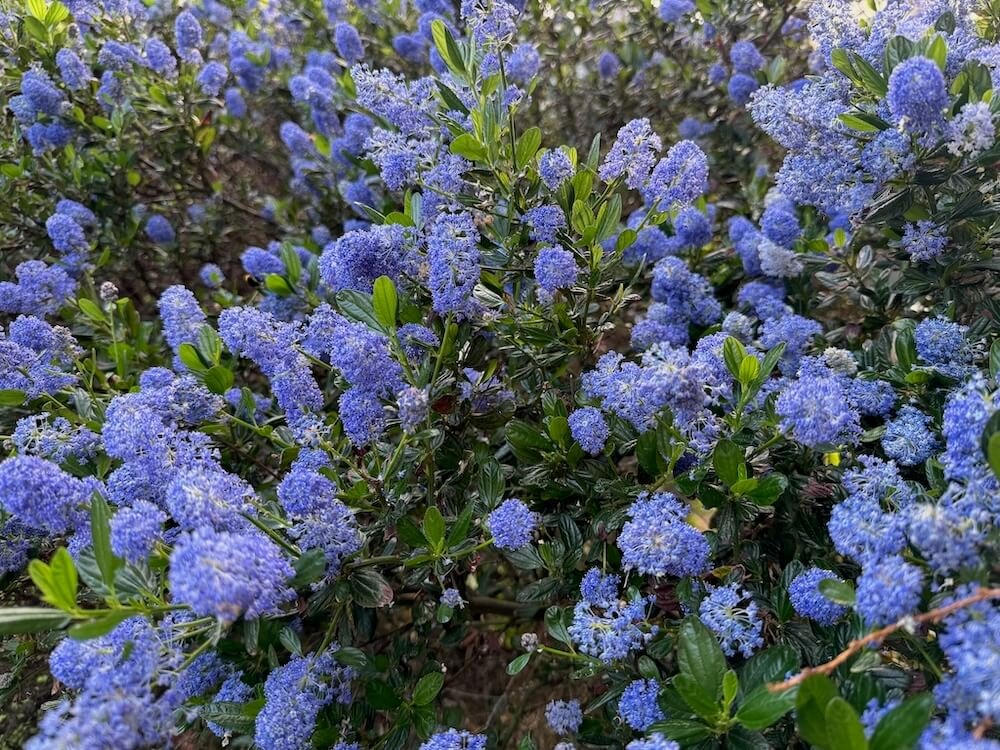
California lilacs are among the signature shrubs of dry-climate landscapes, combining evergreen foliage with spectacular spring displays. Ceanothus 'Dark Star' (shown here) produces dense clusters of saturated deep blue flowers that nearly cover the dark green foliage. Its small leathery leaves and naturally compact habit are well suited to hot conditions, rocky soils, and slopes where moisture is limited.
The vivid flower colors and evergreen character of ceanothus bring lasting beauty to water-wise plantings. Ceanothus thyrsiflorus 'Victoria' bears abundant cobalt-blue blossoms above glossy foliage, creating a striking contrast against silver-leaved shrubs and ornamental grasses. Their ability to flourish in dry summers and coastal conditions makes them especially effective in Mediterranean-style gardens, where bold color and year-round structure are essential.
PITTOSPORUM
11

Pittosporums are well suited to dry-climate gardens, where their evergreen foliage and naturally tidy habits provide structure with minimal water requirements. Pittosporum tenuifolium ‘Golf Ball’ (shown here) forms a dense rounded mound of small bright green leaves, creating a refined appearance that remains attractive through heat and drought. The compact growth and fine texture allow it to fit comfortably into contemporary landscapes, and other low-water settings.
Leaf shape and growth habit vary considerably among the different species and cultivars. Pittosporum heterophyllum develops narrow gray-green foliage and fragrant yellow flowers, while Pittosporum tobira 'Shima' combines creamy variegated leaves with a broad, layered form. Their tolerance for sun, wind, and dry conditions makes them especially useful in coastal gardens and Mediterranean-style plantings, where evergreen texture plays an important role.
CINQUEFOIL (Potentilla)
12
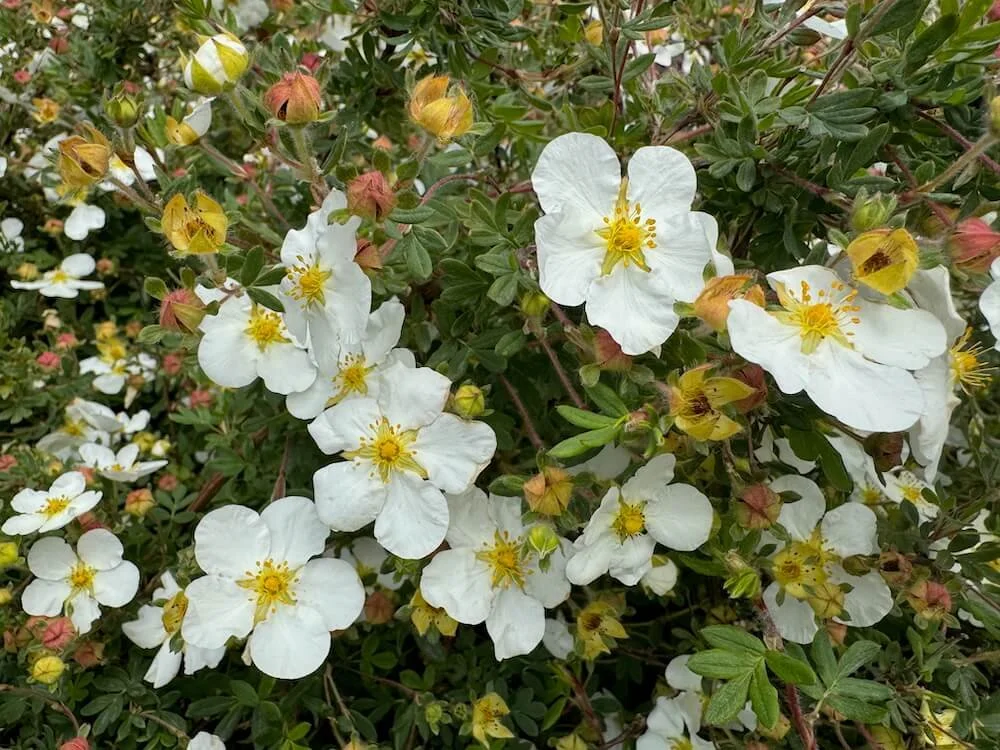
Drought-tolerant cinquefoil offers reliable color and fine texture in dry garden settings, with flowers appearing from late spring through summer and often continuing into early fall. Potentilla fruticosa is grown for its small, bright blooms and soft, green foliage, forming a compact, mounded shrub that holds its shape well with minimal care. Its steady flowering and tolerance of dry conditions make it a dependable choice for sunny landscapes.
These shrubs work well in borders, low hedges, or mass plantings where consistent color is desired. Potentilla fruticosa ‘Goldfinger’ (shown here) adds rich yellow blooms that hold their color, while Potentilla fruticosa ‘Abbotswood’ offers clean white flowers that brighten the planting. Together, these selections provide long-lasting bloom and strong performance in warm garden settings.
CURRANT (Ribes)
13
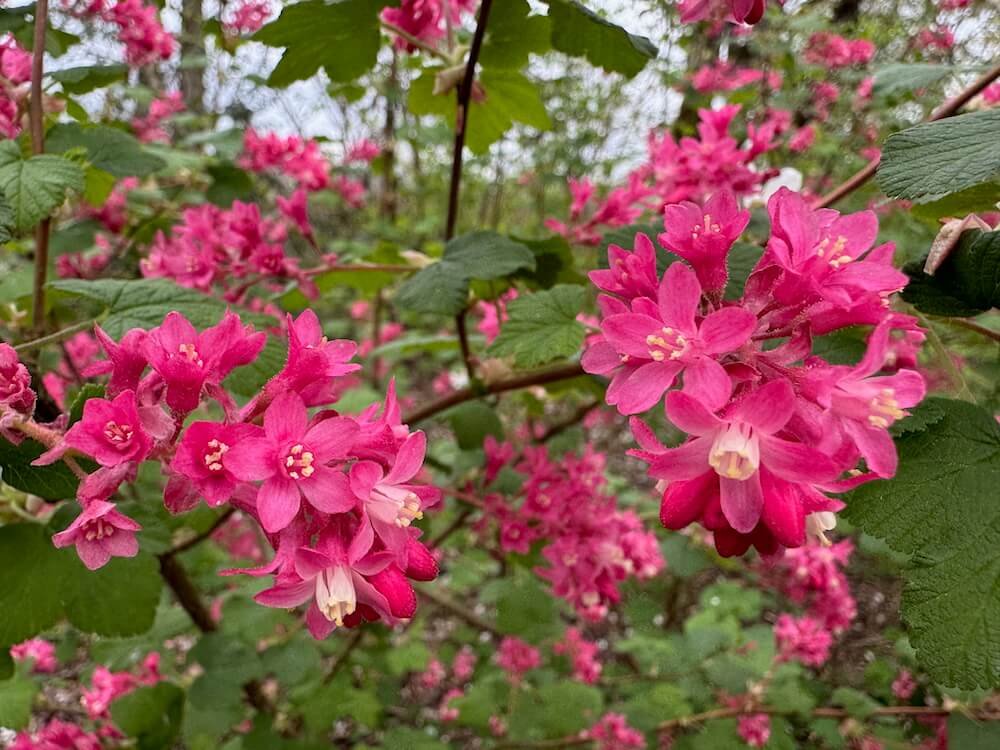
Early-blooming currant shrubs offer both seasonal color and strong drought tolerance, with flowers appearing from late winter into early spring. Ribes sanguineum (shown here) is grown for its pendant clusters of pink to red flowers that create a cascading display against fresh green foliage. Once established, it performs well in dry conditions, making it a dependable choice for low-water landscapes.
They adapt well to borders or dry woodland edges where both their resilience and blooms can be appreciated. Ribes sanguineum ‘Pulborough Scarlet’ intensifies the display with deeper red flowers, while ‘Henry Henneman’ offers white tones. Ribes aureum adds another dimension with yellow, lightly fragrant blooms and a more upright presence. Together, these selections provide early seasonal color and reliable performance in water-wise gardens.
EASTERN WHITE PINE (Pinus)
14
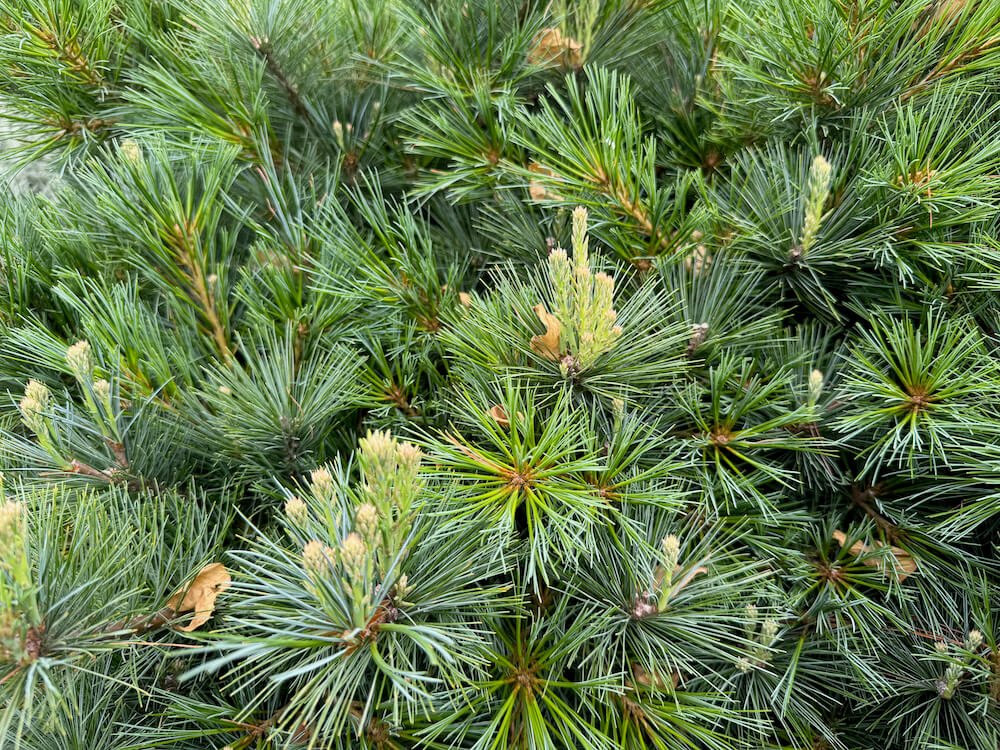
Eastern white pines bring year-round texture to dry gardens, where their flexible needles and deep root systems help them cope with periods of limited moisture. Pinus strobus ‘Minuta’ (shown here) forms a compact mound of fine blue-green needles that create a cloud-like appearance in the landscape. Its slow growth and naturally rounded habit make it particularly useful in rock gardens and other low-water settings.
Unlike broadleaf shrubs that rely on flowers for interest, this dwarf pine contributes subtle color and texture throughout the seasons. The soft needles provide contrast against boulders, gravel, and silver-foliaged companions while maintaining an attractive appearance through heat and winter weather. Its compact form and tolerance for lean soils make it an excellent addition to drought-conscious landscapes where evergreen structure is desired.
Related: Explore All Conifers ➔
LAVENDER COTTON (Santolina)
15
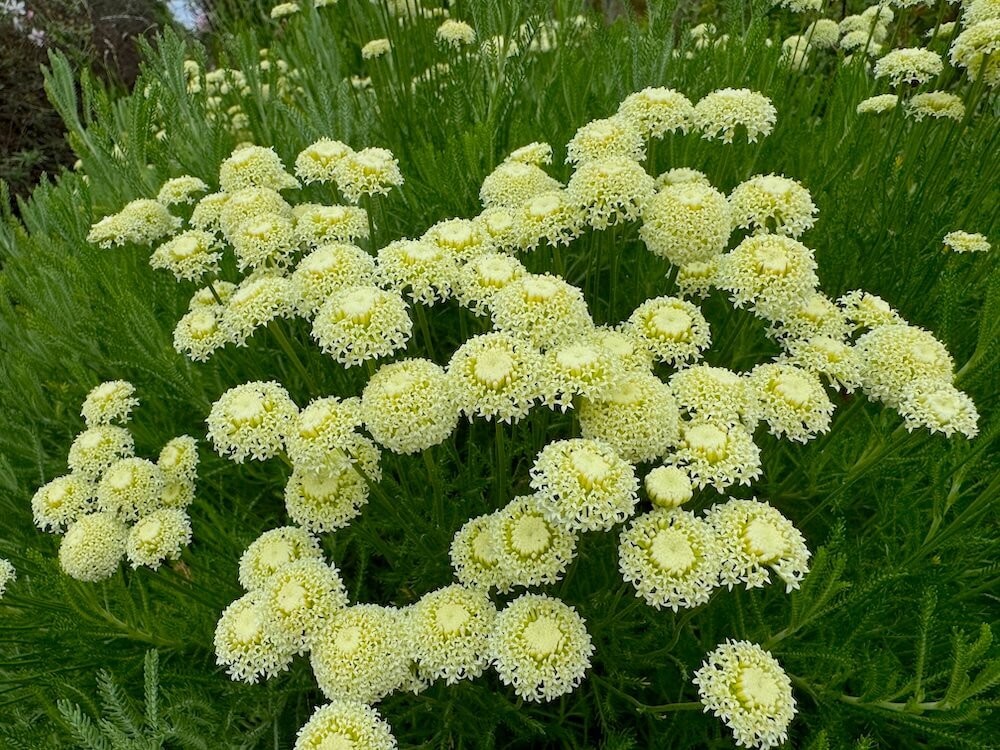
Lavender cotton is perfectly suited to hot, dry landscapes, where its compact habit and aromatic foliage thrive with little supplemental water. Santolina chamaecyparissus 'Lemon Queen' (shown here) develops finely textured green foliage topped with creamy yellow button-like flowers that brighten sunny borders in summer. The narrow leaves help the shrub maintain its neat appearance even during extended periods of drought.
Foliage texture and flower color give these shrubs a distinctive Mediterranean character. Santolina chamaecyparissus 'Pretty Carroll' bears richer golden-yellow blooms, creating cheerful accents among gravel, stone, and silver-leaved companions. Their tolerance for poor soils and reflected heat makes them particularly effective in rock gardens, dry slopes, and water-wise plantings.
MANZANITA (Arctostaphylos)
16
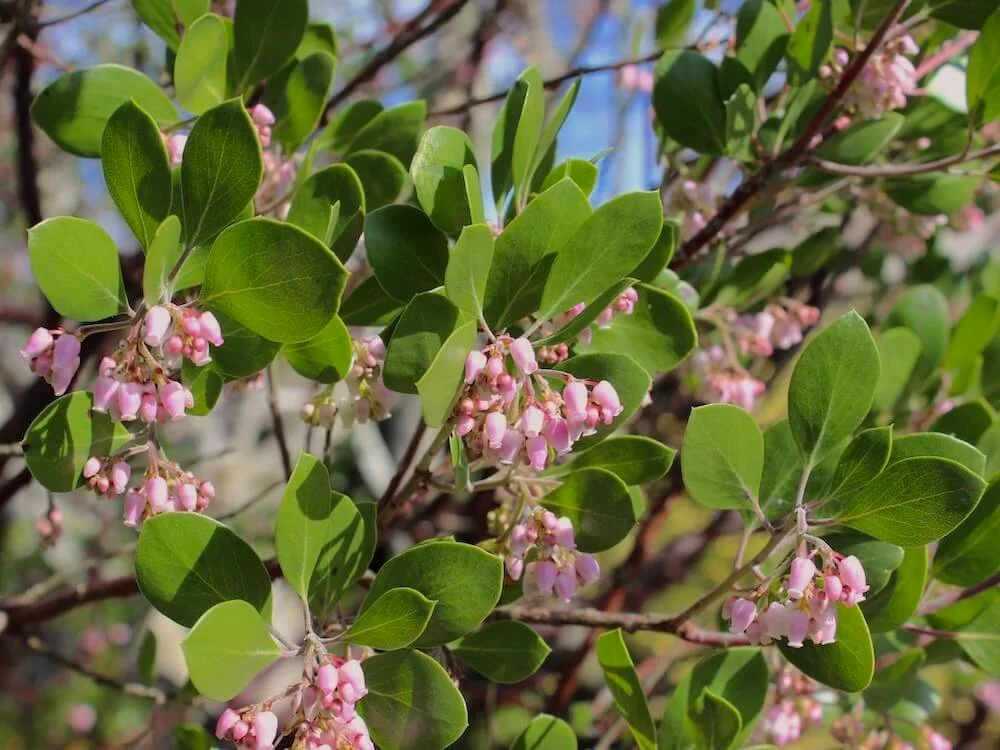
Drought-tolerant manzanitas offer strong structure and year-round presence, with flowering from late fall into winter and often continuing into early spring. Arctostaphylos manzanita is grown for its sculptural branching, evergreen foliage, and clusters of urn-shaped flowers in soft pink to white. Once established, it thrives in dry, well-drained soils with minimal water, making it a dependable choice for water-wise landscapes while adding architectural interest through its smooth, reddish bark.
They are well suited to slopes or dry borders where resilience and form are essential. Arctostaphylos manzanita ‘Hood Mountain’ (shown here) provides a dense, mounding habit, while Arctostaphylos densiflorus ‘Sentinel’ offers a more upright, compact form useful for screening. Arctostaphylos ‘Red Stem’ adds contrast with richer bark tones and more gray-toned foliage than other selections. Together, these varieties deliver drought performance and subtle seasonal bloom in dry garden settings.
BARBERRY (Berberis)
17
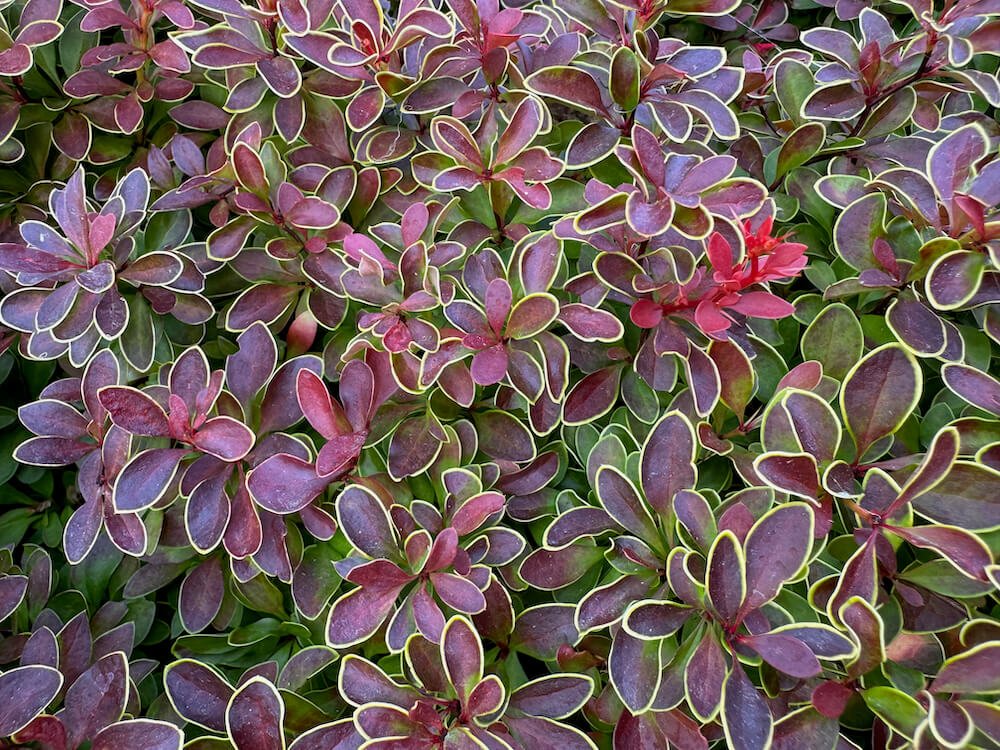
Drought-tolerant barberries offer strong color and structure while thriving in dry, well-drained conditions, making them reliable choices for water-wise landscapes. Berberis thunbergii f. atropurpurea ‘Gentry’ is grown for its deep burgundy foliage, forming a dense, compact shrub that holds its color through the season. Berberis darwinii adds another dimension with small, glossy leaves, bright orange spring flowers, and notably thorny stems.
They are well suited to borders, low hedges, or dry slopes where resilience is essential. Berberis thunbergii ‘Maria’ introduces bright golden foliage that contrasts with darker plantings, while Berberis thunbergii f. atropurpurea ‘Admiration’ (shown here) offers a compact form with red leaves edged in gold. Together, these selections provide strong drought performance and varied foliage color in dry garden settings.
ROCK ROSE (Cistus)
18
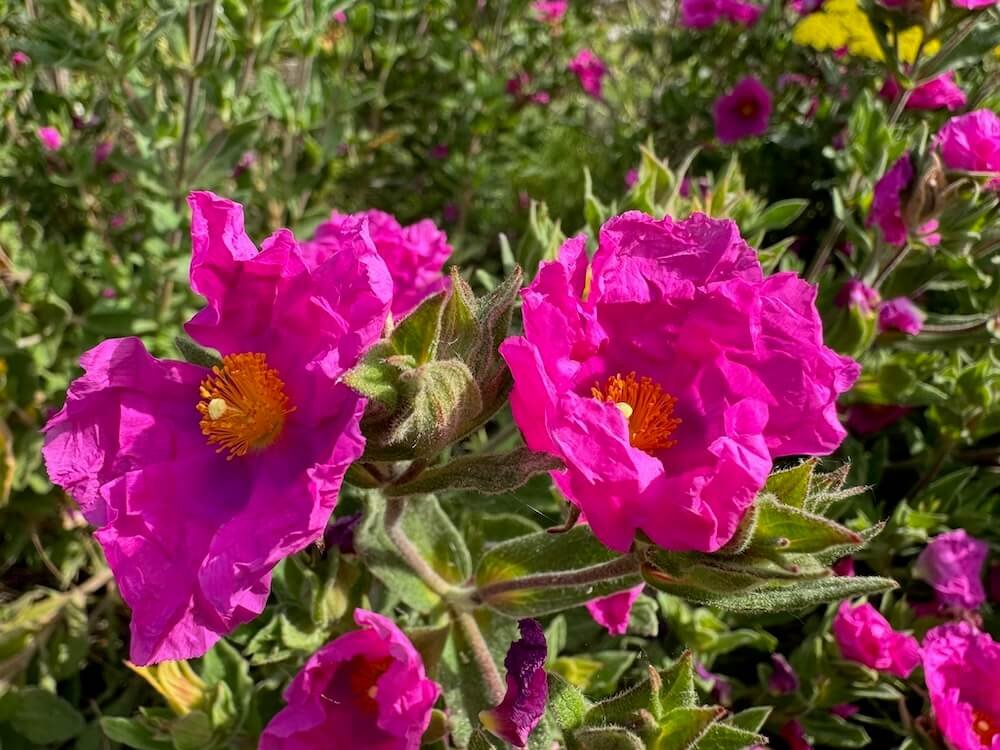
Drought-tolerant rock roses offer reliable color and texture while thriving in hot, dry, well-drained conditions, making them excellent choices for water-wise landscapes. Cistus x pulverulentus ‘Sunset’ (shown here) is grown for its vivid magenta-pink flowers with golden centers, blooming from late spring into early summer against gray-green foliage. Cistus incanus subsp. tauricus adds soft pink blooms over a longer season, contributing a more relaxed, natural look while maintaining strong drought resistance.
They are well suited to slopes, gravel gardens, or dry borders where resilience and sun tolerance are essential. Cistus x hybridus ‘Mickie’ adds white flowers with contrasting centers and variegated foliage, while x Halimiocistus ‘Merrist Wood Cream’ offers pale cream blooms that brighten the planting. Together, these selections provide extended bloom, varied flower color, and dependable performance in warm, low-water garden settings.
ELAEAGNUS
19
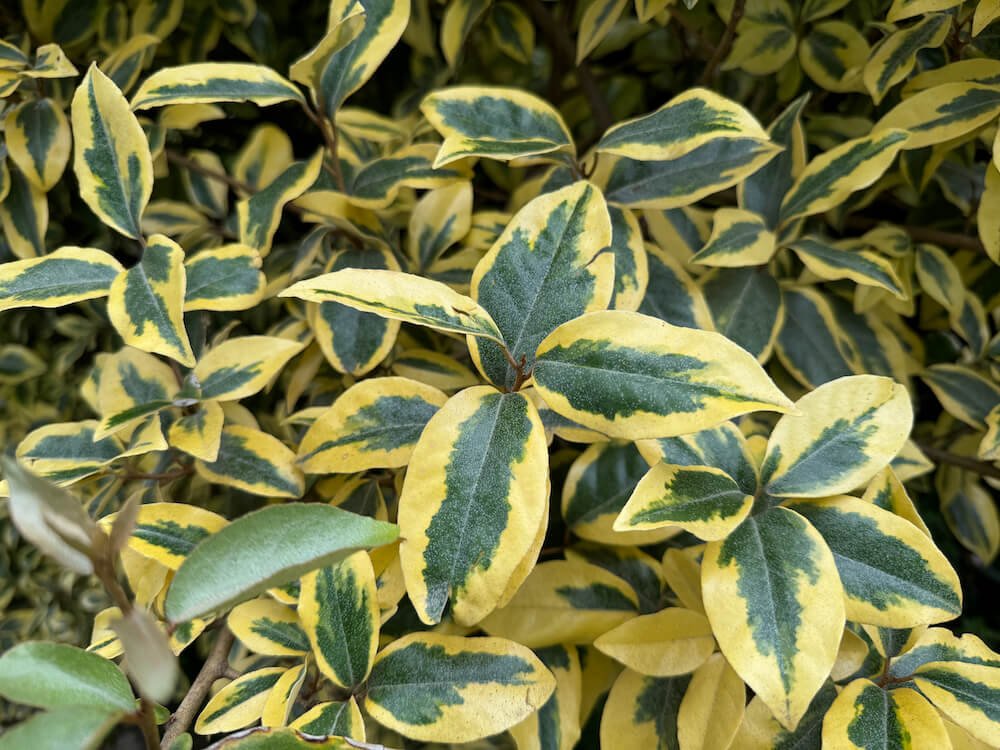
Drought-tolerant elaeagnus offers reliable structure and year-round foliage while thriving in dry conditions, making it a strong choice for water-wise landscapes. Elaeagnus pungens ‘Maculata’ is grown for its glossy green leaves splashed with yellow, creating a bright, variegated effect. In fall, small, fragrant creamy-white flowers appear along the stems, adding subtle seasonal interest while the plant continues to perform with minimal water once established.
They are well suited to hedges, screens, or coastal plantings where durability and wind tolerance are important. Elaeagnus x submacrophylla ‘Gilt Edge’ (shown here) offers broader leaves edged in gold and a dense, upright habit that provides effective coverage. Together, these selections deliver strong drought performance, evergreen structure, and consistent color in low-water garden settings.
ADAM’S NEEDLE (Yucca)
20
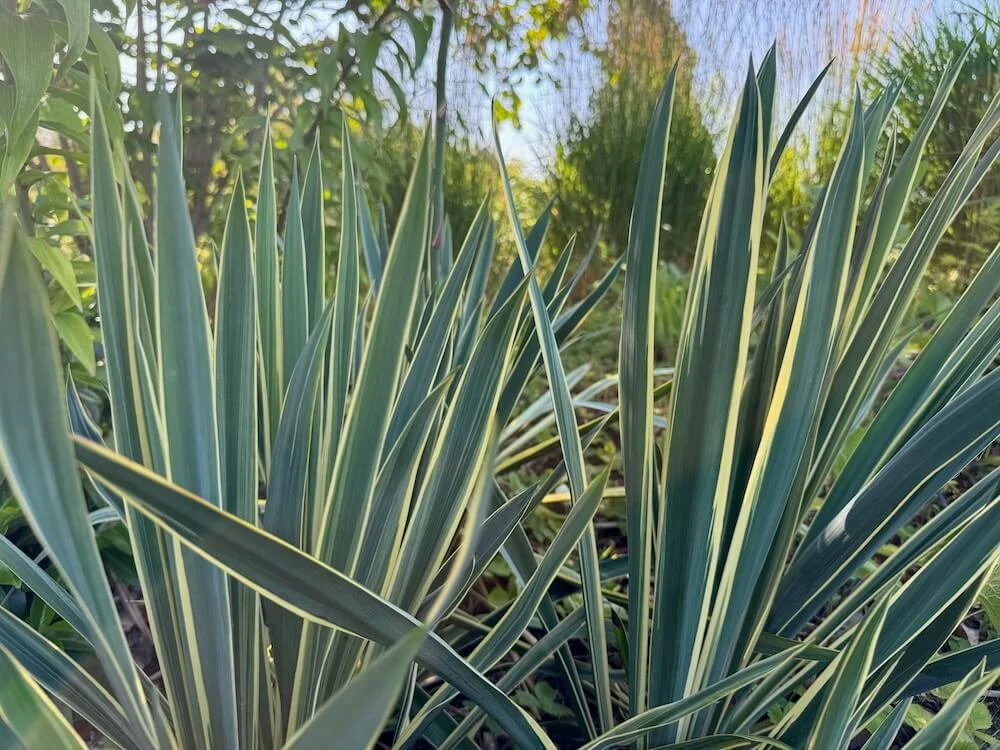
Adam’s needle offers strong drought tolerance and bold structure, with flowering typically occurring in early to mid-summer on tall spikes rising above the foliage. Yucca filamentosa is grown for its rigid, sword-like leaves that form dense rosettes, allowing it to thrive in dry, well-drained soils with minimal water once established. Its creamy white, bell-shaped flowers add vertical interest while reinforcing its durability in challenging conditions.
They are well suited to dry borders, gravel gardens, or sunny slopes where resilience is essential. Yucca filamentosa ‘Bright Edge’ (shown here) features green leaves edged in gold, while ‘Color Guard’ displays a bold yellow center stripe that brightens the planting. ‘Garland’s Gold’ adds another variation with golden tones that intensify in sun. Together, these selections provide year-round structure, strong drought performance, and striking foliage contrast in water-wise landscapes.