
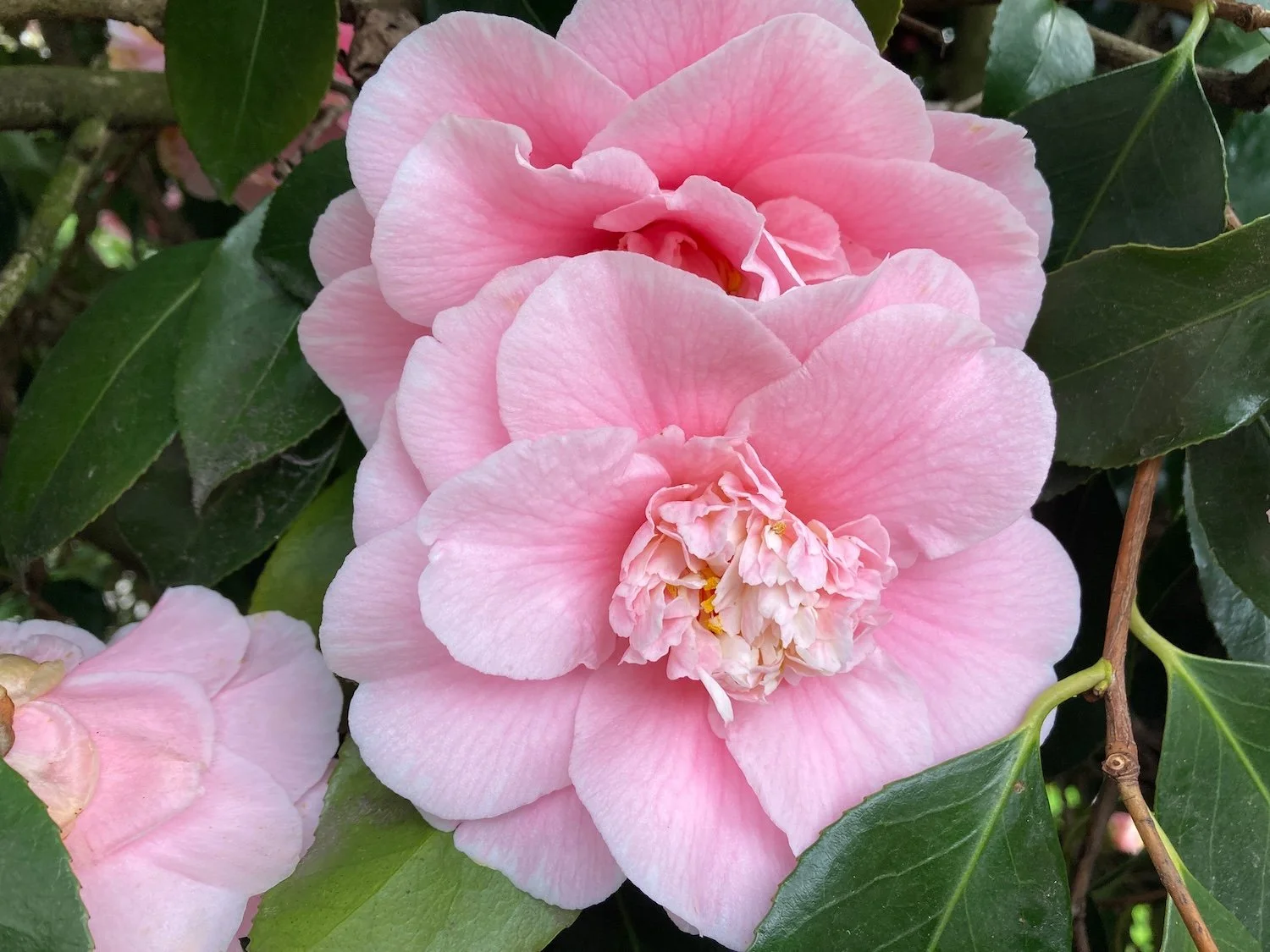
COMPLETE GUIDE
TO CAMELLIAS
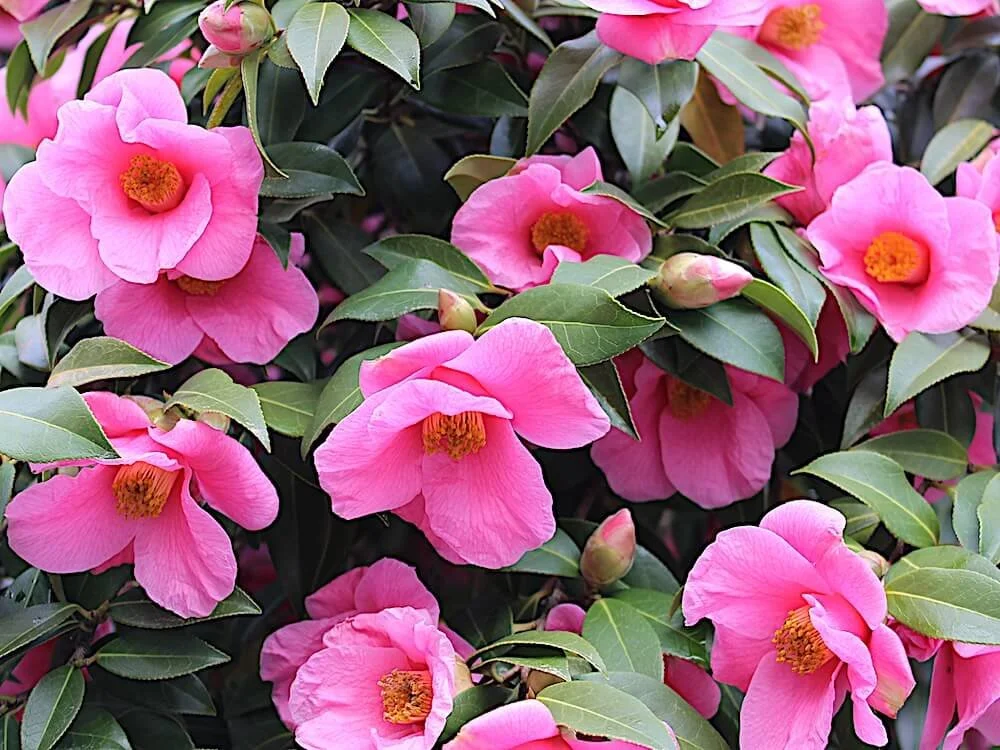
Camellias bring color and structure to the garden during seasons when many plants have slowed or finished blooming, producing elegant flowers in shades of white, pink, red, and soft bi-colors from fall through spring depending on the variety. Their glossy evergreen foliage provides rich texture throughout the seasons, while flower forms range from simple single blooms to fully double, peony-like blossoms. These shrubs add depth to borders and woodland gardens while creating a space that feels welcoming, layered, and full throughout the changing seasons, bringing color and interest during times of year when the garden can otherwise feel quieter.
TYPES OF CAMELLIAS
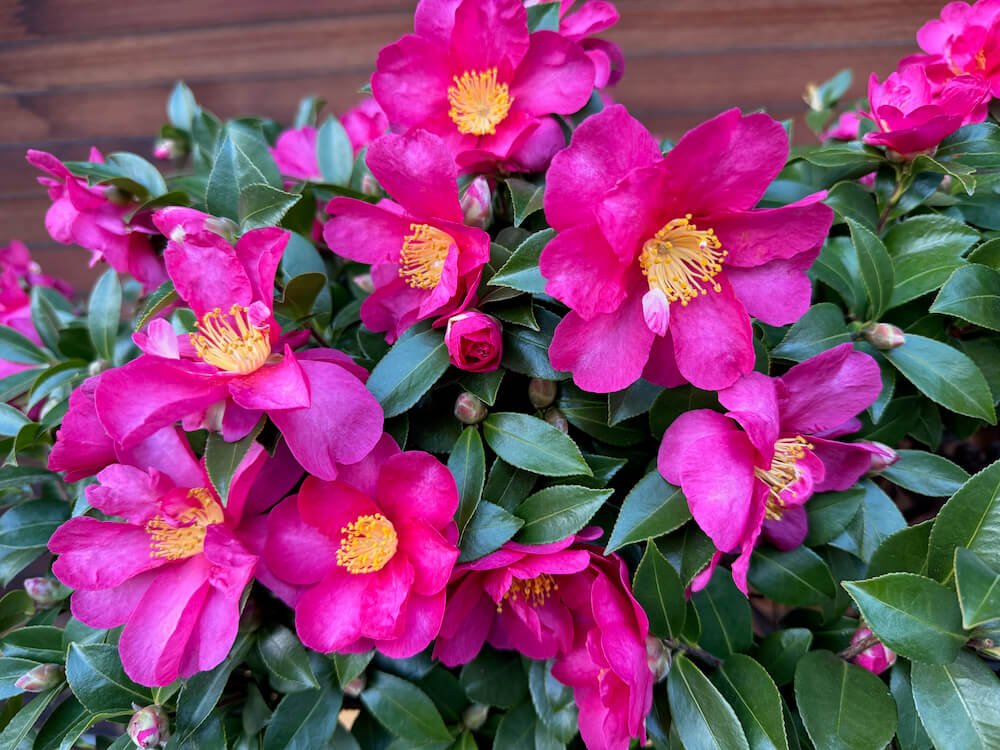
Camellias include a diverse group of evergreen shrubs valued for their glossy foliage, elegant flowers, and ability to provide color during seasons when much of the garden is quiet. Blooming can begin in fall and continue into late winter or spring depending on the type, creating opportunities for extended seasonal interest. While many gardeners recognize the large formal flowers of traditional camellias, different groups vary in growth habit, bloom season, flower form, and landscape use.
Camellia japonica:
Among the most widely grown camellias, Camellia japonica varieties are known for large flowers and substantial evergreen growth. Blooming typically occurs from winter into spring, with flowers ranging from formal doubles to peony and anemone forms in a wide range of colors.
Camellia sasanqua:
Sasanqua camellias generally bloom earlier, often beginning in fall and continuing into winter. Their growth tends to be lighter and more open, making them useful for hedges, espalier, screening, and locations that receive somewhat more sun.
Camellia x williamsii:
These hybrids combine characteristics from multiple camellia species and are valued for abundant flowering, cold tolerance, and graceful habits. Many varieties bloom over an extended period and often hold flowers well through changing weather conditions.
Hybrid and specialty camellias:
Modern hybrids and unusual species selections introduce distinctive foliage, unique flower colors, fragrance, or unusual growth habits. Twisted branching, variegated blooms, darker foliage, and unusual flower forms add diversity beyond traditional camellias.
Bloom seasons:
By combining fall, winter, and spring flowering camellias, gardeners can create months of continuous color. Selecting varieties with overlapping bloom times allows camellias to become an important source of seasonal interest when few other shrubs are flowering.

Winter Blooming Camellias
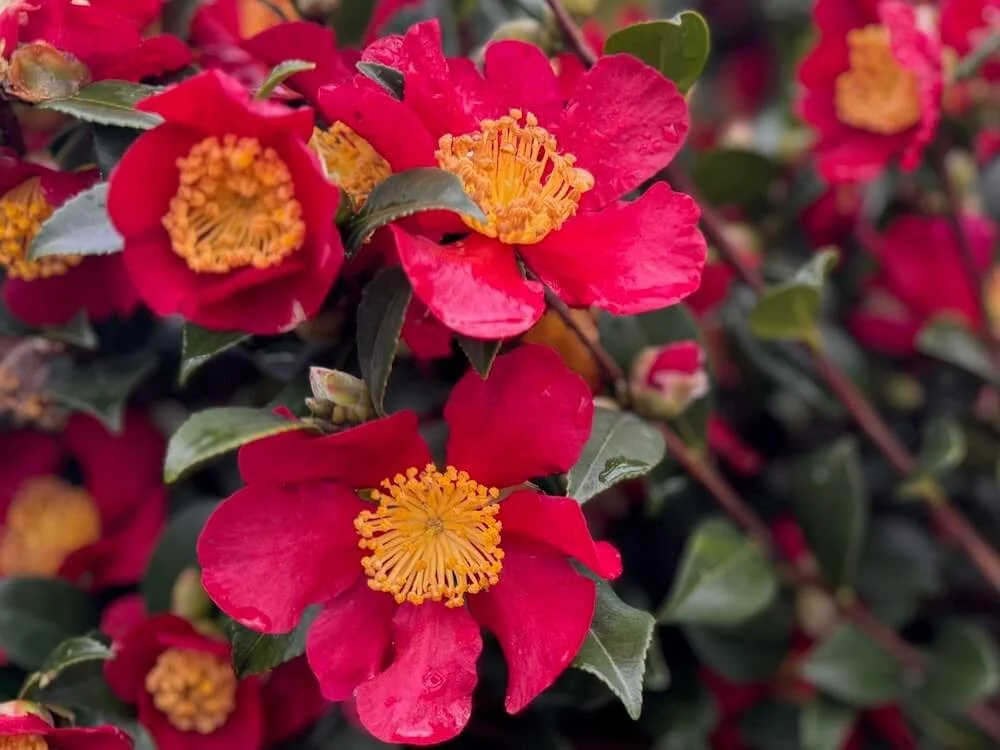
Camellia sasanqua 'Yuletide'
Evergreen shrub with glossy dark green foliage and vivid red single flowers surrounding golden stamens bringing winter color. Develops a dense upright habit and grows 8 to 10 feet tall. Ideal for hedges, and screens. Zones: 7 to 9.
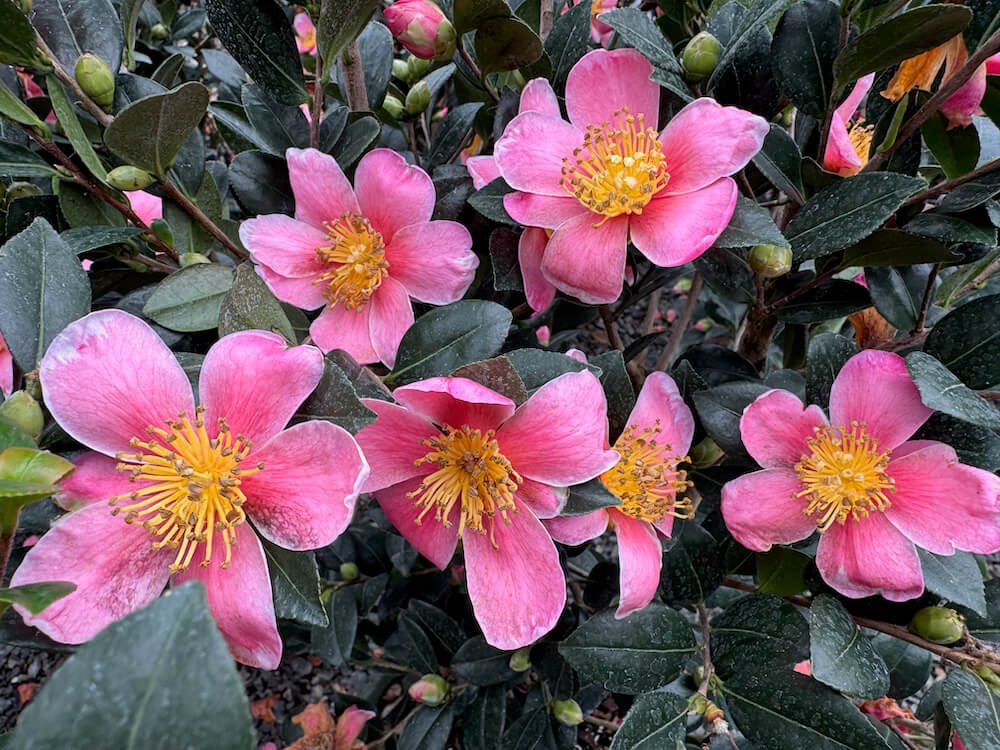
Camellia sasanqua 'Mondel'
Evergreen shrub with green foliage and fragrant soft pink flowers adding elegant winter color. Forms a broad upright habit and grows 8 to 10 feet tall. Ideal for hedges, screens, and seasonal garden plantings. Zones: 7 to 9.
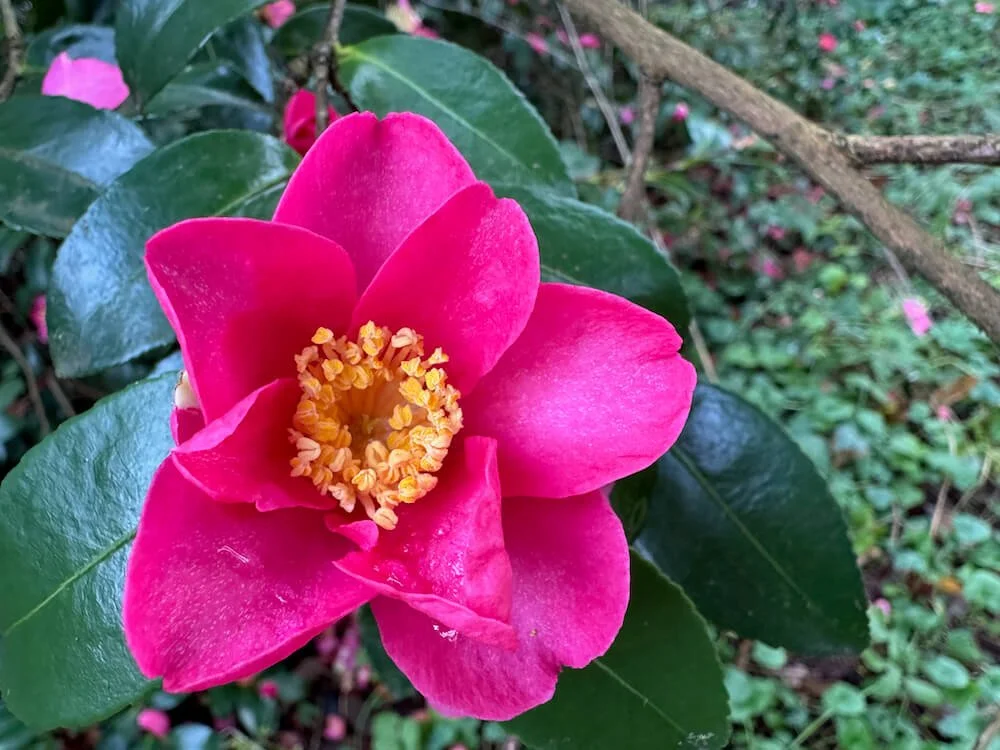
Camellia sasanqua 'Crimson King'
Evergreen shrub with glossy dark green foliage and soft pink fragrant blooms brightening the garden through cooler months. Grows 8 to 10 feet tall. Ideal for hedges, screens, and seasonal garden plantings. Zones: 7 to 9.
Other Notable Winter Blooming Camellias
Camellia sasanqua 'Setsugekka': Large semi-double white flowers with ruffled petals and golden stamens
Camellia sasanqua 'Shishi Gashira': Compact, mounding habit with abundant rose-pink flowers
Camellia sasanqua 'Kanjiro': Vivid deep pink flowers, vigorous growth, and a long flowering season
Camellia x vernalis 'Kokinran': Unusual peony-form flowers and an extended winter bloom season
Camellia sasanqua 'Mine-No-Yuki': Masses of white flowers covering the plant in late fall and winter
PLANTING & CARE OF CAMELLIAS
When to plant:
Camellias can be planted in spring or fall, though cooler weather and moderate temperatures often provide the best conditions for root establishment. In colder climates, spring planting gives roots additional time to settle before winter, while milder regions can successfully plant in fall when soil remains workable and temperatures are less stressful. Avoid planting during periods of extreme heat or when the ground is frozen.
Where to plant:
Choose a location with morning sun or filtered light and protection from intense afternoon heat, particularly in warmer climates where strong sun can damage foliage and flowers. Sheltered sites beneath high tree canopies or near structures often provide the balanced conditions camellias prefer. Protection from drying winds can also help preserve flower buds and improve overall plant appearance.
How to plant:
Prepare the planting area by loosening soil and incorporating organic matter to improve drainage and soil structure. Dig a hole wider than the root ball but no deeper, positioning the plant slightly above surrounding soil level to allow for settling and proper drainage around the crown. Backfill gently without compacting the soil and water thoroughly after planting. Continue regular watering during establishment while roots develop into surrounding soil.
Soil:
Camellias perform best in slightly acidic, organically rich soil with excellent drainage. A soil pH between about 5.5 and 6.5 is ideal. Before planting, incorporating generous amounts of compost, aged leaf mold, composted pine bark, or other well-decomposed organic matter helps improve soil structure and moisture retention while maintaining the acidic conditions these shrubs prefer. Camellias have relatively shallow root systems and benefit from consistently moist, but never waterlogged, soil.
Heavy clay or compacted soils can contribute to root problems and should be improved before planting with compost, pine bark, or other organic materials. Raised beds or planting slightly above the surrounding soil level can be beneficial in areas with poor drainage. Avoid planting too deeply, as camellias prefer their upper roots to remain close to the soil surface. A 2 to 3 inch layer of organic mulch, such as pine straw, shredded bark, or leaf mold, helps conserve moisture, moderate soil temperatures, and gradually enrich the soil as it breaks down. Maintaining healthy soil structure supports stronger root development, better flowering, and healthier evergreen foliage over time.
Watering:
Keep soil consistently moist during establishment and periods of prolonged dry weather, particularly during summer heat when shallow roots can dry more quickly. Camellias prefer evenly moist conditions but dislike saturated soil. Deep watering less frequently is generally more beneficial than frequent shallow watering and encourages stronger root development. During the first year after planting, watering once or twice weekly is often sufficient, depending on rainfall and soil type. Established plants typically benefit from about 1 inch of water per week, either from rainfall or supplemental irrigation, with additional watering during extended periods of heat or drought. Applying water slowly and deeply over the root zone helps encourage roots to grow farther into the surrounding soil and improves drought tolerance over time. Avoid keeping the soil constantly wet, particularly during winter, as excessive moisture can contribute to root problems.
Fertilizing and mulching:
Camellias benefit from light feeding with a fertilizer formulated for acid-loving plants, particularly if growth appears weak or flowering becomes reduced. Products with an analysis such as 4-3-4, 4-6-4, or 10-8-6 are commonly used and can be applied once in early spring after flowering and again in late spring or early summer if needed. Avoid fertilizing after midsummer, as late-season growth may be more susceptible to winter injury. Excess fertilizer can encourage leafy growth at the expense of blooms. A 2 to 3 inch layer of organic mulch such as compost, shredded bark, pine bark, pine needles, or leaf mold around the root zone helps conserve moisture, regulate soil temperatures, suppress weeds, and gradually improve soil quality as it breaks down. Keep mulch several inches away from the main stems to promote good air circulation and reduce the risk of rot.
Pruning:
Camellias generally require very little pruning beyond removing dead, damaged, or crowded branches. Light shaping can be done after flowering if needed, particularly on larger or more vigorous plants. Older shrubs can also be selectively thinned over time to improve airflow and maintain an attractive natural form.
Cold protection:
Flower buds and blooms may occasionally be damaged by sudden temperature fluctuations or harsh winter weather. Planting camellias in protected locations and maintaining mulch around the root zone can help reduce environmental stress and improve long-term performance.
Unique Camellias
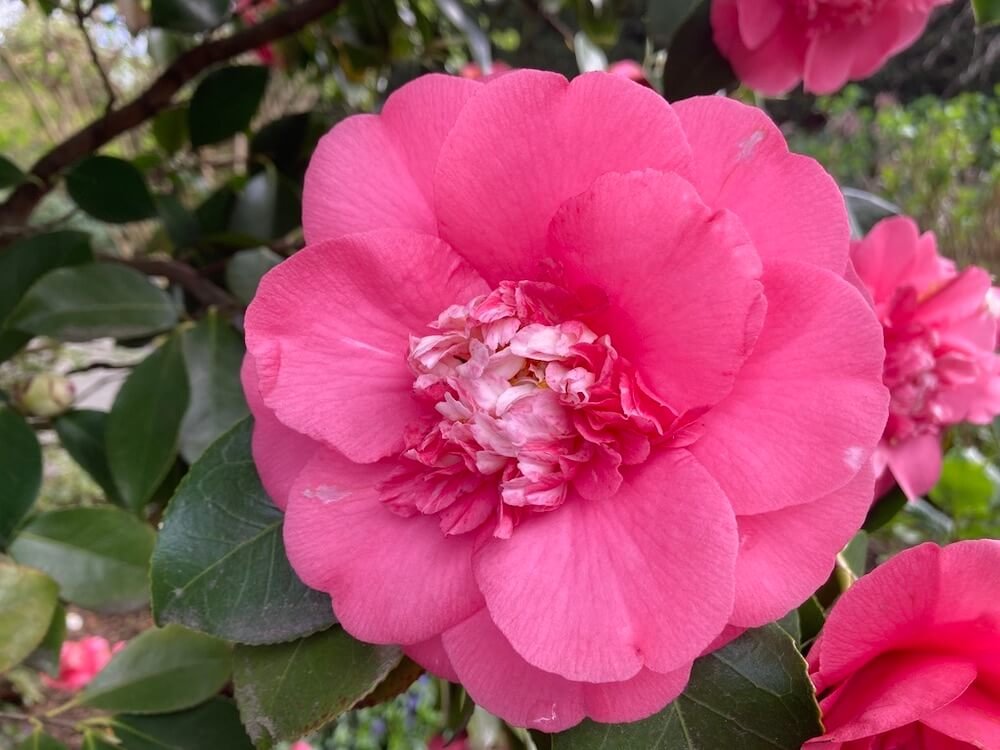
Camellia japonica 'Chandleri Elegans Variegated'
Evergreen shrub with glossy dark green foliage and pink double flowers with white petaloids clustered at the center. Develops a broad upright habit and grows 8 to 12 feet tall. Ideal for hedges, specimen plantings, and woodland borders. Zones: 7 to 9.
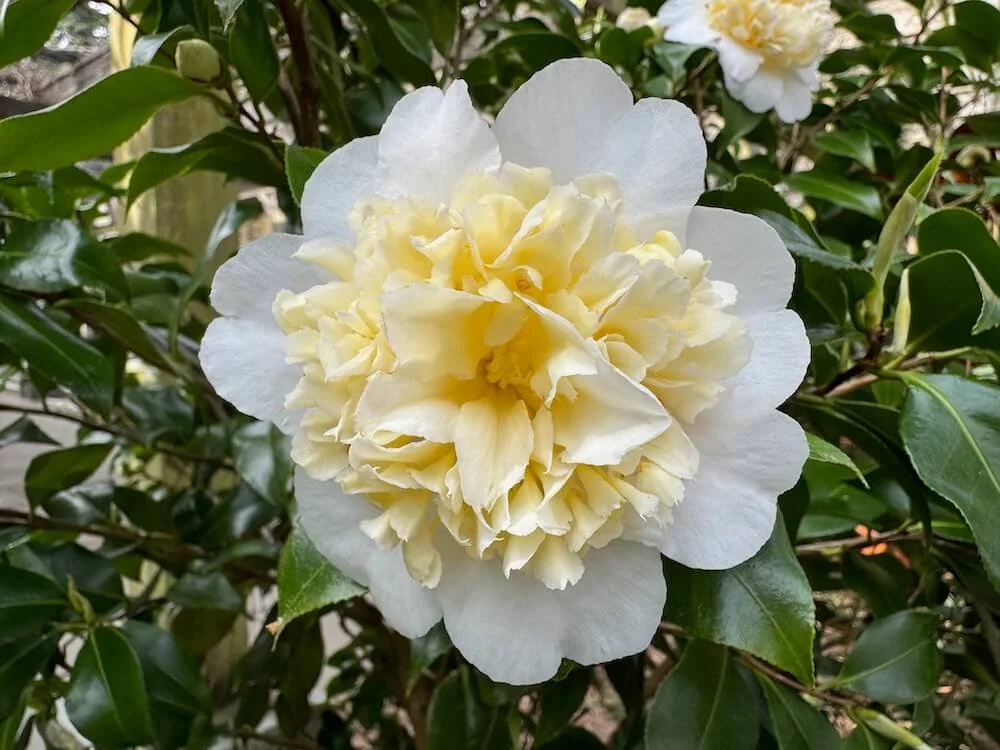
Camellia japonica 'Brushfield's Yellow'
Evergreen shrub with dark green foliage and creamy white double flowers surrounding a soft yellow petaloid center. Forms a broad upright habit and grows 6 to 8 feet tall. Ideal for hedges, specimen plantings, and woodland borders. Zones: 7 to 9.
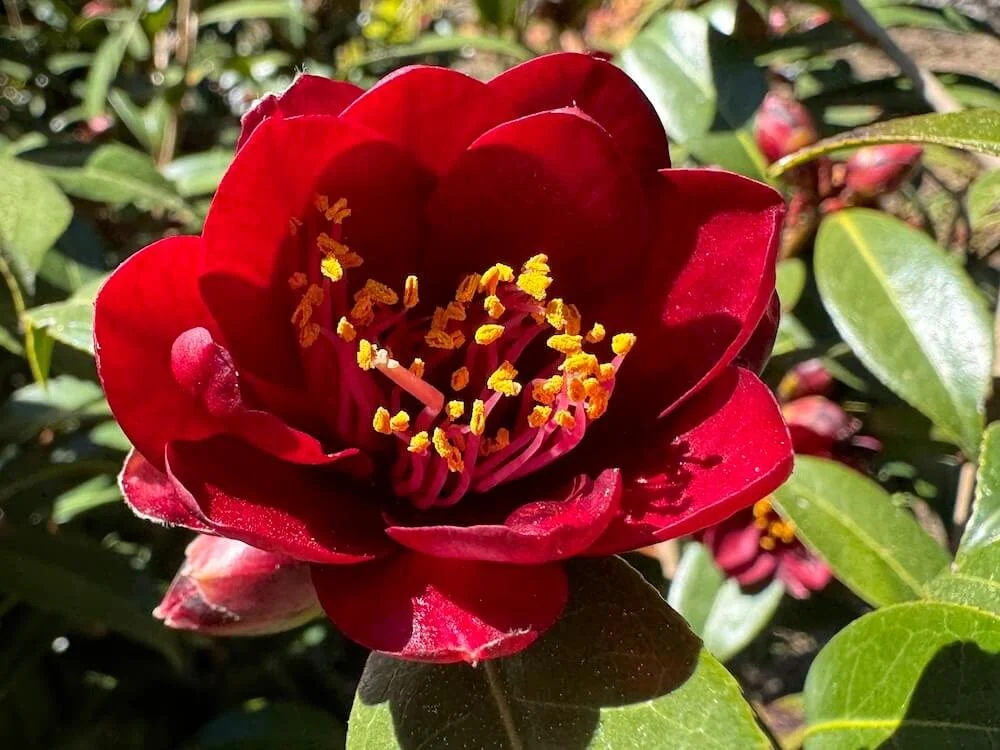
Camellia x williamsii 'Night Rider'
Evergreen shrub with glossy dark green foliage and deep burgundy red flowers appearing nearly black. Develops a narrow upright habit and grows 6 to 8 feet tall. Ideal for hedges, specimen plantings, and woodland borders. Zones: 7 to 9.
Other Notable Unique Camellias
Camellia japonica 'Unryu': Distinctive twisted and contorted branches create year-round architectural interest
Camellia japonica 'Daikagura': Large peony-form flowers with irregular pink-and-white patterning
Camellia japonica 'Spellbound': Dramatic multitone blooms with layered petals and rich coloration
Camellia x lutchuensis 'Minato-no-Akebono': Notable for fragrance, which is relatively uncommon in camellias
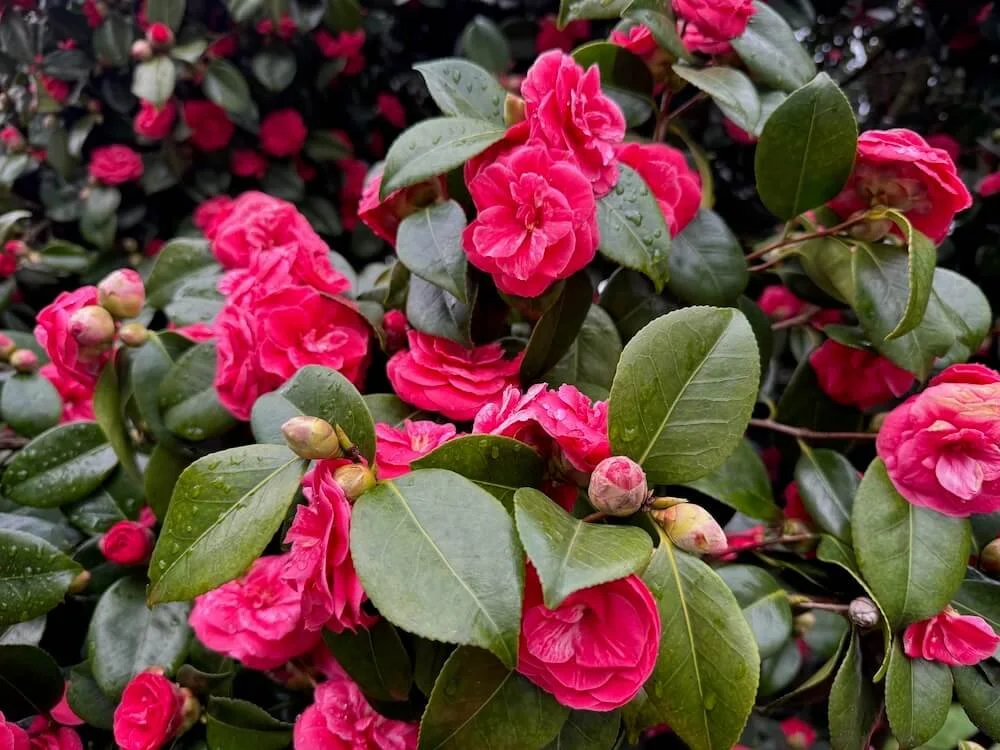
DESIGN USES OF CAMELLIAS
Camellias bring year-round structure and seasonal color to the landscape, combining glossy evergreen foliage with flowers that often appear during fall, winter, and early spring. Their broad range of sizes and habits allows them to function in formal gardens, woodland settings, and smaller landscapes while providing interest during seasons when many other plants are dormant.
Foundation plantings:
Camellias are frequently planted around homes where evergreen foliage provides structure and softens architectural lines throughout the year. Their flowering season adds color near entrances, walkways, and windows when many other shrubs remain quiet. Medium-sized varieties often fit comfortably beneath windows or along foundations without overpowering nearby plantings.
Hedges and screening:
Dense evergreen growth allows many camellias to function as privacy screens, property borders, or informal flowering hedges. Sasanqua varieties are especially useful for screening because of their upright growth and adaptability. In addition to year-round coverage, seasonal flowers bring added interest and soften larger masses of evergreen foliage.
Woodland gardens:
Camellias blend naturally into woodland settings where filtered light and rich soil mirror their preferred growing conditions. Their glossy foliage pairs well with ferns, hellebores, hostas, pieris, and other shade-loving plants. Layering camellias among trees and companion shrubs creates depth while maintaining structure through all seasons.
Specimen plants:
Distinctive varieties with unusually large flowers, dramatic branching, colorful blooms, or interesting foliage can serve as focal points within the landscape. Giving specimen plants enough room to mature naturally allows their individual form and flowering characteristics to become more prominent over time.
Containers and small-space gardens:
Compact and slower-growing camellias adapt well to containers and smaller landscapes where space is limited. Container plantings allow greater control over soil conditions and create opportunities to add evergreen structure and seasonal flowers to patios, courtyards, and entryways. Smaller forms also fit comfortably into narrow borders and urban gardens where larger shrubs would eventually become oversized.
Mixed shrub borders:
Camellias combine well with other acid-loving shrubs such as rhododendrons, pieris, hydrangeas, and conifers. Mixing plants with different bloom seasons, foliage textures, and growth habits creates layered plantings that maintain interest throughout the year.
Seasonal color displays:
By combining camellias with different bloom periods, gardens can transition from fall into winter and spring with months of continuous flowering. Layering early, midseason, and later blooming varieties creates stronger seasonal succession and a more dynamic landscape experience.
Large-Flowered Camellias

Camellia japonica 'Pearl Maxwell'
Evergreen shrub with glossy dark green foliage and large soft pink peony form flowers with layered petals. Forms a rounded upright habit and grows 8 to 10 feet tall. Ideal for hedges, specimen plantings, and woodland borders. Zones: 7 to 9.

Camellia 'Freedom Bell'
Evergreen shrub with dark green foliage and full-sized vivid red bell shaped flowers. Forms a compact upright habit and grows 4 to 6 feet tall. Ideal for hedges, borders, and woodland plantings. Zones: 7 to 9.
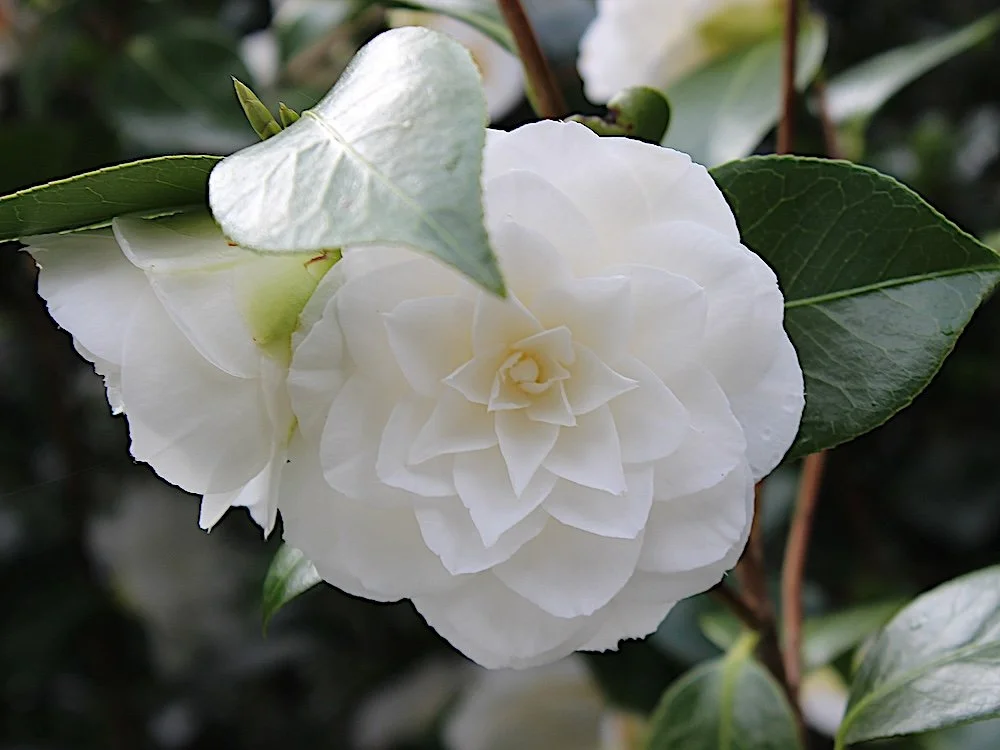
Camellia japonica 'Matterhorn'
Evergreen shrub with glossy dark green foliage and pure white broad double blooms with densely layered petals. Develops an upright rounded habit and grows 8 to 12 feet tall. Ideal for hedges, and specimen plantings. Zones: 7 to 9.
Other Notable Large-Flowered Camellias
Camellia japonica 'Annie Wylam': Exceptionally large peony-form flowers with heavily layered petals
Camellia reticulata x williamsii 'Leonard Messel': Unusually large open flowers with an elegant form
Camellia japonica 'Rose Dawn': Large soft pink blooms with a classic formal appearance
Camellia japonica 'Drama Girl': Oversized flowers with rich coloration and heavily layered petals
Camellia japonica 'Elegans Splendor': Large peony-form flowers packed with layered petals