
Shade Loving Perennials
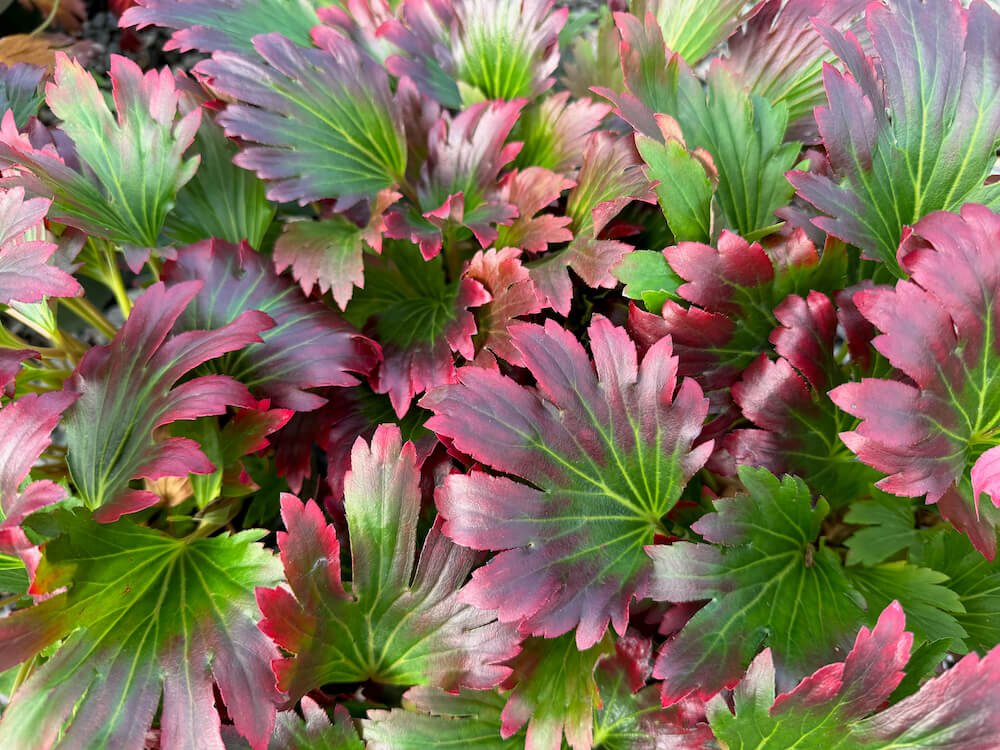
Mukdenia rosii 'Crimson Fans'
Deciduous perennial with deeply lobed green foliage developing crimson red autumn tones and airy white spring flowers. Grows 8 to 12 inches tall. Ideal for woodland gardens, shaded borders, and underplanting beneath shrubs. Zones: 4 to 8.
Shade loving perennials bring texture, foliage, and seasonal color to areas where direct sunlight is limited, helping transform overlooked spaces into inviting parts of the garden. Many are prized as much for their leaves as their flowers, offering a range of forms, patterns, and textures that add depth to borders and woodland plantings. Their varied bloom times and growth habits provide interest from spring through fall.
Well suited to sheltered locations beneath trees or alongside buildings, these plants thrive in conditions that can be challenging for sun-loving species. By selecting perennials adapted to lower light levels, gardeners can create layered, long-lasting displays that bring beauty and character to even the shadiest corners of the landscape.
Highlights ►
12 to 18 in tall
12 to 18 in wide
Part to full shade
Deciduous
Spring bloom
Maroon flowers
Woodland native
Zones 6 to 9
TRILLIUM
01

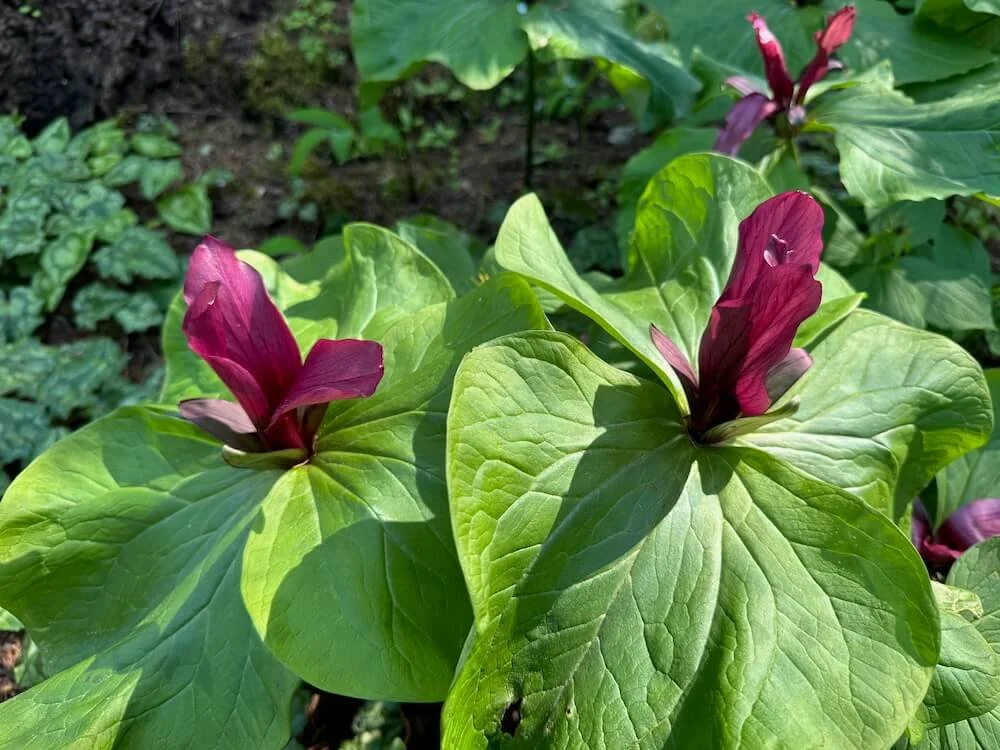
Trilliums bring understated elegance and refinement to shaded gardens, where their distinctive three-petaled flowers emerge among broad, handsome foliage in spring. Trillium chloropetalum 'Volcano' (shown here) produces deep burgundy blooms above oversized leaves, while Trillium luteum offers bright yellow flowers accompanied by a light citrus fragrance. Their unusual forms and intricate details reward close observation, adding richness and seasonal interest beneath trees and along woodland paths.
Each species contributes its own combination of color and pattern. Trillium cuneatum bears maroon flowers above beautifully mottled foliage that remains attractive throughout the blooming period. Their sculptural presence pairs naturally with ferns, epimediums, and other shade-loving companions, creating layered plantings filled with texture, subtle color, and springtime warmth.
Highlights ►
18 to 24 in tall
18 to 24 in wide
Part to full shade
Deciduous
Summer bloom
Deep red plumes
Pollinator friendly
Zones 4 to 8
ASTILBE
02
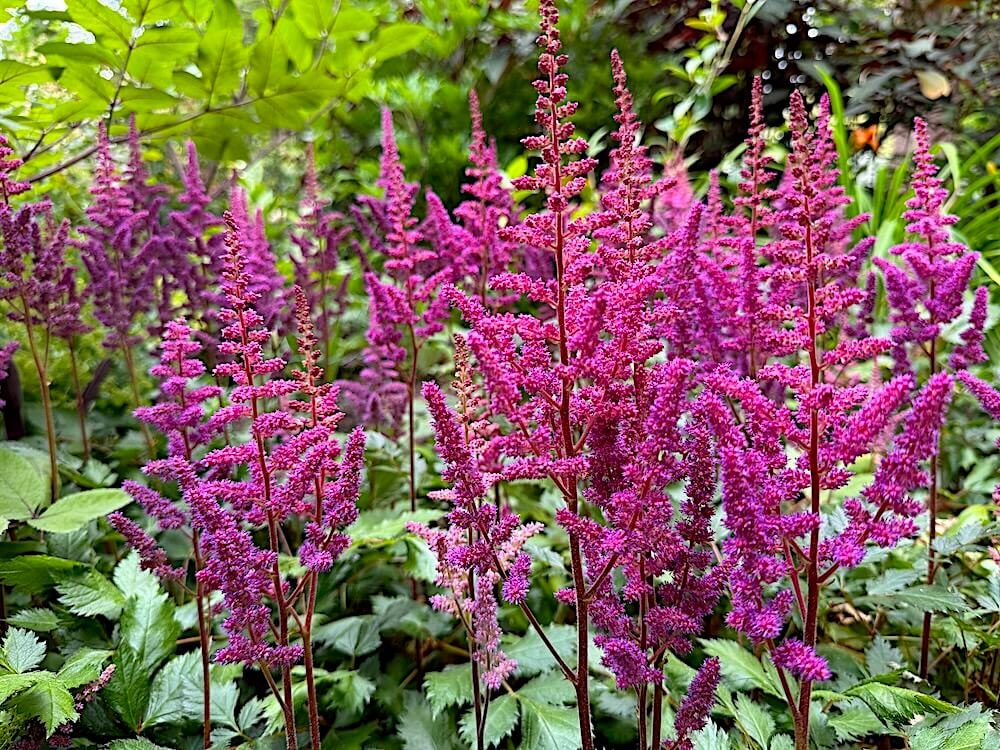
Astilbes bring color and texture to shaded gardens, where their feathery flower plumes rise above handsome foliage during the summer months. Astilbe chinensis 'Vision in Red' (shown here) produces deep fuchsia-pink flower spikes that create rich contrasts against dark green leaves, while Astilbe chinensis 'Vision in White' offers luminous white plumes that brighten woodland borders. Their finely divided foliage forms attractive mounds that provide interest long after flowering has passed.
Flower shape and color vary among the selections. Astilbe simplicifolia 'Hennie Graafland' bears airy blush-pink plumes that create a lighter, more delicate effect. Their elegant flowers combine beautifully with hostas, ferns, and heucheras, creating layered compositions filled with texture and seasonal beauty.
Related: Explore All Astilbes ➔
Highlights ►
18 to 36 in tall
18 to 24 in wide
Part to full shade
Deciduous
Spring bloom
Fragrant white flowers
Arching stems
Zones 3 to 8
SOLOMON’S SEAL (Polygonatum)
03
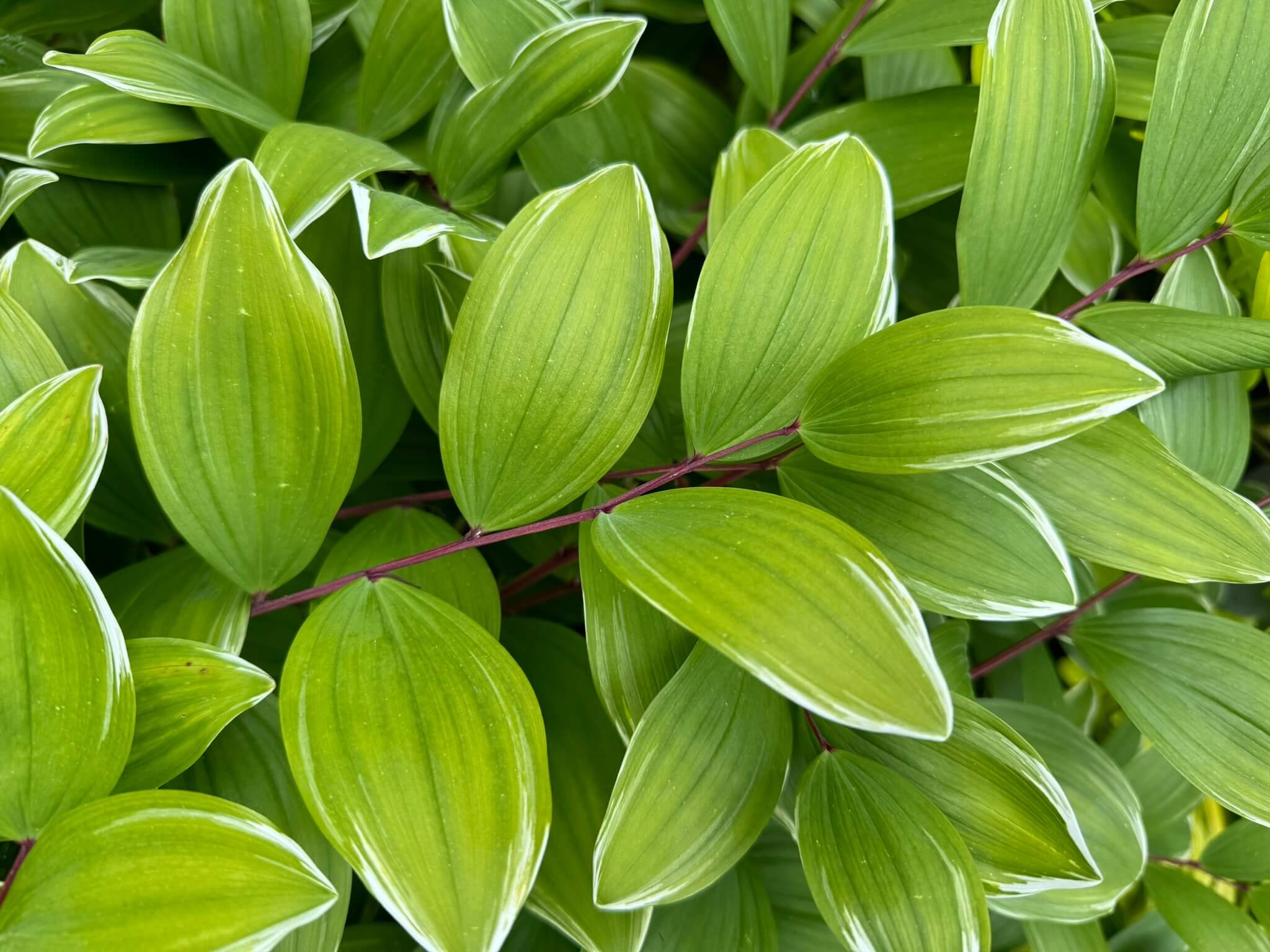
Solomon's seal brings graceful lines and refined texture to shaded gardens, where its arching stems create a flowing, layered effect beneath trees and shrubs. Polygonatum odoratum var. pluriflorum (shown here) features elegant leaves edged in creamy white that brighten woodland plantings and provide interest throughout the growing season, while Polygonatum multiflorum bears clusters of dangling creamy white flowers suspended beneath gently curving stems. Their broad foliage and rhythmic form introduce movement and continuity to shaded borders, enhancing the peaceful character of woodland settings.
Distinctive foliage and stem patterns add further appeal. Polygonatum x hybridum 'Striatum' bears leaves marked with creamy white striping that brighten darker corners of the garden. Their refined presence pairs beautifully with ferns, hostas, and epimediums, creating layered compositions rich in texture and seasonal interest.
Highlights ►
10 to 12 in tall
18 to 24 in wide
Part to full shade
Deciduous
Spring bloom
White flowers
Red fall foliage
Zones 4 to 8
MUKDENIA
04
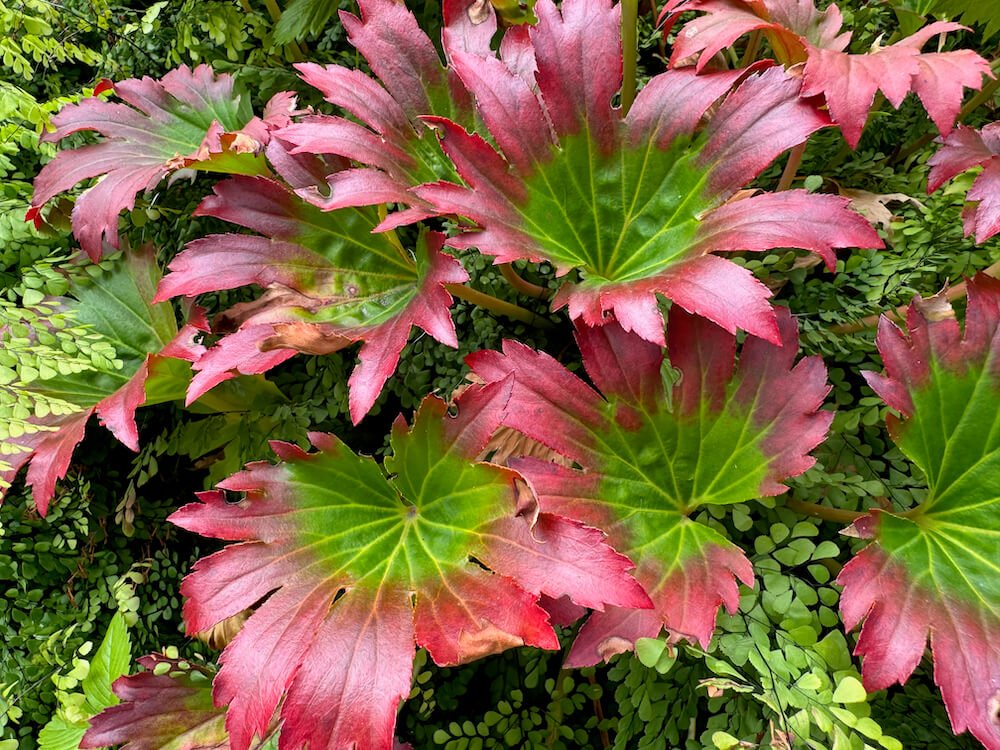
Mukdenias bring distinctive foliage and changing seasonal color to shaded gardens, where their maple-like leaves create an appealing tapestry beneath trees and shrubs. Mukdenia rossii produces airy white flower sprays in spring that emerge above fresh green foliage, while Mukdenia rossii ‘Crimson Fans’ (shown here) develops brilliant red tones along the leaf margins as the season progresses. Their rounded clumps provide texture and contrast, adding depth and interest to woodland borders without overwhelming neighboring plants.
The beauty of mukdenias lies as much in their foliage as in their flowers. Their changing colors and refined forms provide a gentle transition between bolder leaves and finer textures. Combined with ferns, hostas, and epimediums, they create serene plantings filled with subtle color, intricate detail, and seasonal variation.
Highlights ►
24 to 36 in tall
36 to 48 in wide
Part to full shade
Deciduous
Spring bloom
Pink flowers
Bold foliage
Zones 5 to 7
UMBRELLA PLANT (Darmera)
05
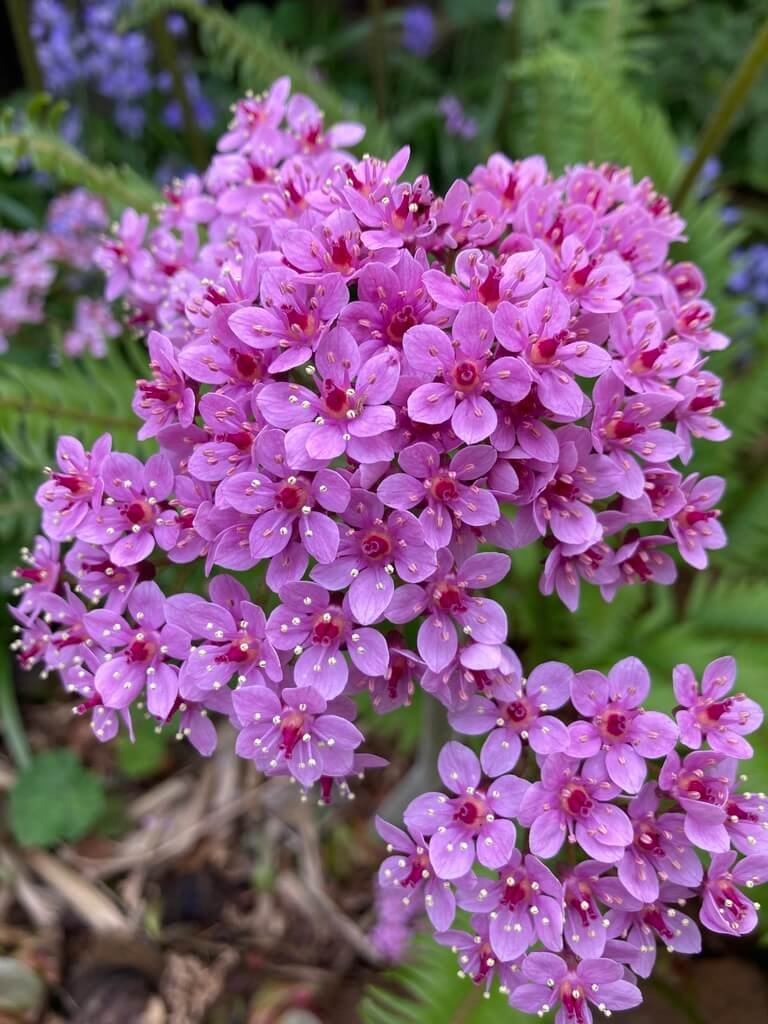
Umbrella plant brings bold texture and dramatic foliage to shaded gardens, where its large rounded leaves create a dramatic presence along woodland paths and moist borders. Darmera peltata (shown here) sends up clusters of soft pink flowers in early spring before the foliage emerges, creating an unusual sequence that adds seasonal interest. As the leaves unfurl, they form broad canopies that lend a lush, tropical character to shaded spaces. Their impressive size provides a strong contrast to finer-textured companions and smaller woodland plants.
The appeal of umbrella plant changes throughout the year, with foliage often developing warm tones in autumn. Its architectural leaves create memorable focal points and help anchor larger plantings. Combined with ferns, astilbes, and hostas, it creates richly layered compositions filled with texture and visual depth.
Highlights ►
12 to 18 in tall
12 to 18 in wide
Part to full shade
Evergreen
Non-flowering fern
Strap-like fronds
Architectural foliage
Zones 5 to 9
FERNS
06
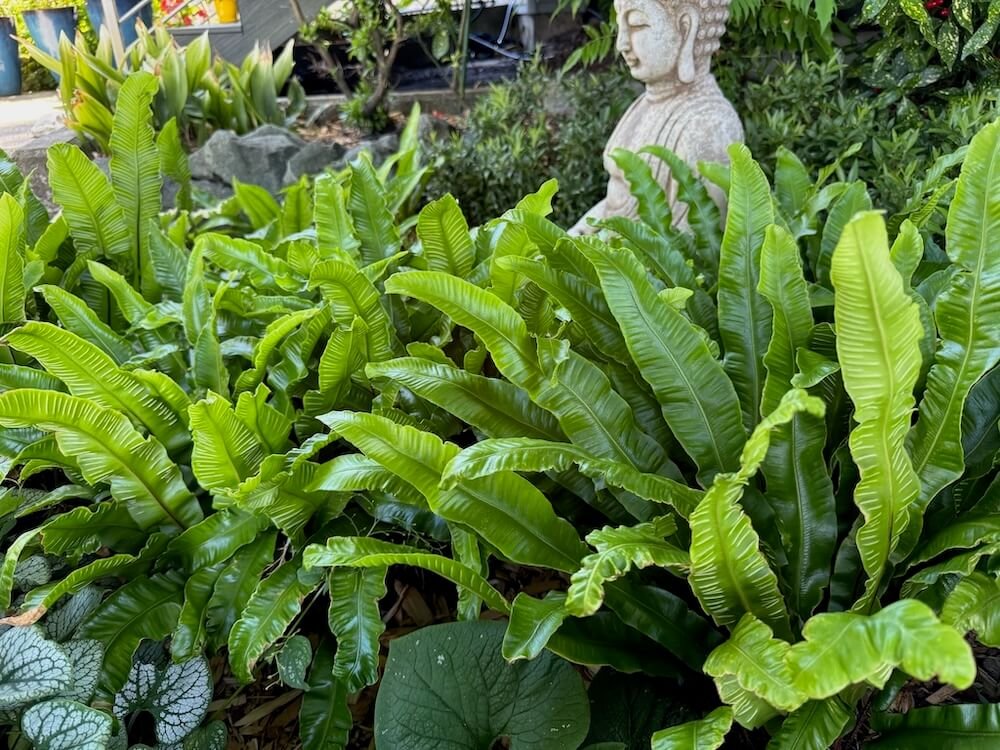
Ferns bring texture to shaded gardens, where their diverse fronds create layers of green beneath shrubs and trees. Asplenium scolopendrium (shown here) offers glossy strap-like leaves that provide a bold contrast to finely divided foliage, while Adiantum venustum forms delicate fans of soft green leaflets that lend an airy quality. Their varied forms and graceful habits add depth and richness throughout the growing season. The absence of showy flowers allows their foliage to take center stage.
The range of textures found among ferns creates endless possibilities for shade gardens. Cyrtomium falcatum 'Rochfordianum' bears holly-like fronds that introduce a coarser texture and evergreen appeal. Their elegant forms combine beautifully with hostas, epimediums, and spring bulbs, creating serene compositions filled with subtle detail and seasonal contrast.
Related: See All Ferns ➔
Highlights ►
18 to 24 in tall
18 to 24 in wide
Part to full shade
Evergreen
Winter to spring bloom
White flowers
Marbled foliage
Zones 5 to 9
LENTEN ROSE (Helleborus)
07
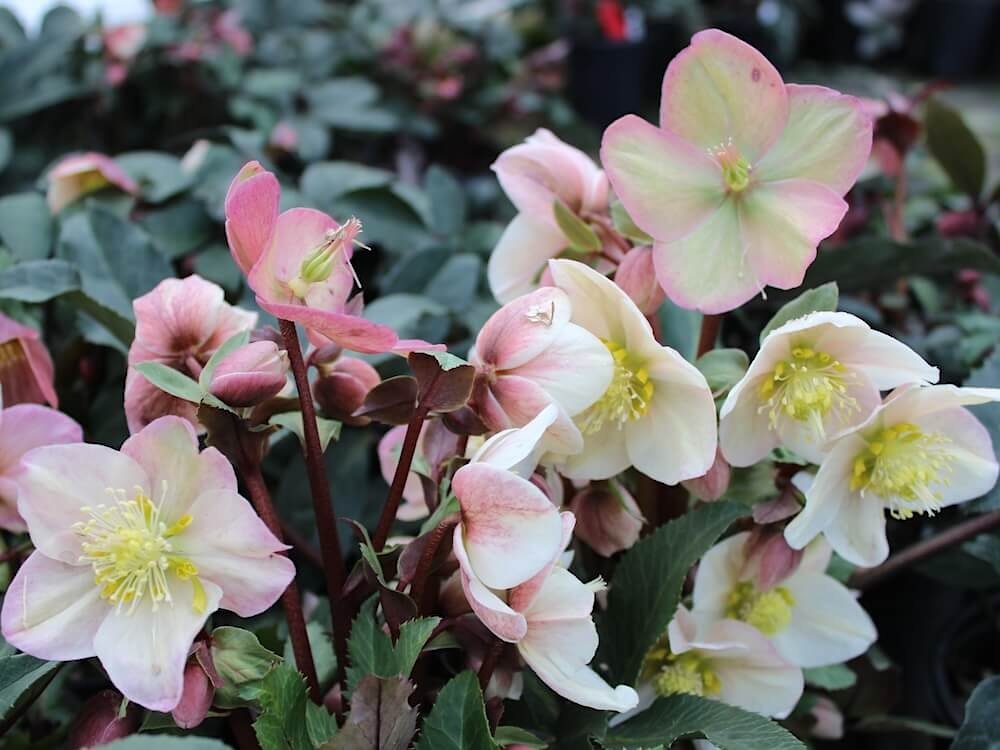
Lenten roses bring welcome color to shaded gardens when little else is in bloom, where their nodding flowers emerge above handsome evergreen foliage. Helleborus x ericsmithii HGC 'Shooting Star' (shown here) bears soft blooms highlighted with rosy tones, while Helleborus x glandorfensis HGC 'Ice N' Roses Early Rose' produces rich pink flowers that brighten late winter and early spring. Their leathery leaves provide substance and structure long after flowering has ended.
Flower colors and markings create a wide range of effects. Helleborus x hybridus 'Flower Girl' offers graceful blooms in delicate white with pink edges that complement other shade-loving plants. Their refined forms pair beautifully with ferns, epimediums, and spring bulbs, creating layered plantings filled with subtle beauty and seasonal interest.
Related: Explore All Lenten Roses ➔
Highlights ►
12 to 18 in tall
18 to 24 in wide
Part to full shade
Deciduous
Ornamental grass
Golden foliage
Arching habit
Zones 5 to 9
JAPANESE FOREST GRASS (Hakonechloa)
08

Japanese forest grass brings movement and luminous color to shaded gardens, where its cascading foliage softens paths, borders, and woodland edges. Hakonechloa macra ‘Aureola’ (shown here) produces gracefully arching leaves striped in green and gold, creating a flowing effect that catches shifting light beneath trees. Hakonechloa macra 'All Gold' offers brilliant chartreuse foliage that brightens darker corners and provides a vivid contrast to broader leaves. Their gently billowing habit introduces a sense of rhythm and continuity to shaded plantings.
The beauty of Japanese forest grass lies in its changing appearance through the seasons. The arching blades take on warm tones in autumn, extending the display well beyond summer. Their elegant forms pair beautifully with hostas, ferns, and hellebores, creating compositions rich in texture, color, and graceful movement.
Highlights ►
3 to 4 ft tall
3 to 4 ft wide
Part to full shade
Deciduous
Early summer bloom
Creamy white flowers
Bronze foliage
Zones 5 to 7
RODGER’S FLOWER (Rodgersia)
09
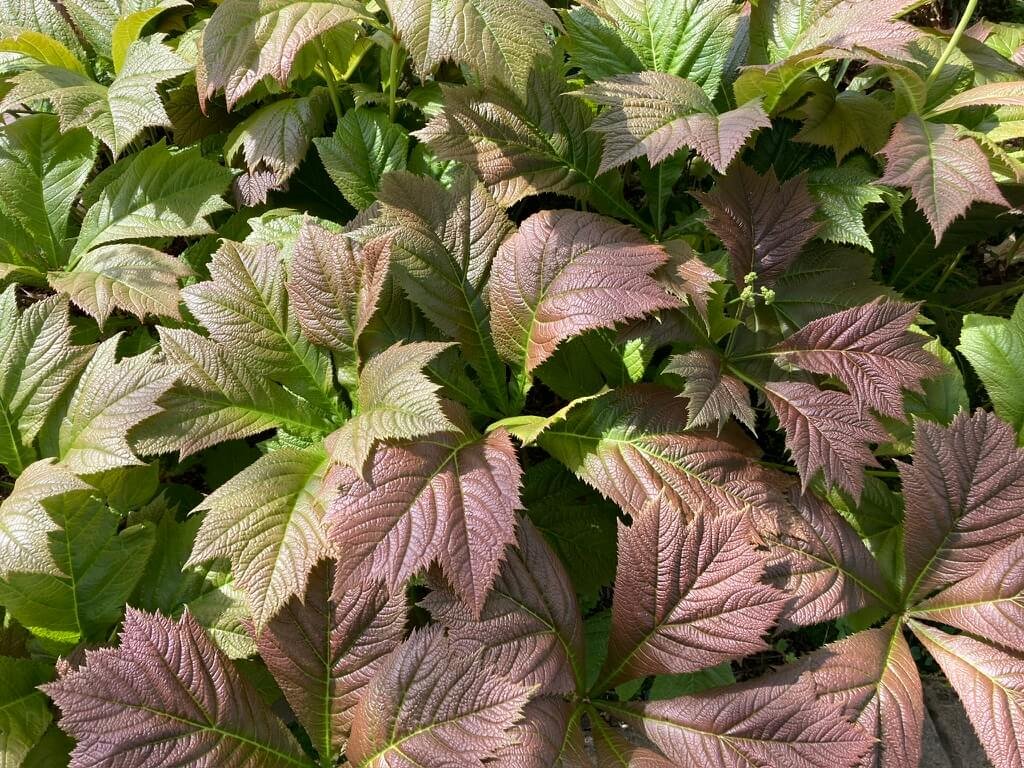
Rodger’s flower bring bold foliage and architectural form to shaded gardens, where their large divided leaves create a lush, dramatic backdrop beneath trees and along woodland paths. Rodgersia podophylla ‘Rotlaub’ (shown here) emerges with bronze-red foliage that gradually matures to green, while Rodgersia pinnata 'Bronze Peacock' displays richly colored leaves accented by airy flower plumes in early summer. Rodgersia podophylla adds handsome texture and broad, tropical-looking foliage that lends substance to shaded borders. Their impressive leaves create a strong contrast with finer-textured companions and smaller woodland plants.
Seasonal changes add another layer of interest to these striking perennials. Their bold forms combine beautifully with ferns, hostas, and astilbes, creating richly layered plantings filled with texture, depth, and changing colors throughout the growing season.
Highlights ►
2 to 3 ft tall
2 to 3 ft wide
Part to full shade
Deciduous
Spring bloom
Pink flowers
Golden foliage
Zones 3 to 9
BLEEDING HEART (Lamprocapnos)
10
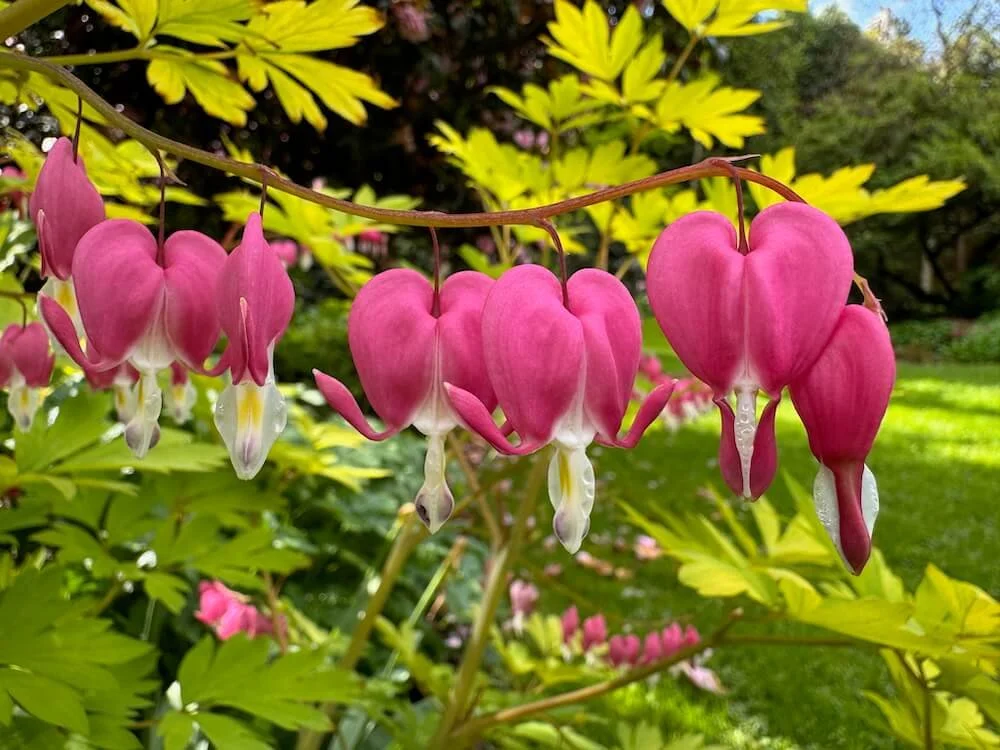
Bleeding hearts bring a romantic quality to shaded gardens, where their arching stems and pendant flowers create graceful displays in spring. Lamprocapnos spectabilis 'Gold Heart' (shown here) combines luminous golden foliage with rosy-pink heart-shaped blooms, while the species Lamprocapnos spectabilis produces classic pink and white flowers suspended along elegantly curving stems. Their finely divided foliage provides a soft texture that complements the broader leaves of many woodland companions, adding lightness and movement to shaded borders.
Flower color and foliage tones create a variety of effects among the selections. Lamprocapnos spectabilis 'Alba' bears pure white blooms that lend a serene presence to darker corners of the garden. Their refined forms pair beautifully with hostas, ferns, and epimediums, creating layered compositions filled with texture, gentle color, and seasonal interest.
Highlights ►
1 to 1.5 ft tall
1.5 to 2 ft wide
Part to full shade
Semi-evergreen
Spring bloom
Blue flowers
Silver foliage
Zones 3 to 8
LUNGWORT (Pulmonaria)
11
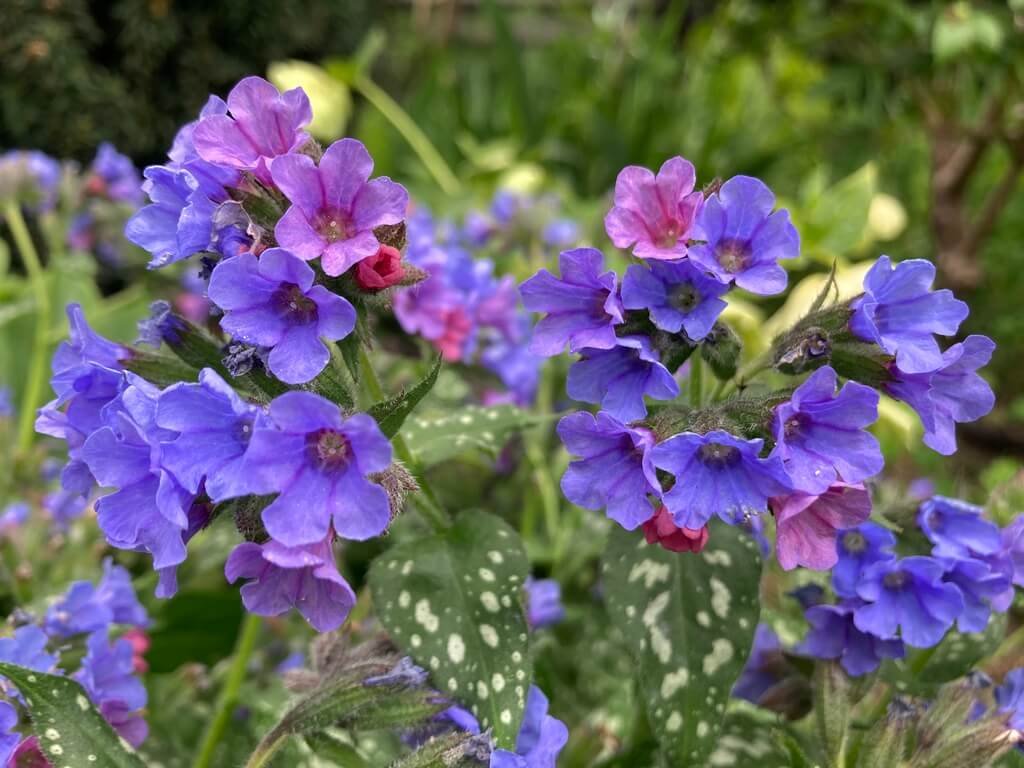
Lungwort brings early color and beautifully patterned foliage to shaded gardens, where its low mounds create attractive carpets beneath trees and shrubs. Pulmonaria ‘Trevi Fountain’ (shown here) produces clusters of cobalt-blue flowers above silver-speckled leaves, while Pulmonaria ‘Twinkle Toes’ adds cheerful pink buds that gradually open to lavender as they age. Their handsome foliage remains attractive long after flowering, providing texture and contrast throughout the growing season. The silvery markings help brighten woodland borders and partially shaded spaces.
Flower colors and leaf patterns create a variety of effects among the cultivars. Pulmonaria 'Lisa Marie' bears rosy pink flowers above heavily spotted foliage that adds interest from spring through fall. Their refined forms combine beautifully with ferns, hostas, and epimediums, creating layered plantings rich in texture and subtle color.
Highlights ►
1 to 1.5 ft tall
2 to 3 ft wide
Part to full shade
Deciduous
Summer bloom
Lavender flowers
Variegated foliage
Zones 3 to 9
HOSTA
12
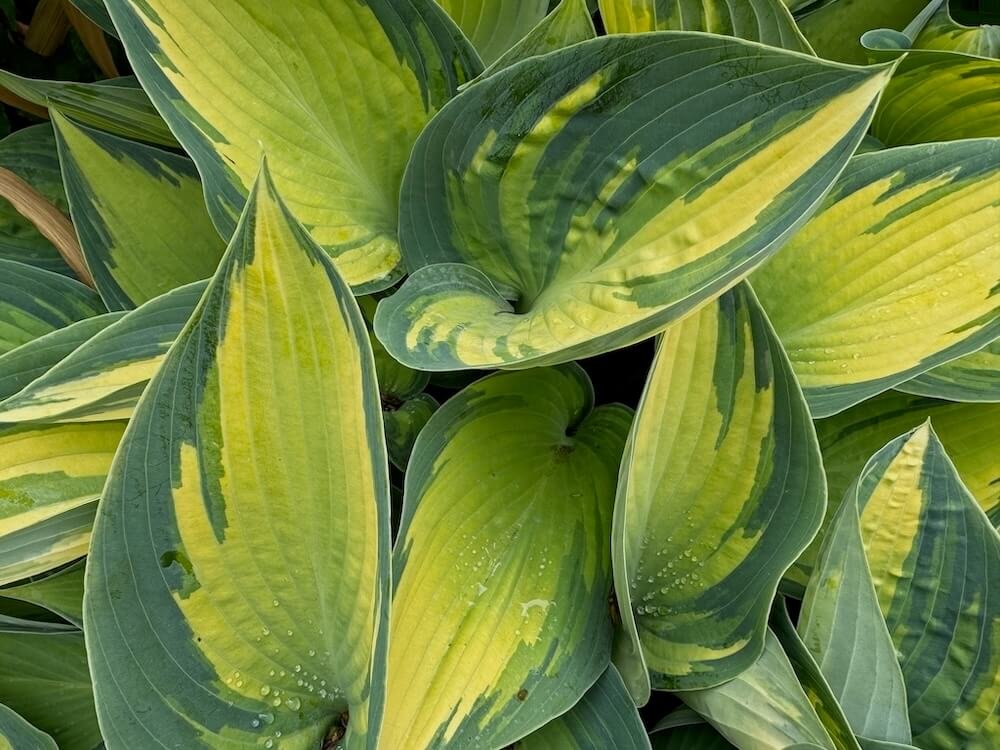
Hostas bring bold foliage and contrasting colors to shaded gardens, where their broad leaves create a calm, inviting atmosphere beneath trees and along pathways. Hosta x 'Francie' displays deep green leaves edged in creamy white, while Hosta x ‘June’ (shown here) combines blue-green centers with golden margins that brighten woodland borders. Their mounded forms provide substance and balance, creating a pleasing backdrop for finer-textured companions. Lavender flowers rising above the foliage add another layer of interest during summer.
Leaf colors and patterns offer a remarkable range of effects. Hosta pachyscapa 'Piedmont Gold' bears bright golden foliage that illuminates darker corners and highlights neighboring plants. Their handsome leaves pair beautifully with ferns, astilbes, and epimediums, creating layered compositions rich in texture, color, and seasonal interest.
Related: See All Hostas ➔
Highlights ►
8 to 12 in tall
8 to 12 in wide
Part to full shade
Deciduous
Spring bloom
Lavender-pink flowers
Woodland native
Zones 4 to 8
TROUT LILY (Erythronium)
13
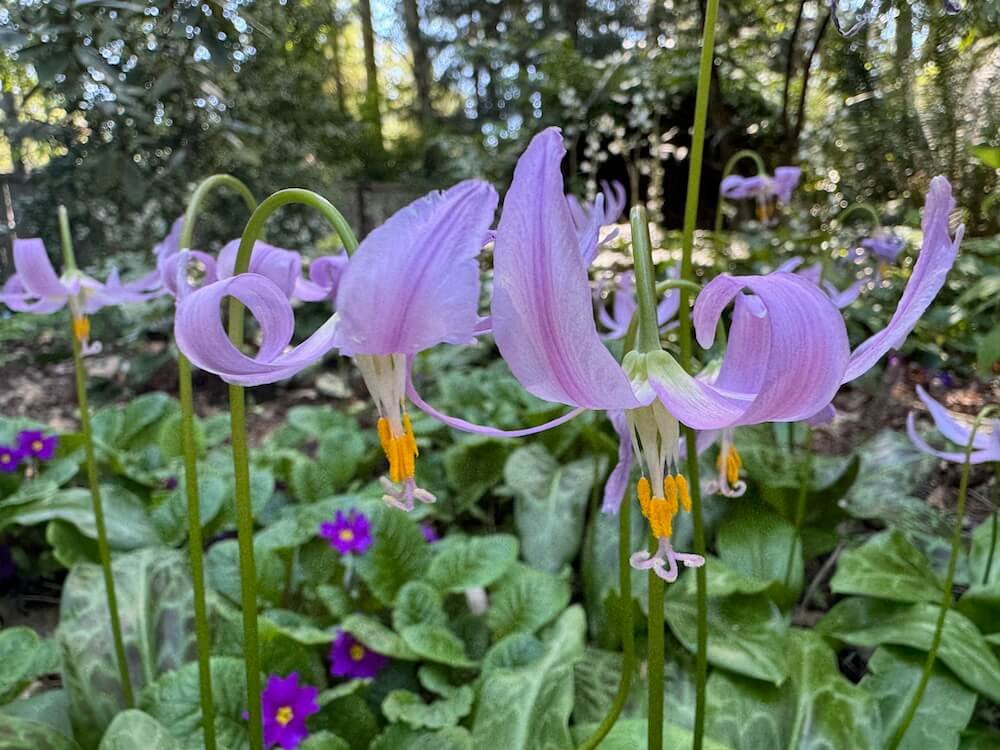
Trout lilies bring delicate beauty to shaded gardens, where their nodding flowers and beautifully mottled foliage signal the arrival of spring. Erythronium revolutum (shown here) produces reflexed lavender-pink flowers above leaves marbled in shades of green and brown, while Erythronium oregonum bears creamy white blooms with yellow centers that illuminate woodland settings. Their elegant flowers rise above the foliage on slender stems, adding a sense of lightness beneath trees and shrubs. The patterned leaves provide interest even when the plants are not in flower, enhancing the display with intricate markings.
These spring ephemerals create memorable displays before retreating for the season. Their refined forms pair beautifully with ferns, trilliums, and epimediums, creating woodland plantings rich in texture, subtle color, and seasonal change. Their fleeting appearance adds anticipation and rhythm to the spring garden.
Highlights ►
2 to 3 ft tall
2 to 3 ft wide
Part to full shade
Deciduous
Spring bloom
Deep red flowers
Spotted foliage
Zones 5 to 9
MAYAPPLE (Podophyllum)
14
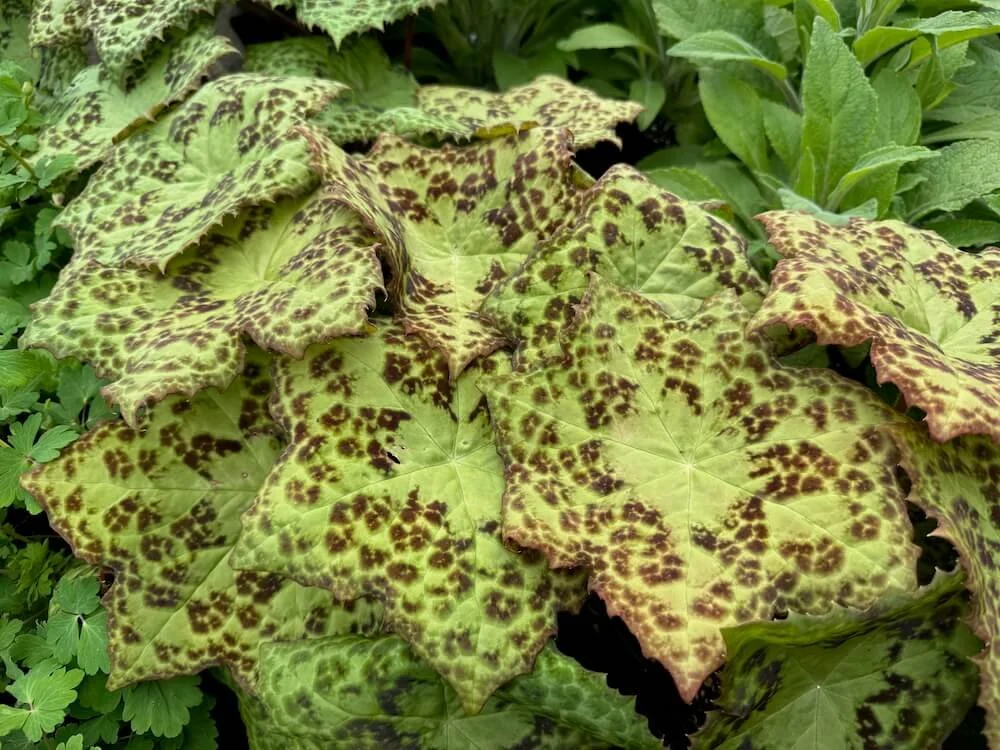
Mayapples bring bold foliage and unexpected patterns to shaded gardens, where their broad umbrella-like leaves create dramatic accents beneath trees and shrubs. Podophyllum versipelle x delavayi 'Andy Navage' displays richly marked foliage that provides interest from spring onward, while Podophyllum pleianthum 'Snowfall' forms impressive mounds of large, glossy green leaves with pronounced veining and a lush, tropical appearance. Their substantial foliage creates pockets of texture and helps establish a layered atmosphere in shaded borders. The unusual forms lend a sense of discovery to quiet garden spaces.
Leaf color and markings create an impressive range of effects. Podophyllum versipelle ‘Spotty Dotty’ (shown here) bears glossy leaves adorned with intricate mottling that becomes more pronounced as the season progresses. Their distinctive forms pair beautifully with ferns, epimediums, and hellebores, creating woodland compositions rich in texture, pattern, and seasonal interest.
Highlights ►
1 to 1.5 ft tall
6 to 12 in wide
Sun to part shade
Deciduous
Spring bloom
White flowers
Fragrant flowers
Zones 5 to 9
DAFFODIL (Narcissus)
15
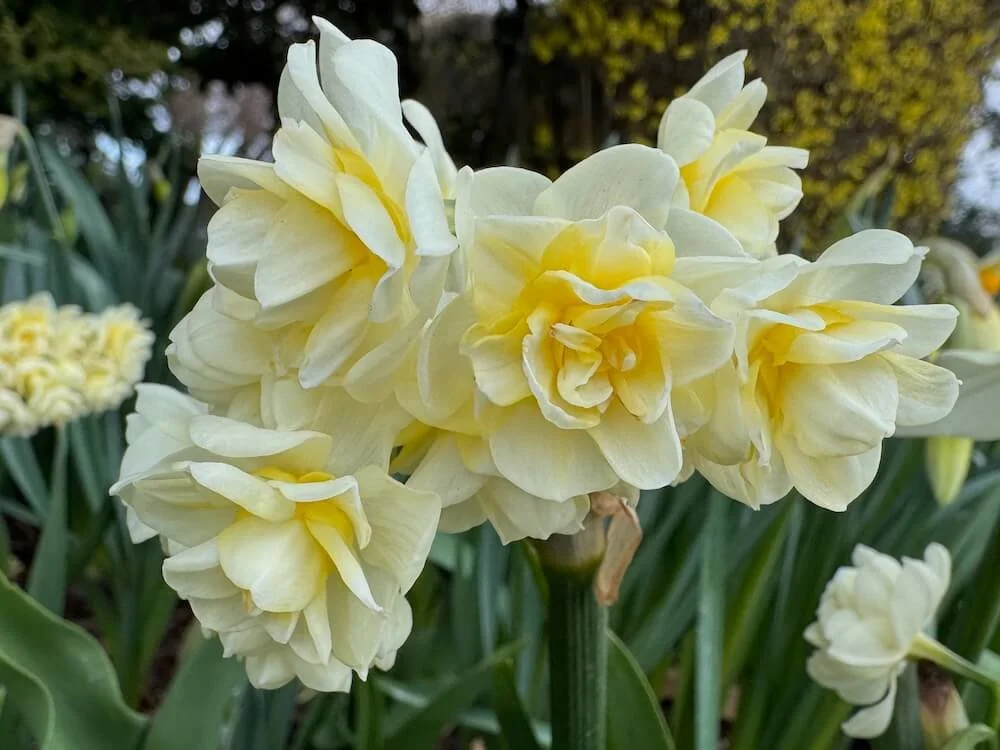
Daffodils bring welcome color to lightly shaded gardens, where their blooms emerge in spring before trees fully leaf out. Narcissus 'Erlicheer' (shown here) bears clusters of fragrant creamy white flowers touched with soft yellow, while Narcissus 'Candy Princess' displays ruffled white petals surrounding soft peach-pink cups. Their upright stems and strap-like foliage provide a fresh presence that blends naturally with woodland companions. These bulbs help bridge the transition between winter and the growing season.
Flower forms and colors create a broad range of effects. Narcissus 'Le Torch' produces vivid yellow blooms with frilly orange centers that brighten shaded borders and pathways. Their elegant flowers pair beautifully with hellebores, ferns, and early perennials, creating displays rich in color and springtime beauty.
Related: Explore All Bulbs ➔
Highlights ►
2 to 3 ft tall
1.5 to 2 ft wide
Part to full shade
Deciduous
Late spring bloom
White flowers
Showy berries
Zones 4 to 8
FALSE SOLOMON’S SEAL (Maianthemum)
16
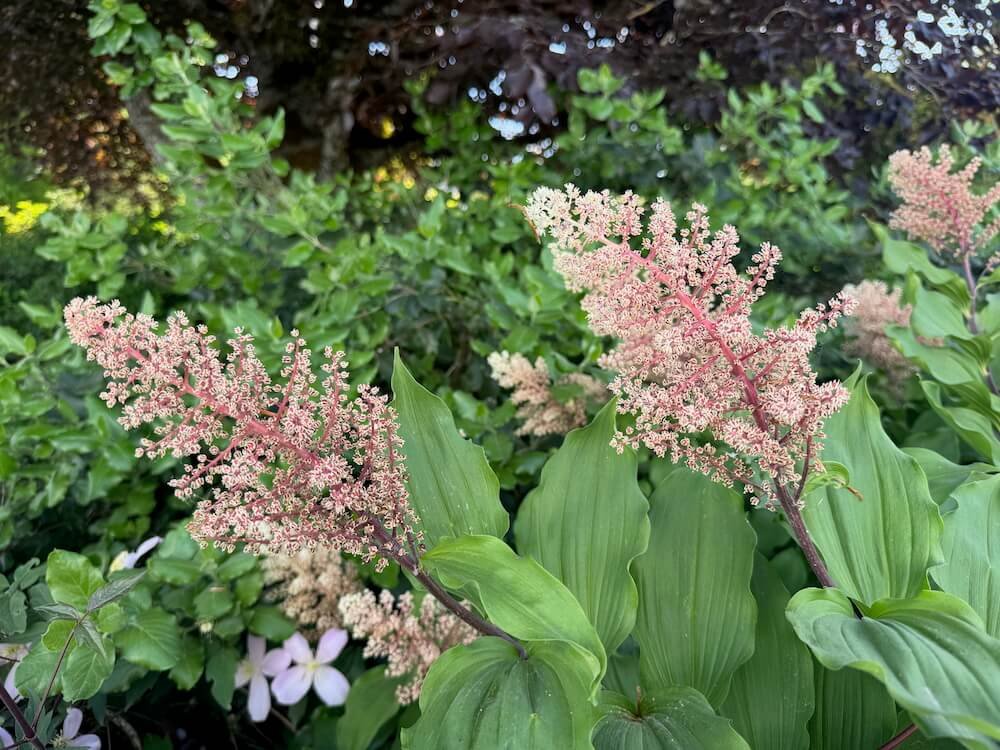
False Solomon's seal brings a natural woodland character to shaded gardens, where its arching stems and layered foliage create a relaxed, flowing appearance. Maianthemum racemosum subsp. amplexicaule (shown here) produces feathery plumes of tiny blush-pink flowers held above broad green leaves on reddish stems, creating a soft, airy display in late spring and early summer. The handsome foliage forms graceful drifts that blend easily with other woodland plants, adding depth and continuity beneath trees and shrubs. Its upright flower clusters provide a pleasing contrast to plants with pendant blooms.
Seasonal changes give this native perennial lasting appeal. The berries and golden autumn foliage extend the display well beyond flowering, bringing additional interest to shaded borders. Combined with ferns, trilliums, and epimediums, it creates layered plantings rich in texture, form, and subtle seasonal color.