
Spring Blooming Shrubs
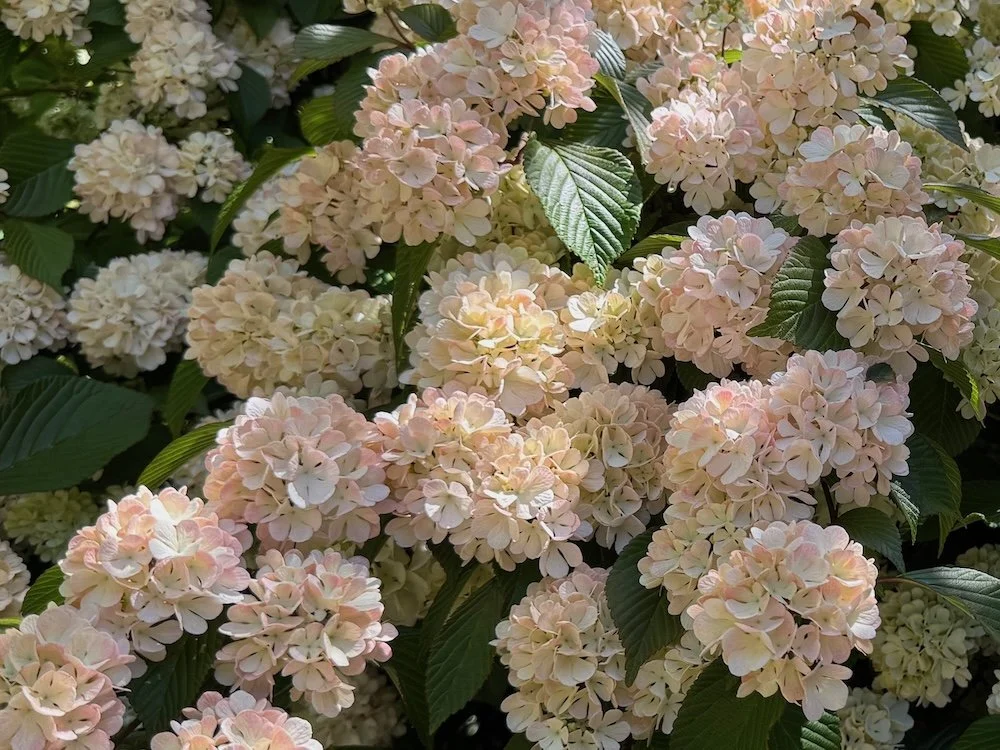
Viburnum p. f. plicatum ‘Mary Milton’
Deciduous shrub with layered branching and rounded double soft pink flowers. Attracts pollinators, and produces berries for birds. Grows 6 to 8 feet tall; ideal for wildlife hedges and seasonal screening. Zones: 5 to 8.
Spring blooming shrubs bring fresh color and renewal to the garden, producing abundant flowers as the landscape begins to wake. Their blossoms range from soft pastels to brighter shades of pink, yellow, white, and blue, often appearing alongside emerging foliage. These shrubs add structure to borders and hedges while creating a space that feels bright, inviting, and full, as the season unfolds.
Planted with intention, they help carry the garden from early growth into peak spring display with dependable blooms. Different varieties flower at slightly different times, extending the season and adding variety. Over time, you may begin to anticipate their arrival and look forward to the familiar rhythm of spring as each shrub comes into bloom.
TREE PEONY (Paeonia)
01

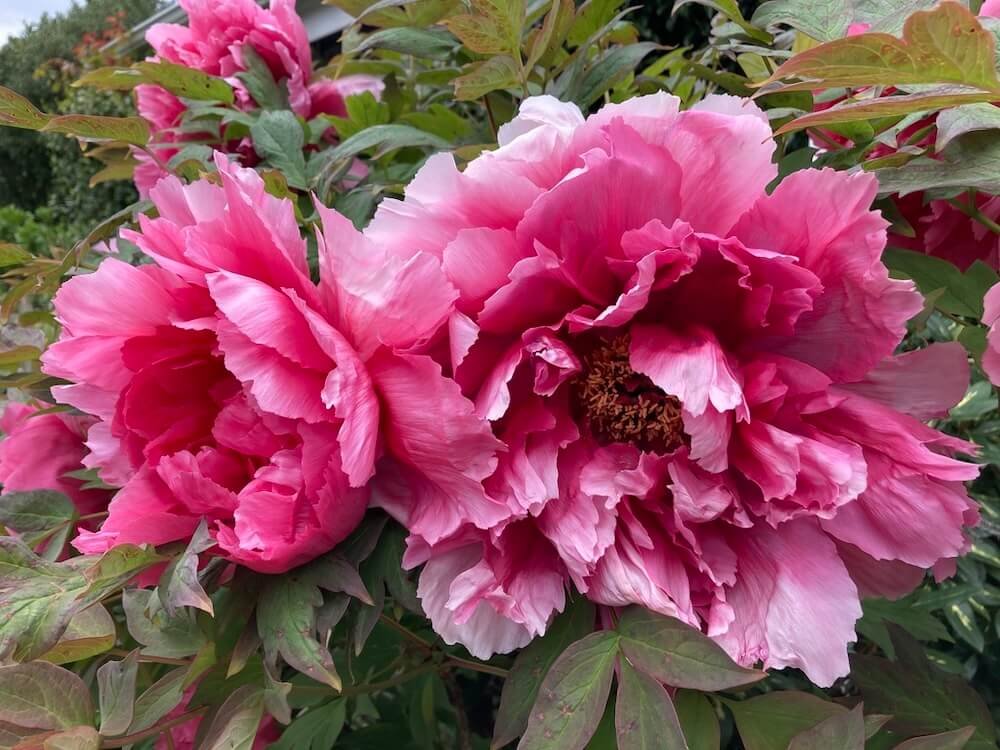
Spring-blooming tree peonies bring bold color and dramatic form to the garden, with large flowers appearing in mid to late spring before many other shrubs reach their peak. Paeonia x suffruticosa ‘Zi Er Qiao’ (shown here) is grown for its distinctive pink and purple tones in a striking, layered display against finely divided foliage. Their woody structure remains in place year-round, providing a framework that supports these oversized flowers.
They are well suited to borders or focal plantings where their blooms can be clearly seen. Paeonia x suffruticosa ‘Sonoma Apricot’ offers warm apricot-toned flowers with a softer, blended effect, while Paeonia ‘Ruffled Sunset’ adds rich coral and peach tones with a more textured form. Paeonia x intersectional ‘Scarlet Heaven’ provides vivid red blooms on a compact, sturdy plant. Together, these selections deliver bold spring color, refined structure, and a strong visual presence in the garden.
VIBURNUM
02
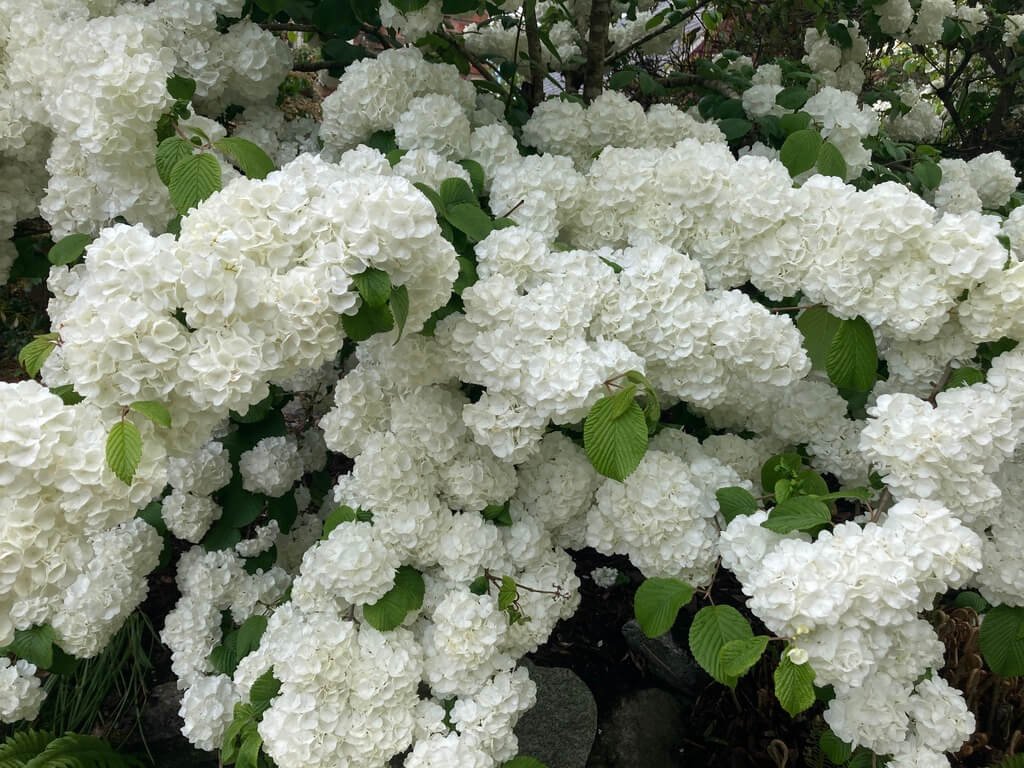
Spring-blooming viburnums bring abundant flowers to the garden, with blooms appearing from mid to late spring along tiered branches. Viburnum plicatum (shown here) is grown for its pleated foliage and showy white blooms, which may appear as rounded, snowball-like clusters or in more open forms depending on the selection. Viburnum plicatum f. plicatum ‘Mary Milton’ adds a softer variation, with rounded flower heads that open pale pink and deepen in tone. Its structured branching enhances the flowering effect, giving the plant a balanced, architectural presence.
Ideal for borders or specimen plantings, these shrubs allow their distinctive form and bloom to be fully appreciated. Viburnum plicatum ‘Mariesii’ offers a contrasting look with flat, lacecap-style white flowers arranged along horizontal branches, creating a layered, tiered effect. Together, these selections provide varied flower forms, soft seasonal color, and a refined presence that defines the spring landscape.
LILAC (Syringa)
03
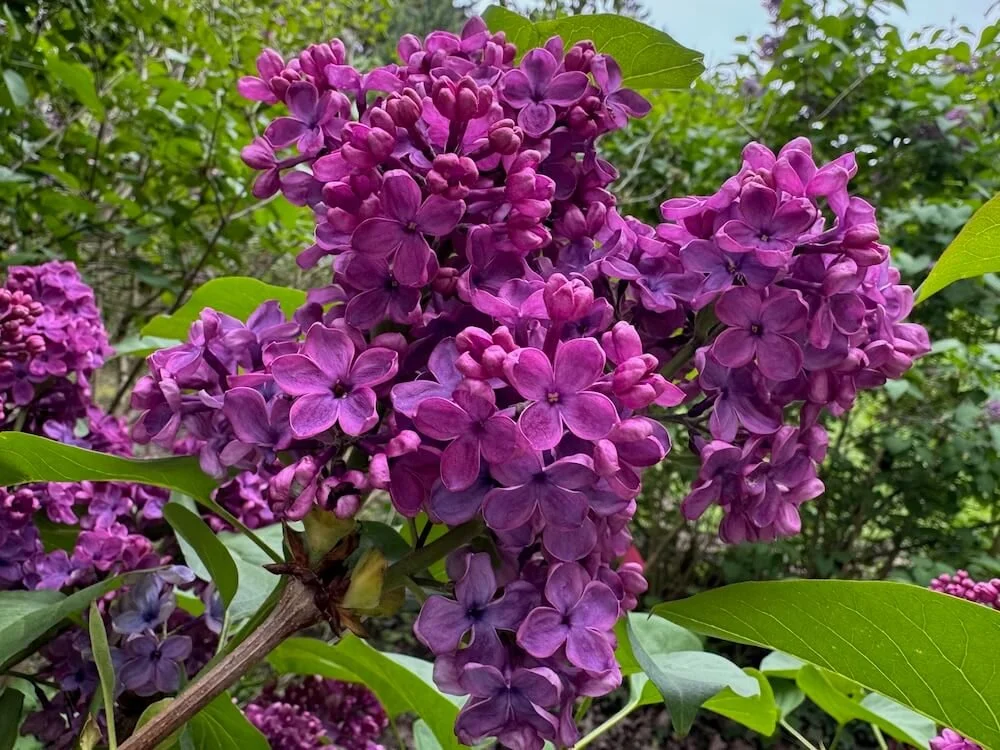
Lilacs bring fragrance and abundant color to the garden, with flowers appearing in mid to late spring on upright, multi-stemmed shrubs. Syringa vulgaris ‘Charles Joly’ (shown here) is grown for its deep red-purple, double blooms that create a rich, full display against fresh green foliage. Their naturally open structure allows the flower clusters to stand out clearly, adding both height and seasonal presence.
Well suited to borders, hedges, or focal plantings, these shrubs allow their blooms and fragrance to be fully appreciated. Syringa vulgaris ‘Katherine Havemeyer’ offers soft lavender-pink, double flowers with a romantic, layered effect, while Syringa vulgaris ‘Fritz Klager’ adds deep lilac-blue tones that brighten the planting. Together, these selections provide rich spring color, classic fragrance, and a strong visual presence in the landscape.
Related: Explore All Lilacs ➔
CAMELLIA
04
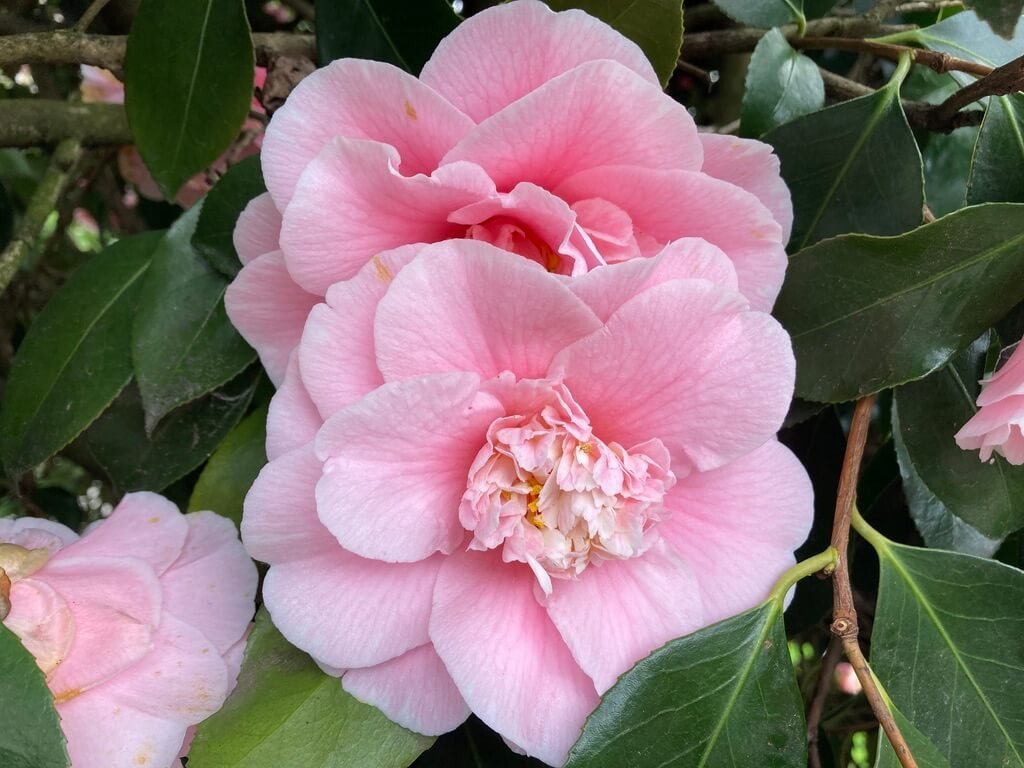
Spring-blooming camellias bring refined color and structure to the garden, with flowers appearing from late winter into spring as the landscape begins to fill in. Camellia ‘April Kiss’ is grown for its clear pink blooms and reliable flowering, creating a bright, consistent display against glossy evergreen foliage. Their dense habit provides year-round structure while supporting a steady succession of blooms.
Camellias are well suited to borders, foundation plantings, or woodland edges where their flowers can be clearly seen. Camellia japonica ‘Annie Wylam’ (shown here) offers large soft pink blossoms and a distinctive center of small, petaloid segments that create a full, layered effect, while Camellia japonica ‘Brushfield’s Yellow’ adds creamy white flowers with soft yellow centers for a lighter contrast. Together, these selections provide extended spring color, evergreen structure, and a polished presence in the garden.
Related: Explore All Camellias ➔
MEXICAN ORANGE BLOSSOM (Choisya)
05
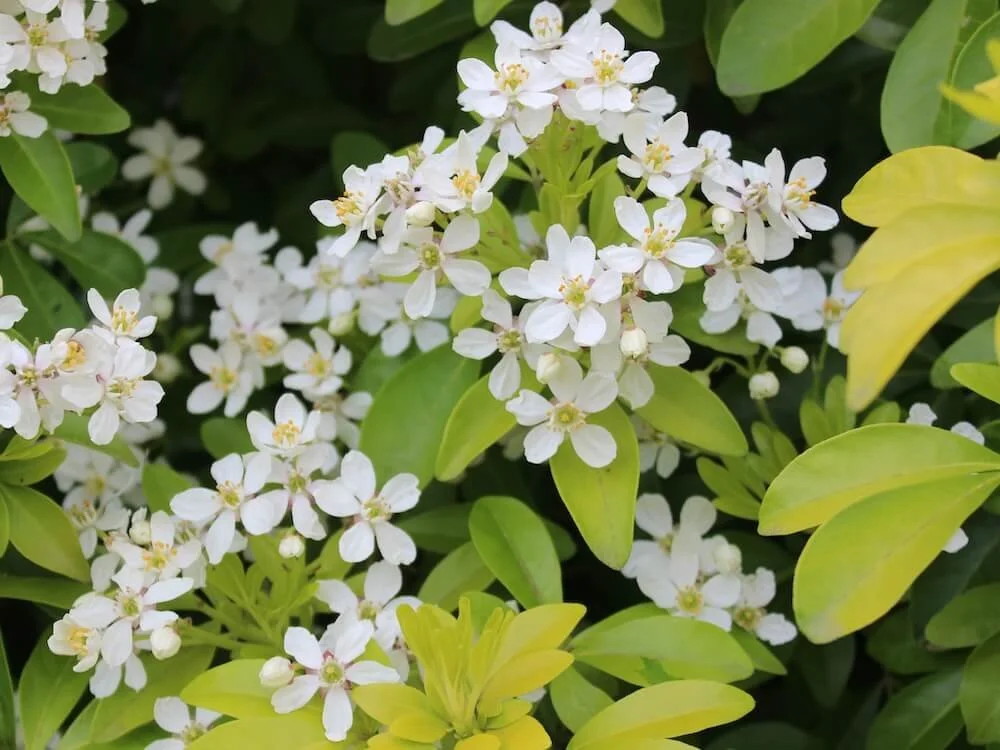
Mexican orange blossom brings fragrance and bright, clean color to the garden, with flowers appearing in mid to late spring and often repeating later in the season. Choisya ternata is grown for its naturally rounded habit and glossy green leaves, along with clusters of white, citrus-scented flowers that create a fresh, luminous display. Its dense evergreen structure provides a consistent backdrop that highlights the bloom, filling the surrounding space with a light, refreshing citrus fragrance.
Ideal for borders, foundation plantings, or mixed beds, these shrubs allow both fragrance and form to be fully appreciated. Choisya ternata ‘Sundance’ (shown here) adds golden foliage that brightens the planting, while Choisya x dewitteana ‘Aztec Pearl’ offers a finer texture with narrow leaves and delicate white flowers. Together, these selections provide reliable spring bloom, evergreen structure, and a refined presence in the garden.
RHODODENDRON
06
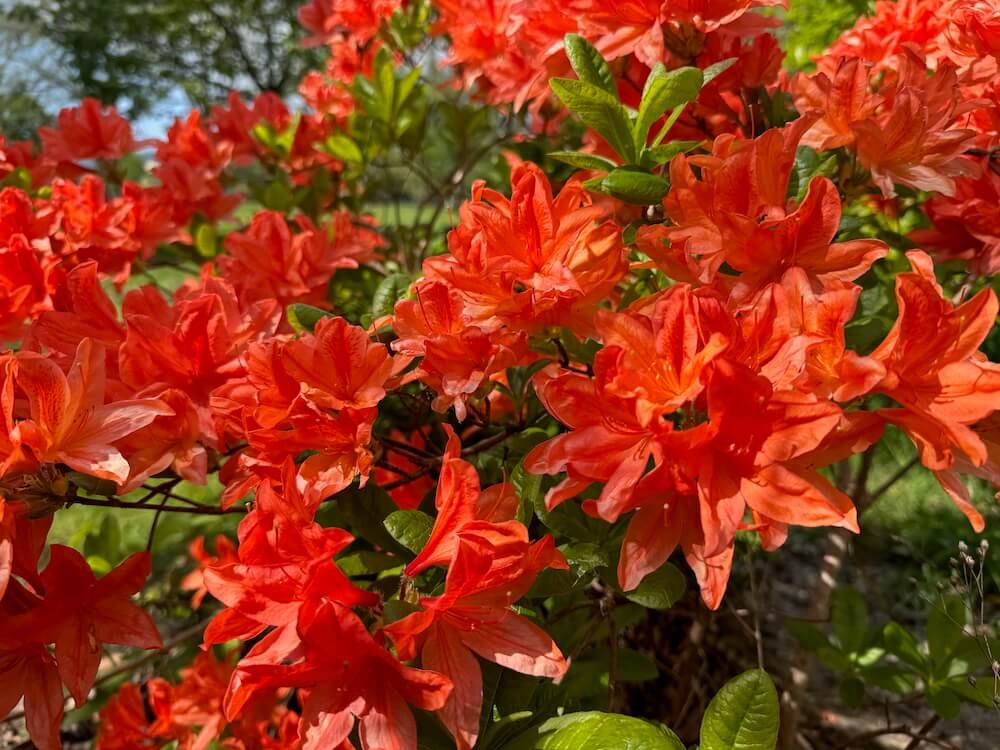
Rhododendrons bring layered color and evergreen structure to the garden, with flowers appearing from early to mid-spring depending on the selection. Rhododendron x molle ‘Koster’s Brilliant Red’ (shown here) is grown for its vivid red-orange blooms that create a bold, intense display against green foliage, adding warmth and intensity at the start of the season. Their dense growth provides a consistent backdrop while supporting a strong floral show.
Well suited to woodland edges, shaded borders, or foundation plantings, these shrubs allow their blooms to be clearly seen. Rhododendron albiflorum var. albiflorum adds a more delicate presence with small, white flowers, while Rhododendron impeditum offers a compact form with lavender-blue blooms that introduce a cooler color range. Together, these selections provide varied bloom color, evergreen structure, and a balanced spring display in the landscape.
Related: See All Rhododendrons ➔
JAPANESE SNOW FLOWER (Deutzia)
07
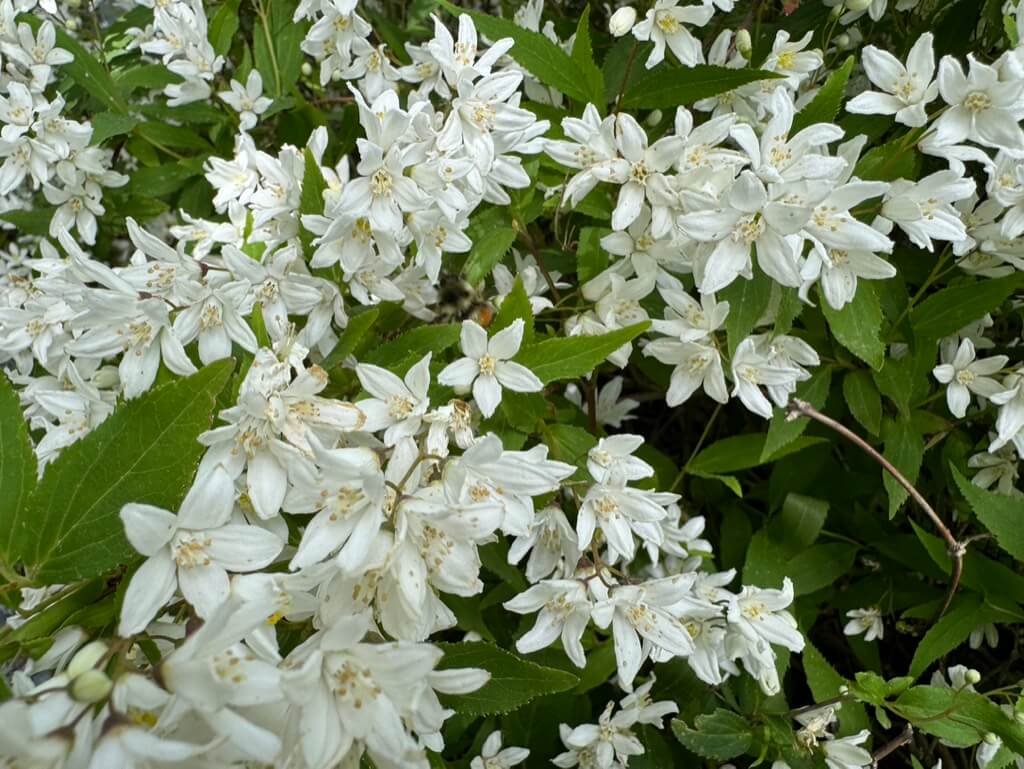
Japanese snow flower brings a soft, cascading display to the spring garden, with blooms appearing in mid to late spring along arching branches. Deutzia gracilis ‘Nikko’ (shown here) is grown for its profusion of small, star-like white flowers that cover the plant in a dense, flowing layer, creating a clean, luminous effect against fine-textured green foliage. Its low, spreading habit forms a graceful mound that highlights the bloom, spilling gently over edges and softening transitions between planting areas.
Ideal for borders, edging, or mass plantings, this shrub allows its form and flowering to be fully appreciated in open settings. Its compact size and naturally tidy growth require little maintenance while providing reliable seasonal interest, blending easily with perennials and other shrubs in layered garden designs. Together, these qualities offer consistent spring color, refined texture, and a soft, cohesive presence in the landscape.
WEIGELA
08
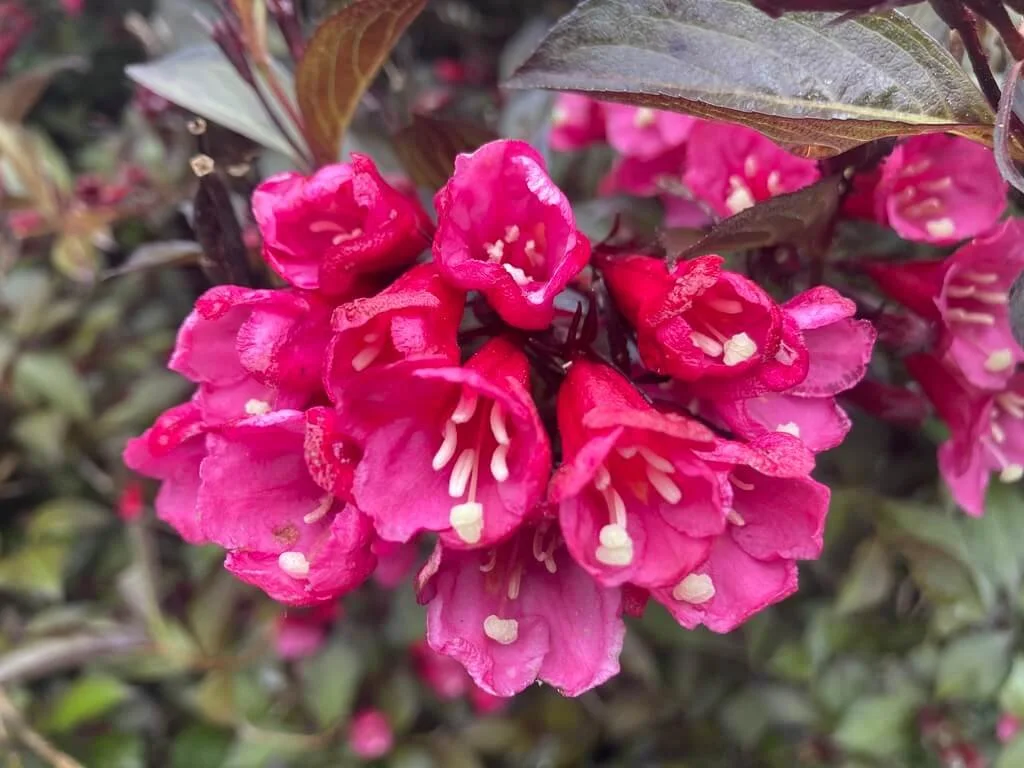
Weigelas bring vibrant color and soft structure to the garden, with flowers appearing in late spring and often repeating lightly into summer. Weigela florida ‘Alexandra’ (shown here) is grown for its rosy-pink blooms set against deep burgundy foliage, creating strong contrast and a rich display in sunny garden settings with excellent seasonal interest and color depth. Its arching habit allows the flowers to be clearly visible, adding movement and seasonal interest.
Well suited to borders, low hedges, or mixed plantings, these shrubs provide both color and form in spring displays. Weigela ‘Looymansii Aurea’ adds golden foliage that brightens the planting, while Weigela florida ‘Verweig’ offers a compact form with variegated leaves and soft pink flowers. Together, these selections provide layered foliage color, reliable bloom, and a balanced presence in the spring garden.
ELDERBERRY (Sambucus)
09
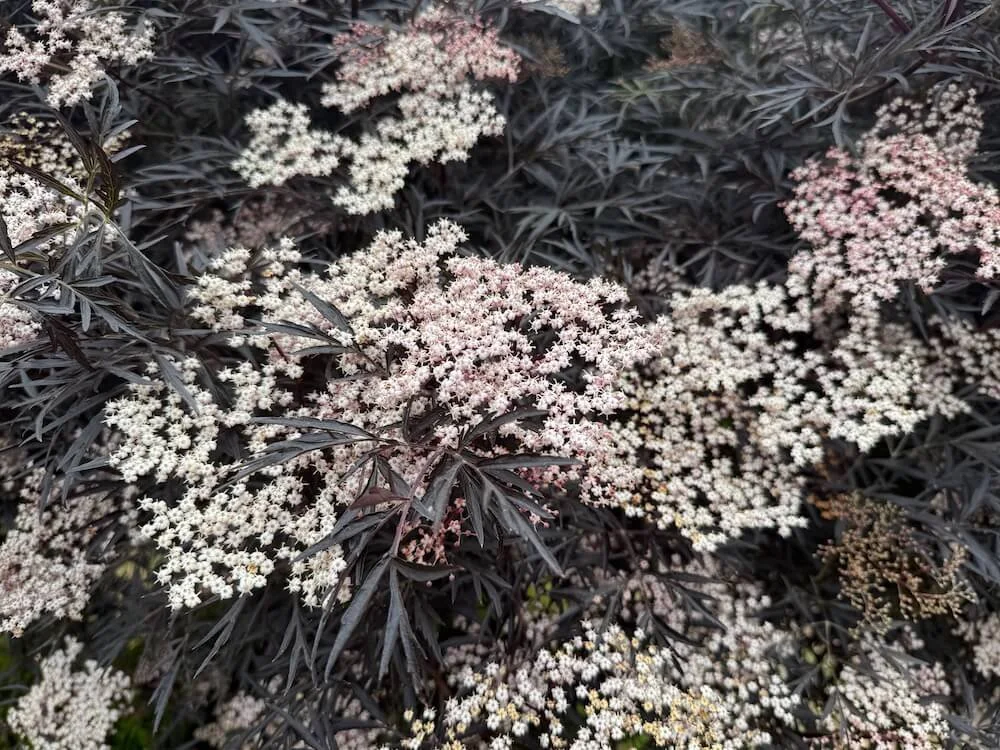
Elderberries bring bold foliage and airy spring bloom to the garden, with flowers appearing in late spring in broad, flat clusters. Sambucus nigra ‘Eva’ (shown here) is grown for its finely cut, deep burgundy foliage paired with soft pink flower heads that create a light, layered display. Its upright, open habit allows both foliage and blooms to stand out clearly, adding contrast and movement to the planting, while creating a soft, airy presence that enhances surrounding garden combinations.
Well suited to borders, naturalized areas, or mixed plantings, these shrubs offer both structure and seasonal interest. Sambucus nigra ‘Variegata’ adds green leaves edged in creamy white, brightening the display while producing white flower clusters in spring. Together, these selections provide soft bloom, bold foliage contrast, and a dynamic presence in the spring garden.
ALPINE MINT BUSH (Prostanthera)
10
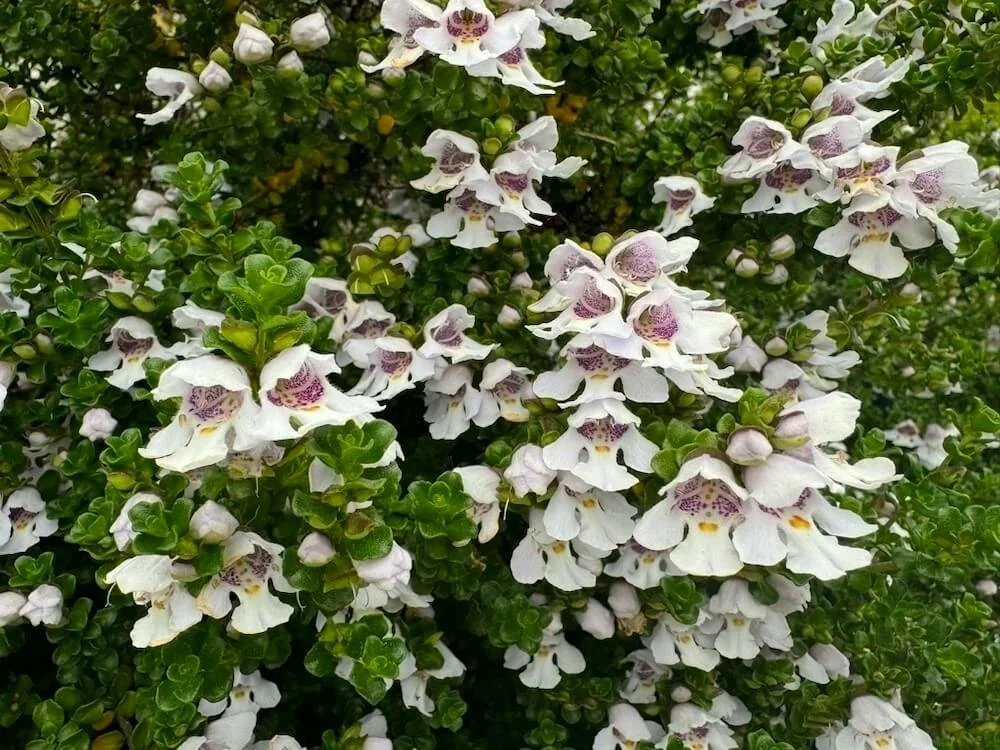
Alpine mint bush brings fragrance and soft color to the garden at the beginning of the growing season, producing masses of white flowers marked with purple spotting against dense evergreen foliage. Prostanthera cuneata (shown here) is grown for its small aromatic leaves and compact branching habit that becomes covered in bloom during early spring. The flowers appear in such abundance that they often partially conceal the foliage, creating a light, cloud-like effect across the shrub.
As temperatures warm later in the season, the evergreen foliage continues contributing texture and fragrance throughout the garden. Its naturally rounded form works especially well in borders, cottage-style plantings, and pathways where the mint-scented foliage can be appreciated up close. The fine branching structure and small leaves also provide contrast against broader foliage shrubs and heavier spring-flowering plants nearby.
KERRIA
11
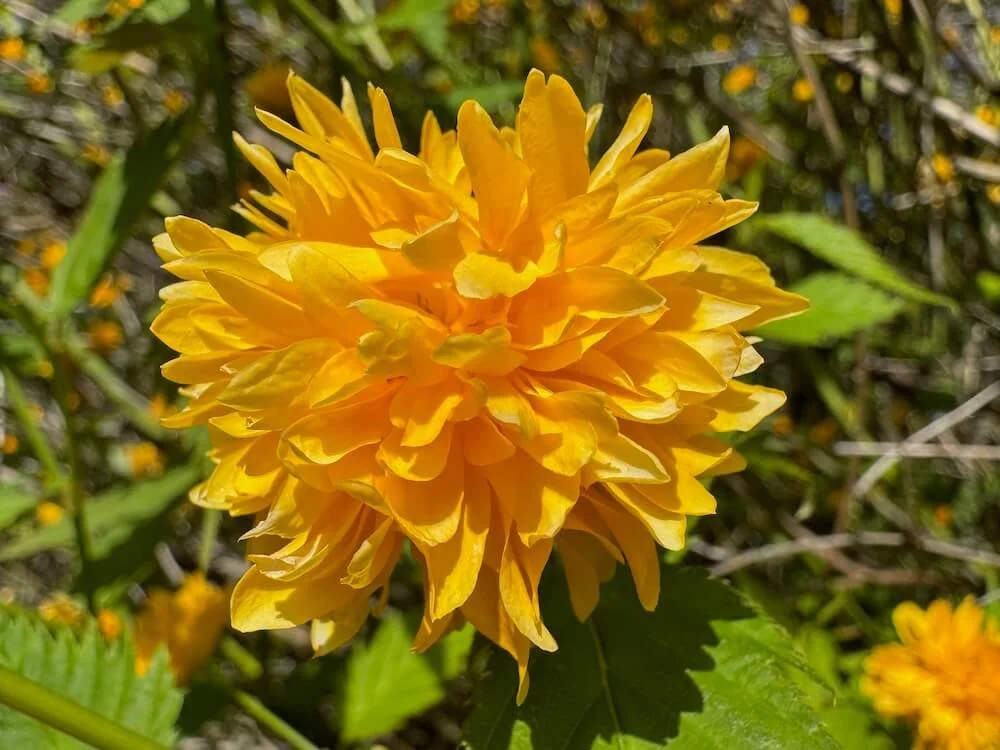
Kerrias fill the spring garden with bright yellow flowers carried along graceful green stems that remain visible well beyond the blooming season. Kerria japonica ‘Pleniflora’ (shown here) is grown for its fully double golden blooms that appear in abundance against arching branches as spring gardens begin to leaf out. The rounded flowers and vivid stem color create strong contrast with emerging foliage and darker evergreen backdrops nearby.
As surrounding shrubs expand through the season, kerrias continue contributing texture through their slender branching habit and fresh green foliage. Their naturally arching form helps loosen rigid planting combinations while adding depth to woodland borders and shaded garden spaces. Even after flowering finishes, the bright stems remain visually effective through winter, extending interest across multiple seasons.
HAWTHORN (Rhaphiolepis)
12
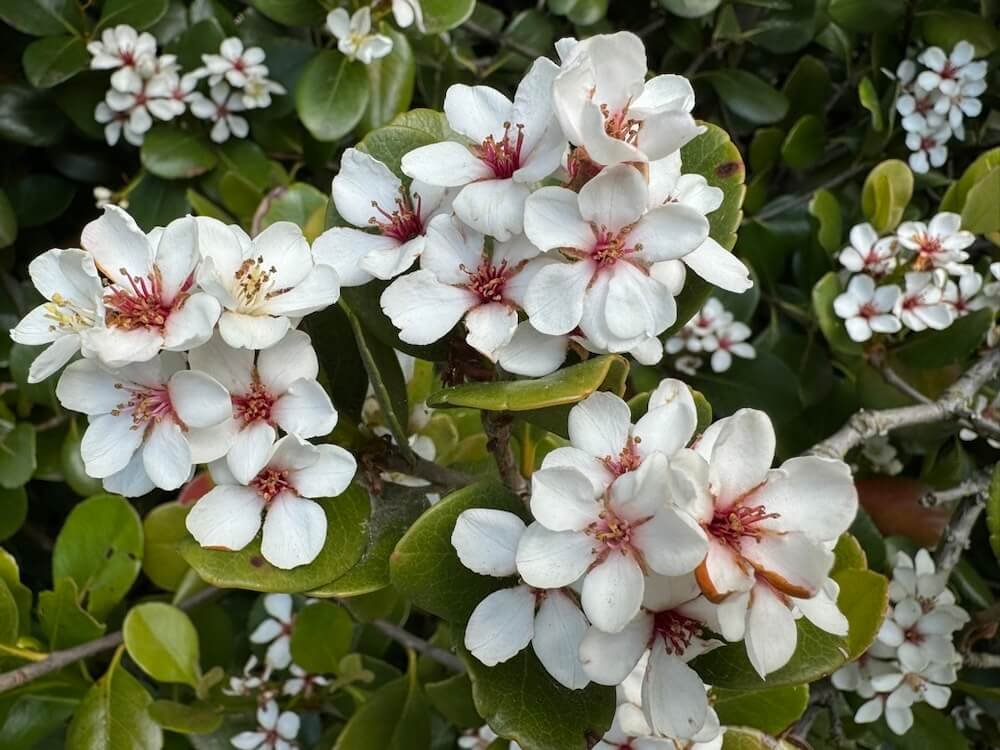
Indian hawthorns bring evergreen structure and clusters of soft spring flowers to the garden at a time when many shrubs are only beginning to emerge from winter. Rhaphiolepis umbellata (shown here) is grown for its leathery dark green foliage and rounded clusters of white to pale pink flowers that appear across the branch tips in early spring. The glossy foliage provides year-round substance while the blooms create a softer appearance against the dense branching habit.
As the season progresses, these shrubs continue contributing structure through their compact forms and tidy evergreen foliage. Rhaphiolepis indica adds richer pink flower tones and a slightly more refined texture that works especially well in borders, foundation plantings, and coastal gardens. Their dense branching and persistent foliage help anchor planting combinations while providing contrast against lighter spring-flowering shrubs and perennials nearby.
VACCINIUM
13
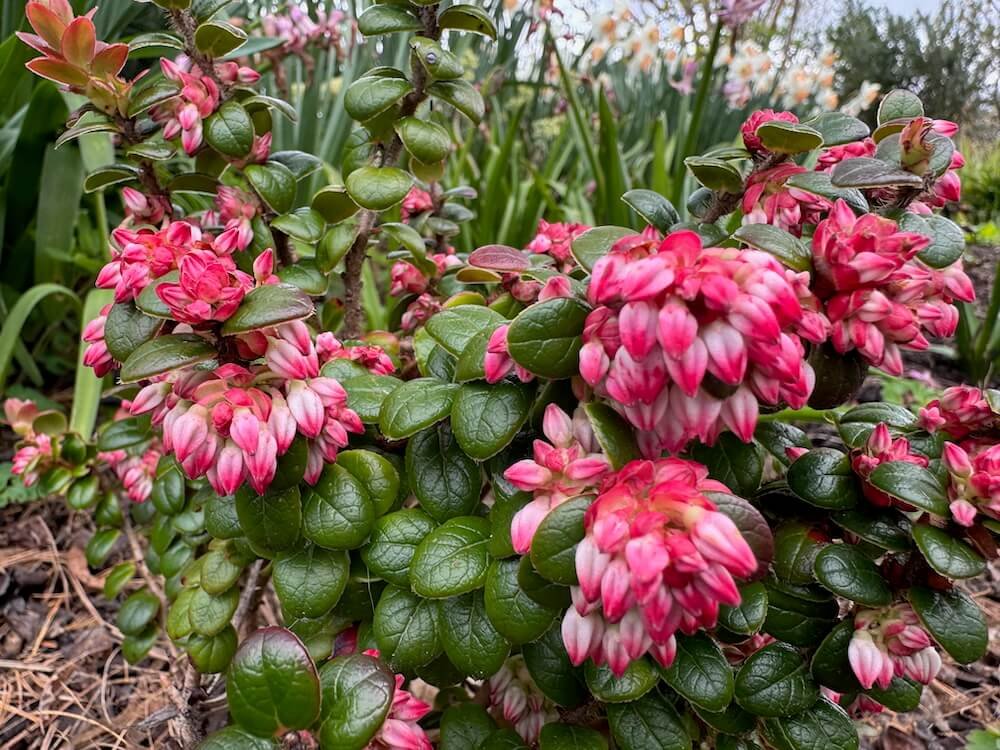
Vacciniums bring delicate spring flowers and fine-textured evergreen foliage to the garden while adding a more woodland character to mixed shrub plantings. Vaccinium nummularia (shown here) is grown for its tiny rounded leaves and small reddish-pink urn-shaped flowers that appear along the stems in early spring. The low dense branching and miniature foliage create a mossy, layered appearance that works especially well in rock gardens and woodland edges.
As the season develops, these shrubs continue contributing texture through their foliage and later ornamental fruit. Vaccinium glaucoalbum produces pendulous pale pink to white bell-shaped flowers followed by powdery blue berries that stand out against blue-green foliage. Their refined branching habits and smaller leaves create contrast alongside broader evergreen shrubs while extending seasonal interest from spring flowering into the fruiting season.
SPIREA (Spiraea)
14
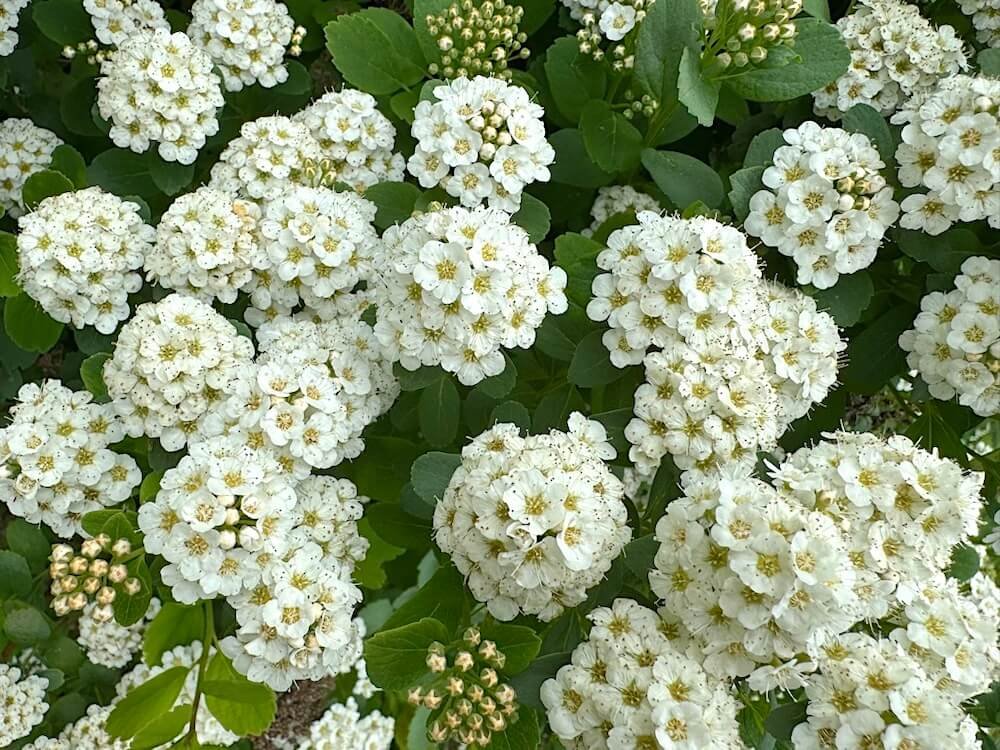
Spireas bring layered branching and clouds of flowers to the garden as spring planting combinations begin filling in with fresh foliage and color. Spiraea betulifolia ‘Tor’ (shown here) is grown for its compact habit and clusters of white flowers that cover the shrub above small rounded leaves in spring. The dense branching structure creates a full appearance early in the season while developing warm tones later in fall.
Different spireas contribute contrasting foliage colors and flower forms that broaden their role in mixed shrub borders. Spiraea japonica ‘Goldflame’ produces bright golden-orange new growth that gradually softens to yellow-green beneath rosy-pink flower clusters, while Spiraea nipponica develops arching branches lined with white blooms that create a cascading effect in spring. Their varied forms and changing foliage colors help extend visual interest well beyond the flowering period.
CALIFORNIA LILAC (Ceanothus)
15
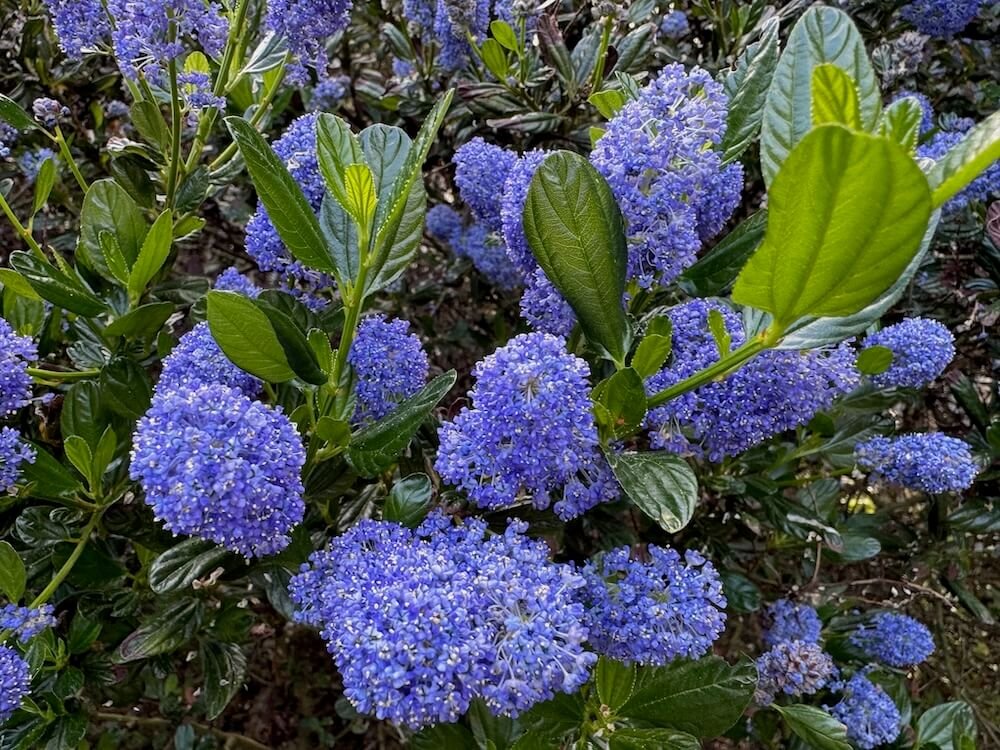
California lilacs cover themselves in dense clusters of blue flowers during early spring, bringing strong color to the garden while many shrubs are only beginning to leaf out. Ceanothus ‘Dark Star’ (shown here) is grown for its deep cobalt-blue flower clusters set against small glossy evergreen leaves and dark branching stems. The vivid blooms attract pollinators in large numbers while the compact foliage provides year-round texture and structure in the landscape.
As spring planting combinations begin filling in, ceanothus shrubs contribute bold color and a distinctly West Coast character to borders and dry garden settings. Ceanothus thyrsiflorus ‘Victoria’ develops a broader habit covered in deep lavender flower trusses that stand out clearly against dark green foliage. Their dense evergreen branching creates contrast alongside softer deciduous shrubs while extending visual interest beyond the main flowering season.
DOGWOOD (Cornus)
16
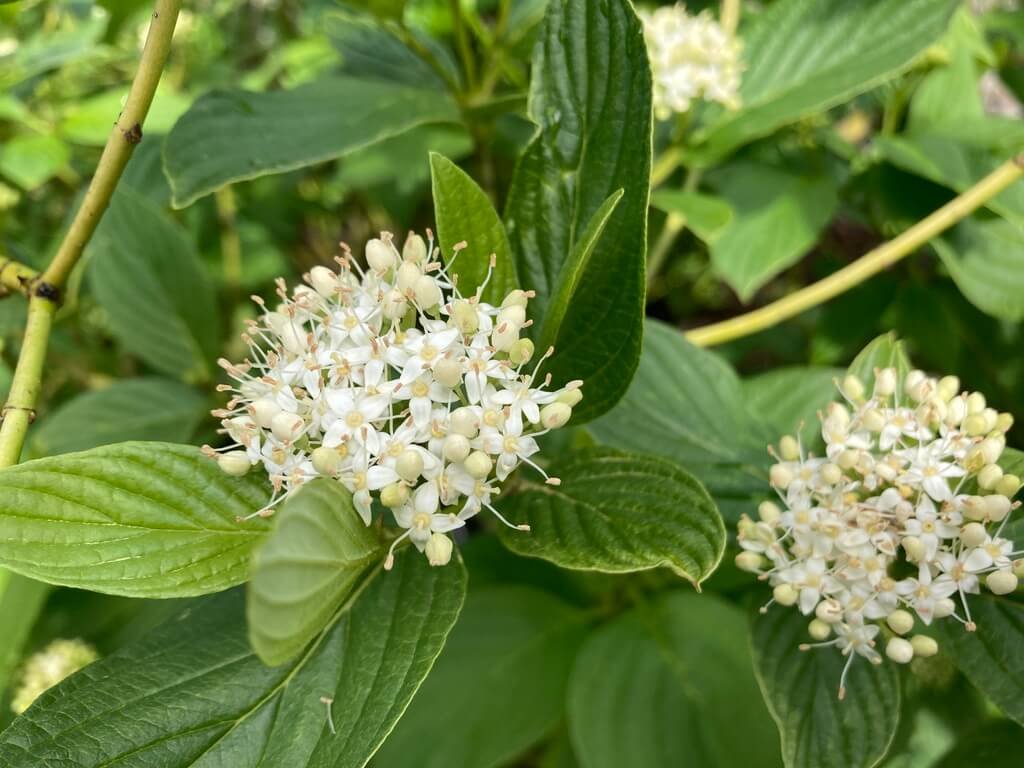
Shrub dogwoods bring clusters of small spring flowers and colorful stems to the garden while adding structure that remains visible through multiple seasons. Cornus sericea ‘Flaviramea’ (shown here) is grown for its bright yellow-green stems and creamy white flower clusters that appear against fresh green foliage in spring. The flowers are followed by ornamental berries later in the season, while the vivid stems continue contributing color long after leaves have dropped.
Beyond their spring flowers, dogwoods continue contributing strong foliage contrast and colorful winter stems. Cornus sericea ‘Hedgerows Gold’ develops green leaves edged in golden yellow that brighten mixed borders, while Cornus alba ‘Elegantissima’ produces silver-white variegated foliage that stands out clearly against darker evergreen backgrounds. Their layered branching habits and colorful stems help maintain texture and visual interest from spring into winter.
FLANNEL BUSH (Fremontodendron)
17
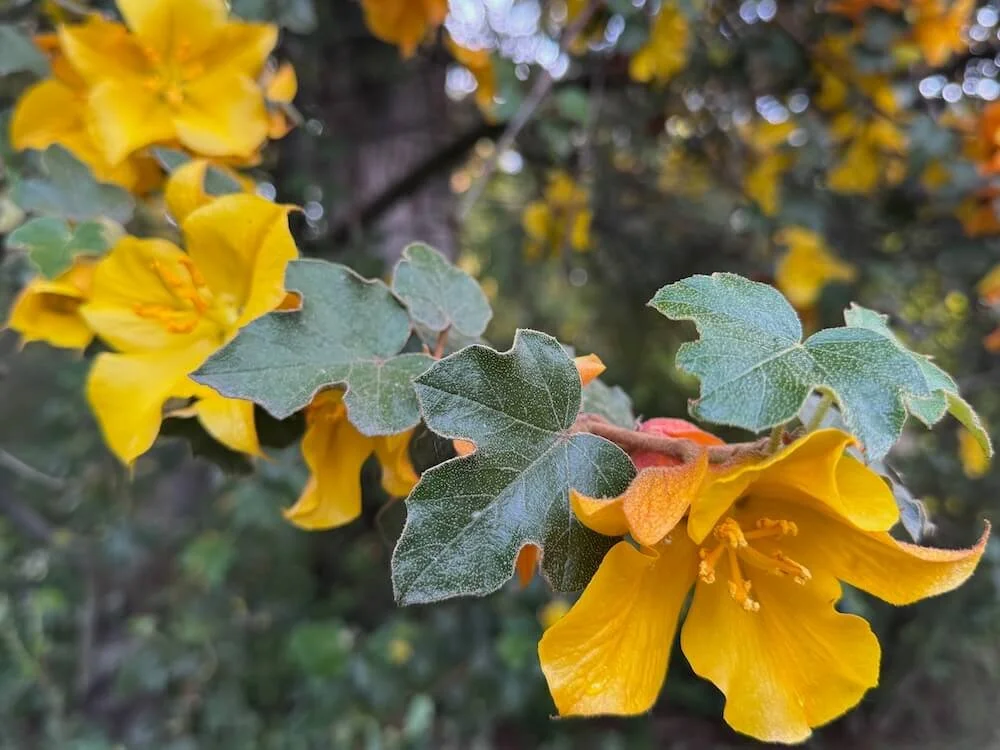
Flannel bushes bring vivid warm-toned flowers to the garden in spring, covering their branches with large satiny flowers that stand out clearly against evergreen foliage. Fremontodendron californicum ‘Pacific Sunset’ (shown here) is grown for its deep yellow blooms and dark green leaves with fuzzy undersides that give the shrub its common name. The flowers appear in abundance along arching branches, creating strong contrast and a distinctly western character in dry garden settings.
Bold flower color and evergreen structure allow this shrub to remain visually prominent well beyond the main flowering season. The dense branching habit creates a substantial presence in Mediterranean-style plantings, hillsides, and sunny borders where the foliage provides year-round texture. Its darker stems and leathery leaves also pair effectively with softer silver foliage and finer-textured drought-tolerant shrubs nearby.
DAPHNE
18
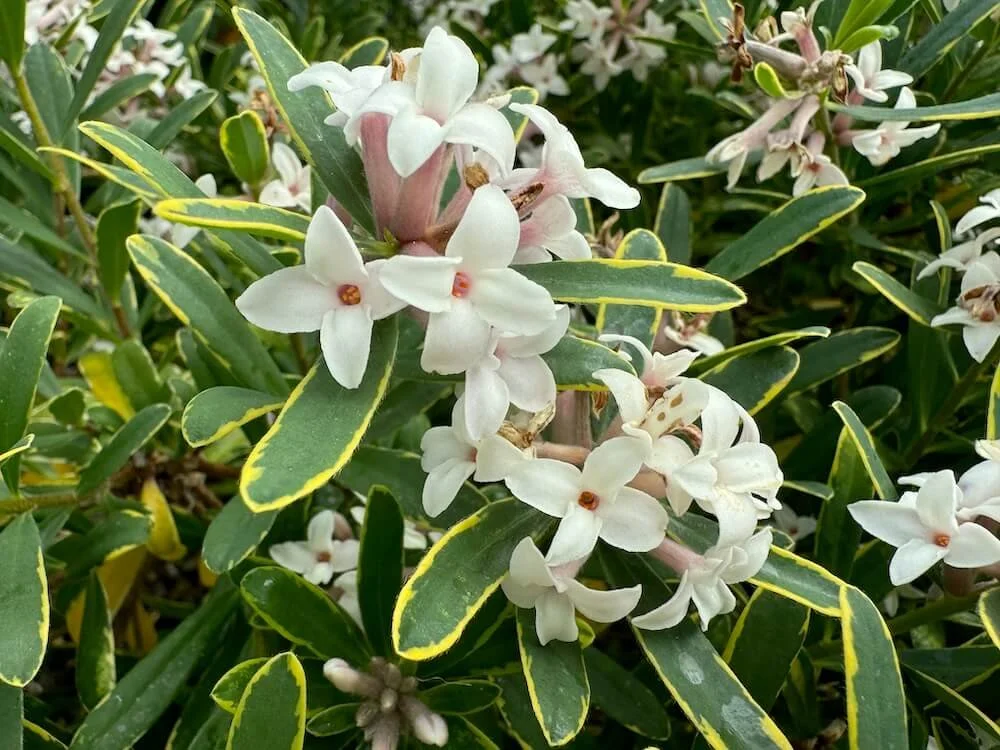
Daphnes bring fragrance into the garden at the beginning of the growing season, producing clusters of blooms when many shrubs are only starting to awaken from winter. Daphne x transatlantica ‘Summer Ice’ (shown here) is grown for its variegated evergreen foliage and highly fragrant white flowers flushed with soft pink that appear repeatedly from spring into summer. The compact branching and bright foliage help illuminate borders and pathways while adding year-round structure to smaller garden spaces.
Fragrance remains one of the defining qualities of these shrubs, especially when planted near entrances, seating areas, or frequently used garden paths. Daphne x transatlantica ‘Pink Fragrance’ develops richer pink blooms with an extended flowering season, while Daphne x susannae ‘Lawrence Crocker’ forms a low spreading mound covered in deep rosy-pink flowers above dark evergreen foliage. Their refined foliage and long blooming periods provide interest that extends beyond spring.