
Groundcovers for Rock Gardens
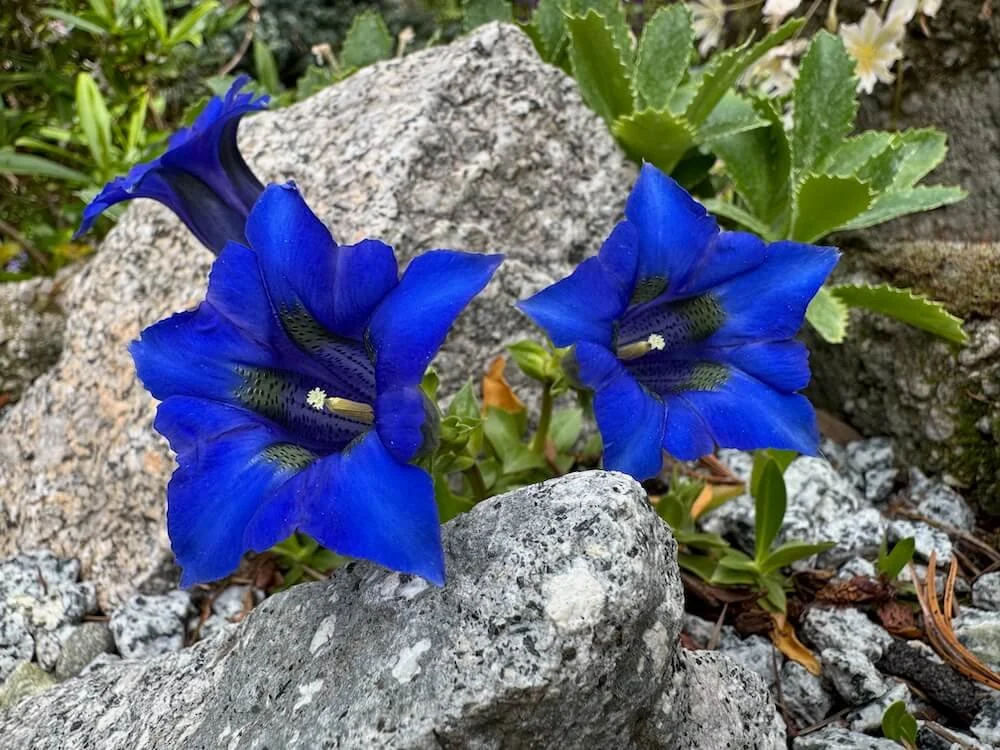
Gentiana acaulis
Evergreen groundcover with large trumpet shaped cobalt blue flowers creating vivid spring color. Grows 2 to 4 inches tall. Ideal for rock gardens, troughs, alpine plantings, and edging. Zones: 3 to 8.
Rock garden groundcovers bring texture, color, and year-round interest to spaces where excellent drainage and exposed conditions can make growing plants more challenging. Many form low mats or spreading carpets that nestle between stones, soften edges, and highlight the natural contours of the landscape. Their compact growth habits and varied foliage create interest even when flowers are not in bloom.
Well suited to slopes, gravel beds, and rocky sites, these plants are often adapted to lean soils and periods of dry weather. By combining different forms, textures, and bloom times, gardeners can create rock gardens that remain attractive and engaging throughout the seasons while requiring relatively little maintenance.
ROCK CRESS (Aubrieta)
01

Highlights ►
4 to 6 in tall
18 to 24 in wide
Sun to part shade
Evergreen
Flowers
Moderate spread
Mat forming
Spring color
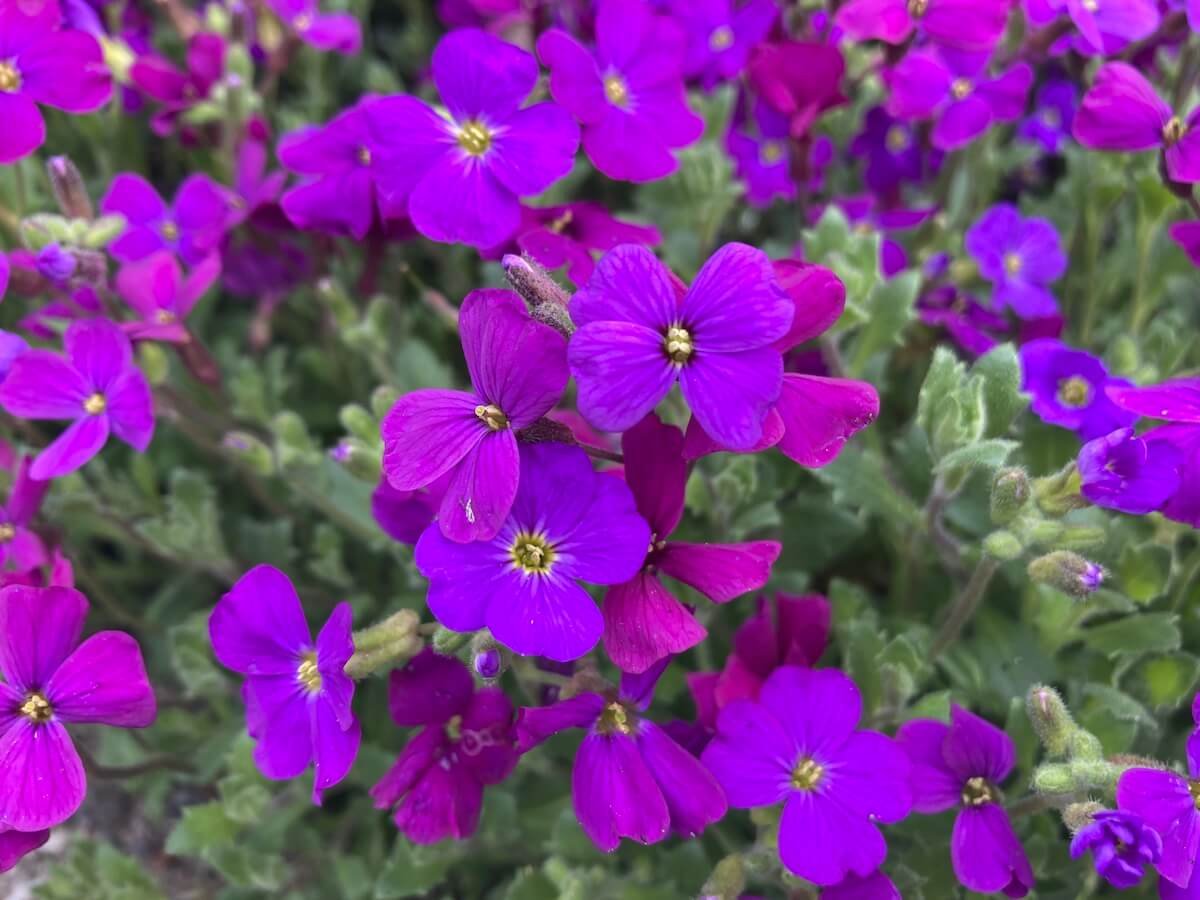
Rock cress creates flowing carpets of spring color in rock gardens, where its trailing habit softens stone edges and fills pockets between boulders and gravel. Aubrieta deltoidea (shown here) bears abundant violet-purple flowers above small evergreen leaves, bringing brightness to alpine settings and raised beds. Aubrieta ‘Axcent Light Blue’ offers softer lavender-blue blooms and a compact form that works beautifully along pathways and retaining walls. Their dense mats provide texture long after flowering has ended, helping tie together small-scale plantings.
Among spring-flowering alpines, rock cress is prized for the way it drapes naturally over stonework. The different flower colors and forms pair naturally with spring bulbs, creeping thyme, and compact dianthus, creating layered displays that feel at home among stones and gravel while adding a touch of seasonal beauty.
CANDYTUFT (Iberis)
02
Highlights ►
8 to 12 in tall
18 to 24 in wide
Full sun
Evergreen
Flowers
Moderate spread
Mounding habit
Spring color
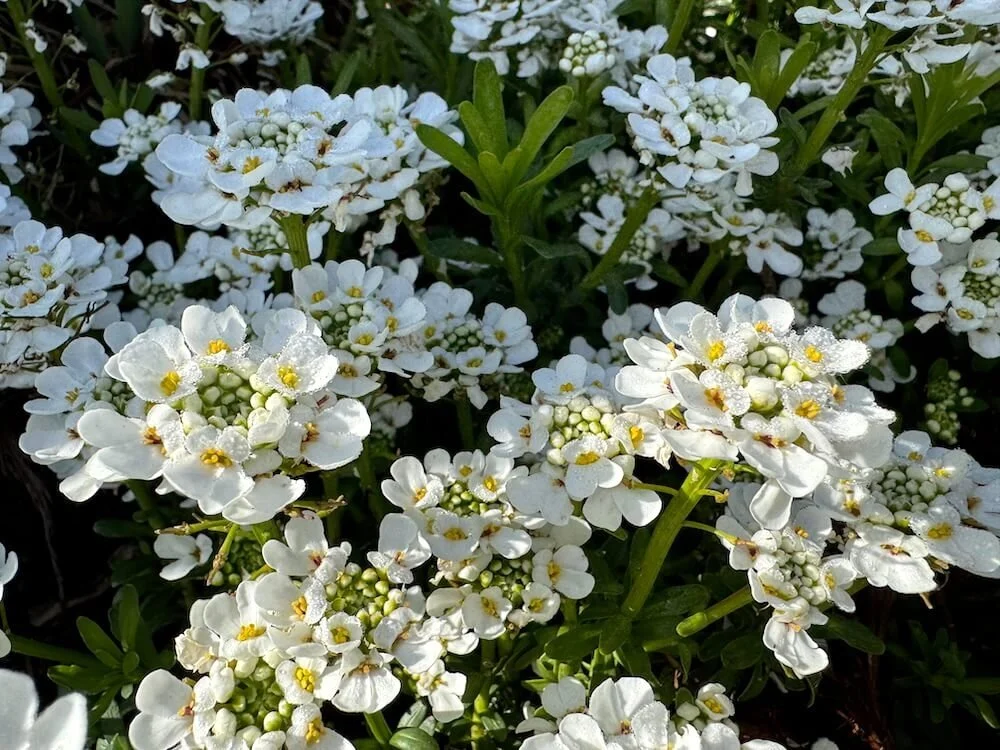
Candytuft brings structure and brightness to rock gardens, where its neat evergreen mounds provide contrast against gravel, stone, and low-growing companions. Iberis sempervirens (shown here) is covered in clusters of crisp white flowers during spring, creating a bright effect that stands out among darker foliage and emerging bulbs. Its tidy form lends definition to pathways, terrace walls, and the front of raised beds, helping unify small-scale plantings without overwhelming neighboring species.
Native to the Mediterranean region, candytuft has been cultivated in rock gardens for centuries. The dark green foliage remains present throughout the year, giving rock gardens substance beyond the flowering season. It combines beautifully with creeping phlox, dwarf conifers, and alpine perennials, contributing texture and seasonal contrast to naturalistic landscapes.
BELLFLOWER (Campanula)
03
Highlights ►
6 to 8 in tall
18 to 24 in wide
Sun to part shade
Semi-evergreen
Flowers
Moderate spread
Trailing habit
Long bloom
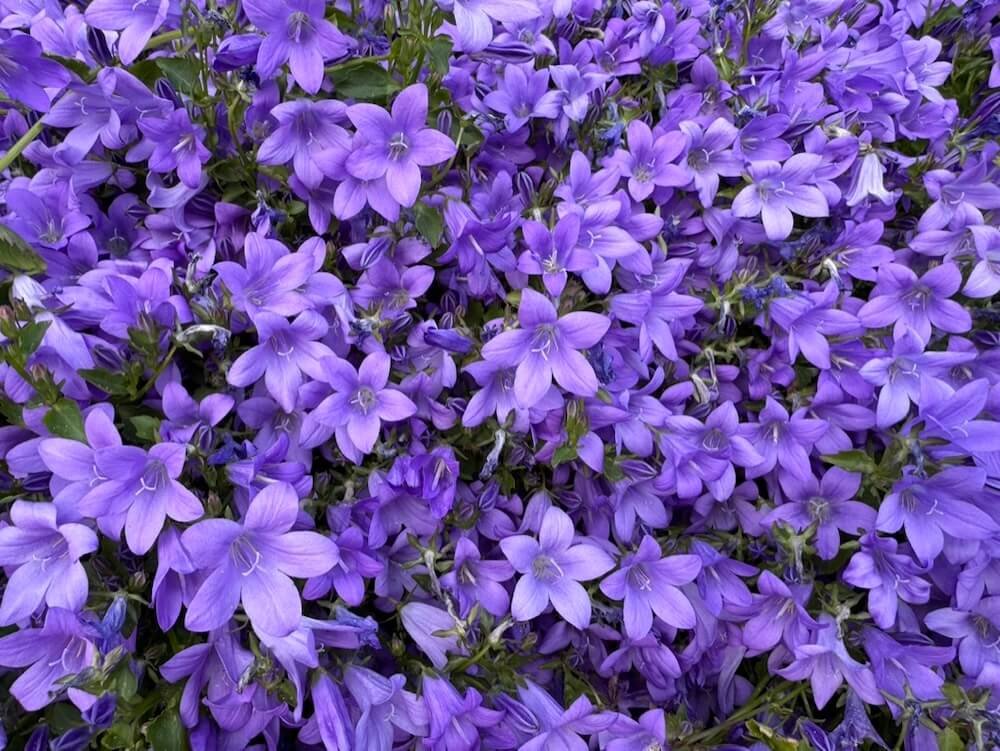
Bellflowers add a soft, informal quality to rock garden plantings, weaving between stones and edging paths with waves of bloom. Campanula x ‘Birch Hybrid’ (shown here) produces lavender-blue, upward-facing flowers over a compact mound, while Campanula carpatica ‘White Clips’ offers rounded white blossoms that brighten sunny crevices and trough gardens. Campanula portenschlagiana spreads into broad mats and becomes covered with violet-purple bells, making it especially effective for cascading over retaining walls and rocky ledges.
The Campanula genus includes numerous species adapted to cliffs, screes, and mountainous landscapes. Their varied forms bring depth and movement to alpine settings and combine beautifully with sedums, dianthus, and dwarf conifers. Even when not in bloom, the low foliage helps knit together pockets of planting among gravel and stone.
ECHEVERIA
04
Highlights ►
4 to 6 in tall
6 to 12 in wide
Full sun
Evergreen
Flowers
Slow spread
Clump forming
Rosette foliage
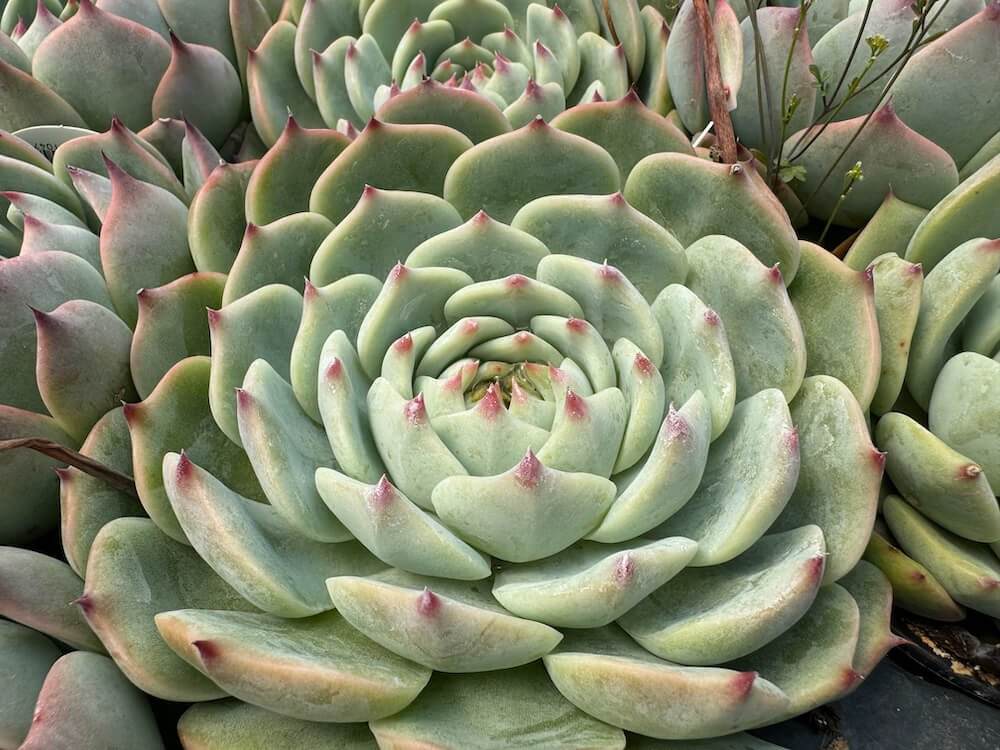
Echeverias introduce bold form and subtle color to rock gardens, where their geometric rosettes provide a striking contrast to gravel, weathered stone, and finely textured plants. Echeveria 'Parva' (shown here) develops clusters of small blue-green rosettes accented with reddish margins, creating a mosaic-like effect as offsets gradually fill open spaces. In summer, slender stems rise above the foliage carrying coral and yellow flowers that add another layer of interest to the planting.
Many echeverias evolved in arid environments where dramatic temperature swings shaped their compact forms. Their sculptural shapes complement sedums, sempervivums, and ornamental rocks, bringing year-round pattern and a distinctly contemporary feel to alpine-style landscapes and water-wise garden designs.
GENTIAN (Gentiana)
05

Highlights ►
4 to 6 in tall
8 to 12 in wide
Sun to part shade
Evergreen
Flowers
Slow spread
Clump forming
Spring color
Gentians bring an unexpected richness of color to rock gardens, where their compact growth and jewel-like flowers stand out against stone and gravel. Gentiana acaulis (shown here) forms low cushions of glossy green foliage topped in late spring by large, trumpet-shaped blooms of intense cobalt blue marked with green speckling inside the throat. The flowers appear almost luminous and create eye-catching focal points in crevices, troughs, and alpine plantings.
These remarkable plants have long been associated with classic European alpine gardens. Their refined appearance pairs beautifully with dwarf conifers, saxifrages, and small campanulas, bringing depth, contrast, and a touch of alpine character to carefully composed landscapes that celebrate the beauty of high mountain flora.
LEWISIA (Lewisiopsis)
06
Highlights ►
6 to 12 in tall
12 to 18 in wide
Sun to part shade
Evergreen
Flowers
Slow spread
Clump forming
Spring color
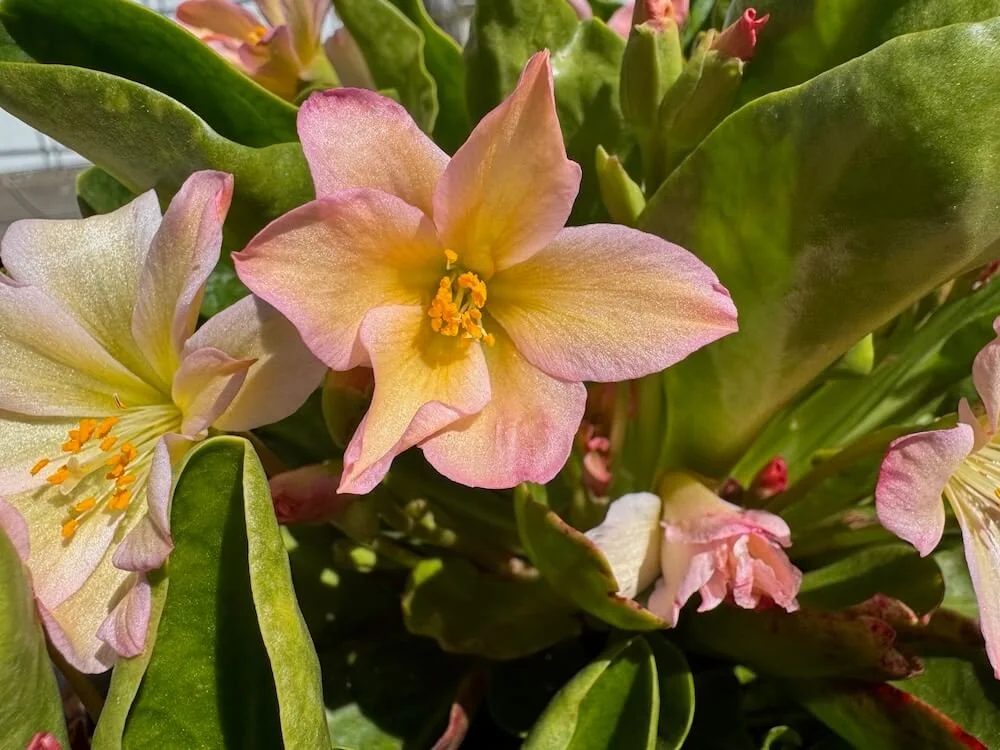
Lewisias are treasured in rock gardens for their ability to tuck into narrow crevices and bring bursts of color to places where few plants thrive. Lewisiopsis tweedyi (shown here), formerly classified as a Lewisia, produces satiny flowers in shades of soft peach to salmon-pink above low rosettes of leathery green foliage. The broad blooms have a delicate, almost translucent quality that draws attention to small alpine settings and stone troughs. Their compact stature makes them particularly appealing in intimate garden spaces.
In the Pacific Northwest, these plants are found in some of the region's most rugged mountain settings. They combine beautifully with miniature sedums, saxifrages, and dwarf evergreens, lending a distinctive Pacific Northwest character to alpine-inspired plantings.
CREEPING PHLOX (Phlox)
07
Highlights ►
4 to 6 in tall
18 to 24 in wide
Full sun
Evergreen
Flowers
Moderate spread
Mat forming
Spring color
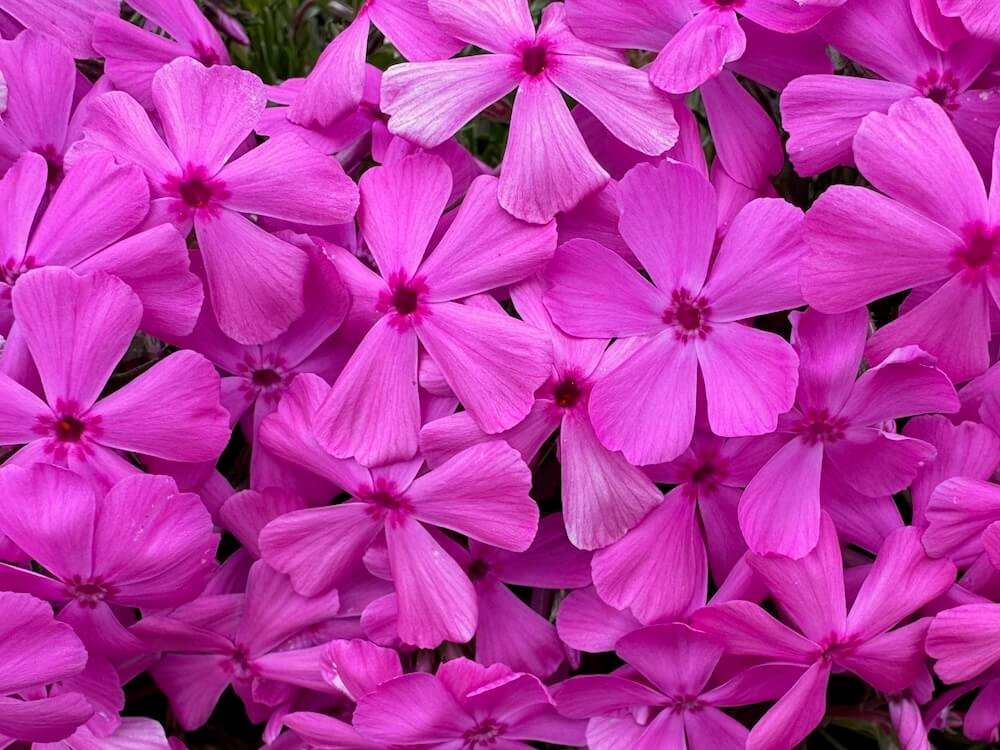
Creeping phlox transforms rock gardens into colorful spring tapestries, spreading across slopes and weaving through pockets of gravel with a finely textured carpet of evergreen foliage. Phlox subulata 'Ruby Riot' (shown here) produces rich magenta-pink flowers, Phlox subulata ‘Spring Scarlet’ offers deep pink blooms with vivid red centers, and Phlox subulata 'Purple Beauty' covers itself in soft violet-purple blossoms. The varied colors allow gardeners to create bold drifts or subtle combinations that highlight the contours of walls and rocky banks.
As the flowers fade, creeping phlox settles into the background and helps unify surrounding plantings. Its dense growth helps visually connect boulders, alpine perennials, and dwarf shrubs, bringing rhythm and seasonal color to small-scale landscapes.
SNOW-IN-SUMMER (Cerastium)
08
Highlights ►
4 to 8 in tall
12 to 24 in wide
Full sun
Evergreen
Flowers
Fast spread
Mat forming
Silver foliage
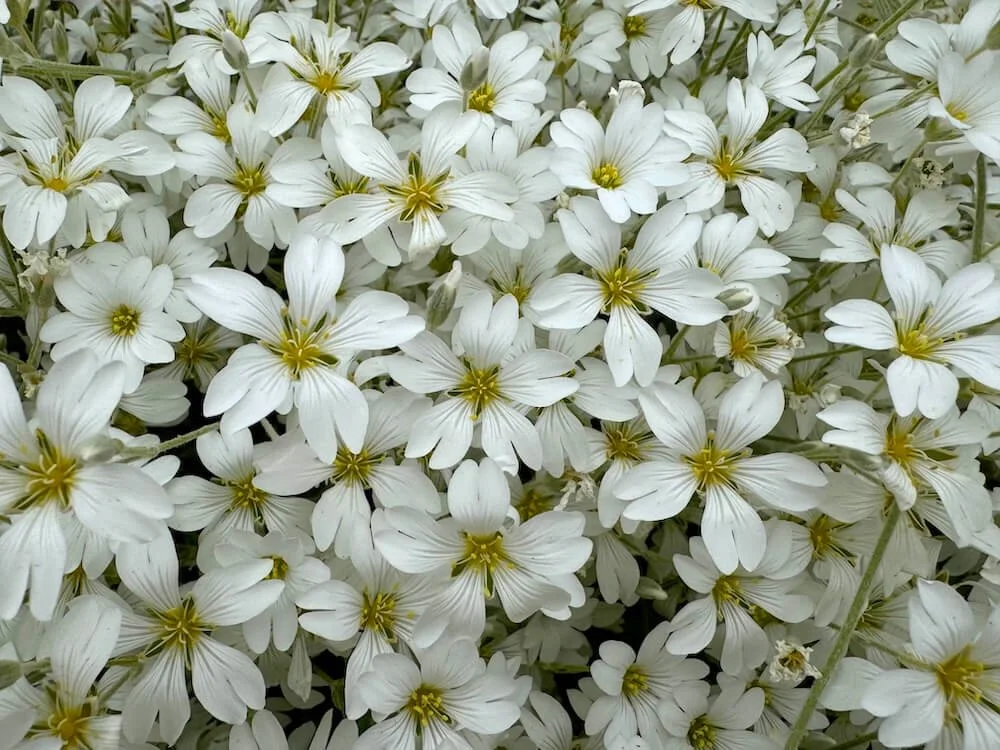
Snow-in-summer creates a luminous effect in rock gardens, where its silvery foliage provides contrast long before the flowers appear. Cerastium tomentosum (shown here) forms broad cushions of woolly gray leaves that resemble soft felt and serve as a quiet backdrop for neighboring plants. In late spring and early summer, countless white blossoms rise above the foliage, giving the impression of a light dusting of snow across rocky slopes and retaining walls. The cascading habit allows it to spill naturally over ledges and between stones.
Its pale foliage tones are particularly effective in gardens featuring granite, limestone, or gravel mulch. Its muted foliage tones complement blue-flowering campanulas, purple creeping phlox, and dwarf evergreens, contributing texture and contrast to alpine-style plantings with understated year-round interest and structure.
HENS AND CHICKS (Sempervivum)
09
Highlights ►
2 to 4 in tall
6 to 12 in wide
Full sun
Evergreen
Flowers
Slow spread
Colony forming
Rosette foliage
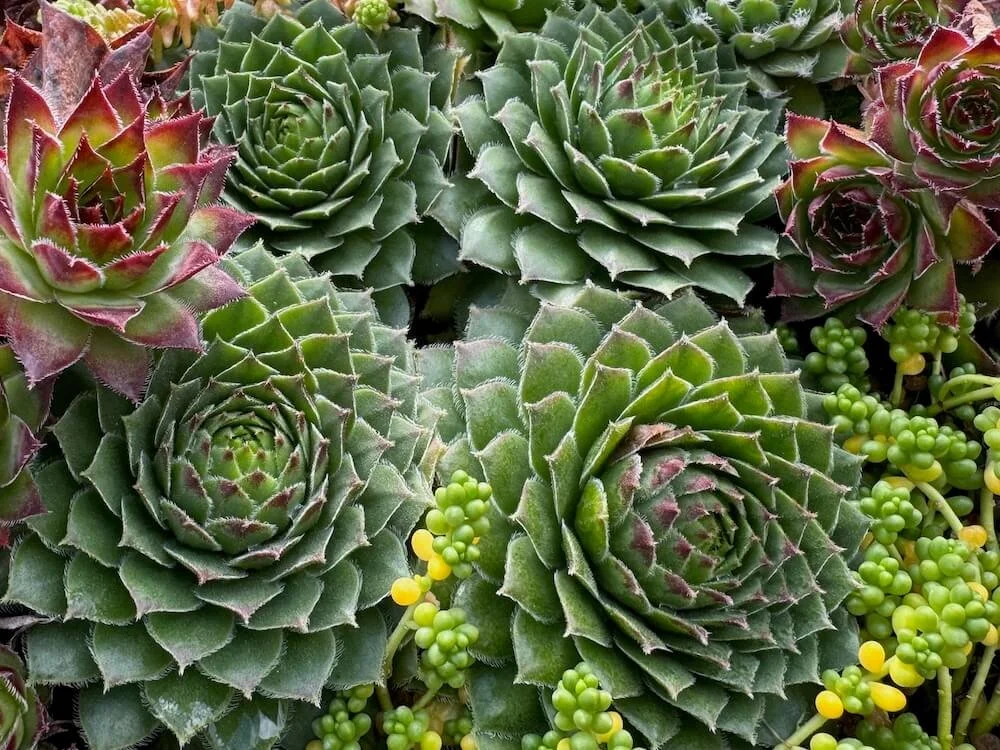
Hens and chicks bring sculptural form to rock gardens, where their symmetrical rosettes create repeating patterns among gravel and stone. Sempervivum tectorum ‘Emerald Express’ displays rich green rosettes with reddish highlights, while Sempervivum 'Green Wheel' (shown here) offers tightly arranged foliage with distinctive geometry. Offsets gradually spread to form colonies that add visual rhythm and a mosaic-like quality to small spaces.
For centuries, hens and chicks have been grown on stone walls and rooftops throughout Europe. Sempervivum 'Cobwebs' adds another layer of interest with fine white threads stretched across the leaf tips, giving the rosettes an intricate, web-like appearance. Their varied colors and textures pair beautifully with miniature sedums, dwarf conifers, and weathered rocks, creating compositions with year-round structure and character.
LITHODORA
10
Highlights ►
6 to 12 in tall
24 to 36 in wide
Sun to part shade
Evergreen
Flowers
Slow spread
Trailing habit
Spring color
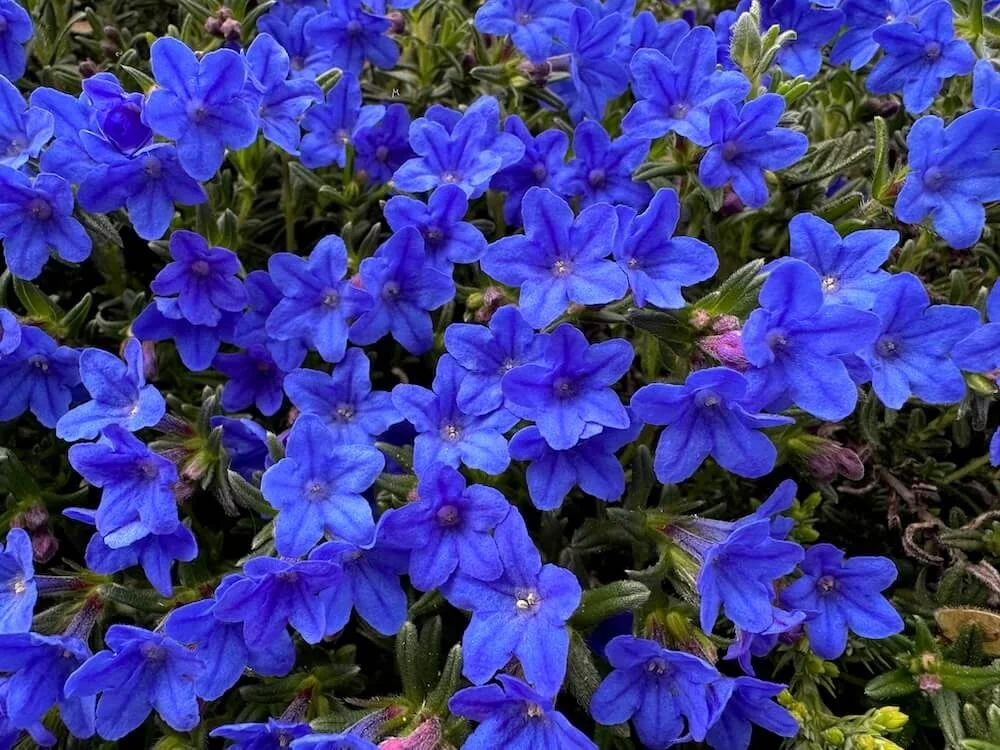
Lithodora brings remarkable color intensity to rock gardens, where its low, spreading habit creates pools of blue among gravel and weathered stone. Lithodora diffusa ‘Grace Ward’ (shown here) is especially admired for its brilliant gentian-blue flowers, which appear in abundance above narrow, deep green leaves. The rich flower color stands out vividly against pale rocks and complements the muted tones often found in alpine settings. Its flowing form is particularly attractive along ledges and at the edges of stone pathways.
Unlike many alpine plants, lithodora offers intensely saturated flower color rather than subtle pastel tones. The evergreen foliage provides fine texture throughout the year and pairs beautifully with dwarf conifers, silvery plants, and spring bulbs, adding depth and visual contrast to carefully layered landscapes.
SPURGE (Euphorbia)
11
Highlights ►
6 to 12 in tall
18 to 24 in wide
Full sun
Evergreen
Flowers
Moderate spread
Trailing habit
Blue foliage
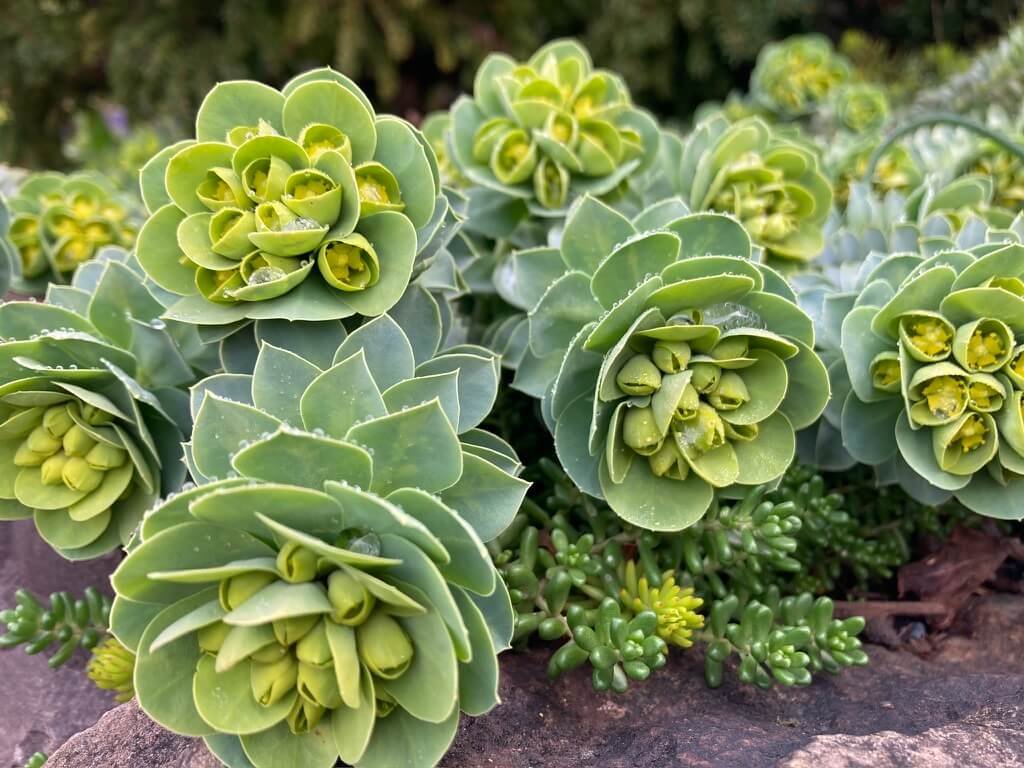
Groundcover spurges introduce unusual forms and foliage colors to rock gardens, where their distinctive silhouettes provide contrast to rounded cushions and mounding perennials. Euphorbia myrsinites (shown here) sends out trailing stems lined with blue-gray leaves arranged in striking spirals, while Euphorbia cyparissias ‘Fens Ruby’ offers finely textured foliage flushed with burgundy tones and topped by glowing yellow bracts in spring. Their bold shapes add visual interest to slopes, gravel beds, and sunny embankments.
Unlike many alpine plants grown primarily for flowers, spurges are often appreciated as much for their foliage and architectural qualities. Combined with sedums, ornamental grasses, and weathered stone, they bring strong lines and contrasting textures to contemporary and naturalistic rock garden designs.
MOUNTAIN SANDWORT (Arenaria)
12
Highlights ►
4 to 6 in tall
12 to 18 in wide
Full sun
Evergreen
Flowers
Moderate spread
Mat forming
Spring color
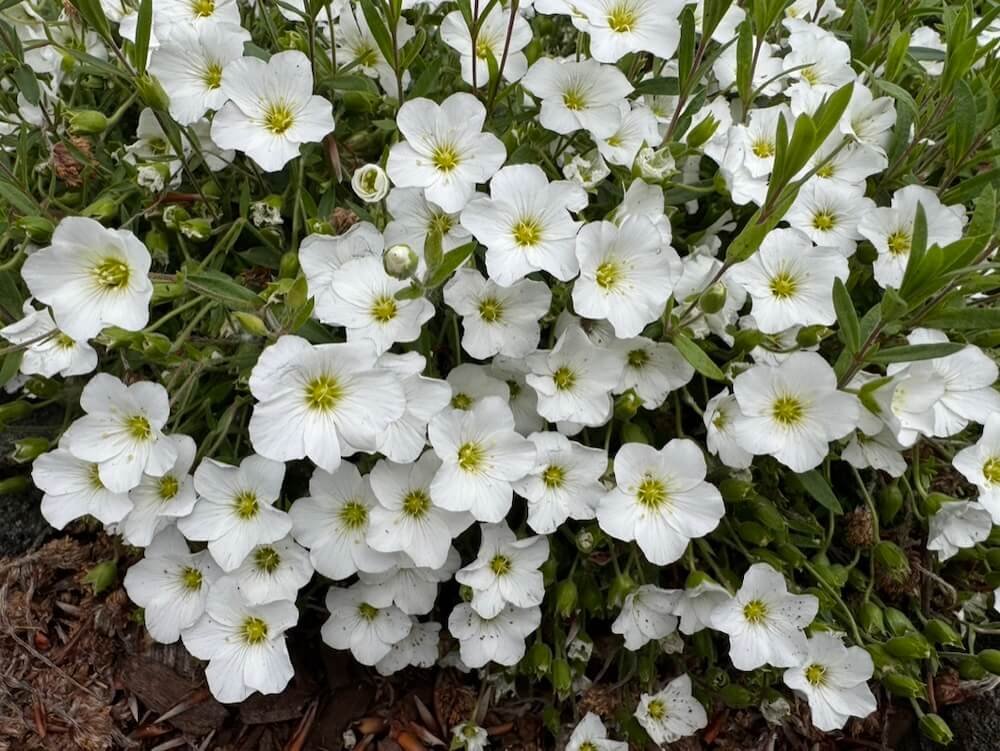
Mountain sandwort lends a fresh, understated look to rock gardens, where its compact cushions help soften the edges of stones and gravel. Arenaria montana (shown here) forms dense mats of narrow evergreen foliage that become covered in large white flowers during late spring and early summer. The bright blooms seem to float above the foliage, creating pockets of light that stand out against darker rocks and neighboring plants. Its neat growth makes it well suited to troughs, crevices, and the fronts of raised beds.
Despite its delicate appearance, mountain sandwort is closely tied to rugged upland habitats. It combines beautifully with gentians, dwarf dianthus, and small campanulas, bringing balance and fine detail to intimate garden spaces and enhancing their natural character throughout the growing season.
SCOTCH MOSS (Sagina)
13
Highlights ►
1 to 2 in tall
12 to 18 in wide
Sun to part shade
Evergreen
Flowers
Moderate spread
Mat forming
Golden foliage
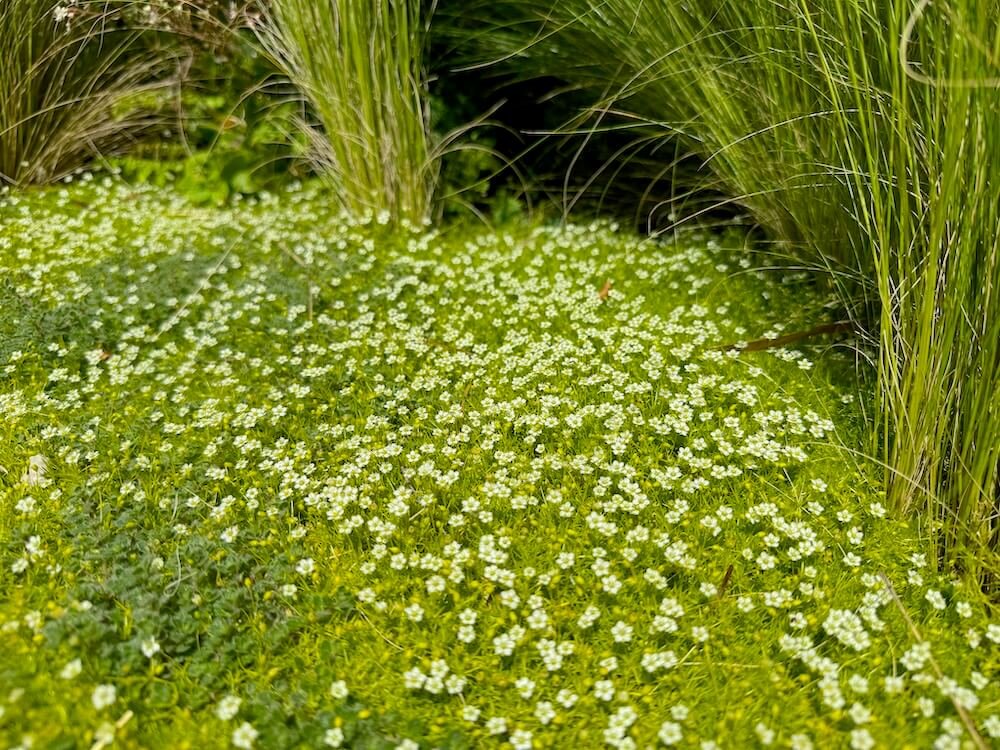
Scotch moss creates a soft, carpet-like effect in rock gardens, where its tiny leaves form rounded hummocks that contrast beautifully with rough stone surfaces. Sagina subulata ‘Aurea’ (shown here) is especially valued for its bright chartreuse foliage, which brings a splash of color to crevices, stepping stones, and miniature landscapes. In late spring and summer, small white flowers appear above the foliage like scattered pearls, adding another layer of detail to the scene. Its cushion-like growth lends a sense of softness to otherwise rugged settings.
The bright foliage color of Scotch moss makes it particularly useful for illuminating small garden spaces. It pairs naturally with dwarf campanulas, miniature hostas, and alpine bulbs, contributing texture and subtle color variation to small-scale plantings while enhancing the visual flow between neighboring plants and stones.
PERSIAN STONECRESS (Aethionema)
14
Highlights ►
6 to 12 in tall
12 to 18 in wide
Full sun
Evergreen
Flowers
Moderate spread
Mounding habit
Spring color
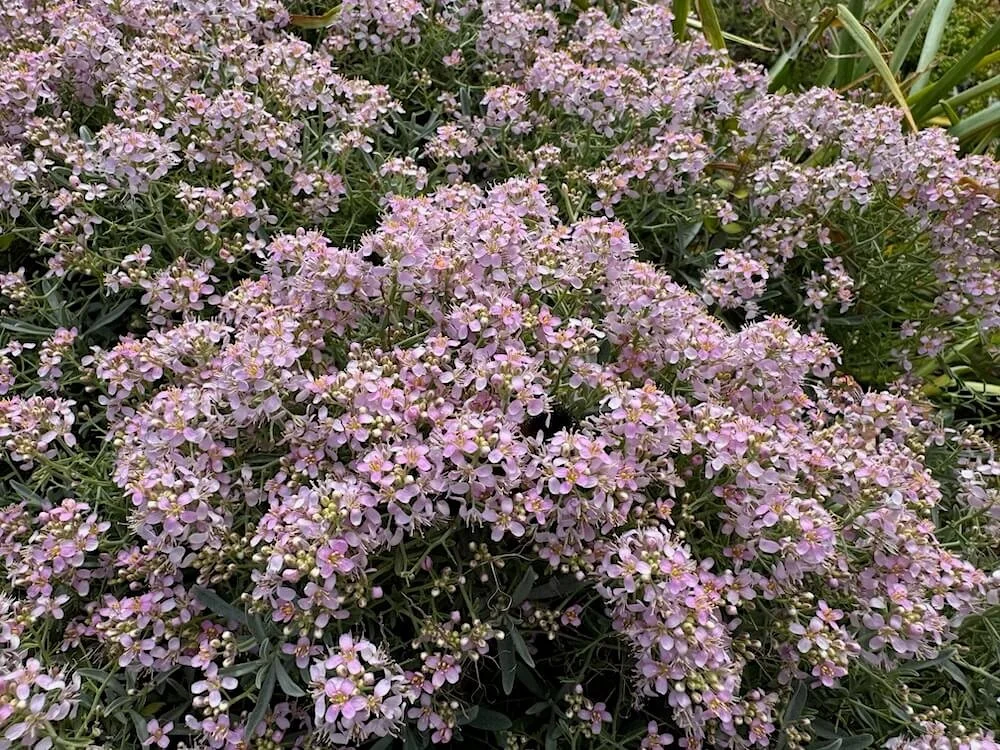
Persian stonecress adds a graceful, airy quality to rock gardens, where its mounded form and fine blue-green foliage provide contrast to larger stones and bolder plants. Aethionema grandiflorum (shown here) produces loose clusters of soft pink flowers that hover above the foliage in spring, creating a delicate veil of color across sunny slopes and gravel beds. The blooms and slender leaves give the plant a light appearance that suits intimate spaces and alpine settings.
Few plants capture the relaxed character of Mediterranean hillsides quite as gracefully as Persian stonecress. It blends beautifully with dwarf irises, low-growing dianthus, and silver-leaved companions, bringing movement, texture, and seasonal color to carefully arranged rock garden plantings throughout much of the season.
BASKET-OF-GOLD (Aurinia)
15
Highlights ►
8 to 12 in tall
12 to 24 in wide
Full sun
Semi-evergreen
Flowers
Moderate spread
Mounding habit
Spring color
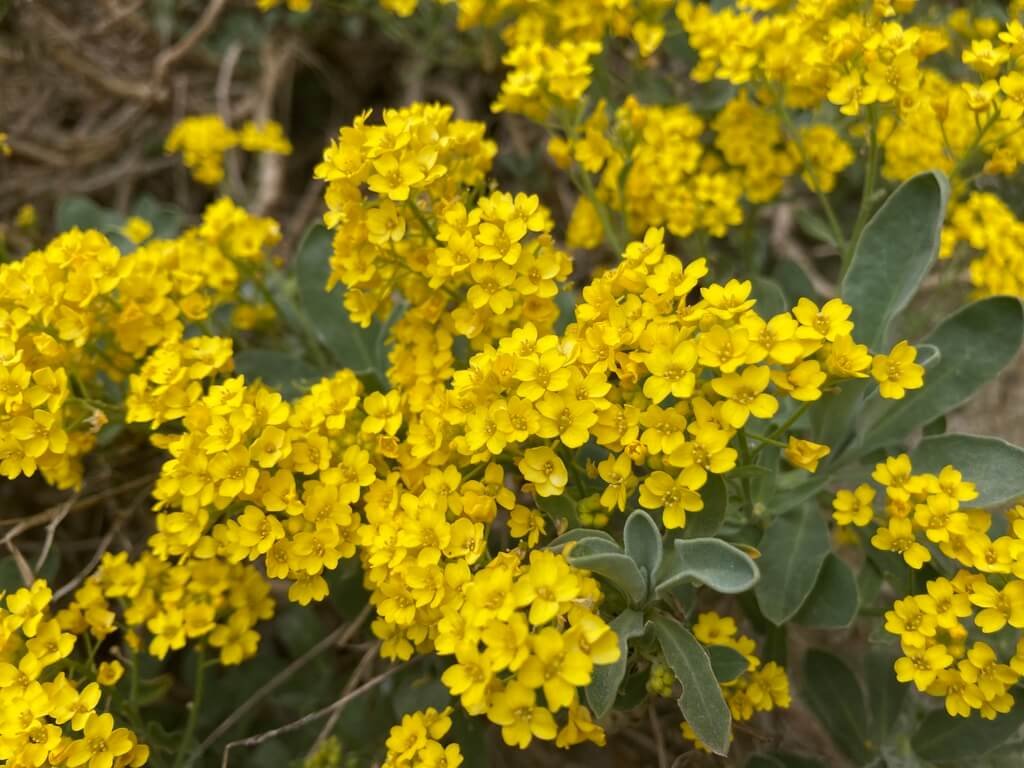
Basket-of-gold brings a burst of warm color to rock gardens, where its cascading habit can soften walls and spill gracefully over ledges. Aurinia saxatilis (shown here) produces dense clusters of bright golden-yellow flowers in spring above mounds of gray-green foliage, creating a striking contrast against stone and gravel. The cheerful blooms form broad swaths of color that draw the eye and help define the contours of slopes and raised beds. Even when not flowering, the compact foliage contributes a pleasing texture to the landscape.
Among the earliest highlights of the season, basket-of-gold is often used to bridge the transition between spring bulbs and later-blooming perennials. Its sunny tones pair beautifully with blue campanulas, purple aubrietas, and silver-leaved companions, creating memorable combinations in alpine-inspired settings.