
Shade Tolerant Groundcovers
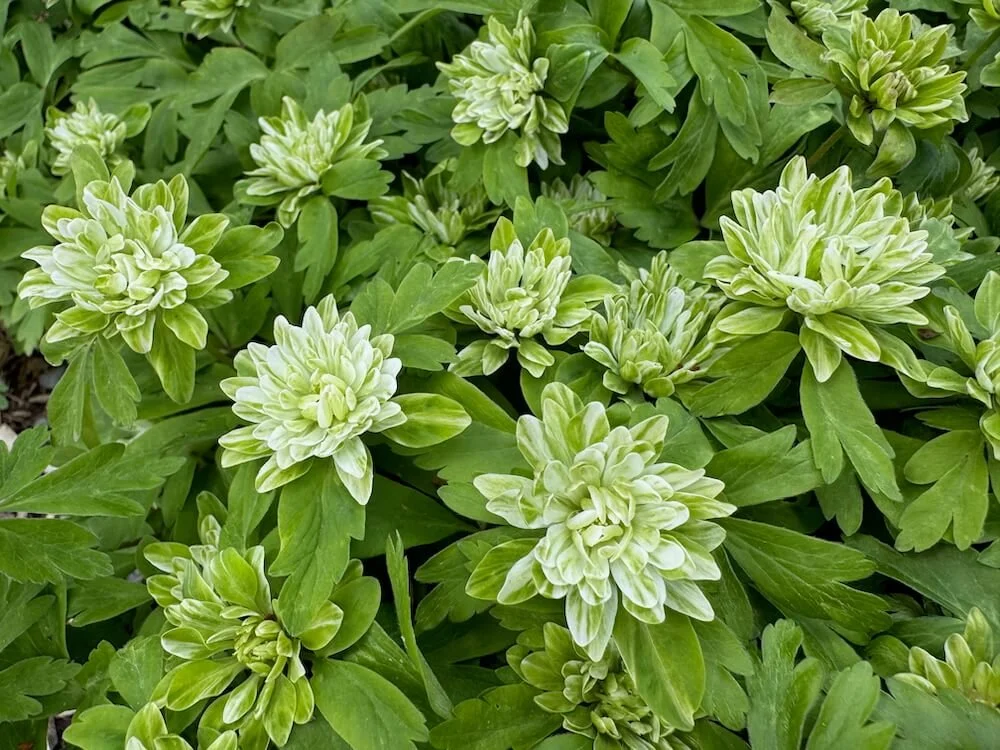
Anemone nemorosa 'Green Dragon'
Deciduous groundcover with double white and green marbled flowers accented by leafy green bracts. Grows 4 to 8 inches tall. Ideal for woodland gardens, shaded borders, and naturalized plantings. Zones: 4 to 8.
Shade tolerant groundcovers help transform darker areas of the landscape into attractive, cohesive spaces, providing layers of foliage and seasonal interest where many plants struggle to thrive. Their spreading growth helps suppress weeds, protect soil, and soften the transition between trees, shrubs, and pathways while reducing the need for mulch. Well suited to woodland gardens and other low-light conditions, these plants bring texture and color to shaded corners, creating a landscape that feels more complete and inviting throughout the year.
NAVELWORT (Omphalodes)
01

Highlights ►
4 to 6 in tall
12 to 18 in wide
Part to full shade
Semi-evergreen
Flowers
Moderate spread
Mat forming
Spring color
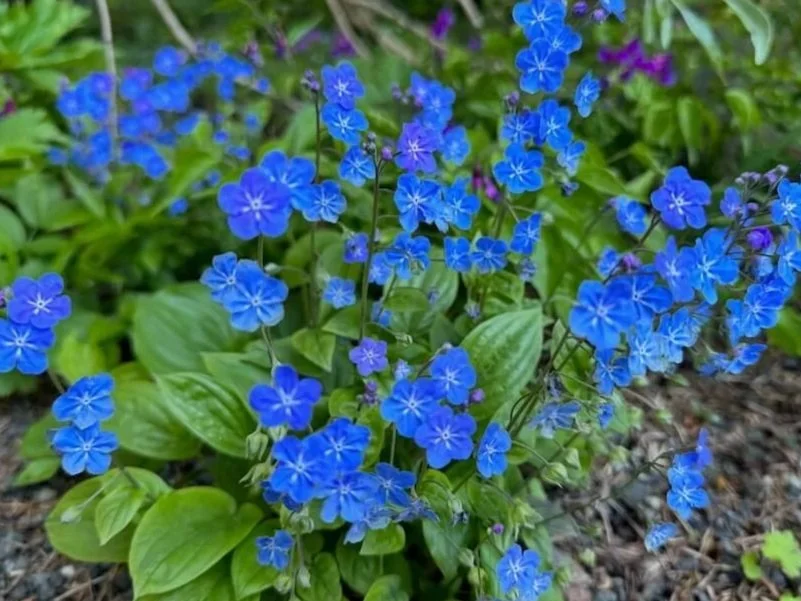
Navelwort forms gentle carpets beneath deciduous trees and shrubs, bringing soft color and a natural woodland feel to shaded gardens. Omphalodes verna (shown here) produces a profusion of bright blue flowers in spring, while Omphalodes cappadocica 'Starry Eyes' adds pale blue blooms edged in white for a more delicate effect. Their rounded green leaves spread gradually to fill open spaces, creating a calming backdrop for other shade-loving plants. The flowers hover above the foliage like tiny stars scattered across the forest floor.
Often overlooked in favor of bolder perennials, navelwort excels at tying together mixed plantings. It pairs beautifully with pulmonarias, epimediums, and early bulbs, adding subtle color and a sense of continuity to sheltered garden spaces throughout the spring growing season and into the weeks beyond.
LILY-OF-THE-VALLEY (Convallaria)
02
Highlights ►
6 to 8 in tall
12 to 18 in wide
Part to full shade
Deciduous
Flowers
Slow spread
Colony forming
Colorful foliage
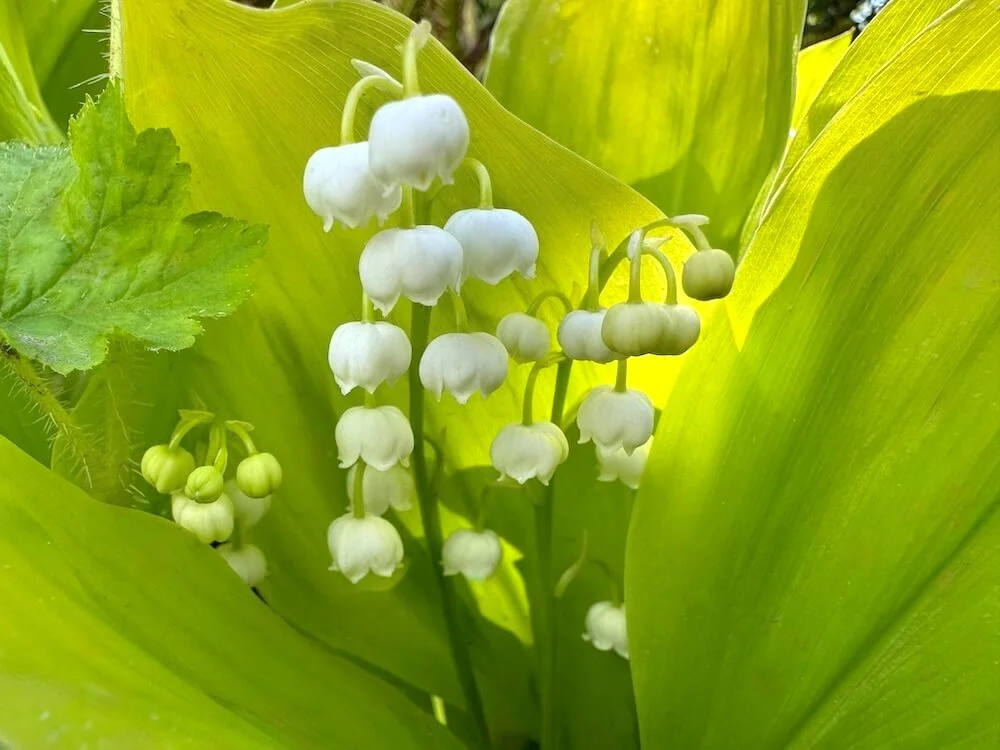
Lily-of-the-valley lends a timeless woodland character to shaded gardens, where its spreading colonies create a lush carpet beneath trees and shrubs. Convallaria majalis is cherished for its fragrant white bells in spring, while Convallaria majalis 'Golden Slippers' (shown here) brightens darker corners with golden foliage. Convallaria majalis 'Prolificans' offers an unusual twist with double, clustered flowers that add extra detail to the display. The broad leaves provide a rich green backdrop that helps unify shaded beds and pathways.
Long associated with cottage gardens and woodland landscapes, lily-of-the-valley has been cultivated for centuries for its fragrance and elegant form. Its refined appearance pairs beautifully with ferns, hostas, and epimediums, bringing softness and seasonal interest to sheltered garden spaces.
CORAL BELLS (Heuchera)
03
Highlights ►
8 to 12 in tall
18 to 24 in wide
Part shade to full shade
Evergreen
Flowers
Slow spread
Clump forming
Colorful foliage
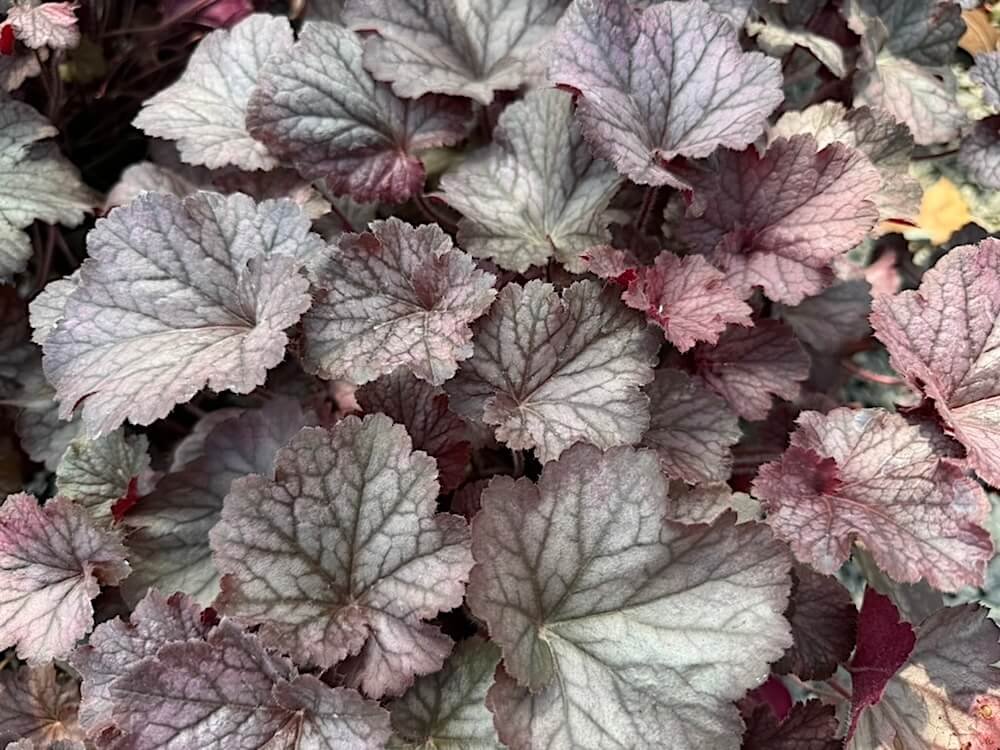
Coral bells bring intricate foliage and subtle color shifts to shaded groundcovers, where their mounded forms create layers beneath trees and larger perennials. Heuchera x 'TNHEUNES' (shown here) features silvery leaves flushed with soft pink and highlighted by deep burgundy veins, while Heuchera 'Peppermint Spice' displays silver foliage with contrasting dark veining. Heuchera 'Red Lightning' contributes chartreuse leaves marked with dramatic burgundy patterns. Airy flower stems rise above the foliage, adding another dimension to the planting without competing for attention.
Rather than forming a uniform carpet, coral bells are often arranged in combinations that emphasize differences in leaf color and texture. They blend beautifully with hostas, ferns, and epimediums, bringing depth and year-round structure to woodland-inspired gardens.
Related: Explore All Heucheras ➔
PRIMROSE (Primula)
04

Highlights ►
6 to 8 in tall
12 to 18 in wide
Part shade to full shade
Semi-evergreen
Flowers
Slow spread
Clump forming
Spring color
Primroses bring fresh spring color to shaded groundcovers, where their low rosettes and abundant blooms brighten the spaces beneath deciduous trees and shrubs. Primula 'Belarina Lively Lilac' (shown here) produces fully double lilac flowers, while Primula vulgaris ‘Oakleaf Yellow Picotee’ displays soft yellow blooms edged with a darker margin and distinctive oak-shaped foliage. Primula 'Rose Edge' adds clusters of rosy pink flowers highlighted by pale centers. Their compact growth and early bloom time help awaken woodland gardens after winter.
With their wide range of flower forms and colors, primroses lend themselves to drifts and small groupings rather than large masses. They combine beautifully with ferns, pulmonarias, and spring bulbs, adding charm and seasonal highlights to sheltered garden settings.
SNOWDROP (Galanthus)
05

Highlights ►
4 to 6 in tall
6 to 12 in wide
Part to full shade
Deciduous
Flowers
Slow spread
Colony forming
Early bloom
Snowdrops awaken shaded gardens at the close of winter, bringing delicate beauty to the spaces beneath deciduous trees and shrubs. Galanthus nivalis (shown here) produces nodding white flowers marked with green, while Galanthus elwesii offers larger, fuller flowers with broader petals and more extensive green markings. Galanthus nivalis 'Sam Arnott' is especially admired for its vigorous growth and fragrant flowers. As colonies expand over time, these early bulbs create drifts that weave naturally through woodland settings and along shaded pathways.
Few plants signal the changing seasons with such quiet elegance. Their understated flowers combine beautifully with hellebores, epimediums, and emerging ferns, providing welcome interest at a time when much of the garden is only beginning to stir.
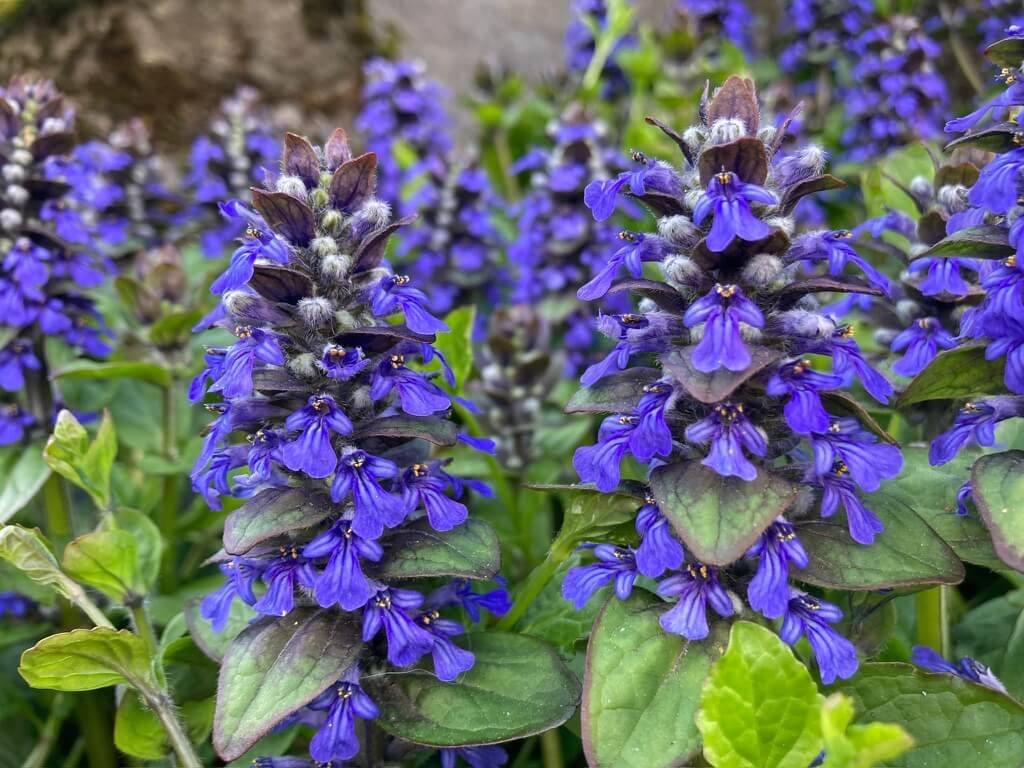
BUGLEWEED (Ajuga)
06
Highlights ►
4 to 6 in tall
12 to 24 in wide
Part to full shade
Semi-evergreen
Flowers
Fast spread
Mat forming
Variegated foliage
Bugleweed brings colorful foliage and spring bloom to shaded areas, where its spreading habit helps knit together the spaces beneath trees and taller perennials. Ajuga reptans ‘Burgundy Glow’ features cream, pink, and green variegated leaves, while Ajuga reptans ‘Mahogany’ develops rich bronze-purple foliage that deepens the mood of woodland settings. Ajuga reptans ‘Pink Lightning’ adds bright accents with cream-edged leaves and soft pink flower spikes that rise above the foliage in spring. The varied leaf colors provide interest well beyond the flowering season.
Rather than fading into the background, bugleweed often serves as a colorful foundation for hostas, ferns, and spring bulbs. Its tapestry-like foliage creates striking contrasts that bring depth and visual interest to shaded garden spaces.
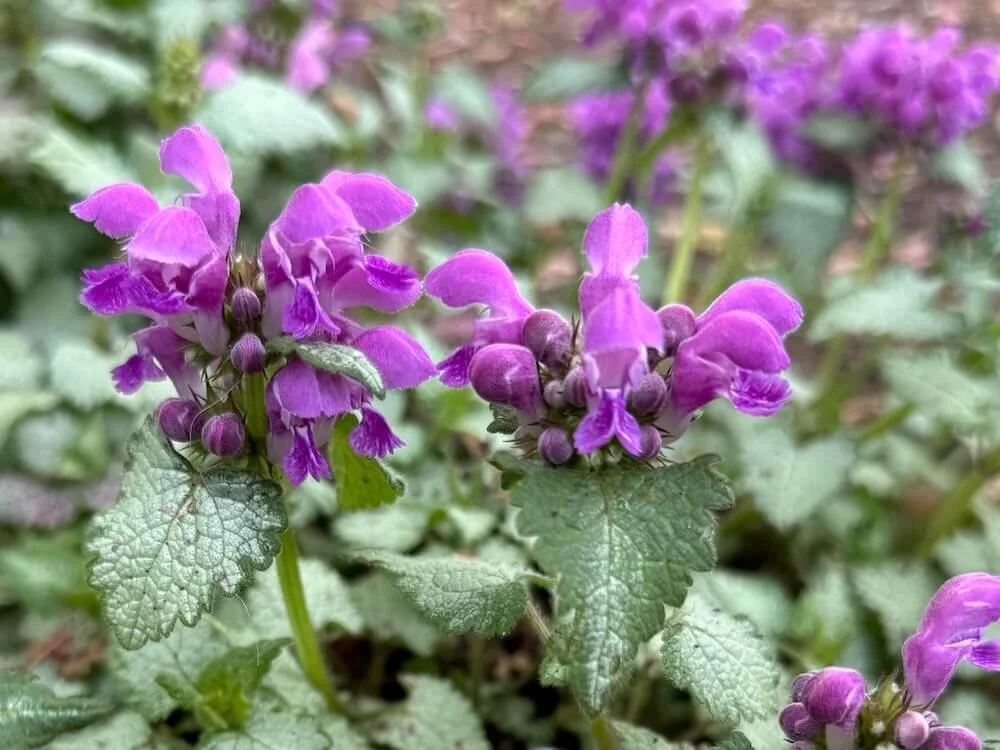
DEADNETTLE (Lamium)
07
Highlights ►
6 to 8 in tall
18 to 24 in wide
Part to full shade
Semi-evergreen
Flowers
Fast spread
Mat forming
Variegated foliage
Deadnettles brighten shaded corners with colorful foliage and scattered blooms, creating a textured understory beneath shrubs and trees. Lamium maculatum 'Orchid Frost' (shown here) combines silvery leaves with lavender-pink flowers, while Lamium maculatum ‘Anne Greenaway’ adds cream-edged foliage touched with soft green and yellow tones. Lamium maculatum ‘Beacon Silver’ contributes soft pink blooms with broad silver leaves that catch available light and help illuminate darker areas. Their spreading habit weaves between neighboring plants, creating a patchwork of color and texture throughout the growing season.
Rather than relying solely on flowers, deadnettles provide much of their appeal through their foliage patterns. They pair beautifully with hostas, pulmonarias, and hardy ferns, adding contrast and visual depth to woodland-inspired plantings and shaded garden pathways.
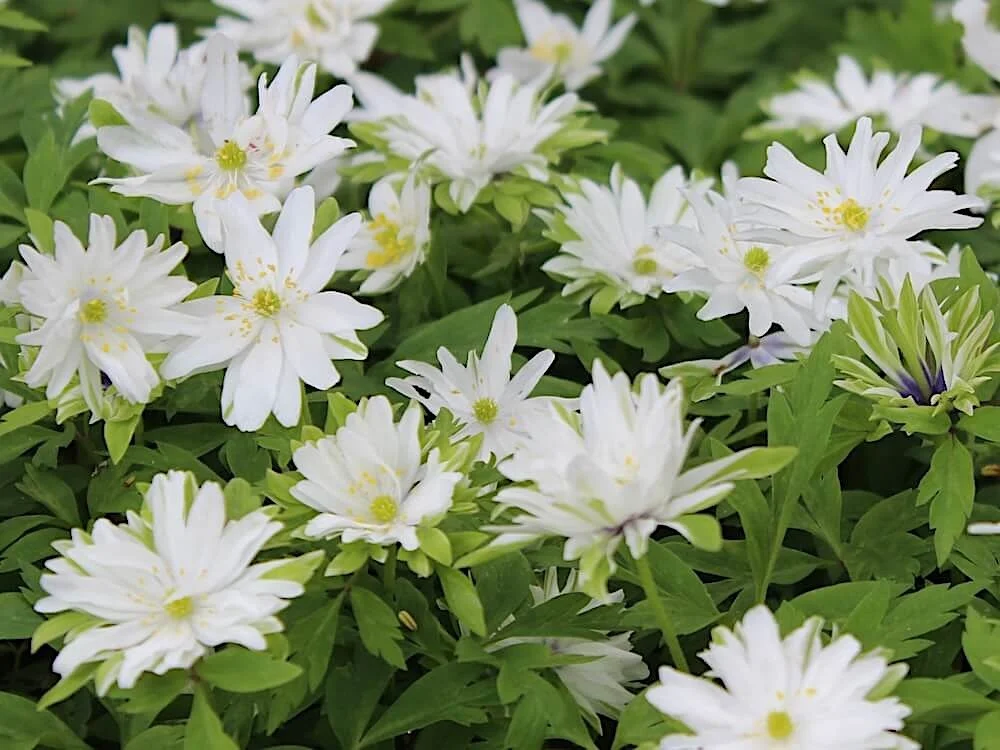
ANEMONE
08
Highlights ►
6 to 8 in tall
12 to 18 in wide
Part to full shade
Deciduous
Flowers
Slow spread
Colony forming
Spring color
Wood anemones bring a fleeting touch of spring to shaded gardens, where their low colonies emerge before the tree canopy fully leafs out. Anemone nemorosa 'Bracteata Plena' (shown here) bears double white flowers with finely divided bracts, while Anemone nemorosa 'Green Dragon' offers unusual blooms accented with green and white marbled petals. Anemone nemorosa ‘Robinsoniana’ provides soft lavender-blue flowers that lend a gentle, natural appearance to woodland settings. Their finely cut foliage and delicate blossoms create a sense of lightness beneath shrubs and deciduous trees.
Inspired by the carpets of flowers found in European woodlands, these anemones are especially effective when allowed to naturalize in drifts. They mingle beautifully with epimediums, ferns, and spring bulbs, bringing subtle color and seasonal rhythm to sheltered landscapes.
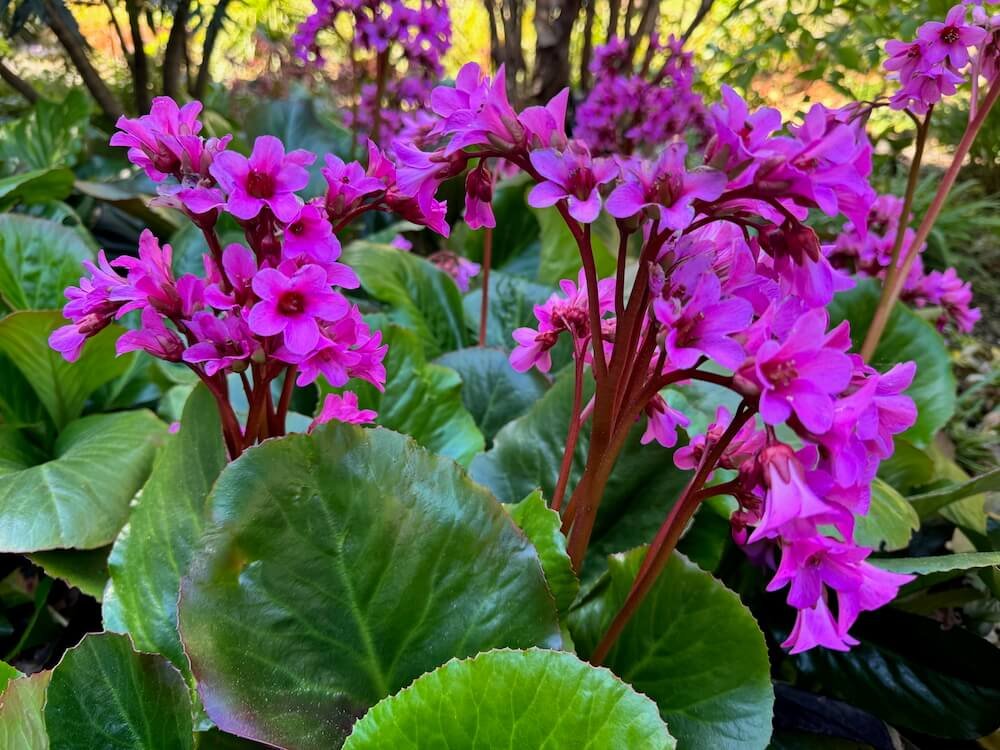
BERGENIA
09
Highlights ►
12 to 18 in tall
18 to 24 in wide
Part to full shade
Evergreen
Flowers
Moderate spread
Clump forming
Winter interest
Bergenias provide bold foliage and early-season color to shade-tolerant groundcovers, where their broad leaves create a strong visual presence beneath trees and along pathways. Bergenia cordifolia produces clusters of soft pink flowers above glossy green leaves, while Bergenia cordifolia 'Winter Glow' (shown here) produces deeper rosy-pink blossoms, and leaves that develop rich reddish tones during the colder months. Bergenia 'Silberlicht' offers clear white flowers that brighten shaded settings and contrast beautifully with the evergreen foliage. Their substantial leaves add texture and help anchor mixed plantings throughout the year.
Sometimes called pig squeak because of the sound made when the leaves are rubbed together, bergenias have long been valued for their versatility and changing seasonal character. They combine beautifully with hostas, epimediums, and spring bulbs, bringing structure and contrast to woodland-inspired gardens.
BUGLOSS (Brunnera)
10

Highlights ►
12 to 18 in tall
18 to 24 in wide
Part to full shade
Deciduous
Flowers
Slow spread
Clump forming
Variegated foliage
Bugloss brings luminous foliage and delicate spring flowers to shade-tolerant groundcovers, where its broad leaves help brighten the understory beneath trees and shrubs. Brunnera macrophylla ‘Jack Frost’ (shown here) is prized for its silver leaves outlined in green, while Brunnera macrophylla 'Silver Heart' offers thicker, heart-shaped foliage with a softer sheen. In spring, airy sprays of small blue flowers rise above the leaves, creating a cloud-like effect reminiscent of forget-me-nots. Their bold foliage provides a striking counterpoint to finer-textured woodland plants.
The silver tones of brunneras are especially effective in reflecting available light and adding contrast to darker corners. They pair beautifully with ferns, heucheras, and hostas, bringing elegance and visual depth to shaded garden compositions with interest extending well beyond the flowering season.
CANADIAN BUNCHBERRY (Cornus)
11
Highlights ►
4 to 8 in tall
12 to 24 in wide
Part to full shade
Deciduous
Flowers
Slow spread
Colony forming
Showy berries
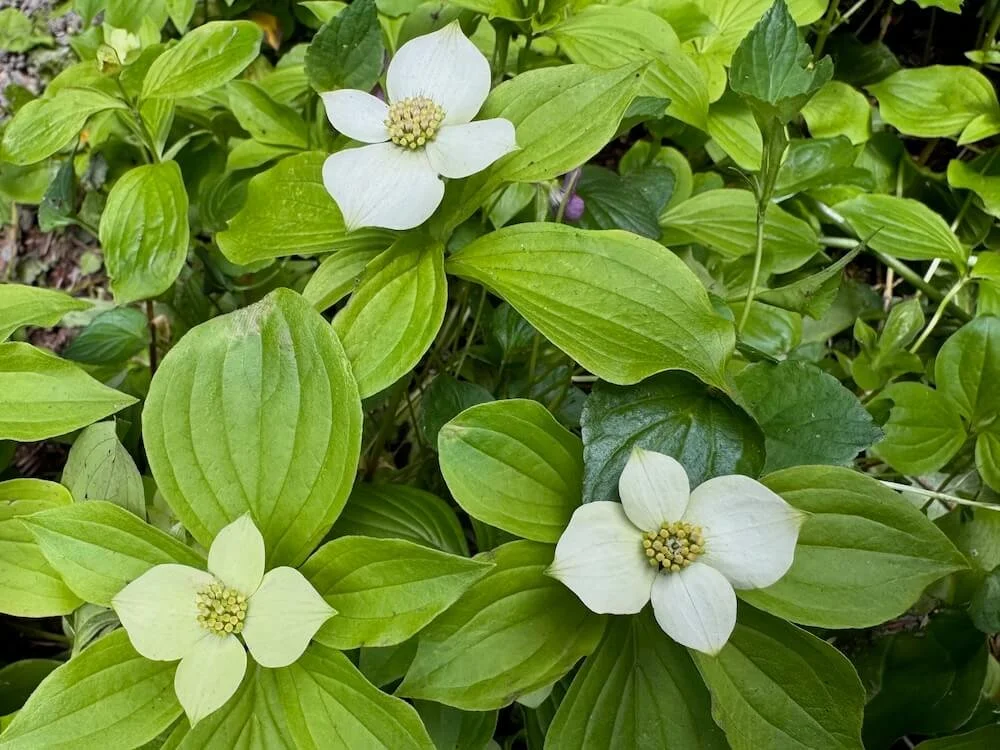
Canadian bunchberry creates a distinctive woodland carpet, bringing seasonal interest to shaded groundcovers with its layered foliage and unusual flowers. Cornus canadensis (shown here) produces whorls of deep green leaves topped in late spring by white bracts surrounding tiny central blooms. By late summer, bright red berries replace the flowers, adding another stage of interest and attracting wildlife. The low, spreading habit allows it to mingle naturally with mosses and other shade-loving plants beneath trees and shrubs.
Unlike many woodland perennials that rely on a single season of display, bunchberry changes noticeably as the year progresses. It pairs beautifully with ferns, foamflowers, and native violets, lending a natural character to moist, sheltered garden spaces.
LESSER CELANDINE (Ficaria)
12
Highlights ►
3 to 6 in tall
12 to 18 in wide
Part to full shade
Deciduous
Flowers
Moderate spread
Colony forming
Early bloom
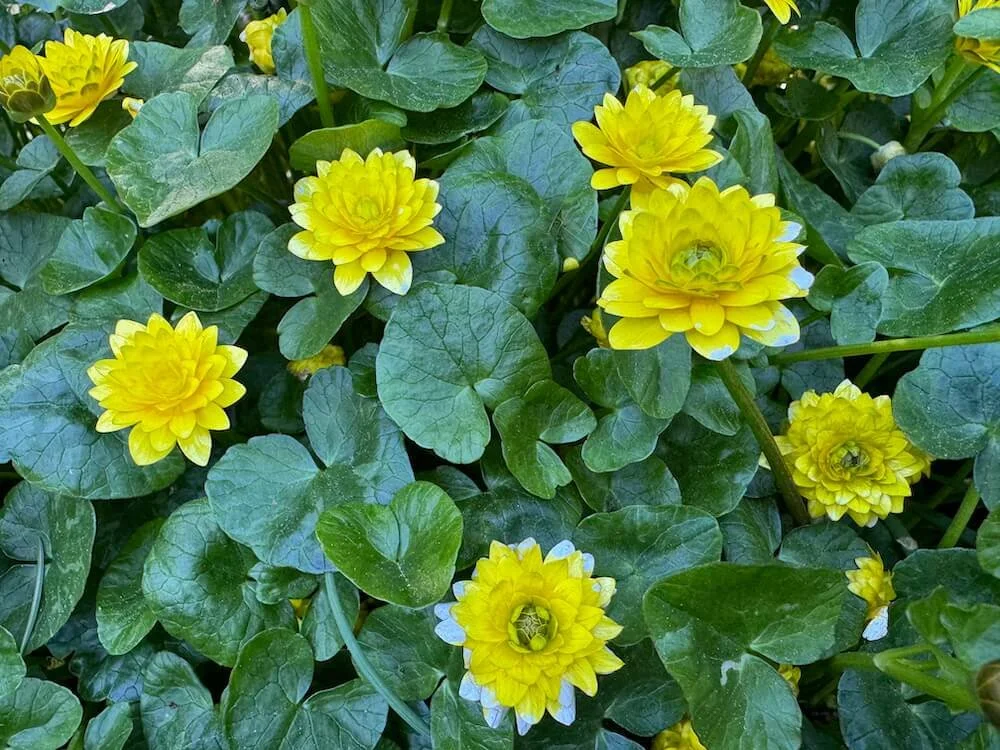
Lesser celandine brings a burst of early spring color to shade-tolerant groundcovers, where its low growth fills the spaces beneath deciduous trees before the canopy fully leafs out. Ficaria verna 'Flore Pleno' (shown here) produces fully double golden-yellow flowers that resemble miniature waterlilies, creating a rich display above glossy green leaves. As the season progresses, the foliage forms a dense carpet that helps cloak bare soil and accent the edges of woodland paths and shaded beds.
Appearing when many other perennials are still dormant, lesser celandine contributes a fleeting but memorable chapter to the garden year. Its bright blooms mingle beautifully with snowdrops, wood anemones, and early primroses, creating layered spring scenes in sheltered settings.
SAXIFRAGA
13
Highlights ►
4 to 6 in tall
8 to 12 in wide
Part to full shade
Evergreen
Flowers
Slow spread
Clump forming
Variegated foliage
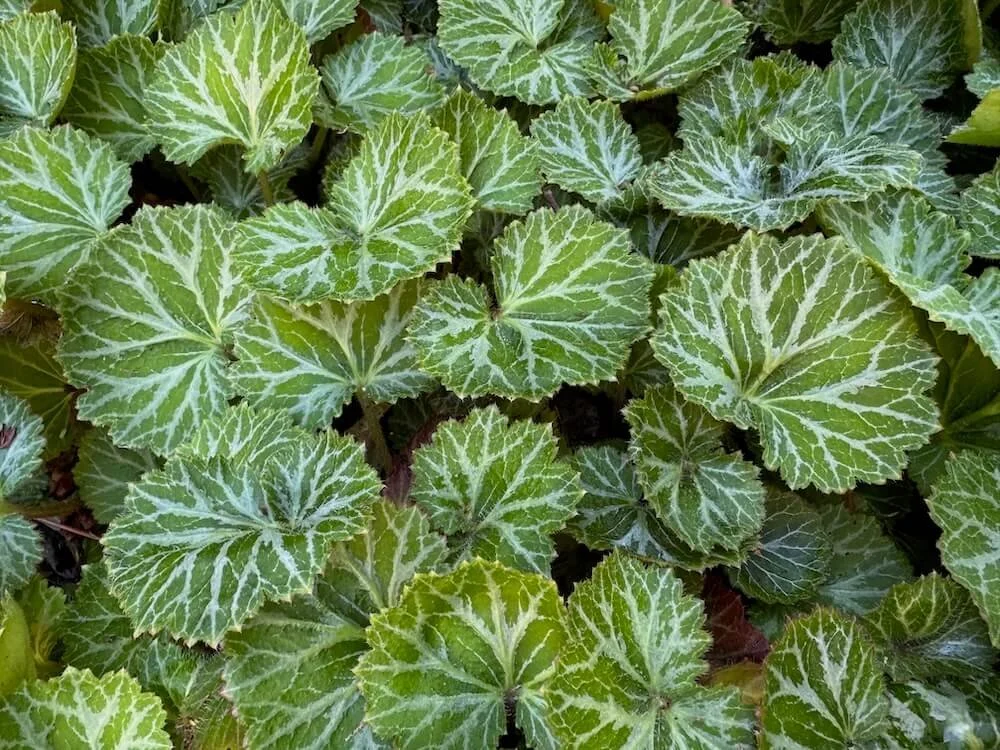
Saxifrages bring intricate foliage and understated charm to shade-tolerant groundcovers, where their compact rosettes create fine textures beneath shrubs and deciduous trees. Saxifraga ‘Hsitou Silver’ (shown here) stands out with silver-veined leaves, while Saxifraga x geum ‘Dentata’ forms mounds of toothed green foliage topped by airy clusters of pale flowers. Saxifraga x urbium ‘Aureopunctata’ adds further interest with leaves speckled in gold, brightening sheltered corners throughout the growing season. Their varied forms lend detail and contrast to woodland-inspired plantings.
Rather than dominating a planting, saxifrages excel at filling the quiet spaces between larger companions. They mingle beautifully with ferns, epimediums, and miniature hostas, adding subtle patterns and a sense of refinement to shaded garden settings.
MONDO GRASS (Ophiopogon)
14
Highlights ►
6 to 12 in tall
12 to 18 in wide
Part to full shade
Evergreen
Flowers
Slow spread
Clump forming
Colorful foliage
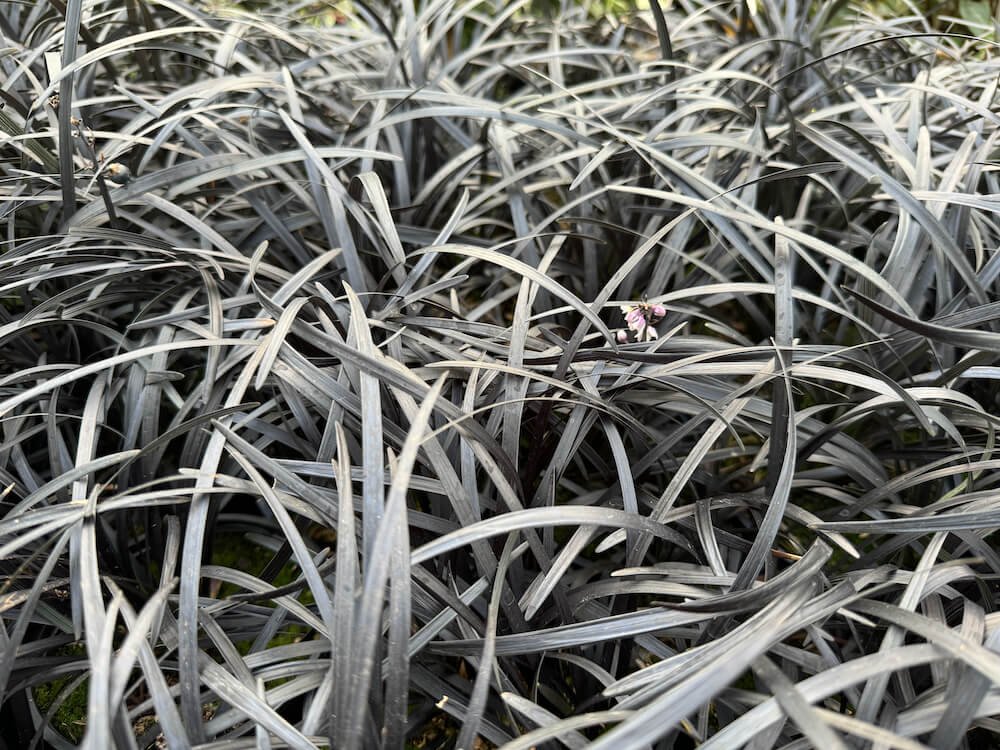
Mondo grass introduces a graceful, grassy texture to shade-tolerant groundcovers, where its arching foliage creates flowing ribbons beneath shrubs and along pathways. Ophiopogon planiscapus ‘Nigrescens’ (shown here) is especially striking with its nearly black leaves, while Ophiopogon japonicus 'Nanus' forms compact tufts of rich green foliage that resemble miniature fountains. Their narrow leaves provide a pleasing contrast to broad-leaved perennials and help define the edges of woodland beds and shaded borders. Small lavender flowers followed by dark berries add subtle seasonal accents.
Drawing attention through form rather than showy blooms, mondo grasses bring a calming presence to garden compositions. They pair beautifully with hostas, hakone grass, and heucheras, adding rhythm and texture to sheltered landscapes.
BISHOP’S WEED (Aegopodium)
15
Highlights ►
8 to 12 in tall
24 to 36 in wide
Part to full shade
Deciduous
Flowers
Fast spread
Colony forming
Variegated foliage
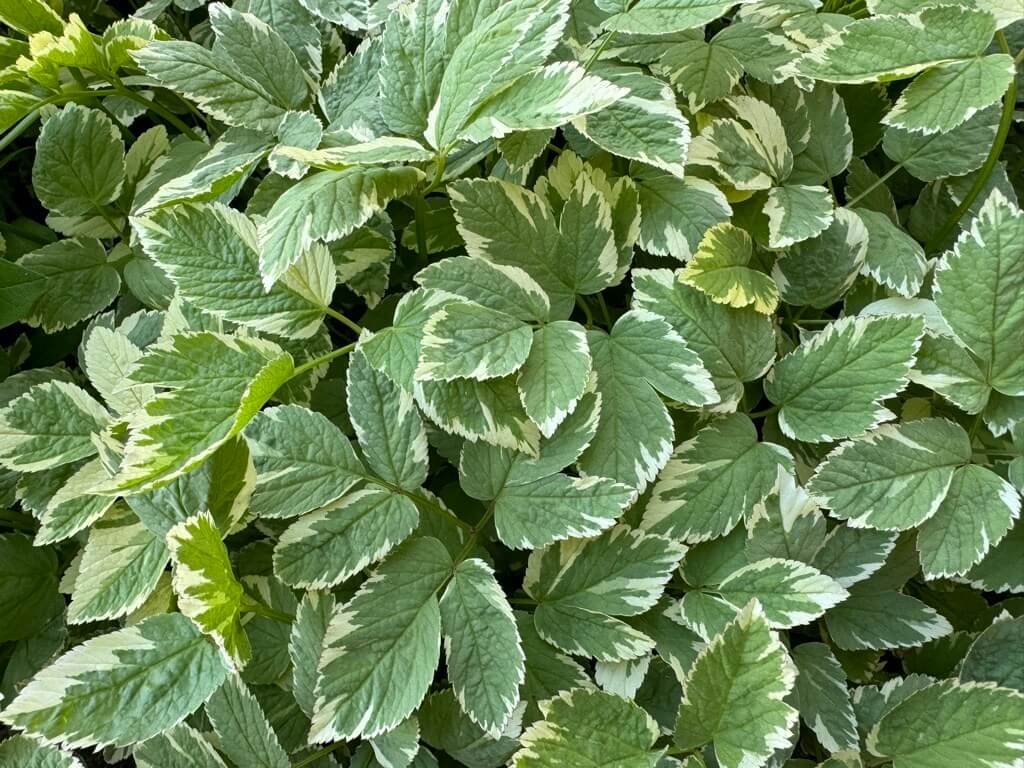
Bishop's weed creates broad sweeps of variegated foliage in shaded gardens, where its bright leaves can illuminate areas beneath trees and along the edges of woodland borders. Aegopodium podagraria ‘Variegatum’ (shown here) features finely toothed leaves edged in creamy white, forming a striking tapestry that remains attractive throughout the growing season. Clusters of tiny white flowers appear above the foliage in summer, adding a light, airy quality to the planting. The contrasting leaf colors provide visual interest even when flowers are absent.
Few shade-tolerant groundcovers have such a strong effect on the overall tone of a planting. Used thoughtfully, bishop's weed pairs beautifully with hostas, ferns, and darker-leaved companions, bringing brightness and contrast to sheltered garden spaces.
ALPINE SNOWBELL (Soldanella)
16
Highlights ►
3 to 6 in tall
6 to 12 in wide
Part to full shade
Evergreen
Flowers
Slow spread
Clump forming
Early bloom
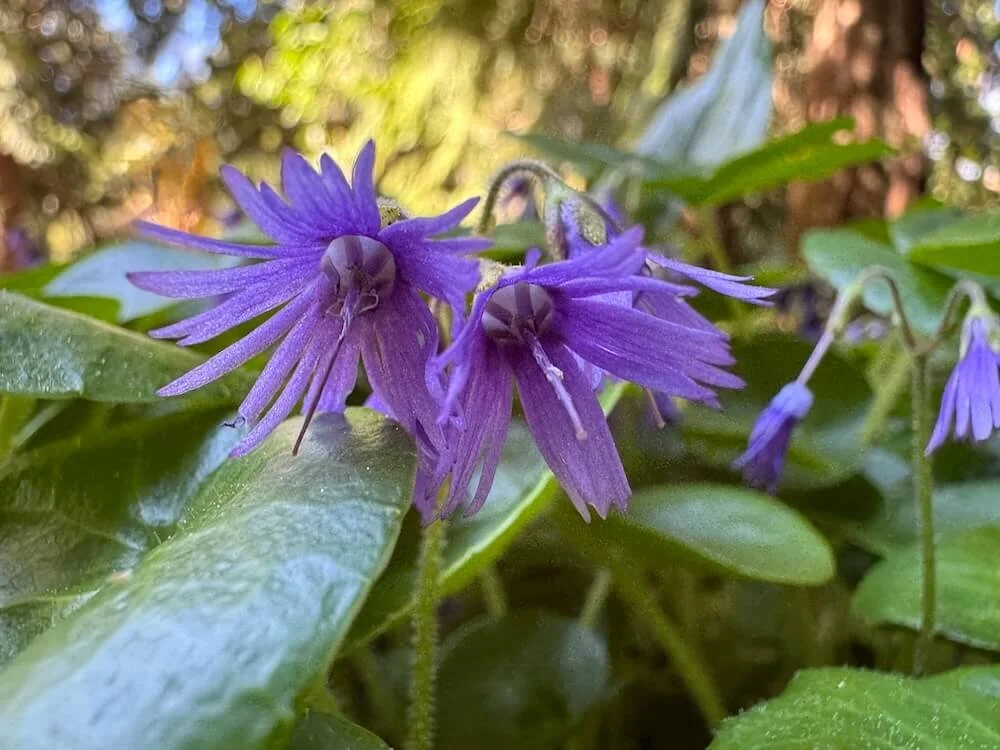
Alpine snowbell brings a touch of mountain delicacy to shade-tolerant groundcovers, where its compact foliage and unusual flowers create interest in cool, sheltered settings. Soldanella alpina (shown here) forms low rosettes of rounded evergreen leaves that provide a neat backdrop for nodding violet-lavender blooms in spring. The fringed petals give the flowers a finely cut appearance unlike that of most woodland perennials, adding an element of surprise to shaded borders and rock pockets. Its modest size allows it to nestle comfortably among larger companions without competing for attention.
Emerging soon after winter, alpine snowbell recalls the wildflower displays found in high-elevation meadows. It combines beautifully with miniature ferns, primroses, and small saxifrages, lending a quiet elegance to intimate garden spaces.