
Early Blooming Shrubs
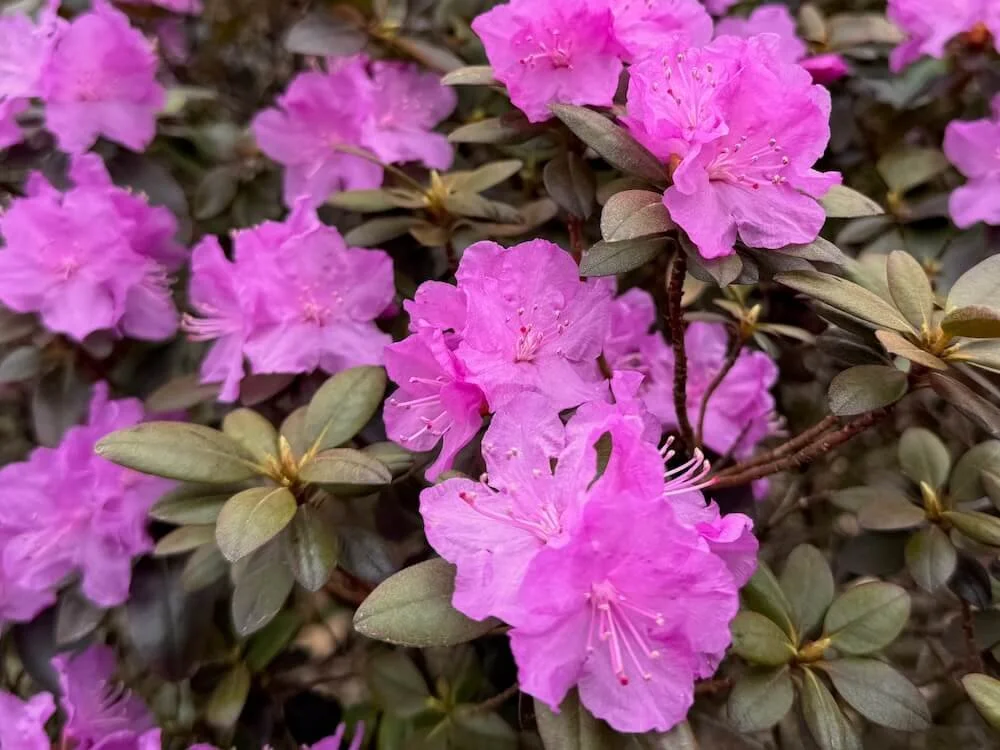
Rhododendron x ‘PJM’
Evergreen shrub with small leathery foliage and lavender pink flower clusters. Grows 4 to 6 feet tall. Ideal for hedges, foundation plantings, and woodland borders. Zones: 4 to 8.
Early spring blooming shrubs bring fresh color and energy to the garden just as winter recedes, often flowering before trees have fully leafed out. Their blossoms range from soft pastels to vivid pinks, yellows, and whites, appearing on bare branches or alongside emerging foliage. These shrubs create focal points in borders and provide an early source of nectar for pollinators.
Well-suited for mixed plantings or as stand-alone specimens, they help bridge the seasonal gap between winter structure and late spring abundance. Many offer additional interest through fragrance, branching form, or fall color. Placed where they can be easily seen from windows or pathways, early bloomers extend the gardening season and signal the start of growth in the landscape.
DAPHNE
01

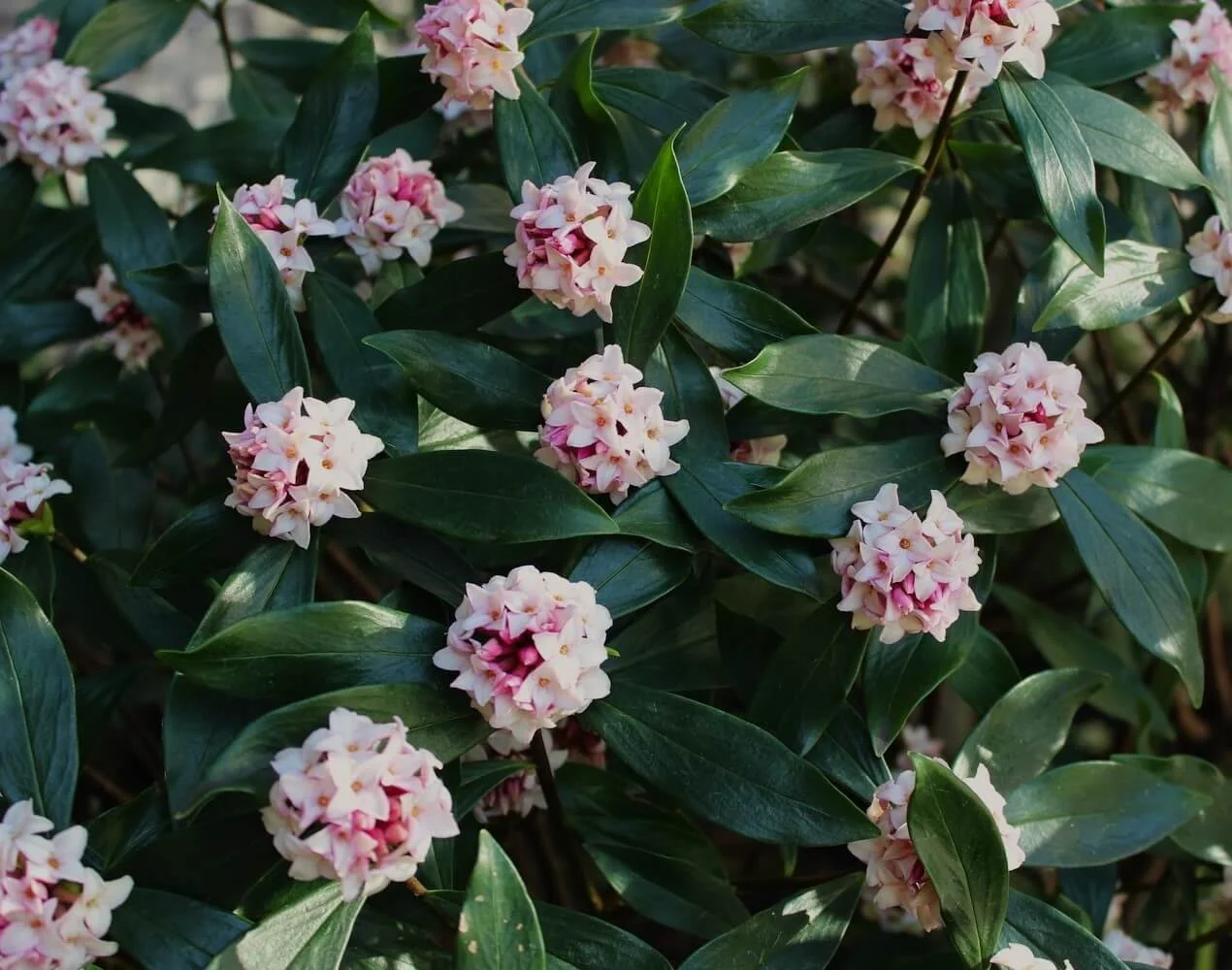
Early-blooming daphnes are appreciated for bringing fragrance and color to the garden at the transition from winter into spring. Daphne odora (shown here) leads the group, producing clusters of intensely fragrant pink to white flowers set against glossy evergreen foliage just as the garden begins to wake up. Variegated selections such as Daphne odora ‘Maejima’ add another layer of interest, with gold-edged leaves that brighten the plant year-round while supporting the same richly scented blooms.
These shrubs are especially effective when planted near entryways, walkways, or outdoor living spaces, where their fragrance can be appreciated up close. Their compact habit and refined appearance make them well suited to smaller garden spaces, sheltered borders, or container plantings, where they provide both structure and scent.
FRINGE FLOWER (Loropetalum)
02
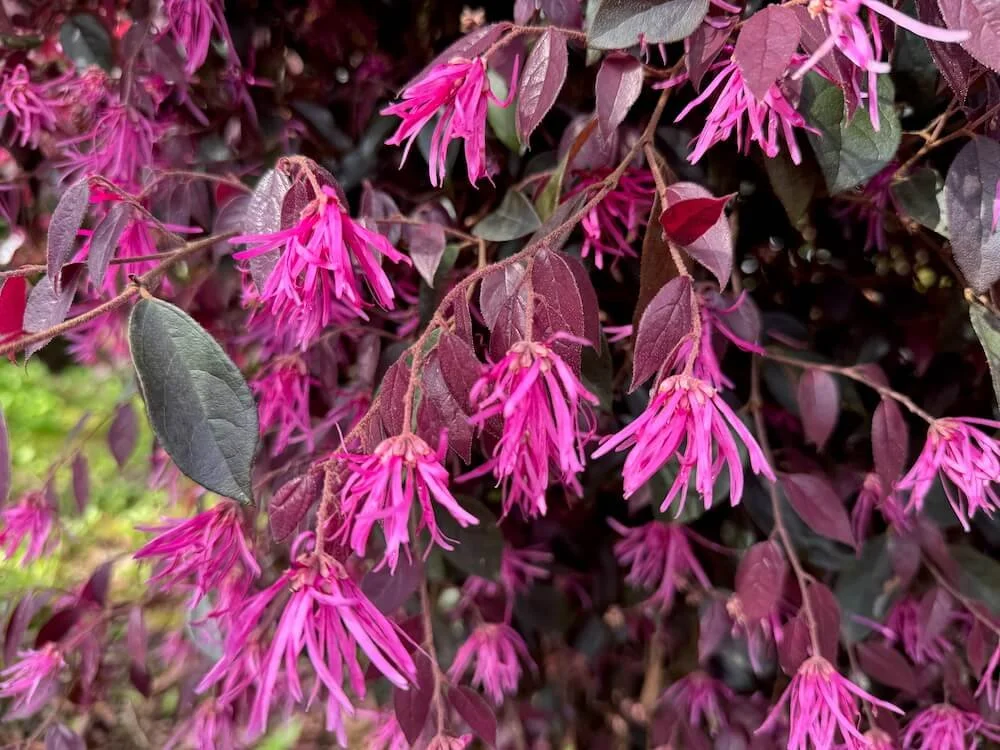
Fringe flower provides colorful early-season interest, with most varieties blooming from late winter into March and April. Loropetalum chinense var. rubrum ‘Burgundy’ (shown here) is grown for its deep purple foliage and bright pink, ribbon-like flowers that create strong contrast and a fuller visual presence. Its naturally dense, arching habit forms a cohesive backdrop, adding structure and color even when not in bloom.
These shrubs are especially effective in borders, foundation plantings, or along pathways where their color and texture can be easily seen. Loropetalum chinense ‘Sizzling Pink’ adds a vibrant element with vivid pink flowers set against rich, dark foliage, enhancing depth within the planting. Together, these selections provide season-long color, soft movement, and reliable structure in a range of garden settings.
MAGNOLIA
03
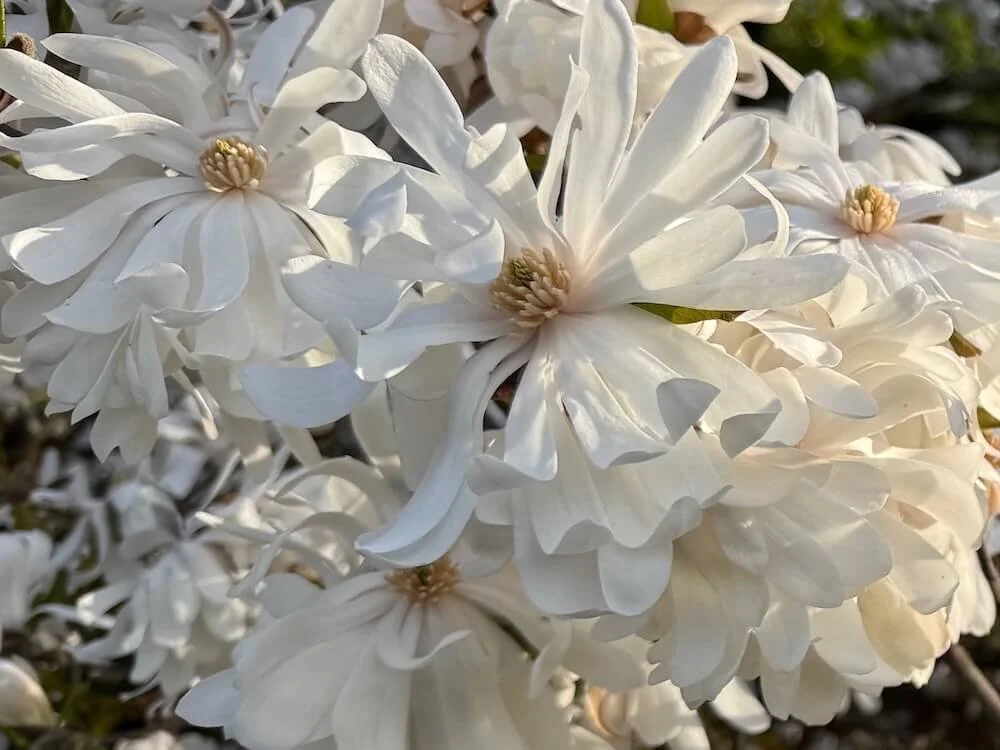
Early-blooming magnolias bring soft color to the garden as winter transitions into spring. Selections such as Magnolia stellata and its cultivars are especially valued for their star-shaped flowers that appear before the foliage, covering bare branches in white, lightly fragrant blooms. Magnolia stellata ‘Royal Star’ (shown here) produces fuller, layered white flowers with a slightly more substantial presence, while Magnolia stellata ‘Double Star’ offers an even denser, multi-petaled display. Their branching structure creates a graceful silhouette that adds interest even when not in bloom.
These magnolias are particularly effective when planted where their early flowers can be appreciated up close, such as near entryways, windows, or garden paths. Their compact size and refined habit make them well suited to smaller gardens or sheltered borders, where they provide a reliable and visually striking display at a time when the landscape is just beginning to awaken.
CAMELLIA
04
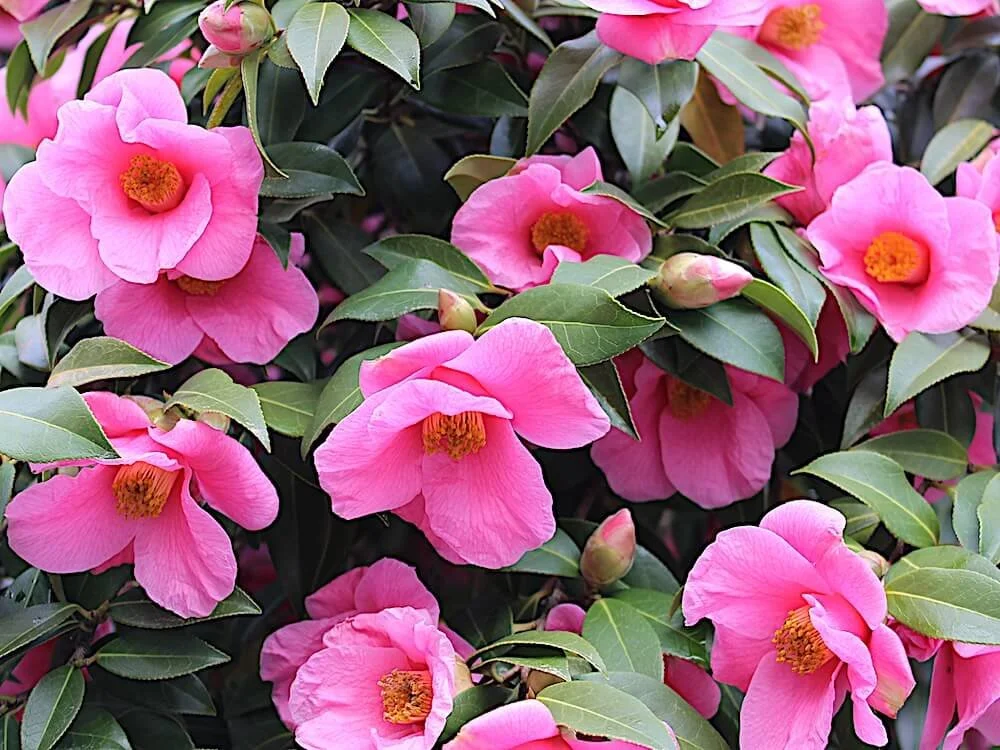
Early spring-blooming camellias bring refined color to the garden as winter transitions into spring. Selections such as Camellia x williamsii ‘Mary Christian’ (shown here) are especially valued for their soft pink flowers over an extended period. Camellia x williamsii ‘Freedom Bell’offers a more compact habit with rich red blooms, while Camellia japonica ‘Pearl Maxwell’ provides elegant, pale pink flowers that brighten shaded settings. Their glossy evergreen foliage adds structure throughout the year, complementing the early-season display.
These camellias are particularly effective when planted where their flowers can be enjoyed up close, such as near entryways, paths, or windows. With their combination of early bloom time, refined form, and evergreen presence, they provide a steady, understated show of color at a time when the garden is just beginning to come back to life.
SKIMMIA
05
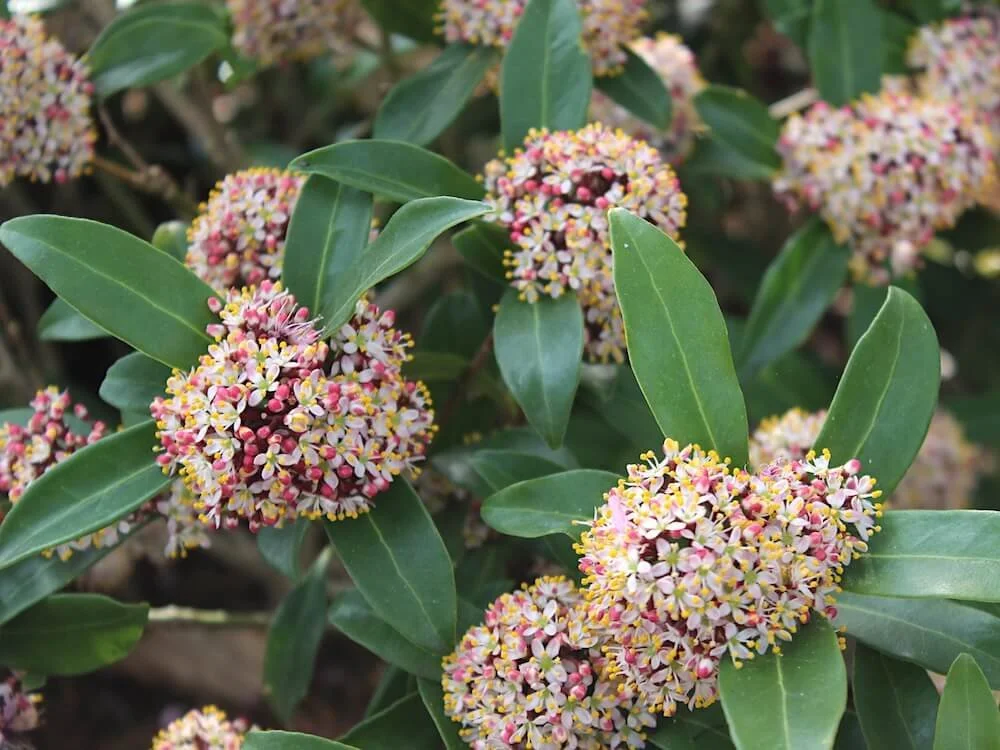
Skimmias provide refined early-season interest, with buds and flowers developing from late winter into spring. Skimmia japonica (male) (shown here) is grown for its dense, evergreen foliage and clusters of reddish buds that open to small, fragrant white flowers, creating a polished display even before full bloom. Its compact, rounded habit offers structure, particularly in shaded settings where it performs well.
These shrubs are especially effective in woodland gardens, foundation plantings, or along shaded paths where their form and seasonal detail can be easily enjoyed. Skimmia reevesiana adds another layer of interest, producing both flowers and bright red berries on a single plant, extending seasonal appeal beyond the bloom period. Together, these selections provide year-round structure, early spring interest, and dependable performance in sheltered, low-light areas.
OSMANTHUS
06
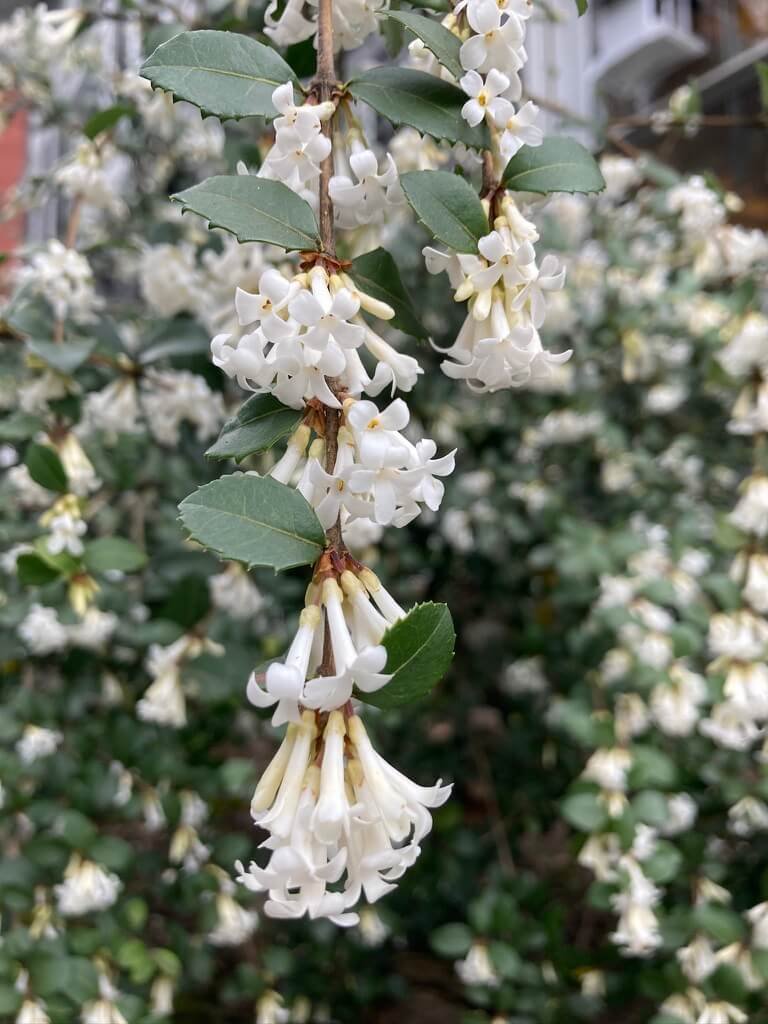
Early spring-blooming osmanthus bring subtle color and fragrance to the garden as winter gives way to spring. Selections such as Osmanthus x burkwoodii are valued for their dense, evergreen foliage and clusters of small white flowers that release a sweet, noticeable scent. Osmanthus delavayi (shown here) offers a slightly more refined look, with smaller leaves and delicate white blooms that appear along its branching stems. Their tidy growth and year-round foliage provide consistent structure while supporting the early-season display.
These shrubs are especially effective when planted near walkways, entrances, or outdoor living areas where their fragrance can be appreciated up close. With their combination of early bloom, evergreen presence, and understated flowers, they add both structure and seasonal interest at a time when the garden is just beginning to awaken.
RHODODENDRON
07
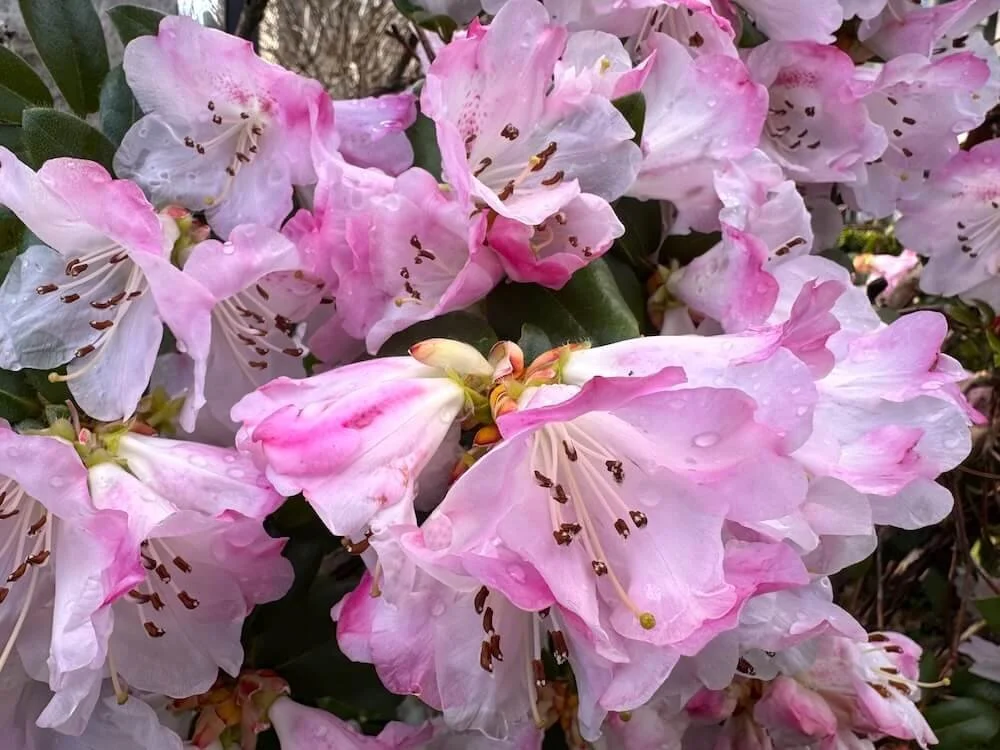
Early spring-blooming rhododendrons bring welcome color to the garden just as winter fades. Selections such as Rhododendron x ‘PJM’ are valued for their early lavender-pink blooms and cold tolerance, often flowering reliably after harsh winters. Compact varieties like Rhododendron ‘Snow Lady’ offer a smaller, tidy form with soft white flowers, well suited to borders and foundation plantings. Their evergreen foliage provides year-round bold structure.
These rhododendrons are effective when planted where their early flowers can be easily enjoyed, such as near entryways, walkways, or windows. Rhododendron cilpinense (shown here) adds another dimension with delicate pink blooms and refined foliage, contributing a softer texture to early spring displays. Together, these selections create layered interest, combining reliable bloom timing with a range of colors and forms.
QUINCE (Chaenomeles)
08
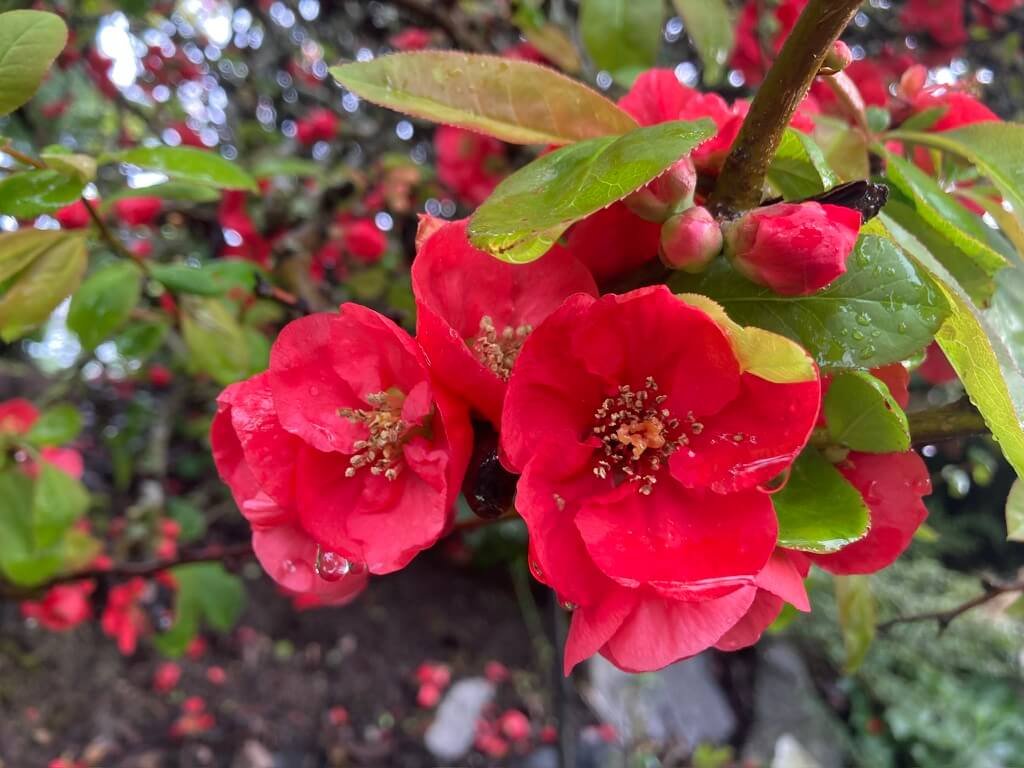
Flowering quince brings bold color to the garden at the transition from winter into spring, with most varieties blooming from late winter through March and April. Chaenomeles speciosa (shown here) is valued for its profusion of vivid red blooms that appear along bare, often thorny branches before the foliage emerges, creating a bright, early display. Cultivars such as Chaenomeles speciosa ‘Orange Delight’ offer rich orange tones that stand out clearly in the early-season landscape.
These shrubs are especially effective when planted along borders, fences, or pathways where their early blooms can be easily seen. Chaenomeles speciosa ‘Contorta’ adds a softer dimension, with more subdued soft pink color and distinctive, twisted branches that create sculptural interest even when not in bloom. Together, these selections bring strong seasonal color and architectural interest as the garden begins to come back to life.
STAR ANISE (Illicium)
09
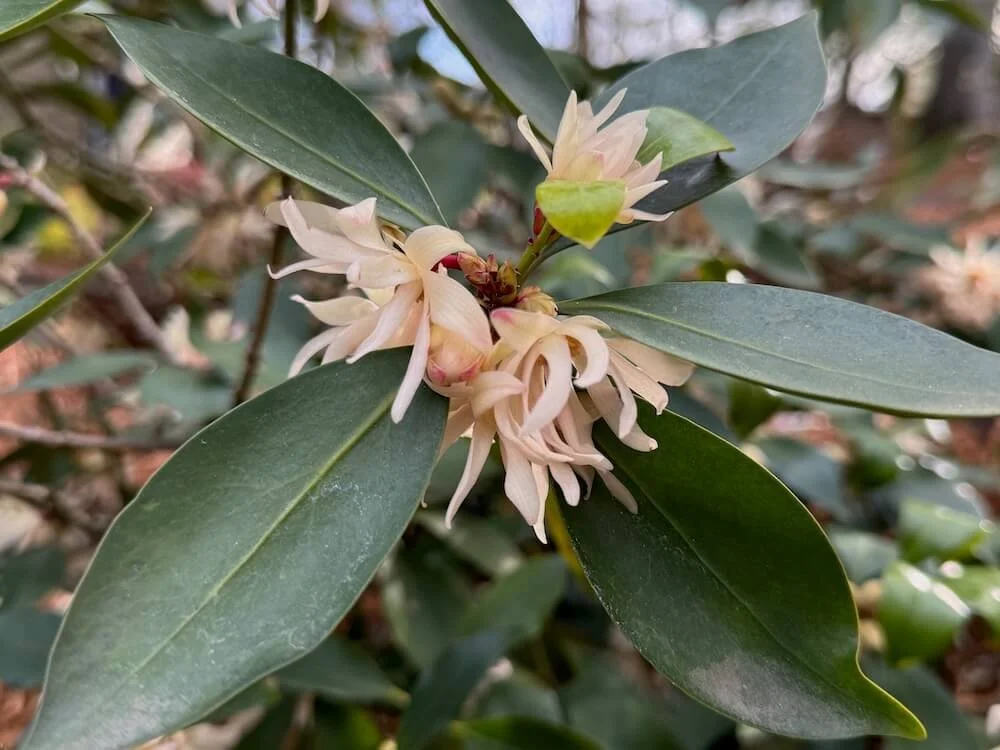
Illicium brings subtle early-season interest to the garden, with flowering typically occurring from late winter into March and April as new growth begins to emerge. Illicium anisatum is grown for its dense, evergreen foliage and delicate, star-shaped white flowers that appear tucked among the leaves, creating a refined and understated display. Its naturally layered branching provides consistent structure, particularly in shaded settings.
These shrubs are especially effective in woodland gardens, foundation plantings, or along shaded paths where their form and foliage can be appreciated up close. Cultivars such as Illicium anisatum ‘HinPurlf’ (shown here) introduce added contrast with rich burgundy stems and darker-toned foliage, enhancing depth and texture throughout the planting. Together, these selections provide year-round structure, subtle bloom, and reliable performance in sheltered, low-light areas as the garden begins to come back to life.
VIBURNUM
10
Viburnums that flower in early spring offer both fragrance and gentle color just as the garden begins to wake. Selections such as Viburnum x bodnantense ‘Dawn’ and ‘Pink Dawn’ are especially valued for their clusters of pink, highly fragrant flowers that open along bare stems, creating a delicate display before the foliage emerges. Their upright, open branching structure adds a light, architectural presence.
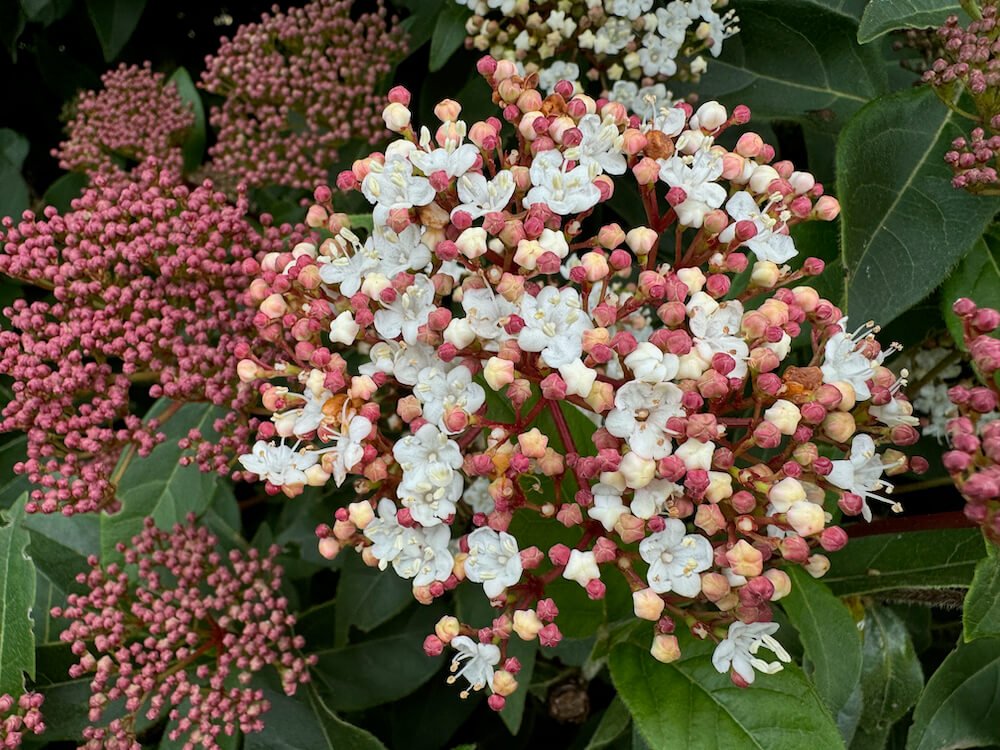
These viburnums are particularly effective when planted near walkways, entrances, or windows where their fragrance can be enjoyed up close. Evergreen types such as Viburnum tinus ‘Spring Bouquet’ (shown here) add a different dimension, with dense foliage and clusters of white to soft pink flowers that provide a fuller, more structured presence.
CURRANT (Ribes)
11
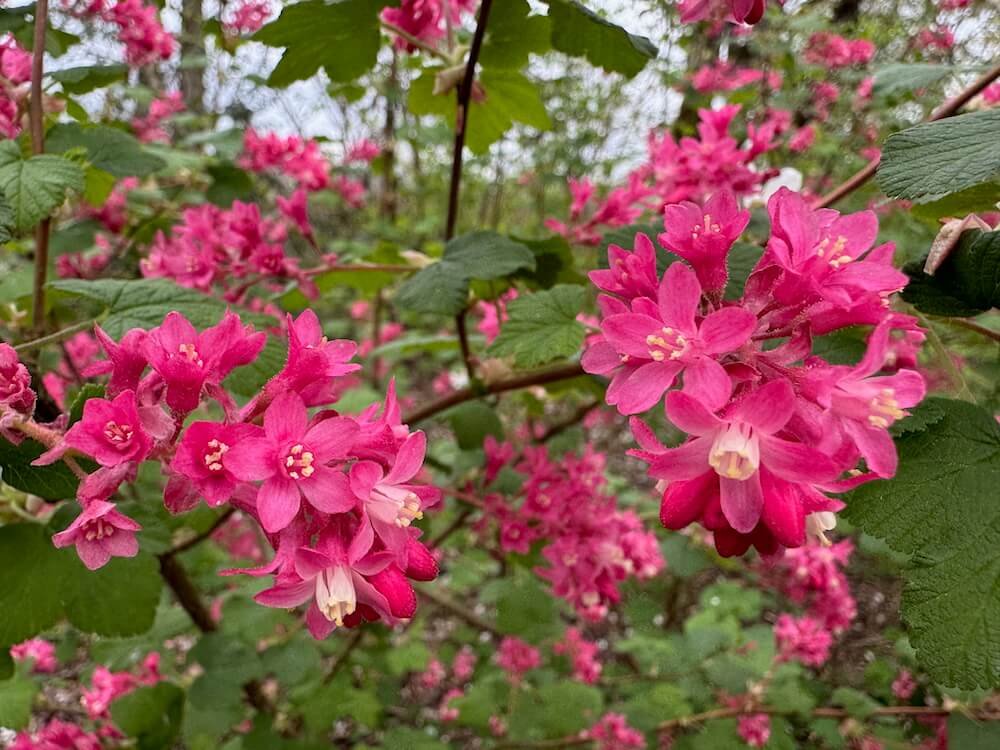
Flowering currants bring some of the earliest color to the garden, producing dangling clusters of blooms while much of the landscape is still emerging from winter. Ribes sanguineum ‘Pulborough Scarlet’ (shown here) is grown for its deep rosy-red flower trusses that appear along bare branches before fresh green foliage fully develops. The early blooms attract hummingbirds and pollinators while creating strong seasonal color at a time when few other shrubs are flowering.
As spring progresses, different currants expand the range of color and texture within the landscape. Ribes sanguineum ‘Ubric’ produces long clusters of white flowers that brighten woodland edges and mixed borders, while Ribes aureum adds fragrant golden-yellow blooms followed by dark berries later in the season. Their arching forms and early flowering habit help soften transitions between taller shrubs, woodland plantings, and naturalistic garden spaces.
ROSEMARY (Rosmarinus)
12
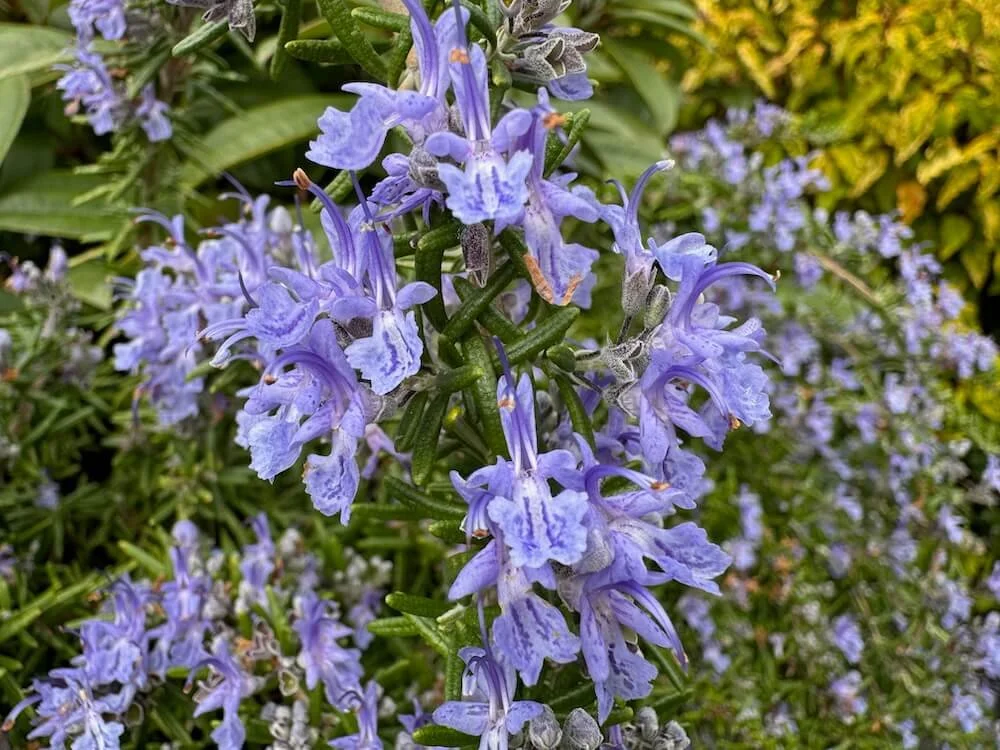
Rosemary adds fragrance and evergreen structure to the garden while producing soft blue flowers during the cooler months of late winter and early spring. Rosmarinus officinalis ‘Tuscan Blue’ is grown for its upright habit, aromatic needle-like foliage, and rich blue flowers that appear along tall stems as the season begins to change. The evergreen foliage provides year-round texture while the early blooms attract pollinators at a time when flowering shrubs are still limited.
Different rosemary forms allow this shrub to fill a range of garden roles beyond its culinary use. Rosmarinus officinalis develops a dense shrubby form well suited to borders and Mediterranean-style plantings, while Rosmarinus officinalis ‘Prostratus’ (shown here) spreads outward and cascades over walls, containers, and rocky slopes. Their silver-green foliage and early flowering habit bring color, fragrance, and structure into the landscape before many spring shrubs begin blooming.
FOTHERGILLA
13
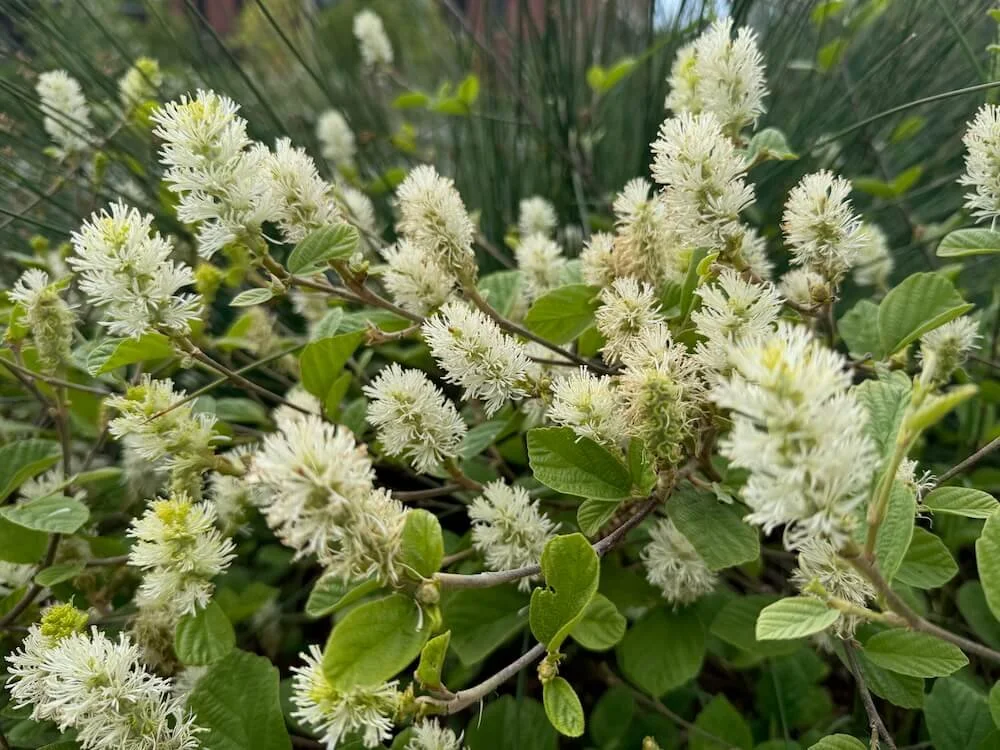
Fothergillas announce the arrival of spring with bottlebrush-like white flowers that appear before the foliage fully emerges on the branches. Fothergilla gardenii (shown here) is grown for its compact habit and fragrant blooms, whose soft white stamens create a hazy appearance across the shrub in early spring. The flowers arrive at a time when many landscapes still lack color, bringing texture and movement to woodland edges and mixed shrub borders.
As the season continues, fothergillas develop rounded blue-green foliage that shifts to vivid shades of orange, red, and yellow in fall. Fothergilla x intermedia ‘Mount Airy’ is especially valued for its larger leaves, stronger fall color, and more vigorous branching habit that adds fullness to naturalistic plantings. Their layered branching structure and changing seasonal character allow these shrubs to remain visually effective long after flowering has finished.